



Categories
Applied Innovation

How Drone Technology Can Advance Healthcare Delivery

Categories
Applied Innovation

How Drone Technology Can Advance Healthcare Delivery

Introduction

One of the recurring issues in the ever-changing world of healthcare is guaranteeing timely and efficient medical services for a large and varied population. The rising demand for healthcare, along with geographical and infrastructure constraints, has forced the development of novel solutions to bridge the gap between medical resources and people in need. The revolutionary function of drone technology is one such game-changing answer. This article looks at how drones can help overcome healthcare delivery obstacles and revolutionise access to medical treatments.

Challenges in Healthcare Delivery

Delivering healthcare services in a timely and effective manner is a difficult challenge to solve, especially in areas with vast landscapes, limited infrastructure, and different populations. Access to crucial medical supplies, immunisations, and prompt healthcare treatments is sometimes challenging in remote and underprivileged communities. Traditional forms of transportation struggle to cross difficult terrain, resulting in delays that can be disastrous.

The global healthcare system has encountered unprecedented obstacles, in addition to geographical limitations, as shown by the COVID-19 pandemic. The requirement for speedy distribution of medical supplies, such as vaccinations and testing materials, has highlighted the shortcomings of existing healthcare delivery systems.

Drone Technology: A Game-Changer in Healthcare Delivery

The advancement of drone technology offers a viable answer to these problems. Drones, also known as Unmanned Aerial Vehicles (UAVs), have the potential to transform healthcare delivery by offering a quick and effective way of transferring medical supplies to distant and inaccessible locations.

1. Medical Supplies Distribution:

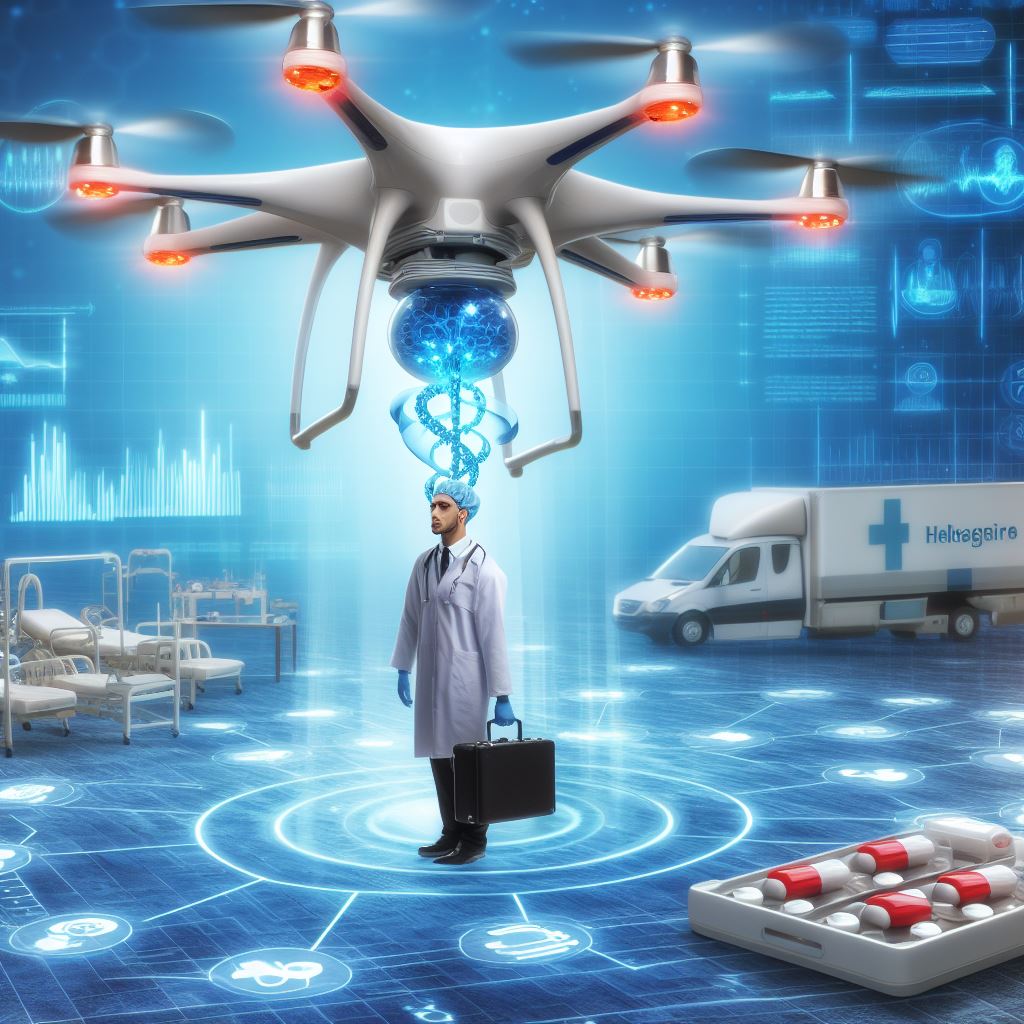
The delivery of medical supplies is one of the key applications of drone technology in healthcare. Drones can deliver critical supplies like pharmaceuticals, first aid kits, and equipment to inaccessible regions quickly and precisely. This skill is especially important in times of emergency, when fast access to medical resources might mean the difference between life and death.

Drones can quickly transport medical help in disaster-stricken areas or places with weak road infrastructure, ensuring that impacted populations receive timely treatment. Drone delivery efficiency can dramatically improve response to natural disasters, epidemics, and other health emergencies.

  1. Vaccine Distribution: 

Vaccination efforts, which are critical for limiting the spread of infectious illnesses, sometimes have difficulties reaching rural or isolated areas. Drones have the ability to overcome these obstacles by acting as effective vaccination carriers.

Drones fitted with temperature-controlled compartments can provide the safe and dependable conveyance of vaccinations in areas where cold chain storage is an issue. This not only speeds up vaccination efforts, but also adds to the worldwide objective of obtaining widespread immunisation, especially in places with restricted access.

  1. Transportation of Blood Samples: 

Another crucial component of healthcare is the prompt transfer of blood samples for diagnostic reasons. Drones can help speed up this procedure by lowering the time it takes to carry samples from remote locations to testing centres. This faster turnaround time can result in faster diagnosis and more prompt medical interventions, which is especially crucial in situations of contagious illnesses or disorders that require immediate care.

  1. Telehealth Services: 

Drones have the ability to offer telehealth services in addition to the physical transfer of medical supplies. Drones equipped with telecommunications equipment can serve as mobile communication centres, linking patients in distant places with healthcare specialists located thousands of kilometres away. This increases access to medical experts and allows for real-time consultations and monitoring, ultimately improving the quality of healthcare delivery.

5. Disease Surveillance: 

Drone technology can also help with disease surveillance. Drones can monitor and gather data on disease outbreaks, population health, and environmental variables since they have advanced imaging and sensor capabilities. This information can be important in detecting health problems early, allowing for proactive and targeted public health actions.

Challenges and Considerations

Despite its potential benefits, using drone technology in healthcare delivery confronts significant obstacles. Robust regulatory frameworks are required to ensure drone integration safety, security, and ethical concerns. Adequate infrastructure development, including landing zones and maintenance facilities, is essential for successful drone deployment. While the initial investment is substantial, the long-term advantages must be balanced against the expenses, demanding rigorous economic analysis. The public’s acceptability is critical, and resolving privacy and security issues is critical for gaining support and guaranteeing effective implementation.

Conclusion

The revolutionary impact of drone technology in improving healthcare delivery is set to revolutionise the global health landscape. Drones provide a plethora of opportunities for addressing the issues of providing timely and effective healthcare services, from accelerating the delivery of medical supplies to improving telemedicine services and disease surveillance

While there are certain constraints to overcome, such as legal frameworks and infrastructural development, the potential advantages greatly exceed the difficulties. Drones can reach previously inaccessible locations, enhancing healthcare accessibility and, ultimately, saving lives. As we fly through the skies of innovation, the incorporation of drone technology into healthcare delivery holds the possibility of a more robust, responsive, and fair healthcare system for all.

Are you intrigued by the limitless possibilities offered by modern technologies? Can you imagine a potential transformation in your business through innovative solutions? If so, we invite you to embark on a journey of exploration and evolution!
Let’s initiate a transformative partnership. Reach out to us at open-innovator@quotients.com.


Categories
Applied Innovation

How is AI revolutionizing Mental Health Care

Categories
Applied Innovation

How is AI revolutionizing Mental Health Care

AI is set to transform our approach to health and wellbeing. From mental health chatbots to predictive analytics, AI is changing the way consumers and businesses approach wellness.

Mental Health Concerns on Rise

Mental health disorders are on the rise globally. Depression is a primary cause of disability. According to WHO, suicide is the fourth highest cause of mortality among those aged 15 to 29. People with serious mental illnesses die prematurely, up to two decades earlier, due to avoidable physical diseases. The divide between those who require care and those who have access to care remains significant. Treatment coverage is still extremely poor that can be met by extensive use of AI in this field.

AI as Solution

The use of artificial intelligence represents a possible route for transforming mental health treatment. AI is a light of hope for those seeking comprehensive and personalised services, with the potential to improve diagnosis, treatment, and support. Advanced algorithms and data analysis enhance pattern detection, issue prediction, and personalised solutions. While the emergence of AI in mental health has enormous potential, it also presents critical ethical and practical issues. As a result, it is critical to strike the proper balance between technical advancement and human contact.

Artificial intelligence (AI) is making substantial advances in mental health treatment through new applications. Machine learning early detection enables the analysis of social media postings and other data sources to find minor patterns indicative of mental health issues. This early intervention capacity holds the possibility of immediate help, perhaps avoiding mental health disorders from worsening. Furthermore, AI aids to diagnostic assistance by assessing patients’ linguistic clues and emotional subtleties using natural language processing (NLP). Chatbots powered by NLP engage users in chats to assess their mental health, offering physicians with important insights and improving assessment accuracy.

Furthermore, the combination of virtual reality (VR) technology and artificial intelligence (AI) provides immersive therapy experiences for trauma and anxiety patients, establishing controlled situations to assist individuals in confronting and managing psychological discomfort in a secure setting. The capacity of AI to use patient data to create personalised treatment plans improves mental health care by adapting interventions to individual requirements.

Furthermore, AI-powered mental health education is democratizing access to information and coping strategies. Chatbots equipped with AI engage users in conversations, providing accessible guidance and resources. These applications collectively exemplify how AI is transforming mental health care by enhancing early detection, diagnostics, therapy, personalized treatment, and educational support, ultimately contributing to a more comprehensive and individualized approach to well-being.

Challenges in Implementation

AI bias, particularly in facial recognition and prediction technology, raises the possibility of biassed consequences, particularly for people of colour. AI training with specific demographic data causes disparities in healthcare recommendations. Healthcare providers should diversify AI training data to enhance equity. When sharing health-related data with generative AI systems, privacy problems arise, including dangers of privacy breaches and identity theft. Harmful suggestions in AI wellness data may result from prejudice and a lack of human understanding, emphasising the significance of professional monitoring. The possible loss of human ties, which is especially troubling for people who suffer from social anxiety or depression, emphasises the importance of balancing AI help with the essential need for human connection.

Future Direction

The dynamic potential of artificial intelligence (AI) promises a viable path forward for mental health treatment in the future. As technology advances, artificial intelligence (AI) will play a revolutionary role in altering how mental health treatments are offered and experienced. The power of artificial intelligence (AI) to handle massive volumes of data, combined with advanced algorithms, has the potential to revolutionise diagnosis, treatment planning, and intervention tactics. The continual development of AI apps suited to various mental health issues offers a more sophisticated and individualised approach to therapy that addresses each patient’s specific requirements.

Moreover, the fusion of AI with emergent technologies such as virtual reality (VR) and portable devices is paving the way for a holistic paradigm in mental health care. VR, when integrated with AI, offers immersive therapeutic experiences for individuals dealing with trauma, anxiety, or other mental health challenges. The controlled environments created by AI-driven VR scenarios provide a safe space for exposure therapy and skill-building, contributing to more effective and personalized treatment strategies. Portable devices, enhanced by AI capabilities, enable real-time tracking of mental health trends, facilitating early intervention and preventive measures. This synergistic blend of AI with emerging technologies not only expands the scope of mental health care but also promotes accessibility and inclusivity, ensuring that individuals globally can benefit from these transformative advancements. As we move forward, the integration of AI and innovative technologies is poised to usher in a new era of mental health care characterized by precision, accessibility, and enhanced therapeutic outcomes.

Are you intrigued by the limitless possibilities offered by modern technologies? Can you imagine a potential transformation in your business through innovative solutions? If so, we invite you to embark on a journey of exploration and evolution!
Let’s initiate a transformative partnership. Reach out to us at open-innovator@quotients.com.

Categories
Applied Innovation

Can Technology Redefine Construction? Exploring the Transformative Power of AI in the Industry

Categories
Applied Innovation

Can Technology Redefine Construction? Exploring the Transformative Power of AI in the Industry

The phrases “artificial intelligence” (AI) and “machine learning” conjure up thoughts of cold, impersonal processes devoid of human touch in the world of technology. A deeper examination reveals, however, that these cutting-edge notions may, in fact, breathe life into businesses, particularly the construction industry.

Recent worries regarding the possible negative effects of AI on the labour have been expressed, and a high number of workers fear AI will hurt rather than benefit the workforce. Despite these reservations, it is critical to recognise the substantial beneficial influence that AI may have, particularly in the construction sector, when used appropriately.

Bridging the Divide Between Humanity and Technology

AI and machine learning technologies have the potential to improve the daily lives of construction workers. Rather of eliminating humans from the equation, these technologies enable people to do their jobs more efficiently. With the introduction and improvements in construction-related AI solutions, there has been a rise in discussions about the possible advantages and concerns.

Recognising the legitimate worries about AI, the construction sector is undergoing a paradigm change. AI and machine learning are emerging as crucial actors in the effort to keep projects on schedule while adopting new technology. These innovations not only move the sector ahead, but they also improve results for workers, contracting businesses, and end users.

The Transformative Power of AI 

This voyage into the realm of AI reveals a wide range of breakthroughs, from improving design quality and assuring workplace safety to proactive risk management and project longevity. We dig into the revolutionary potential of AI in this investigation, giving light on its role in everyday automation and how it matches with the human-centric character of the construction industry.

Improving Design Quality: In one notable case, a prominent workspace supplier used machine learning to forecast the frequency of space utilisation, resulting in optimised meeting room designs. In addition, a partnership between design software experts and AI specialists resulted in the development of an AI-powered building design system, which especially improved the layout optimisation for timber flooring.

Making Construction Sites Safer: The use of AI-powered computer vision in the construction sector has revolutionised safety procedures. This system analyses accidents, detects possible safety concerns, and ensures that safety standards are followed. Furthermore, AI streamlines incident reporting via real-time data monitoring and natural language processing. This dual strategy supports in effective safety management, making construction crews safer on the job.

Assessing and Reducing Risk: Artificial intelligence plays a critical role in risk assessment and reduction on building sites. A construction-focused AI system, for example, is meant to prioritise possible concerns, allowing for proactive control of costs and schedule risks. AI algorithms in the construction industry can do more than just identify problems; they can also discover root causes, forecast safety events, and provide continuous monitoring of high-risk parts of building projects. This proactive risk management technique helps to simplify procedures and avert problems.

Increasing Project Lifespan: The use of AI and machine learning may dramatically increase the lifespan of building projects. These technologies simplify facility management by categorising data and evaluating real-time conditions. This comprehensive strategy guarantees that construction projects have a long and well-maintained life cycle.

Advancing AI in Construction

Large portions of organised and interconnected data are required for AI to be successful. AI might capture design requirements, integrate design and construction teams, and automate drawing generation in the future. While artificial intelligence (AI) continues to have an impact on the construction industry, it should be considered as a tool that enhances human abilities, creativity, and inventiveness rather than a substitute. Finally, the growth of AI in building opens up intriguing possibilities. Adopting AI correctly may unlock the full potential of human creativity and invention, ensuring that the construction sector evolves and thrives in the digital era.

Are you captivated by the boundless opportunities that contemporary technologies present? Can you envision a potential revolution in your business through inventive solutions? If so, we extend an invitation to embark on an expedition of discovery and metamorphosis!

Let’s engage in a transformative collaboration. Get in touch with us at open-innovator@quotients.com

Categories
Applied Innovation

Role of AI in Anticipating and Confronting Infectious Diseases

Categories
Applied Innovation

Role of AI in Anticipating and Confronting Infectious Diseases

Infectious diseases are a major worldwide health concern, claiming millions of lives each year. Effective disease control and prevention efforts involve a thorough understanding of disease transmission. The development of machine learning algorithms has aided in the prediction and management of infectious illnesses by providing insights into their spatial and temporal dynamics.

These algorithms, capable of analyzing massive datasets, excel in identifying patterns and trends related to disease propagation. Despite encouraging results, obstacles remain, notably in data quality issues such as incompleteness and bias. Overcoming these obstacles is critical for accurately interpreting and applying machine-learning predictions.

Recent research emphasises the potential uses of machine learning in infectious disease prediction, such as forecasting cases, detecting epidemic origins, and predicting individual vulnerability. Machine learning’s adaptability makes it a significant tool in public health practices.

There are comprehensive studies going on that evaluate the effectiveness of machine-learning models, address obstacles, and suggest future possibilities for research in this subject by focusing on recent, high-quality works.

The random and fast spread of infectious illnesses makes it difficult to predict their appearance. Reliable computational methods, such as machine learning, are critical in the development of successful control and preventative strategies. Time series forecasting, for example, is one way proposed to improve public health responses.

Efficient modeling of infectious illness propagation necessitates taking into account complex connections and uncertainties. While machine-learning approaches, such as neural networks, are beneficial, issues such as bias and overfitting exist. In terms of quantitative accuracy and modeling complexity, mathematical models, which are commonly used in epidemiology, have limits.

Deep learning, which combines numerous machine-learning approaches for robust contagion dynamics models, provides a complementary viewpoint. Despite flaws, these models give useful insights for infectious disease response decision-makers, assisting in planning, resource allocation, and policy formation.

The application of machine-learning algorithms for early epidemic detection is a developing topic. Diverse approaches make comparing research difficult, but the general view is that major infectious illnesses can be efficiently monitored. Machine learning be widely used in public health practices, predicting future advances and applications. In the field of infectious illnesses, the merging of various machine-learning models shows promise for more exact forecasts and informed decision-making.

Are you captivated by the boundless opportunities that contemporary technologies present? Can you envision a potential revolution in your business through inventive solutions? If so, we extend an invitation to embark on an expedition of discovery and metamorphosis!

Let’s engage in a transformative collaboration. Get in touch with us at open-innovator@quotients.com

Categories
Applied Innovation

How Blockchain is Transforming Finance with Efficiency and Transparency

Categories
Applied Innovation

How Blockchain is Transforming Finance with Efficiency and Transparency


Blockchain, a decentralised peer-to-peer (P2P) ledger that securely records transactions on a publicly available computer network. It has been around for more than 10 years and is currently becoming more and more well-known in the financial sector.

Blockchain as a Key Component of Fintech:

Blockchain is emerging as a key component of fintech. The cryptocurrency “Bitcoin” was the main focus of the original blockchain concept. Owing to its unique qualities, a lot of businesses and people now find blockchain to be highly helpful for applications in a variety of fields. FinTech, supply chain, education, and many more industries have embraced blockchain integration into their current corporate tech stacks, the most promising developments in FinTech and Blockchain have improved security by lowering costs and speeding up transaction speeds.

The Qualities Of Blockchain That Can Transform Finance

Blockchain’s ability to transport data has helped the FinTech sector overcome obstacles. The removal of intermediaries, lower costs, data integrity, asset creation, and distribution are some of the main advantages that blockchain technology offers, along with data privacy and authentication. These developments have been made possible by a powerful combination of fintech and blockchain.

By dispersing transaction validation among nodes, decentralisation reduces single sources of failure, increasing resilience to security breaches. Encryption protects data transfer by utilising cryptographic techniques, and encrypted transactions become immutable blocks, reinforcing the system. Immutability is provided by node collaboration, with each operation modification needing agreement, guaranteeing data stays extremely tamper-resistant. These attributes, when combined, provide a strong, secure financial environment, establishing blockchain as a cornerstone in resolving weaknesses and revolutionising transactional integrity in the fintech sector.

Blockchain improves finance skills in a variety of ways. For starters, the dispersed nature of its distributed character in decentralised banking networks provides for smooth restorability in the face of incidents like as database corruption or cyber assaults. This guarantees that finance organisations can quickly restore their blockchain networks, preserving data integrity and providing uninterrupted services. Second, by eliminating unneeded intermediaries, blockchain lowers the expenses associated with financial services, potentially saving fintech businesses up extra expenditures, notably in remittance services. Third, the use of self-executing smart contracts automates a variety of fintech services, ranging from loan approvals to yield payments, streamlining operations, decreasing the need for many staff, and improving efficiency and scalability.

Furthermore, blockchain technology drastically reduces settlement times, allowing transactions that used to take days to be processed in seconds. This not only improves efficiency but also creates chances for increased reach, as decreased service costs and inexpensive cross-border payments allow fintech blockchain firms to become more competitive and acquire access to clients in other markets. Finally, consensus mechanisms and smart contracts enable data consistency inside the blockchain network, ensuring consistency and immutability and thereby creating confidence in the financial ecosystem.

Uses In Many Financial Services:

With the increasing use of blockchain technology in recent years, the financial sector has experienced a transformational transition, altering conventional standards and ushering in an era of increased efficiency and transparency. Blockchain’s numerous uses in many financial services have the potential to revolutionise transactional procedures, asset management, and identity identification. Blockchain’s disruptive influence in digital payments stems from the availability of a decentralised and secure alternative, supported by smart contracts that enable fast and cost-effective peer-to-peer transactions. Similarly, the impact of blockchain on trading is altering financial markets by enabling the creation of transparent, tamper-resistant ledgers that provide an immutable record of asset ownership and simplify transaction settlements. The decentralised and transparent structure of blockchain enhances asset management by allowing for fractional ownership, efficient transferability, and greater liquidity.

Furthermore, with the inclusion of blockchain, the lending environment is transforming, with smart contracts being used to automate agreements, simplify loan approvals, and improve transaction security. Blockchain provides a strong solution for digital identity management by using decentralised identification systems, giving users greater control over personal information and minimising the danger of identity theft and fraud. Blockchain’s immutability protects the confidentiality and unalterability of recorded identifying information, signalling a fundamental shift in the way financial services function.

As finance evolves, blockchain technology stands out as a driver of good change. Blockchain enables fintech businesses to deliver more efficient and accessible financial services by resolving security issues, lowering costs, and automating operations. Blockchain applications in banking are numerous, suggesting a future in which openness, security, and innovation coexist.

Are you captivated by the boundless opportunities that contemporary technologies present? Can you envision a potential revolution in your business through inventive solutions? If so, we extend an invitation to embark on an expedition of discovery and metamorphosis!

Let’s engage in a transformative collaboration. Get in touch with us at open-innovator@quotients.com

Categories
Applied Innovation Healthtech

Bionics with Neural Prostheses and 3D Printing helps meet the challenge of Limb differences

Categories
Applied Innovation Healthtech

Bionics with Neural Prostheses and 3D Printing helps meet the challenge of Limb differences

Limb differences are more common than what is thought and a significant population is living with this condition. Limb differences is a condition when an arm or leg is not shaped in the normal way or limb i.e. the arms or legs may be might be shorter than the other or missing or deformed. Limb differences can be congenital, when a child is born with it, or acquired, that happens after birth due to any trauma or injury.

People living with limb loss face unique challenges ranging from immobility to depression and financial hardships. In this situation receiving a prosthesis may come to aid and help alleviate some of these challenges. A prosthetic implant, i.e. an artificial device that replaces a missing body part, can ensure the restoration of functional mobility, and optimize the person’s quality of life and satisfaction.

3D printing technologies and Additive Manufacturing

3D printing technologies with Additive manufacturing have an interesting aspect in this field of prosthetics. These technologies use data computer-aided design (CAD) software or 3D object scanners to direct hardware to deposit material, layer upon layer, in particular geometric forms.

As opposed to traditional means, i.e. removing material through milling, machining, etc additive manufacturing adds material to create an object. It also has advantages like lightweight and compact designs as well as it is easy to manufacture. It is assessed that this manufacturing technology in the future may play a significant role in replacing human organ transplants, and significantly speeding-up surgical procedures.

Neural prostheses and Bionics

Advancements in Bionics, replication of biological systems by mechanical and electronic systems, and Neural prostheses, assistive devices that restore lost neurological functions, have led to brain-machine interfaces (BMIs) that can restore communication or motor function to individuals. The researchers have designed a soft, lightweight, and low-cost neuroprosthetic hand. The hand designed with a system for tactile feedback can restore some of the primitive sensations in a volunteer’s residual limb and can help perform daily activities, such as switching lights on, zipping a suitcase, driving cars, etc.

This solution is being deployed at various levels in the healthcare industry and has been certified by the public institutions. To know the details and discuss more on this as well as other evolving solutions in multiple domains please write to us at open-innovator@quotients.com.



Categories
Applied Innovation Industry 4.0

Intelligent Video Analytics Transforming Manufacturing, Hospitality, Transportation, Healthcare, Retail, etc

Categories
Applied Innovation Industry 4.0

Intelligent Video Analytics Transforming Manufacturing, Hospitality, Transportation, Healthcare, Retail, etc

Video analytics, also referred to as video content analysis or intelligent video analytics, in recent times has been at the center of attention in both the industry and the academic world.

Advances in Deep Learning aiding Video Analytics

With advances in Deep Learning research and expanded availability of video data, video analytics now allows for the automation of tasks that were once possible by a human intervention only. This allows it to be used in a number of applications ranging from monitoring traffic jams and alerting in real-time, to analyzing customers’ flow in retail to maximize sales.

In Deep Learning, a subset of AI, a machine is exposed to volumes of tagged data allowing it to learn and recognize and identify the same information in new data sets imitating the way a human works. Deep Learning offers advantages like faster analytic output, improved processing performance, and increased object detection, accuracy, and classification.

Intelligent video analytics automatically recognizes temporal and spatial events in videos and performs real-time monitoring but it can also be used to analyze historical data to find insights. It can recognize objects, object attributes, movement patterns, or behavior related to the monitored environment are detected.

Some applications

Video analytics has the potential to be widely used in industries such as manufacturing, hospitality, education, retail, and others. We are discussing a few of them.

Healthcare

Integrating video analytics into legacy CCTV systems can transform cameras into much more proactive intelligence tools that can be used to ensure the safety of patients, staff, and visitors. Some of the most common problems like theft, infant abduction, and drug diversion can be detected and checked.

Mental healthcare is another area in which video analytics can be used to analyze facial expressions, and body posture to alert the hospital staff. It can also play a role in the at-home monitoring of older adults or people with health issues

Further, the data collected can be used to generate insights that can help to shorten wait times and achieve business goals by managing the staff according to patterns in the footfall of patients.

Transportation

Video analytics can be used in reducing accidents and traffic jams by dynamically adjusting traffic light control systems by monitoring traffic. By recognizing situations that may turn fatal in real-time, it can raise alerts, and even in the case of an accident, these systems can trigger an alarm to security and healthcare institutions to take action apart from that it can also serve as evidence in case of litigation.

Video analytics can also perform tasks like vehicle counting, speed cameras can detect traffic movements and license plate recognition can spots stolen vehicles or vehicles being used in a crime. It can also generate high-value statistics to assist in making infrastructure-related and other policy decisions.

Retail

The retail industry can use video analytics to generate insights and actionable information on customers’ behavior and buying patterns through their key characteristics like gender, age, duration and time of visit, walkways, etc. These algorithms can also be used to recognize previous customers and improve customer experience and provide personalized service. Video analytics can also play a role in developing anti-theft mechanisms by identifying shoplifters.

Manufacturing

Video analytics can improve productivity, reduce downtime and ensure staff health at the manufacturing facility by enhancing operations and management efficiency.

Smart cameras can be used to predict potential interruptions, evaluate specific bottlenecks and reduce downtime by generating alerts to take proactive action immediately. It can also optimize the number of employees in the production facility and improve overall productivity. Inventory management can also be enhanced by analytics as the warehouses can be monitored for their capacity. The use of machine vision can help in inspection and improve quality control.

Video analytics can also warn of situations that may pose threats to people, products, or machines by detecting movements and identifying conditions. Video analytics can provide round-the-clock security and alert commercial as well as residential buildings and prevent potential break-ins.

Video Analytics Approach

Video content analysis can be done in real-time or post-processing. Also, it can be centrally on servers that are generally located in the monitoring station or can be embedded in the cameras themselves, some times a hybrid approach is adopted.

There are startups that are working on Video Analytics and have successfully deployed their solutions across various sectors such as hospitality, retail, manufacturing, pharma, and food. To more about evolving use-cases and startups in different domains please write to us at Open-innovator@Quotients.com

Categories
Industry 4.0

AI-powered Computer Vision Revolutionizing Multiple Industries

Categories
Industry 4.0

AI-powered Computer Vision Revolutionizing Multiple Industries

Inspections are critical for attaining manufacturing excellence. Inspection of processes and products determine the business success and customer confidence in the brand. Companies are increasingly relying on next-generation inspection solutions to improve quality control and deliver defect-free products. 

AI-powered Computer Vision

Digitization and machine vision based on AI algorithms can identify manufacturing anomalies much faster than human inspectors and improve quality and reduce costs. It employs computer vision, a field of artificial intelligence (AI) that enables computers and systems to obtain useful insight from digital images, videos, and other visual inputs — and take actions or make recommendations.

AI-backed computer vision is finding applications in industries ranging from manufacturing to automotive – and the market is expanding rapidly. It can perform the functions like inspection and identification in much less time. By the use of cameras, data, and algorithms, a system can be trained to inspect products or watch a production asset and analyze a very wide range of products or processes and detect invisible defects at a rate exceeding human capabilities.

Deep learning, an aspect of machine learning technology, trains machines by feeding a neural network with examples of labeled data. This is used to identify common patterns based on these examples and then convert it into a ‘math equation’ that mimics a human visual inspection classifies forthcoming information and performs tasks like differentiating parts, abnormalities, and texture.

Use Cases:

Automatic Counting: Computer Vision can be used for counting applications in industries where small parts are manufactured in large numbers like in metal parts, foods, pharmaceuticals, food, rubber pieces, wooden products, jewelry, etc.

Detect absence/presence: Computer vision can also detect the absence and presence of something such as date print, tags, brand logos, codes, stamps, etc, and automatically confirm the completeness of the product.

Sorting: Vision systems powered by AI algorithms can identify the right and defective product types by imaging them at high speeds. For example, separating pills in the pharma industry and segregating broken and damaged items in jewelry. This can be followed by sorting the identified items into chosen categories.

Surface Inspection: Computer Vision can identify surface anomalies for example scratches, dents, and pits accurately and at a high speed. Defects in some products like fabrics or automobile bodies are very small and undistinguishable, which can be detected only by monitoring the variation in intensity using deep learning algorithms.

Application:

Machine Vision is powering Industrial Automation. Using the latest 2D, 3D, and Artificial Intelligence solutions inspection systems are used across various industries like the pharmaceutical industry, automotive industry, printing and packaging industry, food and beverage industry, and textile industry. It offers huge benefits in eliminating human interventions and errors thus cutting down heavily on inspection cost and time.

There are startups working on this solution helping the above-mentioned as well as other sectors to greatly enhance their functioning through the acceptance and integration of new technologies into their existing systems. To know more about these and for collaboration and partnership opportunities please write to us at open-innovator@quotients.com

Categories
Applied Innovation Industry 4.0

No Code RTLS Platform can enhance Safety and Productivity

Categories
Applied Innovation Industry 4.0

No Code RTLS Platform can enhance Safety and Productivity

RTLS or Real-time locating systems are used to determine an item or person’s location accurately. RTLS, rather than a specific technology, is a collection of methods for locating and managing assets. These systems generate location data and depending on the application the collected data can be used for employee tracking and high-value asset tracking in industries such as manufacturing, mining, healthcare, etc. The components of RTLS consist of a transponder, a receiver, and software to interpret each data. Due to the increasing focus on industry 4.0, smart manufacturing, and technological advancements such as IoT, the demand for RTLS is soaring.

Location Data Ensuring Visibility


Location is also a key element in a comprehensive IoT solution that can have a significant impact on the revenues of any company. It can give businesses complete visibility into their operations, from the movement of people to the monitoring of assets. The analysis of this data can help an organization to derive valuable insights which can lead to more informed decision-making, optimization of processes, and streamlined costs.

Supply Chain Management

Timing is very crucial in the supply chain, location data can make the value chain completely visible to decision-makers helping them streamline operations and increase productivity. This also can ensure predictive analytics to refine performance and boost productivity by identifying lag time and areas for improvement. It can also bring down the operating costs with detailed and optimal transportation routes.

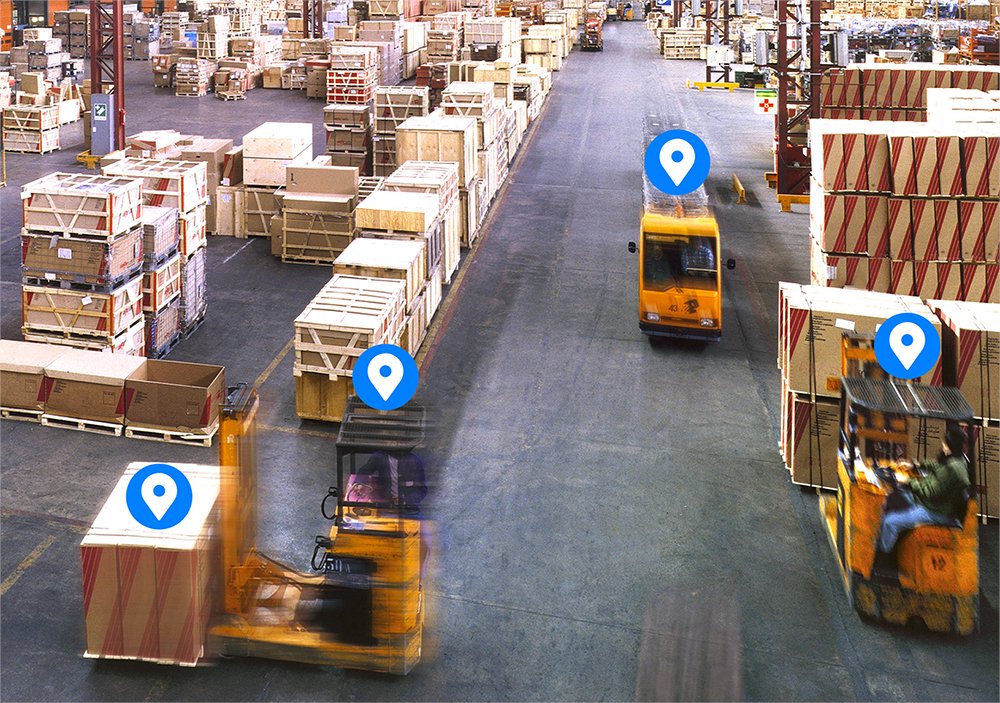
RTLS through data of the assets can help in optimal use and inventory stocking. With this, it enables better asset tracking, and material handling systems, reducing accidents and asset losses. Multiple activities can be monitored at once — supply chain, warehousing, transportation, etc so it can thus streamline processes and increase customer satisfaction.

Manufacturing

In Manufacturing Industry, workers’ data on their location and wearable sensors collect data about their health parameters that can be analyzed against standard parameters to predict behavior patterns and improve their productivity along with preventing workers’ injuries and ensuring safety. With this, by leveraging location data with IoT data, manufacturers can better sense the manufacturing and supply chain processes, improve demand forecasting, and achieve faster time to market.

Healthcare

In the Healthcare industry, RTLS through data collection on medical equipment location and usage and staff and patient interactions can ensure compliance reporting by gathering important data. RTLS data if integrated with other sources like electronic health records and maintenance management systems can be used to give comprehensive information across the healthcare enterprise leading to improvements for healthcare facilities and their patients.

No-Code/ Low Code RTLS Platform

There are some hurdles in the implementation of RTLS in any organization. Apart from the leadership hurdle, some enterprises focus on certain aspects more heavily than others. In this respect, the No-Code/ Low Code RTLS Platform is a programming platform that enables non-technical users to build applications by visual development interface and, dragging and dropping software applications. Such modular and configurable solutions can give flexibility to organizations to configure their rules and alerts according to their requirement and also lead to quick deployment.

Quotients is also engaged with matured startups that are working on this solution helping the above-mentioned as well as other sectors to greatly enhance their functioning through the acceptance and integration of new technologies into their existing systems. To know more about these and for collaboration and partnership opportunities please write to us at open-innovator@quotients.com

Categories
Innovator's Vista

Genomics with AI holds potential to transform Healthcare

Categories
Innovator's Vista

Genomics with AI holds potential to transform Healthcare

Healthcare organizations are increasingly relying on data in organizational and operational decisions. Data sharing and insight are leading to the creation of data ecosystems that can ensure that the right information is available at the right time.

Data-Driven HealthCare

As organizations shift their focus toward preventive and personalized care, data-driven health management has become important in clinical decision-making. Technologies such as machine learning, automation, deep learning, artificial intelligence (AI), neural networks, and intelligent algorithms are transforming the healthcare industry. Data is extensively being generated for predictive care-based population health initiatives, data intelligence-based internal operational decision support, and intelligent remote monitoring of patients leveraging the internet of medical things. This data is playing its role in potentially curing diseases, managing treatments, and improving patient care.

Genomics

Genomics is the study of all of a person’s genes including interactions of those genes with each other and with the person’s environment. An organism’s complete set of DNA is called its genome. Every single cell in the body contains a complete copy of the approximately 3 billion DNA base pairs. Virtually every human ailment has some basis in our genes and the availability of powerful tools can help in studying the role these genes play in complex diseases.

Genomics data combined with clinical, pharmaceutical, and lifestyle information, can help in the discovery of early signs of disease and the risk of developing the disease. It is also possible to find out underlying causes of clinical changes, leading to more personalized, effective treatments. The diseases, such as cancer, diabetes, and cardiovascular disease can thus be diagnosed better, and more effective therapeutic strategies can be designed resulting in better decision-making for patients and tailored treatment can be devised according to a patient’s particular genomic makeup.

AI and Genomics Data

Genomic data is very complex but with the application of advanced analytics methods, potential bias, inaccuracies, and lack of trained personnel can be ruled out. The use of AI in healthcare can enhance the interpretability of genomic data into a meaningful medical asset and then to actionable clinical information

A startup, NuGenomics, is working on this use case that studies and analyses an individual’s DNA (genome), blood parameters, lifestyle information, medical history, and physical parameters to create a comprehensive picture of current and future health. It is using Machine Learning to study the Genetic basis of lifestyle and clinical disorders aimed toward the prediction, prognosis, and cure of these disorders among the Indian population. NuGenomics collects over 5 million data points per person to create a comprehensive picture of current and future health and create interventions to rehabilitate existing health conditions and avoid future conditions from occurring.

The company currently is focusing on conducting genetic tests and providing interventions to individual consumers (B2C) and corporate organizations (B2B). Nugenomics also provides a SAAS service to other health and wellness organizations.

To know more about such innovative solutions and evolving use cases in different domains along with collaboration and partnership opportunities please write to us at open-innovator@quotients.com