



Categories
Applied Innovation

How Geoanalytics is helping solve Complex Problems for Businesses

Categories
Applied Innovation

How Geoanalytics is helping solve Complex Problems for Businesses

Today, almost every company is using Geoanalytics to make better choices, whether for handling store locations, customizing marketing and sales strategies by area, maximizing foreign operations, responding to location-specific trends, improving shipping and movement of products, or any other related problems. Organizations can better comprehend complex relationships in data and analyze them by using analytics techniques that utilize geographic data.

Geoanalytics uses location-based information like locations, zip codes, GPS positions, and more in analyses for contextual knowledge and various views on the data being examined. Incorporating geo-location and other spatial information, can help businesses in obtaining a better grasp of their data and discover new insights. Geoanalytics thus provides more detailed, full perspectives of the data and allows comparisons across cities, regions, and countries, as well as to spot trends and patterns.

Benefits of Geoanalytics

There are several advantages of using geographic data. For example, Geospatial data, through data abnormalities, can alert companies to impending changes that will impact their business. It can also help companies understand why and how some areas are working well while others are not. It can also improve the effectiveness and operational efficiency of enterprises by using precise accuracy given by geospatial data.

Businesses can use geoanalytics in data visualisations to create a exact picture of what is going on and identify patterns more effectively. Heat maps and density charts, in particular, can be helpful in understanding spatial data distributions. Powerful map representations and location-based analytics can reveal vital geospatial information and uncover hidden geographic connections, resulting in improved location-related choices.

Geoanalytics benefits more than just companies and can be used by government organizations, nonprofits, and community service providers as well to find areas in need, at-risk groups, and gaps in access to care.

Use Cases of Geoanalytics

Let’s now look at some of the use cases of geoanayltics

GIS Data for Effective Physical Store Sites

Companies, understandably, battle when deciding where to locate their shops or depots. It should be carefully planned, striking a compromise between procurement suitability and improved client reach while keeping costs in mind.

Companies can use location intelligence to blend sales data with client geographical spread to determine the best location for opening up a business. Retailers have been trying and developing further to determine the regional tastes of their target group in order to drive successful retail strategies, such as finding busy hours and managing parking spaces and store employees appropriately. Furthermore, they can distinguish between lucrative and unprofitable shops using this data.

Crop Production Prediction Using Satellite Imagery

A good or poor harvest can have a knock-on impact on supply, production, and demand, throwing your running expenses into disarray. Geoanalytics is widely used by developed and emerging businesses to predict staple crop output. Satellites can determine the condition of vegetation based on its hue. This data can be converted into agricultural yield metrics using statistics and modeling methods.

Improvement of Supply and Transportation Routes

Supply and delivery firms use satellite images for route optimization to reduce transportation costs, reduce deadhead and empty kilometers, and optimize unit economies. Distribution costs can be reduced even further if the warehouse is properly situated.

The business is under enormous pressure to provide the finest possible experience to customers. Modern route optimization methods employ spatial data science, which takes into account not only storage locations but also fulfillment center locations and capabilities.

Data models can be created using the spatial analytics-based method to mimic network circumstances based on fundamental limitations. The successful implementation of such efforts leads to improved visualization of route performance, and thus in the formulation of optimum transportation plans, and the elimination of bottlenecks.

Checking the Validity of Insurance Claims Using Locational Data

The most difficult issue for insurance firms is sorting out legitimate claims from fraudulent ones. Insurance data intelligence on their clients’ information is one of the ways these businesses fight such threats. One of these is a study of spatial data to determine their clients’ risk exposure based on where they live.

Insurance companies use GIS data to track down non-credible claims, which allows them to focus their efforts on clients in desperate need and expedite claim handling. Some locations or places are more vulnerable to natural catastrophes or criminality, resulting in a larger number of claims. Customers’ locational info can be used by insurers to charge greater premiums.

Better Shared Infrastructure for All

Geoanalytics can be a significant move towards bettering citizens’ livelihoods and can be used to enhance a variety of public utilities. It can assist in carefully placed public amenities such as hospitals, schools, and police offices, which can lead to increased foot traffic and improved accessibility for the people.

The route optimization techniques discussed for logistics and warehouses can be used by government services that require transportation such as post offices, freights carry goods, ambulances, garbage collection, etc. to find the best available routes and reduce resource wastage in terms of fuels, time, wear and tear, or perishability.

Optimization of Piping Layout

Pipelines are the most efficient way to move fuels, LPG, or water sources; however, the starting cost is prohibitively high, necessitating optimization at every step of the way. Locational intelligence can be used in pipeline least-cost route analysis. As we all know, the quickest route between two locations is a straight line, but existing services and infrastructure, as well as topography (uneven terrain), make this impossible—the least-cost path analysis considers all of these characteristics, as well as environmental factors and help businesses coming to the right answer.

Are you interested in implementing geoanalytics in your company? Quotients through its partner networks offers quicker, and more affordable alternatives without the constraints of time, money, and resources. Please write to us at open-innovator@quotients.com to know more about these solutions.


Categories
Applied Innovation Healthtech

How Healthcare Can Benefit From Data Lakes

Categories
Applied Innovation Healthtech

How Healthcare Can Benefit From Data Lakes

Healthcare companies are racing against the clock to improve the efficiency of their electronic health data (EHR). As a consequence, healthcare providers need to create new analytical models in order to spot at-risk patients, avoid adverse events, and practice evidence-based medicine. The emergence of cutting-edge research and forecasting models has led healthcare organizations to use data to verify theories and improve them using these techniques.

Data-informed Healthcare Organisations

The boom in AI and machine learning capabilities, and the accessibility of high-performance, storage-efficient hardware via the Commercial Cloud have all contributed to the emergence of the data-informed healthcare organization. The entrance hurdle for data-informed intelligence has decreased as a result of the market’s recent influx of technology and talent. This has ushered in a decrease in expense and improved the learning curve propelled by market and innovation.

Having a solid data infrastructure is the first step toward becoming a data-informed healthcare company. The information must be safe while still being easily accessible to those who require it. Systems must be able to search through the data in a matter of seconds or less, also the data must be inexpensive to keep in extremely large quantities. Complex data such as JS Object Notation or pictures. must be available through common query languages like SQL.

Enter the Healthcare Data Lake, a compilation of datasets that includes clinical data from electronic health record systems, societal factors of health data, analytical output from quality assessment and risk adjustment programs, and patient claims history.

Understanding Data Lakes

When compared to the clean, processed data kept in conventional data warehouse systems, a data lake’s ad hoc character is indicated by the word “data lake.”

A data lake is a gathering of different data assets that are kept within a Hadoop ecosystem with little alteration to the original format or substance of the source data. It is not just Big Data. As a result, the data lake does not have an explicit schema-on-write. Several programs that use “schema-on-read” are used to access the data lake’s information.

Big data from numerous sources are kept in a raw, granular version in a data lake, which is a primary storage location. Data can be retained in a more flexible shape for future use because it can be stored in an organized, semi-structured, or unstructured manner. A data lake identifies the data it stores with IDs and metadata markers to speed up retrieval.

Leveraging Data Lake for Healthcare

The data lake produces one complete, consolidated source of data for healthcare companies by removing the barriers posed by siloed data sources in various forms. This must be accessible on-demand to aid a motley of clinical and business use cases.

Healthcare organizations and health plans are considering whether their general data design needs a corporate data repository, a data lake, or both.

Some businesses seek to address complicated problems with a combination of alternative and conventional implementations, and there is a market change towards mixed approaches to data management.

The challenge facing healthcare leaders is to drive member and patient involvement, enhance patient medical results, and reduce the cost curve. These organizations must have the capacity to quickly ingest and evaluate sizable quantities of data in batch or in real-time from a wide range of sources in a variety of forms in order to accomplish this.

Benefits of Data Lake for Healthcare

Healthcare companies can enhance their data with data lakes to obtain more complete, useful insights to drive therapeutic and business efforts. For example, it can assist healthcare companies to leverage clinical data in order to find populations or diagnoses that may be under-reported for risk and quality initiatives. Additionally, it can provide access to real-time clinical data to care managers, allowing them to effectively prevent unnecessary emergency room visits, hospitalizations, and so on.

Data lakes can also aid in the integration of useful clinical results into provider report cards, as well as the tracking of opiate prescription trends to spot potential patient safety concerns and discover instances of fraud, waste, and abuse. Benefit design, network, and quality efforts can all gain from evaluating member care-seeking trends using data lakes.

We have innovators working to expedite data-centric techniques which enable biopharma and medical technology firms to provide cost-effective treatments to patients more quickly. Please contact us at open-innovator@quotients.com if you want to learn more about such solutions.

Categories
Applied Innovation Healthtech

Improving Healthcare with Clinical Data Intelligence

Categories
Applied Innovation Healthtech

Improving Healthcare with Clinical Data Intelligence

Clinical Data Intelligence for Life Sciences solutions is making data gathering and categorization effective and intelligent, lowering mistakes and speeding up submissions.

In the age of machine learning, artificial intelligence, and semantic data pools, no nugget of information is wasted. The healthcare sector has advanced significantly in clinical decision support and predictive analytics in just the last few years.

As Data are becoming more accessible in the healthcare sector as opposed to a siloed strategy. The use of technology and data and data-driven value creation is now being witnessed throughout the network. Healthcare organizations now have the chance to better leverage data, improve patient care, and increase revenue while handling increasing risks in patient privacy and data security as new data technologies with advanced intelligence capabilities become available.

With businesses investing more in population health management and accountable care, the use cases for big data are multiplying quickly, and consumers are keeping up with the demand for affordable services that take advantage of the ease of their preferred applications and devices. This results in better treatment outcomes, individualized care, and preventive interventions. We would be discussing some of the emerging use cases going forward.

Preventive Healthcare: Preventive Healthcare is one of the use cases for clinical data intelligence. It enables experts to identify dangers early and take preventative measures. Through the use of data science techniques like AI and machine learning, wearables and other tracking devices that gather and track data are producing forecast models that can correctly identify a person’s health risks and enable carers to take preemptive action. It is feasible to anticipate and avoid chronic cardiac conditions, autism meltdowns, etc. by utilizing genetic and historical data.

Data-Driven Care: Data science technologies can make uses like medical image analysis and pathology reports that read with high precision possible because a large number of patients perish each year as a result of diagnostic mistakes. To analyze and understand X-rays, MRIs, mammograms, and other imaging studies, as well as to spot trends and identify illnesses, data models and algorithms can be created. This will increase output and aid doctors in making correct diagnoses.

Individualized Care: A one-size-fits-all strategy for medical care and medication is also now considered ineffective. The ability to monitor individual data and improvements in gene technology are enabling customized medicine. Based on a patient’s prior medical history, gene markup, and current data, machine learning, and deep learning algorithms can now help a doctor determine whether a specific drug will be effective for the patient.

Lowering Costs: Insurance firms are putting weight on healthcare organizations to improve therapy outcomes in order to lower readmissions. Longer personal care is a consequence of bed shortages in some nations. By enabling doctors to remotely monitor their patient’s vital signs, receive alerts when conditions deteriorate, and take appropriate action when required, data science and intelligence can significantly assist in resolving these problems.

Drug discovery: Drug development and clinical studies are lengthy, expensive procedures. Data intelligence tools can aid scholars in the analysis of huge data sets and in the creation of computer models for various tests. Additionally, text mining can assist medical academics by automatically reviewing thousands of web resources and performing analytical processing quickly to give the required information. Clinical trials will use data science apps to accelerate findings and reduce costs.

Thus providing companies with cutting-edge capabilities can improve care, accomplish improved treatment outcomes, increase patient experience, and make new discoveries in drug discovery, data science, and intelligence will have a major influence on the future of the healthcare sector.

However, healthcare companies are still having trouble mastering descriptive analytics, particularly when valuable insights call for a variety of data sources. Despite the data-driven promises, the majority of healthcare companies still have a lot of work to do before they can turn their growing big data analytics skills into actually usable clinical information.

Are you interested in implementing data science and intelligence in your company? Quotients through its partner networks offers a quicker, more affordable alternative. Using advanced data science technologies like AI, machine learning, deep learning, etc. without the constraints of time, money, and resources is made possible by our solutions. Please write to us at open-innovator@quotients.com

Categories
Applied Innovation Industry 4.0

How AI is impacting the textile industry

Categories
Applied Innovation Industry 4.0

How AI is impacting the textile industry

The textile industry is looking for high-quality low-cost strategies to differentiate itself and take production ROI into consideration due to growing competition led by high labor expenses.

Problems with the manual approach

Most of the time, in the textile industry, inspecting yarn is done manually, which takes a lot of time and work. Operators stationed at various lines do the check, they have to pick up a variety of goods at random and examine them with their unaided eyes. They determine the fibers’ grade by visual inspection and separate them accordingly. Due to this manual approach wide variety of faults, including stains, deformation, knots, broken yarn, splitting, fuzzy edges, and incorrect color, missed inspections are also rather prevalent. Rule-based vision systems are prone to high rates of incorrect detections and require manual double-checking when errors are irregular or occur in large numbers. Yarn inspection requires a more dependable approach in order to increase labor productivity.

AI-powered solution

Using an AI-powered solution several kinds of yarn flaws may be detected and identified through picture analysis. The AI model can swiftly and precisely find faults to increase detection rates and manufacturing output while lightening the load on manual inspection. The technology can continue to refine the AI recognition process as the amount of accessible data grows and enable the speedy transfer of training results into multiple manufacturing lines.

This involves the use of an appearance tester that tests the samples of yarn taken from the lab. Vectors are defined and utilized as network inputs, and sample photos are taken and preprocessed. Then feed-forward neural networks are employed that had been trained using the back-propagation rule. Better outcomes may be achieved by using a multilayer neural network in conjunction with picture enhancement to estimate various yarn metrics. As a result, a modeling system may be effectively constructed.

Artificial intelligence (AI) can also be used in forecasting yarn properties and dye recipes. By analyzing past data on dye recipes and their outcomes and extrapolating this understanding to the characteristics of new dye recipes, AI may also be used to predict the quality of dye recipes. Machine learning algorithms or other types of AI techniques may be used to achieve this. To identify trends and forecast results, one method is to employ machine learning algorithms, which can be trained on vast datasets of yarns, textiles, and dye recipes. A machine learning model, for example, may be trained on a dataset of fibers with known attributes, such as strength and fineness, in order to predict the characteristics of new fibers. Similar to this, a machine learning model that has been trained on a dataset of well-known yarn attributes like tensile strength and elongation may be used to predict the properties of new yarns.

The advantages of implementing a machine vision system include an inspection accuracy of about 98 percent and each product may be inspected. Overall, the use of AI for yarn property prediction, fiber grading, and dye recipe prediction may assist manufacturers in improving the quality and effectiveness of their processes, resulting in significant cost savings and improvements in product performance.

Our innovators have developed solutions for computer vision for inspection and forecasting yarn properties and dye recipes. Some of these solutions have been successfully implemented at different levels. Please write to us at open-innovator@quotients.com to know more about these solutions.

Categories
Applied Innovation

How Smart Contracts can transform Traditional Financial Services

Categories
Applied Innovation

How Smart Contracts can transform Traditional Financial Services

Smart contracts

Smart contracts are essentially programs that run when certain criteria are satisfied and are recorded on a blockchain. They are often used to automate the implementation of an agreement so that all participants may be confident of the conclusion instantly, without the participation of an intermediary or time lost. They can also automate a workflow by automatically activating the next activity when certain circumstances are satisfied.

Smart contracts operate by executing basic “if/then” statements encoded into blockchain code. When preset circumstances are met and validated, a network of computers conducts the activities. These activities might include transferring payments to the proper parties, registering a vehicle, providing alerts, or issuing a ticket. Only those who have been granted permission can see the results.

A smart contract can have as many specifications as necessary to reassure the participants that the work will be executed correctly. Participants must identify how transactions and associated data are represented on the blockchain, agree on the “if/when” rules that govern those transactions, investigate all conceivable exceptions, and design a framework for resolving disputes in order to set the terms.

The smart contract can then be coded by a developer; however, firms that use blockchain for business are increasingly providing templates, web interfaces, and other online tools to facilitate smart contract construction.

Benefits of smart contracts

Smart Contracts are a faster, cheaper, and more secure way of executing and managing agreements. Some other benefits of smart contracts are discussed here:

  • Accountability: The participants know the same information at the same time, which reduces the possibility of contract clause manipulation. Because smart contracts are built on blockchain, they ensure the immutability of data, allowing contracts and agreements to be created without the need for the parties to know each other and preventing potential violations of conditions or mistakes in contract administration and implementation. This openness provides the parties with security and confidence since the data and information relevant to the contract are available to them during the contract’s life cycle, and transactions are copied so that all parties involved have a record.
  • Autonomy: Smart contracts do not require trusted third parties or human participation in the process, allowing the parties autonomy and independence. This intrinsic property of smart contracts provides additional benefits such as cost savings and increased process speed.
  • Cost-cutting: This benefit is also associated with the removal of middlemen. The related expenses are minimised since there is no need to rely on a third party to verify the terms of the contract and offer the required trust. Intermediary costs are eliminated in this sort of contract.
  • Speed: The elimination of intermediaries lowers both the economic and time costs. Because it is done automatically, it takes less time than contracts done manually and in the presence of a third party.
  • Updates performed automatically: Because of its technical and autonomous character, the contract conditions are automatically altered and updated, eliminating not only the need for intermediaries but also the need for new processes to carry out these revisions.

Application of Smart Contracts in Financial services:

Smart contracts contribute to the transformation of traditional financial services in a variety of ways. In the case of insurance claims, they verify for errors, route them, and then send compensation to the user if everything checks up.

Smart contracts include essential bookkeeping capabilities and reduce the potential of accounting record intrusion. They also allow shareholders to participate in decision-making in a transparent manner. They also aid in trade clearing, when payments are transmitted once trade settlement amounts have been computed.

Smart Contracts in Warehouse Receipt Lending:

To improve and sustain the living conditions of marginal farmers by bringing negotiation and reducing various agriculture-related frauds, a blockchain-backed lending platform can play its role. It can help banks reduce the fraud risk in Warehouse receipt Finance and provide timely access to credit to Farmers and other stakeholders. This may assist farmers in obtaining the best price for their crops during harvesting. Lending can be done through a consortium that includes financiers, banks, and other stakeholders. On a single platform, the blockchain network with mobile app links banks, warehouses/collateral managers, and borrowers. Using blockchain’s tokenization and immutability capabilities, the network decreases lending risk for banks while smart contracts enable other participants boost efficiency.

We have innovators working on this use case and it is being implemented at different levels. To know more about it please write to us at open-innovator@quotients.com

Categories
Applied Innovation

Automation Transforming Offices, Hotels, and Homes

Categories
Applied Innovation

Automation Transforming Offices, Hotels, and Homes

Automation refers to technological applications in which human involvement is minimized. Basic automation automates simple and fundamental operations. This degree of automation is concerned with digitizing labor by utilizing technologies to expedite and consolidate everyday operations. Basic automation includes business process management (BPM) and robotic process automation (RPA), IT automation, and personal applications such as home automation, and others.

Types of Automation

Process automation increases productivity and efficiency in firms by providing new perspectives on corporate difficulties and delivering solutions. Process automation includes workflow automation and process mining.

Another form is integration automation, in which computers replicate human jobs and repeat the behaviors once the machine rules are defined by people. People have characterized digital employees in recent years as software robots trained to collaborate with humans to execute certain jobs.

With the introduction of AI in automation, robots can now learn and make decisions based on previous scenarios that they have experienced and studied. Virtual assistants powered by AI, for example, are widely employed to save costs while empowering both consumers and human agents.

Automation is being implemented at Home, Office, and Hotel Automation as it offers several advantages like effective management from one place, maximizing security, and Increased energy efficiency. It also helps improve appliance functionality by providing management insights.

Home automation

Smart gadgets are now assisting in the development of the best home robotization frameworks and controls. Home automation technologies are altering how people live and interact with their houses.

The “Internet of Things,” or IoT, is made up of home automation systems and controls. The Internet of Things (IoT) is a system that allows smart devices to communicate with one another. This system uses the internet and wireless connections to sync devices and conduct tasks. Smart devices are ordinary home items that have sensors and connectivity built in. These sensors assist the device in gathering information about how people use it. The gadget then sends the data it has gathered to other smart devices to help them with its work. This information exchange is what gives rise to the Internet of Things.

Office Automation

Office automation is used to meticulously create, store, control, and transfer office data and information that is required for basic automation and goals. It enables business associations to improve their efficiency and recognize simpler ways to collaborate in benefits. Office automation, which began primarily as a data handling and word processing device, now includes more modern and complex tasks such as coordinating front-office and back-end systems. It aids in the advancement of current office strategies by saving time, money, and human effort. Office automation also provides various benefits such as better data storage and manipulation, data management, data exchange, accuracy, time and resource savings, and cost savings.

Hotel Automation

Hotels are just the most recent area to join administration offices to improve client experience and productivity as a result of automated innovation. Hotels can incorporate the use of automated processes in a variety of ways. Automation in the hotel industry is quickly becoming a must in order to provide competent yet high-quality service. Reasons to use a Hotel Automation System include lower management expenses, increased safety, and comprehensive control over the building.

We have solutions for home, office, and hotel automation solutions to transform any property into a smart, luxurious place and to significantly improve users’ living comfort and well-being while reducing energy consumption and achieving a sophisticated high-performance property.

We custom-integrate the most advanced electronic hardware and software to deliver superior-quality automation solutions that allow you to easily perform complex tasks – literally putting room control at your fingertips.

For additional information on such solutions and emerging use cases in other areas, as well as cooperation and partnership opportunities, please contact us at open-innovator@quotients.com

Categories
Applied Innovation Industry 4.0

Drones for inspection of challenging internal environments

Categories
Applied Innovation Industry 4.0

Drones for inspection of challenging internal environments

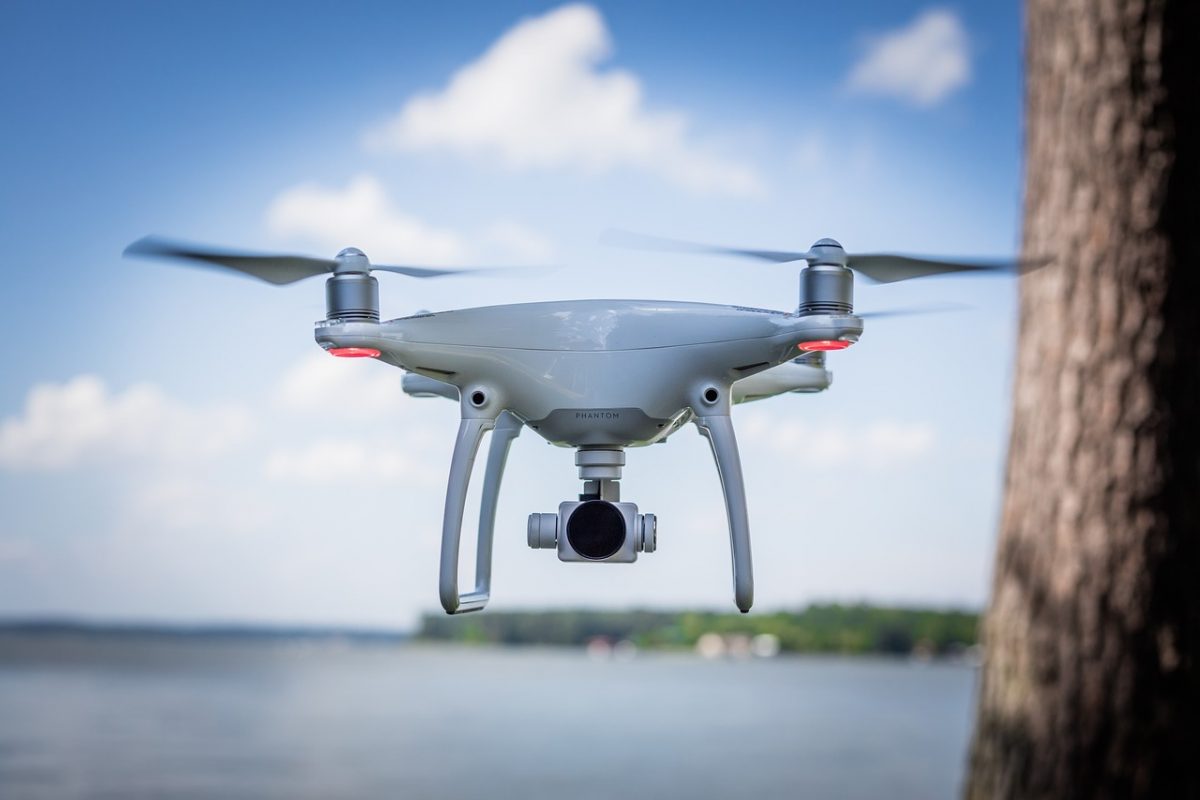
Visual inspections are required as part of most industries’ maintenance procedures. Using a drone to capture visual data on the state of an asset can assist inspectors in avoiding unsafe circumstances, lowering risk, and drastically lowering cost.

High-resolution Video Checks

Drones have several other advantages such as high-resolution video checks. This allows for more efficient and cost-effective examination of difficult-to-reach places such as pipelines and structures, eliminating the need for costly approaches such as rope access and scaffolding. Captured high-quality images may be used to conduct extensive condition evaluations.

Thermal Imaging

Thermal imaging may also be performed by drones. Inspections may be done in a highly effective and timely manner using aircraft-mounted thermographic imaging technology. Potentially dangerous hot spots that might lead to unanticipated downtime and maintenance can be identified promptly.

Photogrammetry

Another approach utilized by drones for inspection is photogrammetry, which produces the most precise data for 3D modeling and dimensional mapping for volumetric calculations. This significantly improves comprehension of an asset’s status to aid decision-making.

Fields of Application

Offshore projects are generally viewed as severe and demanding, and it is critical to limit errors and loss of production at both the installation and the inspection equipment to a minimum. For instance, a flare inspection on an oil-and-gas platform where the flare is still operational. The drones can here capture image- or thermographic data about the flare’s status while production continues unimpeded.

Drone inspection may also be used for onshore structures such as bridges on land, linking islands, or crossing divides in a landscape. Also for inspection of towering buildings such as wind turbines, where the drone obtains high-resolution photographs of potential flaws, allowing for detailed planning of repair work as the data obtained will assist avoid unpleasant surprises during the maintenance period.

Drone inspection is also useful in confined locations such as power plant boilers, fuel storage tanks, and so on. Visual inspections are desirable, but there are significant problems when deploying drones in limited locations. Drones, on the other hand, can provide good picture quality with real, natural colors by employing strong LED lighting.

Every day, workers all across the world evaluate dangerous interior places. Drones can thus undertake surveys of difficult inside settings more securely, economically, and effectively than human inspectors; thus, the time has come to transition to drones for internal inspection.

We have solutions for drone inspection that can be used in sectors like Renewable energy, the Oil and Gas Industry, Cement Industry, Mining Industry, and other traditional manufacturing industries.

For additional information on such solutions and emerging use cases in other areas, as well as cooperation and partnership opportunities, please contact us at open-innovator@quotients.com

Categories
Applied Innovation

How AI can impact Maritime Logistics?

Categories
Applied Innovation

How AI can impact Maritime Logistics?

Investing in communication technologies has provided several benefits for shipping firms. Most ships have grown into remote offices at sea, providing the captain and crew with dependable Internet connectivity, virtual networks, email, route planners, and a variety of other technologies and applications. Further investing in innovative technologies can enhance regular vessel operations while also lowering corporate expenses and optimizing business processes.

Machine Learning enables users to use sophisticated algorithms and analyze data, which aids in guiding the logic of potential issues in marine transportation. These approaches may be used for maritime network design, trip planning, cargo optimization, maintenance processes, and other areas.

Machine learning, a branch of Artificial Intelligence, relies on working with small to large datasets by examining and comparing the data to find common patterns and explore nuances. It enables the use of intelligent algorithms and the evaluation of data, which aids in guiding the logic of potential issues in marine transport. These algorithms may be applied to maritime network design, trip planning, cargo optimization, and other applications.

The intelligence of ML algorithms, combined with industry knowledge, has the potential to provide a significant advantage to shipping companies that first adopt them in their operations. The bigger the investment in AI/ML, the more advantage from their big data analysis capabilities as ML algorithms can handle data from the whole history of a vessel’s operation.

Advanced Machine Learning algorithms will be capable of enhancing trip optimization, such as fuel economy, crew performance, voyage cost estimates, calculating the ideal route in a minute, and providing advice on speed, course, and so on. ML algorithms, for example, may be used to estimate fuel usage based on engine data and vessel parameters. These algorithms enable the transformation of massive amounts of noisy sensor data and other onshore data into organized information that may be used to anticipate fuel usage and map ideal paths for boats.

As data is a critical component for removing uncertainty, adopting ML algorithms can assist to boost the usual data that might be critical for shipowners. Data mining in the marine industry has been quite restricted thus far. As a result, as compared to other industries, the deployment of ML approaches in marine transport is restricted. Taking this into consideration, our innovators have created solutions incorporating edge platforms, machine learning models, onboard sensors, and application software. We have solutions for Predictive Scheduling, Container Positioning Organization, Voyage Planning and Route Forecasting, Fuel Consumption Optimization, and Predictive Maintenance.

We would be pleased to hear from you and would want to discuss potential partnership opportunities. Please write to us at open-innovator@quotients.com


Categories
Applied Innovation Industry 4.0

How Microfactories will transform Manufacturing?

Categories
Applied Innovation Industry 4.0

How Microfactories will transform Manufacturing?

A microfactory is a small-to-medium-sized, highly automated, technologically advanced manufacturing setup with a diverse set of process capabilities. It is often a production facility, the output of which may be scaled up by reproducing such setups in huge numbers. Because of the high-tech automated operations, microfactories use less energy, less material, and a smaller workforce. The microfactory idea also encourages the shrinking of manufacturing equipment and systems based on product dimensions. This helps to reduce the size of the plant, which requires less capital and decreases operational expenditures.

As micro-factories proliferate over the world, they will establish a uniform style of working and running, resulting in global production unity. On Similar lines to Cloud computing, Cloud manufacturing, a new production idea that converts traditional manufacturing resources into services and makes them available via the Internet by utilizing cloud computing, the Internet of Things (IoT), and virtualization is emerging. As companies like AWS offer standardized platforms on which a wide range of services and applications run, cloud manufacturing in the near future will have corporations supplying standardized micro-factories that handle the majority of contemporary industrial output.

Manufacturing as a Service (MaaS)

Cloud Manufacturing also referred to as MaaS or Distributed Production is one of the most significant opportunities made available by widespread company digitalization. It enables organizations to focus on product innovation while outsourcing the actual process, as well as crucial services and technology, to an outside party by using new technologies and linked services to improve production efficiency and business leanness.

Manufacturing as a service is the production of commodities using a networked manufacturing infrastructure. To put it another way, manufacturers utilize the internet to share production equipment in order to cut costs and produce better goods.

Just as cloud computing allows for instant access to pooled computer resources such as software, hardware, and data, similarly MaaS is driven by Cloud networked manufacturing. The cost of manufacturing infrastructure—machines, maintenance, software, networking, and other costs—is shared by all consumers. For starters, this results in cheaper production costs, more uptime for each machine, and increased manufacturing capacity for each organization.

These MaaS platforms are rapidly gaining traction in key industries such as automotive, aerospace, health care, and military. Major industrial enterprises have begun to use these platforms as well.

Our innovators have developed a new business model around MaaS that is expected to have a deep effect on the global manufacturing sector. We offer manufacturing services with complete visibility with significant lead time and capacity that is available for both startups and industries. CCTV camera-based machine vision capabilities assist in visualizing production processes digital twin and automate production data capture, monitoring, and analysis.

We would be delighted to hear from you and would like to discuss the opportunities for collaboration. Please write to us at open-innovator@quotients.com

Categories
Applied Innovation

Robotic & Autonomous Systems for Homeland Security

Categories
Applied Innovation

Robotic & Autonomous Systems for Homeland Security

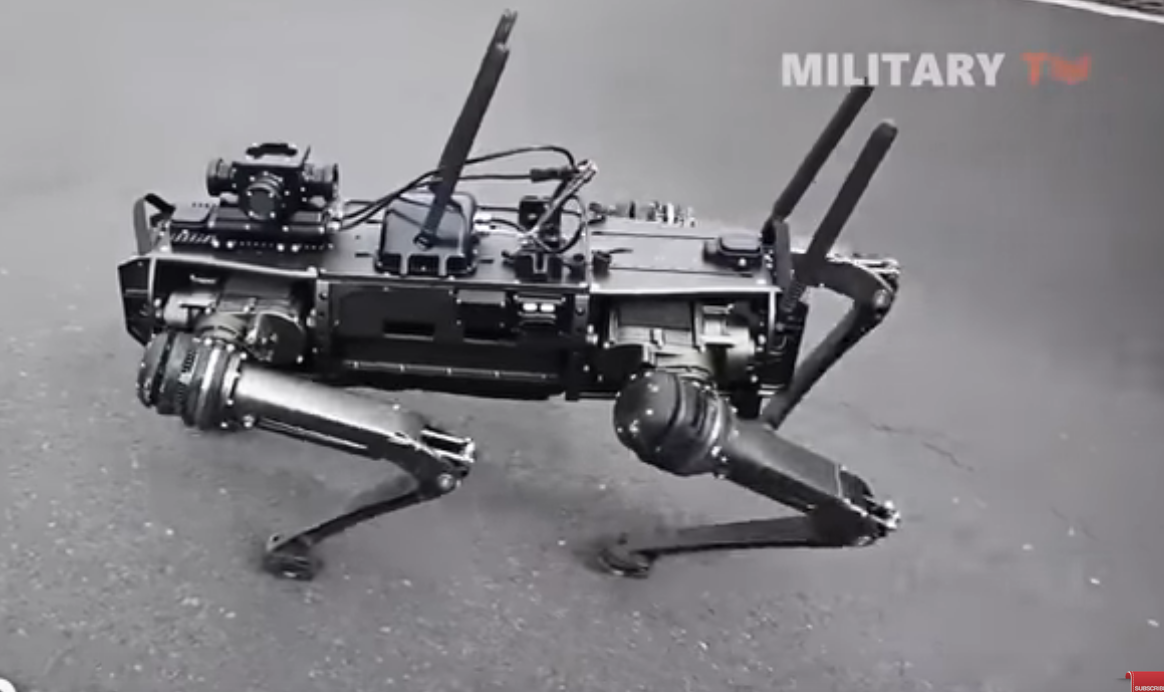
Robotic advancements are anticipated to continue to revolutionize military equipment and tactics, and robotic systems for troops are becoming a reality. Concepts such as using these robots for border monitoring are also being investigated, with the devices being able to roam freely or be directed remotely, delivering live video feeds to controllers.

Soldiers are increasingly relying on technology such as robots to save lives. Military robotic (unmanned) devices have revolutionized the battlefield. Many countries’ military arsenals now include unmanned systems, which are utilized on land, at sea, and in the air. They are frequently utilized for reconnaissance and striking missions in high-risk situations.

Off-road, robotic, and autonomous solutions are available from Robotic & Autonomous Systems for military (land warfare), paramilitary, national security forces, and commercial markets. Some alternatives are being considered to improve the maneuverability, survivability, and lethality of the force.

Multi-Purpose Combat Vehicle (MPCV)

The Multi-Purpose Combat Vehicle (MPCV) is a ground-based defense vehicle with a short range. It can automatically execute a variety of actions on the battlefield without the need for human help or involvement, lowering the danger to soldiers and improving their capabilities on the ground. It can be utilized by homeland security units during riots, as well as by police units in high-threat and counter-terrorist urban environments.

It is employed for unmanned and autonomous day and night surveillance, weapons mounting, situational awareness, casualty evacuation, and carrying and delivery of operational cargo in deserts, plains, and high altitude/mountain terrain.

High-payload Autonomous Robot

High payload autonomous robot capable of transporting payloads over long distances. It has a high level of autonomy and can handle weapon mount logistical transportation, medic support, and other combat field needs. It can travel in swarms and has automated person/leader tracking and auto-target lock functions to save troops time and resources on the battlefield.

Autonomous Monitoring Robots

An autonomous surveillance and reconnaissance robot may move about independently and offer real-time tactical intelligence to the operator based on real-time video analytics data and sensor data. It has encrypted communication, a laser designator, and an optional gun mount for remote action.

Terrain Rovers

A terrain robot can be utilized in difficult, risky, and demanding applications such as IED disposal, demining remote surveillance, and reconnaissance on rocky terrain, steep slopes, and shallow seas. It can normally carry up to 500 kg of cargo and has a 45-degree climbing capability, a 2-kilometer remote range, and an 8-hour run duration. It may be employed for mission-specific activities in remote-controlled and autonomous modes.

System of Autonomous Weapons

A cutting-edge autonomous weapon station can track more than 20 targets at once and lock on to any target within a second for fire. Homeland security units and other mounting stations may utilize it to deliver a fully situational aware defender system that uses deep learning to identify and kill threats in seconds. The weapon station can rotate 360 degrees and tilt 180 degrees at the same time, and it can also carry barrel launchers.

Protective Vision Devices

360-degree situational awareness is provided by an armor vision system that delivers information about the objects and persons in the armored vehicle’s vicinity and tracks them in real-time. It may be utilized by the army, homeland security, and police forces in high-threat and counter-terrorism scenarios in urban environments. The device is a mix of a high-precision optic system – thermal cameras and RADARs installed precisely – and a parallel computer architecture that allows the system to locate – track – and alert the user to any situational hazard.

System for determining gunshot direction

State-of-the-art gunshot direction finding technology capable of pinpointing the position of the sound source with extraordinary precision of 5 degrees and distance of a range of 1500 meters. At a refresh rate of 1000 Hz, the system uses advanced digital data processing and basic physics to determine the direction and distance of the gunshot from the sensor. The total system consumes less than 50W of electricity, can be placed on small, medium, or big vehicles, and can be set up in less than 5 minutes. The device can distinguish between different gunshots and may be programmed to watch only specified gunshots or frequencies.

We have such high-performance systems available for use in homeland security. Some of our clients have already successfully used our robotic systems. We would be delighted to hear from you and would like to discuss the opportunities for collaboration. Please write to us at open-innovator@quotients.com