




Categories
Applied Innovation

Revolutionizing Knowledge Management Systems with AI and Generative AI

Categories
Applied Innovation

Revolutionizing Knowledge Management Systems with AI and Generative AI

Knowledge Management Systems (KMS) have become critical for high-performing businesses in today’s quickly changing business technology environment. With the combination of Artificial Intelligence (AI) and Generative AI (Gen AI), these systems are being turned into super-powered tools that expedite workflows, increase productivity, and give a competitive advantage.

The Power of Knowledge Management Systems

Knowledge Management Systems are designed to store, organise, and retrieve information, ensuring that employees have access to the facts they require to make sound choices. High-performing businesses use KMS differently than their mid- and low-performing peers, utilising these systems to provide insights for business choices and automating procedures. These firms may improve their efficiency, productivity, and innovation by integrating diverse data sources and using AI solutions.

A strong KMS is the cornerstone of all knowledge management activities. Using technology to simplify workflows and avoid duplication of effort is critical for increasing productivity and efficiency. Furthermore, integrating decarbonisation initiatives with corporate objectives via KMS can improve customer experience and service quality. Measuring the performance of these systems using metrics like before-and-after analysis is critical for continual improvement.

Metrics for Success

Implementing AI-powered knowledge management necessitates careful evaluation of numerous parameters. Access to data and information is critical for all stakeholders, including workers, agents, and partners. Making sure that information is intelligible and available in several languages increases its efficacy. Regular interaction and feedback assist to assess the use of information, ensuring that it is used efficiently and effectively.

Modern customers expect rapid and simple access to information, necessitating the creation of succinct, current content. This method addresses the current trend for concise information, making it easier for users to digest and implement what they learn.

The Impact of AI and Gen AI on Knowledge Management

The integration of AI and Gen AI into knowledge management systems represents a substantial shift in data handling. Historically, information was spread across several platforms, making it difficult to digitise and automate. Today’s focus is on consolidating and comprehending this data in order to develop accurate, personalised, and predictive information. AI and Gen AI have the ability to transform knowledge management across many industries, including healthcare, where compliance and security are critical.

AI usage in healthcare differs between primary, secondary, and tertiary care settings. Primary healthcare makes the most extensive use of AI to increase patient happiness, but tertiary healthcare, which involves higher-risk treatments such as surgery, is slower to embrace because to the inherent hazards. AI in the diagnostic sector, notably for image processing and prediction, serves as a clinical decision support system, although regulatory limitations and the technology’s “black box” nature pose obstacles.

Key Components of a Successful Knowledge Management Strategy

A effective knowledge management strategy is built on several critical components, including information accessibility, a people-centric approach, and technological integration across several applications and systems. Gen AI may assist gather and construct data repositories from a variety of sources, but it must be thoroughly tested to assure accuracy, especially in key industries like healthcare and cosmetics. Trust in Gen AI systems will grow as they mature, potentially providing suggestions for healthcare professionals.

Data security and feedback loops are critical to ensuring the integrity and efficacy of AI-driven KMS. Protecting sensitive information involves validating and regulating data access, as well as adopting encryption and other security measures. Regular user input helps to fine-tune AI models, boosting their performance and dependability.

Overcoming Challenges in Knowledge Sharing

Implementing Gen AI-powered knowledge management systems is not without hurdles. Data silos, which separate information between distinct departments or organisations, can restrict the flow of knowledge. Furthermore, human reluctance to share information, which is motivated by variables like as rivalry, fear of losing hierarchical rank, or job security concerns, creates a considerable obstacle.

Addressing these difficulties necessitates a culture shift towards information sharing, spearheaded by leaders. Leaders must set the example by making data-driven choices and encouraging cross-collaboration. Recognising and rewarding employees for their contributions to the knowledge database can help to build an open and collaborative environment.

Adoption by Startups

Startups, too, may profit from AI-powered KMS. It is critical to assess the requirement for such systems in relation to the size and type of the firm. Starting small and focussing on high-impact tasks can help startups progressively incorporate KMS into their operations. Crowdsourcing expertise and utilising real-time data can help improve decision-making and future learning.

The Future of AI in Enterprises

As AI tools such as analytics and machine vision become more widely available, firms must develop high-impact growth plans. Starting small and iterating based on feedback enables businesses to learn and adapt. AI-powered knowledge management solutions for businesses with proprietary and confidential data handle privacy issues by using light models with low hallucination rates.

These systems handle a wide range of data formats, including documents, videos, audio files, and tables, and they enable real-time connections between libraries and sources. These systems improve overall knowledge management efficiency by allowing for real-time changes while also maintaining transparency, dependability, and data security.

Document Intelligence Solutions Gaining Importance

Document intelligence technologies are becoming increasingly vital for managing unstructured data while maintaining high accuracy. These methods provide transparency and dependability via correct document indexing, chunking, hierarchy map generation, and Knowledge Graph building. Data security is prioritised in on-premises or private cloud systems that use role-based access control.

These technologies may be used for smart operations as well as financial and ESG data analytics. In smart operations, AI-powered assistants may handle customer support issues by analysing technical papers and replying to enquiries. Structured data helps financial analysts do research and create reports.

Takeaway:

The integration of AI and Gen AI into Knowledge Management Systems is transforming the way businesses manage and utilize information. By addressing challenges such as data silos and human reluctance to share knowledge, and by fostering a culture of collaboration, companies can harness the full potential of these advanced technologies. As we move forward, the continuous evolution of AI-driven KMS will undoubtedly play a pivotal role in driving innovation, efficiency, and success across various industries.

Contact us at open-innovator@quotients.com to schedule a consultation and explore the transformative potential of this innovative technology.


Categories
Applied Innovation

The Rise of AI-Powered Coding: Transforming Software Development

Categories
Applied Innovation

The Rise of AI-Powered Coding: Transforming Software Development

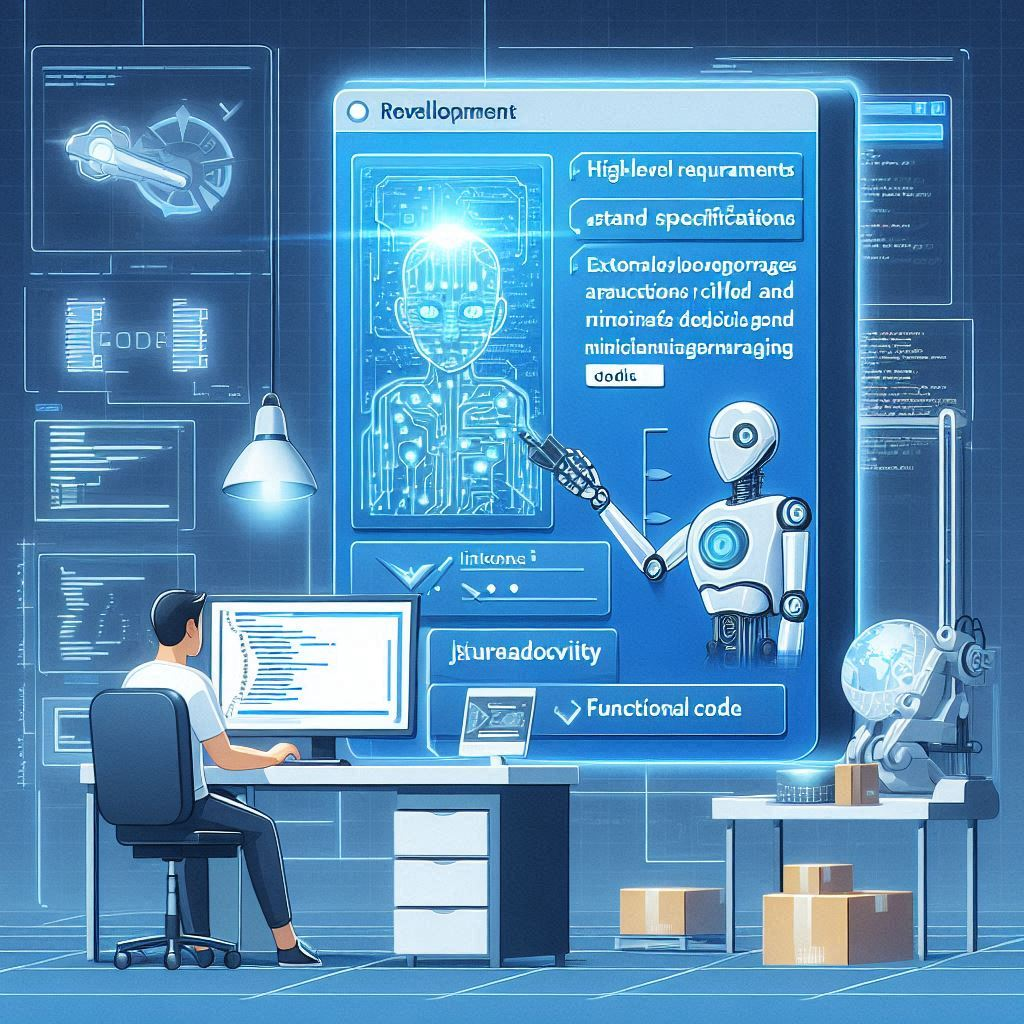
The software development landscape has changed dramatically in recent years, owing to the fast evolution of artificial intelligence (AI) technologies. This article investigates the current status and future possibilities of AI in the world of coding, focussing on how AI is transforming the software development process, the problems it poses, and the skills developers will need to succeed in this new era.

The Impact of AI on Coding Practices

AI-powered coding tools have emerged as major changers in the software development space. These technologies, which use Large language models and machine learning techniques, may generate code snippets, complete partially written code, and even create full functions based on natural language descriptions. Industry experts point out that existing AI technologies can create code with up to 80% correctness, considerably speeding up the development process.

However, it is important to emphasise that human interaction is still necessary, particularly for the remaining 20%, which frequently requires sophisticated logic, edge situations, and integration with current systems. AI can make writing code easier, but it still needs human supervision to manage and maintain historical code, find and debug flaws, and make complicated judgements.

Emerging AI-Powered Coding Solutions

Several creative firms are pushing the frontiers of AI in software development. These organisations are creating tools to automate various stages of the software development lifecycle, from basic code creation to testing and deployment.

Some solutions rely on artificial intelligence to automatically find and resolve code errors and security vulnerabilities. These technologies interface with common development environments and serve as centralised platforms for code governance, allowing businesses to enforce specific best practices and regulations throughout their entire codebase.

Other AI-powered systems may create complete code for web and mobile applications, including database design and deployment scripts. These platforms attempt to make app creation more accessible by allowing non-coders to create fully working applications without writing a single line of code.

Furthermore, AI agents for automating software testing are gaining popularity. These tools may construct complete test cases based on the API documentation, possibly saving developers significant time and effort in the quality assurance process.

Challenges and Limitations

While the potential for AI in coding is enormous, some obstacles and constraints must be addressed:

  1. Code Quality and Security: Maintaining the quality and security of AI-generated code is a major challenge. Tools that can create code while adhering to best practices and security requirements are needed.
  2. Context and Customisation: AI tools must be able to recognise the unique context of each project and follow company-specific coding standards and procedures.
  3. Overreliance on AI: There is a concern that developers may become too reliant on AI technologies, perhaps resulting in a loss of essential coding abilities.
  4. Integration with Existing Processes: Integrating AI technologies into established development workflows and obtaining team buy-in can be difficult.
  5. Accuracy and Hallucinations: AI models can occasionally generate inaccurate or illogical code, referred to as “hallucinations.” Developers must be careful and validate AI-generated code.

Future Trends in AI-Powered Coding

Several trends are likely to shape the future of AI in software development:

  1. Increased Automation: AI is predicted to automate more components of the software development lifecycle, including requirement collecting, deployment, and maintenance.
  2. Improved Code Governance: AI technologies will play a bigger role in enforcing code standards, detecting possible vulnerabilities, and assuring security and regulatory compliance.
  3. AI-powered no-code and low-code platforms: AI-powered no-code and low-code platforms will advance, enabling non-technical people to construct complex apps.
  4. Improved Testing and Quality Assurance: AI will continue to improve automated testing capabilities, possibly saving time and costs for QA operations.
  5. Personalised Development Environments: AI assistants might emerge to give personalised coding services based on a developer’s style and preferences.

Skills for the AI-Augmented Developer

As AI continues to alter the coding landscape, developers must modify their skill sets to stay relevant. In the AI future, developers will need to focus on many essential aspects.

  1. Strong Foundation in Programming Fundamentals: Despite AI aid, a thorough grasp of programming ideas, data structures, and algorithms is still required.
  2. Problem-Solving and Critical Thinking: The capacity to dissect difficult issues and devise effective solutions will be more vital than ever.
  3. AI Literacy: Developers should be aware of how AI coding tools function, their limits, and how to effectively interact with them.
  4. Code Review and Quality Assurance: The capacity to critically review and improve AI-generated code will be extremely useful.
  5. Continuous Learning: Developments must commit to continuous learning and adaptability as AI technologies advance fast.
  6. Interdisciplinary Knowledge: Understanding fields other than pure coding, such as user experience, data science, and cloud architecture, will become increasingly vital.

Take Aways:

The introduction of AI-powered coding tools heralds a new age of software development, promising enhanced efficiency, higher code quality, and new avenues for creativity. However, it also introduces issues that the industry must solve, ranging from assuring the security and dependability of AI-generated code to rethinking the role of human developers in an AI-augmented environment.

AI is not intended to replace developers, but rather to enhance them. By viewing AI as a collaborative tool and focusing on creating skills that complement AI capabilities, developers can place themselves at the forefront of this exciting shift in the software industry.

The path to completely AI-integrated software development is only beginning, and the future years are expected to deliver even more innovative advancements. As we move forward, it will be critical for developers, businesses, and educational institutions to keep current on these developments and react accordingly.

Artificial intelligence can significantly alter software development. Early adopters of AI-powered coding tools report shorter development times and lower costs, with some estimations indicating a 65-75% decrease in key areas. These technologies also promise to increase code quality and security, speed up testing and bug identification, and democratize app development with powerful no-code/low-code platforms.

However, realizing these benefits would necessitate resolving critical problems, such as the correctness of AI-generated code and ideas, the requirement for suitable documentation for AI tools to work properly, and striking the appropriate balance between automation and human participation in complicated settings.

As AI evolves and becomes increasingly integrated into the software development process, it will surely transform developers’ roles and the nature of coding itself. The future of coding is now, and AI powers it. Those who can adapt to this new paradigm, using AI as a powerful tool while retaining basic programming and problem-solving abilities, will be well-positioned to drive the next wave of software innovation.

Contact us at open-innovator@quotients.com to schedule a consultation and explore the transformative potential of this innovative technology.

Categories
Applied Innovation

The Rise of Large Language Models: Transforming Industries and Challenging Norms

Categories
Applied Innovation

The Rise of Large Language Models: Transforming Industries and Challenging Norms

Language models such as Large Language Models (LLMs) have recently become one of the biggest disruptive forces in artificial intelligence, promising to overhaul how businesses operate across a wide range of industries. Therefore, these sophisticated AI systems that can handle huge amounts of data, understand intricate contexts and produce human-like text are increasingly being used at the core of numerous AI-based tools employed day-in-and-day-out in various sectors including healthcare and finance.

Some organizations already begin to take advantage of LLMs, with early adopters reaping tangible benefits. For example, there is a significant increase in productivity levels and time-to-market among life sciences companies. In one instance, they were able to automate critical processes like quality assurance by designing their applications based on their own data. The beauty industry too uses LLMs for creating extensive research papers, relating information from previous studies or analyzing social media reviews for insights useful when it comes to customers.

The appeal of more control over intellectual property and laws, increased customisation options, and possible cost savings is propelling the movement towards open source models in workplace use forward. Many industry professionals believe that the future rests in customised models based on open source LLMs and modified to client requirements.

However, the route to widespread LLM acceptance is not without obstacles. Technical challenges, like as memory bandwidth difficulties when executing LLMs on GPUs, are important barriers. Innovative solutions to these difficulties are developing, such as optimised memory consumption via request batching and less communication between memory components. Some firms claim to have made significant advances in inference speeds, providing specialised stacks for open source LLMs that promise quicker performance at a cheaper cost.

Smaller enterprises continue to face strong entrance hurdles. The high costs of hardware and cloud services, combined with a lack of simply implementable alternatives, can make LLMs unaffordable. To close the gap, several experts recommend using smaller, open-source LLMs for certain use cases as a more accessible starting point.

As organisations increase their LLM installations, it becomes increasingly important to ensure production system security, safety, and dependability. Concerns concerning data hallucinations, personal information leaks, prejudice, and potential hostile assaults must be thoroughly addressed. Comprehensive testing and quality assessments are critical, as features such as hallucination detection and security guardrails become more significant.

New architectural patterns are developing to help LLMs integrate more seamlessly into current systems. The “AI Gateway pattern,” for example, serves as middleware, offering a common interface for communicating with different models and making configuration updates easier. Similarly, the notion of a Language Model Gateway (LMG) is gaining popularity for managing and routing LLMs in business applications, with capabilities like rate restriction, budget control, and improved insight into model performance.

As the LLM environment changes, the value of data security and model fine-tuning cannot be emphasised. While fine-tuning is not required, it is becoming a popular method for increasing cost-efficiency and lowering latency. Many systems now support implementation within a customer’s own cloud environment, which addresses data control and security issues.

Looking ahead, LLMs are expected to dominate the AI environment in the following decade. Their ability to speed research and provide insights, especially in time-sensitive sectors, is unrivalled. However, successful implementation will necessitate striking a delicate balance between quick adoption and cautious integration, with a heavy emphasis on training stakeholders and assessing organisational preparedness.

LLM applications continue to grow, with new opportunities arising in areas like as thorough trip mapping in research sectors and increased efficiency in data processing and reporting. As we approach the AI revolution, it’s obvious that LLMs will play an important role in influencing the future of business and technology.

In a nutshell, while there are major hurdles, the potential benefits of properly adopting LLMs are enormous. As organisations traverse this complicated terrain, those who can successfully leverage the potential of LLMs while resolving the related technological, ethical, and practical issues will most likely be at the forefront of innovation in their respective sectors.

Contact us at open-innovator@quotients.com to schedule a consultation and explore the transformative potential of this innovative technology.

Categories
Applied Innovation

How Intelligent Platforms are Revolutionizing Fleet Safety and Management

Categories
Applied Innovation

How Intelligent Platforms are Revolutionizing Fleet Safety and Management

In an era where road safety is vital and fleet efficiency is critical to company success, novel solutions are developing to meet these difficulties front on. A new generation of sophisticated driver and fleet safety technologies is making waves in the transportation sector. These cutting-edge tools, which use artificial intelligence and computer vision technology, are not only boosting road safety but also revolutionizing the whole fleet management environment.

These systems, which are at the vanguard of the AI-powered fleet management revolution, provide a portfolio of solutions aimed at improving driver performance, lowering risks, and optimising fleet operations. From real-time collision warnings to full driver risk evaluations, they’re giving fleet managers the tools they need to negotiate the complicated world of commercial transport.

The real-time alert system serves as the foundation for these solutions. The device uses powerful AI algorithms and computer vision technologies to offer drivers with contextual notifications in the cabin. These alerts are more than just notifications; they are sophisticated cautions that assist drivers avoid possible crashes and reduce unsafe behaviours. Whether it’s keeping a safe distance from other cars or remaining awake throughout extended trips, these AI systems serve as diligent co-pilots, always on the lookout for any hazards.

But the capabilities go well beyond real-time notifications. The driver risk assessment function is game-changing for fleet management. These platforms provide detailed risk profiles for each driver by analysing a large amount of data, such as driving behaviour, event data, and environmental variables. This enables fleet managers to identify high-risk drivers and execute tailored coaching programs to enhance their performance.

The advantages of such systems are numerous. Not only do they improve fleet safety, but they also result in considerable cost savings. Companies that reduce the number and severity of accidents can save money on insurance premiums, maintenance costs, and potential legal fees. Furthermore, higher efficiency leads to better fuel economy and less vehicle wear and tear.

Another notable component of these systems is the Fleet Safety Index. This application gives actionable insights and data, allowing fleet managers to make more informed decisions regarding their operations. The Safety Index provides a bird’s-eye perspective of overall fleet performance by collecting and analysing data from across the fleet, highlighting areas of excellence and indicating areas for improvement.

In an age where data privacy is more important, these platforms have taken substantial efforts to safeguard the security of the information they gather. They use strong encryption technologies for data in transit and at rest. Personal information is anonymised to safeguard drivers’ identities, and rigorous access restrictions are in place to prevent unauthorised access. Furthermore, they follow important data protection legislation, such as GDPR, proving a dedication to upholding the greatest levels of privacy.

While the benefits are obvious, these platforms are not without obstacles. The high initial expenses of deploying AI and computer vision technology might be prohibitive for smaller fleets. Furthermore, negotiating the complicated regulatory framework surrounding AI and self-driving car technology creates significant problems.

However, these challenges are counterbalanced by substantial possibilities. The increasing need for fleet management solutions creates a sizable and rising market for AI-powered goods. Furthermore, if governments continue to encourage technology that improve road safety, favourable rules and incentives are expected to arise, promoting broader use of such systems.

Looking ahead, the prospects for these technologies appear promising. As AI and machine learning improve, we may expect to see increasingly more complex and effective safety solutions. The possibility for integration with other upcoming technologies, like as 5G networks and the Internet of Things, gives up new avenues for real-time data processing and even more precise prediction capabilities.

For fleet managers, the message is clear: adopting AI-driven safety solutions is no longer a choice; it is a need for remaining competitive in an increasingly technologically driven market. These solutions provide a look into the future of fleet management, combining safety, efficiency, and data-driven decision-making.

AI-powered fleet management tools are paving the path for a future in which self-driving cars will rule the road. By increasing human driver performance today, they are not only saving lives and lowering costs, but also contributing to the development of foundational technologies that will define the transportation environment of the future.

To summarise, these intelligent systems offer a huge step forward in fleet safety and administration. They provide fleet managers unprecedented visibility and control over their operations by using the capabilities of AI and computer vision. As technology advances and matures, we may expect to see even more breakthroughs in this area. For the time being, one thing is certain: the future of AI-powered fleet management seems quite promising.

Contact us at open-innovator@quotients.com to schedule a consultation and explore the transformative potential of this innovative technology.

Categories
Applied Innovation

Strategies to Reduce Hallucinations in Large Language Models

Categories
Applied Innovation

Strategies to Reduce Hallucinations in Large Language Models

Large language models (LLMs) such as GPT-3 and GPT-4 have emerged as powerful tools in the rapidly expanding field of artificial intelligence, capable of producing human-like prose, answering questions, and assisting with a range of tasks. However, these models face a basic challenge: the ability to “hallucinate,” or produce information that seems coherent and compelling but is factually incorrect or entirely created.

Understanding LLM hallucinations

LLM hallucinations occur when AI models provide outputs that look grammatically correct and logical but deviate from factual accuracy. This phenomenon can be attributed to a number of factors, including training data shortages, the model’s inability to access real-time information, and linguistic difficulties.

These hallucinations can have far-reaching implications, especially when LLMs are used in critical areas such as healthcare, finance, or journalism. Misinformation generated by these models may lead to poor decision-making, a loss of faith in AI systems, and perhaps harmful consequences in sensitive areas.

Reducing Hallucinations

Recognising the importance of the situation, researchers and AI practitioners have created a number of strategies to decrease hallucinations in LLMs. These strategies aim to improve model accuracy, base replies on factual information, and overall dependability.

1. Retrieval-Augmented Generation (RAG)

One of the most promising techniques is Retrieval-Augmented Generation (RAG). This approach blends the generative capabilities of LLMs with information retrieval systems. RAG aids in ensuring that responses are based on reliable data by letting the model to access and incorporate critical information from external knowledge bases throughout the generating process.

For example, when asked about recent occurrences, a RAG-enhanced model may gather current knowledge from reputable sources, significantly reducing the likelihood of delivering outdated or incorrect information. This approach is particularly useful for domain-specific applications requiring great accuracy.

2. Fine-Tuning with High-Quality Datasets

Another important strategy is to fine-tune LLMs with carefully selected, high-quality datasets. This process provides the model with accurate, relevant, and domain-specific data, allowing it to build a more nuanced understanding of certain issues.

A model built for medical purposes, for example, might be improved by consulting peer-reviewed medical literature and clinical suggestions. This specialised training enables the model to offer more accurate and contextually relevant replies in its own domain, reducing the possibility of hallucinations.

3. Advanced Prompting Techniques

The method in which questions are posed to LLMs has a significant impact on the quality of their responses. Advanced prompting tactics, such as chain-of-thought prompting, encourage the model to explain its reasoning step by step. This strategy not only improves the model’s problem-solving abilities, but it also makes it easier to spot logical flaws or hallucinations throughout the development process. Other techniques, like as few-shot and zero-shot learning, can help models understand the context and intent of queries, leading to more accurate and relevant responses.

4. Reinforcement Learning from Human Feedback

Human monitoring via reinforcement learning is another successful way to combating hallucinations. In this method, human reviewers evaluate the model’s outputs, providing feedback that helps the AI to learn from its mistakes and improve over time.

This iterative process allows for continuous improvements to the model’s performance, bringing it closer to human expectations and factual accuracy. It is particularly useful for spotting minor errors or contextual misunderstandings that would be difficult to discover with automated approaches alone.

5. Topic Extraction and Automated Alert Systems

Using topic extraction algorithms and automated alert systems can give further protection against hallucinations. These systems examine LLM outputs in real time to detect any content that deviates from agreed norms or contains potentially sensitive or incorrect information.

Setting up these automated inspections enables businesses to detect and cure potential hallucinations before they cause harm. This is especially critical in high-risk applications where the consequences of deception might be severe.

6. Contextual Prompt Engineering

Carefully developed prompts with clear instructions and rich contextual information can assist LLMs in producing more consistent and coherent responses. Contextual prompt engineering can significantly minimise the chance of hallucinations by reducing ambiguity and focussing the model’s attention to relevant query components.

This strategy requires an in-depth understanding of both the model’s capabilities and the specific use case, allowing prompt designers to supply inputs that provide the most accurate and meaningful outcomes.

7. Data Augmentation

Improving the training data with more context or examples that fall inside the model’s context window can provide a stronger foundation for comprehension. This method allows the model to get a better grasp of a variety of topics, leading in more accurate and contextually appropriate responses.

8. Iterative Querying

In some circumstances, an AI agent may manage interactions between the LLM and a knowledge base throughout several rounds. This method comprises refining queries and responses in stages, allowing the model to focus on more accurate answers by using more context and information gathered along the process.

Challenges and Future Directions

While these approaches have shown promise in reducing hallucinations, eliminating them remains a significant challenge. The ability of LLMs to generate new text based on patterns in their training data predisposes them to occasional flights of fancy.

Furthermore, implementing these ideas in real-world applications poses distinct challenges. The field’s ongoing difficulties include reconciling the need for accuracy with computer efficiency, maintaining model performance across several domains, and ensuring ethical use of AI systems.

Looking ahead, scholars are looking at new avenues of AI development that might help tackle the hallucination problem. Advances in causal reasoning, knowledge representation, and model interpretability may contribute to the creation of more reliable and trustworthy artificial intelligence systems.

Takeaway:

As LLMs become more important in many parts of our lives, overcoming the issue of hallucinations is key. Combining tactics like as RAG, fine-tuning, smart prompting, and human involvement may significantly improve the accuracy and trustworthiness of these powerful AI technologies.However, there is no optimum answer. Users of LLMs should always treat their findings with caution, especially in high-risk situations. As we work to refine these models and find new approaches to battle hallucinations, the goal remains clear: to maximise AI’s vast potential while ensuring that its outputs are as accurate, reliable, and helpful as possible.

Contact us at open-innovator@quotients.com to schedule a consultation and explore the transformative potential of this innovative technology.
Categories
Applied Innovation

Navigating Cybersecurity Challenges in the Era of Remote Work

Categories
Applied Innovation

Navigating Cybersecurity Challenges in the Era of Remote Work

The worldwide move to remote work, spurred by the COVID-19 epidemic, has thrown enormous cybersecurity issues into the spotlight. As organisations adjust to the new normal, the necessity for strong cybersecurity safeguards has never been greater.

The shift to remote employment has increased the attack surface for hackers, exposing flaws in home networks and personal gadgets. Some of the most significant difficulties are residential Wi-Fi security threats, as unlike business networks, home configurations sometimes lack enterprise-grade security protections. Phishing schemes aimed at remote workers have escalated, as fraudsters take advantage of the pandemic’s fear and concern.

Weak passwords continue to be a serious concern, since employees who manage several accounts may use weak or recycled passwords. Ensuring data security for remote workers has gotten increasingly difficult as employees access company resources from several places and devices.

To solve these difficulties, organisations must develop a comprehensive cybersecurity strategy. Virtual cybersecurity training, consisting of regular, engaging sessions, may help employees learn and follow best practices for remote work security. Ongoing cybersecurity awareness training may help remote workers stay focused on security and spot possible risks. Using AI-powered tools can improve security and speed up the adoption of new technology in a remote work environment. Implementing flexible, cloud-agnostic network solutions can provide consistent protection across several devices and networks used by remote employees.

Artificial intelligence (AI) is transforming the cybersecurity environment, providing strong tools to battle emerging threats. AI threat detection use machine learning algorithms to analyse massive volumes of data, discovering patterns and anomalies to detect possible threats in real time. AI-powered malware detection can recognise and neutralise new malware variants quicker than traditional signature-based approaches. Building next-generation security teams with AI may supplement human knowledge, allowing security teams to respond more effectively to emergencies while freeing up resources for strategic projects.

AI integration in cybersecurity has various benefits, including faster threat detection and response times, more accuracy in detecting and classifying threats, the capacity to manage enormous amounts of security data, and continuous learning and adaptability to new attack vectors.

As we enter the post-COVID era, cybersecurity will remain a top priority for organisations. Organisations must create security methods that cater to both in-office and remote workers in hybrid work arrangements. Businesses must be alert and adaptable in their security practices as the threat landscape evolves. With increased data protection legislation, businesses must verify that their remote work security methods fulfil compliance standards.

Looking ahead, various developments are influencing the future of cybersecurity. These include the implementation of Zero Trust Architecture, which takes a “never trust, always verify” approach to network access; Extended Detection and Response (XDR), which integrates security across endpoints, networks, and cloud environments; and Secure Access Service Edge (SASE), which combines network security functions with WAN capabilities to support secure access for remote workers.

Successful cyberattacks may have disastrous effects for organisations. Data breaches, ransomware payments, and company disruptions can all cause financial losses. Reputational harm can result in a loss of customer trust and have a long-term influence on brand value. Noncompliance with data protection standards may result in severe regulatory penalties.

As remote work grows more prevalent in the corporate world, organisations must prioritise cybersecurity to secure their assets, workers, and consumers. Businesses may negotiate the hurdles of remote work while enjoying the advantages by harnessing AI, establishing strong security measures, and cultivating a cybersecurity-aware culture. The goal is to be aware, adaptive, and aggressive in the face of new cyber dangers.

Contact us at open-innovator@quotients.com to schedule a consultation and explore the transformative potential of this innovative technology.

Categories
Applied Innovation

Quantum Computing: Unlocking New Frontiers in Artificial Intelligence

Categories
Applied Innovation

Quantum Computing: Unlocking New Frontiers in Artificial Intelligence

In the ever-changing technological environment, quantum computing stands out as a revolutionary force with the potential to change the area of artificial intelligence.

Quantum computing is a breakthrough field that applies quantum physics concepts to computation. Unlike conventional computers, which employ bits (0s and 1), quantum computers use quantum bits, or qubits, which may exist in several states at the same time owing to superposition. This unique characteristic, along with quantum entanglement, enables quantum computers to handle massive volumes of information simultaneously, possibly solving complicated problems tenfold quicker than conventional computers.

These powerful computing systems, which use the perplexing laws of quantum physics, promise to solve complicated problems that traditional computers have long struggled to handle. As we investigate the symbiotic link between quantum computing and AI, we discover a world of possibilities that might radically alter our understanding of computation and intelligence.

Quantum Algorithms for Encryption: Safeguarding the Digital Frontier

One of the most significant consequences of quantum computing on AI is in the field of cryptography. Current encryption technologies, which constitute the foundation of digital security, are based on the computational complexity of factoring huge numbers. However, quantum computers equipped with Shor’s algorithm can crack various encryption systems, posing a huge danger to cybersecurity.

Paradoxically, quantum computing provides a solution to the identical problem that it generates. Quantum key distribution (QKD) and post-quantum cryptography are two new topics that use quantum features to provide unbreakable encryption systems. These quantum-safe technologies ensure that even in a world with powerful quantum computers, our digital communications are secure. 

For AI systems that rely largely on secure data transmission and storage, quantum encryption methods provide a solid basis. This is especially important in industries such as financial services, healthcare, and government operations, where data privacy and security are critical.

Quantum Simulation of Materials and Molecules: Accelerating Scientific Discovery

One of quantum computing’s most potential applications in artificial intelligence is the capacity to model complicated quantum systems. Classical computers fail to represent the behavior of molecules and materials at the quantum level because computing needs to rise exponentially with system size.

However, quantum computers are fundamentally adapted to this task. They can efficiently model quantum systems, which opens up new avenues for drug development, materials research, and chemical engineering. Quantum simulations, which properly represent molecular interactions, might significantly expedite the development of novel drugs, catalysts, and innovative materials.

AI algorithms, when paired with quantum simulations, can sift through massive volumes of data generated by the simulations. Machine learning algorithms can detect trends and forecast the features of novel substances, possibly leading to breakthroughs in personalised treatment, renewable energy technology, and more efficient manufacturing.

Quantum-Inspired Machine Learning: Enhancing AI Capabilities

Quantum computing ideas apply not just to quantum hardware, but they may also inspire innovative techniques in classical machine learning algorithms. Quantum-inspired algorithms attempt to capture some of the benefits of quantum processing while operating on traditional hardware.

These quantum-inspired approaches have showed potential in AI domains:


– Natural Language Processing: Quantum-inspired models can better capture semantic linkages in text, resulting in improved language interpretation and creation.
– Computer Vision: Quantum-inspired neural networks have shown improved performance in image identification tests.
– Generative AI: Quantum-inspired algorithms may provide more diversified and creative outputs in jobs such as picture and music production.

As our grasp of quantum principles grows, we should expect more quantum-inspired advances in AI that bridge the gap between classical and quantum computing paradigms.

The Road Ahead: Challenges and Opportunities

While the promise of quantum computing in AI is enormous, numerous hurdles remain. Error correction is an important topic of research because quantum systems are extremely sensitive to external noise. Scaling up quantum processors to solve real-world challenges is another challenge that academics are currently addressing.

Furthermore, building quantum algorithms that outperform their conventional equivalents for real situations is a continuous challenge. As quantum technology develops, new programming paradigms and tools are required to enable AI researchers and developers to properly leverage quantum capabilities.

Despite these limitations, the industry is advancing quickly. Major technology businesses and startups are making significant investments in quantum research, while governments throughout the world are initiating quantum programmes. As quantum computing technology advances, we should expect an increasing synergy between quantum computing and AI, enabling significant scientific and technological discoveries in the next decades.

The combination of quantum computing with artificial intelligence marks a new frontier in computational research. From unbreakable encryption to molecule simulations, complicated optimisations to quantum-inspired algorithms, the possibilities are limitless and transformational.

As we approach the quantum revolution, it is evident that quantum technologies will have a significant impact on the development of artificial intelligence. The challenges are substantial, as are the possible benefits. By using the capabilities of quantum computing, we may be able to unleash new levels of artificial intelligence that beyond our present imaginations, leading to innovations that might transform our world in ways we don’t yet comprehend.

Contact us at open-innovator@quotients.com to schedule a consultation and explore the transformative potential of this innovative technology.

Categories
Applied Innovation

Robotic Technology: Revolutionizing Sanitation Practices

Categories
Applied Innovation

Robotic Technology: Revolutionizing Sanitation Practices

In recent years, we have seen a considerable technical revolution in approach to sanitation management, notably in the areas of sewage and septic tank cleaning. The emergence of modern robotic equipment has made cleaning procedures more efficient, safe, and automated. This technological breakthrough tackles long-standing issues with traditional cleaning procedures, which can pose health and safety problems owing to tight areas, the existence of poisonous gases, and exposure to dangerous chemicals.

These robotic cleaning systems are engineering marvels, with a variety of innovative functions. Their mechanical design often features a small and modular structure for quick deployment in limited locations, waterproof and corrosion-resistant materials to tolerate severe conditions, and tracked or wheeled locomotion systems to navigate pipelines and tanks. 

These robots rely on advanced sensing and navigation technologies. CCTV cameras give real-time visual input, and ultrasonic sensors help measure distance and identify obstacles. Inertial Measurement Units (IMUs) assist in determining orientation and location. Control systems are often designed around microcontroller-based central processing units, with wireless communication modules for remote operation. Custom software interfaces enable user control and data logging. Power is often provided by rechargeable lithium-ion battery packs, with power management systems assuring maximum energy efficiency.

The operational workflow of these robotic systems consists of numerous steps. It starts with a pre-inspection, in which the robot scans the sewer or septic tank with its onboard cameras and sensors. This aids in determining the state of the room and devising a cleaning strategy. Many robots in septic tanks use rotary blade mechanisms to break down and homogenise solid waste, liquefying the sludge for easy disposal. The real cleaning procedure cleans the walls and floor using a mix of high-pressure water jets, mechanical scrapers and hoover systems, while the dislodged trash is suctioned out concurrently. A post-cleaning assessment confirms that the area has been thoroughly cleaned and detects any structural concerns.

Many of these robotic systems have extra innovative features that improve their functionality. Some feature a modular architecture, which allows for easy customization based on unique cleaning needs. Advanced locomotion systems allow for travel over a variety of terrains, including steep inclines and uneven slopes commonly encountered in sewage systems.

More modern models include AI-powered autonomous navigation systems, which enable them to map and navigate complicated sewage networks with minimum human interaction. Advanced communication systems allow distant operators to receive video feeds and sensor data in real-time, allowing for faster decision-making and problem-solving.

These robotic systems reach their full potential when they are coupled with larger infrastructure management platforms. Data acquired during cleaning activities is transmitted into centralized databases, giving important information on the sanitation infrastructure’s state. By analyzing this data over time, AI algorithms may anticipate possible problems and arrange preventative maintenance, lowering the probability of system failure.

This precise information on cleaning requirements in various regions enables more effective resource allocation and cleaning schedule planning. Many systems also interface with Geographic Information Systems (GIS), which enables geographical analysis and visualization of the sanitation network’s state.

Robotic sanitation technology is quickly growing, with numerous promising breakthroughs on the way. Researchers are working on using swarms of smaller, cooperative robots to clean massive sewage networks more efficiently. More complex AI models are being created to anticipate infrastructure degradation with greater accuracy, enabling more proactive maintenance.

Some researchers are investigating the integration of biodegradation processes into robots, which would allow them to handle specific forms of organic waste on-site. The discovery of self-healing materials for robot building might greatly improve their corrosion resistance. Future robots may even add energy collecting technology to extend their working duration, even exploiting the flow of wastewater to create electricity.

The use of robotic technology in sanitation management represents a substantial advancement in infrastructure maintenance and public health management. These innovative solutions not only outperform traditional cleaning methods in terms of efficiency and safety, but they also give significant data-driven insights for better infrastructure management. As this technology advances, it promises to transform how we approach urban sanitation, opening the door for smarter, more sustainable cities.

Contact us at open-innovator@quotients.com to schedule a consultation and explore the transformative potential of this innovative technology.

Categories
Applied Innovation

Automated Irrigation: Precision in Water Management

Categories
Applied Innovation

Automated Irrigation: Precision in Water Management

Efficient water management is crucial in agriculture, particularly in light of increasing water shortages and climate change. Automated irrigation systems use artificial intelligence (AI) to improve water management precision and reliability. These systems optimise water consumption by utilising real-time data and complex algorithms, ensuring that crops receive the proper amount of water at the appropriate time. This essay investigates the transformational potential of AI-powered automated irrigation in modern farming.

The Importance of Efficient Water Management

Water is an important resource in agriculture, and proper utilisation is critical for crop health and output. Traditional irrigation systems frequently result in water waste owing to over-irrigation or improper scheduling. With increasing demands on water resources, there is an urgent need for more accurate and effective irrigation systems..

AI-Powered Real-Time Monitoring

Artificial intelligence-powered irrigation systems employ sensors to monitor soil moisture levels, weather conditions, and crop water requirements in real time. These sensors collect continuous data on soil and ambient variables, allowing for dynamic modifications to watering schedules.
For example, if soil moisture levels fall below a specific threshold, the AI system can trigger irrigation to provide proper hydration. If significant rainfall is expected, the system can postpone watering to avoid waterlogging and root damage. This real-time monitoring ensures that crops receive an adequate amount of water, eliminating waste and boosting healthy development.

Optimization Algorithms for Precision Irrigation

AI algorithms optimise irrigation schedules using a variety of criteria, including weather forecasts, soil moisture data, and crop growth trends. AI guarantees that irrigation is carried out efficiently, reducing water waste and increasing agricultural yields.

For example, AI systems can plan irrigation during cooler times of the day to avoid evaporation losses. They may also modify irrigation frequencies and durations to meet the unique demands of different crop growth stages. This accuracy in water management enables farmers to use water more efficiently, lowering costs and saving resources.

Case Studies and Real-World Applications

Numerous case studies demonstrate the benefits of AI-powered automated irrigation in a variety of agricultural contexts. For example, farms that utilise AI-powered irrigation systems have reported considerable increases in water efficiency and grape quality. By constantly monitoring soil moisture levels and changing irrigation schedules, these vineyards have been able to cut water use while maintaining healthy grapes.

In another case, farmers in dry regions have utilised AI-powered irrigation systems to optimise water consumption in their farms. These technologies have allowed them to sustain agricultural production despite restricted water supply, highlighting AI’s potential to manage water shortage issues in agriculture.

The Future of Automated Irrigation

The future of automated irrigation depends on the continuing integration of AI technology with other innovative tools and practices. Future advances may involve the utilisation of satellite imaging and drone data to offer even more thorough and complete information about soil and crop conditions. These technologies can assist farmers in identifying parts of their crops that demand more or less water, allowing for more accurate and targeted irrigation.

Furthermore, advances in machine learning algorithms will boost AI’s predictive capacity, allowing farmers to make more precise and effective irrigation decisions. The integration of AI with IoT devices and smart agricultural platforms will improve water management efficiency and scalability.

Conclusion

AI-driven automated irrigation is changing agricultural water management by giving farmers with accurate, real-time analytics and optimisation tools. These systems use modern sensors and algorithms to guarantee that crops receive the proper quantity of water, eliminating waste and boosting healthy development. As AI technology advances, the capabilities of automated irrigation systems will improve, giving farmers even more sophisticated tools for managing water resources effectively and sustainably. Adopting these creative solutions will ensure food security and environmental sustainability for future generations.


Contact us at open-innovator@quotients.com to schedule a consultation and explore the transformative potential of this innovative technology.

Categories
Applied Innovation

The Future of Precision Pest Control

Categories
Applied Innovation

The Future of Precision Pest Control

Protecting crops against infesting species, viruses, and outbreaks has traditionally been one of agriculture’s most difficult issues. Artificial intelligence (AI) is swiftly rewriting the rules for precise pest and disease management with powerful new tools. Here we discuss how artificial intelligence is transforming pest control, giving farmers improved tools to safeguard their crops effectively and responsibly.

The Challenge of Pest and Disease Control

Pests and diseases pose serious risks to crop health and productivity. Traditional pest management approaches frequently use broad-spectrum insecticides, which can be toxic to the environment and non-target creatures.

Furthermore, these treatments can be expensive and not always efficient in avoiding insect outbreaks. The desire for more precise and sustainable pest management methods has fueled the use of AI technology in agriculture.

Image Analysis for Early Detection

One of the most promising uses of artificial intelligence in pest control is picture analysis. AI-powered systems can analyse crop photos to identify pests and illnesses including aphids, whiteflies, and fungal infections. These systems use powerful image recognition algorithms to detect pests and illnesses at an early stage, allowing farmers to take targeted action before severe harm occurs.

For example, if AI-powered cameras identify aphids in a specific region of a field, farmers may only apply pesticides to that area. This focused strategy decreases chemical consumption, expenses, and the environmental effect of pest management operations.

Sensor Data Analysis for Predictive Insights

AI algorithms can also analyse environmental sensor data to detect pest and disease infestations at an early stage. These sensors monitor variables such as soil moisture, temperature, and humidity, all of which can have an impact on pest and disease dynamics. By comparing changes in these characteristics to past pest and disease data, AI can give early warnings and predictive insights.

Rising soil temperatures, for example, may indicate that rootworms are about to emerge. With this early notice, farmers may take preventive steps like as spraying pesticides at the appropriate time or employing alternative pest management tactics. This proactive method allows farmers to anticipate possible risks and better secure their crops.

Machine Learning Models for Pattern Recognition

Machine learning models built on historical data are another effective method for AI-powered pest management. These algorithms recognise trends in pest and disease outbreaks, allowing farmers to anticipate future hazards and plan appropriately. Understanding these trends allows farmers to create optimised pest management systems that are both successful and sustainable.

For example, if specific weather conditions have a history of causing fungal outbreaks, farmers can apply fungicides ahead of time or take other precautions. This data-driven strategy guarantees that pest management operations are timely and focused, eliminating the need for broad-spectrum insecticides while also minimising environmental effect.

Case Studies and Real-World Applications

Real-world uses of AI-driven pest management show that it is effective in a variety of agricultural situations. In vineyards, for example, AI-powered drones outfitted with image recognition software may detect fungal diseases early on, allowing for more precise fungicide applications. This focused strategy not only preserves the plants but also decreases chemical use, so encouraging sustainable viticulture.

Another example is the employment of AI-powered pest detection systems in greenhouses to monitor and manage insect populations. By continually analysing photos and sensor data, these systems may detect pest outbreaks early and initiate automatic actions, such as releasing beneficial insects or altering ambient conditions to prevent pests.

The Future of Precision Pest Control

The future of precision pest management depends on the ongoing integration of AI technology with traditional farming techniques. As AI algorithms advance, they will be able to analyse more datasets and give more accurate and useful insights. The combination of AI and other technologies, such as IoT devices and satellite imaging, will improve the precision and efficacy of pest control activities.

Future innovations might involve the employment of AI-powered robots and drones for autonomous pest monitoring and control. These robots can roam fields autonomously, detecting and resolving insect problems in real time. By merging AI and robots, farmers may achieve more automation and efficiency in pest management.

Conclusion

AI is changing pest and disease control in agriculture by giving farmers accurate, data-driven solutions to safeguard their crops. AI allows for early detection, predictive insights, and targeted pest management techniques by analysing images, sensor data, and machine learning models. These developments not only improve crop security, but also support sustainable agricultural techniques by minimising the need for broad-spectrum insecticides. As AI technology advances, its role in precise pest management will become increasingly important, ushering in a new era of agricultural efficiency and sustainability.

Contact us at open-innovator@quotients.com to schedule a consultation and explore the transformative potential of this innovative technology.