



Categories
Healthtech Evolving Use Cases

AI-Assisted Radiology: A Paradigm Shift in Medical Imaging

Categories
Healthtech Evolving Use Cases

AI-Assisted Radiology: A Paradigm Shift in Medical Imaging

The Evolution of Radiology

Radiology has played a crucial role in modern medicine by enabling physicians to see the human body’s internal workings with extraordinary clarity. Imaging has been essential to diagnosis and treatment planning from the first discovery of X-rays and continues to be so today with advanced technologies like MRIs and CT scans. However, radiologists are finding it increasingly difficult to interpret these images due to the growing complexity and volume of data.

The Emergence of AI in Radiology

In radiology, artificial intelligence (AI) has become a revolutionary ally. It enhances human expertise rather than replaces it, providing accuracy and efficiency to match medical experts’ abilities. Deep learning, computer vision, and clinical expertise are all combined in AI-assisted radiology to completely transform the diagnostic field.

Beyond automation, artificial intelligence (AI) has the potential to make radiology a proactive field. AI has the potential to change the focus from reactive to preventive and customized treatment by developing algorithms that can recognize early illness signs and detect minor abnormalities. In healthcare settings, where AI tools help prioritize urgent cases and streamline operations, this development is already apparent.

Deep Learning and the New Frontier

The development of deep learning has been crucial to enhancing AI’s radiological capabilities. Beyond the constraints of conventional rule-based systems, advanced neural networks may now evaluate disease progression, differentiate between benign and malignant lesions, and propose potential diagnoses.

Clinical Practice and the AI-Radiologist Alliance

AI is being used more and more in imaging centers and hospitals to help radiologists with triage. It ensures that patients receive prompt and proper care by identifying urgent situations, such as those that indicate pulmonary embolism or pneumothorax. This is particularly important in emergency situations.

AI contributes to image quality enhancement in addition to image interpretation. Algorithms, for example, can minimize radiation exposure by reconstructing detailed images from low-dose CT scans. Furthermore, AI-powered MRI methods shorten scan times without sacrificing diagnostic precision.

The Global Impact of AI in Radiology

Because of its versatility, AI is a vital tool for resolving healthcare inequities. It can be modified and retrained to fit different imaging methods and illnesses, offering decision support in areas where radiologists are in short supply. This capacity is essential for enhancing health outcomes for a variety of populations.

However, there are obstacles to overcome when incorporating AI into radiology, such as making sure algorithms are impartial and that their decision-making procedures are open. Thorough validation of AI tools is crucial, as is the ability of radiologists to challenge and evaluate AI-generated results.

Collaboration: The Key to Successful AI Integration

To create AI solutions that are efficient, fair, and reliable, radiologists, data scientists, ethicists, and regulators must work together. This entails establishing precise guidelines for governance, openness, and validation.

In order to prepare future medical professionals for a practice that blends human judgment with machine intelligence, medical education must be reevaluated in light of the integration of AI in healthcare.

The potential of deeptech solutions in healthcare is best demonstrated by AI-assisted radiography. It demonstrates how teamwork may result in inventions that cut across boundaries and benefit a range of stakeholders.

Future Horizons in AI-Driven Radiology

The application of AI in radiology is a microcosm of the broader trend in healthcare toward patient-centered, data-driven care. It changes medical practice across a range of disciplines by facilitating risk assessment, longitudinal analysis, and customized treatment planning.

With federated learning techniques to protect data privacy, multimodal systems for comprehensive diagnosis, and generative models for training unusual conditions, the promise of AI in radiology keeps growing.

Stakeholder engagement and effective communication are essential for the successful application of AI in healthcare. We can hasten this change and make sure that everyone gains from it by encouraging cooperation and trust.

AI-assisted radiology is a significant shift in medical imaging, not just a technical breakthrough. It redefines the future of medicine, improves patient care, and gives physicians more authority. It is crucial that we innovate with a purpose and create a cooperative future as we manage this change.

Reach out to us at open-innovator@quotients.com or drop us a line to delve into the transformative potential of groundbreaking technologies. We’d love to explore the possibilities with you


Categories
Events

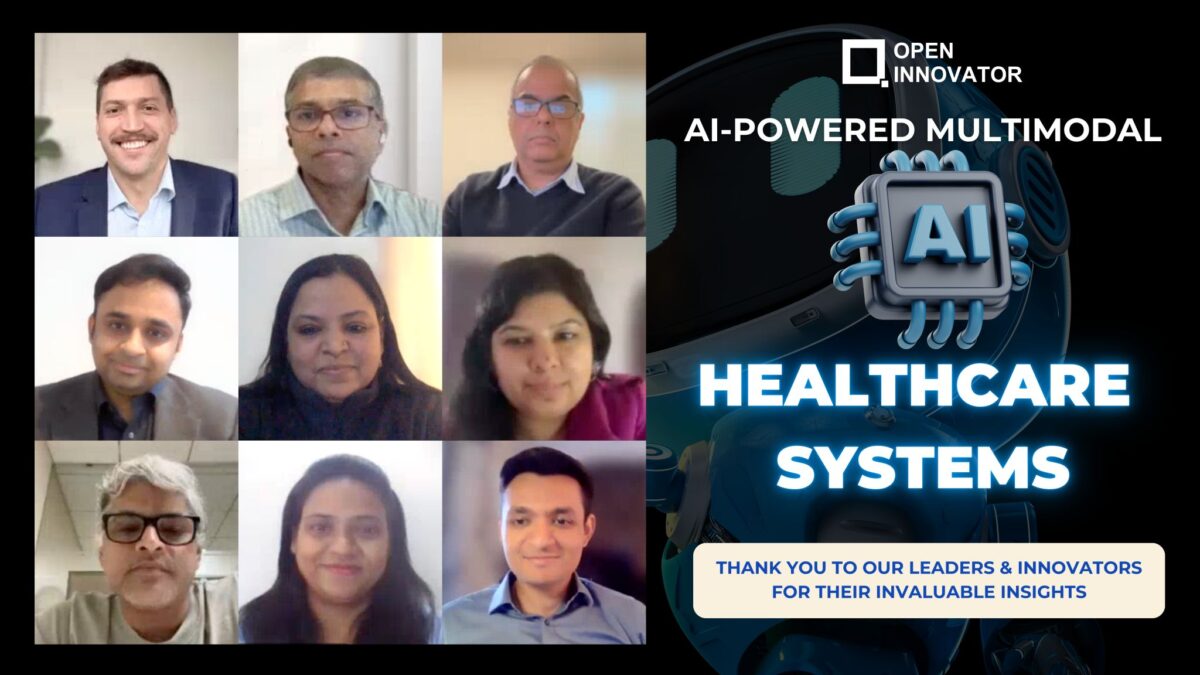
Exploring the Future of Healthcare: AI-Powered Multimodal Systems at the Open Innovator Session

Categories
Events

Exploring the Future of Healthcare: AI-Powered Multimodal Systems at the Open Innovator Session

The Open Innovator Session on the “AI Powered Multimodal Healthcare System,” held on January 21st, explored the essential role of AI technologies in integrating medical data and enhancing healthcare delivery. The session featured expert panelists such as Shyamnath Harinath from Siemens Healthineers, Claude Waddington, Principal Consultant at The Palindromic, Bharat Aggarwal, Principal Director at Max Healthcare, Naman Kothari, Innovation Lead, Nasscom CoE and Shantanu Gaur, Senior Innovation Manager at Nasscom CoE. Additionally, the co-founders of Easiofy Solutions, Meenal Gupta, Noor Fatma, and Mukesh Mhatre, Managing Director at Nuverse, presented their innovative solutions.  

The Panelists shared their insights on the transformative potential of AI in creating a unified healthcare ecosystem that incorporates diverse data sources, from clinical records to wearable devices. Key topics included patient care enhancements, digital twins for continuous patient monitoring, and multimodal AI for improving workflows and personalized treatment.

Overview of the Presentation

The presentation began by highlighting the disorganization in current healthcare systems and presented AI as a potential solution to integrate diverse health data, such as X-rays and fitness tracker data, into a cohesive ecosystem. The discussion was framed around the life-saving significance of these technologies, inviting audience participation and emphasizing the relevance of AI in healthcare today.

Key Discussion Points and Expert Insights

  1. AI and Multimodal Technologies in Healthcare: Panelists discussed the impact of AI in enhancing healthcare systems. Shantanu G from Nasscom focused on the importance of AI adoption in India’s healthcare sector, while Sham from a medical technology company shared his work on developing a digital twin—a system that integrates data from multiple sources for continuous patient monitoring and actionable insights.
  2. The Role of Automation and Data Structuring: One of the major points of discussion was the importance of automation in healthcare to reduce time and improve access to medical services. Panelists discussed their efforts to eliminate data silos by structuring and aggregating data from pharmaceuticals, Medtech, and major tech firms. Examples included using text automation to optimize clinical environments and integrating data in radiology to improve operational efficiency.
  3. Multimodal AI for Streamlined Healthcare: Experts emphasized the benefits of multimodal AI in integrating data from various hospital departments, making healthcare processes more efficient. He highlighted examples such as an AI-powered remote screening system for glaucoma and the automation of discharge summaries, both of which improve accessibility and patient experience.
  4. Equity and Accessibility in AI Healthcare Solutions: The conversation also touched on the need for equitable access to AI-driven healthcare, particularly for underserved populations. Claude stressed the importance of policy frameworks and structured data to enable AI adoption, particularly in high-demand environments like India, where doctor workloads are often overwhelming.
  5. Challenges in AI Integration: The integration of AI tools into clinical workflows, particularly in radiology, was identified as a major challenge due to the lack of interoperability between different AI systems. Panelists called for improved communication protocols and standards (e.g., HL7, FHIR) to ensure that various AI solutions can work together seamlessly.
  6. Digital Infrastructure and Privacy Concerns: Dr. Bhat highlighted the necessity of a robust digital infrastructure, particularly in institutions struggling to transition from paper records to digital formats. Additionally, the importance of data privacy and security was emphasized, with panelists discussing recent regulations like the DPDP Act and the need for compliance from all stakeholders.
  7. Evaluation and Monitoring of AI Models: The ongoing evaluation and oversight of AI models were discussed as a crucial step to ensure optimal performance. Regular monitoring of AI systems can address issues such as anomalies or inaccuracies, ensuring that they remain reliable in clinical settings.

Startup Pitches and Innovation Showcase

The session also included startup pitches, one of which featured Minal Gupta and her team from Easiofy Solutions, who introduced a multimodal AI system designed to enhance medical imaging diagnostics and surgical planning. This system integrates seamlessly into existing healthcare infrastructure by adhering to standards. The innovation aims to improve diagnostic accuracy and reduce the time needed for procedures such as cranial implant design and surgical planning, showcasing the potential of AI in transforming healthcare practices. Mukesh Mhatre, Managing Director at Nuverse, presented innovative solutions from his company.

Future Outlook and Responsible AI Use

The conversation concluded with a focus on the future of AI-powered healthcare systems, emphasizing the need for responsible use, cross-validation, and transparency in AI applications. Panelists discussed the potential of AI to provide personalized, efficient, and equitable healthcare, urging continued collaboration among stakeholders to maximize its benefits. The speakers expressed optimism about the advancements in AI technologies but stressed the importance of ongoing dialogue, ethical considerations, and responsible innovation in healthcare.

The session underscored the transformative potential of AI-powered multimodal healthcare systems. By leveraging AI to integrate diverse data sources, streamline workflows, and personalize treatments, these innovations promise to enhance healthcare delivery globally, while also addressing key challenges such as equity, data privacy, and interoperability.