







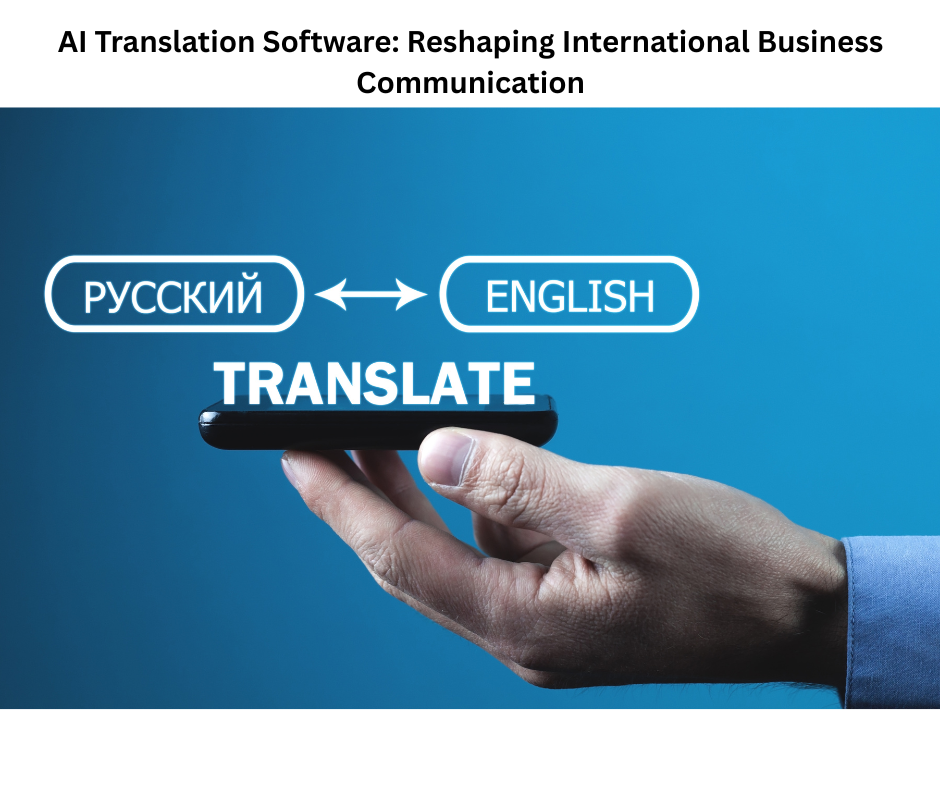
In the interconnected global marketplace, clear multilingual communication has transitioned from advantageous to essential. Organizations navigating international agreements, coordinating remote teams, or addressing customers in multiple languages must demonstrate precision, expertise, and cultural awareness consistently. Yet linguistic differences continue to hinder truly fluid global operations.
Conventional solutions like professional translators or multilingual employees remain effective but present limitations: they’re resource-intensive, expensive, and challenging to expand. AI translation tools now offer transformative potential, revolutionizing how companies create cross-border communications. These systems deliver dependable, contextually-aware preliminary versions, accelerating standardized and strategically aligned global exchanges.
The Evolution of AI Translation: From Utility to Strategy
Recent years witnessed dramatic advances in translation technology. Primitive systems produced stiff, inaccurate outputs through direct word substitution. Modern neural machine translation (NMT) and natural language processing (NLP) platforms deliver nuanced comprehension of context, tone, and specialized vocabulary. They generate not just structurally sound but professionally refined and culturally considerate drafts.
This progression from functional aid to strategic asset marks a pivotal change. Translation AI now underpins global operations rather than merely assisting them. By creating robust initial translations, these tools free professionals to concentrate on subtle refinements, message customization, and relationship cultivation instead of translation mechanics.
Enhancing Business Correspondence: Speed, Consistency, and Clarity
The most significant business application of AI translation is in professional communications. Emails, proposals, reports, and internal documents must all be clear and aligned with the brand, regardless of language. AI tools enable this by producing appropriate-toned rough drafts, maintaining terminology consistency across languages, and accelerating multilingual response cycles.
Consider a company entering Latin American markets using AI to create Spanish proposals mirroring their English counterparts’ structure. Support teams resolve inquiries in customers’ native languages within minutes. European and Asian divisions collaborate efficiently with instantly translated updates. These efficiencies yield measurable benefits: quicker decisions, enhanced customer loyalty, and stronger international partnerships.
Integration into Enterprise Workflows
Contemporary AI translation platforms integrate smoothly with corporate ecosystems. They connect to CRM systems, CMS platforms, chatbots, and collaborative tools, embedding multilingual capabilities directly into operational workflows rather than treating translation as isolated tasks.
Such functionalities prove invaluable in regulated sectors like law, finance, and healthcare where exactness and uniformity are non-negotiable. Organizations ensure compliance while maintaining professional clarity in translated materials.
The Human-AI Collaboration Model
While powerful, AI translation doesn’t supplant human judgment—it enables synergistic partnerships. Systems handle foundational work while professionals provide contextual refinement, balancing efficiency with authenticity.
Users enhance AI-generated drafts with cultural insights, strategic emphasis, or stakeholder-specific adjustments. This hybrid approach proves crucial for sensitive communications: investor presentations, government submissions, or media statements where precision carries significant weight. Additionally, businesses scale operations sustainably—routine messaging benefits from speed and cost savings, while strategic content receives necessary human attention.
Cultural Fluency and Strategic Messaging
Beyond linguistic precision, translation software advances cultural fluency—the cornerstone of effective international engagement. By interpreting context and modifying expressions, these tools help companies evade pitfalls like misplaced idioms, tonal discord, or culturally inappropriate phrasing.
This proves especially vital where communication conventions diverge sharply. Translation AI navigates these nuances, ensuring messages resonate locally. Thus the technology evolves from mere converter to strategic communications ally, crafting messages that build cross-cultural trust through genuine understanding.
Use Cases Across Industries
Diverse sectors adopt AI translation for specialized needs:
• E-commerce: Adapting product details, reviews, and support content for global markets
• Education: Translating curricula and student communications internationally
• Finance: Maintaining compliance in multilingual financial disclosures
• Healthcare: Enabling multilingual patient interactions and documentation
Each application accelerates processes, lowers expenses, and elevates user experiences through reliable preliminary translations.
Challenges and Considerations
Despite advantages, translation AI presents limitations. Accuracy fluctuates based on language combinations, technical complexity, and platform capabilities. Critical content often warrants human verification for compliance and appropriateness. While learning algorithms improve continuously, their development relies on quality data inputs and user feedback.
Businesses should therefore implement translation technology strategically—selecting suitable platforms, training teams effectively, and establishing review procedures for vital communications. Thoughtful deployment transforms AI translation into a formidable component of global operational infrastructure.
The Future of AI Translation in Business
The business importance of translation technology will grow significantly as it develops. Future developments could include tone-sensitive messaging via sentiment analysis, real-time verbal translation during conferences, and closer connection with AI writing assistance for all-encompassing content creation.
These advances will further integrate translation with strategic communication, empowering more agile and empathetic cross-border operations.
Conclusion: A Strategic Enabler for Global Engagement
AI translation technology fundamentally reshapes international business communication. By generating dependable preliminary correspondence drafts, it facilitates swifter, clearer, and culturally intelligent messaging. Professionals gain freedom to focus on strategy and relationships while ensuring linguistic consistency and operational efficiency.
Where language can either divide or connect, translation AI helps businesses build bridges. This technology emerges not merely as a tool but as a strategic catalyst for worldwide collaboration, engagement, and expansion.
Reach out to us at open-innovator@quotients.com or drop us a line to delve into the transformative potential of groundbreaking technologies. We’d love to explore the possibilities with you