




Categories
Innovator's Vista

How AI is Transforming Supply Chain Management

Categories
Innovator's Vista

How AI is Transforming Supply Chain Management

Supply chain management is an essential part of most businesses and is crucial for company success and customer satisfaction. Supply chain refers to the entire system comprising of individuals, organisations, resources, activities and technology that play their role from the procuring of the raw materials to the final delivery of the product to service. 

Each stage of a supply chain is essentially a different industry by itself so it is a very complex chain. With this the factors like rising customer expectations for faster lead times, expanded products and services, and demand for tailored experiences are adding to its complexity. 

Supply chain management, or SCM is a diverse business process that involves overseeing the mentioned functions and factors from flow of a good or service, delivery, customer experience and also ensuring profitability. Building end-to-end visibility, collaboration, and optimisation across inventory, order, logistics, and transportation management are important for effective SCM.

Implementing AI in supply-chain management can improve operations and solve key issues like forecasting, risk management, costing, delivery logistics, customer service etc. AI can help create models for demand forecasting, that give fairly accurate estimates of future demand against current stock. 

By using historical data with real-time data across multiple layers of the supply chain, it can provide data visualisations and indicate supply chain issues causes and effects, reduce or eliminate bottleneck complications, and identify opportunities.

AI also allows business plans to be integrated across multiple companies and stages of production hence better understand consumer demand trends, predict unexpected events and transportation issues. Through transportation automation and warehouse automation AI can ensure quicker order processing, more efficient inventory management, and timely delivery. 

There are startups offering AI-enabled solutions that allows enterprises to have complete visibility over delivery drivers. Through features like auto-order allocation and route optimisation, the platforms efficiently manage drivers to reduce delivery costs, increase customer experiences. Such companies are operating in industries like Food and Beverage, E-commerce, Pharmaceutical, Healthcare etc.

Bert Labs, a Bangalore based startup, focuses on efficiency improvements in energy, production, supply chain planning & logistics, along with reduction in carbon footprint. Similarly, Edgeverve, an Infosys company, has come up with TradeEdge, an intelligent supply chain management platform that enables channel visibility, improve retail execution, reach new markets faster.

There are many startups working in this evolving space of AI based supply chain management. Open Innovator plans to cover these startups in the next few months where we would be discussing their unique offerings and how they are solving the key issues related to this sector.


Open Innovator is a platform and service to discover the use-cases and best-suited tech solutions in any enterprise or domain and engage with innovators and founders. Connect with us and Follow us for more updates on evolving use cases in various domains.


Categories
Innovator's Vista

Autonomous Mobile Robots improving Healthcare

Categories
Innovator's Vista

Autonomous Mobile Robots improving Healthcare

Robots are no longer automated stationary machines executing specific tasks but have evolved into sophisticated, mobile platforms solving various automation needs. An Autonomous Mobile Robot (AMR) is one such example that can independently move through any environment understanding and performing various tasks.

It is an innovative automation solution performing assigned tasks in varied environments like construction sites, warehouses, healthcare centres etc. Often compared with Automated Guided Vehicles (AGV) but unlike them AMRs do not operate on predefined paths or require operator sight. With more advanced software and hardware, AMRs are a step above and beyond AGVs.

AMRs have higher level of autonomy and capacity of moving around in shared environment. They rely on cameras, a set of sensors, artificial intelligence, machine learning, machine vision and navigation technique like collision avoidance for functioning like identifying, picking, moving objects from one location to another while avoiding obstacles.

They are finding application in warehouses for tasks like pick-and-place items, in e-commerce applications for moving carts and in automated construction. Another use of AMRs is in healthcare sector for automating distribution of medicine to the correct patients in hospitals.

Jetbrain Robotics, a Gurugram based startup, is working on providing end-to-end solutions for hospitals to provide enhanced patient care, using autonomous mobile robots (AMRs). The company envisions AMRs that would assist with nursing and managing internal logistics, enhancing the productivity of hospital staff.

The company has designed an AMR to carry hospital utilities to different destinations as required. Named AMRO, the robot has a compact body and protective outer layer. It can charge itself and work all day with inbuilt power capacity, claims the company.

AMRO carries hospital utilities to different destinations as required

Another product by Jetbrain is a UV disinfection robot with an Ultraviolet (UV) lamp emitter able to clear and disinfect environments from bacteria and viruses. Lytbot emits powerful broad-spectrum UV light, targeting high-touch surfaces while disinfecting the whole room. ‘Core 0’ is another such offering by the company that takes care of internal logistics and carrying items like surgical instruments, glucose packets, blood samples and medical necessities to required destinations.

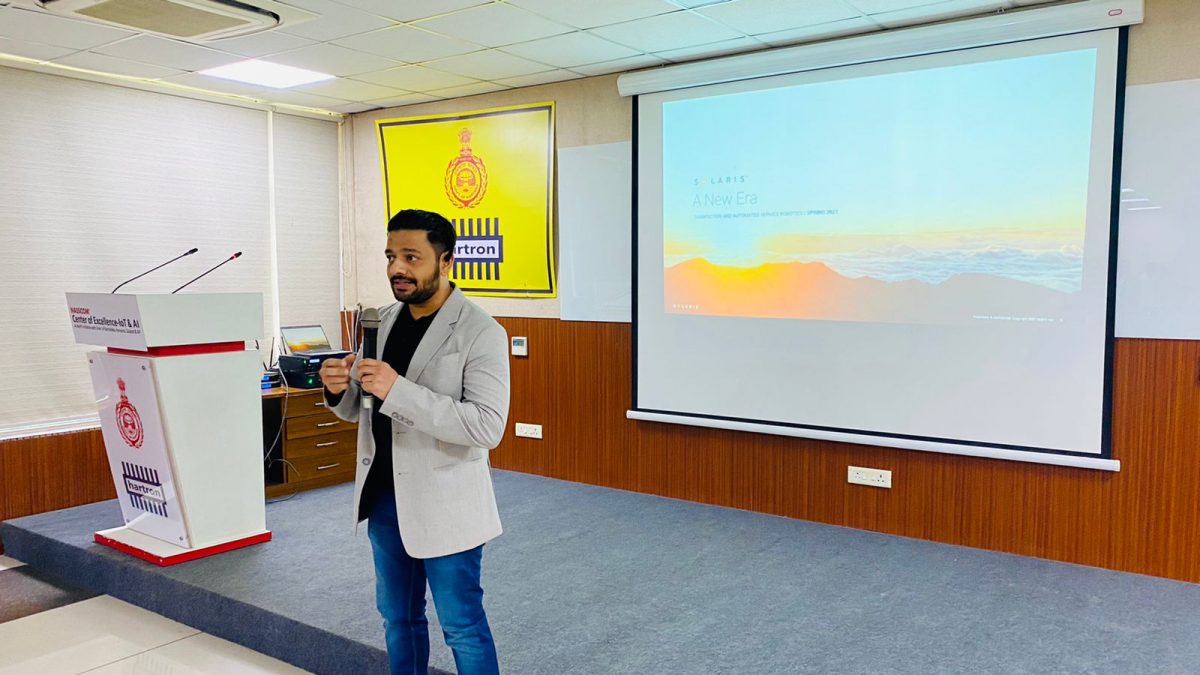
Founder of Jetbrain Robotics, Ajay Vishnu, was present in the Open Innovator Meet recently held at NASSCOM CoE, Gurugram. He at the meet briefed about the vision of the company and plans for the near future.


Categories
Innovator's Vista

Computer Vision for Quality Inspection

Categories
Innovator's Vista

Computer Vision for Quality Inspection

In manufacturing sector whether it is clothing and textiles, petroleum, chemicals and plastics, electronics, computers and transportation, food production, metal manufacturing etc, poor production quality has a significant impact on efficiency. It results in additional operational and financial costs in form of lost time, wasted resources, scraps and decreased efficiency. Therefore, maintaining quality standards is of utmost importance in the field of manufacturing.

Typically product is visually inspected for defects which is a highly manual process. It is time consuming, prone to errors and dependent on operator’s experience and requires consistency which is not always possible.  Rule-based visual inspection machines which are programmed, are not flexible, and cannot adapt to product changes and can only detect a handful of defects at a time.

By using computer vision in manufacturing quality inspection can be automated during the production process.  There are several advantages of using computer vision like reduced cognitive load for operators, no programming required, and it adapts to product changes. It also makes inspections faster, more accurate, and efficient. There are today several manufacturing firms that are shifting towards using deep learning and computer vision for quality control and inspection tasks. 

Computer Vision:

Computer vision seeks to replicate and automate tasks that the human visual system can do. It is an interdisciplinary scientific field that aims to give computers the ability to extract a high-level understanding of the visual world from digital images and videos. It uses Artificial Intelligence (AI) and deep learning models to enable machines accurately identify, interpret, understand, classify and react to objects in form of visual data like digital images from cameras and videos.

More sophisticated artificial intelligence (AI)–based vision systems can enable more powerful visual inspection solutions. These solutions can handle complex applications with less engineering time compared to traditional machine vision solutions.

These systems are faster and simpler process that can carry out repetitive and monotonous tasks at a faster rate, which simplifies the work for humans. Computer vision systems better trained through all kinds of data generally commit zero mistakes resulting in faster delivery of high-quality products and services. With no room for faulty products and services, companies do not have to spend money on fixing their flawed processes.

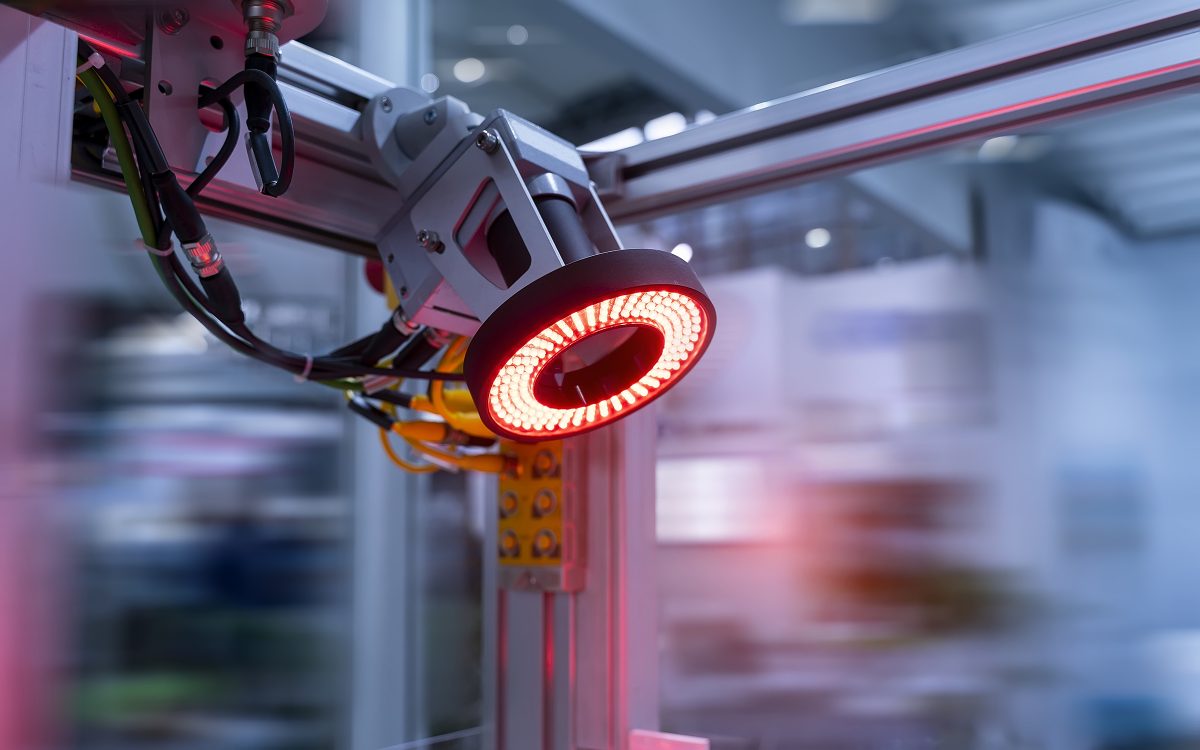
By using a laser coupled with a 2D camera, object edges can be more easily located and “pseudo 3D” images can be produced. These 3D machine vision systems creates a full 3D profile of the object by stitching together the individual lines of image data that makes inspection of complex assemblies and sub-assemblies as well as individual components easier.

Categories
Innovator's Vista

AI-driven health tech platform optimising care management

Categories
Innovator's Vista

AI-driven health tech platform optimising care management

With the increased digitization in healthcare, immense amount of data is being generated, as a result data analytics and artificial intelligence are increasingly being applied within this field. Several types of AI are already being employed by payers and providers of care, and life sciences companies. These advanced technologies are transforming many aspects like providing high quality patient care, responding to real-time situations and saving more lives on the clinical front; and optimising the use of resources, improving the processes and services and reducing the costs on the operational and financial front.

Patient care management, a program that involves comprehensive health services to assist patients in managing their health, is also one of the fields where these advanced technologies can play a significant role. A B2B healthtech startup, HEAPS, is already working on this. The Startup provides SaaS and Platform that leverages data analytics, artificial intelligence, and machine learning and creates care management systems.

Care management systems for insurers, hospitals, corporates and patients:

Heaps, working with the aim to revolutionise healthcare delivery and payment models at a global level, has created care management systems for insurers, hospitals, corporates and patients.

For Corporates, the company helps in improving the quality of care and support health care support to employees while reducing group policy premiums. It ensures comprehensive health care for employees and their dependents with 24/7 support and data on call for employees as well as corporations to pre-empt future health and resource risks. Heaps also provides personalised health care plans for the mental and physical well-being of employees, thus  can improved employee loyalty and satisfaction. The startup has also designed a “Risk Severity Index” that helps patients understand their health better and prevent complications and thus reduces hospitalisations.

For Hospitals, it can help in reducing 30 day readmissions and preponement of discharge by analysis of areas of concern. This leads to increase in patient satisfaction and stickiness. It can also result in better performance by analysis of complaints and satisfaction scores at a Specialty & Doctor level. It helps in generating revenue for Hospitals through Cross-speciality referrals, Home care Nursing, Physiotherapy, Diagnostic and other ancillary medical services. There is also a “Health Compliance & Risk Management (HCRM)” program that provides proactive outreach, personalised care management and real-time risk assessment to improve patient outcomes. 

For Insurers, the startup helps in reducing their cost of hospitalisation and rehospitalisation by actively monitoring patients’ needs and reduce unwarranted hospitalisation and health care costs. By leveraging past analysed data any avoidable deterioration of health of the patient can also be predicted and can be followed by adequate action.

Funding:

Founded in the year 2020, the company is expanding its presence in India, with offices in Mumbai, Hyderabad, and Bengaluru. Heaps has also been successful in making inroads into the North American market and plans to enter Europe and the MENA region this year. The company has also raised a Series A fund of $7.4 million in January 2022 and is backed by well known investors.

Categories
Enterprise Innovation Innovator's Vista

Blending AI with human agents for customer experience automation

Categories
Enterprise Innovation Innovator's Vista

Blending AI with human agents for customer experience automation

New generation of consumers look to engage and resolve issues in real-time, 24/7. Businesses have no other choice but to transform their customer and employee experiences to be omnichannel, intelligent, personalised, that too, at scale.

Customer Experience Automation let businesses to build the toolset that makes the most sense for their model, then orchestrate personalized experiences across.

Natural Learning Processing (NLP) Engine forms the core component that interprets what users say at any given time and converts that language to structured inputs the system can process.

Businesses can deliver on-demand fulfilment by blending AI and human intelligence Thus business-to-consumer interactions of every enterprise across the world, can be made intuitive, personal, and real-time. As AI offloads simple, repetitive, monotonous tasks from customer service agents — letting them concentrate on complex questions or allowing them to better connect with the customer.

The hybrid Agent + AI model, the next natural progression is towards bot-initiated conversations. The scope of these messages includes promotions, campaigns, back-in-stock notifications, abandoned cart reminders, etc., to proactively reach customers.

With the advent of DIY no-coding bots, it is rapidly becoming an option for small startups and individuals to try their hand at building bots with basic functionalities.

Blending AI with human agents allows enterprises improves customer service that leads to more customer satisfaction, agent satisfaction, agent productivity and increased customer retention.

These customer experience automation platforms can find application in sectors such as BFSI, Retail & Ecommerce, Telecom, Education etc.