




Categories
Applied Innovation

Transforming Mental Health Care: The Role of AI in Mental Wellness

Categories
Applied Innovation

Transforming Mental Health Care: The Role of AI in Mental Wellness

In the fast-changing world of healthcare, Artificial Intelligence (AI) is playing a crucial role in reshaping mental health care. By utilizing cutting-edge technologies, AI is improving diagnosis, treatment, and overall mental well-being. This integration seeks to enhance accessibility, personalization, and effectiveness in mental health interventions, offering hope for a better future in mental health care around the world.

Overview of AI in Mental Wellness

Artificial Intelligence is transforming the delivery of mental health care. The use of AI technologies in this field includes a range of applications, such as assisting with diagnoses, creating personalized treatment plans, and providing virtual therapy options. The main aim is to enhance accessibility and effectiveness in mental health care for all individuals, irrespective of their location or economic status.

Applications of AI in Mental Health

 1. Diagnostic Support and Prediction

AI technologies, especially machine learning (ML) and deep learning (DL), are being used to sift through large amounts of patient data, which includes electronic health records, behavioral trends, and even social media interactions. These technologies can detect early indicators of mental health issues with notable accuracy, ranging from 63% to 92%, depending on the data quality and the algorithms applied. For example, AI can identify potential concerns like stress or cognitive decline before they develop into more serious problems. By examining patterns and irregularities in the data, AI systems can alert healthcare providers early on, allowing for prompt interventions and improved patient outcomes.

 2. Personalized Treatment Plans

The capacity of AI to develop customized treatment plans based on patient data, such as genetics, medical history, and lifestyle variables, is one of the most important benefits of AI in mental health care. By suggesting certain actions that fit the patient’s particular profile, this individualized method optimizes the effectiveness of treatment.

AI programs are able to evaluate how a patient reacts to various therapies and modify treatment regimens as necessary. Patients are guaranteed to receive the best treatment possible, customized to meet their unique needs, thanks to this dynamic and personalized approach.

3. Virtual Therapy Platforms

Chatbots and virtual assistants that offer ongoing assistance and therapeutic interactions are being developed using generative AI. These systems may imitate human-like interactions, have conversations with users, and provide digital cognitive behavioral therapy (CBT) activities. For those who do not have easy access to typical therapeutic services, this accessibility is very helpful.

Platforms for virtual treatment can give prompt assistance by providing therapeutic activities and coping mechanisms to control symptoms. They can also be used as an adjunct to conventional therapy, guaranteeing that patients stay involved in their care and provide continuous support in between sessions.

 4. Monitoring and Engagement

Applications powered by AI are able to monitor mood swings and offer insights into emotional trends, assisting users in identifying triggers and taking proactive measures to maintain their mental health. Features that improve adherence to treatment programs and promote improved communication between patients and healthcare professionals include symptom tracking and drug reminders.
These apps have the ability to track a patient’s development over time, giving medical professionals useful information. Providers can make well-informed judgments on interventions and therapy modifications by evaluating this data.

 Benefits of AI in Mental Wellness

  • Enhanced Availability

When someone is in need of assistance, AI technologies might be their first port of call, particularly in underprivileged communities with few mental health facilities. These resources can offer prompt assistance, cutting down on wait periods for conventional treatment programs and guaranteeing that people get help when they need it.

  • Improved Early Identification

AI can identify people at risk and enable prompt treatments to stop the evolution of mental health issues by evaluating data from several sources. Effective therapy depends on early identification, and patients may benefit from AI’s capacity to spot mental health problems early on.

  • Reduction in Stigma

People may be inspired to seek treatment without fear of the stigma attached to traditional mental health services by the anonymous support choices offered by digital platforms. Artificial intelligence (AI) solutions can lower the obstacles to mental health treatment and encourage more people to get the help they require by providing discreet and private support.

Challenges and Ethics

Notwithstanding its promise, there are a number of ethical issues with AI’s use in mental health that need to be resolved to guarantee its responsible usage.

  • Algorithm Bias

Cultural sensitivity must be incorporated into AI system design to prevent biases that can influence diagnostic and treatment results. To prevent inequalities in mental health treatment, it is crucial to make sure AI algorithms are inclusive and representative of many groups.

  •  Data Privacy

The handling of sensitive patient data necessitates robust privacy protections to maintain trust between patients and healthcare providers. Ensuring that data is stored and processed securely is critical to protecting patient confidentiality and preventing data breaches.

  •  Dependence on Technology

An over-reliance on AI technologies may compromise the human component that is crucial to therapeutic alliances. AI can improve mental health treatment, but it shouldn’t take the role of a patient-provider relationship. Providing thorough and compassionate treatment requires striking a balance between technology and human connection.

In conclusion

An important development in the provision of mental health treatment is the incorporation of AI into mental wellbeing. Although technology has encouraging advantages like individualized treatment programs and enhanced accessibility, the ethical ramifications and potential biases of these technologies must be carefully considered. AI has the potential to significantly improve mental health outcomes worldwide as research advances.

AI is revolutionizing mental health care through its capacity to evaluate enormous volumes of data, create individualized treatment programs, and give ongoing support via online platforms. AI may be successfully incorporated into mental health treatment to enhance patient outcomes and accessibility by tackling issues like bias, data privacy, and the requirement for human engagement.

AI will surely continue to influence the field of mental health treatment in the future by providing creative answers to difficult problems. We can build a more effective and inclusive system of mental health treatment for everyone if we embrace new technologies and handle ethical issues.


Categories
Success Quotient

The Indian Startup Ecosystem in 2024: Major Funding Deals and Technological Advancements

Categories
Success Quotient

The Indian Startup Ecosystem in 2024: Major Funding Deals and Technological Advancements

The Indian startup ecosystem embarks on yet another phase in its journey of expansion and maturity. This is excitable due to large funding rounds made with disruptive business ideas and technology. Hence, here’s a comprehensive overview of major developments shaping the landscape this year

Major Funding Deals

Significant Investments

PhonePe: In a fundraising round led by General Atlantic, PhonePe, a pioneer in digital payments, raised an incredible $1.7 billion. With this investment, PhonePe plans expanding into lending and insurance services in addition to payments. This substantial investment demonstrates the growing significance of fintech in India’s developing economy.

Fractal Analytics: TPG Capital contributed $360 million to this AI-powered analytics behemoth. The significant investment demonstrates how artificial intelligence (AI) has the ability to completely transform corporate processes and highlights the rising interest and confidence in its applications across a range of sectors.

HealthKart: The wellness and health platform made ₹1,291 crore, or around $155 million, demonstrating the high level of investor trust in the health technology industry. The success of HealthKart demonstrates the growing need for cutting-edge wellness and health solutions.

SarvaGram: This fintech business, which raised ₹565 crore (about $68 million), is evidence of the continuous need for financial services in neglected communities. The importance of fintech in closing the gap in financial inclusion is emphasized by this fundraising round.

Rapido: After raising $200 million, the bike taxi business became a unicorn. This milestone demonstrates the competitive and ever-changing ride-hailing market in India, which is fueled by the rising need for cost-effective and effective urban transportation solutions.

PhysicsWallah: PhysicsWallah raised $210 million, highlighting the thriving edtech industry. The growing need for easily accessible and efficient online learning solutions is fueling the ongoing development of educational technology.

Zepto: By raising over $340 million, the fast commerce platform cemented its position as a market leader in expedited delivery. The increasing need for quick delivery services in cities is shown by this investment.

DMI Finance: This financial services firm raised $334 million, demonstrating the high level of interest that investors have in fintech products. The money will probably be utilized to reach additional clients and broaden its selection of financial items.

Whatfix: By highlighting the value of SaaS solutions in business training and onboarding, the digital adoption platform garnered ₹1,044 crores, or around $125 million. Whatfix will use this money to improve its platform and increase its visibility internationally.

OYO: Although exact numbers were not revealed, the massive hotel conglomerate has raised a sizable sum of money in anticipation of an IPO. This action demonstrates OYO’s goals to improve its market standing and broaden its worldwide presence.

Additional Noteworthy Deals

Ather Energy: This EV producer shown strong growth in the EV industry by raising a substantial amount of money and filing for an IPO for ₹3,100 crores. The funding will help Ather Energy expand its manufacturing and develop innovative sustainable mobility solutions.

Moneyview: Another unicorn, Moneyview raised money to improve its services for managing personal finances. Moneyview will be able to grow its user base and add new features thanks to this investment.

Purplle: By raising more than $100 million, the beauty and personal care platform demonstrated the expansion of direct-to-consumer (D2C) businesses in India. The growing customer desire for individualized and direct-to-consumer products is reflected in Purplle’s success.

Drip Capital: This fintech company, which specializes in offering trade financing solutions to small and medium-sized businesses, has also surpassed the $100 million investment milestone. Drip Capital will be able to assist more companies in need of export funding thanks to the investment.

Technological Developments

AI and Deep Tech

According to a Boston Consulting Group research, India has solidified its position as a leader in AI preparedness, placing it in the top 10 internationally. With more than 3,000 firms concentrating on cutting-edge technologies like blockchain, AI, and machine learning, India’s deep tech industry is especially thriving.

AI is becoming more and more integrated into the operations of businesses in a variety of industries. Efficiency gains, creativity, and the development of innovative goods are all being made possible by this combination. AI is being applied in the healthcare industry, for example, to improve diagnostic precision and expedite patient treatment. AI-powered analytics are transforming customer service and risk management in the financial industry. Machine learning algorithms in logistics streamline supply chain processes, cutting expenses and speeding up delivery.

Direct-to-Consumer (D2C) Growth

By 2025, the D2C industry in India is expected to grow to $100 billion because to the growing use of e-commerce and tailored marketing techniques. Bypassing conventional retail channels and providing individualized experiences, startups are using digital platforms to communicate directly with customers. Businesses are able to obtain important information, strengthen consumer connections, and react swiftly to market developments thanks to this direct interaction.

Expansion Beyond Major Cities

In India, entrepreneurship is no longer limited to major cities. With the help of government initiatives that promote innovation in less competitive areas, there is a rising trend of developing startup ecosystems in Tier 2 and Tier 3 cities.

Government Initiatives

The Indian government is still a major contributor to the startup community. Initiatives such as Startup India offer a strong foundation for promoting creativity. More than 140,000 companies have received recognition under these programs as of the middle of 2024.

By providing funding, coaching, and expedited regulatory procedures, these government initiatives seek to establish an atmosphere that is favorable for entrepreneurs to flourish. Such programs are crucial for fostering a thriving ecosystem of entrepreneurs and promoting long-term economic growth.

Takeaway

Significant technology developments and strong fundraising activity characterize the Indian startup environment in 2024. With a rising consumer market, a supportive government framework, and developing digital infrastructure, India is well-positioned to continue to be one of the top startup destinations in the world.

More development in the upcoming years is probably going to be fueled by the emphasis on sustainable growth models and innovation in a variety of industries. It is crucial for stakeholders to keep creating an atmosphere that promotes experimentation, teamwork, and resilience as the ecosystem changes.

A bright future for Indian startups is painted by the advancements in AI and deep tech, the growth of the direct-to-consumer (D2C) market, the extension of entrepreneurial activity outside of large cities, and the government’s aggressive initiatives. These patterns demonstrate not just how vibrant the Indian startup scene is, but also how capable the nation is of taking the lead in technological innovation globally.

Categories
Success Quotient

The Cutting-Edge Tech Trends Defining 2024: A Detailed Insight

Categories
Success Quotient

The Cutting-Edge Tech Trends Defining 2024: A Detailed Insight

The emerging new technology advances all over the various mediums are transforming industries and daily lifestyles as they redefine existing human-technology boundaries. We present the most significant trends of the year that shape the technology world.

A Generative AI storm

Generative AI is presently at the forefront of the revolution that artificial intelligence brings. By creating new content from unstructured data, this technology is catching on like wildfire throughout sectors such as healthcare and finance. Productivity and innovation are enhanced by purely automated tasks and insights delivered by generative AI from large data sources. Enhanced operations, new product development, and personalized customer experience are some of the capabilities generated for companies by this new technology, which in turn fosters growth and competitiveness.

Another significant development in AI is AI in Scientific Discovery. The discovery process has been hastened by strong input from AI into research, particularly in health and sustainability, making discoveries much faster and predictions very accurate. Artificial Intelligence in scientific methods is transforming the research paradigm and allowing scientists to solve problems in ways that have never been possible. For example, AI algorithms can search huge datasets to uncover patterns and correlations that would likely elude even the most dedicated human researchers while making great strides in areas of drug discovery or in climate science.

Quantum Computing

Quantum computing is moving away from pure theoretical research and becoming linked more to practical applications, seriously impacting fields such as cryptography and drug discovery. Using qubits for calculations, quantum computers have the potential for much more complex calculations than classical computers. This incalculable increase in computational power stands to benefit industries investing huge resources into quantum technologies, with IBM among those hambling at the front line.

These are just some of the applications; the potential is endless. For example, because nuclear encryption cannot be easily hacked by any computerized systems, a complete quantum computer might be able to crack all conventional encryption. It means that data processing will be required to develop algorithms that can resist quantum disruption, along with drug discovery where quantum simulations will model molecular interactions that could not have been captured previously. Quantum computing- discloses to science and industry-future paths toward advance systems.

5G Rollout

The 5G network permits an even more high-speed and latency-free communications link. It has really sustained the further establishment of some developing areas of an Internet of Things, augmented reality, and cars that are fully autonomous going toward real-time information processing and conveyance. In the end, industry-wide automation and productivity will reach levels completely unthought of.

Using 5G communications, a hybrid and fully automated vehicle application can use real-time communications, boosted by increased safety and efficiency. Indeed, 5G has the appropriate bandwidth and low latency to afford instantaneous linking of billions of devices for IoT applications. It results in smart environments that adapt swiftly and easily to user inputs. New opportunities for innovation and economic growth become available across industries with the advent of 5G.

Digital Twins

In fact, this is a new digital twin technology that is being applied to industries by replicating real-world scenarios into a virtual version of the real-world system. This would be digital models for improved observation of their optimization and predictive maintenance, especially in the manufacturing and healthcare fields. Digital twins enable businesses to simulate reality to test and refine without the associated risks of live trials.

For example, in manufacturing, a digital twin can enable an individual to monitor machine performance, predict when maintenance is needed, and optimize production processes. Digital twins are also able to experiment with the different clinical conditions of a patient through simulation and trial and error modeling for developing treatment retrospectively, hence enhancing individualized patient care and furthering medical research. Clearly, a capacity to develop digital replicas that are at once representative and flexible is one of the driving forces behind operational efficiency and subsequent innovations.

The Metaverse

The metaverse is now an extension of virtual and augmented realities mixed with an ever-immersive experience where users can interact socially and economically using avatars, cryptocurrencies, and NFTs. Many organizations are investing in the mushrooming metaverse, wherein they anticipate the next frontier of interaction.

The metaverse allows digital avatars to indulge not just in attending virtual events but also shopping from online bazaars, sharing ideas through virtual workspace collaboration. It raises vital ethical considerations about user experience pertaining to such digital interactions, such as data protection and the implications for mental well-being. The metaverse would soon become one of the prime elements of the digital economy and the social psyche.

Connectivity

Emerging technologies are optimizing wireless communications by dynamically altering wireless reconformable intelligent surfaces (RIS) and specifically focusing wireless signals to enhance signal strength and coverage, especially in environments where this is difficult to achieve. This is precisely the USP of RIS technology, improving both the reliability of the network and the attention towards environmental sustainability.

This is what the latest connectivity technology would do for the use and increased demand of high-speed internet and connected devices. Improved network reliability and efficiency increase the pace at which smart environments can grow while opening avenues for new applications in remote work, telemedicine, and online education.

Takeaway

The evolution of technologies in 2024 is primarily represented through a fast and rapid revolution in landscape development. Transforming industries and dominating the way we interact with technology is an evolving course of technologies such as artificial intelligence, quantum computing, connectivity, and new computing paradigms. The very trends are now moving forward towards their promise of considerable economic growth, efficiency that matters, and the enhancement of the quality of human life.

The openness of AI is democratizing powerful technologies of enterprise size or beyond, but the power of quantum computing will revolutionize the very domains of cryptography and drug discovery. The much-anticipated extension of 5G is already creating the smart city and enabling further near-real-time applications. Edge computing, on the other hand, satisfies local requirements for data processing and security. Digital twins have been transforming efficiency across sectors, while smart cities will deploy advanced technologies for environmental sustainability. The metaverse would open up a whole new venue for social and economic interactions as connectivity technologies improve the reliability of the network.

These shaping technologies will continue to create a new era and bring solutions to many problems.

Categories
Success Quotient

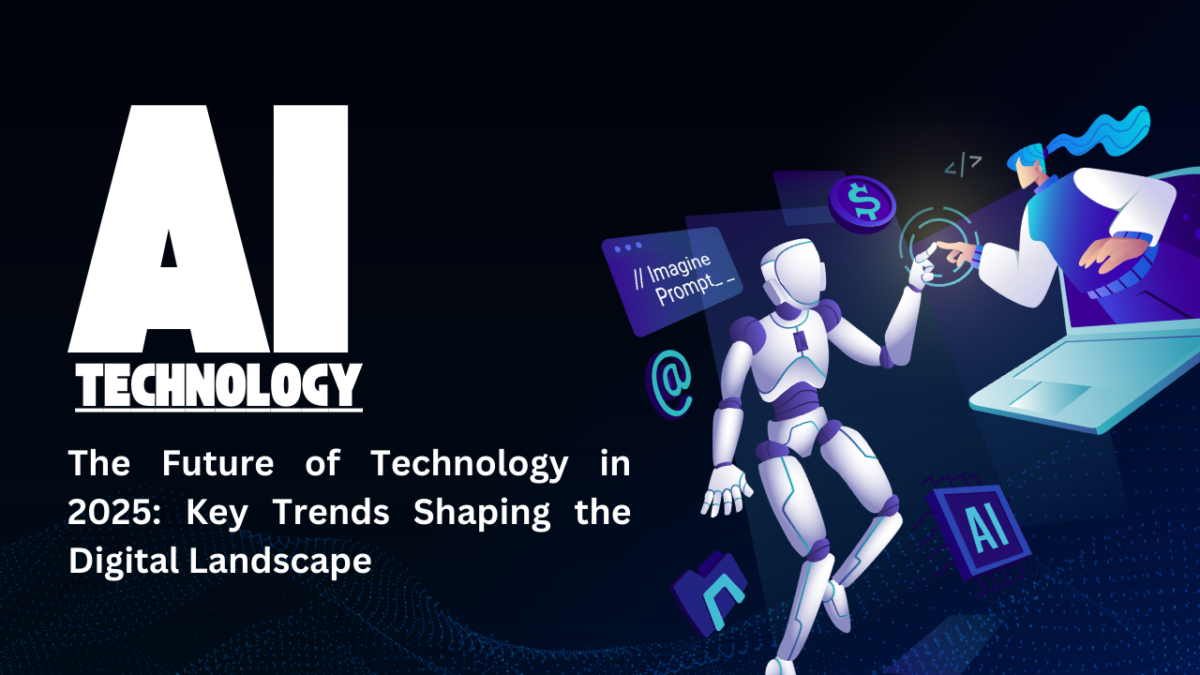
The Future of Technology in 2025: Key Trends Shaping the Digital Landscape

Categories
Success Quotient

The Future of Technology in 2025: Key Trends Shaping the Digital Landscape

The tech world is changing faster than ever, shaking up industries left and right. As we glance at what 2025 might bring, there are a few big trends that could seriously change the game for businesses and how we all use tech. Let’s dive into some of these trends: the spread of AI to the masses, leaps in quantum computing, the rollout of 5G everywhere, robots and automation taking over tasks, AI stepping up in cybersecurity, augmented reality making shopping more fun, and edge computing becoming a thing.

Democratization of AI

Artificial Intelligence (AI) has really become a big deal in today’s business world. More and more companies are jumping on the AI bandwagon, using it for at least one part of their operations. As there are so many open-source options out there now, and the costs to get started have dropped quite a bit. This means even the little guys—small businesses—can get in on the action, competing toe-to-toe with the big fish.

Take OpenAI, for instance, they’re the brains behind ChatGPT, and they’re all about making AI available to everyone. By doing this, they’re giving businesses of all sizes the tools to dive into data analysis and automation. It’s like handing over a magic wand to boost innovation and efficiency.

Small businesses can now use AI-driven solutions to up their game in customer service, streamline their operations, and make decisions based on solid data. As AI becomes even more user-friendly, we’re likely to see it popping up in all sorts of industries, doing things we might not even have imagined.

Quantum Computing Advancements

Quantum computing is really starting to profoundly altering the technology landscape, edging closer to becoming something we can actually use in everyday life. It seems like everyone is throwing money at quantum startups, and big players like IBM are leading the way. They’re unveiling these mind-blowingly powerful quantum computers that can solve problems faster than you can say “supercomputer.”

The potential of quantum computing is enormous, with applications spanning across various fields such as life sciences, finance, and logistics. These machines can handle massive data sets and perform calculations that would leave a traditional computer gasping for air. In the realm of life sciences, they could accelerate drug discovery by simulating molecular interactions at lightning speed. Over in finance, they might just refine trading strategies and manage risks like a seasoned pro.

As these possibilities become more tangible, we might be looking at a game-changer for industries worldwide—and possibly even a significant boost for the economy. Who knows? Maybe one day quantum computing will be as common as smartphones are now.

5G Expansion

The rollout of 5G technology is dramatically transforming the digital world. With its lightning-fast data speeds and super low latency, 5G is about to change how we do real-time communication and data processing. It’s like opening the door to a whole new world for things like the Internet of Things (IoT), augmented reality (AR), and self-driving cars.

5G lets tons of devices connect without a hitch, paving the way for smart cities and making industrial operations run smoother than ever. In the car world, 5G is a game-changer for self-driving vehicles, letting them talk to each other and their surroundings in real time, which is pretty crucial for safe and smooth rides.

And let’s not forget about AR. 5G is set to turn it on its head by giving us the bandwidth and low latency needed for some seriously immersive experiences in shopping, healthcare, and even entertainment. As 5G networks spread their wings, we’re on the brink of a wave of new and exciting applications that will make the most of what it can do.

Robotics and Automation

Robotics and automation are moving at lightning speed letting machines tackle more and more complex jobs all by themselves. We can really see this happening in places like factories and hospitals, where robots are stepping in for precise tasks and even helping out with surgeries.

Throwing AI into the mix with robotics is like giving them a brain boost. These AI-driven robots are getting smarter, learning from their surroundings, and getting better at what they do over time. They’re becoming the MVPs in production lines and medical procedures, making everything more efficient, accurate, and safe.

In the world of manufacturing, robots are drastically changing things up by streamlining the whole production process and cutting down on the need for manual labor. This means more stuff gets made faster and for less money. And over in healthcare, robotic assistants are pulling off some pretty intricate surgeries with amazing precision, which is leading to better results for patients and quicker recovery times.

AI in Cybersecurity

As cyber threats get sneakier and more complex, AI’s role in keeping our digital world safe is becoming super important. These AI systems are out there spotting weird stuff and jumping into action right away, making security way better across all sorts of industries.

Imagine this: AI-driven cybersecurity tools can sift through mountains of data to spot patterns that might mean trouble. By catching these threats early, companies can stop them from blowing up into full-scale attacks. And with cyber-attacks happening more often than ever, using AI to protect sensitive data and keep businesses running smoothly is pretty much a no-brainer.

AI can handle the boring, routine security tasks, which means people can focus on the big-picture stuff. These systems are always learning from new data, so they can keep up with new threats and offer strong defenses. It’s like having a digital watchdog that’s always on duty.

Augmented Reality (AR) in Retail

Augmented Reality (AR) is significantly reshaping the retail world, giving shoppers a whole new way to interact with products. Imagine being able to see how that new sofa looks in your living room before you even buy it. AR is doing just that—helping customers visualize items in their own spaces, which means they’re happier with their purchases and less likely to return them.

Retailers are jumping on the AR bandwagon too. They’re setting up virtual fitting rooms where you can try on clothes without leaving your house. This not only makes shopping more fun but also helps stores keep track of their stock better. Plus, AR can dish out detailed product info and personalized suggestions, making shopping feel like it was tailored just for you.

And it’s not just online shopping that’s getting a makeover. Brick-and-mortar stores are using AR to create immersive experiences right in the shop. You can use AR apps to find your way around the store, get the lowdown on products, and snag special offers. It’s like having a personal shopping assistant in your pocket, making the whole experience smoother and more enjoyable.

Edge Computing

Edge computing is really starting to make waves as a key technology for handling data closer to where it’s created. It cuts down on delays and lets us make decisions in the blink of an eye. That’s a game-changer for stuff like self-driving cars and industrial IoT, where you need to crunch the numbers right away.

Take autonomous vehicles, for example. Edge computing lets these cars process sensor data on the spot, so they can make quick, smart choices. That’s pretty crucial for keeping things safe and running smoothly on the road. And in the world of industrial IoT, having edge computing means machines can be monitored and controlled in real-time, boosting efficiency and cutting down on downtime. Who wouldn’t want that?

But wait, there’s more! By spreading out data processing, edge computing also steps up data privacy and security. Sensitive info gets handled right there on the spot, so it’s less likely to get nabbed during transmission. As more folks hop on the edge computing bandwagon, we’re bound to see even more cool and creative uses for it. Exciting times ahead!

Takeaway

As we look ahead to 2025, the tech world is buzzing with some pretty exciting changes. We’re seeing a big move towards more integrated and advanced solutions that are shaking things up across all sorts of industries. AI is becoming more accessible, letting businesses of all sizes get in on the action. And let’s not forget about quantum computing—it’s opening doors to tackle problems we once thought were impossible.

5G is spreading like wildfire, paving the way for smart cities and supercharging how we communicate in real-time. Meanwhile, robotics and automation are turning the manufacturing and healthcare sectors on their heads. AI is also stepping up in cybersecurity, helping to keep organizations safe from the ever-evolving threats out there. And if you’ve been shopping lately, you might’ve noticed augmented reality making the experience way more interactive and personal.

Edge computing is another game-changer, popping up as a vital tech for processing data in real-time, perfect for apps that need split-second decision-making. As these trends keep growing and changing, they’re bound to shape our tech future and totally redefine how we interact with the digital world.

Categories
Success Stories

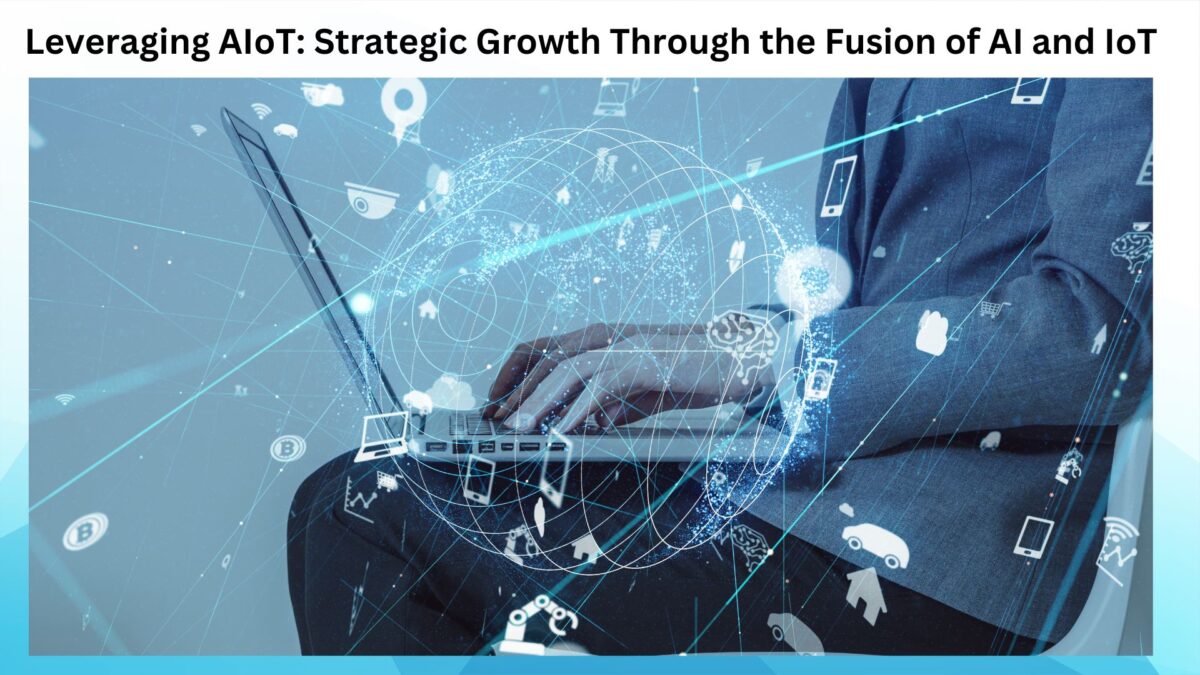
Leveraging AIoT: Strategic Growth Through the Fusion of AI and IoT

Categories
Success Stories

Leveraging AIoT: Strategic Growth Through the Fusion of AI and IoT

The combination of Artificial Intelligence (AI) with the Internet of Things (IoT), also known as AIoT, heralds a new age in technology. This integration, which combines IoT data gathering capabilities with AI intelligent decision-making processes, is transforming industries and improving everyday lives by creating smarter, more autonomous systems.

At the core of AIoT is the collaboration between AI and IoT, in which IoT devices collect massive volumes of data via sensors and connection, while AI interprets this data to provide insights and make choices. This potent combination allows gadgets to collect information, learn from it, and act autonomously. Consider smart thermostats that change temperatures based on user behavior or self-driving cars that negotiate difficult areas using real-time data analytics. These examples demonstrate the transformational potential of AIoT.

Key Components of AIoT

AIoT is built on three key components: data gathering, analysis, and real-time processing. IoT devices continually monitor and collect data about their environment, such as temperature, humidity, and motion. AI systems then process this data, identifying patterns, predicting outcomes, and facilitating decision-making without the need for human participation. Edge computing integration is crucial in this case, since it allows for instantaneous data processing at the source. This minimizes latency and increases the responsiveness of applications like industrial automation and healthcare monitoring.

Benefits of AIoT

The combination of AI and IoT provides several benefits. One of the most significant benefits is autonomous decision-making. Devices can work autonomously, making real-time choices based on processed data. This feature is critical in circumstances requiring quick reactions, such as autonomous driving and emergency management.

Improved data insights are another significant benefit. AI’s analytical skills reveal deeper insights into patterns and anomalies that traditional approaches may miss. Businesses that use AI can make better judgments and discover new possibilities.

AIoT improves operational efficiency significantly. Businesses may enhance operations through predictive maintenance, which decreases downtime and the costs associated with equipment breakdown. For example, AIoT can predict when machinery will fail and arrange maintenance before a breakdown occurs, saving time and money.

Furthermore, AIoT systems provide more tailored user experiences. These systems improve client satisfaction in a variety of industries by personalizing services to specific demands. Retail systems driven by AIoT may offer individualized shopping experiences based on consumer preferences and behaviors, resulting in a more engaging and gratifying customer journey.

Applications Across Industries

AIoT is causing ripples across different industries. Remote monitoring and diagnostics, for example, have transformed the healthcare industry. IoT devices allow for real-time health checks, and AI analyzes this data to discover possible health concerns early on. Wearable technologies such as smartwatches may monitor vital signs and notify healthcare practitioners of any irregularities, therefore improving patient outcomes.

AIoT has also improved medical imaging and diagnosis. AI systems can interpret images more precisely and faster than human radiologists, helping to discover and diagnose illnesses earlier and increasing treatment outcomes.

In manufacturing, AIoT is changing operations into smart factories. Predictive maintenance, a crucial AIoT application, improves production lines by predicting equipment breakdowns before they occur. Smart sensors integrated in machines collect performance data, which AI systems evaluate to forecast maintenance requirements, assuring continuous and efficient operation.

AIoT has also improved quality control in the production process. These systems track and evaluate the manufacturing process in order to maintain high quality standards. AI can detect flaws in real time and make modifications to assure quality while decreasing waste and enhancing efficiency.

Smart cities are another area in which AIoT is having a big influence. AIoT aids traffic management, for example, by enabling intelligent traffic systems. IoT sensors collect data on traffic patterns, which AI uses to optimize traffic flow, minimize congestion, and increase public transit efficiency.

AIoT helps to increase energy efficiency in urban infrastructure. Smart grids use artificial intelligence (AI) to better manage energy use by studying usage trends and changing power distribution to save waste and expenses.

Public safety is improved with AIoT-powered surveillance systems. These systems employ artificial intelligence (AI) to evaluate data from cameras and sensors in real time, allowing for faster incident detection and reaction, ultimately boosting security.

Future Prospects

The effect of AIoT technologies will spread to even more sectors as they develop further. For example, AIoT is crucial to the development of completely autonomous cars. These cars’ IoT sensors gather environmental data, which AI then analyzes to help with driving decisions. To win over the public’s trust and guarantee road safety, these systems must be extremely dependable and secure.

Another field with room to grow is advanced robots in manufacturing. Robots can now execute intricate operations with extreme accuracy and instantly adjust to changing conditions thanks to AIoT, which boosts output and lowers human error.

AIoT will continue to develop smart urban settings, resulting in more sustainable and effective urban life. The quality of life for city people will be improved by innovations in public services, trash reduction, and energy management.

However, issues like cybersecurity, data privacy, and interoperability need to be resolved if the advantages of AIoT are to be fully realized. To foster confidence and encourage the broad use of AIoT solutions, it will be essential to provide strong security protocols and adherence to data protection laws.

Takeaway

The combination of AI and IoT is not just a new trend in technology; rather, it is a force that will revolutionize how we use technology on a daily basis. Adopting AIoT may provide companies a major competitive edge by improving customer experiences, streamlining processes, and spurring innovation. As a tech consultant, keeping up with the most recent advancements in AIoT allows you to provide your customers insightful analysis and strategic direction, assisting them in navigating this quickly changing environment.

Categories
Success Quotient

Leveraging Startup Acquisitions for Strategic Growth: Insights from 2024

Categories
Success Quotient

Leveraging Startup Acquisitions for Strategic Growth: Insights from 2024

Mergers and acquisitions (M&A) have been quite active in 2024, especially in the technology industry. In order to improve their skills, spur innovation, and gain a competitive edge, established businesses are increasingly purchasing startups. The quick development of technology, particularly in areas like cybersecurity, cloud computing, and artificial intelligence (AI), is a major factor driving this trend. Here we explore some of the biggest startup acquisitions of 2024, considers their strategic ramifications, and provides insights into how these transactions are influencing the direction of different sectors.

The following are some of the most impactful startup acquisitions that have taken place in 2024:

Google Acquires Mandiant

Value: $5.4 billion Date Announced: January 2024

Google made a calculated step to strengthen its cloud security solutions by acquiring Mandiant, a well-known cybersecurity company. Google is better equipped to defend its cloud services from ever-more-sophisticated cyberthreats because to Mandiant’s proficiency in threat intelligence and incident response. This purchase is in line with Google’s overarching plan to improve its market position in the cloud computing space by providing its clients with strong security solutions.

Salesforce Acquires Troops

Value: Estimated at $100 million Date Announced: February 2024

Salesforce wants to improve its CRM capabilities by acquiring Troops, a firm that incorporates business data into chat networks. Through the integration of data from several business systems into well-known messaging applications like Slack and Microsoft Teams, Troops’ technology enables smooth collaboration inside enterprises. Salesforce is now able to provide more complete and intuitive CRM solutions thanks to this purchase, increasing overall organizational effectiveness.

Microsoft Acquires Nuance Communications

Value: $19.7 billion Date Closed: March 2024

An important step in improving Microsoft’s AI and healthcare capabilities was the company’s acquisition of Nuance Communications. Microsoft’s cloud services are enhanced by Nuance’s cutting-edge speech recognition technology, especially its uses in patient care and medical transcription. Microsoft may now offer more comprehensive healthcare solutions thanks to this purchase, utilizing AI to enhance patient outcomes and expedite medical procedures.

Amazon Acquires One Medical

Value: $3.9 billion Date Closed: April 2024

Amazon’s goal to increase its presence in the healthcare industry is demonstrated by its acquisition of One Medical. Amazon’s current healthcare activities are well-integrated with One Medical’s network of primary care clinics and telemedicine services. By merging cutting-edge telemedicine technology with conventional in-person treatment, this purchase allows Amazon to provide a more complete healthcare service, enhancing its customers’ access to healthcare.

Adobe Acquires Figma

Value: $20 billion Date Announced: May 2024

Adobe made a calculated effort to expand its product line for designers and developers when it acquired the collaborative design platform Figma. Teams may collaborate on design projects in real time with Figma’s cloud-based platform, which facilitates remote collaboration. Adobe’s position in the market for creative software is strengthened by this acquisition, which also facilitates smooth cooperation on creative projects.

Major Startup Acquisitions in 2024

Beyond the notable acquisitions mentioned above, several other significant deals have taken place in 2024, further shaping the technology landscape:

Google Acquires Cameyo

Value: Not disclosed Date Announced: June 2024

Google’s acquisition of Cameyo, a virtual application delivery specialist, aims to simplify the use of legacy Windows applications on Chromebooks. This move is part of Google’s strategy to enhance its cloud offerings and improve user experience for Chromebook users, making it easier to run essential applications without complex installations. This acquisition enhances Google’s ability to offer more versatile and user-friendly cloud solutions.

AMD Acquires ZT Systems

Value: Not disclosed Date Announced: August 2024

AMD’s acquisition of ZT Systems, known for high-performance data center systems, is designed to strengthen AMD’s expertise in AI infrastructure. The deal focuses on enhancing AMD’s capabilities in delivering systems optimized for AI workloads while retaining ZT’s design capabilities. This acquisition allows AMD to offer more robust solutions for data centers, supporting the growing demand for AI-driven computing.

Salesforce Acquires PredictSpring

Value: Estimated at $100 million Date Announced: July 2024

Salesforce’s acquisition of PredictSpring, a developer of point-of-sale software, aims to integrate its systems into Salesforce’s Customer 360 platform. This acquisition will enable retailers to enhance customer interactions across various touchpoints within their stores, streamlining operations and improving service delivery. This move strengthens Salesforce’s retail offerings and provides a more comprehensive solution for managing customer experiences.

Nvidia Acquires Run.ai

Value: $700 million Date Announced: April 2024

Nvidia’s acquisition of Run.ai, an AI infrastructure management startup, is part of its strategy to bolster its capabilities in managing AI workloads efficiently. This acquisition reflects Nvidia’s commitment to maintaining its leadership position in the AI space by integrating advanced management tools into its offerings. Run.ai’s technology enhances Nvidia’s ability to optimize the performance of AI applications, supporting the growing demand for AI solutions.

SAP Acquires WalkMe

Value: $1.5 billion Date Announced: March 2024

SAP’s acquisition of WalkMe is aimed at enhancing its Joule AI copilot software. This deal illustrates SAP’s focus on integrating user-friendly digital adoption solutions into its enterprise software ecosystem. WalkMe’s technology improves user engagement and operational efficiency, enabling SAP to offer more intuitive and effective software solutions for its clients.

Accenture Acquires Excelmax

Value: Not disclosed Date Announced: February 2024

Accenture’s acquisition of Excelmax, a semiconductor design company, is intended to provide clients with custom chips tailored for data center and AI applications. This move aligns with the growing demand for optimized computing solutions in various sectors. By integrating Excelmax’s design capabilities, Accenture can offer more tailored and efficient solutions for its clients.

Trends and Implications

The practice of bigger businesses purchasing startups is a sign of a wider tech sector plan to acquire personnel and cutting-edge technology. The 2024 acquisitions reveal a number of significant themes and ramifications:

Emphasis on AI and Cloud Computing: AI and cloud computing will be at the heart of many of the noteworthy acquisitions in 2024. To improve their product offerings and preserve their competitive advantages, companies including as Microsoft, Google, and Nvidia are making significant investments in these technologies. This pattern emphasizes how crucial cloud computing and artificial intelligence are becoming to advancing technical advancement and corporate expansion.

Healthcare Innovation: Businesses like Amazon and Microsoft have expanded their healthcare capabilities, and the healthcare industry has witnessed a number of notable acquisitions. The goal of these purchases is to improve patient care and operational efficiency by incorporating cutting-edge technologies into healthcare services. The trend emphasizes how technology and healthcare are increasingly interacting due to the demand for more effective and easily available healthcare solutions.

Improved User Experience: A emphasis on improving user experience is seen in acquisitions such as SAP’s acquisition of WalkMe and Adobe’s acquisition of Figma. These businesses are spending money on technology that encourage cooperation, usability, and user involvement. The significance of user-centric design in creating effective software solutions is highlighted by this trend.

Strategic Alliances and Ecosystems: Salesforce’s acquisition of Troops and PredictSpring, as well as other collaborations between IT giants and startups, demonstrate the importance of strategic alliances. Through these purchases, larger businesses are able to incorporate cutting-edge technologies into their ecosystems and give their clients more extensive and potent options.

Key takeaways

The 2024 startup acquisition boom emphasizes how crucial creativity and flexibility are to the IT sector. Established businesses are improving their product offerings and strategically positioning themselves for future development in a more competitive market by acquiring startups with specialized technology. These integrations will probably change market dynamics and have an impact on technology breakthroughs in a number of industries as they develop.

Categories
Success Stories

How Goldman Sachs Marcus Revolutionized Consumer Banking

Categories
Success Stories

How Goldman Sachs Marcus Revolutionized Consumer Banking

With more than 150 years of experience, Goldman Sachs is a Wall Street mainstay that has established a solid reputation in wealth management and investment banking. To reduce the risks connected with its conventional business lines, the corporation realized it needed to diversify its sources of income after the 2008 financial crisis. Marcus, a digital-only bank created to enter the consumer banking sector, was the result of this strategy shift.

Marcus’s Origins

Goldman Sachs found itself at a turning point in the middle of the decade. Investment banking profit margins were being squeezed, and the regulatory landscape had become more stringent. Goldman Sachs chose to stray from its usual emphasis and investigate the consumer banking industry in order to deal with this new reality. The business debuted Marcus in 2016, after one of its founders, Marcus Goldman.

Marcus, a digital-only marketplace that provides unsecured personal loans, was established. A number of considerations led to the decision to join the consumer market. First, in contrast to investment banking, the consumer banking industry offered the possibility of consistent, less erratic revenue sources. Second, by providing smooth, digital-first client experiences, conventional banks were able to compete with fintech firms thanks to technological developments.

First Products Offered

Marcus initially concentrated on offering customers unsecured personal loans. Simple fixed-rate, fee-free loans up to $30,000 with interest rates ranging from 5% to 24.99% were the hallmark of these loans. Marcus is a strong participant in the consumer lending market thanks to the competitive nature of these loans and a simple online application process.

Marcus added high-yield savings accounts to its lineup of products in 2017. Customers were further persuaded to switch to Marcus for their banking requirements by the attractive interest rates these accounts offered in comparison to traditional savings accounts. Building a deposit base that could be utilized to finance more lending operations was the goal of this calculated action.

In collaboration with Apple, Marcus launched its first credit card by 2019. For Marcus, the Apple Card—which is linked with Apple Pay and offers special benefits and easy-to-use financial management tools—was a major turning point. It showed how the bank may improve its product offerings by innovating and working with digital titans.

Challenges and Growth

Marcus’s quick growth wasn’t without its difficulties. Scaling the infrastructure to accommodate an expanding client base was one of the main challenges. Goldman Sachs’s technology and human resources were under strain due to the spike in new accounts and loan applications.

As Marcus expanded, it required solid IT infrastructure, seamless interaction with Goldman Sachs’s systems, and major expenditures in technology and cybersecurity. Navigating new regulatory norms and striking a balance between agility and compliance were necessary while entering the consumer banking sector. Because the industry was so competitive, building brand awareness and trust required great goods, services, and smart alliances. Marcus’s development was remarkable in spite of these obstacles; by the fall of 2019, it had $5 billion in loans and $55 billion in deposits, demonstrating the success of its strategic efforts.

Strategic Initiatives and Innovations

Marcus put in place a number of innovative and smart strategies to deal with the difficulties and maintain its growth:

Digital-First Strategy: Marcus made use of digital technology to give its clients a flawless banking experience. The web platform’s user-friendly interfaces and simple navigation were part of its design. This digital-first strategy appealed to tech-savvy customers seeking easy banking options.

Customer-Centric Products: Marcus concentrated on creating goods that solved the problems associated with conventional banking. High-yield savings accounts, fee-free personal loans, and the ground-breaking Apple Card were all created with the consumer in mind. This customer-focused strategy contributed to the development of a devoted clientele.

Strategic Alliances: By working with tech behemoths like Apple, Marcus was able to increase the range of products it offered and reach a wider market. For example, the Apple Card offered consumers special advantages and improved their entire experience by integrating smoothly with the Apple ecosystem.

Data-Driven Insights: Marcus used sophisticated data analytics to learn more about the tastes and behavior of his customers. The bank was able to adapt its marketing tactics and product offerings to the changing demands of its clientele thanks to this data-driven strategy.

Impact on the Banking Industry

Marcus’s success has had a big influence on the banking sector, proving that established banks can compete with fintech companies and innovate. The crucial role that digital transformation plays in enabling traditional banks to satisfy changing customer demands with competitive goods and services is one of the main lessons to be learned from Marcus’s path. The emphasis on customer-centricity has been crucial in fostering loyalty and trust. Strategic alliances have increased reach and stimulated innovation, as seen by Marcus’s cooperation with Apple. Finally, Marcus’s flexibility in reacting to shifting market dynamics and legal frameworks emphasizes how crucial resilience and agility are to long-term success.

Takeaway

Marcus’s story serves as a powerful illustration of how a traditional financial firm, like as Goldman Sachs, can effectively handle the challenges of the contemporary banking environment. Marcus has established a strong position in the consumer banking industry by utilizing digital technology, paying attention to client demands, and embracing innovation. Marcus is in a strong position to take the lead in reimagining the banking industry’s future as it develops and grows.

SOURCE: Marcus website, HBS Paper

Categories
Applied Innovation

AI-Enhanced Connected Vehicle Technologies Transforming Fleet Management

Categories
Applied Innovation

AI-Enhanced Connected Vehicle Technologies Transforming Fleet Management

Adopting cutting-edge technologies is essential to remain ahead of the competition in the ever changing automotive sector. At the vanguard of this change is vehicle connectivity, specifically through vehicle-to-everything (V2X) communication. V2X makes it possible for cars to communicate with a variety of ICT equipment, such as other cars, buildings, people, and external networks. In order to prepare their fleets for the future, companies are finding that connected car technologies are crucial.

Enhancing Driver Safety

For fleet managers, ensuring driver safety has always been a top priority. Conventional dashcams work well for detecting incidents in real time, but more preventative safety measures were required.

Driver safety has been increased as a result of AI’s integration with camera video monitoring systems. Through the analysis of facial cues and behaviors, AI-powered driver-facing cameras are able to identify high-risk behaviors like weariness and distraction. By warning the driver and the fleet management about possible hazards, these cameras assist to avert collisions before they happen.

By taking a proactive approach to safety, fewer accidents occur on the road, improving fleet safety as a whole. With the use of this data, fleet managers may implement corrective measures that will guarantee safer driving conditions and enhance driver performance.

Optimizing Driver Training

It has long been difficult to recognize and deal with unsafe driving practices. Driver behaviors were not usually changed by conventional training techniques.

The way fleet managers keep an eye on driving habits has been completely transformed by telematics devices. These gadgets gather information about driving behaviors such excessive speeding, hard braking, abrupt turns, and engine idling. This information may be used by fleet management to fully comprehend how each driver behaves while driving.

Fleet managers can provide specialized training programs designed to address certain driving patterns by identifying areas for development. Individual driver performance is improved by this tailored strategy, which also improves fleet efficiency and safety as a whole.

Ensuring Regulatory Compliance

Ensuring adherence to safety requirements is essential for fleets operating in regulated areas, including construction. Conventional incident management techniques were frequently insufficient.

Dashcams that are incorporated into fleet management systems offer a practical way to handle incidents and adhere to regulations. These dashcams, which are equipped with both audio and video capabilities, allow fleet managers to thoroughly examine occurrences involving injuries, crashes, or aggressive conduct.

Dashcam data in real time guarantees timely incident reaction and offers useful documentation for regulatory examinations. This improves adherence to safety regulations for lone workers and safeguards drivers of specialist vehicles.

Streamlining Route Optimization

For fleet management, effective route planning is crucial, but it is frequently hampered by erratic factors like traffic, weather, and road conditions.

AI is becoming a vital component for fleet management’s route optimization. Large volumes of data may be analyzed by AI-driven fleet management software, which can then spot trends and design the best routes possible depending on variables like cost, time, and distance.

AI keeps an eye on factors like traffic, weather, and road conditions to make real-time route adjustments for optimal efficiency. Better cost management, lower carbon emissions, and quicker task completion times are the outcomes of this, which is particularly important for last-mile delivery.

Enhancing Communication

For operations to run well, drivers and fleet management must communicate effectively, which can be difficult with conventional approaches.

The use of Natural Language Processing (NLP) technology has improved fleet management system communication. Effective communication between drivers and fleet management is made possible by NLP, which gives AI-based systems the ability to comprehend, interpret, and react to human language.

Text-to-speech technology allows fleet management to provide drivers immediate feedback, especially when dangerous driving patterns are identified. This AI-powered communication makes sure that drivers get informed about critical developments while maintaining their attention on the road.

Streamlining Vehicle Maintenance

For operational effectiveness, fleet vehicle health maintenance is essential, but anticipating repair requirements can be difficult.

By generating historical data sets through predictive analytics, artificial intelligence (AI) and cloud computing play important roles in fleet data management. These data sets assist in preventing malfunctions and informing maintenance choices.

AI predicts possible vehicle faults ahead of time by analyzing both historical and current data. Fleet managers may plan maintenance in advance and monitor service intervals with this predictive maintenance capabilities. Fleets may save expensive repairs and preserve operating effectiveness by averting unplanned malfunctions.

The Role of OEMs in Fleet Management

Original Equipment Manufacturers (OEMs) must provide strong support in order to fully realize the promise of connected car technology.

The technology infrastructure and data analytics skills required to enable connected car systems are supplied by OEMs. AI gives fleet managers useful insights by analyzing massive volumes of data from embedded and networked OEM hardware devices.

These realizations increase production, lower expenses, and optimize operational efficiency. Modern technology is radically altering fleet management, from improved communication and real-time route optimization to predictive maintenance and driver safety. AI’s predictive ability increases with further development and data collection, resulting in more user-friendly and effective fleet management.

Takeaway

Fleet management is being revolutionized by the integration of cutting-edge technology like telematics, AI, and V2X communication. Fleets are becoming more effective, safer, and sustainable via increasing driver safety, simplifying route optimization, boosting communication, guaranteeing regulatory compliance, optimizing driver training, and improving vehicle maintenance.

In this transition, OEMs play a critical role in supplying the required technology infrastructure and data analytics skills. AI’s capacity to forecast and optimize fleet operations will only become better as it develops and gathers more data. Businesses will be in a better position to dominate the sector in the future if they adopt these technology now.

Categories
Success Stories

Embracing Innovation: Ford’s Successful Adoption of 3D Printing

Categories
Success Stories

Embracing Innovation: Ford’s Successful Adoption of 3D Printing

Maintaining an advantage in the fiercely competitive automobile sector necessitates ongoing innovation and technological adaptability. Ford Motor Company, a well-known industry leader, has adopted 3D printing to transform its production procedures, increasing productivity and quickening the creation of new products. This case study explores Ford’s strategic use of 3D printing, emphasizing the difficulties encountered, the solutions put in place, and the revolutionary outcomes attained.

Company Background

Since its founding in 1903, Ford Motor Company has led the automotive sector and is renowned for having invented assembly line and mass manufacturing methods. As the market became more competitive and customer needs changed over time, Ford looked for creative ways to cut expenses, simplify processes, and keep its position as the industry leader.

Challenges Faced

Need for Faster Prototyping: Traditional prototype methods’ labor-intensive and time-consuming nature made it difficult to quickly create and iterate new items. Ford found it difficult to quickly introduce new inventions to the market as a result of this inefficiency, which slowed down the entire product development cycle. One major barrier was the prototype process’s latency, which hindered the quick design iterations and modifications required to meet changing customer and market needs.

Waste and Cost Reduction: Ford realized it needed to streamline its production procedures in order to preserve sustainability and profitability in the very competitive automobile sector. Reducing material waste and manufacturing costs without sacrificing quality was the aim. Ford sought to establish a more effective manufacturing workflow that reduced waste, which in turn reduced costs and improved overall operational efficiency. To this end, the company streamlined production processes and implemented technologies such as 3D printing. Maintaining the business’s competitive advantage and encouraging innovation required this calculated action.

Solutions Implemented

In order to overcome these obstacles, Ford incorporated 3D printing technology into several phases of their production process. This cutting-edge technology provided several important advantages:

• Quick Prototyping: 3D printing made it possible to create prototypes quickly, which sped up design revisions and iterations. The time needed to launch new items was shortened by this agility.

• Customization: Without requiring significant retooling, Ford was able to create parts that were specifically suited to the demands of individual customers because to the versatility of 3D printing. This skill was especially useful for producing one-of-a-kind and limited-edition parts.

• Material Efficiency: 3D printing is an additive process that develops items layer by layer, as opposed to conventional subtractive manufacturing techniques, which entail removing material. By drastically reducing material waste, this strategy helped to save money and preserve the environment.

Results Achieved

For Ford, the use of 3D printing technology produced a number of noteworthy results:

• Faster Product Development: By significantly cutting down on the time needed to create new prototypes, Ford was able to launch products more quickly. Ford was able to keep ahead of the competition and react swiftly to consumer trends because to its speed-to-market advantage.


• Cost Savings: 3D printing reduced total manufacturing costs by enabling on-demand part manufacture and minimizing material waste. The money saved was put back into new product development and innovation.


• Increased Innovation: 3D printing’s adaptability encouraged an innovative culture within the business. Designers and engineers may try out novel concepts and intricate geometries that were previously hard or impossible to accomplish using conventional production techniques.

Takeaway

The effective use of 3D printing by Ford Motor Company is an example of how cutting-edge technologies may transform production methods. Ford has established itself as a pioneer in automotive innovation by tackling issues with cost-effectiveness and prototyping speed. For other firms seeking to use technology to gain a competitive edge in an industry that is changing quickly, the Ford case study provides a template.

Source: Ford Media Center

Categories
Success Stories

Starbucks’ Digital Flywheel: Revolutionizing Customer Experience Through AI

Categories
Success Stories

Starbucks’ Digital Flywheel: Revolutionizing Customer Experience Through AI

To meet and surpass client expectations in the dynamic retail and service sectors, businesses must continuously innovate. Starbucks, a market leader in coffee shops worldwide, has demonstrated this with its ground-breaking Digital Flywheel approach. Starbucks has created a smooth and customized customer experience by utilizing data analytics and artificial intelligence (AI), which not only increases customer pleasure but also boosts operational efficiency. This case study explores Starbucks’ Digital Flywheel strategy’s main elements and effects, showing how the business has used technology to maintain its lead in a cutthroat industry.

Key Components of the Digital Flywheel

Analytics and Data Gathering

The foundation of Starbucks’ Digital Flywheel strategy is data collection and analytics. Starbucks collects a lot of information about its customers’ tastes, buying patterns, and contextual elements like location and weather thanks to its rewards program and mobile app, which have over 17 million users. Starbucks’ individualized marketing strategy and product offerings are based on this data. Starbucks can adjust its marketing strategies to match the unique requirements and preferences of its consumers by examining what they order, when they order it, and how frequently they come.

• Data Integration: Starbucks is able to develop a thorough picture of every consumer by combining data from several sources. By using a comprehensive strategy to data collecting, the business is able to comprehend the complex tastes and behaviors of its clientele.


• Contextual Insights:
Starbucks’ marketing techniques are greatly influenced by variables like geographical information and weather. For example, the app may recommend a cold beverage on a hot day and a hot cup of tea or coffee on a chilly day.

Personalized Customer Experience

The Digital Flywheel strategy’s capacity to deliver a customized client experience is one of its most notable aspects. Starbucks is able to provide its consumers with personalized recommendations by utilizing artificial intelligence. For instance, the point-of-sale system can recognize a consumer via their app and recommend their preferred orders when they visit a new location. Similar to being recognized by a familiar barista, this customized touch gives consumers a sense of worth and understanding.

• Targeted promos: By sending personalized promos according to each user’s past purchases, the app increases user engagement and promotes return visits. The purpose of these promos is to appeal to the individual tastes of each consumer, increasing the likelihood that they will take action.

• AI-Powered Suggestions: By utilizing AI, Starbucks is able to continuously improve its suggestions, guaranteeing that consumers find fresh goods that suit their preferences. The consumer experience is kept interesting and novel by this dynamic approach.

Seamless Ordering Process

Convenience and efficiency are essential to the Digital Flywheel approach. Customers may submit orders ahead of time with features like Mobile Order & Pay, which drastically cuts down on wait times. With mobile transactions making up around 25% of total purchases, this service has been incredibly successful. Customers may now place orders via voice commands or SMS thanks to the addition of a virtual barista feature, which greatly simplifies the ordering procedure.

• Order Customization: Clients may tailor their orders to their precise requirements, guaranteeing that they will always receive what they need.
• Real-Time information: The app keeps users informed at every stage of the order’s journey by providing real-time information on its status, from preparation to pickup.

Continuous Innovation

Starbucks’ use of consumer data to guide menu changes and product development demonstrates its dedication to ongoing innovation. Starbucks may launch new goods that address changing consumer tastes by examining purchase patterns. For example, insights from user data led directly to the creation of unsweetened iced tea choices.

Product Testing: Before launching new items worldwide, Starbucks tests them in a few markets using data. This data-driven strategy guarantees that consumers will accept new products.
• Finding New Products: The business uses machine learning methods to continuously improve its suggestions, making sure that clients find new products that suit their preferences.

Impact on Customer Satisfaction

Starbucks has seen a number of benefits from the implementation of the Digital Flywheel strategy, including a notable increase in customer happiness and operational effectiveness.

Increased Customization

Consumers take pleasure in a customized, engaging, and intimate experience. Having the option to get specials and recommendations that suit their tastes promotes repeat business and loyalty. Customers feel appreciated and understood because to this individualized approach, which is similar to interacting with a friendly barista.

Enhanced Practicality

For busy customers, being able to place their orders in advance and avoid lineups has changed everything. Wait times are greatly decreased by mobile order and pay, especially during busy hours. For consumers who value efficiency in their everyday activities, this convenience is essential.


• Time Savings: By avoiding large lineups and having their orders ready when they arrive, customers save a significant amount of time.
• Less Friction: Customers may more easily and swiftly obtain their preferred food and drink products thanks to the smooth ordering process.

Stronger Customer Engagement

Customers remain interested in the Starbucks brand thanks to tailored recommendations and targeted advertising. The app’s capacity to give pertinent deals and recommendations improves consumer engagement and strengthens their sense of brand loyalty.

• Loyalty Programs: By providing points and discounts, the rewards program encourages return business and bolsters client loyalty.
• Interactive Features: Customers get a more engaging and interactive experience thanks to features like real-time order updates and a virtual barista.

Improved Operational Efficiency

Starbucks can react quickly to shifting customer preferences by using data analytics for product offers and inventory management. Through resource optimization and waste reduction, this agility guarantees that the business successfully satisfies client needs.

• Inventory Optimization: Starbucks lowers the risk of overstocking or understocking by using predictive analytics to manage inventory more skillfully.
• Supply Chain Efficiency: Starbucks is able to ensure that the correct items are accessible at the right time by streamlining its supply chain using data-driven insights.

Takeaway

Starbucks’ Digital Flywheel approach demonstrates how AI and data analytics may revolutionize consumer experiences. Starbucks has developed a customer-centric strategy that meets the demands of contemporary consumers by combining data collecting, tailored suggestions, easy ordering procedures, and ongoing innovation. Stronger client interaction, more convenience, better customisation, and higher operational efficiency are all clear benefits of this approach. Starbucks is in a strong position to hold into its top spot in the cutthroat coffee shop industry as long as it keeps innovating and improving its Digital Flywheel.