




Categories
Applied Innovation

How XR Technology is revolutionizing Product Design and Development

Categories
Applied Innovation

How XR Technology is revolutionizing Product Design and Development

The process of product design and development is changing due to the use of expanded reality (XR) technology that is providing a realistic, dynamic setting for product ideation, prototyping, and testing. This way the creation and production of products is being revolutionized by this cutting-edge technology.

The technology known as Extended Reality (XR) combines Augmented Reality (AR), Virtual Reality (VR), and Mixed Reality (MR). It allows designers and engineers to visualize and test their ideas in a virtual world using XR technology leading them to find and fix problems early in the development process. Companies are investigating the potential of XR technology because of the exciting opportunities it offers in product creation and development. In the near future, it is likely to become a crucial component of product creation.

This technology also has the potential to accelerate product creation, lower expenses, and streamline design and development processes. It also makes it feasible for product developers to visualize and engage with their products in ways that were previously impossible. In order to help users better comprehend how a product functions and how to use it, it can be used to create interactive product experiences.

Businesses are also utilizing XR technology to develop more individualized goods. Businesses can design goods that are customized for specific consumers by utilizing XR. The building of tangible prototypes, which could be time-consuming and expensive, was a traditional step in the process of product design and development. Contrarily, XR technology dispenses with the need for tangible models by enabling designers and engineers to build and evaluate virtual prototypes. Due to the ease and quickness with which adjustments and iterations can be made, this can lower expenses and speed up the development process.

Additionally, XR technology gives engineers and designers a more engaging and realistic way to visualize their creations. For instance, designers can evaluate the shape, functionality, and aesthetics of their product by viewing and interacting with a 3D model of it in a simulated world using VR. This can assist engineers in finding problems with their designs early on and fixing them.


On the other hand, augmented reality (AR) can be used to overlay digital data onto actual tangible prototypes, giving creators real-time information about the performance and behavior of the product. This can assist engineers in finding and fixing problems early in the development process, lowering the likelihood of expensive errors later.

VR and AR advantages can be combined with MR technology helping designers and developers to evaluate how the product will function in the real world by interacting with virtual versions in a real-world setting using MR. In order to evaluate their products in various environments, designers and engineers can use XR technology to mimic various product utilization situations. A VR simulation, for instance, can be used to evaluate a product’s longevity under various environmental circumstances, such as temperature and humidity. Before the product is produced, this can assist designers in identifying possible problems and making changes.

Overall, XR technology has the ability to completely transform the process of creating new products. Businesses can cut costs, expedite development, and eventually bring goods to market quicker by giving designers and engineers a more immersive and interactive way to visualize and test their ideas.

Please write to us at open-innovator@quotients.com to learn how the product design and development process is changing as XR technology develops further and how this technology will support more effective and efficient company operations.


Categories
Applied Innovation Industry 4.0 Uncategorized

How XR Technology is transforming the Maintenance and Repair Industry

Categories
Applied Innovation Industry 4.0 Uncategorized

How XR Technology is transforming the Maintenance and Repair Industry

Everyone is raving about the new, intriguing technology known as XR. But what does XR actually imply, and when can this technology be used? Cross reality, also known as expanded reality, is a general word for several distinct but connected technologies, which include Augmented Reality (AR), Virtual Reality (VR), and Mixed Reality (MR).

XR, MR, VR, and AR

The terms XR, MR, VR, and AR are frequently used synonymously but there is a definite distinction between these. Virtual Reality is a type of XR that uses a head-mounted display (HMD) or smartphone, or other gadgets placed about an inch away from the viewer’s eyes to fully immerse the viewer in a simulated world. Here the display of the gadget completely fills the user’s field of view. However, not all XR is virtual reality (VR).

Similarly, Augmented Reality is a subset of XR that uses digital enhancements to improve the user’s perception of the actual world. Typically, a device’s camera is used for this, which records the real-world scene and superimposes digital components on top of it. For instance, augmented reality (AR) may phone’s camera to project game figures onto the screen of a smartphone, giving the impression that they are in the same room as you.

MR, or “mixed reality,” is a fusion of VR and AR. In other words, Virtual reality and augmented reality are combined to create Mixed Reality. Users can engage with both physical and digital objects thanks to MR’s anchoring of digital components to the real world. Usually, specialized gear, like Microsoft’s HoloLens, is used to accomplish this. Overall, it’s critical to comprehend the distinctions between XR technologies because each has particular advantages and disadvantages and is best suitable for particular uses.

Application of XR in Different Industries

XR technology by combining the physical and virtual worlds improves safety, efficiency, and productivity while reducing costs and downtime. It has the potential to revolutionize the way we work and is impacting many industries like Gaming and Entertainment, Employee Training, Customer Support, Healthcare, Property and Real Estate, and Retail.

Application of XR in Maintenance and repair


Maintenance and repair work is one of the most important applications where XR is having an impact. Technicians can obtain real-time information, such as directions, blueprints, and troubleshooting manuals, about the equipment they are working on by using AR overlays. This technology may increase the precision and effectiveness of maintenance and repair work, decrease delay, and eventually result in cost savings for companies.

Traditionally, techs have user manuals and blueprints to identify and fix equipment. This approach, though, can be laborious and error-prone. On the other hand, XR technology gives workers a visual depiction of the equipment, enabling them to swiftly recognize the issue and fix it. This is especially advantageous for sophisticated apparatus and equipment, where even a small error can result in expensive downtime and maintenance costs.

Additionally, step-by-step directions on how to fix or keep the equipment can be provided using AR overlays. This benefits technicians who may be inexperienced with a specific sort of machinery or lack the required knowledge. Technicians can more swiftly and correctly identify and fix machinery with the help of real-time guidance.

Repair workers as well can be trained using XR technology on how to operate and manage equipment. The use of VR models can give techs access to a regulated and secure virtual world where they can practice maintenance and repair tasks. This can lower the possibility of mishaps and equipment harm while training, as well as increase the techs’ effectiveness and accuracy in real-world situations.

Remote assistance can also be provided using AR graphics. With the aid of smart eyewear, techs can communicate in real-time with specialists who can assist them virtually throughout the maintenance or repair process. When working with complicated equipment that calls for specialized knowledge and experience, this can be especially helpful.

In general, XR technology has the power to completely transform the servicing and repair sector. Businesses can increase the precision and effectiveness of maintenance and repair tasks, decreasing delay and eventually saving money, by giving workers real-time information, step-by-step directions, and online assistance. It will be fascinating to observe how XR technology develops in the future and how it will help companies run more effectively and efficiently.

Please write to us at open-innovator@quotients.com to learn more about such innovative solutions and partnership opportunities.

Categories
Applied Innovation

Expanding role of Geoanalytics in Retail Industry

Categories
Applied Innovation

Expanding role of Geoanalytics in Retail Industry

Geospatial data and technology can provide the retail industry with useful insights to help understand consumer behavior, optimize store locations, and improve marketing efforts. It can play an important role in every stage of retail business, from site selection to customer delivery as each of these steps requires a spatial component to plan activities and make decisions.

With the emergence of studies on customer purchasing behavior geoanalytics is playing a critical role and companies are working to redefine their supply chain strategy and rethink their business processes and customer loyalty strategies. GIS data is extensively being used to discover new business opportunities and improve productivity.

Geoanalytics can help businesses to Identify areas of high customer demand by analyzing data on customer behavior and demographics. It can also aid in optimizing store locations and formats and identifying the best locations for new stores. By analyzing customer data and behavior, geoanalytics retailers can tailor their marketing and promotions to specific customer segments and geographic areas. Geospatial analytics can also help in optimizing inventory management by identifying which products are most popular in which areas and predicting demand based on customer behavior.

Some areas in which geoanalytics is playing its role in the retail industry is being discussed below:

Site selection: Retailers can learn a lot about the racial composition and spending habits of prospective consumers in a given region by analyzing geospatial data. With the help of this data, they can decide where new stores would be most successful, taking into consideration things like customer behavior, wage levels, and population density. Making data-driven choices about where to locate new shops can assist retailers in increasing sales and profitability.

Store plan: By examining consumer behavior, such as how they move around the store, where they spend the most time, and which goods they are most likely to buy, retailers can use geospatial data to optimize the plan of their stores. With the aid of this information, merchants can create shop designs that direct consumers to particular goods and boost sales. Retailers can enhance the shopping experience for customers and boost revenue by optimizing the arrangement of their stores.

Marketing: Retailers can also use geographic data to develop specialized marketing strategies that will connect with their target market more effectively. Retailers can develop marketing strategies that are tailored to particular geographic regions, demographics, or customer categories by analyzing data on customer purchasing patterns and tastes. Merchants may benefit from this by increasing the ROI of their marketing investments and the efficiency of their marketing efforts.

Inventory Management: Retailers can streamline their inventory management procedures by analyzing geospatial data on product demand, operations in the supply chain, and store sites. They can use this information to determine which goods are popular where and how much merchandise they should keep on hand. Dealers may be able to lower holding costs for goods and increase supply chain effectiveness as a result.

Competition Analysis: Merchants can use geospatial data to analyze their competing environment and learn more about the consumer base, pricing policies, and marketing strategies of their rivals. Retailers can use this knowledge to inform their pricing and marketing choices so they can compete effectively in their market.

In conclusion, geoanalytics can be a potent instrument for retailers to gain a competitive edge by comprehending consumer behavior, optimizing store locations, and enhancing marketing initiatives. Retailers can use geospatial data to make data-driven choices that could result in higher sales, profits, and consumer satisfaction.

Are you interested in implementing geoanalytics in your company? Quotients through its partner networks offers quicker, and more affordable alternatives without the constraints of time, money, and resources. Please write to us at open-innovator@quotients.com to know more about these solutions.

Categories
Applied Innovation

AI can analyze data from news reports and social media posts to predict disease outbreaks

Categories
Applied Innovation

AI can analyze data from news reports and social media posts to predict disease outbreaks

AI can serve as an effective tool that could be extensively used in clinical and public health decision-making in order to successfully manage a pandemic. AI and machine learning can be used to anticipate and react to disease outbreaks like creating early detection systems capable of detecting and tracking illness outbreaks in real time.

Policymakers and governments have a wide range of options for population-level health initiatives, which are essential for early-stage disease management. There are various non-pharmaceutical interventions available that can help in containing the rise of a pandemic. These include travel restrictions, company closures, school closures, mask mandates, and distribution of scarce resources such as personal protective equipment (PPE) and testing. Many of these choices rely on expert advice rather than data-driven algorithms but this has been changing post-COVID-19.

Data has always been essential in healthcare and public health decision-making; however, data proved to be particularly useful in global efforts to combat COVID-19. Unprecedented levels of worldwide cooperation have sparked data-sharing efforts from both traditional and non-traditional sources. The data generated in form of social media posts and news reports are also available for analysis that can be used to come to a conclusion and figure out the response by the government and other bodies.

An AI-powered platform can monitor and collect data from various sources, such as news reports, social media, and government notifications.  It can analyze this data using machine-learning techniques to detect possible disease outbreaks. An early warning device can notify public health authorities in real time of outbreaks, enabling them to react swiftly and contain disease spread.

Diseases are sociobiological phenomena that leave both social and microbiological traces, and using both AI and public data, such as social media posts, may aid in monitoring human society for indications of odd activity that may indicate the rise of new pathogens with pandemic potential.

By examining social media posts and other data in the months preceding the epidemic can be seen if there were any patterns or trends that could have given an early warning of the virus. Using this technology in a pandemic-focused early detection method could allow for faster reactions in public health, medicine, and government.

The system analyzes social media posts for early indications of disease epidemics and rising health issues using natural language processing (NLP) and machine learning algorithms. The aim is to detect possible outbreaks before they proliferate and to take preventive measures. Predictive models for AI-based tools and apps are presently being developed and evaluated.

There are also obstacles that have to be overcome such as data privacy and bias, as well as guarantee that the data gathered is accurate and reliable. There are concerns about privacy, data security, and the potential for prejudice in automated decision-making. Overall, it can be stated that AI has great potential to improve health care and predict outbreaks and hence improving responses, but cautious attention must be given to its application and ongoing tracking to ensure that it is used effectively and ethically.

Please write to us at open-innovator@quotients.com to know more about such innovative solutions and partnership opportunities,

Categories
Applied Innovation Healthtech

How Artificial Intelligence can help identify Melanoma

Categories
Applied Innovation Healthtech

How Artificial Intelligence can help identify Melanoma

Every area of healthcare is being significantly impacted by artificial intelligence (AI), and dermatology is no exception. Melanoma identification using AI is one possible application for AI in dermatology. Melanoma is the deadliest type of skin cancer and is difficult to detect and can be fatal. Artificial intelligence (AI) in this context can identify melanoma with a high degree of precision. This is crucial because the number of skin biopsies is increasing while the number of pathologists is decreasing leading to slows down in the rate of identification and, consequently, therapy.

The Process

The process includes the use of Deep Learning to build Convolutional Neural Networks (CNNs), a subcategory of machine learning. CNNs are a form of network architecture for deep learning algorithms and are specifically used for image recognition and other tasks requiring the processing of pixel data. They are therefore perfect for positions requiring computer vision (CV) skills as well as situations requiring precise object detection.

Data collection is the first step in dermatology scans for melanoma, where a sizable dataset of pictures of moles, lesions, and other skin anomalies is gathered and annotated by doctors to build a training set. The machine learning programs’ training on this information comes next during which, the system learns to recognize the characteristics of a melanoma lesion and distinguish them from other kinds of skin anomalies.

After the system is trained it is then incorporated into a dermatologist’s workflow. The dermatologist would capture photos of any suspicious lesions during a skin examination and upload them to the AI system, which would then evaluate the pictures and offer a diagnosis. A possible melanoma lesion would be flagged by the algorithm, prompting the physician to conduct additional testing.

After reviewing the image and the AI-generated analysis, a dermatologist may use additional diagnostic techniques like biopsy to support or contradict the prognosis. In order to increase the precision of the system, dermatologist comments on how well the AI system performed is integrated back into the training data.

An artificial intelligence (AI) system hence helps medical workers in developing possibly successful treatments and improving patient results. It can also increase access to treatment and raise the number of patients who can be seen and diagnosed quickly.

Conclusion

Dermatologists are now outperformed by artificial intelligence (AI) in the diagnosis of skin cancer, but dermatology is still lagging behind radiology in its widespread acceptance. Applications for AI are becoming easier to create and use.

Complex use cases, however, might still necessitate specialist knowledge for implementation and design. In dermatology, AI has a wide range of uses including basic study, diagnosis, treatments, and cosmetic dermatology.

The main obstacles preventing the acceptance of AI are the absence of picture standardization and privacy issues. Dermatologists are crucial to the standardization of data collection, the curation of data for machine learning, the clinical validation of AI solutions, and eventually the adoption of this paradigm change that is transforming our practice.

We want to make innovation accessible from a functional standpoint and encourage your remarks. If you have inquiries about evolving use cases across various domains or want to share your views email us at open-innovator@quotients.com

Categories
Applied Innovation

Artificial intelligence (AI)- the next stage in the transition from conventional to creative farming

Categories
Applied Innovation

Artificial intelligence (AI)- the next stage in the transition from conventional to creative farming

Artificial intelligence (AI) has the ability to transform the way we think about agriculture by bringing` about numerous advantages and allowing farmers to produce more with less work.

With increasing urbanization with the world’s population and shifting consumption patterns, and rising disposable money, Farmering Industry is under a lot of strain to satisfy the rising demand and needs to find a method to boost output. There is a need to search for methods to lessen or at the very least control the risks faced by farmers. One of the most interesting possibilities is the application of artificial intelligence in agribusiness.

Artificial intelligence (AI) is the next stage in the transition from conventional to creative farming. Here we are discussing some applications of AI in agriculture:

Soil and Crop Monitoring

The amount and quality of the yield, as well as the health of the product, are directly influenced by the micro- and macronutrients in the soil.

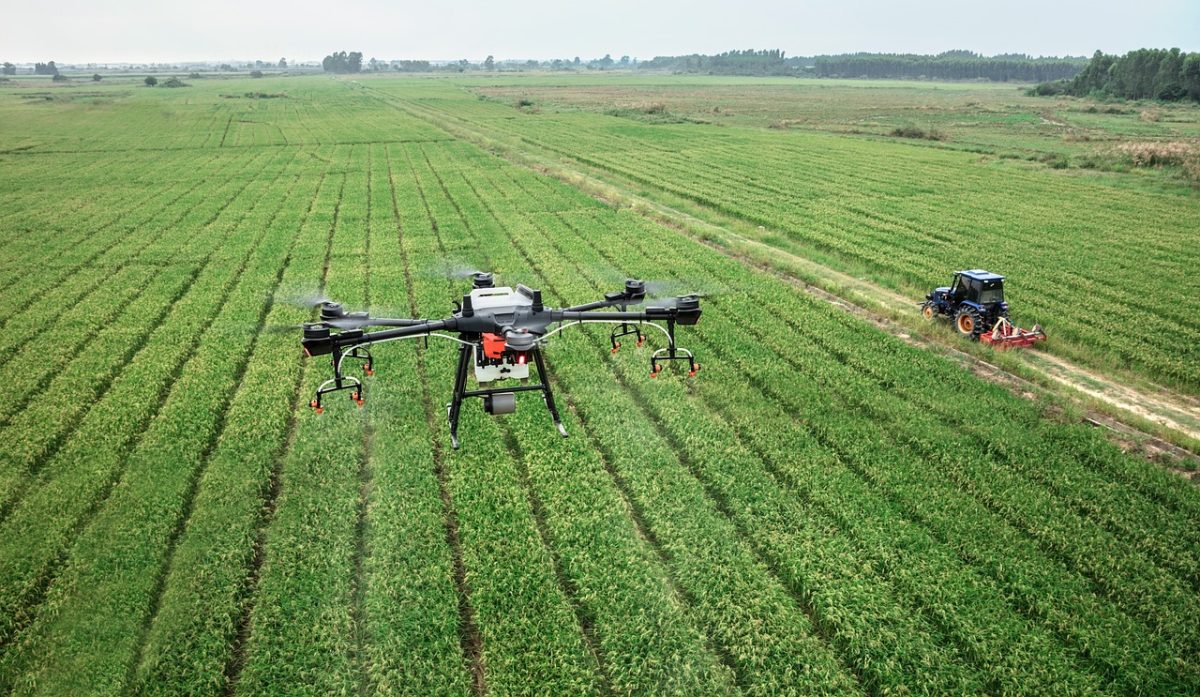
In the past, personal sight and opinion were used to assess the health of the soil and the crops. However, this approach is neither precise nor prompt and in its place, UAVs can now be used to collect aerial picture data, which can then be fed into computer vision models for intelligent agricultural and soil condition tracking. This data can be analyzed and interpreted by AI much more quickly than by humans in order to monitor agricultural health, forecast yields accurately, and identify crop malnutrition.

Farmers typically have to collect soil samples from the ground and transport them to a facility for labor- and energy-intensive analysis. Instead, researchers chose to investigate whether they could teach a program to perform the same task using image data from a low-cost handheld camera.

The computer vision model was able to produce approximations of sand composition and SOM that were as accurate as pricey lab processing.

Therefore, not only can computer vision remove a significant portion of the labor-intensive, manual work involved in crop and soil track, it often does so more efficiently than people.

Monitoring Crop Maturation

To maximize output effectiveness, it is also crucial to watch the growth stages. To make changes for better agricultural health, it’s essential to comprehend crop development and how the climate interact.

Precision agriculture can benefit from AI’s assistance with labor-intensive processes like manual development stage monitoring. For producers, overserving and overestimating agricultural development and maturity is a difficult, labor-intensive task. But a lot of that labor is now being handled with ease and remarkable precision by AI.

The farmers no longer needed to make daily trips out into the fields to inspect their crops because computer vision models can more correctly spot development phases than human observation. Computer vision can determine when a crop is mature by using an algorithm that examined the hue of five distinct crop components, estimated the crop’s maturity, and then used this information.

Detecting Insect and Plant Diseases

Plant pest and disease monitoring can be mechanized using deep learning-based picture recognition technology. This works by creating models of plant health using picture categorization, detection, and segmentation techniques. This is accomplished by using pictures of rotten or diseased crops that had been labeled by botanists according to four main phases of intensity to training a Deep Convolutional Neural Network. The substitute for machine vision entails extensive, time-consuming human searching and review.

Livestock Monitoring

Farmers can keep an eye on their livestock in real time by using AI. Dairy farms can now separately watch the behavioral characteristics of their cattle thanks to artificial intelligence (AI) solutions like image classification with body condition scores, feeding habits, and face recognition. Additionally, farmers can keep track of the food and water consumption as well as the body temperature and behavior of their animals. These benefits of AI are the main reasons the farming industry is seeing a sharp rise in demand for it.

Conclusion

Technology has been employed in farmland for a very long time to increase productivity and lessen the amount of demanding manual work needed for farming. Since the advent of farming, humankind, and agriculture have evolved together, from better plows to drainage, vehicles to contemporary AI.

Computer vision’s expanding and more accessible supply could represent a major advancement in this area. Because of the significant changes in our climate, environment, and dietary requirements, AI has the potential to revolutionize 21st-century agriculture by boosting productivity in terms of time, labor, and resources while also enhancing environmental sustainability. By implementing real-time tracking to encourage improved product quality and health, it is also enhancing agriculture.

Categories
Global News of Significance

Innovation in business models giving rise to the Gig economy

Categories
Global News of Significance

Innovation in business models giving rise to the Gig economy

The gig economy is expanding exponentially, and businesses of all sizes are benefiting from it by saving time, money, and permanently changing the connection between boss and employee.

A gig economy is a labor market where independent workers, as opposed to paid workers, are employed for brief assignments. Temporary employment is widespread in this free market economy, and freelance work—small, intermittent contracts—is the norm.

Freelancers are a valuable source of ideas, knowledge, and specific skills for businesses that use open innovation. Businesses can use project-specific employment to seek innovations without overcommitting resources, and they can use technology to expand their regional reach. When they employ people from the gig economy, they can also gain access to fresh viewpoints.

According to a recent report by Zinnov and Microsoft on the Indian gig economy and the role of technology in fostering industry development, Indian gig employees will create USD 250 Bn in employment by 2030. According to the study, India’s $5 trillion economy will be made possible by gig employees, with the nation’s 7.7 million-strong gig workforce taking the lead. This talent group is anticipated to more than treble in size to 23.5 million by 2030.

The study titled, ‘Unlocking the Power of the Gig Economy with Cloud PC’, highlights some points that are mentioned below:

  • In the post-pandemic business environment, Finance & Insurance, and IT sectors are witnessing 31% and 20% increased engagement with gig workers.
  • Pre-pandemic, nearly half of all gig workers were concentrated in two sectors – Retail Trade and Transportation, which is rapidly giving way to nearly 35% of gig workers being employed in the IT sector.
  • In fact, soon every third ’employee’ of an IT organization will be a gig worker.
  • This is being pushed by factors such as skilled labor shortage and companies exploring new, innovative business models and increasingly engage with the rising gig economy.
  • Engaging with the gig economy is not only beneficial for enterprises but gig workers as well. Viewed through the economical, operational, and innovation lens, gig workers benefit through high-paying, multiple short-term jobs that enable flexibility. It also allows for rapid upskilling while in some cases, enabling investment in passions and interests that pay them.
  • For enterprises, engagement with the gig workforce ensures cost savings, the flexibility of an ad-hoc, project-based working model that can be scaled or descaled quickly, enable quick onboarding, and access to highly skilled, niche talent.

The gig economy also brings some challenges and issues with data protection, IP theft, access control, cultural sensitivity, etc. The planning, onboarding, implementation, and funding stages of the gig worker process are all affected by these difficulties. More than 70% of CXOs believe that Onboarding and Execution are the two challenging yet crucial stages and that by tackling them, the contract economy model can be widely adopted. Technologies like Cloud, Artificial Intelligence (AI), and Cybersecurity are being used to effectively and transparently handle such issues.

The gig economy depends heavily on technology, which will also be fundamental in determining how work will be done in the future and where it will be done. People and businesses need solutions that are adaptable, dynamic, and cloud-powered to flourish in a hybrid world. Cloud technology, which made the move to online work easy, will play a key role here and make it possible for autonomous pros, like gig workers, to work online, interact without restriction, and handle complicated financial and technological issues.

Categories
Global News of Significance

Global Virtual Reality in Healthcare Market is Projected to Grow Significantly by 2029

Categories
Global News of Significance

Global Virtual Reality in Healthcare Market is Projected to Grow Significantly by 2029

The global virtual reality in the healthcare market is projected to grow to USD 6.20 billion by 2029, exhibiting a CAGR of 38.7% during 2022-2029.

As per the report by Fortune Business Insights, the global virtual reality in healthcare market size was USD 459.0 million in 2021 and grew to USD 628.0 million in 2022. With over 185.0 Million in annual market revenue, North America held the largest portion.

Medical professionals and institutions have benefited greatly from the use of virtual reality in healthcare. Planning, treating and diagnosing people with autism, fears, melancholy, and addiction all involve this technology. Virtual reality has many advantages, and healthcare providers are starting to use it in their operations. The technology has been demonstrated to be an effective tool for challenging procedures because it offers risk-free conditions. For the best learning programs for students and doctors, major virtual reality companies have combined 3D engaging content with 360-degree video.

The report’s main conclusions are:

  • Pain management is a crucial area where investments can have a big impact.
  • Technology developments will be crucial in fostering VR’s use in wearable gadgets.
  • It is a common customer belief that smart tech makes healthcare more affordable and available.
  • Healthcare professionals are increasingly using virtual reality to improve patient therapy capability.
  • Application Analysis: As PTSD cases increase, the pain management segment will dominate the market.

Constraints and Drivers

  • The industry is anticipated to advance due to the growth potential of smart technology and expenditures in pain management.
  • Virtual reality usage in healthcare will be aided by the rising appeal of wearable technology, such as fitness monitors, fit bands, rings, headphones, and spectacles.
  • Real-time mental health treatment is a growing application for VR headsets, and technological advancements will further expand VR’s application in wearable technology.
  • Virtual reality technologies are increasingly in demand due to the popularity of patient treatment apps for pain management, rehabilitation, harm evaluation, stroke recovery, and PTSD.
  • The use of virtual reality to address post-traumatic stress disorder in war veterans has attracted the attention of medical professionals.
  • The industry could encounter difficulties as a result of technical restrictions like computer specifications and resolution quality.

The report expects that North America will dominate the market for virtual reality (VR) in healthcare. Expanding healthcare research and development would accelerate regional market expansion. Asia Pacific will expand at a healthy rate and revenue-wise, major countries like India, China, and Japan are anticipated to rule the healthcare industry, concludes the report. It is also anticipated that businesses in the healthcare sector will increase their investments in VR.

Categories
Global News of Significance

UK government funding research on artificial intelligence (AI) to advance healthcare

Categories
Global News of Significance

UK government funding research on artificial intelligence (AI) to advance healthcare

The UK government has committed almost £16 million to cutting-edge study in artificial intelligence (AI).

The third round of the AI in Health and Care Awards has awarded funding to nine businesses, accelerating the testing and application of the most cutting-edge AI technologies. The awards were established in 2019 to advance AI technology aimed at assisting patients in managing chronic diseases and enhancing the speed and precision of diagnostics.

The victors include AI systems that can assist the treatment of neurological disorders like dementia, spot cancer, identify women at the greatest risk of preterm delivery, and diagnosis uncommon illnesses. The money will be used to assist the National Health Service in testing, reviewing, and adoption of these companies’ innovations.

One of the companies performs breast cancer screenings using an AI-driven program. By analyzing pictures of tissue samples, the technology enables doctors to identify cancer more rapidly. Another winner in the medical device industry, has been releasing gadgets and treatments to combat more than 30 chronic illnesses, such as diabetes and Parkinsons. A digital health start-up that supports an AI system that analyses electronic health data to identify patients with unidentified uncommon illnesses and suggest the best management strategies has also received an award. A consortium headed by a university has also been awarded that uses an online medical tool to identify pregnant women who are most at risk of giving birth early or experiencing problems that could result in birth defects.

One of the top 5 objectives of the UK government is reducing wait times for the National Health Service, which is supported by record spending of up to £14.1 billion for health and social care over the next two years.

The government is confident that technological advancements, such as those in robotics and artificial intelligence, will give people more control and aid in the fight against some of the largest healthcare challenges, such as genetic illnesses and cancer. Innovations of this nature can expedite diagnostics and therapies while freeing up staff time.

Source: Gov.uk

Categories
Global News of Significance

Tata Consultancy Services and Renesas Join Forces to Launch an Innovation Hub

Categories
Global News of Significance

Tata Consultancy Services and Renesas Join Forces to Launch an Innovation Hub

Renesas has partnered with Tata Consultancy Services to open an Innovation Center to develop semiconductor designs and software solutions for the IoT, infrastructure, industrial, and automotive segments. Mr. Rajeev Chandrasekhar, Minister of State for Skill Development and Entrepreneurship and Minister of State for Electronics and Information Technology, was present at the opening event in Bengaluru.

TCS, one of the world’s largest IT services companies, and Renesas, a supplier of advanced semiconductor solutions, announced the establishment of a joint Innovation Center in Bengaluru and Hyderabad. The companies plan to collaborate on radio frequency, digital and mixed-signal design, and software development for innovative next-generation semiconductor solutions serving a variety of industries.

RF circuit design includes the creation of circuits that operate in radio frequencies. Its applications include Radio broadcasting, Wireless communications, Remote sensing, Satellite navigation, etc. Mixed-signal circuit is an integrated circuit that contains both analog and digital circuitry on a single semiconductor chip is referred to as a With the increased use of cell phones, telecoms, portable electronics, and vehicles equipped with electronics and digital sensors, their utilization has skyrocketed.

The Innovation Center will bring together Renesas’ cutting-edge semiconductor designs and expert embedded software assistance with TCS’s extensive IoT experience and industry-specific knowledge of the industrial, telecom, and automobile sectors. The partners hope to introduce cutting-edge semiconductor designs and software solutions for the IoT, smart cities, industrial, and car sectors by working together and utilizing their combined strengths.

Source: Renesas