







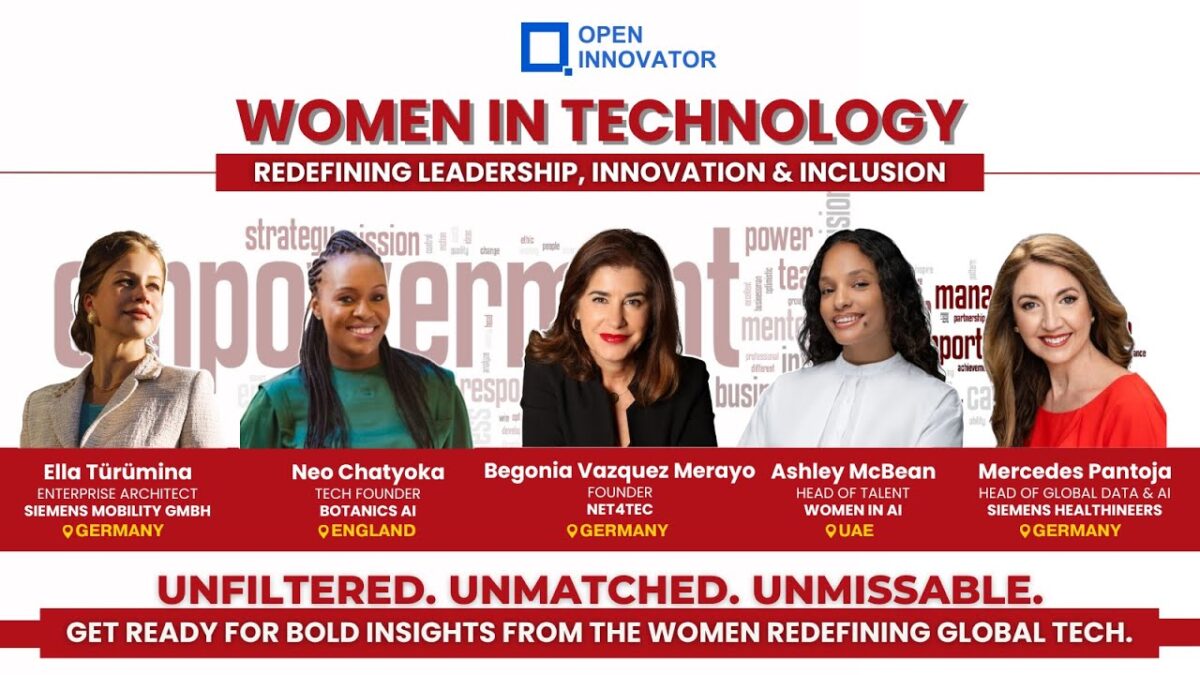
Expert Panel Explores Strategies for Creating More Inclusive Technology Environments
A distinguished panel of technology leaders recently gathered at the Open Innovation Virtual session to address the critical issue of gender inclusion and diversity in the tech industry. The discussion featured Neo Chatyaka, a technology innovator focused on creating solutions for diverse communities; Ashley McBeath, a tech executive specializing in embedding diverse perspectives into technological development; Ella Türünima, Enterprise Architect at Siemens Mobility GmbH; Begonia Vazquez Meraya, Tech Founder of Net4Tec; and Mercedes Pantoja, Head of Global Data & AI at Siemens Healthineers. Together, these trailblazing women shared bold insights and actionable strategies to foster inclusive workplace cultures and redefine leadership in global tech.
The session was moderated by Naman K, Nasscom CoE, on the Open Innovator platform, a community dedicated to fostering innovation and collaboration among technocrats, industry leaders, and startups. The discussion opened with a thought-provoking scenario about gender stereotypes, highlighting how ingrained mental models continue to shape perceptions about professional roles, particularly in technology sectors.
Key Discussion Points
Confronting Unconscious Bias and Stereotypes
The panel began by addressing fundamental challenges around gender stereotypes in professional settings. Through an engaging scenario about assumptions regarding surgeons and other professional roles, the discussion highlighted how deeply embedded mental models influence perceptions about who belongs in technology positions. This opening set the stage for examining how these biases impact women’s representation and advancement in tech roles.
Defining Meaningful Innovation Through Inclusion
Neo emphasized that meaningful innovation must serve diverse communities rather than focusing solely on dominant market segments. She argued that technology solutions developed without diverse perspectives often fail to address real-world problems faced by underrepresented groups. This approach requires intentionally including varied viewpoints throughout the innovation process.
Ashley reinforced this perspective by discussing how embedding diverse perspectives directly into technological development processes leads to more comprehensive and effective solutions. She stressed that diversity extends beyond gender to include varied mindsets, experiences, and cultural backgrounds that enrich problem-solving approaches.
Transforming Leadership and Workplace Culture
The panel addressed the critical need for inclusive leadership that actively fosters environments where women can thrive. Panelists shared personal insights about their career paths and experiences navigating male-dominated technology environments, emphasizing that leadership must be intentional about creating inclusive cultures rather than assuming they will develop naturally.
The discussion highlighted the importance of encouraging women to apply for leadership roles even when they don’t meet every listed requirement, challenging the tendency for women to self-select out of opportunities due to perceived qualification gaps.
Redesigning Talent Pipelines in Technology
Ashley focused specifically on artificial intelligence and technology sectors, discussing the urgent need to redesign talent pipelines to include diverse candidates. She emphasized that organizations must implement systemic changes in recruitment, retention, and advancement strategies rather than relying on individual efforts to drive inclusion.
The conversation addressed barriers that prevent women from entering and remaining in technology careers, including cultural expectations, lack of mentorship, and organizational environments that don’t support diverse working styles and perspectives.
Personal Leadership Development and Resilience
Panelists shared personal moments that shaped their leadership approaches, emphasizing the importance of resilience, continuous learning, and personal experiences in developing effective leadership styles. These stories illustrated how diverse backgrounds and experiences contribute to stronger leadership capabilities.
The discussion highlighted how personal narratives can inspire others to recognize their own leadership potential and overcome barriers that might otherwise prevent career advancement in technology fields.
Core Principles for Inclusive Technology Environments
The experts identified several fundamental principles for creating more inclusive technology workplaces:
- Proactive Cultural Change: Organizations must actively work to create environments where women and other underrepresented groups can succeed, rather than expecting individuals to adapt to existing cultures that may not serve them effectively.
- Comprehensive Mentorship Systems: Effective mentorship programs that connect women with both technical and leadership development opportunities prove essential for retention and advancement in technology careers.
- Systemic Recruitment Reform: Traditional recruitment and hiring practices often perpetuate existing biases, requiring deliberate redesign to attract and retain diverse talent pools.
- Leadership Visibility: Women in leadership positions must be visible throughout organizations to provide role models and demonstrate career advancement possibilities for other women.
Call to Action for Technology Professionals
The session concluded with strong encouragement for attendees to actively participate in creating more inclusive technology environments. This includes networking with and supporting other women in technology, advocating for inclusive practices within their organizations, and continuously developing leadership capabilities.
The panel stressed that everyone, regardless of their current position or level of influence, can contribute to building more diverse and inclusive technology communities through their daily actions and choices.
The discussion reinforced that creating equitable technology environments benefits everyone by fostering innovation, improving problem-solving capabilities, and ensuring that technological advancement serves broader societal needs effectively.
Write us to at open-innovator@quotients.com to get more information and participate in our upcoming sessions.