



Categories
Events

OI Session: Tech Leaders Address Gender Inclusion and Diversity Challenges

Categories
Events

OI Session: Tech Leaders Address Gender Inclusion and Diversity Challenges

Expert Panel Explores Strategies for Creating More Inclusive Technology Environments

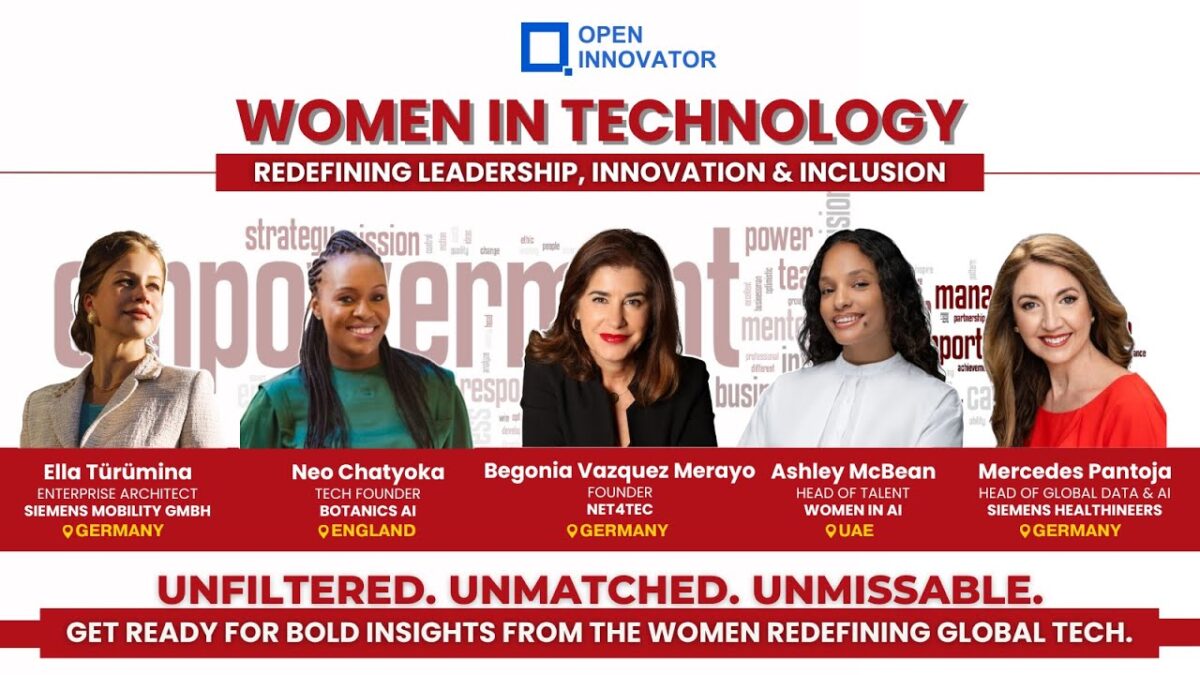
A distinguished panel of technology leaders recently gathered at the Open Innovation Virtual session to address the critical issue of gender inclusion and diversity in the tech industry. The discussion featured Neo Chatyaka, a technology innovator focused on creating solutions for diverse communities; Ashley McBeath, a tech executive specializing in embedding diverse perspectives into technological development; Ella Türünima, Enterprise Architect at Siemens Mobility GmbH; Begonia Vazquez Meraya, Tech Founder of Net4Tec; and Mercedes Pantoja, Head of Global Data & AI at Siemens Healthineers. Together, these trailblazing women shared bold insights and actionable strategies to foster inclusive workplace cultures and redefine leadership in global tech.

The session was moderated by Naman K, Nasscom CoE, on the Open Innovator platform, a community dedicated to fostering innovation and collaboration among technocrats, industry leaders, and startups. The discussion opened with a thought-provoking scenario about gender stereotypes, highlighting how ingrained mental models continue to shape perceptions about professional roles, particularly in technology sectors.

Key Discussion Points

Confronting Unconscious Bias and Stereotypes

The panel began by addressing fundamental challenges around gender stereotypes in professional settings. Through an engaging scenario about assumptions regarding surgeons and other professional roles, the discussion highlighted how deeply embedded mental models influence perceptions about who belongs in technology positions. This opening set the stage for examining how these biases impact women’s representation and advancement in tech roles.

Defining Meaningful Innovation Through Inclusion

Neo emphasized that meaningful innovation must serve diverse communities rather than focusing solely on dominant market segments. She argued that technology solutions developed without diverse perspectives often fail to address real-world problems faced by underrepresented groups. This approach requires intentionally including varied viewpoints throughout the innovation process.

Ashley reinforced this perspective by discussing how embedding diverse perspectives directly into technological development processes leads to more comprehensive and effective solutions. She stressed that diversity extends beyond gender to include varied mindsets, experiences, and cultural backgrounds that enrich problem-solving approaches.

Transforming Leadership and Workplace Culture

The panel addressed the critical need for inclusive leadership that actively fosters environments where women can thrive. Panelists shared personal insights about their career paths and experiences navigating male-dominated technology environments, emphasizing that leadership must be intentional about creating inclusive cultures rather than assuming they will develop naturally.

The discussion highlighted the importance of encouraging women to apply for leadership roles even when they don’t meet every listed requirement, challenging the tendency for women to self-select out of opportunities due to perceived qualification gaps.

Redesigning Talent Pipelines in Technology

Ashley focused specifically on artificial intelligence and technology sectors, discussing the urgent need to redesign talent pipelines to include diverse candidates. She emphasized that organizations must implement systemic changes in recruitment, retention, and advancement strategies rather than relying on individual efforts to drive inclusion.

The conversation addressed barriers that prevent women from entering and remaining in technology careers, including cultural expectations, lack of mentorship, and organizational environments that don’t support diverse working styles and perspectives.

Personal Leadership Development and Resilience

Panelists shared personal moments that shaped their leadership approaches, emphasizing the importance of resilience, continuous learning, and personal experiences in developing effective leadership styles. These stories illustrated how diverse backgrounds and experiences contribute to stronger leadership capabilities.

The discussion highlighted how personal narratives can inspire others to recognize their own leadership potential and overcome barriers that might otherwise prevent career advancement in technology fields.

Core Principles for Inclusive Technology Environments

The experts identified several fundamental principles for creating more inclusive technology workplaces:

  • Proactive Cultural Change: Organizations must actively work to create environments where women and other underrepresented groups can succeed, rather than expecting individuals to adapt to existing cultures that may not serve them effectively.
  • Comprehensive Mentorship Systems: Effective mentorship programs that connect women with both technical and leadership development opportunities prove essential for retention and advancement in technology careers.
  • Systemic Recruitment Reform: Traditional recruitment and hiring practices often perpetuate existing biases, requiring deliberate redesign to attract and retain diverse talent pools.
  • Leadership Visibility: Women in leadership positions must be visible throughout organizations to provide role models and demonstrate career advancement possibilities for other women.

Call to Action for Technology Professionals

The session concluded with strong encouragement for attendees to actively participate in creating more inclusive technology environments. This includes networking with and supporting other women in technology, advocating for inclusive practices within their organizations, and continuously developing leadership capabilities.

The panel stressed that everyone, regardless of their current position or level of influence, can contribute to building more diverse and inclusive technology communities through their daily actions and choices.

The discussion reinforced that creating equitable technology environments benefits everyone by fostering innovation, improving problem-solving capabilities, and ensuring that technological advancement serves broader societal needs effectively.

Write us to at open-innovator@quotients.com to get more information and participate in our upcoming sessions.

Categories
Events

OI Session: Startup Experts Reveal Strategies for Acquiring First 10 Real Customers

Categories
Events

OI Session: Startup Experts Reveal Strategies for Acquiring First 10 Real Customers

Panel Discussion Addresses Critical Challenge of Moving from Product Creation to Customer Acquisition

An expert panel of startup specialists recently participated in virtual session convened by Open Innovator. The goal was to address one of entrepreneurship’s most critical challenges: acquiring the first 10 real customers.

The discussion featured Angelie Mullin, a branding expert specializing in storytelling and narrative development; Jack Winter, a strategic marketing professional with expertise in demand validation; Celen Ebru, a community building specialist focused on targeted audience engagement; and featured a live startup pitch from Punit Agrawal, founder of an AI-powered customer support platform. The session was moderated by Naman K, who brings years of startup experience and emphasized the harsh reality that while every founder believes their product will succeed, the true test lies in actual customer acquisition.

Key Discussion Points

The Customer Acquisition Reality

The panel opened with a sobering statistic that 42% of startups fail due to lack of customers, not product issues. Naman highlighted the common founder illusion that first customers will come easily, describing this as a dangerous trap that leads many promising startups to failure. The discussion emphasized the critical difference between building a product and building a sustainable customer base.

Essential Mindset Shifts for Founders

Angelie stressed the importance of transitioning from founder-led sales to scalable sales models. She explained that founders must resist the temptation to over-customize their products for individual customers and instead focus on developing core offerings that appeal to broader market segments. This shift requires founders to think beyond their personal attachment to specific features.

Input-Focused Decision Making

Jack introduced the concept of validating demand before building products, using Dropbox as a prime example. The founder tested market interest through a simple video demonstration before investing in full product development. This approach emphasizes gathering real market feedback rather than making assumptions about customer needs.

Strategic Focus Over Scatter Approach

Celen emphasized the critical importance of focusing marketing efforts on fewer, more impactful activities rather than adopting a scattered approach. She stressed understanding specific audience segments deeply, arguing that trying to appeal to everyone often results in appealing to no one effectively.

Building Relationships Beyond Transactions

The panel unanimously agreed that successful customer acquisition requires moving beyond transactional relationships toward building long-term value connections. Early customers should be viewed as partners in product development rather than simply revenue sources, creating opportunities for referrals and testimonials.

The Power of Authentic Storytelling

A significant portion of the discussion focused on storytelling as a customer acquisition tool. Angelie noted that “people don’t buy what you sell, people believe what you believe,” emphasizing how emotional connections drive purchasing decisions. The panel shared tactics for using personal narratives to create resonance with potential customers.

Core Customer Acquisition Principles

The experts identified several fundamental principles for effective customer acquisition:

Problem-Solution Fit: Successful customer acquisition begins with solving genuine problems rather than promoting product features. Founders must understand customer pain points deeply and position their solutions accordingly.

Network Leverage: Building and utilizing professional networks emerges as crucial during early stages for gaining visibility and generating qualified leads. Personal connections often provide the most effective path to first customers.

Authentic Communication: Customers respond to genuine communication about challenges and solutions rather than polished marketing messages. Authenticity in founder communication creates trust and credibility.

Focused Targeting: Rather than casting wide nets, successful founders identify specific customer profiles and concentrate efforts on reaching these ideal segments effectively.

Practical Implementation Strategies

The panel provided concrete recommendations for implementing these principles. Founders should start with their immediate networks to identify potential early adopters who genuinely need their solutions. This approach provides validation opportunities while building initial customer relationships.

Storytelling should be integrated into all customer communications, focusing on the founder’s journey and the problem they’re solving rather than technical product details. This narrative approach helps potential customers understand the motivation behind the solution.

Community engagement and relationship building should take priority over paid advertising in early stages. Organic growth through genuine connections often produces more loyal customers than paid acquisition channels.

Addressing Long-Term Sustainability

The discussion acknowledged that acquiring first customers represents only the beginning of startup challenges. Panelists emphasized that early success doesn’t guarantee long-term viability without understanding broader market dynamics and developing scalable acquisition systems.

Real-World Application

The session included a live pitch demonstration from Punit Agrawal, showcasing an AI platform for automating customer support voice interactions. This practical example illustrated how founders can present their solutions while incorporating the discussed principles of customer-focused positioning and clear value proposition communication.

Key Takeaways for Entrepreneurs

The expert panel concluded with several critical insights for startup founders. Success requires moving beyond product creation excitement toward systematic customer acquisition approaches. Founders must develop empathy for customer needs while building authentic relationships that extend beyond initial transactions.

The emphasis on storytelling and emotional connections provides a competitive advantage in crowded markets, while strategic focus prevents resource waste on ineffective broad-spectrum marketing approaches. Building strong networks and leveraging personal connections offers the most reliable path to first customer acquisition.

The session reinforced that customer acquisition represents a fundamental business skill that requires dedicated attention and systematic development, challenging the assumption that great products automatically attract customers without strategic effort.

Reach out to us at open-innovator@quotients.com or drop us a line to delve into the transformative potential of groundbreaking technologies and participate in our OI sessions. We’d love to explore the possibilities with you.

Categories
Events

Innovation Experts Champion ‘Fail Fast, Learn Faster’ Approach

Categories
Events

Innovation Experts Champion ‘Fail Fast, Learn Faster’ Approach

At our recent Open Innovator Session, we dove into topic ‘F𝗮𝗶𝗹 F𝗮𝘀𝘁 𝗮𝗻𝗱 L𝗲𝗮𝗿𝗻 F𝗮𝘀𝘁𝗲𝗿’. A distinguished panel of innovation experts gathered to explore the transformative power of failure in driving business success.

The discussion featured Mehdi Khammassi, an experienced entrepreneur specializing in rapid iteration strategies; Professor Dr Yang (Lucy) Lu, an academic leader in innovation education; Dr. Deena Elsori, a researcher focused on entrepreneurial psychology and confidence building; and Belal Riyad, a startup practitioner with extensive experience in customer-centric product development. The session was moderated by Naman K, who facilitated insights on building collaborative innovation communities.

Key Discussion Points

The Failure Reality Check

The panel opened with a striking statistic: 90% of startups fail not because they have bad ideas, but because they learn too slowly from their mistakes. This fundamental insight shaped the entire conversation, with participants arguing that traditional approaches to avoiding failure actually slow down the innovation process.

Redefining Success and Failure

The experts challenged conventional thinking by positioning failure as the actual process of success rather than its opposite. Khammassi emphasized that “it’s not us who fail; it’s our hypothesis,” helping entrepreneurs separate their personal identity from business outcomes. This psychological shift enables faster decision-making and reduces the emotional barriers to necessary pivots.

Building Confidence Through Action

Dr. Elsori provided a counterintuitive insight about confidence, stating that “confidence is a result of overcoming failure, not a prerequisite.” This perspective encourages entrepreneurs to take action despite uncertainty, building resilience through direct experience rather than waiting for complete confidence before moving forward.

Customer-Centric Learning

Belal Riyad stressed the importance of understanding customer pain points and using real feedback to guide product development. He advocated for focusing on small features and minimal viable products to learn faster, rather than building extensive solutions based on assumptions. This approach ensures that innovation efforts address actual market needs.

Academic Innovation

Professor Dr Lu discussed how educational institutions can foster fail-fast principles through structured experimentation. She emphasized creating learning environments where failure becomes a valuable educational tool rather than a source of discouragement.

Core Methodology Principles

The panel identified several key principles for implementing fail-fast approaches:

Speed of Learning: Organizations must prioritize how quickly they can extract lessons from failures rather than focusing solely on avoiding mistakes. Rapid iteration and hypothesis testing become more valuable than extensive planning.

Ego Management: Successful innovators learn to receive objective feedback without letting personal attachment to ideas prevent necessary changes. This emotional discipline enables more rational decision-making throughout the innovation process.

Customer Engagement: Direct interaction with target markets provides the most valuable insights for refining products and services. Customer feedback should drive iteration cycles rather than internal preferences or assumptions.

Risk Reframing: Rather than avoiding risks, successful innovators take calculated risks with rapid feedback mechanisms that minimize potential losses while maximizing learning opportunities.

Practical Applications

The experts provided concrete strategies for implementing these principles across different contexts. Startups can use minimal viable products to quickly test market assumptions before investing in full development. Academic institutions can create experimentation-friendly environments that encourage student innovation. Established companies can develop internal cultures that reward learning from failure rather than penalizing unsuccessful attempts.

Community and Collaboration

Host Naman K emphasized the collaborative nature of innovation, encouraging continued dialogue among innovators, entrepreneurs, and educators.

The session also had a presentation from Puneet Agarwal, Founder, AI LifeBOAT, who introduced his product to the panelists. The virtual event concluded with strong encouragement for community engagement and peer-to-peer learning as essential components of the fail-fast methodology.

Looking Forward

The panel’s insights suggest a fundamental shift in how organizations should approach innovation challenges. By embracing failure as a learning accelerator rather than an outcome to avoid, businesses can develop more effective products, build stronger teams, and create sustainable competitive advantages in rapidly changing markets. The unanimous agreement among these diverse experts indicates growing recognition that strategic failure management will become increasingly critical for innovation success.

Write us to at open-innovator@quotients.com to get more information on our upcoming sessions.

Categories
Applied Innovation

AI-Powered Epidemic Surveillance: Revolutionizing Global Health Intelligence with Instant Data

Categories
Applied Innovation

AI-Powered Epidemic Surveillance: Revolutionizing Global Health Intelligence with Instant Data

Rapid outbreak identification and response are essential for maintaining global security in today’s interconnected world because diseases cross boundaries at previously unheard-of rates. While useful in controlled environments, traditional monitoring techniques are unable to keep up with the ever changing biological dangers. These systems rely on official reporting procedures, which frequently have loopholes, delays, or blind spots in certain areas. AI turns out to be a game-changer, radically changing the way we monitor, predict, and fight epidemics.

Global health intelligence is transformed by AI-driven epidemic monitoring, which processes vast amounts of open-source data from ecological sensors, social media, digital news, and medical records. These platforms do more than just aggregate data; they also examine trends, learn from mistakes, and instantly initiate reactions. AI makes it possible for previously unheard-of early-alert systems that are faster, more accurate, more dynamically responsive by combining natural language processing, machine learning, and predictive modeling.

From Signals to Situational Awareness: The Role of AI in Epidemic Intelligence 

Surveillance enabled by AI is excellent at finding weak signals in cluttered data environments. In order to identify symptoms, geographic groupings, and transmission risks, NLP and ML algorithms search through millions of daily inputs, including news fragments, social media discussions, and clinical reports. These solutions independently cross-verify sources and provide health authorities with real-time alerts, in contrast to manual systems that are limited by standardized forms. This change makes it possible to implement targeted mitigation techniques, maximize resource deployment, and begin containment efforts earlier.

The intelligence is more than just a response to forecasts. AI predicts outbreak trajectories, projects case volumes, and models intervention impacts by modeling disease behavior and regional vulnerabilities. This allows AI to provide actionable insights even in the absence of complete data.

NLP-Powered Early Warning Systems: Reading Between the Lines 

When it comes to identifying outbreak indicators in unstructured data, natural language processing is invaluable. Long before official confirmations, early disease indications are frequently found in community posts, local news, and online discussions. This unstructured text is broken down by NLP algorithms, which identify symptom keywords and unusual sentiment to highlight new dangers.

For example, a region’s concentrated online references of respiratory ailments may portend a variation of influenza. AI can create a multifaceted threat assessment by comparing this to hospital data or pollution levels. This method democratizes epidemic intelligence worldwide and is especially useful in under-resourced areas or emerging outbreaks where traditional surveillance is slow.

Deep Learning for Pandemic Forecasting

AI trackers can use deep learning models trained on transmission patterns, population mobility, and the effects of interventions to forecast case surges, monitor viral propagation, and guide policy. These models are able to adjust to changing settings and better represent nonlinear dynamics than statistical techniques.

Complex data, such as estimating ICU need, spotting new hotspots, or calculating lockout effectiveness, can be made simpler by visual analytics applied on top of these projections. For pandemic response teams around the world, these tools proved indispensable.

Real-Time Monitoring and Rapid Alerts: AI in Action 

Continuous epidemic detection is made possible by contemporary AI platforms that use news streams, social signals, and global health data. They immediately notify authorities to mobilize containment when they detect anomalies, a capability that saves hours and potentially saves lives. This real-time feature allows for dynamic risk prioritization according to severity and vulnerability while preventing isolated flare-ups from turning into pandemics.

Most importantly, these technologies are easily scalable. AI can handle enormous amounts of data without compromising speed, which makes it perfect for both domestic programs and international projects. It can be used for everything from neighborhood monitoring to continental surveillance.

Multi-Source Data Integration: A Holistic View of Outbreak Dynamics 

The power of AI in epidemic surveillance resides in its ability to combine many data sources. Prominent platforms use satellite data, migration patterns, wastewater virology, and temperature records to create a comprehensive model of outbreak ecosystems.

Prediction accuracy is increased by this fusion. For instance, dengue spikes are predicted by combining monsoon data with mosquito measures, and community transmission is revealed by sewage RNA research. AI combines these inputs to provide a 360-degree perspective of biological, environmental, and sociological aspects by mapping area dangers and simulating responses. Such integration fills knowledge gaps with real-time intelligence and is particularly useful for emerging diseases where previous data is limited.

The Future of Epidemic Surveillance: Intelligence at the Speed of Outbreaks 

Agile, intelligent surveillance is becoming more and more necessary as health threats become more complicated. AI outpaces diseases with speed and scalability. Future developments will see wearables, genomics, and telemedicine push the boundaries of monitoring while federated learning and privacy-centric analytics strengthen trust. In our race against the clock, cross-sector collaboration will speed up innovation and solidify AI as a strategic paradigm shift rather than just a tool, enabling mankind to detect earlier, respond more quickly, and save lives.

Reach out to us at open-innovator@quotients.com or drop us a line to delve into the transformative potential of groundbreaking technologies. We’d love to explore the possibilities with you

Categories
Applied Innovation

How Knowledge Graphs Are Quietly Reshaping AI, Science, and Enterprise Strategy

Categories
Applied Innovation

How Knowledge Graphs Are Quietly Reshaping AI, Science, and Enterprise Strategy

Knowledge graphs are a technology that is subtly but significantly changing how robots comprehend, reason, and provide insights in the quickly changing field of artificial intelligence. Knowledge graphs are emerging as the unseen framework for increasingly intelligent systems, precise forecasts, and profound scientific discoveries—even if they aren’t as exciting as generative AI or humanoid robots. Their uses are growing across industries, from simplifying enterprise audits to deciphering drug interactions, and India is well-positioned to gain from this.

So what exactly are knowledge graphs, and why are they suddenly so central to the future of AI?

Knowledge graphs are fundamentally organized representations of data. They create a network that machines can understand by mapping relationships between entities, such as people, places, ideas, molecules, or financial transactions. Knowledge graphs arrange data in nodes and edges rather than rows and columns like typical databases do. This enables AI systems to comprehend not only what something is, but also how it relates to everything else.

The power of knowledge graphs stems from this relational intelligence. They offer context in addition to facts. Furthermore, context is crucial in the AI era.

The Graph Database Revolution

The majority of knowledge graphs are built using graph database platforms, which enable businesses to create flexible, scalable graphs that link intricate data from several disciplines. Graph databases facilitate quick querying, reasoning, and visualization, whether a fintech business is mapping consumer behavior to fraud tendencies or a pharmaceutical company is connecting clinical trial results with molecular structures.

Graph databases provide a means of bringing diverse information together and revealing meaningful insights in India, where data fragmentation is a recurring problem in a variety of areas, including government and healthcare. A knowledge graph, for instance, might be used by a state government to link infrastructure data, land records, and citizen services, facilitating more transparent governance and intelligent urban planning.

The capacity of graph databases to facilitate semantic thinking makes them especially well-suited for artificial intelligence. Semantic search driven by knowledge graphs comprehends purpose and relationships, in contrast to keyword-based search. In scientific research, where uncovering hidden connections between datasets can result in novel theories and discoveries, this is extremely helpful.

When Knowledge Graphs Meet Large Language Models

When knowledge graphs and large language models (LLMs) are combined, the true magic happens. Although LLMs excel at producing writing that reads like it was written by a human, they frequently lack a foundation in structured knowledge. Hallucinations—confident but inaccurate outputs—and inadequate explainability may result from this.

Organizations may significantly increase the accuracy, relevance, and reliability of AI replies by integrating LLMs with knowledge graphs. Consider an enterprise chatbot that can comprehend your question and, to bolster its response, retrieves validated information from a knowledge graph. Or a scientific assistant who can use both organized biomedical data and natural language to describe how two proteins relate to one another.

In industries like legal tech, where AI systems employ knowledge graphs to scan contracts, identify hazards, and even generate jurisdiction-specific clauses, this connection is already being investigated. Such technologies could transform the way judges and attorneys obtain precedent and interpret statutes in India’s legal system, where case law is extensive and frequently unstructured.

Accelerating Medical Research and Personalized Healthcare

The field of biomedical research is one of the most potential uses for knowledge graphs. Data in the healthcare industry is notoriously segregated; patient information, clinical trials, medication interactions, and genomic data are frequently housed in different systems. By tying these dots together, knowledge graphs allow researchers to forecast the effectiveness of medications, find new treatment alternatives, and customize care.

A medical knowledge graph, for example, could enable physicians more precisely customize treatments by connecting a patient’s genetic profile with known drug interactions and clinical trial results. Knowledge graphs were utilized to quickly examine vaccine reactions, treatment regimens, and virus mutations across regions during the COVID-19 pandemic.

India stands to benefit greatly from such developments given its large and diversified population. Researchers could boost the development of indigenous treatments, enhance public health outcomes, and speed up discovery by creating national-scale biological knowledge graphs.

Enterprise Intelligence and Decision Support

Knowledge graphs are becoming used in enterprise planning outside of the fields of research and medicine. Organizations struggle with disjointed data systems that make decision-making difficult in industries including auditing, banking, and urban planning. These sources can be combined into a single, connected view using knowledge graphs.

Consider auditing as an example. By connecting financial transactions, compliance documents, and risk indicators, a knowledge graph enables auditors to identify irregularities and evaluate risk instantly. Graphs can be used in urban planning to link environmental measurements, infrastructural initiatives, and population data to promote more intelligent development.

Knowledge graphs offer Indian companies navigating digital transformation a competitive advantage. They facilitate real-time decision-making, facilitate complicated analytics, and aid in breaking down conventional data silos. The capacity to contextualize data will become a crucial difference as more businesses implement AI-driven operations.

The Road Ahead: Ecosystem Building and Innovation Platforms

Knowledge graphs are a strategic enabler for innovation platforms, not merely a backend tool. A platform can speed up matchmaking, promote cross-border cooperation, and enable tailored discovery by mapping the relationships between companies, researchers, patents, investors, and use cases.

Consider an India-based deeptech startup developing quantum encryption. In real time, a knowledge graph might link it to pertinent scholars overseas, investors in developing markets, and regulatory frameworks in various jurisdictions. The next generation of innovation platforms will be characterized by this type of ecosystem intelligence.

Knowledge graphs are already being used by top ecosystems worldwide to compare best practices, spot gaps, and promote co-creation. India can’t be left behind. The nation is well-positioned to take the lead in graph-based innovation thanks to its talent pool, data wealth, and developing AI capabilities.

Challenges and Considerations

Naturally, creating and managing knowledge graphs is not without its difficulties. Concerns around privacy, interoperability, and data quality must be addressed. Since graphs are only as good as the data they use, it is important that the data used in industries like healthcare and finance be reliable, safe, and ethically supplied.

Furthermore, a knowledge graph’s ontology—the schema that specifies the structure of things and relationships—determines how well it works. Iterative improvement, teamwork, and domain knowledge are necessary for creating strong ontologies.

However, these obstacles can be overcome. Knowledge graphs have the potential to be a key component of India’s AI strategy, supporting both automation and augmented intelligence, if the appropriate frameworks, collaborations, and governance models are in place.

Final Thoughts

Intelligent systems stand out in a world full with data because of their capacity for connection, contextualization, and reasoning. The significance of structured, relational information will only increase as AI develops further, moving from language models to autonomous agents. The message for businesses, inventors, and policymakers is if you invest in knowledge graphs, you’re investing in intelligence’s future.

Reach out to us at open-innovator@quotients.com or drop us a line to delve into the transformative potential of groundbreaking technologies. We’d love to explore the possibilities with you

Categories
Evolving Use Cases

AI-Powered Robotics for Planetary Exploration

Categories
Evolving Use Cases

AI-Powered Robotics for Planetary Exploration

The difficulties of planetary exploration get more complicated as humanity ventures farther into space. Real-time control of robotic missions by human operators is not feasible due to harsh terrains, unpredictable surroundings, and communication delays. A new generation of AI-driven robots with sophisticated autonomy, adaptive mobility, and intelligent decision-making abilities is emerging to get beyond these obstacles. In addition to being tools, these systems are independent explorers that can scale rock overhangs, navigate lava tubes, and work with other robotic agents to map and examine foreign environments.

Reimagining Mobility: Extendable Booms for Rugged Terrain

Deployable extensible booms are one of the most notable developments in planetary robotics. These gripping-equipped robotic arms enable exploration units to secure themselves to overhangs, steep surfaces, and underground formations such as lava tubes. Robots can move through intricate geometries that would be difficult for conventional wheeled or legged systems to traverse by pulling themselves forward with these booms.

This method significantly increases the robotic missions’ range. Robots may now investigate geological formations that may provide hints about the history of the planet, possible water sources, or even evidence of extinct life, rather than being restricted to flat or slightly sloping ground. Scientific competence has advanced significantly with the ability to conduct in-depth surface investigations in these difficult-to-reach locations.

Furthermore, the boom-based movement system is modular by design. Robots are capable of retracting limbs when not in use, adjusting their grip strength based on surface roughness, and simultaneously deploying numerous booms for stability. This adaptability improves efficiency and safety by enabling dynamic adaption to the surroundings.

Learning the Landscape: Real-Time Traversability Modeling

It takes cognitive observation in addition to mechanical skill to explore uncharted planetary surfaces. Robots may now learn and update real-time representations of their surroundings and traversability thanks to AI systems. These systems create spatial maps and evaluate terrain stability in real time using sensor data from cameras, LiDAR, and inertial measurement units.

The ability to make decisions on one’s own is essential. Robots can autonomously assess their environment, recognize impediments, and select the best routes rather than depending on pre-programmed routes or continual human supervision. They are able to determine the best locomotor gait for a certain surface, evaluate the cost of traversing it, and differentiate between passable and impassable terrain.

Learning never stops. The robot improves its navigation and prediction skills as it advances by deepening its understanding of the area. Long-duration missions, where conditions may change over time or deviate greatly from early predictions, benefit greatly from this adaptive intelligence.

Strength in Numbers: Cooperative Robotic Teams

Even while individual robots are getting better, teamwork is the key to planetary exploration in the future. To investigate complicated environments like as lava caverns, skylights, and crater interiors, heterogeneous robotic teams—which include legged, wheeled, and airborne units—are being deployed.

The collaborative method has a number of benefits. It makes job specialization possible, improves resilience through redundancy, and expands exploration coverage. For instance, one robot might survey the surroundings while another gathers geological samples. Coordinated movement, data sharing, and dynamic task distribution are made possible by communication between units.

Inspired by biological systems, AI-driven task-level autonomy enables this swarm-like behavior. Without human assistance, robots are able to assign responsibilities, adjust to setbacks, and maximize group performance.

Simulating Success: Physics-Based Mission Planning

Any robot’s mission must be carefully planned and verified before it steps foot—or wheels—onto a planetary surface. In this approach, physics-based simulation systems are essential because they enable engineers to simulate robotic exploration scenarios in virtual space.

Numerous dynamics domains are included in these simulations, including as guidance systems, path planning algorithms, rigid and flexible multibody mechanics, and environmental elements like air conditions and terrain geometry. Researchers can find possible hazards, improve robot design, and hone navigation algorithms by evaluating autonomous tactics in these virtual settings.

Additionally, simulation facilitates system verification and onboard software integration. Before being implemented on real hardware, algorithms created for safe landing, autonomous navigation, and manipulation are tested on high-fidelity models. This guarantees that robots perform dependably in real-world scenarios while lowering the expense and complexity of field testing.

Simulation tools are used to design command sequences, estimate resource requirements, and evaluate hazards in mission operations. They give operators and scientists a virtual sandbox in which to practice, train, and get ready for the uncertain challenges of space travel.

Toward a New Era of Space Autonomy

An important development in space exploration is the incorporation of AI into planetary robotics. Robots are now intelligent agents with perception, reasoning, and action capabilities rather than just passive tools. These machines represent the future of autonomous mobility, whether they are navigating the ground beneath their feet, grasping the walls of a Martian lava tube, or cooperating with a group of other explorers.

This change is about pushing the limits of human understanding, not just about technology. Artificial intelligence (AI)-powered robots bring up new horizons for research, innovation, and science by providing access to previously inaccessible situations. They enable us to investigate the universe as active participants, propelled by curiosity, intelligence, and autonomy, rather than as passive observers.

Reach out to us at open-innovator@quotients.com or drop us a line to delve into the transformative potential of groundbreaking technologies. We’d love to explore the possibilities with you

Categories
Evolving Use Cases

AI in the Metaverse: Powering the Next Frontier of Immersive Digital Experiences

Categories
Evolving Use Cases

AI in the Metaverse: Powering the Next Frontier of Immersive Digital Experiences

The Metaverse is quickly evolving into a dynamic, immersive extension of our digital life and is no longer just a sci-fi fantasy. Artificial Intelligence (AI) is becoming the unseen architect behind the scenes as virtual environments transform from static simulations into interactive, customized ecosystems. AI is revolutionizing how people connect, create, and engage with the Metaverse, from creating lifelike avatars to instantly improving virtual worlds. The combination of AI with the Metaverse represents a paradigm shift in how we perceive digital reality, not merely a technical advancement.

Generative AI: Building the Metaverse from Imagination

Generative AI has altered the rules and users can now explore and modify landscapes, avatars, items, and experiences that form the core of the Metaverse. These components used to need a lot of hand design, coding, and artistic work to create. Realistic virtual landscapes, intricate avatars, and interactive items may now be produced by AI on its own using sophisticated models that have been trained on enormous databases of visual, textual, and behavioral inputs. Users can now customize their virtual environments regardless of technical proficiency thanks to the democratization of content creation. AI makes it possible to create scalable, varied, and incredibly engaging content, whether it’s creating a futuristic cityscape or a tranquil woodland retreat.

Intelligent Avatars: Redefining Digital Presence

Avatars in the Metaverse are more than just visual representations; they are interactive tools and extensions of identity. These avatars are intelligent, expressive, and context-aware thanks in large part to AI.

Avatars are able to comprehend and react to user speech with subtlety and relevance because to natural language processing (NLP). Avatars may mimic human expressions through gesture recognition and emotion modeling, adding authenticity to talks. By facilitating deeper social presence, these features allow users to interact, cooperate, and communicate in ways that go beyond conventional computer interfaces.

With AI-driven customization tools, which let users alter everything from clothing and facial attributes to voice modulation and behavioral characteristics, users may precisely customize their avatars. Users feel more represented in their virtual worlds thanks to this customisation, which increases engagement.

The distinction between companion and interface will become increasingly hazy as AI develops since avatars will be able to understand user preferences, initiate interactions, and even help with activities.

Adaptive Virtual Environments: Immersion Through Intelligence

Making a virtual world that is visually appealing is just half the battle. Where AI really excels is in making sure it reacts dynamically to user behavior.

Now rendering techniques are optimized using AI algorithms that strike a real-time balance between realism and performance. These systems modify lighting, texturing, and object placement according on user movement, gaze direction, and interaction patterns to create environments that are lively and responsive.

AI adjusts the surroundings according to user choices and emotional cues, going beyond visual fidelity. For example, the system might recommend comparable settings or gently alter background noises and graphics to improve comfort if a user frequently spends time in peaceful, nature-themed areas.

This level of personalization transforms passive exploration into active immersion. Users aren’t just navigating a virtual world—they’re co-creating it with AI as a silent collaborator.

AI Moderation: Safeguarding the Virtual Experience

Strong safety and moderation measures are becoming more and more necessary as the Metaverse expands. Maintaining a polite and safe atmosphere is crucial given the millions of individuals interacting in real time.

These days, AI-based moderation techniques are being used to track user interactions, identify improper conduct, and highlight offensive material. These systems detect hazards ranging from spam and false information to hate speech and harassment by using anomaly detection, sentiment analysis, and contextual understanding.

AI makes proactive, real-time action possible, in contrast to manual moderation, which is reactive and resource-intensive. In a matter of seconds, it can notify moderators, delete objectionable content, and silence disruptive users.

This makes the Metaverse a place where creativity and connection may thrive without fear or conflict, while also protecting users and promoting inclusivity and trust.

Personalization and Engagement: The Data-Driven Metaverse

AI’s capacity to tailor experiences according to user behavior is among its most revolutionary contributions to the Metaverse. Artificial intelligence (AI) systems customize content, recommendations, and even social relationships for each user by examining interaction patterns, preferences, and engagement metrics.

A user who regularly attends virtual art exhibitions, for instance, might be paired with communities that are similar to their interests or receive carefully curated invitations to events of a similar nature. Based on real-time data, AI can also recommend avatar enhancements, new environments to explore, and game difficulty adjustments.

User retention and happiness are improved by this data-driven customisation. It transforms the Metaverse from a generic online environment into a carefully tailored experience that changes with the user and feels exclusively their own.

Additionally, platform developers and producers benefit greatly from these insights. They can improve engagement funnels, create more engaging virtual experiences, and hone content strategy by knowing what appeals to users.

The Road Ahead: AI as the Metaverse’s Operating System

It seems obvious that artificial intelligence (AI) will be the Metaverse’s operating system as we move forward. In order to create a smooth, intelligent, and flexible digital environment, it will coordinate every aspect of content creation, interaction, moderation, and personalization.

This combination creates fascinating opportunities. Imagine AI-powered virtual mentors assisting users in learning simulations. or marketplaces powered by AI where avatars independently negotiate, trade, and work together. The Metaverse will be more than just a destination; it will be a world that knows us, changes with us, and gives us power.

But this ambition also necessitates careful governance. The Metaverse must continue to be open, accountable, and inclusive by addressing concerns about algorithmic bias, data privacy, and the ethical application of AI. Not only will AI improve the Metaverse, but it will also define it with the correct foundations and ongoing innovation.

Reach out to us at open-innovator@quotients.com or drop us a line to delve into the transformative potential of groundbreaking technologies. We’d love to explore the possibilities with you.

Categories
Evolving Use Cases

Rewriting the Rules: How AI Is Transforming Legal Contract Drafting

Categories
Evolving Use Cases

Rewriting the Rules: How AI Is Transforming Legal Contract Drafting

Accuracy is crucial in the high-stakes realm of legal contracts. Every word, phrase, and punctuation mark has important connotations. Contract drafting and review have historically been laborious procedures requiring hours of careful attention from legal experts. However, there is a significant change taking place in the landscape. Artificial Intelligence (AI) has evolved from a future idea to a force that is changing the way legal teams work today. AI technologies are simplifying contract creation in ways that were unthinkable only a few years ago, from automating negotiating operations to recommending language and identifying discrepancies.

The Rise of AI in Legal Drafting

To create strong contracts, lawyers have long relied on precedent, gut feeling, and in-depth research. However, the need for more intelligent instruments increases along with the amount and complexity of legal papers. AI has filled this void by enhancing the skills of attorneys rather than taking their place.

Contemporary AI tools help with legal contract drafting by:

  • Suggesting contextually appropriate language
  •  Detecting errors and inconsistencies
  • Ensuring stylistic and structural uniformity
  • Highlighting risks and opportunities
  • Automating routine tasks like redlining and clause comparison

These are not only hypothetical powers. A new wave of sophisticated platforms created especially for legal workflows is enabling legal teams across sectors to implement them at scale.

Deep Research Meets Drafting Precision

To speed up research, document analysis, and authoring, one class of AI tools combines generative and agentic capabilities. These platforms provide a cohesive experience that easily integrates with internal knowledge bases, productivity tools, and legal databases.

Their capacity to carry out multistep legal projects—which match the mental processes of seasoned attorneys—is what distinguishes them. Their extensive research capabilities provide thorough reports based on reliable legal information, enabling attorneys to confidently and quickly transition from query to strategy.

These tools make contract drafting a strategic endeavor by integrating expert-curated playbooks and permitting clause-level enhancements. Within a single interface, attorneys may compare papers, verify authority, and make compliance edits.

Speed and Searchability Redefined

The simplification of contract review is the topic of another class of AI technologies. These platforms promise to cut review times by up to 80% and make clause searches possible in a matter of seconds, which is revolutionary for legal teams that handle large amounts of documents.

Lawyers can “talk terms” with the AI through their conversational interfaces, working together to thrash out fine print. In addition to retrieving clauses, advanced search features comprehend them and automatically identify contract kinds, signatures, and important terms. Users may precisely cut and dice contracts thanks to this semantic intelligence.

Additionally, these technologies ensure that deadlines and obligations are not missed by converting commitments into actionable checklists. This strategy provides a convincing answer for legal teams looking for speed without compromising accuracy.

Collaboration at the Core

Collaboration is the foundation of some AI platforms, which adjust to team workflows and enable legal professionals to examine, investigate, and prepare contracts with previously unheard-of efficiency.

Features such as tabular review turn contract folders into interactive grids that let users quickly compare clauses and extract important information. This methodical technique improves document insights and speeds up decision-making.

Lawyers can draft more intelligently without stepping outside of their comfort zone because to integration with well-known ecosystems like word processors. These technologies serve as a second set of eyes, allowing for markup, comments, and real-time collaboration whether a contract is being reviewed against a playbook or long-form agreements are being filled up.

Beyond standard searches, their agentic research skills may uncover pertinent precedents, validate citations, and decipher intricate legal jargon. This sort of AI is a potent friend for businesses that prioritize accuracy and collaboration.

Legal-Grade AI for Risk and Reporting

Another set of AI platforms, created with assistance from data scientists and legal professionals, provides legal-grade intelligence at every stage of the contract lifecycle. They provide a whole range of tools that have been approved by top attorneys, from generation to negotiation and post-execution review.

Their capacity to draw attention to risky or advantageous parts of contracts, including crucial times or unusual terms, is their most notable quality. Instant visibility into contract terms, governing law, and other topics is made possible by AI-powered libraries that extract insights across hundreds of legal concepts.

Conversational AI chatbots let users ask natural language questions about documents, get real-time summaries, and quickly revise clauses. This makes contract analysis quicker and easier by bridging the gap between machine intelligence and legal knowledge.

These platforms also empower non-legal teams—like Sales or HR—to generate compliant contracts from approved templates, reducing bottlenecks and accelerating time-to-signature.

Automating Negotiation with Strategic Focus

Lastly, certain artificial intelligence applications are made to automate the tedious process of negotiating contracts. They allow legal teams to concentrate on strategic elements rather than mundane duties, such as evaluating, redlining, and writing agreements.

Their algorithms guarantee consistency across documents, identify important negotiation points, and recommend backup positions. These tools shorten response times and increase overall negotiation efficiency by automating repetitive tasks.

This method provides a scalable solution that strikes a compromise between speed and legal rigor for businesses that make deals frequently.

The Strategic Impact of AI in Legal Workflows

AI tools are changing legal teams’ strategic stance in addition to increasing efficiency. Lawyers can concentrate on higher-value activities, such as advising clients, negotiating intricate agreements, or researching novel legal frameworks, by reducing the amount of time spent on manual chores.

Additionally, AI improves technological proficiency, which is becoming more and more expected in contemporary legal practice. Businesses that use AI tools are becoming more and more renowned for their responsiveness, agility, and capacity to produce value at scale.

Additionally, AI-powered systems let clients and attorneys work together more effectively. These solutions facilitate more open, responsive, and knowledgeable legal interactions, whether through conversational interfaces, collaborative workspaces, or real-time reporting.

Looking Ahead: AI as a Legal Partner, Not a Replacement

Even though artificial intelligence has amazing potential, it’s crucial to see these technologies as a supplement to legal professionals rather than a substitute. It is still impossible to substitute the human judgment, moral reasoning, and contextual knowledge that attorneys contribute.

Augmentation, or working more intelligently, more quickly, and with more confidence, is what AI provides. The process of creating contracts will become not only more effective but also more strategic, cooperative, and perceptive as legal teams continue to adopt new technology.

Reach out to us at open-innovator@quotients.com or drop us a line to delve into the transformative potential of groundbreaking technologies. We’d love to explore the possibilities with you

Categories
Evolving Use Cases

Reverse Logistics: Reimagining the Supply Chain with AI

Categories
Evolving Use Cases

Reverse Logistics: Reimagining the Supply Chain with AI

Reverse logistics has become a potent tool for supply chain transformation in a time when sustainability is no longer a business afterthought but rather a strategic need. Reverse logistics, which was once thought of as a reactive operation that was centered on returns, recycling, or disposal, is currently being reframed as a proactive, value-generating role that balances economic efficiency with environmental responsibility.

Defining Reverse Logistics and Its Strategic Role

Fundamentally, reverse logistics is the process of moving goods back through the supply chain after they have been consumed in order to be reused, refurbished, recycled, or disposed of safely. This transition from linear to circular flows has philosophical undertones in addition to operational ones. It forces businesses to reconsider resource usage, customer interaction, and product lifecycles. As a result, the supply chain is more adaptable to the needs of a changing global environment and more resilient overall.

Theoretical Foundation: Complex Adaptive Systems

The versatility of reverse logistics is what makes it so alluring. Based on the ideas of Complex Adaptive Systems (CAS), RL networks are viewed as dynamic ecosystems that are decentralized, ever-changing, and influenced by stakeholder interactions and feedback loops. According to this perspective, developing adaptability, teamwork, and systemic intelligence is more important for a successful RL implementation than following strict procedures.

Drivers of Adoption: Why Reverse Logistics Matters

There are several factors influencing this change. Organizations are increasingly being pushed by environmental concerns to adopt circular economy models, which limit waste and continuously recycle commodities. Economic incentives are also important because recovering usable components decreases production costs and lessens reliance on virgin resources. Companies are further forced to assume responsibility for post-consumer waste by regulatory frameworks like Extended Producer Responsibility (EPR). Customers are rewarding companies that show a sincere commitment to environmental stewardship as they raise their demands for sustainability and transparency. Technology also acts as a catalyst; real-time tracking, predictive maintenance, and improved recovery procedures are made possible by IoT devices, ERP systems, and data analytics.

Building a Reverse Logistics System

Effective reverse logistics implementation necessitates a comprehensive strategy. The first step is to guarantee a steady rate of returns by creating mechanisms that motivate customers to return worn goods by offering rewards, information, and convenient locations for collection. Depending on their worth and condition, items go through a variety of recovery procedures after being returned. Reuse, repair, refurbishing, repurposing, recycling, remanufacturing, and cannibalization are a few examples. Every approach prolongs product life and improves resource efficiency. Disposal capacity for non-recoverable goods must be managed appropriately, utilizing eco-friendly techniques such secure landfilling or burning.

What Makes Reverse Logistics Work

Infrastructure by itself, however, does not ensure reverse logistics success. It is dependent upon a number of enabling conditions. Executive teams must prioritize RL as a strategic function rather than a compliance checkbox; leadership commitment is crucial. Collaboration among stakeholders is equally important and necessitates coordination between end users, logistics providers, and suppliers. Through requirements and incentives, regulatory assistance can hasten adoption, and consumer engagement guarantees involvement and confidence. The ecosystem is completed by technological integration, skilled labor development, and financial investment, which together provide a strong basis for scalable RL operations.

The Role of Artificial Intelligence: Accelerating Intelligence and Impact

A key component of next-generation reverse logistics is quickly emerging: artificial intelligence. Predictive analytics made possible by AI can predict return volumes, pinpoint the best recovery routes, and foresee bottlenecks before they arise. Natural language processing improves consumer interactions regarding returns and sustainability, while machine learning algorithms can evaluate product condition data to automate sorting judgments.

Dynamic routing for reverse logistics fleets is also powered by AI, which lowers fuel consumption and boosts collection effectiveness. Robotics and computer vision simplify material recovery and disassembly in warehouse operations. Additionally, AI-powered platforms enable real-time cooperation amongst stakeholders by combining data from regulators, suppliers, and customers to produce a cohesive, flexible RL ecosystem.

AI turns RL from a reactive function into a strategic capacity that is scalable, responsive, and closely connected with sustainability goals by integrating intelligence into each node of the reverse supply chain.

Strategic Implications: Beyond Waste Management

In the end, reverse logistics is a strategic attitude rather than just a supply chain innovation. In order to design for longevity rather than obsolescence and to create ecosystems that flourish on the creation of reciprocal value, it challenges enterprises to view waste as an opportunity. By connecting sustainability, profitability, and systemic change, RL provides a rich environment for impactful leaders and ecosystem builders.

Quotients is a platform for industry, innovators, and investors to build a competetive edge in this age of disruption. We work with our partners to meet this challenge of metamorphic shift that is taking place in the world of technology and businesses by focusing on key organisational quotients. Get in touch with us open-innovator@quotients.com.