



Categories
Events Visibility Quotient

Empowering the Core: Women Redefining the AI Value Chain

Categories
Events Visibility Quotient

Empowering the Core: Women Redefining the AI Value Chain

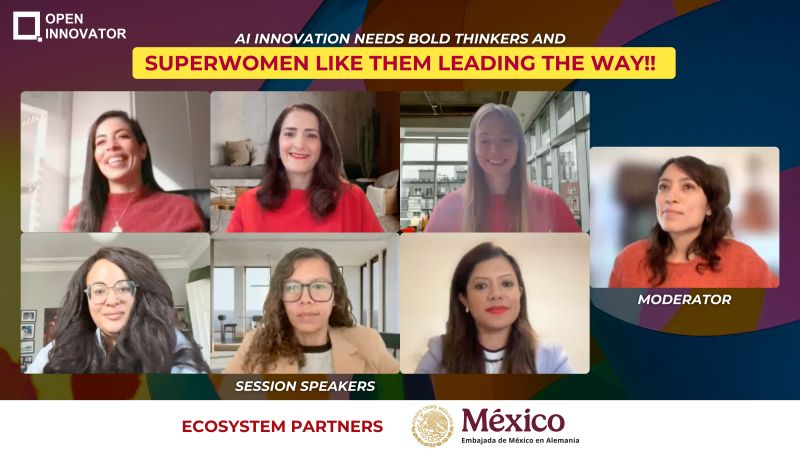
The rapid ascent of Artificial Intelligence is often discussed through the lens of silicon, datasets, and compute power. However, as the global tech landscape shifts toward 2026, a more critical narrative is emerging: the human architecture behind the algorithms. On March 9, 2026, a landmark session titled “Women Across the AI Value Chain” brought together a powerhouse of leaders to dismantle the stereotypes and structural barriers that have historically sidelined female voices in technology. Hosted by Open Innovator, and supported by the Mexican Embassy in Germany, the dialogue served as more than just a commemorative event for International Women’s Day; it was a strategic masterclass on leadership, influence, and the future of innovation.

Panelists

  • Isma Khemies – Advocate for inclusive leadership in AI
  • Shayma Kurz – Driving innovation through ethical AI practices
  • Sina Landorff – Championing diversity in tech ecosystems
  • Angeley Mullins – Scaling global AI-driven businesses
  • Linda Kohl – Breaking barriers in AI adoption and strategy
  • Jomy Jose – Empowering women in AI entrepreneurship

Co-Hosts

  • Adriana Carmona Beltran – Facilitating dialogue on women in AI leadership
  • Tedix – Partner organization amplifying voices in technology

Ecosystem Partners

  • Oliver Contla – Secretaría de Relaciones Exteriores de México, supporting international collaboration
  • Francisco Quiroga – Secretaría de Relaciones Exteriores de México, strengthening global AI networks

The Invisible Foundation of Leadership

The conversation opened with a poignant reflection on the nature of unrecognized leadership. Drawing a parallel between the high-stakes world of AI and the domestic sphere, the host highlighted how women have historically managed complex systems—families, communities, and educational environments—with resilience and innovation, yet these efforts are rarely labeled as “leadership.”

In the context of the AI value chain, this invisibility often persists. While women are integral to the development, ethical oversight, and deployment of AI, their contributions frequently remain behind the scenes.

The goal of the panel was to bridge this gap, moving from quiet contribution to radical visibility. As emphasized during the discussion, visibility creates opportunity. When a woman is seen as a decisive founder or an expert engineer, she provides a blueprint for the next generation. The panel sought to redefine traits like empathy and decisiveness not as gendered characteristics, but as essential human qualities necessary for navigating the “real system” of AI: the people who make the decisions.

Navigating the “Boys’ Club” and Building Credibility

Shayma Kurz, a veteran of the automotive industry and a former engineer at Mercedes-Benz, provided a visceral look at the challenges of navigating male-dominated technical environments. In industries like automotive and AI infrastructure, women often find themselves as the “only one in the room.” Kurz’s journey is a testament to the fact that influence in technical spaces is not built through the volume of one’s voice, but through the undeniable quality of one’s work.

Kurz identified three pillars for building credibility: competency, value creation, and strategic relationships. She emphasized that to succeed in a “boys’ club,” a woman must often solve the problems that others cannot. By becoming the person who can fix a broken data architecture or streamline a complex process, the focus shifts from gender to utility. However, Kurz also warned against the trap of waiting for an invitation to speak. Influence, she noted, is often built before a meeting starts. By aligning stakeholders and understanding the technical “pain points” of a project ahead of time, women can enter decision-making rooms with a foundation of support that makes their presence undeniable.

The Shift from Hierarchy to Data-Augmented Decisions

Jomy Jose, bringing two decades of experience across hospitality and insurance, explored how the nature of decision-making itself is evolving. In the past, corporate structures were strictly hierarchical, with decisions flowing from the top down based largely on seniority and intuition. Today, the integration of AI has transformed this into a data-augmented process.

According to Jose, AI acts as a “helper” that compresses the time between analysis and action. Decisions are now a hybrid of human judgment and AI-supported insights. This shift presents a unique opportunity for women. As AI agents and agentic workflows take over operational tasks, the value of strategic oversight increases. Jose emphasized that communities play a vital role here. By creating psychologically safe spaces for women to experiment with new tools and ask “stupid” questions, professional networks accelerate the learning curve and help women stay at the forefront of the AI value chain.

The Structural Gap: Informal Power vs. Formal Title

One of the most striking segments of the discussion was led by Isma Khemies, an executive coach with deep roots in international key account management. Isma deconstructed the “structural gap” that exists in large organizations. On paper, decisions are made by C-suite executives and board members. In reality, power resides where risk, revenue, and relationships intersect.

Isma shared a sobering personal account of the “competency paradox.” In her previous role, she was the “Wikipedia of the company,” holding deep influence over clients worth millions. Yet, she was passed over for a Sales Director position precisely because she was too valuable in her current role. This highlights a recurring theme for women in tech: holding immense informal power (resolving conflicts, spotting risks, and maintaining client trust) without the formal title or compensation to match. To close this gap, Isma argued that women must move closer to the Profit and Loss (P&L) statements. Influence must be made measurable. If a woman’s leadership is the reason a multi-million dollar account remains loyal, that impact must be quantified and used as leverage for formal advancement.

Scaling AI Through Diversity and Inclusion

The panelists, including Sina Landorff, Angeley Mullins, and Linda Kohl, collectively reinforced the idea that scaling AI requires a diversity of perspectives. AI is not just about the model; it is about the deployment of that model in a human world. When women lead AI teams, they bring a holistic view of the “value chain”—from the ethical sourcing of data to the final user experience.

The discussion touched upon the “double bind” mentioned by Adriana Carmona Beltran: the reality that women are often criticized for being “too manly” if they are decisive, or “too feminine” if they are soft. The consensus among the superwomen on the panel was to reject these labels entirely. By focusing on the high-stakes outcomes—revenue growth, risk mitigation, and technological breakthrough—these leaders are carving out a new definition of authority that is based on impact rather than performance of gender.

A Community of Innovation

The success of the “Women Across the AI Value Chain” event was a collaborative effort. A huge shoutout is deserved for the superwomen panelists: Isma Khemies, Shayma Kurz, Sina Landorff, Angeley Mullins, Linda Kohl, and Jomy Jose. Their willingness to share raw, unvarnished experiences provided a masterclass for everyone in the room.

The conversation was brought to life by co-host Adriana Carmona Beltran and the support of Tedix. Furthermore, the dialogue was amplified by incredible ecosystem partners Oliver Contla and Francisco Quiroga from the Secretaría de Relaciones Exteriores de México, whose support underscores the global importance of inclusive innovation.

Conclusion

As we look toward the future of the AI ecosystem, it is clear that technical skill alone is not enough. The leaders of tomorrow will be those who can navigate complex social architectures, leverage data-augmented insights, and turn informal influence into formal power. The journey of these women shows that while the glass ceiling still exists, it is being cracked by the sheer force of competency and community. By stepping into the spotlight and claiming their roles as builders, scalers, and influencers, women are not just participating in the AI value chain—they are defining it.


About Open Innovator

Open Innovator is a global platform dedicated to fostering collaboration, breaking down silos, and empowering the next generation of tech leaders. We believe that the best innovations happen when diverse minds meet at the intersection of technology and humanity. Through sessions like these, we aim to bridge the gap between theory and real-world impact.

Join the Movement

Are you ready to be part of the future of AI? We are always looking for passionate innovators, thinkers, and leaders to join our growing ecosystem.

Write to us today at open-innovator@quotients.com to join our community and stay updated on upcoming sessions!


Categories
Evolving Use Cases

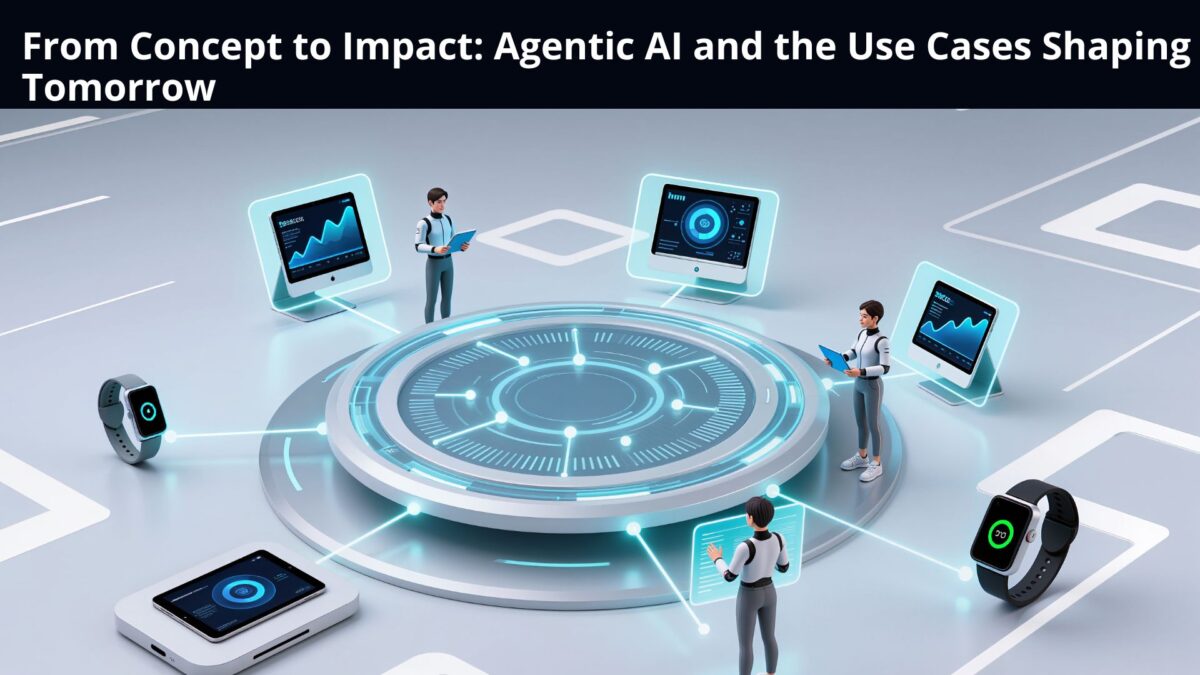
From Concept to Impact: Agentic AI and the Use Cases Shaping Tomorrow

Categories
Evolving Use Cases

From Concept to Impact: Agentic AI and the Use Cases Shaping Tomorrow

Agentic AI is transforming businesses by introducing intelligence and autonomy into routine systems. Agentic AI is perfect for complicated and dynamic contexts because it can reason, plan, and adapt on its own, unlike traditional tools that wait for instructions. Its new applications in robotics, healthcare, and commercial operations are opening up new possibilities for productivity and creativity.

In contrast to standard AI systems that merely react to commands, Agentic AI is capable of independent reasoning, planning, execution, and adaptation. This implies that it can manage intricate, multi-step activities without continual human supervision. It is being used in a variety of industries to enhance decision-making, simplify processes, and increase productivity.

Agentic AI is proving to be very successful in dynamic contexts where conditions change rapidly by fusing sophisticated reasoning with real-time adaptability. These systems are starting to be used by companies, healthcare providers, and digital entrepreneurs to increase productivity, cut expenses, and improve customer and societal outcomes.

Business and Operations Efficiency

Agentic AI is changing how businesses run their day-to-day operations. By doing away with manual handoffs, which frequently cause processes to lag, it simplifies workflows. Research indicates that automating repetitive processes with agentic AI can increase productivity significantly. Additionally, it helps businesses save money and save waste by optimizing resource allocation through real-time data analysis and operational adjustments. Agentic AI in sales can score leads, tailor outreach, and even modify pricing tactics. Shorter sales cycles and conversion rates have resulted from these skills. Agentic AI lowers inventory costs and increases delivery reliability by monitoring suppliers, negotiating contracts, and rerouting shipments during disruptions, all of which help supply chain management.

Healthcare Advancements

Another sector where agentic AI is having a significant impact is healthcare. Wearable technology makes it possible to monitor patients continuously, sending out notifications and taking action when their health deteriorates. This proactive strategy enhances patient safety and enables physicians to react more quickly. By combining genetic and clinical data, agentic AI also facilitates individualized therapy planning, which is particularly helpful in uncommon diseases and oncology. Results greatly increase when treatments are customized for each patient. Agentic AI is being used by hospitals to handle personnel scheduling, supply logistics, and resource allocation. This lowers operating expenses while guaranteeing the availability of vital resources when required. All things considered, agentic AI is assisting healthcare systems in providing more effective, individualized, and economical care.

Robotics in Manufacturing

Agentic AI is driving a new generation of robots in the automotive and manufacturing sectors. These robots can design, learn, and self-improve through autonomous learning cycles; they are not restricted to preprogrammed tasks. This lowers the cost of prototypes and speeds up invention, enabling businesses to launch goods more quickly. Robots powered by agentic AI may adjust to changing production needs without requiring significant reprogramming, increasing the flexibility and resilience of factories. They can also find inefficiencies and provide recommendations for changes by examining production data. This degree of autonomy is transforming industrial automation, making it possible for smarter factories to react more quickly and precisely to shifting demands and difficulties in the global supply chain.

Healthcare Robotics

Healthcare robots is also being revolutionized by agentic AI. Agentic AI-powered robots are performing precision, less invasive procedures that shorten recovery times and enhance patient outcomes. These systems are safer and more efficient since they can adjust during procedures. Healthcare robots help with patient care outside of surgery, from assisting with rehabilitation activities to keeping an eye on vital signs. Their capacity to adapt and learn guarantees that patients receive individualized care that is suited to their need. Reduced staff workloads help hospitals by freeing up physicians and nurses to concentrate on more difficult duties. Healthcare professionals are attaining greater levels of care and efficiency in medical settings by fusing robots with agentic AI.

Autonomous Vehicles and Service Robots

Autonomous cars and service robots are largely powered by agentic AI. These systems need to function in uncertain contexts, and agentic AI allows them to adjust instantly. For instance, autonomous vehicles are able to react to unforeseen dangers, reroute during traffic, and adapt to traffic circumstances. Agentic AI is used by service robots in sectors like retail and hospitality to communicate with clients, respond to inquiries, and carry out duties securely. Over time, these robots get better at what they do by constantly learning from their environment. Agentic AI’s flexibility guarantees that autonomous systems continue to be dependable and efficient, improving consumer happiness and safety in real-world applications.

Customer Support and HR Functions

Agentic AI is changing customer service and human resources outside of technical areas. It can answer questions, fix problems, and even escalate complicated situations when needed in customer support. As a result, customers are happier and wait times are decreased. Agentic AI in HR streamlines processes such as interview scheduling, employee onboarding, and routine inquiry management. HR staff may concentrate on important projects like talent development and employee engagement by taking up monotonous tasks. By relieving professionals of repetitive chores and enabling them to focus on higher-value work, these applications demonstrate how agentic AI is not just increasing productivity but also improving the human experience.

Education and Personalized Learning

Another area that benefits from agentic AI is education. Agentic AI-powered intelligent tutoring programs adjust to the pace and learning preferences of individual students. They guarantee that students receive the assistance they require to achieve by offering individualized instruction, tasks, and feedback. In large classrooms where teachers might find it difficult to provide individualized attention, this strategy is particularly helpful. Additionally, agentic AI can pinpoint areas in which students are having difficulty and modify the curriculum accordingly. It keeps students interested and enhances academic results by providing individualized learning opportunities. Agentic AI is developing into a potent tool for individualized and inclusive learning as educational systems around the world embrace digital revolution.

Energy Management and Sustainability

In terms of sustainability and energy management, agentic AI is essential. Because of their complexity, modern power grids need to be constantly monitored and adjusted. By forecasting demand, balancing supply, and guaranteeing effective distribution, agentic AI systems maximize grid performance. Additionally, they facilitate predictive maintenance by spotting any problems before they produce problems. This increases dependability and decreases downtime. By controlling supply variations, agentic AI in renewable energy helps integrate solar and wind electricity into the system. Agentic AI helps achieve sustainability goals by lowering waste and facilitating the global shift to greener, more efficient energy solutions by making energy systems smarter and more adaptable.

The Future of Agentic AI

By facilitating intelligent, independent decision-making and execution, agentic AI is revolutionizing a number of sectors. Its applications are numerous and expanding, ranging from robotics, education, and energy management to business operations and healthcare. Agentic AI is particularly well-suited to dynamic contexts where standard automation is inadequate because of its capacity for reasoning, planning, and adaptation. Businesses using these technologies are experiencing increased output, reduced expenses, and better results. Agentic AI will probably become a key component of innovation as technology develops further, propelling advancements across industries and influencing a future in which robots collaborate with people to solve challenging problems and open up new avenues for advancement.

Quotients is a platform for industry, innovators, and investors to build a competetive edge in this age of disruption. We work with our partners to meet this challenge of metamorphic shift that is taking place in the world of technology and businesses by focusing on key organisational quotients. Reach out to us at open-innovator@quotients.com.