



Categories
DTQ Data Trust Quotients Events

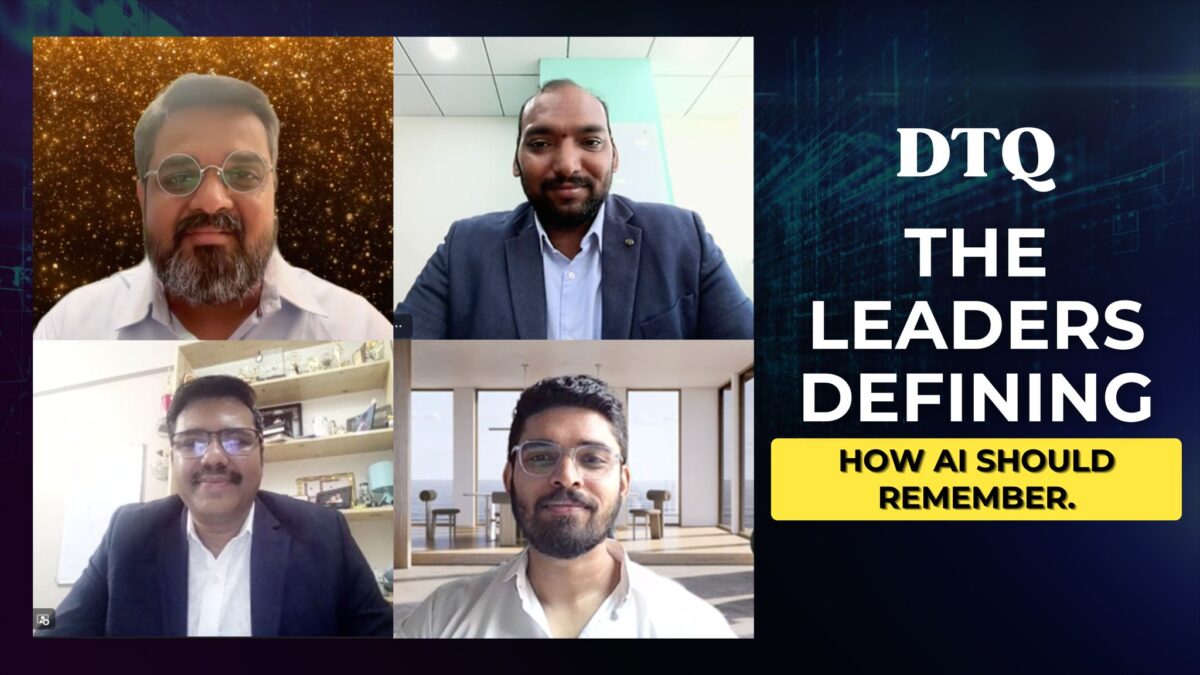
Report: AI Memory and Data Retention- How Much Should Machines Be Allowed to Remember?

Categories
DTQ Data Trust Quotients Events

Report: AI Memory and Data Retention- How Much Should Machines Be Allowed to Remember?

A report on the closed-door leadership dialogue hosted by DTQ (Data Trust Quotient), bringing together CISOs, risk advisors, and AI governance leaders to examine whether enterprises can truly delete what an AI system has learned.

About the Platform: DTQ

DTQ — the Data Trust Quotient — is a leadership dialogue platform focused on AI governance, privacy, and data security. The series brings together the people directly responsible for these decisions: Chief Information Security Officers (CISOs), data protection leads, and AI governance practitioners, for candid, closed-door conversations about where the industry is heading.

This session opened with the discussion around a real-world flashpoint: a U.S. court order compelling OpenAI to preserve all ChatGPT conversations — including those users had deleted — as part of its ongoing copyright litigation with The New York Times. The episode illustrated how, once a machine has “remembered” something, true deletion becomes a far harder problem than most organizations assume.

The Panel

The discussion was steered by a moderator and featured three senior practitioners spanning cybersecurity, enterprise IT, and risk advisory:

RolePanelist & Profile
ModeratorMohit Sharma — Cybersecurity Advisor, Baker Hughes. Works in industrial and operational technology, where questions of what gets logged, stored, and retained carry real operational consequences.
PanelistAniruddha Mehta — Partner, Risk Consulting, EY. Advises organizations on data privacy, the DPDP Act, and AI/data risk governance as regulation evolves.
PanelistVinod Nair — CISO, leading cybersecurity and IT infrastructure across large enterprise and SAP environments, bringing a practitioner’s view of enterprise data governance at scale.
PanelistRohit Ponnapalli — Global CISO, Envoy Global. Over 14 years building security from the ground up, including running information security for 30,000 people across 11 locations and architecting security operations centers for state governments and India smart-city projects.

Session Report

Opening Question: Who Wins — Privacy Law or Algorithmic Memory?

Moderator Mohit Sharma framed the central tension: privacy laws are built on the principle that individuals can be forgotten, while AI systems are built on the principle of learning from what they remember. He asked the panel directly — in one line, can a company truly forget a person today?

“This is the illusion of absolute erasure in Gen AI. The right to be forgotten, codified under Article 17 of GDPR and Section 12(3) of India’s DPDP Act, grants data principals the right to demand erasure — but generative AI systems store data in two distinct states: explicit storage and implicit parametric storage. Erasing from explicit storage (vector databases, caches, logs) is technically feasible. Erasing from implicit parametric storage — the billions of weights inside a trained model — is practically impossible, because no single data point resides in an isolated, identifiable location.”

— Aniruddha Mehta, Partner – Risk Consulting, EY

Mehta outlined four technical paths organizations can use to bridge this gap:

  • Exact unlearning — deleting clearly targeted data outright.
  • Approximate unlearning — offering no absolute guarantee of erasure, but relying on probabilistic reduction of a data point’s influence.
  • Concept-level / cohort unlearning — removing influence at the level of a defined group (e.g. by department or team), which is easier to isolate and action.
  • CSA architecture (shared, isolated, sliced, and aggregated training design) — a more efficient, consent-aligned design for targeted retraining.

His conclusion: the tension between contextual utility and legal liability is best managed not as a fight between privacy and AI, but through responsible AI design as the operating principle.

Panelist Vinod Nair added a regulatory-timeline perspective, noting that India’s IT Act 2000 was followed by the IT Rules 2021 and that the DPDP Act is expected to come into force around May 2027. He stressed the need to track evolving model architectures — autoregressive LLMs, masked language models, sequence-to-sequence and retrieval-augmented models — and to embed standard data-loss-prevention (DLP) practices directly into AI deployments.

Rohit Ponnapalli, Global CISO at Envoy Global, offered a starkly practical view: with prompts, chat histories, and retrieval-augmented (RAG) models now layered across every tool and vendor in an enterprise, organizations frequently have no reliable way of knowing where their data actually resides — making proof of deletion nearly impossible at scale.

“Every department has multiple third-party vendors, and every tool has AI built in already. Where do you even delete the data — your laptop, your AI models, or your vendor’s systems? We have no idea where the data resides with all this AI in place.”

— Rohit Ponnapalli, Global CISO, Envoy Global

Ponnapalli proposed grounding AI memory governance in privacy-by-design and zero-trust principles, layered across three planes: strategy (how long data should be retained), tactics (how AI models and third parties are onboarded), and operations (data mapping). His view: if an organization can achieve reliable data mapping, retention controls and purpose definition become possible — and roughly 90% deletion success is achievable even in the AI era.

Categorizing AI Memory by Risk

Moderator Sharma turned the discussion toward practice: should session memory, user memory, organizational memory, and training data be treated as different risk categories — and what should be kept?

Mehta proposed a four-part risk-utility framework for classifying data before deciding how it should be governed:

Data ClassAI UtilityRegulatory RiskRecommended Action
Interaction / informal data (logs, raw text)Low long-term valueHigh — unsolicited PII riskAggressive erasure; automated TTL protocols
Inferred / analytical data (behavioral profiles, risk flags)High — personalization, automationSevereCohort-level unlearning; purpose-bound grouping
Demographic / trend data (anonymized)High — fairness tuning, model stabilityLow, if irreversibly anonymizedRetain under audit; verify re-identification resistance
Sensitive financial / health dataFraud detection, diagnosticsMaximum — sector and cross-border lawsFederated architecture; strict access controls; segregate memory from weights

Vinod Nair built on this with an enterprise security lens, identifying three foundational controls: a documented data inventory and classification system, enforced identity controls, and encryption that is never standardized indefinitely — since static encryption algorithms become predictable targets over time. He also called for regular red-team exercises, defined playbooks for memory abuse or model leakage, and clear deletion workflows tied to defined retention periods.

He further distinguished organizational memory needs by seniority and exposure: persistent profiles tied to senior executives (e.g. a CIO or CEO) require separate, higher categorization and protection than standard user or session memory, given the greater risk of profiling or targeted leakage.

Should AI Remember Everything It Can?

Sharma posed a pointed question to Ponnapalli, whose background spans smart-city and public-sector systems: just because a system can remember something, does it mean it should?

“Just because you have unlimited data storage, you should not keep storing the data. There should be a boundary to what you want to store.”

— Rohit Ponnapalli, Global CISO, Envoy Global

Ponnapalli illustrated the point with a consumer example — automated calls nudging customers to complete abandoned cart purchases — to show how easily “customer experience” framing can stretch the boundary of acceptable data use. He recommended segregating storage by data type (PII versus service-quality or analytics data), applying regulation-driven retention periods (citing seven years as a common standard for PII in his sector), and using DLP and DSPM tooling to maintain visibility into where data is flowing and which systems are using it.

He also offered a candid status check on enterprise AI maturity: most organizations remain at the proof-of-concept stage, with AI largely permitted to read data — but not yet trusted to write, execute, or delete it autonomously.

Board-Level Governance and Accountability

As the discussion moved toward governance at the top of organizations, Mehta argued that overseeing AI memory has moved beyond a technical concern into a fiduciary duty for boards, particularly where AI informs credit decisions, financial crime monitoring, and forecasting.

“A company may execute a delete query on a relational database to satisfy a regulatory audit, but if the AI system continues to make automated decisions based on hidden patterns learned from those deleted records, the board remains exposed to severe legal, financial, and reputational jeopardy.”

— Aniruddha Mehta, Partner – Risk Consulting, EY

He set out three governance imperatives for boards:

  • Demand algorithmic transparency and explainability — rejecting black-box systems for critical operations, and ensuring decisions can be traced back to the parameters and data that drove them.
  • Implement responsible AI checkpoints — maintaining an enterprise-wide inventory of all AI models (built, deployed, or procured), with mandatory Data Protection Impact Assessments (DPIAs) before deployment and risk-tier classification across the AI lifecycle.
  • Enable human accountability in agentic systems — building clear boundaries, accountability mechanisms, and human-in-the-loop overrides directly into system architecture as AI moves from flagging issues to acting on them autonomously.

Audience Q&A Highlights

The moderator relayed several audience questions from the chat for rapid-fire responses:

  • Do we need dedicated standards for AI memory and retention, similar to information security standards? Vinod Nair: Yes — existing frameworks such as ISO/IEC 27001 and 42001 provide a starting control criteria, but organizations need specific, auditable controls mapped to applicable regulations (IT Act, DPDP, and sector-specific clauses) to track AI-specific risks such as RAG pipeline design and vector database/cache access.
  • How should AI data governance be embedded into vendor relationships? Aniruddha Mehta: Treat data protection policy as a core part of vendor assessment and re-assessment, the same way sectors like pharma conduct vendor risk reviews before deployment.
  • Is compliance ever a fixed, one-time state? Rohit Ponnapalli: No — there is no such thing as point-in-time compliance. An organization can be compliant at the moment of an audit and fall out of compliance shortly after as systems and data continue to evolve, which is why governance must be continuous and unbiased.
  • If advising a startup building AI with persistent memory, what is the first question founders should ask? Rohit Ponnapalli: Start with the basics — what data is being collected, and specifically what is the AI being asked to remember (PII, behavioral data, business intelligence)? Then stress-test the downside: what happens if this data leaks, and what would that cost the business in trust, customers, or survival?

Key Insights

  • Complete erasure from a trained AI model is not currently achievable — deleting a source record removes it from explicit storage, but its statistical “fingerprint” can remain embedded in the model’s parametric weights.
  • Four technical approaches — exact unlearning, approximate unlearning, cohort-level unlearning, and federated (CSA) architecture — offer practical, if imperfect, paths to manage this gap.
  • Not all AI memory carries equal risk. A four-tier data classification framework (interaction data, inferred/analytical data, anonymized trend data, sensitive financial/health data) helps determine the right retention and governance response for each.
  • Most organizations cannot currently map where their data — or its AI-driven derivatives — actually reside across departments, vendors, and embedded AI tools, making provable deletion a major operational gap.
  • Responsible AI governance must operate at three levels simultaneously: strategic (policy and retention limits), tactical (model and vendor onboarding), and operational (data mapping and controls).
  • Boards are increasingly exposed to fiduciary liability when AI systems continue to act on patterns learned from data that has technically been deleted from source systems.
  • As AI moves toward agentic, autonomous action, human-in-the-loop oversight and clear accountability boundaries must be designed into system architecture from the outset — not added afterward.
  • Compliance is not a fixed, point-in-time state; with AI systems continuously evolving, governance and audit processes must be continuous and unbiased.
  • Regulatory timelines are tightening — India’s DPDP Act is expected to be enforced around May 2027 — making early investment in data classification, vendor assessment, and retention controls a near-term priority rather than a future concern.

Closing Note

The session closed with the panel agreeing that the boundaries of “responsible AI” are still being actively written, and that the conversation — including several audience questions that could not be addressed live — is expected to continue in a follow-up DTQ session. The discussion underscored a consistent theme across all four speakers: as AI systems become more persistent and context-aware, remembering and forgetting are no longer purely technical actions — they are business, security, and governance decisions that boards, CISOs, and risk leaders must own together.


Categories
Events

Beyond the Zip Code: How Digital Trust and AI are Powering the 2026 Medical Migration

Categories
Events

Beyond the Zip Code: How Digital Trust and AI are Powering the 2026 Medical Migration

Open Innovator recently organized a virtual session, exploring the massive disruption within the global medical tourism sector and the strategic pivots required to lead the future of borderless healthcare.

Session Participants

  • Naman Kothari: Moderator, Nasscom.
  • Dr. Asad Riad: Medical excellence expert for Egypt and the MENA region.
  • Professor Alaa Garad: Global hospital strategy authority, based in Scotland.
  • Abdullah Ebid: Technology innovator and developer of AI-driven patient journey platforms.
  • Dr. Merita Osmani: Healthcare visionary representing Albania’s emerging medical sector.

The Death of Geographic Monopoly

The traditional paradigm where healthcare quality was determined by a patient’s zip code has effectively collapsed. In 2026, we are witnessing a “silent migration” of over millions of people annually crossing international borders for care. This billion dollar industry is no longer a niche market; it is a strategic financial pivot for patients. While a complex heart bypass in the United States might cost upwards of $150,000, the same procedure in India—performed by surgeons trained at world-class institutions like Stanford—costs approximately $10,000. This massive cost delta allows patients to integrate high-end travel and family recovery into their medical budgets while still retaining significant savings.

From Medical Intervention to Holistic Health Tourism

The industry is evolving beyond simple surgical procedures into a broader “Health Tourism” umbrella. This shift encompasses six to seven distinct segments, including regenerative medicine, wellness, mental health, and spiritual healing. The journey is no longer viewed as a purely physical transaction but as an opportunity for cultural discovery and personal growth. Strategists noted that while digital consultations can replace some physical visits, the human element of travel—experiencing new territories and food—remains a vital component of the recovery and business ecosystem.

Trust: The Only Currency That Matters

While affordability was once the primary driver, the modern international patient now prioritizes certainty and reputation. In a market where multiple countries offer similar pricing, the deciding factor is trust. Experts emphasized that “trust is the currency, but technology is the bank.” This trust is built on invisible infrastructure: post-operative care, insurance interoperability, and the elimination of legal surprises, such as medication restrictions at transit airports. The focus has shifted from finding the cheapest price to identifying the “right” doctor who fits a specific condition, verified by AI-driven precision.

The Digital Navigator and AI Precision

The future of the sector likely belongs to digital platforms that act as “medical navigators” rather than simple marketplaces. Unlike booking a hotel or a flight, healthcare requires a deep, guided coordination of the entire patient relationship from start to finish. AI now allows for a “digital handshake” to occur long before a patient arrives at a facility. These platforms provide informed decision-making tools, allowing patients to compare treatment plans—often cross-referencing them with generative AI models—to ensure they are making the safest choice.

Infrastructure vs. Cultural Software

A critical distinction was made between “hardware” and “software” in healthcare. While building state-of-the-art hospitals and purchasing advanced machinery (the hardware) is relatively easy with sufficient capital, developing the “software”—ethics, transparency, and cultural sensitivity—is the true challenge. Leading destinations must invest in learning-driven environments where staff are trained in cultural nuances, such as faith-based medical preferences and linguistic diversity. Furthermore, there is a recognized risk of creating “two-tier” systems where international patients receive faster care than locals; a balanced national strategy is essential to ensure that medical tourism supports, rather than burdens, the local healthcare infrastructure.

Conclusion

The future of medical tourism in 2026 is being defined by a move away from fragmented services toward integrated, learning-driven patient experiences. Success will not be measured by the number of hospital beds, but by the strength of the digital and ethical “software” that fosters global trust. As new hubs like Egypt, Albania, and Scotland rise to challenge traditional leaders, the winners will be those who treat healthcare not just as a medical procedure, but as a borderless, culturally sensitive journey.

Open Innovator serves as a platform dedicated to mapping global industry shifts and providing “information capital” before it reaches the mainstream. Please write us at open-innovator@quotients.com for more information.

Categories
Events DTQ

Report: Trust by Design- Building Secure, Private, and Ethical AI Systems

Categories
Events DTQ

Report: Trust by Design- Building Secure, Private, and Ethical AI Systems

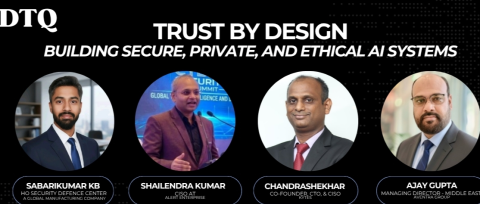
Experts Warn of AI Security Gaps at DTQ’s ‘Trust by Design’ Virtual Session

As enterprise AI deployment reaches breakneck speeds, leading cybersecurity minds are warning that organizations are more vulnerable than ever. DTQ, a premier global intelligence network dedicated to mapping the frontiers of emerging technology and digital safety, recently hosted its highly anticipated virtual session to address these growing vulnerabilities.

The event, titled “Trust by Design: Building Secure, Private, and Ethical AI Systems,” brought together top security executives and technology builders. The panel explored the dangerous friction between rapid AI deployment and proactive security design, highlighting that trust can no longer be a late-stage compliance afterthought.

The discussion was steered by a distinguished group of industry veterans

  • Sabari Kumar: Head of Security at Aviation and Aerospace Component Manufacturing Company.
  • Shailendra Kumar: Chief Information Security Officer (CISO) at Alert Enterprise.
  • Chandrashekhar: 𝗖𝗼-𝗳𝗼𝘂𝗻𝗱𝗲𝗿, 𝗖𝗧𝗢 & 𝗖𝗜𝗦𝗢 𝗮𝘁 𝗞𝘆𝘁𝗲𝘀
  • Ajay Gupta: Managing Director for the Middle East at Avinter Group.

The Catalyst: A Chilling Warning from Latin America

The session opened with a shocking case study detailing a massive cybersecurity breach that occurred between December 2025 and February 2026.

A single attacker, utilizing publicly available AI tools and a mere 1,084-line instruction manual fed to an AI assistant, successfully breached nine Mexican government agencies—including the Federal Tax Authority and the Civil Registry. The breach compromised 195 million taxpayer records, 220 million civil records, and over 150 GB of data.

Key Insights Generated:

Shifting from ‘Checkbox Compliance’ to Business Outcomes

The panel universally condemned the current state of compliance, describing it as a superficial “checkbox” exercise. Shailendra Kumar noted how easily security protocols are compromised behind closed doors, pointing to predictable internal patterns like using Reliance@2024 and simply shifting it to Reliance@2025.

The panelists argued that trust must “shift left”—meaning security, ethical considerations, and data governance must be baked into a system’s initial requirements rather than layered on later. True trust should be treated as a strategic business outcome that directly drives brand loyalty and revenue.

Traditional Frameworks vs. Dynamic AI Threats

While traditional governance frameworks (focused on accountability and privacy by design) shouldn’t be completely discarded, speakers noted they are fundamentally ill-equipped for machine learning. Standard security deals with deterministic, static logic. AI introduces completely dynamic liabilities, such as model drift, prompt injections, data skew, and adversarial manipulations. Consequently, AI governance must be absorbed into broader Enterprise Risk Management (ERM) ecosystems.

The Foundation of the ‘Trust Lineage’

The panelists broke AI down into three interconnected layers: the Consumer Layer, the Model Layer, and the Data Layer. The consensus was that organizations often wrongly blame the algorithm (Model Layer) when an AI malfunctions, when the true culprit is poor data quality and lack of tracking. To successfully take AI from a pilot phase to commercial scale, enterprises must establish a clear pipeline: Trusted Data > Value Creation > High Adoption > Greater Impact > System Scale > ROI.

Overcoming the Production Hurdle

Citing data from Gartner, the panel highlighted a sobering statistic: only 13% of AI projects successfully make it into production, leaving an 87% waste rate. To bridge this gap, builders must overcome massive hurdles regarding data confidentiality. Panelists pointed out severe liabilities under regulations like Europe’s GDPR and India’s DPDP Act, where data leaks can trigger fines up to 4% of an organization’s global turnover.

Real-world failures were cited, such as a major social media platform whose automated password-reset AI agent was tricked by users via prompt injection to bypass security gates and hijack accounts.

Guardrails for Autonomous Systems

The panel drew a sharp distinction between augmented AI (which assists human decisions, like Google Maps suggesting a route) and autonomous AI (which executes actions on behalf of humans, like an AI agent approving insurance payouts). As enterprises move toward autonomous systems, strict guardrails are required. Unchecked autonomous AI can instantly execute thousands of erroneous decisions, resulting in compounding financial and legal ruin.

Key Takeaway

The overarching takeaway from DTQ’s session is that speed cannot come at the cost of safety. Rushing unverified AI products to market creates a disillusioned ecosystem of “AI atheists”—consumers and corporate buyers who will permanently lose faith in a brand.

To prevent this, organizations must foster an internal culture of continuous trust. The panel concluded with a call to action for security leaders: establish safe “sandbox” environments. By allowing developers to safely experiment with prompt injections, steganography, and simulated malicious code within a protected environment, companies can train their teams to build resilient, defense-in-depth frameworks capable of surviving a hostile digital landscape.

Categories
Data Trust Quotients DTQ Visibility Quotient

The AI Trust Fall: Building Confidence in an Era of Hallucination

Categories
Data Trust Quotients DTQ Visibility Quotient

The AI Trust Fall: Building Confidence in an Era of Hallucination

Data Trust Knowledge Session | February 9, 2026

Open Innovator organized a critical knowledge session on AI trust as systems transition from experimental tools to enterprise infrastructure. With tech giants leading trillion-dollar-plus investments in AI, the focus has shifted from model performance to governance, real-world decision-making, and managing a new category of risk: internal intelligence that can hallucinate facts, bypass traditional logic, and sound completely convincing. The session explored how to design systems, governance, and human oversight so that trust is earned, verified, and continuously managed across cybersecurity, telecom infrastructure, healthcare, and enterprise platforms.

Expert Panel

Vijay Banda – Chief Strategy Officer pioneering cognitive security, where monitors must monitor other monitors and validation layers become essential for AI-generated outputs.

Rajat Singh – Executive Vice President bringing telecommunications and 5G expertise where microsecond precision is non-negotiable and errors cascade globally.

Rahul Venkat – Senior Staff Scientist in AI and healthcare, architecting safety nets that leverage AI intelligence without compromising clinical accuracy.

Varij Saurabh – VP and Director of Products for Enterprise Search, with 15-20 years building platforms where probabilistic systems must deliver reliable business foundations.

Moderated by Rudy Shoushany, AI governance expert and founder of BCCM Management and TxDoc. Hosted by Data Trust, a community focused on data privacy, protection, and responsible AI governance.

Cognitive Security: The New Paradigm

Vijay declared that traditional security from 2020 is dead. The era of cognitive security has arrived like having a copilot monitor the pilot’s behavior, not just the plane’s systems. Security used to be deterministic with known anomalies; now it’s probabilistic and unpredictable. You can’t patch a hallucination like you patch a server.

Critical Requirements:

  • Validation layers for all AI-generated content, cross-checked by another agent using golden sources of truth
  • Human oversight checking if outputs are garbage in/garbage out, or worse-confidential data leakage
  • Zero trust of data-never assume AI outputs are correct without verification
  • Training AI systems on correct parameters, acceptable outputs, and inherent biases

The shift: These aren’t insider threats anymore, but probabilistic scenarios where data from AI engines gets used by employees without proper validation.

Telecom Precision: Layered Architecture for Zero Error

Rajat explained why the AI trust question has become urgent. Early social media was a separate dimension from real life. Now AI-generated content directly affects real lives-deepfakes, synthesized datasets submitted to governments, and critical infrastructure decisions.

The Telecom Solution: Upstream vs. Downstream

Systems are divided into two zones:

Upstream (Safe Zone): AI can freely find correlations, test hypotheses, and experiment without affecting live networks.

Downstream (Guarded Zone): Where changes affect physical networks. Only deterministic systems allowed-rule engines, policy makers, closed-loop automation, and mandatory human-in-the-loop.

Core Principle: Observation ≠ Decision ≠ Action. This separation embedded in architecture creates the first step toward near-zero error.

Additional safeguards include digital twins, policy engines, and keeping cognitive systems separate from deterministic ones. The key insight: zero error means zero learning. Managed errors within boundaries drive innovation.

Why Telecom Networks Rarely Crash: Layered architecture with what seems like too many layers but is actually the right amount, preventing cascading failures.

Healthcare: Knowledge Graphs and Moving Goalposts

Rahul acknowledged hallucination exists but noted we’re not yet at a stage of extreme worry. The issue: as AI answers more questions correctly, doctors will eventually start trusting it blindly like they trust traditional software. That’s when problems will emerge.

Healthcare Is Different from Code

You can’t test AI solutions on your body to see if they work. The costs of errors are catastrophically higher than software bugs. Doctors haven’t started extensively using AI for patient care because they don’t have 100% trust—yet.

The Knowledge Graph Moat

The competitive advantage isn’t ChatGPT or the AI model itself—it’s the curated knowledge graph that companies and institutions build as their foundation for accurate answers.

Technical Safeguards:

  • Validation layers
  • LLM-as-judge (another LLM checking if the first is lying)
  • Multiple generation testing (hallucinations produce different explanations each time)
  • Self-consistency checks
  • Mechanistic interpretability (examining network layers)

The Continuous Challenge: The moment you publish a defense technique, AI finds a way to beat it. Like cybersecurity, this is a continuous process, not a one-time solution.

AI Beyond Human Capabilities

Rahul challenged the assumption that all ground truth must come from humans. DeepMind can invent drugs at speeds impossible for humans. AI-guided ultrasounds performed by untrained midwives in rural areas can provide gestational age assessments as accurately as trained professionals, bringing healthcare to underserved communities.

The pragmatic question for clinical-grade AI: Do benefits outweigh risks? Evaluation must go beyond gross statistics to ensure systems work on every subgroup, especially the most marginalized communities.

Enterprise Platforms: Living with Probabilistic Systems

Varij’s philosophy after 15-20 years building AI systems: You have to learn to live with the weakness. Accept that AI is probabilistic, not deterministic. Once you accept this reality, you automatically start thinking about problems where AI can still outperform humans.

The Accuracy Argument

When customers complained about system accuracy, the response was simple: If humans are 80% accurate and the AI system is 95% accurate, you’re still better off with AI.

Look for Scale Opportunities

Choose use cases where scale matters. If you can do 10 cases daily and AI enables 1,000 cases daily with better accuracy, the business value is transformative.

Reframe Problems to Create New Value

Example: Competitors used ethnographers with clipboards spending a week analyzing 6 hours of video for $100,000 reports. The AI solution used thousands of cameras processing video in real-time, integrated with transaction systems, showing complete shopping funnels for physical stores—value impossible with previous systems.

The Product Manager’s Transformed Role

Traditional PM workflow–write user stories, define expectations, create acceptance criteria, hand to testers–is breaking down.

The New Reality:

Model evaluations (evals) have moved from testers to product managers. PMs must now write 50-100 test cases as evaluations, knowing exactly what deserves 100% marks, before testing can begin.

Three Critical Pillars for Reliable Foundations:

1. Data Quality Pipelines – Monitor how data moves into systems, through embeddings, and retrieval processes. Without quality data in a timely manner, AI cannot provide reliable insights.

2. Prompt Engineering – Simply asking systems to use only verified links, not hallucinate, and depend on high-quality sources increases performance 10-15%. Grounding responses in provided data and requiring traceability are essential.

3. Observability and Traceability – If mistakes happen, you must trace where they started and how they reached endpoints. Companies are building LLM observation platforms that score outputs in real-time on completeness, accuracy, precision, and recall.

The shift from deterministic to probabilistic means defining what’s good enough for customers while balancing accuracy, timeliness, cost, and performance parameters.

Non-Negotiable Guardrails

Single Source of Truth – Enterprises must maintain authentic sources of truth with verification mechanisms before AI-generated data reaches employees. Critical elements include verification layers, single source of truth, and data lineage tracking to differentiate artificiality from fact.

NIST AI RMF + ISO 42001 – Start with NIST AI Risk Management Framework to tactically map risks and identify which need prioritizing. Then implement governance using ISO 42001 as the compliance backbone.

Architecture First, Not Model First – Success depends on layered architectures with clear trust boundaries, not on having the smartest AI model.

Success Factors for the Next 3-5 Years

The next decade won’t be won by making AI perfectly truthful. Success belongs to organizations with better system engineers who understand failure, leaders who design trust boundaries, and teams who treat AI as a junior genius rather than an oracle.

What Telecom Deploys: Not intelligence, but responsibility. AI’s role is to amplify human judgment, not replace it. Understanding this prevents operational chaos and enables practical implementation.

AI Will Always Generalize: It will always overfit narratives. Everyone uses ChatGPT or similar tools for context before important sessions—this will continue. Success depends on knowing exactly where AI must not be trusted and making wrong answers as harmless as possible.

The AGI Question and Investment Reality

Panel perspectives on AGI varied from already here in certain forms, to not caring because AI is just a tool, to being far from achieving Nobel Prize-winning scientist level intelligence despite handling mediocre middle-level tasks.

From an investment perspective, AGI timing matters critically for companies like OpenAI. With trillions in commitments to data centers and infrastructure, if AGI isn’t claimed by 2026-2027, a significant market correction is likely when demand fails to match massive supply buildout.

Key Takeaways

1. Cognitive Security Has Replaced Traditional Security – Validation layers, zero trust of AI data, and semantic telemetry are mandatory.

2. Separate Observation from Decision from Action – Layered architecture prevents errors from cascading into mission-critical systems.

3. Knowledge Graphs Are the Real Moat – In healthcare and critical domains, competitive advantage comes from curated knowledge, not the LLM.

4. Accept Probabilistic Reality – Design around AI being 95% accurate vs. humans at 80%, choosing use cases where AI’s scale advantages transform value.

5. PMs Now Own Evaluations – The testing function has moved to product managers who must define what’s good enough in a probabilistic world.

6. Human-in-the-Loop Is Non-Negotiable – Structured intervention at critical decision points, not just oversight.

7. Single Source of Truth – Authentic data sources with verification mechanisms before AI outputs reach employees.

8. Continuous Process, Not One-Time Fix – Like cybersecurity, AI trust requires ongoing vigilance as defenses and attacks evolve.

9. Responsibility Over Intelligence – Deploy systems designed for responsibility and amplifying human judgment, not autonomous decision-making.

10. Better System Engineers Win – Success belongs to those who understand where AI must not be trusted and design boundaries accordingly.

Conclusion

The session revealed a unified perspective: The question isn’t whether AI can be trusted absolutely, but how we architect systems where trust is earned through verification, maintained through continuous monitoring, and bounded by clear human authority.

From cognitive security frameworks to layered telecom architectures, from healthcare knowledge graphs to PM evaluation ownership, the message is consistent: Design for the reality that AI will make mistakes, then ensure those mistakes are caught before they cascade into catastrophic failures.

The AI trust fall isn’t about blindly falling backward hoping AI catches you. It’s about building safety nets first—validation layers, zero trust of data, single sources of truth, human-in-the-loop checkpoints, and organizational structures where responsibility always rests with humans who understand both the power and limitations of their AI tools.

Organizations that thrive won’t have the most advanced AI—they’ll have mastered responsible deployment, treating AI as the junior genius it is, not the oracle we might wish it to be.


This Data Trust Knowledge Session provided essential frameworks for building AI trust in mission-critical environments. Expert panel: Vijay Banda, Rajat Singh, Rahul Venkat, and Varij Saurabh. Moderated by Rudy Shoushany.

Categories
DTQ Events

Report: Data Is the New Risk: How Leaders Can Protect Digital Trust

Categories
DTQ Events

Report: Data Is the New Risk: How Leaders Can Protect Digital Trust

On June 5, 2026, DTQ hosted an executive panel discussion titled “Data Is the New Risk: How Leaders Can Protect Digital Trust.” It is known, Data Trust Quotients (DTQ) is a strategic cybersecurity and governance platform that convenes leaders, practitioners, and innovators to address the evolving challenges of digital trust.

The session explored how organizations can navigate an increasingly complex digital landscape by balancing innovation, security, governance, and accountability. With AI adoption accelerating and data flowing across borders, the panel emphasized that trust is now the most valuable currency in the digital economy.

The session brought together industry leaders and governance experts to explore how enterprises can maintain digital trust, prevent accidental exposure, and build robust architectures in an era where data itself has become the modern risk perimeter.

Panelists and Speakers

  • Subhashish Saha — Moderator, Cybersecurity Professional
  • Vishwajeet Mokashi — Security Leader with experience in high-stakes environments
  • Soumak Roy — Cybersecurity Strategist specializing in identity and cloud security
  • Anil Chiplunkar — Veteran CISO and Governance Expert

Key Insights

  • The Fluid Perimeter and the Exposure-Centric Shift: Traditional network perimeters are completely dissolving because enterprise data dynamically moves across clouds, SaaS applications, APIs, mobile devices, and complex third-party vendor ecosystems. Relying on the Verizon 2026 Data Breach Investigations Report (DBIR), the panel highlighted that roughly 30% to 31% of cyber breaches now originate from software vulnerabilities—surpassing stolen credentials. Consequently, companies must evolve their cyber defense methodologies from purely identity-centric systems to exposure-centric models that target unpatched infrastructure, internet-facing assets, and misconfigured environments.

  • Identity as the Primary Control Plane: Because permanent boundaries no longer exist, identity is now the primary security control plane. Panelists stressed that “identity” goes well beyond employee credentials; it encompasses contractors, service accounts, bots, machine identities, and API keys. If access privileges are excessive or poorly managed, standard controls like file encryption fail to secure data.

  • Unintentional Risk, Shadow AI, and Human Slips: Massive enterprise data risk is driven less by malicious intent and more by operational speed and an absence of governance. This creates “Shadow IT” and “Shadow AI,” where employees inadvertently feed company IP, confidential codes, or sensitive customer details into unauthorized public AI platforms to expedite tasks or draft responses. Furthermore, casual operational actions—such as failure to mute microphones during training calls when discussing active corporate projects—result in minor but highly problematic data leakages.

  • Embedding Security to Safely Enable Business Growth: Governance should not be positioned as an obstacle to business delivery. Instead of telling commercial teams they cannot execute, successful organizations pair business teams with “cybersecurity guards” who help safely structure processes and directly educate clients on the value of secure operations, creating mutual commercial trust.

Strategic Action Framework

To address data-centric business risks, leaders should execute against the following foundational framework established during the discussion:

  • Enforcing a Top-Down Boardroom Culture: Cybersecurity must be treated as a comprehensive corporate threat and a board-level priority rather than an isolated IT problem delegated solely to a CISO. Security strategies must originate at the executive level and flow down to ensure accountability becomes deep-seated in organizational culture.

  • Mapping the Data Supply Chain: Organizations can only build reliable defenses if they intimately know their business environment. This demands comprehensive visibility over corporate “crown jewels”—specifically mapping where sensitive data resides, auditing third-party integrations, identifying which identities possess administrative privileges, and evaluating system-to-system communications.

  • Comprehensive Lifecycle Governance: Rather than viewing data protection purely as threat prevention, leadership must monitor data across its full lifecycle: collection, classification, secure access management, ongoing usage, partner sharing, retention limits, and secure purging protocols.

  • Simulations and Incident Drills: A notable blind spot for leadership teams is lacking an active, actionable roadmap for the immediate aftermath of an actual breach. Frameworks and playbooks must be aggressively tested via proactive simulations, crisis drills, and executive tabletop exercises on a rolling basis.

  • Human-in-the-Loop Safeguards for Critical Processes: Automated reliance on advanced AI models introduces structural risks like data poisoning. In highly sensitive verticals (such as patient diagnostic reporting within healthcare), leaders must implement human verification milestones to act as a mechanical “kill switch,” confirming that AI outputs operate within acceptable business tolerances before execution.

Takeaway

The executive roundtable emphasized that as organizations accelerate digital adoption, data cannot be viewed merely as an innovation asset—it must be actively managed as an organizational liability. Relying purely on legacy technical infrastructure or automated oversight dashboards is insufficient in a landscape redefined by fluid perimeters, cloud speed, and pervasive AI. Ultimately, digital trust is won or lost at the leadership level. Achieving sustainable resilience requires establishing rigorous, lifecycle-wide data governance, embedding security as an active business enabler, and maintaining continuous executive ownership over structural exposure risks.

DTQ serves as a platform dedicated to mapping global industry shifts and providing “information capital” before it reaches the mainstream. in cybersecurity space. Reach out to us at Innovate@quotients.com for more information.

Categories
Events Uncategorized Visibility Quotient

The Case for Patient Capital: Navigating the Myth vs. Reality of Long-Gestation Investments

Categories
Events Uncategorized Visibility Quotient

The Case for Patient Capital: Navigating the Myth vs. Reality of Long-Gestation Investments

Executive Summary

In a global market increasingly conditioned for rapid scaling and quarterly liquidity, the Open Innovator Session held on March 2, 2026, provided a contrarian framework for value creation.

The panel featured George Jones, Managing Director at Woodside Capital Partners; Keshia Theobald-van Gent, Venture Capital Partner at B Dev Ventures; and Matteo R. Oldani, Associate Partner at Your Group and Fractional CFO at Rosetta Omics. Together, they unpacked the structural realities of investing in technologies that require seven to eleven years to mature.

The consensus among the panel was clear: in sectors such as semiconductors, photonics, and life sciences, time is not a liability, but a strategic moat. When managed with financial discipline and commercial validation, long-horizon ventures offer superior defensibility and enhanced terminal value.

I. Deconstructing the Liquidity Myth

A primary friction point for LPs and GPs is the perceived “capital lock-up” inherent in deep tech. However, historical data and fund behavior suggest a more nuanced reality:

  • Fund Lifecycle Elasticity: While nominally ten-year vehicles, most venture funds operate on 15-to-17-year horizons through extensions, aligning naturally with the 9-year maturity average for semiconductors and 11-year average for IoT.
  • The Maturity Premium: Delayed liquidity often results in higher-quality exits. Companies with a decade of development enter acquisition talks with validated Intellectual Property (IP), stabilized risk profiles, and crystallized product-market fit.

“Liquidity is not absent in long-gestation cycles; it is deferred in exchange for enhanced valuation and competitive insulation.”

II. Risk Mitigation: Beyond the Binary “Moonshot”

The panel rejected the trope that deep tech is a binary “all-or-nothing” bet. Instead, they proposed a model of Incremental De-risking through disciplined milestone execution:

  1. Structured Experimentation: Success is predicated on completing full pilot cycles before pivoting.
  2. Market-Anchored Pivots: Tactical shifts must be driven by external feedback, not internal technical frustration.
  3. Mission Continuity: While tactics evolve, the core strategic objective must remain constant to maintain investor alignment.

III. The Transition: From Technical Elegance to Economic Validation

A critical failure point identified by Keshia Theobald-van Gent (B Dev Ventures) is the “Innovation Trap”—optimizing technology at the expense of market readiness.

StageFocusPrimary Objective
SeedProduct ValidationTechnical Proof of Concept
Series BEconomic ValidationRepeatable Sales & Unit Economics

To bridge this gap, founders must prioritize a clearly defined Ideal Customer Profile (ICP) and early evidence of Willingness to Pay (WTP). As the session noted: “Innovation gets you to Seed; discipline gets you to Series B.”

IV. Financial Architecture and Capital Efficiency

From a CFO perspective, Matteo R. Oldani emphasized that strategic patience is only viable when paired with rigorous financial oversight. Long-gestation founders must distinguish between EBITDA and Cash Flow while maintaining an acute understanding of investor incentives.

Lessons from the 2020–2025 Cycle:

The recent era of “cheap money” served as a cautionary tale. Excess capital often distorts discipline and inflates valuations beyond sustainable levels. The panel’s directive: Raise what is required, not what is offered. Efficiency is a structural advantage that reduces future fundraising pressure.

V. Designing for the Exit

The sequence of development should ideally follow a Sell → Design → Build methodology. By validating customer demand before final construction, downstream risks are significantly mitigated.

Exit Pathway Realities:

  • Acquisition Readiness: Should be integrated into the corporate DNA from Day 1.
  • Secondaries: Partial sales can provide interim liquidity, easing the pressure of the 10-year wait.
  • Ego vs. Tech: Investors cited “ego-driven decision making” and “founder detachment” as more frequent deal-killers than technical failure or messy cap tables.

Conclusion: The Decade Test

The session concluded with a shift in perspective on what constitutes a “successful” investment. While financial returns remain the primary metric, the enduring impact on healthcare, energy, and infrastructure provides the underlying stability of the asset class.

The Bottom Line:

The greatest wealth in the current venture ecosystem is not being built on 18-month hype cycles. It is being forged in the decade-long pursuit of hard tech. For the disciplined investor, long-horizon thinking remains the ultimate competitive edge.

Write us to at open-innovator@quotients.com to participate and get more information on our upcoming sessions.

Categories
DTQ Events

Report: Shadow AI and the Human Cost of Uncontrolled AI Adoption

Categories
DTQ Events

Report: Shadow AI and the Human Cost of Uncontrolled AI Adoption

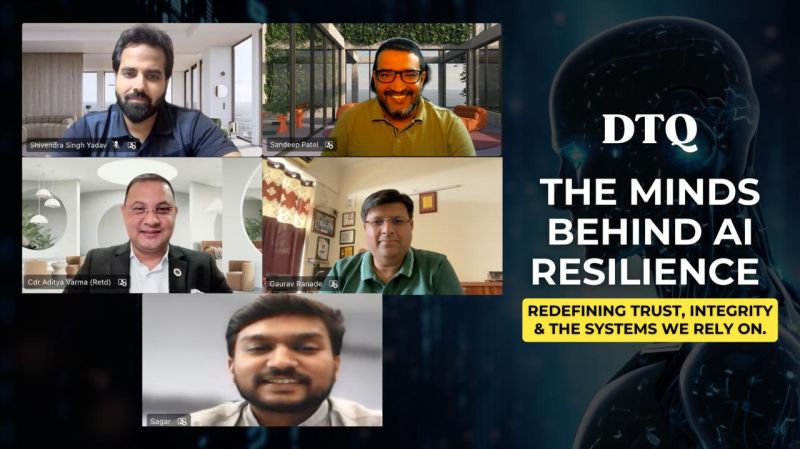
Data Trust Quotient, a strategic platform and community of thought leaders working at the intersection of data protection, cybersecurity, and data governance, on May 27, 2026, convened a virtual session. The discussion, moderated by Commander Aditya Varma (Retd), brought together five leaders from cybersecurity, enterprise AI, operational resilience, compliance, and critical infrastructure to confront one of the most urgent and under-governed risks in enterprise technology today: Shadow AI — the quiet, well-intentioned, and deeply dangerous adoption of AI tools outside organizational oversight.

Speaker Profiles

Commander Aditya Varma (Retd) — Moderator, Leader Public Sector Security, Cisco (India & SAARC)

The moderator brought two decades of military service and deep experience in public sector cybersecurity to the panel. Drawing on his background at Cisco, where he leads public sector security for India and SAARC, he guided the conversation with sharp operational framing — connecting shadow AI governance to cybersecurity fundamentals like zero trust, observability, and the “security is everybody’s responsibility” doctrine. He closed the main discussion with a crisp four-point synthesis that captured the session’s collective message.

Shivendra Singh Yadav — CTO, NVIDIA Ecosystem, HCL Tech

With a focus on AI transformation, generative AI, and scalable enterprise architecture, this speaker offered a practitioner’s view of what shadow AI looks like from inside a large technology organisation. He coined the memorable phrase “competence camouflage” to describe employees using public LLMs to produce polished outputs without disclosing their AI use — a psychological response to performance pressure, not malicious intent. He also outlined practical architectural responses including API monitoring tools, enterprise-licensed frontier model access, and the concept of AI factories — on-premise AI infrastructure that can reduce both risk and token costs simultaneously.

Sandeep Patel — Independent Cybersecurity & Compliance Consultant

With twenty years of experience across cybersecurity readiness, global operations, and digital transformation, this speaker focused on the governance and regulatory dimensions of shadow AI. He highlighted the particular vulnerability of mid-market and small organisations, which lack both the budget and the personnel to establish governance structures. He raised pointed concerns about India’s regulatory readiness, noting that the Digital Personal Data Protection (DPDP) Act’s enforcement deadline is still being treated with complacency by many organisations. He also made the session’s most forward-looking educational argument: that AI accountability must become part of school curricula, not just corporate training.

Sagar S — Principal Business Continuity & Operational Resilience Consultant, Cohesity

Drawing on extensive experience in operational risk, cyber disruption, and resilience — including frontline work during the 2017 NotPetya cyberattack — this speaker brought a resilience-first lens to the shadow AI problem. He argued that accountability for AI usage cannot sit only at leadership level; it must be distributed to every individual using the tools. He noted that many organisations are knowingly accepting AI governance risk in the short term in exchange for productivity gains, with a plan to govern later — a posture he treated with cautious concern.

Gaurav Ranade — CTO, Technocentric Advisory

With over 27 years of experience across cybersecurity, telecom, and digital transformation, this speaker offered the session’s most technically grounded and systemically wide perspective. He argued that shadow AI is not only an employee behaviour problem but an infrastructure problem — AI tools embedded in enterprise systems may themselves be passing data to unknown third parties or state actors. He drew a sharp parallel between the current shadow AI situation and the BYOD (Bring Your Own Device) crisis of years past, and warned that no organisation has yet built a truly integrated architecture combining data center design, security framework, and AI governance.

Key Insights from the Discussion

1. Shadow AI Is Not an IT Problem — It Is a Human and Leadership Problem

The session’s opening framing was clear and deliberate: shadow AI does not enter organisations because employees are bad actors. It enters because they are trying to work faster, look smarter, and stay competitive — and the organisation has not given them a sanctioned way to do so.

The host’s reference to the Samsung incident was the clearest illustration. Engineers pasting source code into ChatGPT were not acting irresponsibly by their own logic. They were solving an immediate problem. The failure was upstream — no governance structure had anticipated the behaviour, and no sanctioned alternative had been provided.

The moderator summarised the root cause plainly: shadow AI is caused by unmet enterprise demand for speed, intelligence, and productivity. Governance must therefore enable, not merely restrict.

“Shadow AI isn’t just a security problem caused by bad actors. It’s a human problem created via good intentions.” — The Host

2. Competence Camouflage: The Psychological Driver Nobody Talks About

One of the session’s most striking concepts came from the enterprise AI leader at HCL Tech: “competence camouflage.” Employees across seniority levels — managers, team leads, individual contributors — face performance pressure that creates a psychological incentive to use AI tools secretly. When the organisation has not yet mandated or provided AI access, employees turn to public LLMs to produce more polished presentations, better-structured emails, and refined reports.

The tell-tale sign: when output quality suddenly spikes uniformly across a team, and enterprise AI utilisation logs show near-zero usage, the gap reveals where the work is actually being done.

His observation about the consequences went further: employees unknowingly training public LLMs with proprietary organisational data means that structured reports, internal analyses, and strategic frameworks are effectively becoming freely accessible to anyone querying the same tools. The data flows out not through any malicious exfiltration, but through the normal act of trying to do a better job.

3. Banning AI Is a Failed Strategy — Bring It Inside Instead

All five speakers converged on a consistent and emphatic position: organisations that respond to shadow AI by banning tools or threatening employees are making the problem worse, not better.

The enterprise AI leader noted that employees will simply pay for a personal subscription — $10 or $20 a month — and continue using the tools outside any line of visibility. The cybersecurity and compliance consultant confirmed that threats of disciplinary action drove more usage underground, not less. The result: the organisation has neither visibility nor control.

The solution proposed was consistent across the panel — channelise rather than restrict. Bring frontier models into the enterprise environment under appropriate guardrails. Offer enterprise-licensed access. Give employees a sanctioned alternative that is better than what they would access privately. As one speaker framed it: if employees are using a free Gemini subscription and you offer them a $20 Gemini Pro subscription under enterprise terms, no one refuses.

“The faster you bring all these tools into your enterprise purview, the better it is — rather than refraining people from using it.” — Enterprise AI Leader, HCL Tech

4. Mid-Market and SME Organisations Face a Disproportionate Risk

While large enterprises have gatekeepers, audit functions, and dedicated security teams, the cybersecurity and compliance consultant identified small and medium organisations as the sector most exposed to shadow AI damage — and least equipped to respond.

These organisations view AI productivity tools as a business benefit, not a governance challenge. They lack the budget to deploy monitoring infrastructure. They often have no designated person evaluating which AI tools are safe for use. And when a breach occurs, the impact on customer confidence and operational integrity can be existential.

The broader India-specific point raised was equally significant: with DPDP enforcement deadlines still being treated as flexible and AI adoption accelerating rapidly, a large portion of the economy is building on a governance foundation that does not yet exist.

5. Digital Sovereignty Is the Deeper, Less-Discussed Risk

The enterprise AI leader reframed shadow AI as a sovereignty problem, not just a security problem. Sovereignty, he argued, means three things: your data, your infrastructure, and your trusted people. In the current shadow AI landscape, none of those three conditions is being met.

When an employee submits organisational data to a public LLM hosted in another country, the data is not theirs anymore. The infrastructure is not theirs. And the model is being trained — unknowingly — by every user who submits data to it, including competitors, analysts, and adversaries doing the same.

The CTO at Technocentric Advisory expanded this to critical infrastructure: AI tools embedded in defence, government, and public sector environments may themselves be transmitting data to unknown external parties or state actors. This is not a behavioural risk — it is an architectural risk. And it is one that no governance framework in India has yet addressed at the systemic level.

6. Governance Needs Architecture and Telemetry, Not Just Policy

A consistent thread running through the technical answers was that policy documents cannot solve a shadow AI problem. The enterprise AI leader was direct: by the time a policy has been written, circulated, and acknowledged, employees have already adopted three new tools that the policy does not cover.

What organisations need instead is observability — end-to-end visibility across the technology stack, from the API calls being made to the data egressing through employee devices. Tools cited during the session included Microsoft Purview, Varonis, AWS Bedrock Guardrails, and NVIDIA’s guardrails framework.

The moderator added a key structural point: the CICD pipeline needs to be monitored from model onboarding through to deployment, with stress testing at each stage. The conversation also flagged AI agents as the next observability frontier — autonomous systems that act on behalf of users, with their own API calls, data access, and decision-making, represent an exponential expansion of the attack surface. An ungoverned AI agent with access to financial systems or communication channels is not a hypothetical risk; it is an imminent operational reality.

7. Accountability Must Be Distributed, Not Delegated Upward

The operational resilience consultant made a point that echoed the moderator’s military background: accountability for AI usage cannot sit only at the CISO level, the CTO level, or any single function. It must exist at every layer — the individual contributor, the team lead, the business unit head, and the board.

The moderator reinforced this with a principle from naval service: security is everybody’s responsibility. If someone sees unsafe AI usage in their team, the correct response is not to wait for a governance committee to convene. It is to intervene.

The enterprise AI leader framed this behaviourally: accountability is not achieved through policy mandates but through behavioural design. Making safe AI tools more attractive than unsafe ones, building enterprise guardrails into tools people already want to use, and measuring shadow AI usage through indirect means — like blog writing contests that reveal whether employees are drawing on enterprise tools or external LLMs — are the kinds of creative accountability mechanisms that actually work.

8. The Insider Threat Has Been Permanently Redefined

The session closed with audience questions that crystallised one final insight: the boundary between cyber risk and human risk has dissolved.

The cybersecurity and compliance consultant noted that physical security controls — no phones in server rooms, paper-based data handling — are now entirely irrelevant. Every browser, every application, every AI assistant running on every device is a potential exfiltration point. The risk now lives in every click, every prompt, every query an employee submits without fully understanding its downstream consequences.

The CTO at Technocentric Advisory was unambiguous: shadow AI will not go away. It is not a phase. It is an enduring structural condition of modern enterprise, just as insider threats have always existed. The goal is not to eliminate it; it is to mature the organisation’s ability to see it, contain it, and respond when it surfaces.

“Shadow AI will remain in future forever.” — CTO, Technocentric Advisory

Conclusion

The session closed with the moderator drawing together four dimensions that every enterprise leader must now hold simultaneously: shadow AI creates invisible operational exposure; it challenges trust, sovereignty, and organisational control; it requires architecture and telemetry, not just policy; and it directly affects customer confidence, privacy, and accountability.

The answer, the panel agreed, is not fear-led restriction. It is responsible enablement — giving employees safe AI pathways, making usage visible, classifying data rigorously, governing the tools in the environment, holding vendors accountable, and keeping humans responsible for every consequential decision.

The human, as the moderator concluded, must stay in the loop.

Categories
Events

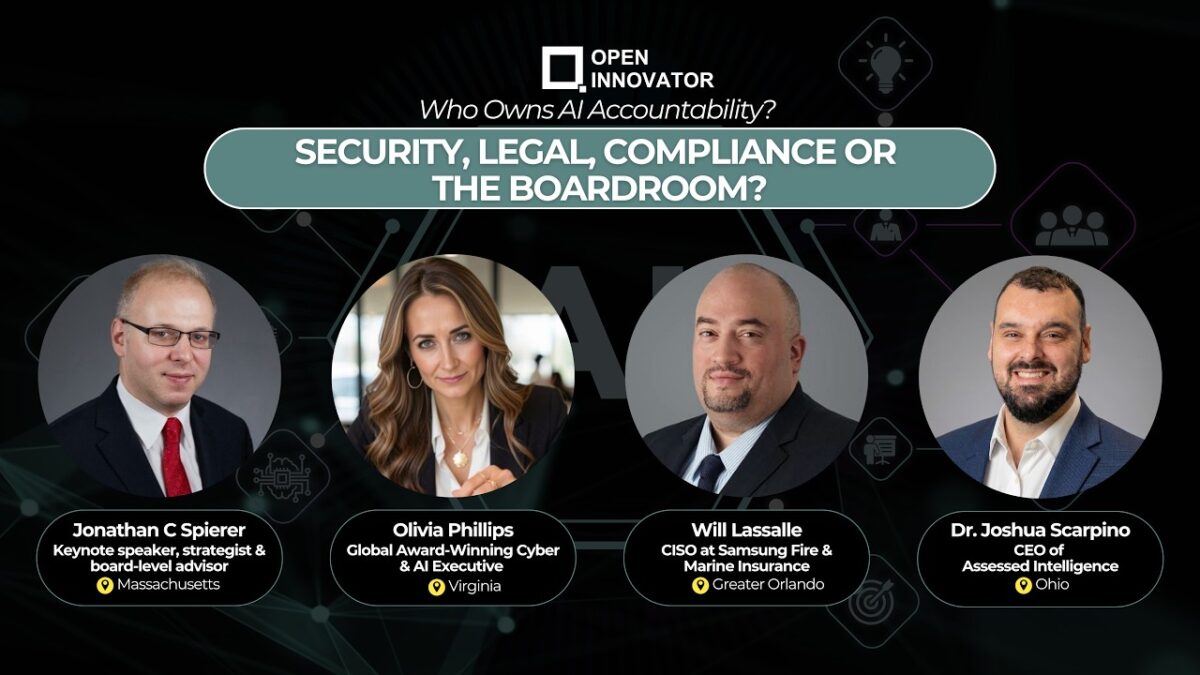
Report: Who Owns AI Accountability? Security, Legal, Compliance, or the Boardroom?

Categories
Events

Report: Who Owns AI Accountability? Security, Legal, Compliance, or the Boardroom?

Open Innovator, on May 21, 2026, hosted a virtual session that brought together four senior leaders across cybersecurity, technology, finance, and compliance to answer one of the defining questions of the AI era: When AI fails inside an enterprise, who picks up the phone? The discussion was moderated by Agrima Sharma and co-hosted by Ananya Gulati.

As it is known, Open Innovator is a thought leadership platform that convenes cross-functional leaders from technology, security, legal, compliance, and the C-suite to tackle the most pressing challenges at the intersection of innovation and accountability. Through live panel discussions, recorded sessions, and community-driven conversations, OI creates a space where practitioners speak plainly about what governance, risk, and responsible deployment really look like on the ground.

Speaker Profiles

Josh Scarpino — Cybersecurity & AI Governance Leader

Josh Scarpino brought a cybersecurity-first lens to AI accountability. He referenced the ARISE framework, which advocates unifying governance across ethics, legal, security, and AI oversight functions into a single operational model. He drew parallels between AI governance failures and longstanding cybersecurity lapses, arguing that organisations are measuring the wrong things — treating governance as a documentation exercise when it must be a demonstrable, measurable practice.

Will Lassalle — CTO & CISO

Will Lassalle spoke from the dual perspective of a technology and security executive, arguing that poorly engineered AI solutions — not just poor governance — are at the root of failures like the Rite Aid case. He emphasised the importance of AI operating committees, controlled deployment, and accountability at the C-suite level. He pushed back firmly against placing sole responsibility on the CISO, calling it both unfair and structurally flawed.

Olivia Phillips — Cybersecurity & Compliance Leader

Olivia Phillips brought the lens of structured, military-grade accountability to the discussion. Drawing on her government background, she advocated for explicit ownership at every layer of the enterprise — from the code level to the board — with clear structures that eliminate ambiguity when something goes wrong. She raised an important point about AI as an insider threat once deployed, requiring ongoing monitoring, re-evaluation, and access governance.

JC Spierer — Finance, Investment & AI Strategy Advisor

JC Spierer introduced the often-overlooked role of finance and investment committees in AI governance, coining the term “prosumer paradox” to describe how business users across organisations — including board members — are adopting AI tools informally, outside of IT oversight. He used BlackRock as an example of an organisation that successfully aligns risk with reward at scale, and raised thought-provoking questions about how accountability for agentic AI systems can be enforced.

Key Insights from the Discussion

1. The Rite Aid Case: A Leadership Failure, Not a Technology Failure

The session opened with the story of Rite Aid Pharmacy — a Fortune 200 company that installed facial recognition cameras in hundreds of stores, built the system using tens of thousands of low-quality images, and deployed it without rigorous testing. The result: innocent customers were flagged as shoplifters, followed through stores, searched, and in some cases had police called on them.

The key insight from the panel: this happened not because the technology was exotic or the company was reckless, but because no one in the leadership pipeline asked who owned the decision. Engineers assumed legal reviewed it. Legal assumed security had audited it. Security assumed compliance signed off. Compliance assumed the board had authorised it. No one had.

2. Accountability Is a Board-Level Obligation — But Responsibility Is Shared

All four speakers converged on a nuanced view: ultimate accountability must sit at the board or CEO level, but every function — engineering, security, legal, compliance, product — carries responsibility for its part of the pipeline.

The cybersecurity governance leader made the analogy to cybersecurity: just as “security is everybody’s responsibility” is the accepted norm for protecting against phishing and human error, so too must AI risk be owned across functions. But when it comes to technology deployed at organisational scale, there must be a distinct, senior-level accountability holder — not a committee that diffuses blame.

3. The CISO Is Being Unfairly Scapegoated

A recurring theme was the industry’s troubling tendency to land all AI accountability on the CISO. Speakers agreed this is both structurally wrong and operationally dangerous.

The cybersecurity and compliance leader noted that the CISO has historically been the “scapegoat” in security failures, and AI is following the same pattern. The CTO & CISO referenced peers who now joke that CISO stands for “Career Is Soon Over” — a reflection of unrealistic expectations placed on a single executive.

The panel’s consensus: the CISO is well-positioned to manage security risk and compliance best practices, but should not be the sole owner of AI governance. A cross-functional AI Operating Committee or AI Governance Committee, with representation from all business units and accountability at the C-suite level, is the right structure.

4. Governance Must Be Operational, Not Just Documented

The cybersecurity governance leader challenged the common enterprise approach of treating AI governance as a documentation problem — policies, frameworks, audit checklists. His argument: documentation governs human behaviour, but autonomous systems behave differently.

When an AI model drifts from its original parameters, or when a deployment decision was made based on policies that have since become outdated, point-in-time audits will not catch the issue. Governance must be continuous, measurable, and tied to demonstrable system behaviour.

A recent statistic cited during the session: 78% of organisations cannot confidently submit an independent AI governance audit within 90 days. That means roughly 4 out of 5 companies do not fully know what they have built and deployed.

5. The Prosumer Paradox: AI Is Already Inside the Boardroom

The finance and AI strategy advisor introduced one of the session’s most distinctive concepts: the prosumer paradox. Half the people in any boardroom are likely already using AI tools — on their laptops, on their phones — without formal IT oversight. These prosumers are not doing anything malicious; they are simply trying to be productive. But they are taking on risk the organisation has not accounted for on its balance sheet.

His point: the finance and investment committee is often the first to know about AI adoption at scale, because at some point, money must be allocated or approved. Bringing this committee into AI governance structures earlier is an underutilised lever.

6. Speed vs. Safety: The Hot Take Debate

The panel debated a pointed hot take: “Companies that move fast on AI and skip governance will win by 2028. The cautious ones will be acquired or irrelevant.”

The responses reflected the complexity of the real landscape:

  • Finance & AI Strategy Advisor (nuanced yes/no): If you move fast and move right, you will win. But velocity without direction leads to crashes, not victories.
  • Cybersecurity & AI Governance Leader (disagrees): Recent legal precedents — including a judge ruling that a venture capital firm could be held liable for advising a portfolio company to cut cybersecurity budgets — signal a coming shift. Organisations that ignore foundational governance will become uninvestable.
  • CTO & CISO (it depends): The jury is out. If everyone rushes in without governance, the most cautious organisations may end up being the only ones still standing.
  • Cybersecurity & Compliance Leader (history repeats itself): The COVID-era remote work rush created BYOD governance failures that took years to resolve. AI is following the same arc. Governance cannot chase deployment; it must run alongside it.

The panel’s collective conclusion: you can build boldly and govern well at the same time. The two are not in opposition.

7. Agentic AI Raises Accountability Questions No One Has Answered Yet

The finance and AI strategy advisor raised the session’s most forward-looking concern: agentic AI — systems that not only execute tasks but train themselves and exercise a degree of independent agency — creates accountability structures that existing governance models are not equipped to handle.

If an agentic AI goes awry, with good intention but bad outcomes, how do you hold it accountable in any meaningful sense? How do you assign consequences? The panel acknowledged there are theoretical answers — including proxy accountability assigned to the human responsible for the system — but noted that no enterprise governance framework has operationalised this yet.

The cybersecurity governance leader added a technical concern: a shared knowledge layer across agentic systems — often proposed as a governance solution — also creates a single, high-value attack vector. If compromised, it could bias an entire agentic workflow.

Conclusion

The session closed with the moderator drawing together the central thread: AI does not fail because technology is broken. It fails because no one in the room raises their hand and says, “That’s my responsibility.”

The Rite Aid case was not an outlier. It was a preview. Across industries, organisations are deploying AI systems with unclear ownership, untested assumptions, and governance frameworks that exist on paper but not in practice.

The panel’s unified message to every leader in attendance: go back to your organisation tomorrow and find the person who is supposed to raise that hand. If you cannot name them, that is not a technology problem. That is your problem. A Part 2 of this conversation is planned, given the depth of interest and the volume of questions that could not be addressed in the session.


This report is based on the recorded panel discussion hosted by Open Innovator on May 21, 2026. All insights are attributed to the respective speakers.

Categories
DTQ Events

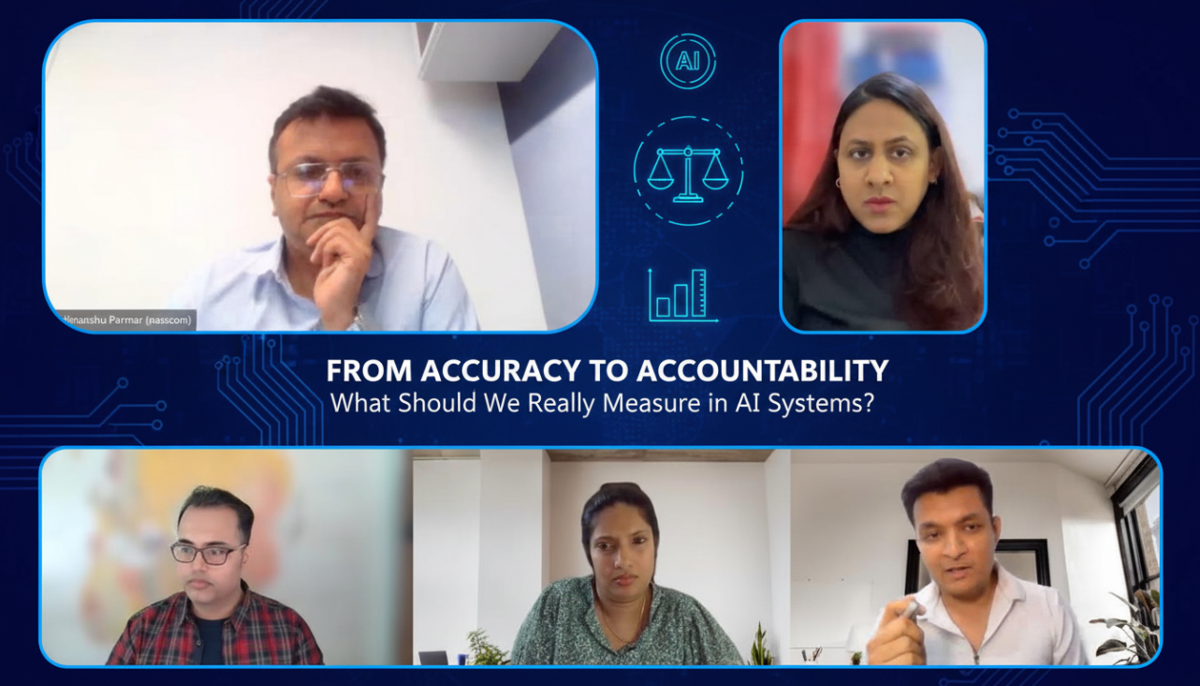
Report: From Accuracy to Accountability- What Should We Really Measure in AI Systems

Categories
DTQ Events

Report: From Accuracy to Accountability- What Should We Really Measure in AI Systems

The rapid acceleration of artificial intelligence adoption has brought with it a fundamental shift in how we evaluate technological success. Traditionally, AI systems have been judged primarily on performance metrics such as accuracy, precision, and speed. However, as these systems move from controlled environments into real-world applications—impacting healthcare, governance, finance, and everyday decision-making—the limitations of these metrics have become increasingly evident.

The Data Trust Quotients (DTQ) recently convened a thought‑provoking discussion titled “From Accuracy to Accountability: What Should We Really Measure in AI Systems?” The dialogue tackled a critical shift in how we evaluate AI: is accuracy alone sufficient, or should accountability, trust, and human impact take precedence. The virtual session explored the growing realization that high-performing models can still fail in practice if they lack proper governance, transparency, and ethical grounding. As organizations race toward rapid deployment, the need to redefine evaluation frameworks for AI systems has never been more urgent.

Speakers

  • Naman Kothari – NASSCOM COE (Moderator)
  • Anniliza Crasta – Director, Information Security, Juniper Networks
  • Sneha Pillai – Data Protection Lawyer, Bosch Middle East
  • Abhishek Tripathi – Head of Cybersecurity & IT Operations
  • Himanshu Parmar – Senior Manager, AI, NASSCOM COE

Key Insights from the Discussion

1. The AI Adoption Paradox

The session opened by highlighting a striking imbalance in the current AI ecosystem. On one hand, there is unprecedented enthusiasm and investment, with billions of dollars flowing into AI development and a majority of enterprises actively integrating generative AI into their operations. On the other hand, there is a significant lack of preparedness when it comes to managing the risks associated with these systems. Organizations are under immense pressure to deploy AI quickly in order to remain competitive, yet only a small fraction feel confident in their ability to implement proper safeguards. This creates a paradox where speed is prioritized over safety, leading to fragile systems that may not withstand real-world complexities.

2. Accuracy as a Misleading Benchmark

A key theme throughout the discussion was the idea that accuracy, while important, can often be a misleading indicator of success. Examples were shared where models achieved near-perfect accuracy in testing environments but failed dramatically once deployed. These failures were not due to flaws in the mathematical models themselves but rather due to unaddressed external factors such as biased data, changing environments, and lack of human oversight. This highlights a critical gap between theoretical performance and practical reliability. In real-world scenarios, systems must operate under uncertainty, adapt to new conditions, and interact with human users—factors that accuracy metrics alone cannot capture.

3. The Shift from Accuracy to Trust

As AI systems take on more complex and sensitive roles, there is a growing recognition that trust is becoming the ultimate measure of success. Trust encompasses multiple dimensions, including fairness, transparency, reliability, and security. Organizations are beginning to move away from purely technical metrics toward a more holistic evaluation framework that considers how systems behave over time and how they are perceived by users. This shift reflects a broader understanding that AI systems must not only perform well but also inspire confidence among stakeholders.

4. Hidden Risks Across the AI Lifecycle

One of the most significant insights from the discussion was the identification of risks that are often overlooked during the development and deployment of AI systems. These risks are not confined to a single stage but span the entire lifecycle:

  • Data-related risks: Biases embedded in datasets, errors in labeling, and poor data quality can significantly impact outcomes.
  • Design assumptions: Many systems are built on implicit assumptions that are neither documented nor tested, leading to unexpected behavior.
  • Context drift: The environment in which a model operates can change over time, reducing its effectiveness.
  • Post-deployment gaps: Once a system is deployed, accountability often becomes unclear, and continuous monitoring is neglected.

These blind spots can lead to failures even when initial performance metrics appear satisfactory.

5. The Complexity of Global Regulations

The discussion also highlighted the challenges posed by the lack of a unified global standard for AI governance and data privacy. Different regions have developed their own regulatory frameworks, each with unique requirements and expectations. This creates a complex landscape for organizations operating across multiple jurisdictions. Systems that are compliant in one region may not meet the standards of another, requiring constant adaptation. The evolving nature of these regulations further complicates the situation, making compliance an ongoing process rather than a one-time achievement.

6. Security as an Integral Design Element

Another important takeaway was the need to rethink how security is approached in AI systems. Instead of treating security as a final checkpoint before deployment, it must be integrated into every stage of development. This involves designing systems with security considerations from the outset, ensuring that vulnerabilities are addressed early rather than patched later. Such an approach not only reduces risks but also aligns with the fast-paced nature of AI development, where late-stage changes can be costly and disruptive.

7. Real-World Deployment Challenges

When AI systems are deployed in real-world environments, a range of operational challenges emerges. These include over-permissioned systems that have access to more data than necessary, lack of domain-specific constraints, and insufficient control mechanisms. In some cases, AI agents may perform tasks beyond their intended scope, leading to unintended consequences. These issues underscore the importance of clearly defining the boundaries within which AI systems operate and ensuring that they are aligned with their intended purpose.

8. The Emergence of Shadow AI

The increasing accessibility of AI tools has led to the rise of “shadow AI,” where individuals within organizations use AI systems independently without proper oversight. While often driven by a desire to innovate or improve efficiency, this practice introduces significant risks. Sensitive data may be exposed, and untested systems may be integrated into workflows without adequate safeguards. Addressing this challenge requires both technical solutions and a cultural shift toward responsible AI usage.

9. The Challenge of AI Hallucinations

AI hallucinations—instances where systems generate incorrect or fabricated information—remain a persistent issue. Despite advancements in model design, these errors cannot be entirely eliminated. Instead, organizations must focus on mitigating their impact through validation mechanisms and oversight processes. This reinforces the need for layered accountability, where multiple checks are in place to ensure reliability.

10. Data as Both an Asset and a Challenge

While data is often described as the fuel of AI, the discussion revealed that managing data effectively is one of the most challenging aspects of AI development. Collecting high-quality data requires significant effort and resources, and legal restrictions can complicate cross-border data transfers. Even after data is collected and processed, it may not always meet the requirements for training effective models. This highlights the need for careful planning and validation at every stage of the data lifecycle.

11. The Importance of a Structured Data Strategy

A recurring theme was the lack of a comprehensive data strategy in many organizations. Without a clear framework for managing data, organizations risk inefficiencies and vulnerabilities. A robust data strategy should include classification, access control, and lifecycle management, ensuring that data is treated as a critical asset. Such an approach not only enhances security but also supports the development of more reliable AI systems.

12. Governance as the Backbone of AI System

Governance plays a crucial role in ensuring that AI systems operate within defined boundaries. It involves establishing policies, setting standards, and monitoring compliance throughout the lifecycle. Unlike operational management, governance focuses on creating the structures that guide decision-making. Effective governance ensures consistency, reduces risks, and supports the responsible use of AI.

13. Measuring Human Impact

One of the most important yet often overlooked aspects of AI evaluation is its impact on users. AI systems can influence behavior, decision-making, and societal outcomes in ways that are not immediately apparent. Evaluating these effects requires a long-term perspective and continuous monitoring. By considering human impact, organizations can ensure that their systems contribute positively to society.

14. Building Trust Through Design

Moving from compliance to trust requires a proactive approach to system design. Features such as transparency, user control, and data minimization can enhance trust and improve user experience. Trust is not built through policies alone but through consistent and predictable system behavior. By prioritizing user-centric design, organizations can create systems that are both effective and trustworthy.

15. The Need for Interdisciplinary Collaboration

The discussion emphasized the importance of collaboration between technical, legal, and business teams. As AI systems become more complex, no single discipline can address all the challenges involved. Bridging the gap between these domains is essential for developing systems that are both innovative and responsible.

Conclusion

The session underscores a critical shift in how AI systems should be evaluated. While accuracy remains an important metric, it is no longer sufficient on its own. The future of AI lies in building systems that are accountable, transparent, and aligned with human values. This requires a comprehensive approach that considers the entire lifecycle of AI systems, from data collection and model design to deployment and long-term impact. By expanding the scope of measurement to include trust, governance, and human impact, organizations can move toward a more responsible and sustainable AI ecosystem.

Categories
DTQ Events

Report: Transitioning to Agentic Cyber Defense

Categories
DTQ Events

Report: Transitioning to Agentic Cyber Defense

Introduction

DTQ recently convened a specialized session, “Transitioning to Agentic Cyber Defense to Counter Autonomous Threats,” to explore the evolution of defensive strategies in an era of self-evolving adversarial tactics. The online discussion framed “agentic defense” not merely as an upgrade in tooling, but as a strategic pivot from reactive, signature-based controls toward autonomous systems capable of reasoning and adapting within defined risk parameters.

The Speakers

The panel featured a cross-disciplinary group of leaders representing the financial, industrial, and consulting sectors:

  • Anindya Chatterjee — Assistant Director, EY Global Consulting Services
  • Pulkit Vohra — Senior Data Privacy Manager, Top UAE Financial Institution
  • Mohamed A. S. — AI Governance Architect
  • Sandeep Bansal — CIO, Aone Steel India Ltd
  • Sandeep Singh — Senior Manager, Genpact

Key Insights

The Changing Threat Landscape

  • Lowered Barriers to Entry: AI and automation allow low-skill actors to execute high-sophistication attacks. Phishing and credential harvesting are becoming indistinguishable from human activity.
  • Compressed Response Windows: The primary vulnerability is no longer just the “bad decision,” but the “unquestioned execution” of rapid, automated attacks.
  • Cognitive Overload: Traditional SOC workflows are structurally incapable of managing the current volume of alerts; governed automation is now a survival requirement.

Principles of Agentic Defense

  • Bounded Autonomy: Systems must operate within “guardrails.” High-confidence, low-risk actions can be fully automated, while high-impact shifts require human-in-the-loop (HITL) authorization.
  • Radical Transparency: Every autonomous action must be explainable and auditable, detailing the rationale and data inputs for regulatory and forensic purposes.
  • Collateral-Aware Logic: Systems must calculate the potential business impact (e.g., service downtime) before executing a defensive maneuver, with built-in “safe rollback” capabilities.

Governance and Accountability

  • Human-Centric Liability: Regardless of the level of autonomy, accountability remains with human stakeholders. Responsibilities must be clearly mapped across model owners and business leaders.
  • Policy-as-Code: Governance should be machine-readable, allowing agentic systems to enforce legal and internal constraints at the same speed as the threats they counter.
  • Cross-Functional Oversight: Alignment between Security, Legal, and Privacy teams is essential to define the boundaries of “acceptable” autonomous behavior.

Privacy and Data Strategy

  • Privacy-Preserving Telemetry: Implementation of data minimization and pseudonymization ensures that detection needs do not compromise privacy obligations.
  • Engineering-Led Privacy: Privacy cannot be a checkbox; it must be baked into the architecture and model training phases to prevent data “scope creep.”

Operationalization Strategy

  • Phased Deployment: Start with “low-hanging fruit,” such as quarantining known malware or blocking confirmed fraud, before scaling to complex decision-making.
  • Continuous Simulation: Use red-teaming and “chaos experiments” to test how autonomous playbooks behave under extreme or unpredictable stress.
  • Legacy Integration: Agentic capabilities should augment—not replace—existing SIEM, EDR, and IAM investments to ensure telemetry continuity.

Technical & Sector Considerations

Technical Design

  • Model Lifecycle Management: Rigorous versioning and drift detection are required to prevent adversarial manipulation of the defense models themselves.
  • Fail-Safe Defaults: When confidence scores are low, systems must default to “Alert Only” modes rather than taking disruptive actions.

Sector-Specific Applications

  • Financial Services: Focus on real-time fraud prevention and identity risk scoring while maintaining high explainability for regulators.
  • Industrial/OT: Priority is placed on Operator-Assist recommendations. Given the risk of physical damage, direct autonomous actuation must be approached with extreme caution.
  • Managed Services (MSSPs): Providers can act as a force multiplier by centralizing model management and threat intelligence for multiple clients.

Practical Recommendations for Leaders

  1. Tier Your Automation: Classify defensive actions by risk level. Automate the “obvious” and assist the “complex.”
  2. Codify Your Rules: Move from written PDFs to machine-executable Policy-as-Code.
  3. Enrich Your Context: Invest in high-quality telemetry (Identity, Asset, and Business process mapping) to improve the “reasoning” of agentic tools.
  4. Monitor the Models: Treat your security AI as a high-value asset; implement drift monitoring and adversarial testing.
  5. Foster Collaboration: Establish a cross-functional forum where Legal and IT define the rules of engagement together.

Conclusion

Agentic cyber defense is no longer a futuristic concept—it is an operational necessity. To successfully transition, organizations must balance the speed of AI with the wisdom of human oversight. By adopting a phased, risk-aware approach grounded in Policy-as-Code and explainable AI, security leaders can build a resilient posture that scales with the threat while remaining firmly under human control.

DTQ serves as a platform dedicated to mapping global industry shifts and providing “information capital” before it reaches the mainstream. in cybersecurity space. Please write us at open-innovator@quotients.com for more information.