



Categories
Applied Innovation

Responsible AI:  Principles, Practices, and Challenges

Categories
Applied Innovation

Responsible AI:  Principles, Practices, and Challenges

The emergence of artificial intelligence (AI) has been a catalyst for profound transformation across various sectors, reshaping the paradigms of work, innovation, and technology interaction. However, the swift progression of AI has also illuminated a critical set of ethical, legal, and societal challenges that underscore the urgency of embracing a responsible AI framework. This framework is predicated on the ethical creation, deployment, and management of AI systems that uphold societal values, minimize potential detriments, and maximize benefits.

Foundational Principles of Responsible AI

Responsible AI is anchored by several key principles aimed at ensuring fairness, transparency, accountability, and human oversight. Ethical considerations are paramount, serving as the guiding force behind the design and implementation of AI to prevent harmful consequences while fostering positive impacts. Transparency is a cornerstone, granting stakeholders the power to comprehend the decision-making mechanisms of AI systems. This is inextricably linked to fairness, which seeks to eradicate biases in data and algorithms to ensure equitable outcomes.

Accountability is a critical component, demanding clear lines of responsibility for AI decisions and actions. This is bolstered by the implementation of audit trails that can meticulously track and scrutinize AI system performance. Additionally, legal and regulatory compliance is imperative, necessitating adherence to existing standards like data protection laws and industry-specific regulations. Human oversight is irreplaceable, providing the governance structures and ethical reviews essential for maintaining control over AI technologies.

The Advantages of Responsible AI

Adopting responsible AI practices yields a multitude of benefits for organizations, industries, and society at large. Trust and enhanced reputation are significant by-products of a commitment to ethical AI, which appeals to stakeholders such as consumers, employees, and regulators. This trust is a valuable currency in an era increasingly dominated by AI, contributing to a stronger brand identity. Moreover, responsible AI acts as a bulwark against risks stemming from legal and regulatory non-compliance.

Beyond the corporate sphere, responsible AI has the potential to propel societal progress by prioritizing social welfare and minimizing negative repercussions. This is achieved by developing technologies that are aligned with societal advancement without compromising ethical integrity.

Barriers to Implementing Responsible AI

Despite its clear benefits, implementing responsible AI faces several challenges. The intricate nature of AI systems complicates transparency and explainability. Highly sophisticated models can obscure the decision-making process, making it difficult for stakeholders to fully comprehend their functioning.

Bias in training data also presents a persistent issue, as historical data may embody societal prejudices, thus resulting in skewed outcomes. Countering this requires both technical prowess and a dedication to diversity, including the use of comprehensive datasets.

The evolving legal and regulatory landscape introduces further complexities, as new AI-related laws and regulations demand continuous system adaptations. Additionally, AI security vulnerabilities, such as susceptibility to adversarial attacks, necessitate robust protective strategies.

Designing AI Systems with Responsible Practices in Mind

The creation of AI systems that adhere to responsible AI principles begins with a commitment to minimizing biases and prejudices. This is achieved through the utilization of inclusive datasets that accurately represent all demographics, the application of fairness metrics to assess equity, and the regular auditing of algorithms to identify and rectify biases.

Data privacy is another essential design aspect. By integrating privacy considerations from the onset—through methods like encryption, anonymization, and federated learning—companies can safeguard sensitive information and foster trust among users. Transparency is bolstered by selecting interpretable models and clearly communicating AI processes and limitations to stakeholders.

Leveraging Tools and Governance for Responsible AI

The realization of responsible AI is facilitated by a range of tools and technologies. Explainability tools, such as SHAP and LIME, offer insight into AI decision-making. Meanwhile, privacy-preserving frameworks like TensorFlow Federated support secure data sharing for model training.

Governance frameworks are pivotal in enforcing responsible AI practices. These frameworks define roles and responsibilities, institute accountability measures, and incorporate regular audits to evaluate AI system performance and ethical compliance.

The Future of Responsible AI

Responsible AI transcends a mere technical challenge to become a moral imperative that will significantly influence the trajectory of technology within society. By championing its principles, organizations can not only mitigate risks but also drive innovation that harmonizes with societal values. This journey is ongoing, requiring collaboration, vigilance, and a collective commitment to ethical advancement as AI technologies continue to evolve.

Reach out to us at open-innovator@quotients.com or drop us a line to delve into the transformative potential of groundbreaking technologies. We’d love to explore the possibilities with you

Categories
Events

Agentic AI: Shaping the Business Landscape of Tomorrow

Categories
Events

Agentic AI: Shaping the Business Landscape of Tomorrow

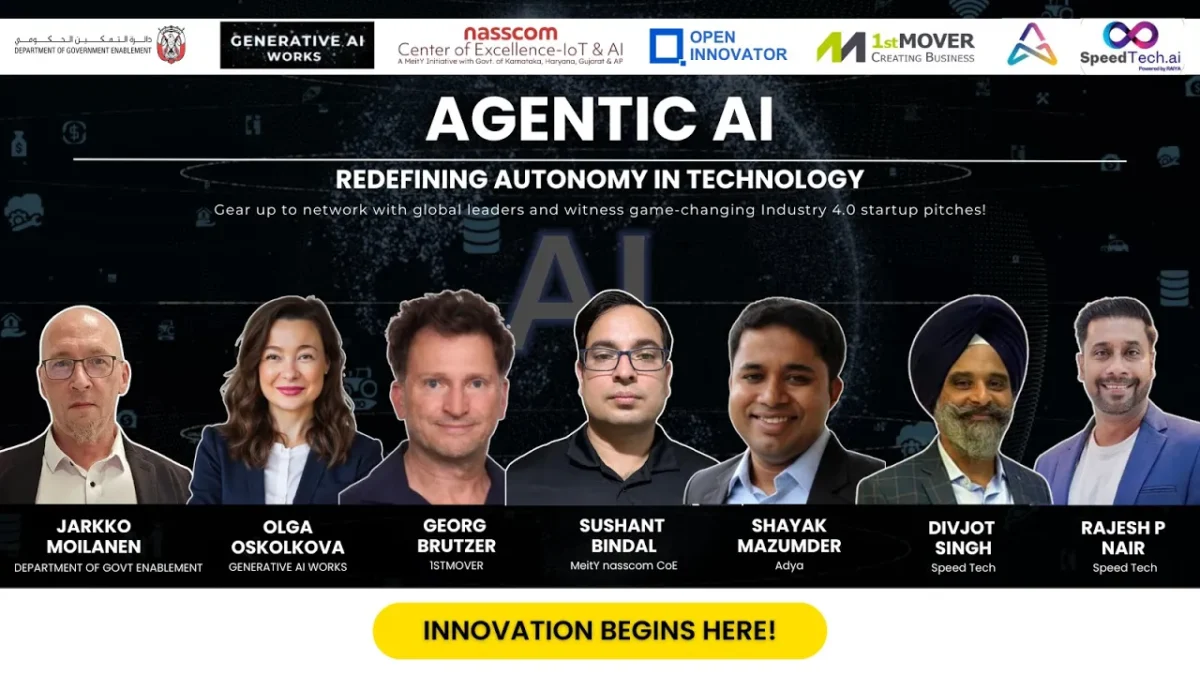
Open Innovator hosted Agentic AI Knowledge Session convened an assembly of distinguished thought leaders, innovators, and industry professionals to delve into the transformative prospects of agentic AI in revamping business practices, fostering innovation, and bolstering collaboration.

The virtual event held on March 21st , moderated by Naman Kothari, underscored the distinctive traits of agentic AI—its proactive and dynamic nature contrasting with the traditional, reactive AI models. The session encompassed engaging panel discussions, startup presentations, and profound insights on how small and medium enterprises (SMEs) can exploit agentic AI to enhance productivity, efficiency, and decision-making capabilities.

Prominent Speakers and Discussion Points:

  • Sushant Bindal, Innovation Partnerships Head at MeitY-Nasscom CoE, steered conversations about nurturing innovation within Indian businesses.
  • Dr. Jarkko Moilanen, Platform Product Head for the Department of Government Enablement in Abu Dhabi, UAE, offered insights into AI’s evolving role within governmental and public domains.
  • Olga Oskolkova, Founder of Generative AI Works, and Georg Brutzer, Agentic AI Strategy Consultant, delved into the long-term implications of agentic AI for commerce and governance frameworks.
  • Shayak Mazumder, CEO of Adya, presented their technology platform, which is instrumental in advancing ONDC adoption in India and simplifying AI integration.
  • Divjot Singh and Rajesh P. Nair, the masterminds behind Speed Tech, showcased their intelligent enterprise assistant aimed at optimizing operations and enhancing decision-making processes.

Overview of the Future of AI in Business

Naman Kothari initiated the session by distinguishing between conventional AI and agentic AI, likening the latter to a proactive participant in a classroom setting. This distinction laid the foundation for an exploration of how AI can transcend automation to facilitate real-time decision-making and collaboration across various industries.

Agentic AI’s Impact on SMEs

A pivotal theme was the substantial benefits that agentic AI can offer to SMEs. Georg Brutzer underscored that SMEs are at disparate levels of digital maturity, necessitating tailored AI approaches. More digitized firms can integrate AI via SaaS platforms, while less digitized ones should prioritize controlled generative AI projects to cultivate trust and understanding. Olga Oskolkova reinforced the importance of strategic AI adoption to prevent resource waste and missed opportunities.

Building Confidence in AI: Education and Strategy

A prevailing challenge highlighted was the need to establish trust in AI within organizational structures. Sushant Bindal advocated for starting with bite-sized AI projects that yield evident ROI, particularly in sectors like manufacturing and logistics where AI can enhance processes without causing disruptions.

Olga Oskolkova placed emphasis on AI literacy, suggesting businesses prioritize employee education on AI’s capabilities, limitations, and ethical ramifications. This approach fosters an environment conducive to learning and helps navigate beyond the hype to derive actual value from AI adoption.

Governance and Ethical Considerations

The increasing integration of AI into business processes has brought to the fore the necessity for robust governance frameworks and ethical considerations. Dr. Jarkko Moilanen spoke on the evolving nature of AI and the imperative for businesses to adapt governance models as AI systems become more autonomous. Balancing machine autonomy with human oversight remains vital for AI to serve as a complementary tool rather than a human replacement.

AI as a Catalyst for Startup and Enterprise Synergy

AI’s role in fostering collaboration between startups and large corporations was another key discussion point. Sushant Bindal pointed out that AI agents can function as matchmakers, identifying supply chain gaps and business needs to facilitate beneficial partnerships. These collaborations can spur innovation and ensure mutual growth for startups and established enterprises.

SaaS Companies and AI’s Evolution

The session touched on the challenges and opportunities SaaS companies face as AI advances. Olga Oskolkova discussed how AI’s transition from basic automation to complex agentic systems would affect business models, suggesting a shift from traditional subscription-based to token-based pricing models tied to output and effectiveness.

Moreover, as AI takes on more sophisticated tasks, businesses must reevaluate their approach to adoption and integration, maintaining human engagement while leveraging AI’s potential.

Startup Showcases: Adya AI and Speed Tech

The session included captivating startup pitches from two innovative companies:

– Adya AI, presented by Shayak Mazumder, showcased their platform’s ability to create custom AI agents using a user-friendly drag-and-drop interface, streamlining data integration and app development. This underscored the potential for agentic AI to boost productivity, innovation, and accessibility.

– Divjot Singh and Rajesh P. Nair introduced Speed Tech’s intelligent enterprise assistant, designed to optimize operations and decision-making. Their product, Rya, demonstrated AI’s ability to enhance customer service and minimize operational costs by addressing challenges such as long wait times and document processing errors.

Concluding Remarks and Key Takeaways

The session concluded with an emphasis on collaboration, innovation, and continuous learning as essential for harnessing agentic AI’s potential. The session encouraged the audience to embrace the evolving AI landscape and recognize the vast potential for business transformation. The speakers collectively highlighted the importance of education, strategy, and collaboration in navigating AI integration successfully. The event left participants with a clear understanding of the profound impact of AI and a call to stay informed, explore emerging opportunities, and drive innovation within the realm of AI.

Categories
Applied Innovation

Understanding and Implementing Responsible AI

Categories
Applied Innovation

Understanding and Implementing Responsible AI

Our everyday lives now revolve around artificial intelligence (AI), which has an impact on everything from healthcare to banking. But as its impact grows, the necessity of responsible AI has become critical. The creation and application of ethical, open, and accountable AI systems is referred to as “responsible AI.” Making sure AI systems follow these guidelines is essential in today’s technology environment to avoid negative impacts and foster trust. Fairness, transparency, accountability, privacy and security, inclusivity, dependability and safety, and ethical considerations are some of the fundamental tenets of Responsible AI that need to be explored.

1. Fairness

Making sure AI systems don’t reinforce or magnify prejudices is the goal of fairness in AI. skewed algorithms or skewed training data are just two examples of the many sources of bias in AI. Regular bias checks and the use of representative and diverse datasets are crucial for ensuring equity. Biases can be lessened with the use of strategies such adversarial debiasing, re-weighting, and re-sampling. One way to lessen bias in AI models is to use a broad dataset that covers a range of demographic groupings.

2. Transparency

Transparency in AI refers to the ability to comprehend and interpret AI systems. This is essential for guaranteeing accountability and fostering confidence. One approach to achieving transparency is Explainable AI (XAI), which focuses on developing human-interpretable models. Understanding model predictions can be aided by tools such as SHAP (SHapley Additive exPlanations) and LIME (Local Interpretable Model-agnostic Explanations). Furthermore, comprehensive details regarding the model’s creation, functionality, and constraints are provided by documentation practices like Model Cards.

3. Accountability

Holding people or organizations accountable for the results of AI systems is known as accountability in AI. Accountability requires the establishment of transparent governance frameworks as well as frequent audits and compliance checks. To monitor AI initiatives and make sure they follow ethical standards, for instance, organizations can establish AI ethics committees. Maintaining accountability also heavily depends on having clear documentation and reporting procedures.

4. Privacy and Security

AI security and privacy are major issues, particularly when handling sensitive data. Strong security measures like encryption and secure data storage must be put in place to guarantee user privacy and data protection. Additionally crucial are routine security audits and adherence to data protection laws like GDPR. Differential privacy is one technique that can help safeguard personal information while still enabling data analysis.

5. Inclusiveness

AI security and privacy are major issues, particularly when handling sensitive data. Strong security measures like encryption and secure data storage must be put in place to guarantee user privacy and data protection. Additionally crucial are routine security audits and adherence to data protection laws like GDPR. Differential privacy is one technique that can help safeguard personal information while still enabling data analysis.

6. Reliability and Safety

AI systems must be dependable and safe, particularly in vital applications like autonomous cars and healthcare. AI models must be rigorously tested and validated in order to ensure reliability. To avoid mishaps and malfunctions, safety procedures including fail-safe mechanisms and ongoing monitoring are crucial. AI-powered diagnostic tools in healthcare that go through rigorous testing before to deployment are examples of dependable and secure AI applications.

7. Ethical Considerations

The possible abuse of AI technology and its effects on society give rise to ethical quandaries in the field. Guidelines for ethical AI practices are provided by frameworks for ethical AI development, such as the IEEE Global Initiative on Ethics of Autonomous and Intelligent Systems. Taking into account how AI technologies will affect society and making sure they are applied for the greater good are key components of striking a balance between innovation and ethical responsibility.

8. Real-World Applications

There are several uses for responsible AI in a variety of sectors. AI in healthcare can help with disease diagnosis and treatment plan customization. AI can be used in finance to control risks and identify fraudulent activity. AI in education can help teachers and offer individualized learning experiences. But there are drawbacks to using Responsible AI as well, such protecting data privacy and dealing with biases.

9. Future of Responsible AI

New developments in technology and trends will influence responsible AI in the future. The ethical and legal environments are changing along with AI. Increased stakeholder collaboration, the creation of new ethical frameworks, and the incorporation of AI ethics into training and educational initiatives are some of the predictions for the future of responsible AI. Maintaining a commitment to responsible AI practices is crucial to building confidence and guaranteeing AI’s beneficial social effects.

Conclusion

To sum up, responsible AI is essential to the moral and open advancement of AI systems. We can guarantee AI technologies assist society while reducing negative impacts by upholding values including justice, accountability, openness, privacy and security, inclusivity, dependability and safety, and ethical concerns. It is crucial that those involved in AI development stick to these guidelines and never give up on ethical AI practices. Together, let’s build a future where AI is applied morally and sensibly.

We can create a more moral and reliable AI environment by using these ideas and procedures. For all parties participating in AI development, maintaining a commitment to Responsible AI is not only essential, but also a duty.

Contact us at innovate@quotients.com to schedule a consultation and explore the transformative potential of this innovative technology.

Categories
Applied Innovation

Generative AI – a game-changing technology set to revolutionize the way organizations approach knowledge management

Categories
Applied Innovation

Generative AI – a game-changing technology set to revolutionize the way organizations approach knowledge management

In today’s digital era, information is a valuable asset for businesses, propelling innovation, decision-making, and seeking competitive advantage. Effective knowledge management is critical for gathering, organising, and sharing useful information with employees, consumers, and stakeholders. However, traditional knowledge management systems frequently fail to keep up with the growing volume and complexity of data, resulting in information overload and inefficiency. Enter generative AI, a game-changing technology that promises to transform how organisations approach knowledge management.

Generative AI vs Traditional Knowledge Management Systems

GenAI refers to artificial intelligence models that can generate new material, such as text, graphics, code, or audio, using patterns and correlations learnt from large datasets. Unlike typical knowledge management systems, which are primarily concerned with organising and retrieving existing information, generative AI is intended to produce wholly new material from start.

Deep learning methods, notably transformer models such as GPT (Generative Pre-trained Transformer) and DALL-E (a combination of “Wall-E” and “Dali”), are central to generative AI. These models are trained on massive volumes of data, allowing them to recognise and describe complex patterns and connections within it. When given a cue or input, the model may produce human-like outputs that coherently mix and recombine previously learned knowledge in new ways.

Generative AI differs from typical knowledge management systems in its aim and technique. Knowledge management systems essentially organise, store, and disseminate existing knowledge to aid decision-making and issue resolution. In contrast, generative AI models are trained on massive datasets to generate wholly new material, such as text, photos, and videos, based on previously learnt patterns and correlations.

The basic distinction in capabilities distinguishes generative AI. While knowledge management software improves information sharing and decision-making in customer service and staff training, generative AI enables new applications such as virtual assistants, chatbots, and realistic simulations.

Unique Capabilities of Generative AI in Knowledge Management

Generative AI has distinct features that distinguish it apart from traditional knowledge management systems, opening up new opportunities for organisations to develop, organise, and share information more efficiently and effectively.

  1. Knowledge Generation and Enrichment: Traditional knowledge management systems are largely concerned with organising and retrieving existing knowledge. In contrast, generative AI may generate wholly new knowledge assets from existing data and prompts, such as reports, articles, training materials, or product descriptions. This capacity dramatically decreases the time and effort necessary to create high-quality material, allowing organisations to quickly broaden their knowledge bases.
  2. Personalised and Contextualised Knowledge Delivery: Generative AI models can analyse user queries and provide personalised, contextualised replies. This capacity improves the user experience by delivering specialised knowledge and insights that are directly relevant to the user’s requirements, rather than generic or irrelevant data.
  3. Multilingual Knowledge Accessibility: Global organisations often require knowledge to be accessible in multiple languages. Multilingual datasets may be used to train generative AI models, which can then smoothly translate and produce content in many languages. This capacity removes linguistic barriers, making knowledge more accessible and understandable to a wide range of consumers.
  4. User Adoption and Change Management: Integrating generative AI into knowledge management processes may need cultural shifts and changes in employee knowledge consumption habits. Providing training, clear communication, and proving the advantages of generative AI may all assist to increase user adoption and acceptance.
  5. Iterative training and feedback loops enable continual improvement for generative AI models. Organisations should set up systems to gather user input, track model performance, and improve models based on real-world usage patterns and developing data.

The Future of Knowledge Management with Generative AI

As generative AI technology evolves and matures, the influence on knowledge management will become more significant. We might expect increasingly powerful models that can interpret and generate multimodal material, mixing text, pictures, audio, and video flawlessly. Furthermore, combining generative AI with other developing technologies, such as augmented reality and virtual reality, might result in immersive and interactive learning experiences.

Furthermore, developing responsible and ethical AI practices will be critical for assuring the integrity and dependability of generative AI-powered knowledge management systems. Addressing concerns of bias, privacy, and transparency will be critical to the general use and acceptance of these technologies.

Contact us at open-innovator@quotients.com to schedule a consultation and explore the transformative potential of this innovative technology