



Categories
Enterprise Innovation

The Silent Rebellion: Why Your Employees Are Using AI Behind Your Back – and What It’s Really Costing You

Categories
Enterprise Innovation

The Silent Rebellion: Why Your Employees Are Using AI Behind Your Back – and What It’s Really Costing You

Every day, a silent uprising takes place on computers and in offices all across the world. A worker is in a hurry to fulfill a deadline. The company-approved tools are either locked behind a ticketing system, sluggish, or cumbersome. Thus, they launch a tab on their browser, enter some private information, and let an unapproved AI program do the rest. For now, the issue has been resolved. Shadow AI is changing the workplace in ways that most businesses have hardly had a chance to consider.

Shadow AI is not an isolated phenomena. It is the business equivalent of sending work files via a personal email account or utilizing a side spreadsheet when the official system is too complicated. Without the knowledge, consent, or supervision of IT or security teams, employees utilize internal or external AI technologies for job activities, such as chatbots, writing assistance, and code generators. Confidential strategy papers, proprietary code, customer information, and sensitive material are copied onto platforms that the business does not control, monitor, or regulate. What began as a productivity shortcut turns into an unseen parallel layer of AI use operating behind the formal architecture of the company.

Why it occurs?

The first step to dealing with Shadow AI honestly is to comprehend why it occurs. Malice is rarely the answer. Unsanctioned tools are used by employees because they are more effective and efficient than the alternatives. People make practical decisions when there are tight deadlines and authorized methods seem like barriers. A copywriter won’t wait three days for IT to whitelist a tool if they require a draft in thirty minutes. When troubleshooting production code at midnight, a developer will use whatever works. Most of the time, shadow AI is a sign of a malfunctioning internal system rather than a malfunctioning employee.

The Error Epidemic Nobody Is Talking About

However, this workaround culture has a higher human cost than it may seem. According to IBM research, 57% of workers say that AI has caused them to make mistakes, while 58% admit to accepting AI results without checking them. These are not isolated incidents; rather, they are common behavioral patterns that arise when individuals use technologies they do not fully comprehend in situations without supervision, direction, or responsibility. Workers are taking on personal danger in addition to organizational risk as they operate in a gray area where everyday pressure to meet deadlines collides with rules they are aware they are breaking.

Caught Between Productivity and Policy: The Stress Nobody Accounts For

In business discussions concerning AI governance, the stress factor is frequently disregarded. For employees dealing with unmanageable workloads, shadow AI often turns into a coping strategy or a pressure valve. However, the respite is fleeting. The underlying anxiousness worsens rather than goes away. Employees must balance two conflicting demands: being productive enough to maintain their position and remaining cooperative enough to avoid being dismissed for breaking a policy. When errors do ultimately come to light, and they do, people are held accountable rather than the instruments. One of the most damaging long-term consequences of unchecked AI deployment is this culture of dread and silent disengagement.

Serious regulatory repercussions:

The dangers increase quickly at the organizational level. Employees may be putting private information into systems regulated by completely different privacy conditions when they paste internal data into uncontrolled AI settings. There may be serious regulatory repercussions; GDPR, HIPAA, and industry-specific compliance standards are in place specifically to safeguard the type of data that frequently passes through Shadow AI networks. Beyond data exposure, AI-generated code poses other subtle risks, such as concealed licensing conflicts, security flaws, and technical debt that only shows up months later and is costly to resolve. And all of this is taking place while businesses pay for the problem twice: first for the dispersed, redundant AI tools that staff members are obtaining on their own, and again for incident cleanup.

Cultural effects may be the most detrimental long-term effect. Shadow AI increases the discrepancy between an organization’s stated values and reality on the ground. Governance loses credibility when practice and policy vary on a large scale. Because they can clearly see that the rules are habitually broken in order to complete tasks, employees cease taking compliance seriously. The leadership is no longer able to see how the task is being done. Employers and employees, businesses and their clients, and workers and the AI tools they use without supervision or training all see a decline in trust.

Blocking not the solution:

Blocking tools are not the solution, or at least they are insufficient. Instead of completely eradicating Shadow AI, organizations that just use prohibition tend to drive the practice more underground. Asking “why are employees reaching for unauthorized AI, and what would make the sanctioned alternative genuinely better?” rather than “how do we stop employees from using unauthorized AI,” is the most effective way to respond. A more effective set of treatments is made possible by that reframing. Compared to the shadow alternatives, approved AI solutions must be quicker, more powerful, and simpler to use. Employees will continue to circumvent the official choice if it takes three approval processes and yields subpar outcomes.

When guardrails and enablement are used in tandem, it truly works. Red lines, which are categories of data that must never leave sanctioned settings, such as customer records, source code, and confidential strategy, must be explicitly defined by organizations and communicated in plain language rather than policy-document verbiage. For higher-risk use cases, they require lightweight review procedures so that workers may complete tasks safely rather than covertly. Training is important, but only if it is useful. Employees must be aware of the dangers they are incurring as well as the safe options at their disposal. Culture matters most of all. AI governance works when employees see it as protection rather than punishment — when the organization’s position is “we want you to use AI well” rather than “we are watching for violations.”

Conclusion:

In the end, shadow AI is more of a trust issue than a technological one. Using the greatest resources at their disposal, employees are attempting to thrive inside their businesses rather than undermine them. Organizations that invest in making safe AI truly useful—fast enough to compete with shadow tools, governed enough to manage real risk, and human enough to account for the pressures workers actually face—will be the ones that successfully navigate the AI era rather than those with the strictest prohibition policies. It’s important to pay attention to the silent rebellion. The question is whether corporations will react with control or with something more intelligent: intentional trust-building, one controlled tool at a time.


Quotients is a platform for industry, innovators, and investors to build a competetive edge in this age of disruption. We work with our partners to meet this challenge of metamorphic shift that is taking place in the world of technology and businesses by focusing on key organisational quotients. Reach out to us at open-innovator@quotients.com.

Categories
Events

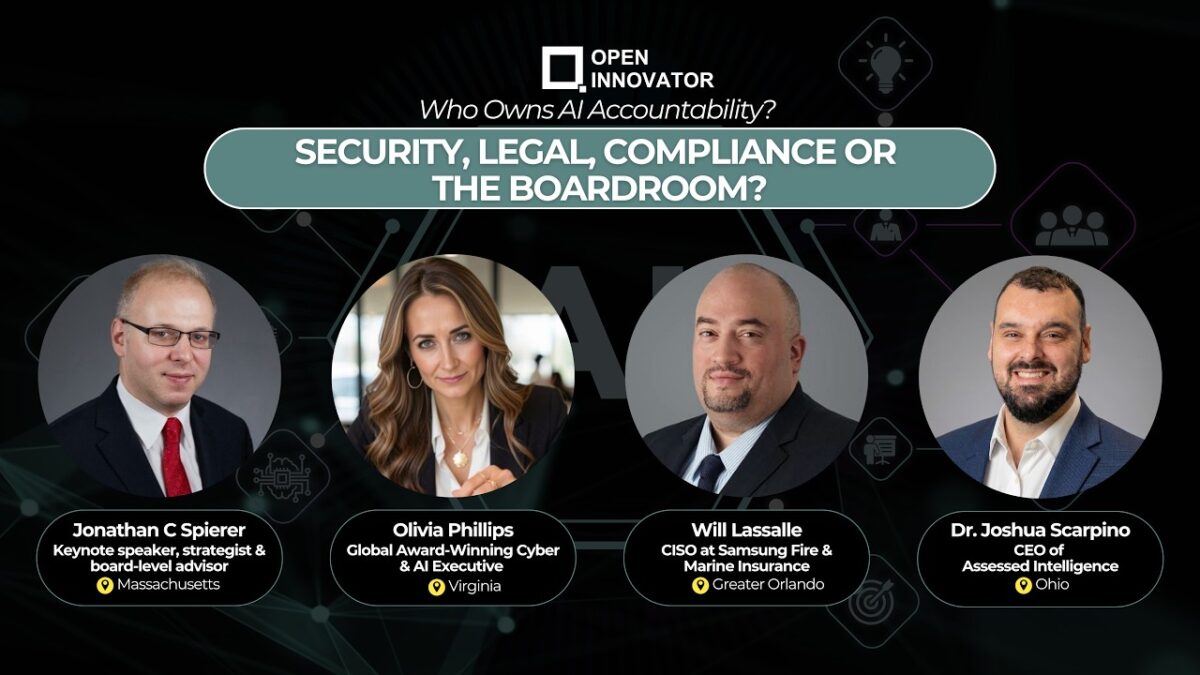
Report: Who Owns AI Accountability? Security, Legal, Compliance, or the Boardroom?

Categories
Events

Report: Who Owns AI Accountability? Security, Legal, Compliance, or the Boardroom?

Open Innovator, on May 21, 2026, hosted a virtual session that brought together four senior leaders across cybersecurity, technology, finance, and compliance to answer one of the defining questions of the AI era: When AI fails inside an enterprise, who picks up the phone? The discussion was moderated by Agrima Sharma and co-hosted by Ananya Gulati.

As it is known, Open Innovator is a thought leadership platform that convenes cross-functional leaders from technology, security, legal, compliance, and the C-suite to tackle the most pressing challenges at the intersection of innovation and accountability. Through live panel discussions, recorded sessions, and community-driven conversations, OI creates a space where practitioners speak plainly about what governance, risk, and responsible deployment really look like on the ground.

Speaker Profiles

Josh Scarpino — Cybersecurity & AI Governance Leader

Josh Scarpino brought a cybersecurity-first lens to AI accountability. He referenced the ARISE framework, which advocates unifying governance across ethics, legal, security, and AI oversight functions into a single operational model. He drew parallels between AI governance failures and longstanding cybersecurity lapses, arguing that organisations are measuring the wrong things — treating governance as a documentation exercise when it must be a demonstrable, measurable practice.

Will Lassalle — CTO & CISO

Will Lassalle spoke from the dual perspective of a technology and security executive, arguing that poorly engineered AI solutions — not just poor governance — are at the root of failures like the Rite Aid case. He emphasised the importance of AI operating committees, controlled deployment, and accountability at the C-suite level. He pushed back firmly against placing sole responsibility on the CISO, calling it both unfair and structurally flawed.

Olivia Phillips — Cybersecurity & Compliance Leader

Olivia Phillips brought the lens of structured, military-grade accountability to the discussion. Drawing on her government background, she advocated for explicit ownership at every layer of the enterprise — from the code level to the board — with clear structures that eliminate ambiguity when something goes wrong. She raised an important point about AI as an insider threat once deployed, requiring ongoing monitoring, re-evaluation, and access governance.

JC Spierer — Finance, Investment & AI Strategy Advisor

JC Spierer introduced the often-overlooked role of finance and investment committees in AI governance, coining the term “prosumer paradox” to describe how business users across organisations — including board members — are adopting AI tools informally, outside of IT oversight. He used BlackRock as an example of an organisation that successfully aligns risk with reward at scale, and raised thought-provoking questions about how accountability for agentic AI systems can be enforced.

Key Insights from the Discussion

1. The Rite Aid Case: A Leadership Failure, Not a Technology Failure

The session opened with the story of Rite Aid Pharmacy — a Fortune 200 company that installed facial recognition cameras in hundreds of stores, built the system using tens of thousands of low-quality images, and deployed it without rigorous testing. The result: innocent customers were flagged as shoplifters, followed through stores, searched, and in some cases had police called on them.

The key insight from the panel: this happened not because the technology was exotic or the company was reckless, but because no one in the leadership pipeline asked who owned the decision. Engineers assumed legal reviewed it. Legal assumed security had audited it. Security assumed compliance signed off. Compliance assumed the board had authorised it. No one had.

2. Accountability Is a Board-Level Obligation — But Responsibility Is Shared

All four speakers converged on a nuanced view: ultimate accountability must sit at the board or CEO level, but every function — engineering, security, legal, compliance, product — carries responsibility for its part of the pipeline.

The cybersecurity governance leader made the analogy to cybersecurity: just as “security is everybody’s responsibility” is the accepted norm for protecting against phishing and human error, so too must AI risk be owned across functions. But when it comes to technology deployed at organisational scale, there must be a distinct, senior-level accountability holder — not a committee that diffuses blame.

3. The CISO Is Being Unfairly Scapegoated

A recurring theme was the industry’s troubling tendency to land all AI accountability on the CISO. Speakers agreed this is both structurally wrong and operationally dangerous.

The cybersecurity and compliance leader noted that the CISO has historically been the “scapegoat” in security failures, and AI is following the same pattern. The CTO & CISO referenced peers who now joke that CISO stands for “Career Is Soon Over” — a reflection of unrealistic expectations placed on a single executive.

The panel’s consensus: the CISO is well-positioned to manage security risk and compliance best practices, but should not be the sole owner of AI governance. A cross-functional AI Operating Committee or AI Governance Committee, with representation from all business units and accountability at the C-suite level, is the right structure.

4. Governance Must Be Operational, Not Just Documented

The cybersecurity governance leader challenged the common enterprise approach of treating AI governance as a documentation problem — policies, frameworks, audit checklists. His argument: documentation governs human behaviour, but autonomous systems behave differently.

When an AI model drifts from its original parameters, or when a deployment decision was made based on policies that have since become outdated, point-in-time audits will not catch the issue. Governance must be continuous, measurable, and tied to demonstrable system behaviour.

A recent statistic cited during the session: 78% of organisations cannot confidently submit an independent AI governance audit within 90 days. That means roughly 4 out of 5 companies do not fully know what they have built and deployed.

5. The Prosumer Paradox: AI Is Already Inside the Boardroom

The finance and AI strategy advisor introduced one of the session’s most distinctive concepts: the prosumer paradox. Half the people in any boardroom are likely already using AI tools — on their laptops, on their phones — without formal IT oversight. These prosumers are not doing anything malicious; they are simply trying to be productive. But they are taking on risk the organisation has not accounted for on its balance sheet.

His point: the finance and investment committee is often the first to know about AI adoption at scale, because at some point, money must be allocated or approved. Bringing this committee into AI governance structures earlier is an underutilised lever.

6. Speed vs. Safety: The Hot Take Debate

The panel debated a pointed hot take: “Companies that move fast on AI and skip governance will win by 2028. The cautious ones will be acquired or irrelevant.”

The responses reflected the complexity of the real landscape:

  • Finance & AI Strategy Advisor (nuanced yes/no): If you move fast and move right, you will win. But velocity without direction leads to crashes, not victories.
  • Cybersecurity & AI Governance Leader (disagrees): Recent legal precedents — including a judge ruling that a venture capital firm could be held liable for advising a portfolio company to cut cybersecurity budgets — signal a coming shift. Organisations that ignore foundational governance will become uninvestable.
  • CTO & CISO (it depends): The jury is out. If everyone rushes in without governance, the most cautious organisations may end up being the only ones still standing.
  • Cybersecurity & Compliance Leader (history repeats itself): The COVID-era remote work rush created BYOD governance failures that took years to resolve. AI is following the same arc. Governance cannot chase deployment; it must run alongside it.

The panel’s collective conclusion: you can build boldly and govern well at the same time. The two are not in opposition.

7. Agentic AI Raises Accountability Questions No One Has Answered Yet

The finance and AI strategy advisor raised the session’s most forward-looking concern: agentic AI — systems that not only execute tasks but train themselves and exercise a degree of independent agency — creates accountability structures that existing governance models are not equipped to handle.

If an agentic AI goes awry, with good intention but bad outcomes, how do you hold it accountable in any meaningful sense? How do you assign consequences? The panel acknowledged there are theoretical answers — including proxy accountability assigned to the human responsible for the system — but noted that no enterprise governance framework has operationalised this yet.

The cybersecurity governance leader added a technical concern: a shared knowledge layer across agentic systems — often proposed as a governance solution — also creates a single, high-value attack vector. If compromised, it could bias an entire agentic workflow.

Conclusion

The session closed with the moderator drawing together the central thread: AI does not fail because technology is broken. It fails because no one in the room raises their hand and says, “That’s my responsibility.”

The Rite Aid case was not an outlier. It was a preview. Across industries, organisations are deploying AI systems with unclear ownership, untested assumptions, and governance frameworks that exist on paper but not in practice.

The panel’s unified message to every leader in attendance: go back to your organisation tomorrow and find the person who is supposed to raise that hand. If you cannot name them, that is not a technology problem. That is your problem. A Part 2 of this conversation is planned, given the depth of interest and the volume of questions that could not be addressed in the session.


This report is based on the recorded panel discussion hosted by Open Innovator on May 21, 2026. All insights are attributed to the respective speakers.

Categories
DTQ Events

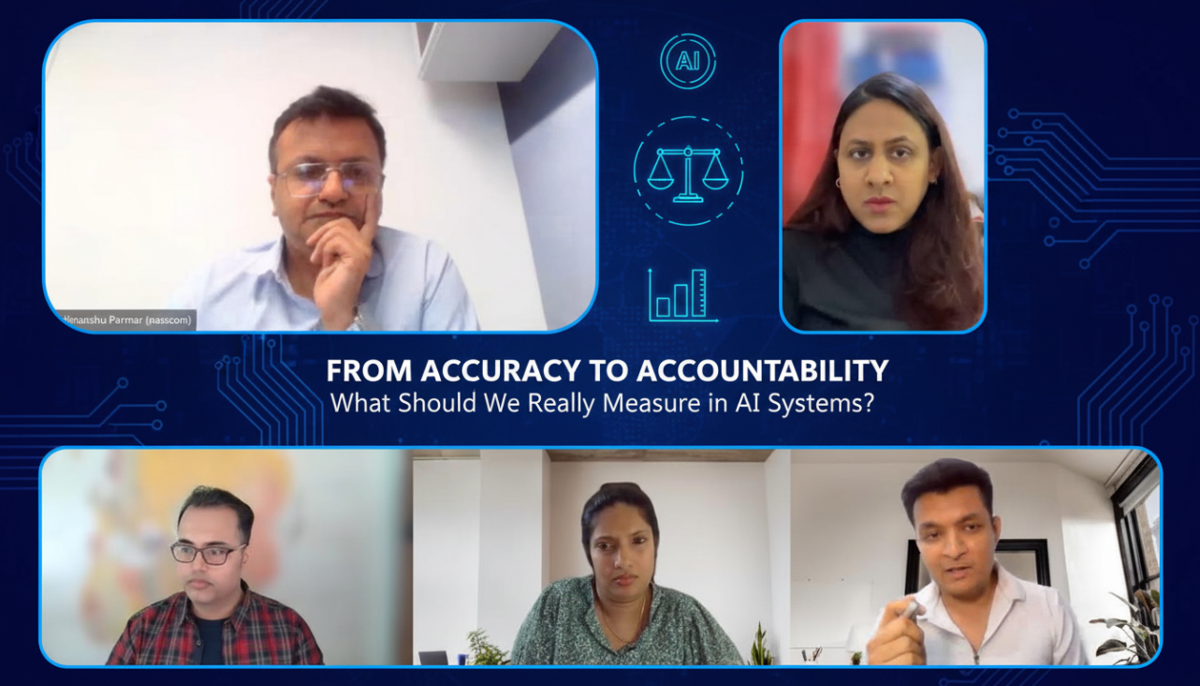
Report: From Accuracy to Accountability- What Should We Really Measure in AI Systems

Categories
DTQ Events

Report: From Accuracy to Accountability- What Should We Really Measure in AI Systems

The rapid acceleration of artificial intelligence adoption has brought with it a fundamental shift in how we evaluate technological success. Traditionally, AI systems have been judged primarily on performance metrics such as accuracy, precision, and speed. However, as these systems move from controlled environments into real-world applications—impacting healthcare, governance, finance, and everyday decision-making—the limitations of these metrics have become increasingly evident.

The Data Trust Quotients (DTQ) recently convened a thought‑provoking discussion titled “From Accuracy to Accountability: What Should We Really Measure in AI Systems?” The dialogue tackled a critical shift in how we evaluate AI: is accuracy alone sufficient, or should accountability, trust, and human impact take precedence. The virtual session explored the growing realization that high-performing models can still fail in practice if they lack proper governance, transparency, and ethical grounding. As organizations race toward rapid deployment, the need to redefine evaluation frameworks for AI systems has never been more urgent.

Speakers

  • Naman Kothari – NASSCOM COE (Moderator)
  • Anniliza Crasta – Director, Information Security, Juniper Networks
  • Sneha Pillai – Data Protection Lawyer, Bosch Middle East
  • Abhishek Tripathi – Head of Cybersecurity & IT Operations
  • Himanshu Parmar – Senior Manager, AI, NASSCOM COE

Key Insights from the Discussion

1. The AI Adoption Paradox

The session opened by highlighting a striking imbalance in the current AI ecosystem. On one hand, there is unprecedented enthusiasm and investment, with billions of dollars flowing into AI development and a majority of enterprises actively integrating generative AI into their operations. On the other hand, there is a significant lack of preparedness when it comes to managing the risks associated with these systems. Organizations are under immense pressure to deploy AI quickly in order to remain competitive, yet only a small fraction feel confident in their ability to implement proper safeguards. This creates a paradox where speed is prioritized over safety, leading to fragile systems that may not withstand real-world complexities.

2. Accuracy as a Misleading Benchmark

A key theme throughout the discussion was the idea that accuracy, while important, can often be a misleading indicator of success. Examples were shared where models achieved near-perfect accuracy in testing environments but failed dramatically once deployed. These failures were not due to flaws in the mathematical models themselves but rather due to unaddressed external factors such as biased data, changing environments, and lack of human oversight. This highlights a critical gap between theoretical performance and practical reliability. In real-world scenarios, systems must operate under uncertainty, adapt to new conditions, and interact with human users—factors that accuracy metrics alone cannot capture.

3. The Shift from Accuracy to Trust

As AI systems take on more complex and sensitive roles, there is a growing recognition that trust is becoming the ultimate measure of success. Trust encompasses multiple dimensions, including fairness, transparency, reliability, and security. Organizations are beginning to move away from purely technical metrics toward a more holistic evaluation framework that considers how systems behave over time and how they are perceived by users. This shift reflects a broader understanding that AI systems must not only perform well but also inspire confidence among stakeholders.

4. Hidden Risks Across the AI Lifecycle

One of the most significant insights from the discussion was the identification of risks that are often overlooked during the development and deployment of AI systems. These risks are not confined to a single stage but span the entire lifecycle:

  • Data-related risks: Biases embedded in datasets, errors in labeling, and poor data quality can significantly impact outcomes.
  • Design assumptions: Many systems are built on implicit assumptions that are neither documented nor tested, leading to unexpected behavior.
  • Context drift: The environment in which a model operates can change over time, reducing its effectiveness.
  • Post-deployment gaps: Once a system is deployed, accountability often becomes unclear, and continuous monitoring is neglected.

These blind spots can lead to failures even when initial performance metrics appear satisfactory.

5. The Complexity of Global Regulations

The discussion also highlighted the challenges posed by the lack of a unified global standard for AI governance and data privacy. Different regions have developed their own regulatory frameworks, each with unique requirements and expectations. This creates a complex landscape for organizations operating across multiple jurisdictions. Systems that are compliant in one region may not meet the standards of another, requiring constant adaptation. The evolving nature of these regulations further complicates the situation, making compliance an ongoing process rather than a one-time achievement.

6. Security as an Integral Design Element

Another important takeaway was the need to rethink how security is approached in AI systems. Instead of treating security as a final checkpoint before deployment, it must be integrated into every stage of development. This involves designing systems with security considerations from the outset, ensuring that vulnerabilities are addressed early rather than patched later. Such an approach not only reduces risks but also aligns with the fast-paced nature of AI development, where late-stage changes can be costly and disruptive.

7. Real-World Deployment Challenges

When AI systems are deployed in real-world environments, a range of operational challenges emerges. These include over-permissioned systems that have access to more data than necessary, lack of domain-specific constraints, and insufficient control mechanisms. In some cases, AI agents may perform tasks beyond their intended scope, leading to unintended consequences. These issues underscore the importance of clearly defining the boundaries within which AI systems operate and ensuring that they are aligned with their intended purpose.

8. The Emergence of Shadow AI

The increasing accessibility of AI tools has led to the rise of “shadow AI,” where individuals within organizations use AI systems independently without proper oversight. While often driven by a desire to innovate or improve efficiency, this practice introduces significant risks. Sensitive data may be exposed, and untested systems may be integrated into workflows without adequate safeguards. Addressing this challenge requires both technical solutions and a cultural shift toward responsible AI usage.

9. The Challenge of AI Hallucinations

AI hallucinations—instances where systems generate incorrect or fabricated information—remain a persistent issue. Despite advancements in model design, these errors cannot be entirely eliminated. Instead, organizations must focus on mitigating their impact through validation mechanisms and oversight processes. This reinforces the need for layered accountability, where multiple checks are in place to ensure reliability.

10. Data as Both an Asset and a Challenge

While data is often described as the fuel of AI, the discussion revealed that managing data effectively is one of the most challenging aspects of AI development. Collecting high-quality data requires significant effort and resources, and legal restrictions can complicate cross-border data transfers. Even after data is collected and processed, it may not always meet the requirements for training effective models. This highlights the need for careful planning and validation at every stage of the data lifecycle.

11. The Importance of a Structured Data Strategy

A recurring theme was the lack of a comprehensive data strategy in many organizations. Without a clear framework for managing data, organizations risk inefficiencies and vulnerabilities. A robust data strategy should include classification, access control, and lifecycle management, ensuring that data is treated as a critical asset. Such an approach not only enhances security but also supports the development of more reliable AI systems.

12. Governance as the Backbone of AI System

Governance plays a crucial role in ensuring that AI systems operate within defined boundaries. It involves establishing policies, setting standards, and monitoring compliance throughout the lifecycle. Unlike operational management, governance focuses on creating the structures that guide decision-making. Effective governance ensures consistency, reduces risks, and supports the responsible use of AI.

13. Measuring Human Impact

One of the most important yet often overlooked aspects of AI evaluation is its impact on users. AI systems can influence behavior, decision-making, and societal outcomes in ways that are not immediately apparent. Evaluating these effects requires a long-term perspective and continuous monitoring. By considering human impact, organizations can ensure that their systems contribute positively to society.

14. Building Trust Through Design

Moving from compliance to trust requires a proactive approach to system design. Features such as transparency, user control, and data minimization can enhance trust and improve user experience. Trust is not built through policies alone but through consistent and predictable system behavior. By prioritizing user-centric design, organizations can create systems that are both effective and trustworthy.

15. The Need for Interdisciplinary Collaboration

The discussion emphasized the importance of collaboration between technical, legal, and business teams. As AI systems become more complex, no single discipline can address all the challenges involved. Bridging the gap between these domains is essential for developing systems that are both innovative and responsible.

Conclusion

The session underscores a critical shift in how AI systems should be evaluated. While accuracy remains an important metric, it is no longer sufficient on its own. The future of AI lies in building systems that are accountable, transparent, and aligned with human values. This requires a comprehensive approach that considers the entire lifecycle of AI systems, from data collection and model design to deployment and long-term impact. By expanding the scope of measurement to include trust, governance, and human impact, organizations can move toward a more responsible and sustainable AI ecosystem.

Categories
DTQ Data Trust Quotients

Trust as the New Competitive Edge in AI

Categories
DTQ Data Trust Quotients

Trust as the New Competitive Edge in AI

Artificial Intelligence (AI) has evolved from a futuristic idea to a useful reality, impacting sectors including manufacturing, healthcare, and finance. These systems’ dependence on enormous datasets presents additional difficulties as they grow in size and capacity. The main concern is now whether AI can be trusted rather than whether it can be developed.

Trust is becoming more widely acknowledged as a key differentiator. Businesses are better positioned to draw clients, investors, and regulators when they exhibit safe, open, and moral data practices. Trust sets leaders apart from followers in a world where technological talents are quickly becoming commodities.

Trust serves as a type of capital in the digital economy. Organizations now compete on the legitimacy of their data governance and AI security procedures, just as they used to do on price or quality.

Security-by-Design as a Market Signal

Security-by-design is a crucial aspect of trust. Leading companies incorporate security safeguards at every stage of the AI lifecycle, from data collection and preprocessing to model training and deployment, rather than considering security as an afterthought.

This strategy demonstrates the maturity of the company. It lets stakeholders know that innovation is being pursued responsibly and is protected against abuse and violations. Security-by-design is becoming a need for market leadership in industries like banking, where data breaches can cause serious reputational harm.

One obvious example is federated learning. It lowers risk while preserving analytical capacity by allowing institutions to train models without sharing raw client data. This is a competitive differentiation rather than just a technical protection.

Integrity as Differentiation

Another foundation of trust is data integrity. The dependability of AI models depends on the data they use. The results lose credibility if datasets are tampered with, distorted, or poisoned. Businesses have a clear advantage if they can show provenance and integrity using tools like blockchain, hashing, or audit trails. They may reassure stakeholders that tamper-proof data forms the basis of their AI conclusions. In the healthcare industry, where corrupted data can have a direct impact on patient outcomes, this assurance is especially important. Therefore, integrity is a strategic differentiation as well as a technological prerequisite.

Privacy-Preserving Artificial Intelligence

Privacy is now a competitive advantage rather than just a requirement for compliance. Organizations can provide insights without disclosing raw data thanks to strategies like federated learning, homomorphic encryption, and differential privacy. In industries where data sensitivity is crucial, this enables businesses to provide “insights without intrusion.”

When consumers are assured that their privacy is secure, they are more inclined to interact with AI systems. Additionally, privacy-preserving AI lowers exposure to regulations. Proactively implementing these strategies puts organizations in a better position to adhere to new regulations like the AI Act of the European Union or the Digital Personal Data Protection Act of India.

Transparency as Security

Black-box, opaque AI systems are very dangerous. Organizations find it difficult to gain the trust of investors, consumers, and regulators when they lack transparency. More and more people see transparency as a security measure. Explainable AI guarantees stakeholders, lowers vulnerabilities, and makes auditing easier. It turns accountability from a theoretical concept into a useful defense. Businesses set themselves apart by offering transparent audit trails and decision-making reasoning. “Our predictions are not only accurate but explainable,” they may say with credibility. In sectors where accountability cannot be compromised, this is a clear advantage.

Compliance Across Borders

AI systems frequently function across different regulatory regimes in different regions. The General Data Protection Regulation (GDPR) is enforced in Europe, the California Consumer Privacy Act (CCPA) is enforced in California, and the Digital Personal Data Protection Act (DPDP) was adopted in India. It’s difficult to navigate this patchwork of regulations. Organizations that exhibit cross-border compliance readiness, however, have a distinct advantage. They lower the risk associated with transnational partnerships by becoming preferred partners in global ecosystems. Businesses that can quickly adjust will stand out as dependable global players as data localization requirements and AI trade obstacles become more prevalent.

Resilience Against AI-Specific Threats

Threats like malware and phishing were the main focus of traditional cybersecurity. AI creates new risk categories, such as data leaks, adversarial attacks, and model poisoning.
Leadership is exhibited by organizations that take proactive measures to counter these risks. “Our AI systems are attack-aware and breach-resistant” is one way they might promote resilience as a feature of their product. Because hostile AI attacks could have disastrous results, this capacity is especially important in the defense, financial, and critical infrastructure sectors. Resilience is a competitive differentiator rather than just a technical characteristic.

Trust as a Growth Engine

When security-by-design, integrity, privacy, transparency, compliance, and resilience are coupled, trust becomes a growth engine rather than a defensive measure. Consumers favor trustworthy AI suppliers. Strong governance is rewarded by investors. Proactive businesses are preferred by regulators over reactive ones. Therefore, trust is more than just information security. In the AI era, it is about exhibiting resilience, transparency, and compliance in ways that characterize market leaders.

The Future of Trust Labels

Similar to “AI nutrition facts,” the idea of trust labels is a new trend. These marks attest to the methods utilized for data collection, security, and utilization. Consider an AI solution that comes with a dashboard that shows security audits, bias checks, and privacy safeguards. Such openness may become the norm. Early use of trust labels will set an organization apart. By making trust public, they will turn it from a covert backend function into a significant competitive advantage.

Human Oversight as a Trust Anchor

Trust is relational as well as technological. A lot of businesses are including human supervision into important AI decisions. Stakeholders are reassured by this that people are still responsible. It strengthens trust in results and avoids naive dependence on algorithms. Human oversight is emerging as a key component of trust in industries including healthcare, law, and finance. It emphasizes that AI is a tool, not a replacement for accountability.

Trust Defines Market Leaders

Data security and trust are now essential in the AI era. They serve as the cornerstone of a competitive edge. Businesses will draw clients, investors, and regulators if they exhibit safe, open, and moral AI practices. The market will be dominated by companies who view trust as a differentiator rather than a requirement for compliance. Businesses that turn trust into a growth engine will own the future. In the era of artificial intelligence, trust is power rather than just safety.

Reach out to us at open-innovator@quotients.com or drop us a line to delve into the transformative potential of groundbreaking technologies. We’d love to explore the possibilities with you.

Categories
Events

Ethics by Design: Global Leaders Convene to Address AI’s Moral Imperative

Categories
Events

Ethics by Design: Global Leaders Convene to Address AI’s Moral Imperative

In a world where ChatGPT gained 100 million users in two months—a accomplishment that took the telephone 75 years—the importance of ethical technology has never been more pressing. Open Innovator on November 14th hosted a global panel on “Ethical AI: Ethics by Design,” bringing together experts from four continents for a 60-minute virtual conversation moderated by Naman Kothari of Nasscom. The panelists were Ahmed Al Tuqair from Riyadh, Mehdi Khammassi from Doha, Bilal Riyad from Qatar, Jakob Bares from WHO in Prague, and Apurv from the Bay Area. They discussed how ethics must grow with rapidly advancing AI systems and why shared accountability is now required for meaningful, safe technological advancement.

Ethics: Collective Responsibility in the AI Ecosystem

The discussion quickly established that ethics cannot be attributed to a single group; instead, founders, investors, designers, and policymakers build a collective accountability architecture. Ahmed stressed that ethics by design must start with ideation, not as a late-stage audit. Raya Innovations examines early enterprises based on both market fit and social effect, asking direct questions about bias, damage, and unintended consequences before any code is created. Mehdi developed this into three pillars: human-centricity, openness, and responsibility, stating that technology should remain a benefit for humans rather than a danger. Jakob added the algorithmic layer, which states that values must be testable requirements and architectural patterns. With the WHO implementing multiple AI technologies, identifying the human role in increasingly automated operations has become critical.

Structured Speed: Innovating Responsibly While Maintaining Momentum

Maintaining both speed and responsibility became a common topic. Ahmed proposed “structured speed,” in which quick, repeatable ethical assessments are integrated directly into agile development. These are not bureaucratic restrictions, but rather concise, practical prompts: what is the worst-case situation for misuse? Who might be excluded by the default options? Do partners adhere to key principles? The goal is to incorporate clear, non-negotiable principles into daily workflows rather than forming large committees. As a result, Ahmed claimed, ethics becomes a competitive advantage, allowing businesses to move rapidly and with purpose. Without such guidance, rapid innovation risks becoming disruptive noise. This narrative resonated with the panelists, emphasizing that prudent development can accelerate, rather than delay, long-term growth.

Cultural Contexts and Divergent Ethical Priorities

Mehdi demonstrated how ethics differs between cultural and economic environments. Individual privacy is a priority in Western Europe and North America, as evidenced by comprehensive consent procedures and rigorous regulatory frameworks. In contrast, many African and Asian regions prioritize collective stability and accessibility while functioning under less stringent regulatory control. Emerging markets frequently focus ethical discussions on inclusion and opportunity, whereas industrialized economies prioritize risk minimization. Despite these inequalities, Mehdi pushed for universal ethical principles, claiming that all people, regardless of place, need equal protection. He admitted, however, that inconsistent regulations result in dramatically different reality. This cultural lens highlighted that while ethics is internationally relevant, its local expression—and the issues connected with it—remain intensely context-dependent.

Enterprise Lessons: The High Costs of Ethical Oversights

Bilal highlighted stark lessons from enterprise organizations, where ethical failings have multimillion-dollar consequences. At Microsoft, retrofitting ethics into existing products resulted in enormous disruptions that could have been prevented with early design assessments. He outlined enterprise “tenant frameworks,” in which each feature is subject to sign-offs across privacy, security, accessibility, localization, and geopolitical domains—often with 12 or more reviews. When crises arise, these systems maintain customer trust while also providing legal defenses. Bilal used Google Glass as a cautionary tale: billions were lost because privacy and consent concerns were disregarded. He also mentioned Workday’s legal challenges over alleged employment bias. While established organizations can weather such storms, startups rarely can, making early ethical guardrails a requirement of survival rather than preference.

Public Health AI Designing for Integrity and Human Autonomy

Jakob provided a public-health viewpoint, highlighting how AI design decisions might harm millions. Following significant budget constraints, WHO’s most recent AI systems are aimed at enhancing internal procedures such as reporting and finance. In one donor-reporting tool, the team focused “epistemic integrity,” which ensures outputs are factual while protecting employee autonomy. Jakob warned against Goodhart’s Law, which involves overoptimizing a particular statistic at the detriment of overall value. They put in place protections to prevent surveillance overreach, automation bias, power inequalities, and data exploitation. Maintaining checks and balances across measures guarantees that efficiency gains do not compromise quality or hurt employees. His findings revealed that ethical deployment necessitates continual monitoring rather than one-time judgments, especially when AI replaces duties previously conducted by specialists.

Aurva’s Approach: Security and Observability in the Agentic AI Era

The panel then moved on to practical solutions, with Apurv introducing Aurva, an AI-powered data security copilot inspired by Meta’s post-Cambridge Analytica revisions. Aurva enables enterprises to identify where data is stored, who has access to it, and how it is used—which is crucial in contexts where information is scattered across multiple systems and providers. Its technologies detect misuse, restrict privilege creep, and give users visibility into AI agents, models, and permissions. Apurv contrasted between generative AI, which behaves like a maturing junior engineer, and agentic AI, which operates independently like a senior engineer making multi-step judgments. This autonomy necessitates supervision. Aurva serves 25 customers across different continents, with a strong focus on banking and healthcare, where AI-driven risks and regulatory needs are highest.

Actionable Next Steps and the Imperative for Ethical Mindsets

In conclusion, panelists provided concrete advice: begin with human-impact visibility, undertake early bias and harm evaluations, construct feedback loops, teach teams to acquire a shared ethical understanding, and implement observability tools for AI. Jakob underlined the importance of monitoring, while others stressed that ethics must be integrated into everyday decisions rather than marketing clichés. The virtual event ended with a unifying message: ethical AI is no longer optional. As agentic AI becomes more independent, early, preemptive frameworks protect both consumers and companies’ long-term viability.

Reach out to us at open-innovator@quotients.com or drop us a line to delve into the transformative potential of groundbreaking technologies and participate in our events. We’d love to explore the possibilities with you.

Categories
Events

A Powerful Open Innovator Session That Delivered Game-Changing Insights on AI Ethics

Categories
Events

A Powerful Open Innovator Session That Delivered Game-Changing Insights on AI Ethics

In a recent Open Innovator (OI) Session, ethical considerations in artificial intelligence (AI) development and deployment took center stage. The session convened a multidisciplinary panel to tackle the pressing issues of AI bias, accountability, and governance in today’s fast-paced technological environment.

Details of particpants are are follows:

Moderators:

  • Dr. Akvile Ignotaite- Harvard Univ
  • Naman Kothari– NASSCOM COE

Panelists:

  • Dr. Nikolina Ljepava- AUE
  • Dr. Hamza AGLI– AI Expert, KPMG
  • Betania Allo– Harvard Univ, Founder
  • Jakub Bares– Intelligence Startegist, WHO
  • Dr. Akvile Ignotaite– Harvard Univ, Founder

Featured Innovator:

  • Apurv Garg – Ethical AI Innovation Specialist

The discussion underscored the substantial ethical weight that AI decisions hold, especially in sectors such as recruitment and law enforcement, where AI systems are increasingly prevalent. The diverse panel highlighted the importance of fairness and empathy in system design to serve communities equitably.

AI in Healthcare: A Data Diversity Dilemma

Dr. Aquil Ignotate, a healthcare expert, raised concerns about the lack of diversity in AI datasets, particularly in skin health diagnostics. Studies have shown that these AI models are less effective for individuals with darker skin tones, potentially leading to health disparities. This issue exemplifies the broader challenge of ensuring AI systems are representative of the entire population.

Jacob, from the World Health Organization’s generative AI strategy team, contributed by discussing the data integrity challenge posed by many generative AI models. These models, often designed to predict the next word in a sequence, may inadvertently generate false information, emphasizing the need for careful consideration in their creation and deployment.

Ethical AI: A Strategic Advantage

The panelists argued that ethical AI is not merely a compliance concern but a strategic imperative offering competitive advantages. Trustworthy AI systems are crucial for companies and governments aiming to maintain public confidence in AI-integrated public services and smart cities. Ethical practices can lead to customer loyalty, investment attraction, and sustainable innovation.

They suggested that viewing ethical considerations as a framework for success, rather than constraints on innovation, could lead to more thoughtful and beneficial technological deployment.

Rethinking Accountability in AI

The session addressed the limitations of traditional accountability models in the face of complex AI systems. A shift towards distributed accountability, acknowledging the roles of various stakeholders in AI development and deployment, was proposed. This shift involves the establishment of responsible AI offices and cross-functional ethics councils to guide teams in ethical practices and distribute responsibility among data scientists, engineers, product owners, and legal experts.

AI in Education: Transformation over Restriction

The recent controversies surrounding AI tools like ChatGPT in educational settings were addressed. Instead of banning these technologies, the panelists advocated for educational transformation, using AI as a tool to develop critical thinking and lifelong learning skills. They suggested integrating AI into curricula while educating students on its ethical implications and limitations to prepare them for future leadership roles in a world influenced by AI.

From Guidelines to Governance

The speakers highlighted the gap between ethical principles and practical AI deployment. They called for a transition from voluntary guidelines to mandatory regulations, including ethical impact assessments and transparency measures. These regulations, they argued, would not only protect public interest but also foster innovation by establishing clear development frameworks and fostering public trust.

Importance of Localized Governance

The session stressed the need for tailored regulatory approaches that consider local cultural and legal contexts. This nuanced approach ensures that ethical frameworks are both sustainable and effective in specific implementation environments.

Human-AI Synergy

Looking ahead, the panel envisioned a collaborative future where humans focus on strategic decisions and narratives, while AI handles reporting and information dissemination. This relationship requires maintaining human oversight throughout the AI lifecycle to ensure AI systems are designed to defer to human judgment in complex situations that require moral or emotional understanding.

Practical Insights from the Field

A startup founder from Orava shared real-world challenges in AI governance, such as data leaks resulting from unmonitored machine learning libraries. This underscored the necessity for comprehensive data security and compliance frameworks in AI integration.

AI in Banking: A Governance Success Story

The session touched on AI governance in banking, where monitoring technologies are utilized to track data access patterns and ensure compliance with regulations. These systems detect anomalies, such as unusual data retrieval activities, bolstering security frameworks and protecting customers.

Collaborative Innovation: The Path Forward

The OI Session concluded with a call for government and technology leaders to integrate ethical considerations from the outset of AI development. The conversation highlighted that true ethical AI requires collaboration between diverse stakeholders, including technologists, ethicists, policymakers, and communities affected by the technology.

The session provided a roadmap for creating AI systems that perform effectively and promote societal benefit by emphasizing fairness, transparency, accountability, and human dignity. The future of AI, as outlined, is not about choosing between innovation and ethics but rather ensuring that innovation is ethically driven from its inception.

Write to us at Open-Innovator@Quotients.com/ Innovate@Quotients.com to participate and get exclusive insights.

Categories
Applied Innovation

Responsible AI:  Principles, Practices, and Challenges

Categories
Applied Innovation

Responsible AI:  Principles, Practices, and Challenges

The emergence of artificial intelligence (AI) has been a catalyst for profound transformation across various sectors, reshaping the paradigms of work, innovation, and technology interaction. However, the swift progression of AI has also illuminated a critical set of ethical, legal, and societal challenges that underscore the urgency of embracing a responsible AI framework. This framework is predicated on the ethical creation, deployment, and management of AI systems that uphold societal values, minimize potential detriments, and maximize benefits.

Foundational Principles of Responsible AI

Responsible AI is anchored by several key principles aimed at ensuring fairness, transparency, accountability, and human oversight. Ethical considerations are paramount, serving as the guiding force behind the design and implementation of AI to prevent harmful consequences while fostering positive impacts. Transparency is a cornerstone, granting stakeholders the power to comprehend the decision-making mechanisms of AI systems. This is inextricably linked to fairness, which seeks to eradicate biases in data and algorithms to ensure equitable outcomes.

Accountability is a critical component, demanding clear lines of responsibility for AI decisions and actions. This is bolstered by the implementation of audit trails that can meticulously track and scrutinize AI system performance. Additionally, legal and regulatory compliance is imperative, necessitating adherence to existing standards like data protection laws and industry-specific regulations. Human oversight is irreplaceable, providing the governance structures and ethical reviews essential for maintaining control over AI technologies.

The Advantages of Responsible AI

Adopting responsible AI practices yields a multitude of benefits for organizations, industries, and society at large. Trust and enhanced reputation are significant by-products of a commitment to ethical AI, which appeals to stakeholders such as consumers, employees, and regulators. This trust is a valuable currency in an era increasingly dominated by AI, contributing to a stronger brand identity. Moreover, responsible AI acts as a bulwark against risks stemming from legal and regulatory non-compliance.

Beyond the corporate sphere, responsible AI has the potential to propel societal progress by prioritizing social welfare and minimizing negative repercussions. This is achieved by developing technologies that are aligned with societal advancement without compromising ethical integrity.

Barriers to Implementing Responsible AI

Despite its clear benefits, implementing responsible AI faces several challenges. The intricate nature of AI systems complicates transparency and explainability. Highly sophisticated models can obscure the decision-making process, making it difficult for stakeholders to fully comprehend their functioning.

Bias in training data also presents a persistent issue, as historical data may embody societal prejudices, thus resulting in skewed outcomes. Countering this requires both technical prowess and a dedication to diversity, including the use of comprehensive datasets.

The evolving legal and regulatory landscape introduces further complexities, as new AI-related laws and regulations demand continuous system adaptations. Additionally, AI security vulnerabilities, such as susceptibility to adversarial attacks, necessitate robust protective strategies.

Designing AI Systems with Responsible Practices in Mind

The creation of AI systems that adhere to responsible AI principles begins with a commitment to minimizing biases and prejudices. This is achieved through the utilization of inclusive datasets that accurately represent all demographics, the application of fairness metrics to assess equity, and the regular auditing of algorithms to identify and rectify biases.

Data privacy is another essential design aspect. By integrating privacy considerations from the onset—through methods like encryption, anonymization, and federated learning—companies can safeguard sensitive information and foster trust among users. Transparency is bolstered by selecting interpretable models and clearly communicating AI processes and limitations to stakeholders.

Leveraging Tools and Governance for Responsible AI

The realization of responsible AI is facilitated by a range of tools and technologies. Explainability tools, such as SHAP and LIME, offer insight into AI decision-making. Meanwhile, privacy-preserving frameworks like TensorFlow Federated support secure data sharing for model training.

Governance frameworks are pivotal in enforcing responsible AI practices. These frameworks define roles and responsibilities, institute accountability measures, and incorporate regular audits to evaluate AI system performance and ethical compliance.

The Future of Responsible AI

Responsible AI transcends a mere technical challenge to become a moral imperative that will significantly influence the trajectory of technology within society. By championing its principles, organizations can not only mitigate risks but also drive innovation that harmonizes with societal values. This journey is ongoing, requiring collaboration, vigilance, and a collective commitment to ethical advancement as AI technologies continue to evolve.

Reach out to us at open-innovator@quotients.com or drop us a line to delve into the transformative potential of groundbreaking technologies. We’d love to explore the possibilities with you

Categories
Applied Innovation

Understanding and Implementing Responsible AI

Categories
Applied Innovation

Understanding and Implementing Responsible AI

Our everyday lives now revolve around artificial intelligence (AI), which has an impact on everything from healthcare to banking. But as its impact grows, the necessity of responsible AI has become critical. The creation and application of ethical, open, and accountable AI systems is referred to as “responsible AI.” Making sure AI systems follow these guidelines is essential in today’s technology environment to avoid negative impacts and foster trust. Fairness, transparency, accountability, privacy and security, inclusivity, dependability and safety, and ethical considerations are some of the fundamental tenets of Responsible AI that need to be explored.

1. Fairness

Making sure AI systems don’t reinforce or magnify prejudices is the goal of fairness in AI. skewed algorithms or skewed training data are just two examples of the many sources of bias in AI. Regular bias checks and the use of representative and diverse datasets are crucial for ensuring equity. Biases can be lessened with the use of strategies such adversarial debiasing, re-weighting, and re-sampling. One way to lessen bias in AI models is to use a broad dataset that covers a range of demographic groupings.

2. Transparency

Transparency in AI refers to the ability to comprehend and interpret AI systems. This is essential for guaranteeing accountability and fostering confidence. One approach to achieving transparency is Explainable AI (XAI), which focuses on developing human-interpretable models. Understanding model predictions can be aided by tools such as SHAP (SHapley Additive exPlanations) and LIME (Local Interpretable Model-agnostic Explanations). Furthermore, comprehensive details regarding the model’s creation, functionality, and constraints are provided by documentation practices like Model Cards.

3. Accountability

Holding people or organizations accountable for the results of AI systems is known as accountability in AI. Accountability requires the establishment of transparent governance frameworks as well as frequent audits and compliance checks. To monitor AI initiatives and make sure they follow ethical standards, for instance, organizations can establish AI ethics committees. Maintaining accountability also heavily depends on having clear documentation and reporting procedures.

4. Privacy and Security

AI security and privacy are major issues, particularly when handling sensitive data. Strong security measures like encryption and secure data storage must be put in place to guarantee user privacy and data protection. Additionally crucial are routine security audits and adherence to data protection laws like GDPR. Differential privacy is one technique that can help safeguard personal information while still enabling data analysis.

5. Inclusiveness

AI security and privacy are major issues, particularly when handling sensitive data. Strong security measures like encryption and secure data storage must be put in place to guarantee user privacy and data protection. Additionally crucial are routine security audits and adherence to data protection laws like GDPR. Differential privacy is one technique that can help safeguard personal information while still enabling data analysis.

6. Reliability and Safety

AI systems must be dependable and safe, particularly in vital applications like autonomous cars and healthcare. AI models must be rigorously tested and validated in order to ensure reliability. To avoid mishaps and malfunctions, safety procedures including fail-safe mechanisms and ongoing monitoring are crucial. AI-powered diagnostic tools in healthcare that go through rigorous testing before to deployment are examples of dependable and secure AI applications.

7. Ethical Considerations

The possible abuse of AI technology and its effects on society give rise to ethical quandaries in the field. Guidelines for ethical AI practices are provided by frameworks for ethical AI development, such as the IEEE Global Initiative on Ethics of Autonomous and Intelligent Systems. Taking into account how AI technologies will affect society and making sure they are applied for the greater good are key components of striking a balance between innovation and ethical responsibility.

8. Real-World Applications

There are several uses for responsible AI in a variety of sectors. AI in healthcare can help with disease diagnosis and treatment plan customization. AI can be used in finance to control risks and identify fraudulent activity. AI in education can help teachers and offer individualized learning experiences. But there are drawbacks to using Responsible AI as well, such protecting data privacy and dealing with biases.

9. Future of Responsible AI

New developments in technology and trends will influence responsible AI in the future. The ethical and legal environments are changing along with AI. Increased stakeholder collaboration, the creation of new ethical frameworks, and the incorporation of AI ethics into training and educational initiatives are some of the predictions for the future of responsible AI. Maintaining a commitment to responsible AI practices is crucial to building confidence and guaranteeing AI’s beneficial social effects.

Conclusion

To sum up, responsible AI is essential to the moral and open advancement of AI systems. We can guarantee AI technologies assist society while reducing negative impacts by upholding values including justice, accountability, openness, privacy and security, inclusivity, dependability and safety, and ethical concerns. It is crucial that those involved in AI development stick to these guidelines and never give up on ethical AI practices. Together, let’s build a future where AI is applied morally and sensibly.

We can create a more moral and reliable AI environment by using these ideas and procedures. For all parties participating in AI development, maintaining a commitment to Responsible AI is not only essential, but also a duty.

Contact us at innovate@quotients.com to schedule a consultation and explore the transformative potential of this innovative technology.

Categories
Applied Innovation

Securing Data in the Age of AI: How artificial intelligence is transforming cybersecurity

Categories
Applied Innovation

Securing Data in the Age of AI: How artificial intelligence is transforming cybersecurity

In today’s digital environment, where data reigns supreme, strong cybersecurity measures have never been more important. As the amount and complexity of data expand dramatically, traditional security measures are more unable to maintain pace. This is where artificial intelligence (AI) emerges as a game changer, transforming how businesses secure their important data assets.

At the heart of AI’s influence on data security is its capacity to process massive volumes of data at unprecedented rates, extracting insights and patterns that human analysts would find nearly difficult to identify. AI systems may continually learn and adapt by using the power of machine learning algorithms, allowing them to stay one step ahead of developing cyber threats.

One of the most important contributions of AI in data security is its ability to detect suspicious behaviour and abnormalities. These sophisticated systems can analyse user behaviour, network traffic, and system records in real time to detect deviations from regular patterns that might signal malicious activity. This proactive strategy enables organisations to respond quickly to possible risks, reducing the likelihood of data breaches and mitigating any harm.

Furthermore, the speed and efficiency with which AI processes data allows organisations to make prompt and educated choices. AI systems can identify insights and patterns that would take human analysts much longer to uncover. This expedited decision-making process is critical in the fast-paced world of cybersecurity, where every second counts in avoiding or mitigating a compromise.

AI also excels in fact-checking and data validation. AI systems can swiftly detect inconsistencies, flaws, or possible concerns in datasets by utilising natural language processing and machine learning approaches. This feature not only improves data integrity, but also assists organisations in complying with various data protection requirements and industry standards.

One of the most disruptive characteristics of artificial intelligence in data security is its capacity to democratise data access. Natural language processing and conversational AI interfaces enable non-technical people to quickly analyse complicated datasets and derive useful insights. This democratisation enables organisations to use their workforce’s collective wisdom, resulting in a more collaborative and successful approach to data protection.

Furthermore, AI enables the automation of report production, ensuring that security information is distributed uniformly and quickly throughout the organisation. Automated reporting saves time and money while also ensuring that all stakeholders have access to the most recent security updates, regardless of location or technical knowledge.

While the benefits of AI in data security are apparent, it is critical to recognise the possible problems and hazards of its deployment. One risk is that enemies may corrupt or control AI systems, resulting in biassed or erroneous outputs. Furthermore, the complexity of AI algorithms might make it difficult to grasp their decision-making processes, raising questions about openness and accountability.

To solve these problems, organisations must take a comprehensive strategy to AI adoption, including strong governance structures, rigorous testing, and continuous monitoring. They must also prioritise ethical AI practices, ensuring that AI systems are designed and deployed with justice, accountability, and transparency as goals.

Despite these obstacles, AI’s influence on data security is already being seen in a variety of businesses. Leading cybersecurity businesses have adopted AI-powered solutions, which provide enhanced threat detection, prevention, and response capabilities.

For example, one well-known AI-powered cybersecurity software uses machine learning and AI algorithms to detect and respond to cyber attacks in real time. Its self-learning technique enables it to constantly adapt to changing systems and threats, giving organisations a proactive defence against sophisticated cyber assaults.

Another AI-powered solution combines pre-directory solutions with endpoint security solutions, which is noted for its effective threat hunting skills and lightweight agent for protection. Another AI-driven cybersecurity technology excels in network detection and response, assisting organisations in effectively identifying and responding to attacks across their networks.

As AI usage in cybersecurity grows, it is obvious that the future of data security rests on the seamless integration of human knowledge with machine intelligence. By using AI’s skills, organisations may gain a major competitive edge in securing their most important assets – their data.

However, it is critical to note that AI is not a solution to all cybersecurity issues. It should be considered as a strong tool that supplements and improves existing security measures, rather than a replacement for human experience and good security practices.

Finally, the actual potential of AI in data security comes in its capacity to enable organisations to make educated decisions, respond to attacks quickly, and take a proactive approach to an ever-changing cyber threat scenario. As the world grows more data-driven, the role of AI in protecting our digital assets will only grow in importance.

Contact us at open-innovator@quotients.com to schedule a consultation and explore the transformative potential of this innovative technology