



Categories
Applied Innovation

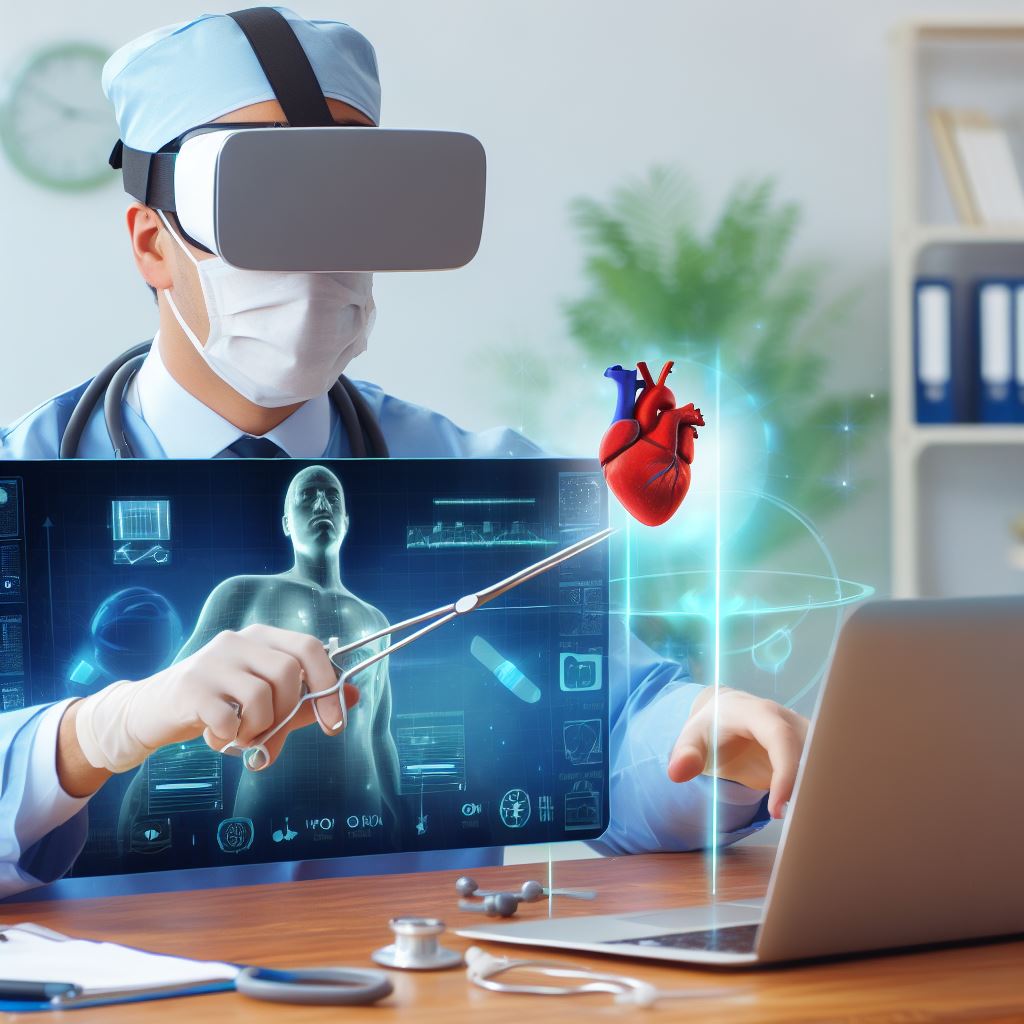
Emotionally Intelligent AI, a Game Changer in Healthcare

Categories
Applied Innovation

Emotionally Intelligent AI, a Game Changer in Healthcare

In the quickly changing field of healthcare innovation, where everyday innovations are fueled by surgical robots, diagnostic algorithms, and predictive analytics, empathy is still a vital but sometimes disregarded element. Building robots that can comprehend human emotions has become crucial as artificial intelligence expands into more personal facets of health care. This is a profoundly human dilemma in addition to a technological one.

The goal of emotionally intelligent AI, or EIAI, is to interact with the emotional nuances of both patients and doctors in addition to just obeying directives. This change heralds a significant revolution in which technology not only supports healing but actively participates in it.

How Machines Learn to Feel

Emotional intelligence has traditionally been a human trait. It’s what allows a nurse to calm a child’s anxieties or a doctor to console a bereaved family. However, this paradigm is changing now because to developments in human-centered design, machine learning, and emotional computing.

AI that is emotionally intelligent is taught to recognize emotional cues in context, speech, text, and facial expressions and to modify replies subtly. Voice biomarkers and minor language clues are already being used by some system to identify emotional discomfort. These days, robots listen for what is not spoken, for what is in between the words, rather than just providing answers to inquiries.

Emotion as a Clinical Resource

AI with emotional intelligence isn’t only for small talk. Real-world medical decisions are starting to be influenced by it. For example, algorithms can identify irritation or bewilderment during virtual consultations and assist doctors in modifying their communication style accordingly. They can spot early indicators of anxiety or sadness in mental health settings before human clinicians do.

These methods provide recommendations that honor emotional preparedness in addition to clinical realities during end-of-life conversations or pediatric care. Often neglected in conventional data analysis, emotion is now a crucial component of diagnosis, triage, and long-term care. With this perspective, EIAI becomes into an emotional stimulant as well as a digital instrument.

Ethics in a Mirror: Can We Trust Empathic Algorithms?

Great responsibility accompanies great sensitivity. AI’s ability to recognize and react to emotion raises ethical questions. Should our inner life be monitored by machines? Who is the owner of the data? Is a machine only mimicking empathy, or will it ever be able to “understand” us? These are real-world problems that have an impact on safety, openness, and trust in healthcare environments.

Patients should be informed about the methods and timing of their emotional state monitoring. Developers need to consider individual differences and cultural nuances while designing. Emotionally intelligent AI has the potential of being manipulative if not handled properly. It can strengthen the moral foundation of care if properly managed.

A Compassionate Future, Augmented by AI

Notwithstanding obstacles, emotionally aware AI has great potential to support physicians and protect emotional health. Consider healthcare systems where patients are guided through soothing therapies by wearable technology that detects their stress reaction.

Imagine post-operative robots that interact with mood as well as symptom checklists, changing their tone to be encouraging and consoling. This is enhancement rather than automation. The underlying technology is sophisticated, combining contextual AI, real-time learning, and multimodal sensing.

Even when the system is overburdened, its goal is to make patients feel noticed, restore emotional presence, and soften the edges of care—all of which are incredibly human. AI that is emotionally intelligent doesn’t pose as a human. It only learns to be there for us, to be patient, to be silent, to comprehend us.

Reach out to us at open-innovator@quotients.com or drop us a line to delve into the transformative potential of groundbreaking technologies. We’d love to explore the possibilities with you


Categories
Applied Innovation

Expanding Role of Artificial Intelligence in Healthcare and Rehabilitation

Categories
Applied Innovation

Expanding Role of Artificial Intelligence in Healthcare and Rehabilitation

In the ever-changing environment of healthcare, Artificial Intelligence (AI) is emerging as a disruptive force comparable to the fourth Industrial Revolution. Its applications cover a wide range of medical fields, with the potential to transform how we approach patient care and rehabilitation.

The Essentials of AI in Medicine:

At its essence, AI refers to computers’ ability to do tasks intelligently while under human supervision. In medicine, AI is more than simply a technology improvement; it is a paradigm revolution. AI has a wide-ranging impact, from assisting clinical disciplines such as radiography to revolutionizing rehabilitation.

AI in Clinical Practice:

One of AI’s most significant accomplishments is its capacity to help healthcare practitioners make clinical decisions. Algorithms are used to learn, think, and generate insights, which improve processes such as radiography and rehabilitation. The technology expands its reach by curating the most recent material from journals, books, and evidence-based practices, allowing for better-informed healthcare decision-making. Furthermore, AI plays an important role in decreasing medical mistakes, a fundamental component of guaranteeing patient safety in healthcare settings.

Sports Medicine and Orthopaedics:

In sports medicine and orthopaedics, AI is showing promise in forecasting athlete injury risks, interpreting medical imaging, and assessing patient-reported results. These applications not only improve the accuracy of diagnosis but also lead to more effective treatment and rehabilitation.

Rehab Revolution:

The influence of AI on rehabilitation is significant. AI improves patient care by helping physical therapists conduct complete exams, anticipate performance, and make accurate diagnoses. Its uses include problem solving, x-ray diagnostics, and the development of best practice guidelines. The use of AI into medical and rehabilitative operations is a big step forward in improving patient outcomes.

Neurology and AI:

AI plays a vital function in neurology. Computer-aided diagnostic (CAD) systems, which use AI and contemporary signal processing technologies, let physicians analyse and interpret physiological data and pictures more efficiently. This is especially important in treating neurological illnesses including epilepsy, Parkinson’s disease, Alzheimer’s disease, multiple sclerosis, and ischemic brain stroke.
AI’s impact does not end there; it actively contributes to the resolution of difficult therapeutic problems associated with brain illnesses. Ongoing study and the development of effective algorithms improve our knowledge of complex brain systems.

AI’s Potential in Neurological Physical Therapy:

AI’s potential in neurologic physical therapy is enormous and transformational. Artificial intelligence has been developed to aid in robotic-assisted treatment, motor function and gait evaluation, upper extremity rehabilitation, and movement analysis. For example, wearable sensors collect data on walking patterns, allowing anomalies to be identified. These AI-powered sensors are critical for analysing functional activities and personalising treatment programmes.

In combination with tele-rehabilitation, virtual reality, and body-worn sensors, the future promises a holistic strategy to monitoring home workouts. Remote therapists might be alerted to erroneous exercise performance or the need for change, thereby improving patient care dramatically.

Finally, incorporating AI into healthcare and rehabilitation is more than a technology development; it is a revolution. As the global healthcare agenda aims for universal health coverage, AI’s potential influence on healthcare delivery is unparalleled. Professionals must embrace the continuing discourse around AI to guarantee appropriate integration and better patient outcomes. AI literacy is essential for successfully navigating the ever-changing healthcare and rehabilitation market. Stay tuned for more on AI’s transformational impact in healthcare and write to us at open-innovator@quotients.com.