



Categories
Events DTQ

Report: Building Digital Trust in an Untrusted World

Categories
Events DTQ

Report: Building Digital Trust in an Untrusted World

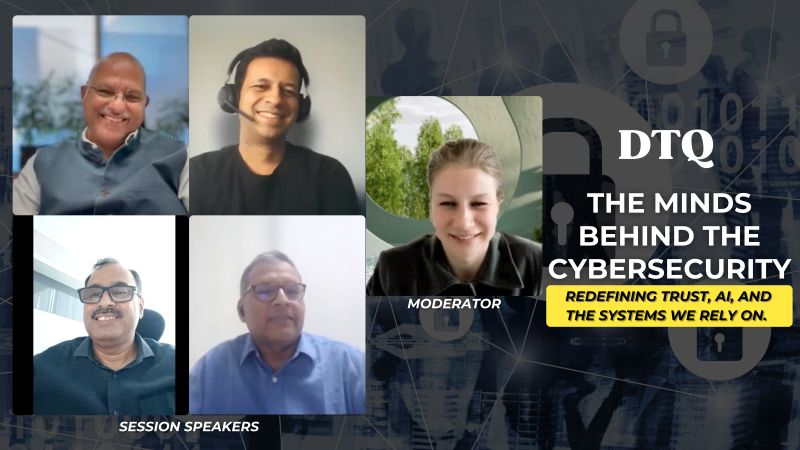
DTQ organized a virtual session on March 23, 2026, titled “Building Digital Trust in an Untrusted World”, bringing together thought leaders to explore the intersection of cybersecurity, AI ethics, and organizational resilience. In a digital era where compliance is often mistaken for genuine trust, the discussion emphasized that true trust is not achieved through audits or technical sophistication alone, but through transparency, predictability, and ethical responsibility.

This report captures the key insights from the session, highlighting the philosophical shift toward viewing trust as a dynamic currency, the hidden vulnerabilities beneath compliance, and the strategic frameworks needed to embed trust into the very architecture of digital systems.

The Architects of Trust: Panel Participants

  • Ella Tiuriumina: Moderator and Siemens Brand Ambassador.
  • Vipin Chawla: Executive VP and CTO at Max Group.
  • Abhishek Kulkarni: Cybersecurity Expert and Technical Lead, Lloyd Technology
  • Ritesh Kumar: Director of Cybersecurity at ARCON
  • Piyush Govil: Director of IT Admin and HR at Infozec Software.

The Digital Trust Mandate: News & Analysis

In a world increasingly dominated by “secure and compliant” marketing narratives, a panel of industry veterans recently met to strip away the corporate jargon and address the uncomfortable truths of the digital age. The consensus was clear: Compliance is not trust. While an organization might pass every audit on paper, the true measure of digital trust is found in the “unseen layers”—the behavior of AI models, the integrity of internal cultures, and the predictability of user experiences.

The following report details the deep-dive insights and strategic learnings from the session.

The Philosophical Shift: Trust as Currency

The panel opened by challenging the standard definition of trust. In the digital realm, trust is often mistakenly viewed as a static “state” achieved via encryption or firewalls. The experts reframed it as a dynamic, fragile currency that is earned through predictability, transparency, and empathy.

  • The Paradox of Convenience: A significant insight shared was the “strange paradox” where users click “Accept All” on privacy cookies without a second thought (trading data for convenience), yet will spend hours researching a third-party review site because they don’t trust the brand’s own claims. This highlights a massive “Trust Deficit” that brands must bridge.
  • Predictability vs. Sophistication: Tech sophistication doesn’t build trust; predictability does. If a system behaves inconsistently—even if it is technically superior—trust evaporates.

Unpacking the “Uncomfortable Truths” of Cybersecurity

One of the most provocative segments of the discussion revolved around what happens beneath the “secure and compliant” surface.

  • The Compliance Trap: The panel warned that many organizations use compliance as a shield to hide fundamental vulnerabilities. Being “compliant” does not mean a system is “trustworthy.” Trust breaks at the experience layer—how the data is actually used—rather than the policy layer.
  • The Internal Perimeter: We often focus on external hackers, but the “uncomfortable truth” is that trust often fails internally. If an employee flags a security concern and it is ignored or buried in “low priority” tickets, that internal breach of trust eventually manifests as an external security failure.
  • Data Drift and AI Opacity: As AI becomes central to operations, “data drift” (where models become less accurate over time) and the “black box” nature of AI decision-making create new trust gaps that traditional security frameworks are not equipped to handle.

Strategic Learnings: Architectural Resilience

The experts moved from identifying problems to outlining architectural solutions, emphasizing that trust cannot be a “bolted-on” feature.

  • Trust by Design (Day Zero)

The panel emphasized that trust must be an architectural requirement from “Day Zero.” This means asking not just “Is it secure?” but “Is it transparent?” and “Is it fair?”

  • Example: In AI-driven recruitment, if the algorithm filters candidates based on hidden biases without human oversight, the trust in the brand’s HR process is fundamentally broken, regardless of how “secure” the database is.
  • Zero Trust for AI Agents

A key technical learning involved the evolution of Zero Trust. In a world of interconnected AI agents, we can no longer trust any entity—internal or external—by default. However, the challenge lies in balancing this “Zero Trust” posture with the need for data fluidity to drive innovation.

  • Information Integrity (The New CIA Triad)

Beyond Confidentiality, Integrity, and Availability, the panel suggested a focus on Information Veracity. In an era of deepfakes and AI-generated misinformation, the ability to prove that data is “true” and “original” is the next frontier of digital trust.

Leadership and the “Trust-First” Mindset

To move forward, the panel argued that Digital Trust must be elevated from the server room to the boardroom.

  • Commercializing Trust: Leadership must stop viewing security as a cost center. Instead, trust should be framed in commercial terms: Customer Lifetime Value (CLV) and Brand Equity. A trusted brand has lower customer acquisition costs and higher retention.
  • The KPI of Trust: Organizations should manage trust through outcome-based KPIs. This includes not just “uptime,” but “transparency scores” and “resolution empathy”—measuring how effectively a company communicates when things go wrong.

Conclusion: Scale Requires Trust

The session concluded with a powerful takeaway: “If I cannot see it, I cannot scale it.” Innovation is only as fast as the trust underlying it. Without a “trust-first” mindset, rapid scaling in the age of AI is not an achievement; it is a liability.

As the digital landscape becomes increasingly complex, the organizations that survive will not be those with the most complex security tech, but those that treat trust as a foundational design constraint.

DTQ serves as a platform dedicated to mapping global industry shifts and providing “information capital” before it reaches the mainstream. in cybersecurity space. Please write us at open-innovator@quotients.com for more information.

Categories
Evolving Use Cases

From Concept to Impact: Agentic AI and the Use Cases Shaping Tomorrow

Categories
Evolving Use Cases

From Concept to Impact: Agentic AI and the Use Cases Shaping Tomorrow

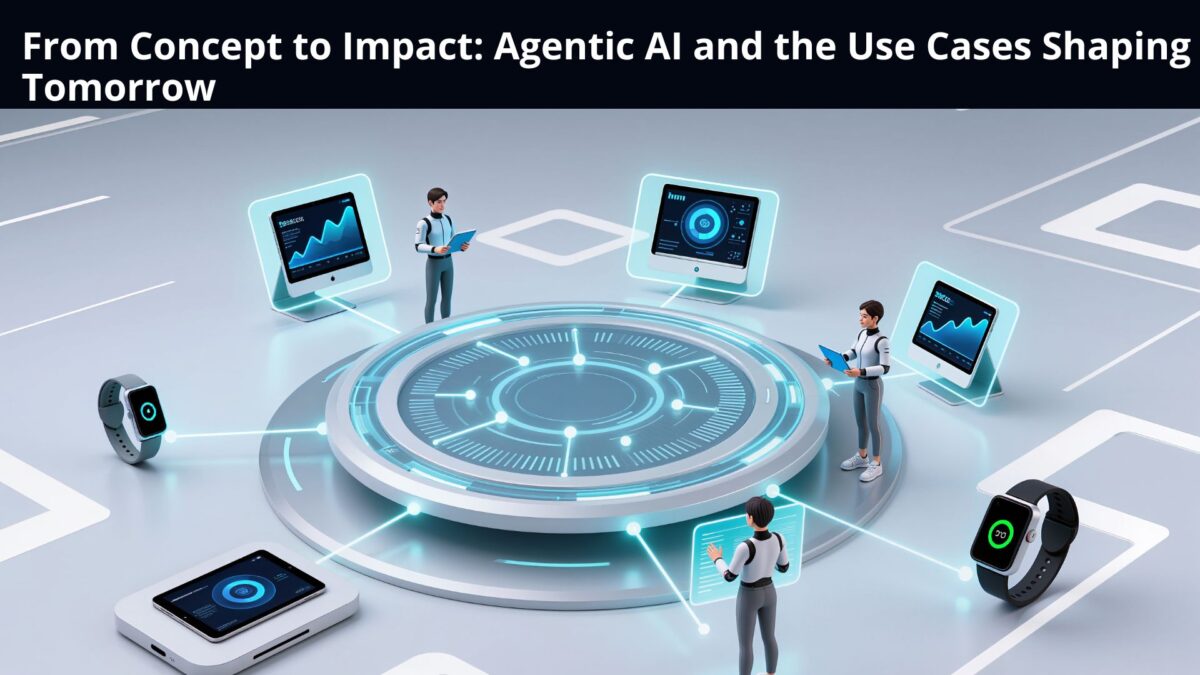
Agentic AI is transforming businesses by introducing intelligence and autonomy into routine systems. Agentic AI is perfect for complicated and dynamic contexts because it can reason, plan, and adapt on its own, unlike traditional tools that wait for instructions. Its new applications in robotics, healthcare, and commercial operations are opening up new possibilities for productivity and creativity.

In contrast to standard AI systems that merely react to commands, Agentic AI is capable of independent reasoning, planning, execution, and adaptation. This implies that it can manage intricate, multi-step activities without continual human supervision. It is being used in a variety of industries to enhance decision-making, simplify processes, and increase productivity.

Agentic AI is proving to be very successful in dynamic contexts where conditions change rapidly by fusing sophisticated reasoning with real-time adaptability. These systems are starting to be used by companies, healthcare providers, and digital entrepreneurs to increase productivity, cut expenses, and improve customer and societal outcomes.

Business and Operations Efficiency

Agentic AI is changing how businesses run their day-to-day operations. By doing away with manual handoffs, which frequently cause processes to lag, it simplifies workflows. Research indicates that automating repetitive processes with agentic AI can increase productivity significantly. Additionally, it helps businesses save money and save waste by optimizing resource allocation through real-time data analysis and operational adjustments. Agentic AI in sales can score leads, tailor outreach, and even modify pricing tactics. Shorter sales cycles and conversion rates have resulted from these skills. Agentic AI lowers inventory costs and increases delivery reliability by monitoring suppliers, negotiating contracts, and rerouting shipments during disruptions, all of which help supply chain management.

Healthcare Advancements

Another sector where agentic AI is having a significant impact is healthcare. Wearable technology makes it possible to monitor patients continuously, sending out notifications and taking action when their health deteriorates. This proactive strategy enhances patient safety and enables physicians to react more quickly. By combining genetic and clinical data, agentic AI also facilitates individualized therapy planning, which is particularly helpful in uncommon diseases and oncology. Results greatly increase when treatments are customized for each patient. Agentic AI is being used by hospitals to handle personnel scheduling, supply logistics, and resource allocation. This lowers operating expenses while guaranteeing the availability of vital resources when required. All things considered, agentic AI is assisting healthcare systems in providing more effective, individualized, and economical care.

Robotics in Manufacturing

Agentic AI is driving a new generation of robots in the automotive and manufacturing sectors. These robots can design, learn, and self-improve through autonomous learning cycles; they are not restricted to preprogrammed tasks. This lowers the cost of prototypes and speeds up invention, enabling businesses to launch goods more quickly. Robots powered by agentic AI may adjust to changing production needs without requiring significant reprogramming, increasing the flexibility and resilience of factories. They can also find inefficiencies and provide recommendations for changes by examining production data. This degree of autonomy is transforming industrial automation, making it possible for smarter factories to react more quickly and precisely to shifting demands and difficulties in the global supply chain.

Healthcare Robotics

Healthcare robots is also being revolutionized by agentic AI. Agentic AI-powered robots are performing precision, less invasive procedures that shorten recovery times and enhance patient outcomes. These systems are safer and more efficient since they can adjust during procedures. Healthcare robots help with patient care outside of surgery, from assisting with rehabilitation activities to keeping an eye on vital signs. Their capacity to adapt and learn guarantees that patients receive individualized care that is suited to their need. Reduced staff workloads help hospitals by freeing up physicians and nurses to concentrate on more difficult duties. Healthcare professionals are attaining greater levels of care and efficiency in medical settings by fusing robots with agentic AI.

Autonomous Vehicles and Service Robots

Autonomous cars and service robots are largely powered by agentic AI. These systems need to function in uncertain contexts, and agentic AI allows them to adjust instantly. For instance, autonomous vehicles are able to react to unforeseen dangers, reroute during traffic, and adapt to traffic circumstances. Agentic AI is used by service robots in sectors like retail and hospitality to communicate with clients, respond to inquiries, and carry out duties securely. Over time, these robots get better at what they do by constantly learning from their environment. Agentic AI’s flexibility guarantees that autonomous systems continue to be dependable and efficient, improving consumer happiness and safety in real-world applications.

Customer Support and HR Functions

Agentic AI is changing customer service and human resources outside of technical areas. It can answer questions, fix problems, and even escalate complicated situations when needed in customer support. As a result, customers are happier and wait times are decreased. Agentic AI in HR streamlines processes such as interview scheduling, employee onboarding, and routine inquiry management. HR staff may concentrate on important projects like talent development and employee engagement by taking up monotonous tasks. By relieving professionals of repetitive chores and enabling them to focus on higher-value work, these applications demonstrate how agentic AI is not just increasing productivity but also improving the human experience.

Education and Personalized Learning

Another area that benefits from agentic AI is education. Agentic AI-powered intelligent tutoring programs adjust to the pace and learning preferences of individual students. They guarantee that students receive the assistance they require to achieve by offering individualized instruction, tasks, and feedback. In large classrooms where teachers might find it difficult to provide individualized attention, this strategy is particularly helpful. Additionally, agentic AI can pinpoint areas in which students are having difficulty and modify the curriculum accordingly. It keeps students interested and enhances academic results by providing individualized learning opportunities. Agentic AI is developing into a potent tool for individualized and inclusive learning as educational systems around the world embrace digital revolution.

Energy Management and Sustainability

In terms of sustainability and energy management, agentic AI is essential. Because of their complexity, modern power grids need to be constantly monitored and adjusted. By forecasting demand, balancing supply, and guaranteeing effective distribution, agentic AI systems maximize grid performance. Additionally, they facilitate predictive maintenance by spotting any problems before they produce problems. This increases dependability and decreases downtime. By controlling supply variations, agentic AI in renewable energy helps integrate solar and wind electricity into the system. Agentic AI helps achieve sustainability goals by lowering waste and facilitating the global shift to greener, more efficient energy solutions by making energy systems smarter and more adaptable.

The Future of Agentic AI

By facilitating intelligent, independent decision-making and execution, agentic AI is revolutionizing a number of sectors. Its applications are numerous and expanding, ranging from robotics, education, and energy management to business operations and healthcare. Agentic AI is particularly well-suited to dynamic contexts where standard automation is inadequate because of its capacity for reasoning, planning, and adaptation. Businesses using these technologies are experiencing increased output, reduced expenses, and better results. Agentic AI will probably become a key component of innovation as technology develops further, propelling advancements across industries and influencing a future in which robots collaborate with people to solve challenging problems and open up new avenues for advancement.

Quotients is a platform for industry, innovators, and investors to build a competetive edge in this age of disruption. We work with our partners to meet this challenge of metamorphic shift that is taking place in the world of technology and businesses by focusing on key organisational quotients. Reach out to us at open-innovator@quotients.com.

Categories
Events

Agentic AI: Shaping the Business Landscape of Tomorrow

Categories
Events

Agentic AI: Shaping the Business Landscape of Tomorrow

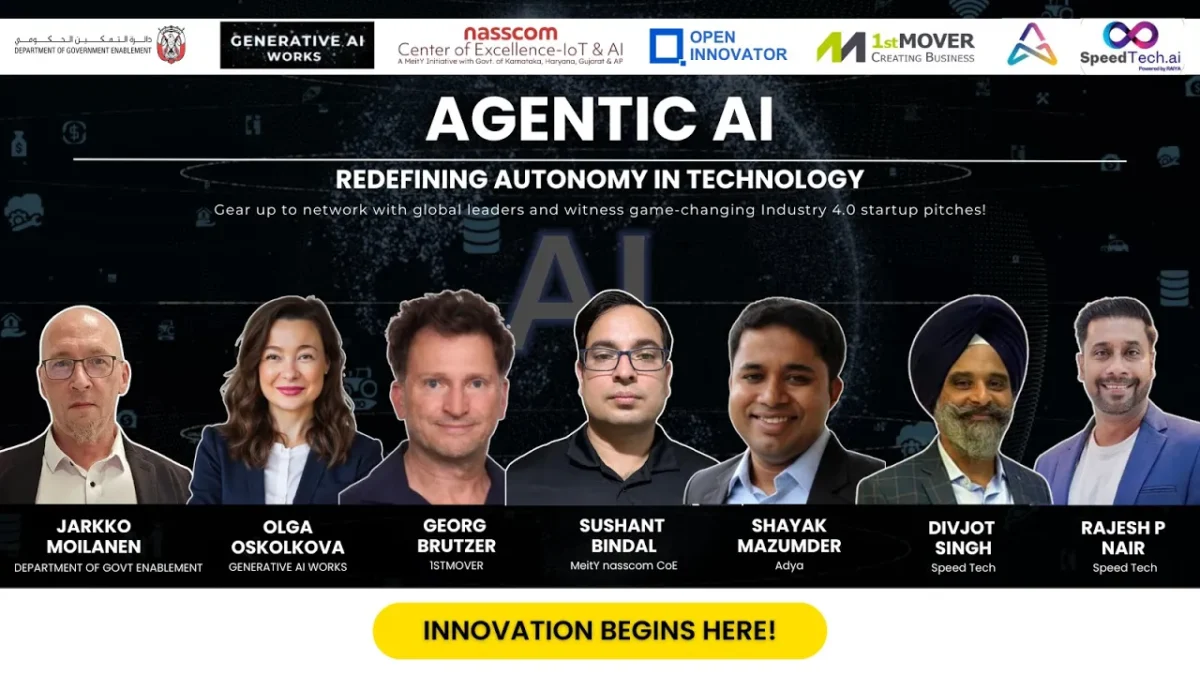
Open Innovator hosted Agentic AI Knowledge Session convened an assembly of distinguished thought leaders, innovators, and industry professionals to delve into the transformative prospects of agentic AI in revamping business practices, fostering innovation, and bolstering collaboration.

The virtual event held on March 21st , moderated by Naman Kothari, underscored the distinctive traits of agentic AI—its proactive and dynamic nature contrasting with the traditional, reactive AI models. The session encompassed engaging panel discussions, startup presentations, and profound insights on how small and medium enterprises (SMEs) can exploit agentic AI to enhance productivity, efficiency, and decision-making capabilities.

Prominent Speakers and Discussion Points:

  • Sushant Bindal, Innovation Partnerships Head at MeitY-Nasscom CoE, steered conversations about nurturing innovation within Indian businesses.
  • Dr. Jarkko Moilanen, Platform Product Head for the Department of Government Enablement in Abu Dhabi, UAE, offered insights into AI’s evolving role within governmental and public domains.
  • Olga Oskolkova, Founder of Generative AI Works, and Georg Brutzer, Agentic AI Strategy Consultant, delved into the long-term implications of agentic AI for commerce and governance frameworks.
  • Shayak Mazumder, CEO of Adya, presented their technology platform, which is instrumental in advancing ONDC adoption in India and simplifying AI integration.
  • Divjot Singh and Rajesh P. Nair, the masterminds behind Speed Tech, showcased their intelligent enterprise assistant aimed at optimizing operations and enhancing decision-making processes.

Overview of the Future of AI in Business

Naman Kothari initiated the session by distinguishing between conventional AI and agentic AI, likening the latter to a proactive participant in a classroom setting. This distinction laid the foundation for an exploration of how AI can transcend automation to facilitate real-time decision-making and collaboration across various industries.

Agentic AI’s Impact on SMEs

A pivotal theme was the substantial benefits that agentic AI can offer to SMEs. Georg Brutzer underscored that SMEs are at disparate levels of digital maturity, necessitating tailored AI approaches. More digitized firms can integrate AI via SaaS platforms, while less digitized ones should prioritize controlled generative AI projects to cultivate trust and understanding. Olga Oskolkova reinforced the importance of strategic AI adoption to prevent resource waste and missed opportunities.

Building Confidence in AI: Education and Strategy

A prevailing challenge highlighted was the need to establish trust in AI within organizational structures. Sushant Bindal advocated for starting with bite-sized AI projects that yield evident ROI, particularly in sectors like manufacturing and logistics where AI can enhance processes without causing disruptions.

Olga Oskolkova placed emphasis on AI literacy, suggesting businesses prioritize employee education on AI’s capabilities, limitations, and ethical ramifications. This approach fosters an environment conducive to learning and helps navigate beyond the hype to derive actual value from AI adoption.

Governance and Ethical Considerations

The increasing integration of AI into business processes has brought to the fore the necessity for robust governance frameworks and ethical considerations. Dr. Jarkko Moilanen spoke on the evolving nature of AI and the imperative for businesses to adapt governance models as AI systems become more autonomous. Balancing machine autonomy with human oversight remains vital for AI to serve as a complementary tool rather than a human replacement.

AI as a Catalyst for Startup and Enterprise Synergy

AI’s role in fostering collaboration between startups and large corporations was another key discussion point. Sushant Bindal pointed out that AI agents can function as matchmakers, identifying supply chain gaps and business needs to facilitate beneficial partnerships. These collaborations can spur innovation and ensure mutual growth for startups and established enterprises.

SaaS Companies and AI’s Evolution

The session touched on the challenges and opportunities SaaS companies face as AI advances. Olga Oskolkova discussed how AI’s transition from basic automation to complex agentic systems would affect business models, suggesting a shift from traditional subscription-based to token-based pricing models tied to output and effectiveness.

Moreover, as AI takes on more sophisticated tasks, businesses must reevaluate their approach to adoption and integration, maintaining human engagement while leveraging AI’s potential.

Startup Showcases: Adya AI and Speed Tech

The session included captivating startup pitches from two innovative companies:

– Adya AI, presented by Shayak Mazumder, showcased their platform’s ability to create custom AI agents using a user-friendly drag-and-drop interface, streamlining data integration and app development. This underscored the potential for agentic AI to boost productivity, innovation, and accessibility.

– Divjot Singh and Rajesh P. Nair introduced Speed Tech’s intelligent enterprise assistant, designed to optimize operations and decision-making. Their product, Rya, demonstrated AI’s ability to enhance customer service and minimize operational costs by addressing challenges such as long wait times and document processing errors.

Concluding Remarks and Key Takeaways

The session concluded with an emphasis on collaboration, innovation, and continuous learning as essential for harnessing agentic AI’s potential. The session encouraged the audience to embrace the evolving AI landscape and recognize the vast potential for business transformation. The speakers collectively highlighted the importance of education, strategy, and collaboration in navigating AI integration successfully. The event left participants with a clear understanding of the profound impact of AI and a call to stay informed, explore emerging opportunities, and drive innovation within the realm of AI.