



Categories
DTQ Data Trust Quotients

Report Virtual Session- Is Your Data Really Yours: Ownership in the Digital Age

Categories
DTQ Data Trust Quotients

Report Virtual Session- Is Your Data Really Yours: Ownership in the Digital Age

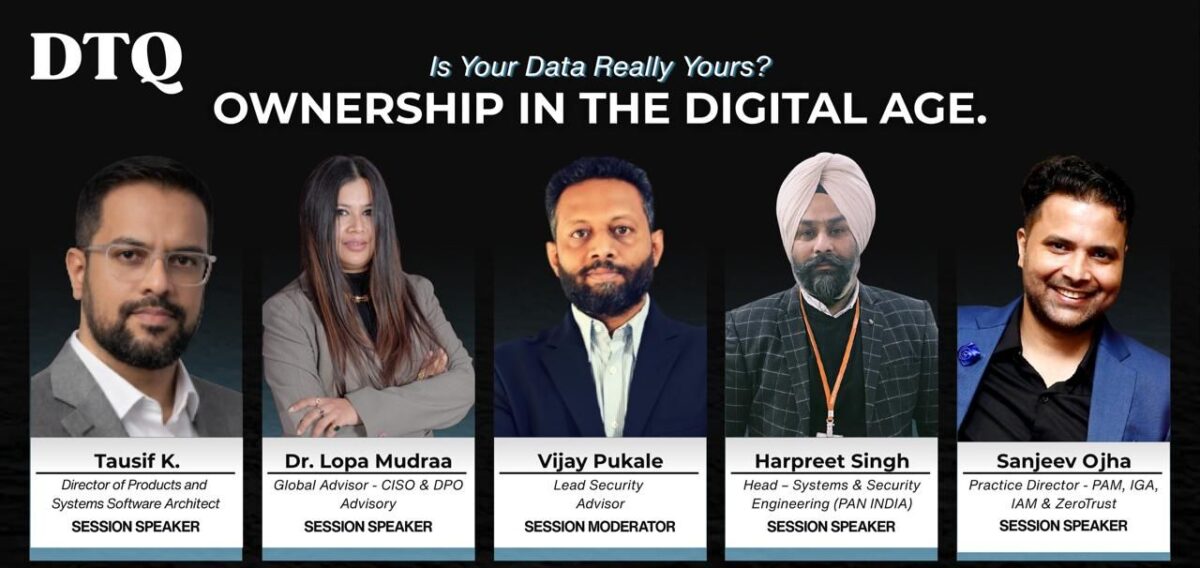
In an era where data is frequently termed the “new oil,” a critical question remains largely unanswered: who truly owns the drill, and more importantly, who owns the oil once it leaves the ground? On May 15, 2026, a high-impact virtual session titled “Is Your Data Really Yours: Ownership in the Digital Age” brought together a panel of global cybersecurity luminaries to dismantle the “consent illusion” and redefine the landscape of data stewardship.

The virtual session explored the uncomfortable truth that while users may generate data, they often lose control of it the moment it enters the complex enterprise ecosystem. As organizations rush to deploy Generative AI (GenAI) at breakneck speeds, the panel argued that the industry is facing a crisis of accountability that transcends traditional technical boundaries.

The Distinguished Panel

The dialogue featured four sharp minds, each bringing a unique perspective from the front lines of global cybersecurity and technology architecture:

  • Dr. Lopa Mudraa Basuu: A recognized visionary leader and former VP at JPMorgan Chase.
  • Harpreet Singh: A Managing Director with 25+ years of expertise in architecting technology solutions.
  • Sanjeev Ojha: Practice Director and a leading expert in Identity and Access Management (IAM) and Zero Trust.
  • Tausif Kazi: A Principal Analytics Consultant and platform

The “Consent Illusion” and the Transparency Gap

The session opened with a sobering look at current statistics. Host highlighted that 4 out of 5 global internet users feel they have lost all control over their personal information. This “consent illusion” is fueled by lengthy, incomprehensible terms of service that users click through out of necessity, not understanding that their data is being replicated across analytics engines, third-party platforms, and cross-border infrastructures.

Dr. Lopa Mudraa Basuu argued that the digital economy is predominantly engineered around “data leverage,” where the user is often the product rather than the customer. She noted that once data enters a corporate ecosystem, ownership becomes “largely theoretical” because the visibility for the user is almost non-existent.

Identity—The New (and Only) Perimeter

Sanjeev Ojha provided a deep dive into the shifting architecture of the enterprise. In a world of cloud-native and AI-driven environments, the traditional “castle and moat” security model is obsolete. Identity is no longer just a control layer; it is the foundation of security itself.

A particularly pressing concern raised by Ojha is the rise of “Agentic AI”—autonomous systems that can elevate their own permissions or access data without direct human awareness. He warned that many organizations are currently “not yet ready” for this shift. To combat this, he proposed a robust lifecycle management approach:

  1. Discovery: Identifying all identities (human and non-human) in the system.
  2. Governance: Assigning a “human in the loop” to manage the lifecycle of these autonomous agents.
  3. Guardrails: Implementing centralized systems like Identity Threat Detection and Response (ITDR) to take feeds from endpoints, XDR, and SIEM servers.

Architecting for Resilience, Not Just Compliance

Harpreet Singh challenged the audience to rethink the “Mahakum style” of operations—large-scale, high-velocity systems where security is often an afterthought. He emphasized that security should not be a “review gate” that slows down innovation but a “product requirement” integrated from the start.

One of the most effective tools in this arsenal is Multi-Factor Authentication (MFA) and Role-Based Access Control (RBAC). Singh broke down the three pillars of MFA:

  • Knowledge: Something you know (e.g., a password).
  • Possession: Something you have (e.g., a hardware token or phone).
  • Inherence: Something you are (e.g., biometrics).

However, the panel agreed that technical controls are insufficient if the architecture doesn’t allow for visibility into traffic and proactive threat prevention.

The Leadership Crisis and the $50 Billion Risk

Perhaps the most provocative segment of the session involved the role of leadership in the age of AI. Dr. Basuu noted that she is less worried about “insecure technology” and more worried about leadership teams deploying AI at a velocity that exceeds their governance maturity.

The financial stakes are astronomical. Sharma cited numbers from IBM Security and legal analysts suggesting that more than $50 billion in cumulative data is currently under “extraction risk” due to active copyrights and privacy lawsuits related to AI training. Despite this, 83% of organizations reportedly have no technical controls to prevent employees from uploading confidential data into public AI tools.

The “Employee as the Weakest Link” Myth

Dr. Basuu offered a strong critique of the common cybersecurity trope that “employees are the weakest link.” She argued that if an employee is the weakest link, it is actually a failure of organizational governance and security deployment.

“Employee needs to be the strongest link of your security,” she stated. This requires unlearning old processes and moving toward a culture where security is part of every role’s responsibility—from the junior scientist to the payroll consolidator. Training must move away from “once a year” compliance checks to a daily “injection” of security awareness.

Conclusion: From “Everyone’s Responsibility” to “My Responsibility”

The session concluded with a powerful call to action. Vijay Pukale (Varij) summarized the shift needed in corporate culture: “Let’s break the myth that security is everyone’s responsibility. From now, we can say that security is my responsibility“.

The consensus among the speakers was clear: reclaiming data ownership in the digital age requires a three-pronged approach:

  1. Ethical Stewardship: Organizations must treat user data with the same dignity and protection they would their own proprietary secrets.
  2. Technological Guardrails: Implementing Zero Trust and advanced IAM to govern the “wild west” of agentic AI.
  3. Leadership Accountability: Slowing down AI deployment enough to ensure that ethical and legal governance can keep pace with innovation.

As the “picture perfect panel” concluded, the sentiment was that while one hour was not enough to solve the crisis of digital ownership, it provided the necessary blueprint for a more secure, accountable future.

Data Trust Quotients (DTQ) is a strategic ecosystem architect that aims to bridge gaps between industry, startups, and investors. DTQ blends data privacy, governance, and cutting-edge AI to accelerate transformative breakthroughs in different domains.

Categories
DTQ Data Trust Quotients

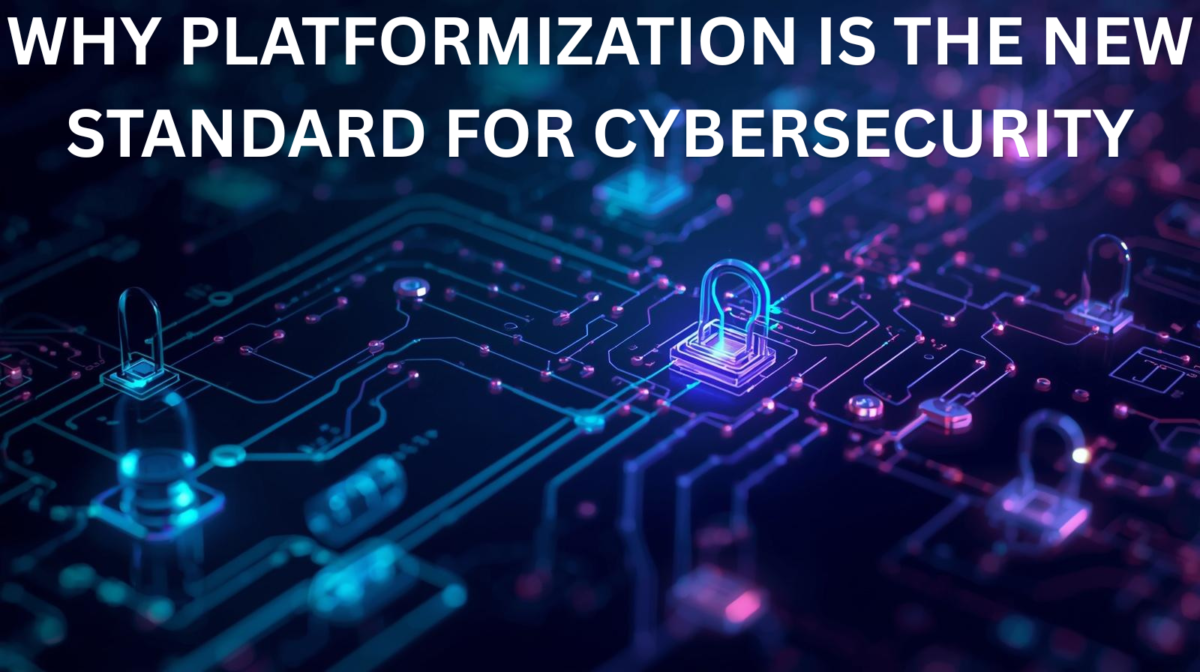
The Future of Digital Resilience: Why Platformization is the New Standard for Cybersecurity

Categories
DTQ Data Trust Quotients

The Future of Digital Resilience: Why Platformization is the New Standard for Cybersecurity

The digital landscape has reached a tipping point. For years, the standard approach to staying safe online was to buy a new tool for every new threat. If you were worried about emails, you bought an email filter. If you were worried about hackers entering your network, you bought a firewall.

Today, this “one tool for one problem” strategy is failing. Organizations are finding themselves buried under dozens of different security products that don’t talk to each other. This complexity has created a “security gap”—a space where threats hide because no single tool has the full picture.

The solution emerging for 2026 is Platformization. This is the shift from a fragmented collection of tools to a single, integrated ecosystem. In this article, we will explore why this shift is happening, how it works, and why it is the only way to build a resilient future.

The Problem with “Point Products”: Why More Isn’t Better

“Point products” made sense in the early days of IT security. They were specialized instruments made to do a certain task very well. However, the number of point products skyrocketed as companies embraced remote work and went to the cloud.

Your security staff spends more time administering software than really combating attacks when you have 50 different solutions from 20 different firms. Alert fatigue results from the system sending so many signals that the ones that are actually threatening are overlooked.

Additionally, these instruments provide blind spots because to their silos. A hacker may cause a minor alert in one tool and another in another, but the security team is never able to view the entire attack pattern without a platform to link the dots.

What is Platformization?

Platformization is about streamlining security operations by integrating them into a cohesive framework. Rather than juggling isolated tools like individual wrenches or hammers, envision an adaptive ecosystem where components seamlessly interact- a “smart factory” for cybersecurity. 

A comprehensive security platform unifies every layer- cloud infrastructure, corporate networks, and remote employee devices- into a single, synchronized environment. Centralizing this data enables advanced automation, allowing the system to detect, analyze, and neutralize threats instantly across the entire enterprise.

The Power of Unified Intelligence

The biggest benefit of using a platform approach is enhanced visibility. When security tools are interconnected, they operate from a unified data source.  Picture this: a login attempt from an unfamiliar location triggers an alert in your identity system. In a disconnected setup, this warning might stand alone-unaware that the same user simultaneously attempted to download a large volume of confidential cloud data. But on an integrated platform, these events are immediately correlated.  The system recognizes a coordinated threat and can swiftly block the account before any data is exfiltrated. This seamless “cross-domain” detection defines next-generation security and trust.

Reducing the “Mean Time to Respond” (MTTR)

In cybersecurity, rapid response is critical. The duration a cybercriminal remains undetected within a network directly correlates with the extent of potential harm. Platformization aims to accelerate threat detection and elimination.

By automating data correlation tasks, platforms eliminate the need for security teams to manually piece together logs across disparate systems. This shift enables teams to transition from identifying threats to resolving them within moments-not days. Such operational efficiency not only reduces organizational risk but also ensures uninterrupted business continuity.

Cost Efficiency and Operational Simplicity

Many people mistakenly believe that transitioning to a premium platform will cost more, when in reality, the reverse is frequently the case. Managing multiple licenses, footing the bill for various support agreements, and onboarding employees across numerous disparate systems can be far more expensive than anticipated.

Platformization presents a cost-efficient alternative:

•          Decreased Licensing Costs: Streamlining vendors typically results in more favorable rates and eliminates redundant service fees.

•          Minimized Training Requirements: Employees only need to become proficient with a single, unified system rather than multiple platforms.

•          Optimized Workforce Utilization: Skilled personnel can redirect their efforts from maintaining outdated tools to strategic initiatives and preventive security measures.

The Role of AI: Fighting Fire with Fire

You cannot rely on outdated, manual methods to protect against sophisticated cyber threats. Attackers are leveraging AI-powered tools to generate polymorphic malware and deceptive phishing schemes that bypass traditional defenses. Organizations must adopt AI-based security solutions to remain protected.

A unified security platform employs machine learning to establish a baseline of expected activity for your unique environment. It detects subtle anomalies that would otherwise go unnoticed by human analysts. This approach goes beyond simple automation-it enhances human capabilities. The AI processes vast amounts of data in real-time, freeing security professionals to focus only on situations requiring expert intervention.

Bridging the Gap: From Legacy Systems to Modern Platforms

Many organizations struggle with outdated “legacy systems”—technology not built for the modern digital landscape, often becoming the most vulnerable point in their security. 

Platformization offers a solution by enabling these older systems to function within a protected, modern framework. Acting as a “secure wrapper,” contemporary platforms can shield legacy tech while exposing previously hidden network segments. This approach allows gradual modernization without abrupt overhauls, blending old infrastructure with new safeguards.

Digital Trust as a Competitive Advantage

In 2026, cybersecurity transcends technical concerns- it becomes the bedrock of business operations. Stakeholders i.e. customers, partners, and regulators now insist on verifiable guarantees of data protection. 

A disjointed security framework appears chaotic and perilous to external evaluators. Conversely, an integrated platform signals security-by-design, reflecting an organization’s strategic grasp of risk and its deployment of automated solutions. In an era where trust reigns supreme, a robust security infrastructure isn’t just prudent-it’s a decisive edge.

Preparing for the Future: A Long-Term Migration

Platformization isn’t an instant transformation- it’s a gradual process. Start by evaluating your existing tools to spot redundancies or missing capabilities. Then prioritize migrating essential functions such as identity management and cloud security into a cohesive system.

The aim is to shift from merely accumulating tools to proactively handling risk. With cyber threats growing more advanced and data regulations tightening, streamlined platforms will emerge as the benchmark for thriving organizations.

Conclusion: The End of the “Toolbox” Era

The era of relying on scattered security tools has passed. Today’s digital battles move too quickly and spread too widely for outdated methods. Adopting a unified platform approach lets organizations cut through overwhelming alerts, slash expenses, and create defenses that match modern threats in speed and smarts.

This shift goes beyond purchasing superior software-it demands a transformation in thinking. It means prioritizing seamless connections over standalone solutions and smart simplicity over tangled systems. In our connected world, true security leaders won’t boast about tool quantity, but about having the most powerfully integrated systems.

Reach out to us at open-innovator@quotients.com or drop us a line to delve into the transformative potential of groundbreaking technologies. We’d love to explore the possibilities with you.

Categories
Events

Beyond the Zip Code: How Digital Trust and AI are Powering the 2026 Medical Migration

Categories
Events

Beyond the Zip Code: How Digital Trust and AI are Powering the 2026 Medical Migration

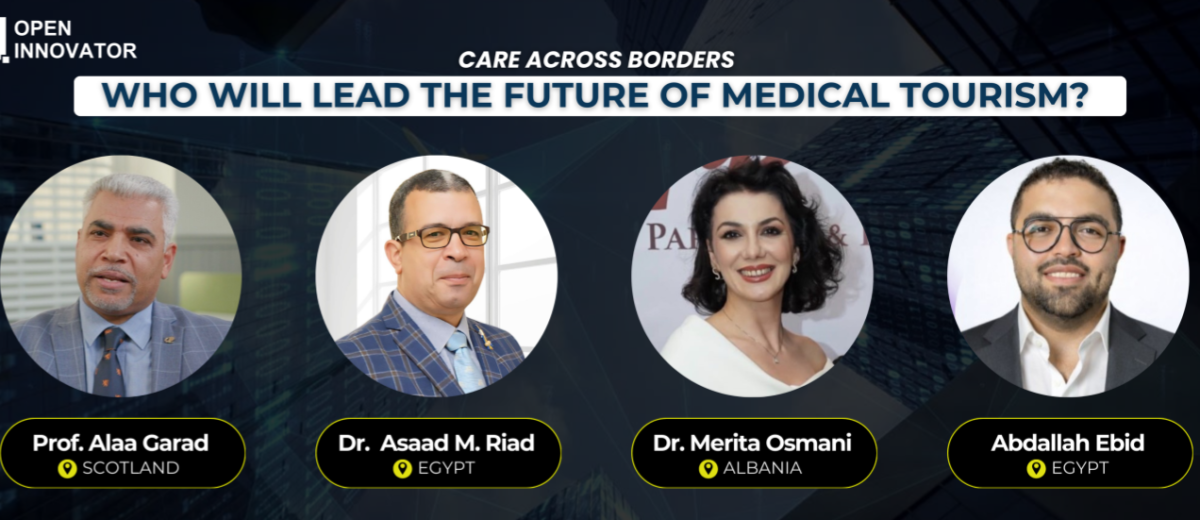
Open Innovator recently organized a virtual session, exploring the massive disruption within the global medical tourism sector and the strategic pivots required to lead the future of borderless healthcare.

Session Participants

  • Naman Kothari: Moderator, Nasscom.
  • Dr. Asad Riad: Medical excellence expert for Egypt and the MENA region.
  • Professor Alaa Garad: Global hospital strategy authority, based in Scotland.
  • Abdullah Ebid: Technology innovator and developer of AI-driven patient journey platforms.
  • Dr. Merita Osmani: Healthcare visionary representing Albania’s emerging medical sector.

The Death of Geographic Monopoly

The traditional paradigm where healthcare quality was determined by a patient’s zip code has effectively collapsed. In 2026, we are witnessing a “silent migration” of over millions of people annually crossing international borders for care. This billion dollar industry is no longer a niche market; it is a strategic financial pivot for patients. While a complex heart bypass in the United States might cost upwards of $150,000, the same procedure in India—performed by surgeons trained at world-class institutions like Stanford—costs approximately $10,000. This massive cost delta allows patients to integrate high-end travel and family recovery into their medical budgets while still retaining significant savings.

From Medical Intervention to Holistic Health Tourism

The industry is evolving beyond simple surgical procedures into a broader “Health Tourism” umbrella. This shift encompasses six to seven distinct segments, including regenerative medicine, wellness, mental health, and spiritual healing. The journey is no longer viewed as a purely physical transaction but as an opportunity for cultural discovery and personal growth. Strategists noted that while digital consultations can replace some physical visits, the human element of travel—experiencing new territories and food—remains a vital component of the recovery and business ecosystem.

Trust: The Only Currency That Matters

While affordability was once the primary driver, the modern international patient now prioritizes certainty and reputation. In a market where multiple countries offer similar pricing, the deciding factor is trust. Experts emphasized that “trust is the currency, but technology is the bank.” This trust is built on invisible infrastructure: post-operative care, insurance interoperability, and the elimination of legal surprises, such as medication restrictions at transit airports. The focus has shifted from finding the cheapest price to identifying the “right” doctor who fits a specific condition, verified by AI-driven precision.

The Digital Navigator and AI Precision

The future of the sector likely belongs to digital platforms that act as “medical navigators” rather than simple marketplaces. Unlike booking a hotel or a flight, healthcare requires a deep, guided coordination of the entire patient relationship from start to finish. AI now allows for a “digital handshake” to occur long before a patient arrives at a facility. These platforms provide informed decision-making tools, allowing patients to compare treatment plans—often cross-referencing them with generative AI models—to ensure they are making the safest choice.

Infrastructure vs. Cultural Software

A critical distinction was made between “hardware” and “software” in healthcare. While building state-of-the-art hospitals and purchasing advanced machinery (the hardware) is relatively easy with sufficient capital, developing the “software”—ethics, transparency, and cultural sensitivity—is the true challenge. Leading destinations must invest in learning-driven environments where staff are trained in cultural nuances, such as faith-based medical preferences and linguistic diversity. Furthermore, there is a recognized risk of creating “two-tier” systems where international patients receive faster care than locals; a balanced national strategy is essential to ensure that medical tourism supports, rather than burdens, the local healthcare infrastructure.

Conclusion

The future of medical tourism in 2026 is being defined by a move away from fragmented services toward integrated, learning-driven patient experiences. Success will not be measured by the number of hospital beds, but by the strength of the digital and ethical “software” that fosters global trust. As new hubs like Egypt, Albania, and Scotland rise to challenge traditional leaders, the winners will be those who treat healthcare not just as a medical procedure, but as a borderless, culturally sensitive journey.

Open Innovator serves as a platform dedicated to mapping global industry shifts and providing “information capital” before it reaches the mainstream. Please write us at open-innovator@quotients.com for more information.