



Categories
Events

Open Innovator Virtual Session: Responsible AI Integration in Healthcare

Categories
Events

Open Innovator Virtual Session: Responsible AI Integration in Healthcare

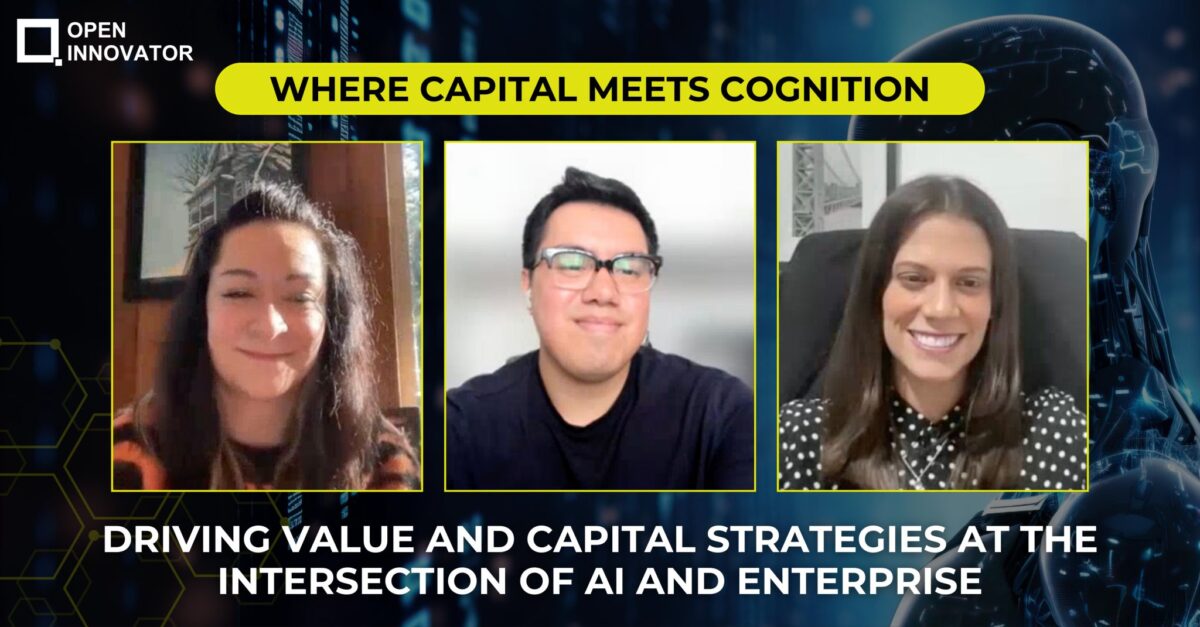
The recent Open Innovator Virtual Session brought together healthcare technology leaders to address a critical question: How can artificial intelligence enhance patient care without compromising the human elements essential to healthcare? Moderated by Suzette Ferreira, the panel featured Michael Dabis, Dr. Chandana Samaranayake, Dr. Ang Yee, and Charles Barton, who collectively emphasized that AI in healthcare is not a plug-and-play solution but a carefully orchestrated process requiring trust, transparency, and unwavering commitment to patient safety.

The Core Message: AI as Support, Not Replacement

The speakers unanimously agreed that AI’s greatest value lies in augmenting human expertise rather than replacing it. In healthcare, where every decision carries profound consequences for human lives, technology must earn trust from both clinicians and patients. Unlike consumer applications where failures cause inconvenience, clinical AI mistakes can result in misdiagnosis, inappropriate treatment, or preventable harm.

Current Reality Check:

  • 63% of healthcare professionals are optimistic about AI
  • 48% of patients do NOT share this optimism – revealing a significant trust gap
  • The fundamental challenge remains unchanged: clinicians are overwhelmed with data and need it transformed into meaningful, actionable intelligence

The TACK Framework: Building Trust in AI Systems

Dr. Chandana Samaranayake introduced the TACK framework as essential for gaining clinician trust:

  • Transparency: Clinicians must understand what data AI uses and how it reaches conclusions. Black-box algorithms are fundamentally incompatible with clinical practice where providers bear legal and ethical responsibility.
  • Accountability: Clear lines of responsibility must be established for AI-assisted decisions, with frameworks for evaluating outcomes and addressing errors.
  • Confidence: AI systems must demonstrate consistent reliability through rigorous validation across diverse patient populations and clinical scenarios.
  • Control: Healthcare professionals must retain ultimate authority over clinical decisions, with the ability to override AI recommendations at any time.

Why AI Systems Fail: Real-World Lessons

The Workflow Integration Problem

Michael Dabis highlighted that the biggest misconception is treating AI as a simple product rather than a complex integration process. Several real-world failures illustrate this:

  • Sepsis prediction systems: Technically brilliant systems that nurses loved during trials but deactivated on night shifts because they required manual data entry, creating more work than they eliminated
  • Alert fatigue: Systems generating too many notifications that overwhelm clinicians and obscure genuinely important insights
  • Radiology AI errors: Speech recognition confusing “ilium” (pelvis bone) with “ileum” (small intestine), leading AI to generate convincing but dangerously wrong reports about intestinal metastasis instead of pelvic metastasis

The Consulting Disaster

Dr. Chandana shared a cautionary tale: A major consulting firm had to refund the Australian government after their AI-generated healthcare report cited publications that didn’t exist. In healthcare, such mistakes don’t just waste money—they can cost lives.

Four Critical Implementation Requirements

1. Workflow Integration

AI must fit INTO clinical workflows, not on top of them. This requires:

  • Co-designing with clinicians from day one
  • Observing how healthcare professionals actually work
  • Ensuring systems add value without creating additional burdens

2. Data Governance

Clean, traceable, validated data is non-negotiable:

  • Source transparency so clinicians know data age and origin
  • Interoperability for holistic patient views
  • Adherence to the principle: garbage in, garbage out

3. Continuous Feedback Loops

  • AI must learn from clinical overrides and corrections
  • Ongoing validation required (supported by FDA’s PCCP guidance)
  • Mechanisms for users to report issues and suggest improvements

4. Cross-Functional Alignment

  • Team agreement on requirements, risk management, and validation criteria
  • Intensive training during deployment, not just online courses
  • Change management principles applied throughout

Patient Safety and Ethical Considerations

Dr. Gary Ang emphasized accountability as going beyond responsibility—it means owning both the solution and the problem. Key concerns include:

Skill Degradation Risk: Over-reliance on AI may erode clinical abilities. Doctors using AI for endoscopy might lose the capacity to detect issues independently when systems fail.

Avoiding Echo Chambers: AI systems must help patients make informed decisions without manipulating behavior or validating delusions, unlike social media algorithms.

Patient-Centered Approach: The patient must always remain at the center, with AI protecting safety rather than prioritizing operational efficiency.

Future Directions: Holistic and Preventive Care

Charles Barton outlined a vision for AI that extends beyond reactive treatment:

The Current Problem: Healthcare data is siloed—no single clinician has end-to-end patient health information spanning sleep, nutrition, physical activity, mental health, and diagnostics.

The Opportunity: 25% of health problems, particularly musculoskeletal and cardiovascular issues affecting 25% of the world’s population, can be prevented through healthy lifestyle interventions supported by AI.

Future Applications:

  • Patient education about procedures, medications, and screening decisions
  • Daily health monitoring instead of reactive treatment
  • Predictive and prescriptive recommendations validated through continuous monitoring
  • Early identification of disease risk years before symptoms appear

Scaling Challenges and Geographic Considerations

Unlike traditional medical devices with predictable inputs and outputs, AI systems are undeterministic and require different scaling approaches:

  • Start with limited, low-risk use cases
  • Expand gradually with continuous validation
  • Recognize that demographics and healthcare issues vary by region—global launches aren’t feasible
  • Prepare organizations for managing AI’s operational complexity

Key Takeaways

For Healthcare Organizations:

  • Treat AI as a process requiring ongoing commitment, not a one-time product purchase
  • Invest in hands-on training and workforce preparation
  • Build data foundations with interoperability in mind
  • Establish clear governance frameworks for accountability and patient safety

For Technology Developers:

  • Spend time in clinical environments understanding actual workflows
  • Design for transparency with explainable AI outputs
  • Enable easy override mechanisms for clinicians
  • Test across diverse populations to avoid amplifying health inequities

For Clinicians:

  • Engage actively in AI development and implementation
  • Maintain clinical reasoning skills alongside AI tools
  • Approach AI suggestions with appropriate professional skepticism
  • Advocate for patient interests above operational efficiency

Conclusion

The Open Innovator Virtual Session made clear that successfully integrating AI into healthcare requires more than technological sophistication. It demands deep respect for clinical workflows, unwavering commitment to patient safety, and genuine collaboration between technologists and healthcare professionals.

The consensus was unequivocal: Fix the foundation first, then build the intelligent layer. Organizations not ready to manage the operational discipline required for AI development and deployment are not ready to deploy AI. The technology is advancing rapidly, but the fundamental principles—earning trust, ensuring safety, and supporting rather than replacing human judgment—remain unchanged.

As healthcare continues its digital transformation, success will depend on preserving what makes healthcare fundamentally human: empathy, intuition, and the sacred responsibility clinicians bear for patient wellbeing. AI that serves these values deserves investment; AI that distracts from them, regardless of sophistication, must be reconsidered.

The future of healthcare will be shaped not by technology alone, but by how wisely we integrate that technology into the profoundly human work of healing and caring for one another.

Reach out to us at open-innovator@quotients.com or drop us a line to delve into the transformative potential of groundbreaking technologies and participate in our events. We’d love to explore the possibilities with you.

Categories
Evolving Use Cases

The Ethical Algorithm: How Tomorrow’s AI Leaders Are Coding Conscience Into Silicon

Categories
Evolving Use Cases

The Ethical Algorithm: How Tomorrow’s AI Leaders Are Coding Conscience Into Silicon

Ethics-by-Design has emerged as a critical framework for developing AI systems that will define the coming decade, compelling organizations to radically overhaul their approaches to artificial intelligence creation. Leadership confronts an unparalleled challenge: weaving ethical principles into algorithmic structures as neural networks grow more intricate and autonomous technologies pervade sectors from finance to healthcare.

This forward-thinking strategy elevates justice, accountability, and transparency from afterthoughts to core technical specifications, embedding moral frameworks directly into development pipelines. The transformation—where ethics are coded into algorithms, validated through automated testing, and monitored via real-time bias detection—proves vital for AI governance. Companies mastering this integration will dominate their industries, while those treating ethics as mere compliance tools face regulatory penalties, reputational damage, and market irrelevance.

Engineering Transparency: The Technology Stack Behind Ethical AI

Revolutionary improvements in AI architecture and development processes are necessary for the technical implementation of Ethics-by-Design. Advanced explainable AI (XAI) frameworks, which use methods like SHAP values, LIME, and attention mechanism visualization to make black-box models understandable to non-technical stakeholders, are becoming crucial elements. Federated learning architectures allow financial institutions and healthcare providers to work together without disclosing sensitive information by enabling privacy-preserving machine learning across remote datasets. In order to mathematically ensure individual privacy while preserving statistical utility, differential privacy algorithms introduce calibrated noise into training data.

When AI systems provide unexpected results, forensic investigation is made possible by blockchain-based audit trails, which produce unchangeable recordings of algorithmic decision-making. By augmenting underrepresented demographic groups in training datasets, generative adversarial networks (GANs) are used to generate synthetic data that tackles prejudice. Through automated testing pipelines that identify discriminatory behaviors before to deployment, these solutions translate abstract ethical concepts into tangible engineering specifications.

Automated Conscience: Building Governance Systems That Scale

The governance framework that supports the development of ethical AI has developed into complex sociotechnical systems that combine automated monitoring with human oversight. AI ethics committees currently use natural language processing-powered decision support tools to evaluate proposed projects in light of ethical frameworks such as EU AI Act requirements and IEEE Ethically Aligned Design guidelines. Fairness testing libraries like Fairlearn and AI Fairness 360 are included into continuous integration pipelines, which automatically reject code updates that raise disparate effect metrics above acceptable thresholds.

Ethical performance metrics, such as equalized odds, demographic parity, and predictive rate parity among production AI systems, are monitored via real-time dashboard systems. By simulating edge situations and adversarial attacks, adversarial testing frameworks find weaknesses where malevolent actors could take advantage of algorithmic blind spots. With specialized DevOps teams overseeing the ongoing deployment of ethics-compliant AI systems, this architecture establishes an ecosystem where ethical considerations receive the same rigorous attention as performance optimization and security hardening.

Trust as Currency: How Ethical Excellence Drives Market Dominance

Organizations that exhibit quantifiable ethical excellence through technological innovation are increasingly rewarded by the competitive landscape. In order to distinguish out from competitors in competitive markets, advanced bias mitigation techniques like adversarial debiasing and prejudice remover regularization are becoming standard capabilities in enterprise AI platforms. Homomorphic encryption and other privacy-enhancing technologies make it possible to compute on encrypted data, enabling businesses to provide previously unheard-of privacy guarantees that serve as potent marketing differentiators. Consumer confidence in delicate applications like credit scoring and medical diagnosis is increased by transparency tools that produce automated natural language explanations for model predictions.

Businesses that engage in ethical AI infrastructure report better talent acquisition, quicker regulatory approvals, and increased customer retention rates as data scientists favor employers with a solid ethical track record. With ethical performance indicators showing up alongside conventional KPIs in quarterly profits reports and investor presentations, the technical application of ethics has moved beyond corporate social responsibility to become a key competitive advantage.

Beyond 2025: The Quantum Leap in Ethical AI Systems

Ethics-by-Design is expected to progress from best practice to regulatory mandate by 2030, with technical standards turning into legally binding regulations. New ethical issues will arise as a result of emerging technologies like neuromorphic computing and quantum machine learning, necessitating the creation of proactive frameworks. The next generation of engineers will see ethical issues as essential as data structures and algorithms if AI ethics are incorporated into computer science curricula.

As AI systems become more autonomous in crucial fields like financial markets, robotic surgery, and driverless cars, the technical safeguards for moral behavior become public safety issues that need to be treated with the same rigor as aviation safety regulations. Leaders who implement strong Ethics-by-Design procedures now put their companies in a position to confidently traverse this future, creating AI systems that advance technology while promoting human flourishing.

Quotients is a platform for industry, innovators, and investors to build a competetive edge in this age of disruption. We work with our partners to meet this challenge of metamorphic shift that is taking place in the world of technology and businesses by focusing on key organisational quotients. Reach out to us at open-innovator@quotients.com.

Categories
Evolving Use Cases

How AI-Powered Systems Are Revolutionizing Real-Time Poaching Detection

Categories
Evolving Use Cases

How AI-Powered Systems Are Revolutionizing Real-Time Poaching Detection

Globally, wildlife poaching still poses a threat to endangered species, and conventional conservation strategies are unable to keep up with the sophistication of criminal networks. Although useful, manual patrol systems are inherently limited in their ability to cover large protected regions, which can cover hundreds of square kilometers.

Artificial intelligence systems that can continually monitor large regions, identify suspicious activity in real-time, and instantly inform law enforcement officers are a solution provided by modern technology, radically changing the way we safeguard endangered wildlife.

Satellite Intelligence and Predictive Analytics

Next-generation poaching prevention systems are powered by extensive threat assessment databases created by combining ground-level data collection with advanced satellite imaging. In order to forecast the most likely locations for illicit activity, these AI-driven platforms examine patterns in a variety of data sources, such as past poaching occurrences, animal migration routes, topographical factors, and seasonal variations.

Large volumes of geospatial data are processed by machine learning algorithms to remarkably accurately identify abnormalities and high-risk areas. By placing patrols in regions where poaching dangers are greatest, conservation managers can more efficiently deploy scarce resources thanks to the predictive capability. By enabling authorities to stop poachers before they attack rather than looking into crimes after the fact, this proactive method signifies a significant shift from reactive enforcement to preventive conservation.

Unmanned Aerial Vehicles Transform Nighttime Surveillance

One of the biggest obstacles to anti-poaching activities is nocturnal wildlife monitoring, which can be transformed by drones fitted with thermal and infrared sensors. The majority of illicit hunting takes place at night, when it is practically impossible to conduct traditional monitoring. By using sophisticated imaging technology that can identify heat signatures from people and cars even in total darkness, modern UAV systems get around this restriction.

While YOLO (You Only Look Once) object identification algorithms detect and categorize items in real-time with remarkable speed and accuracy, Generative Adversarial Networks improve the quality of nocturnal pictures. Rapid response team deployment is made possible by the system’s instantaneous alerts to command centers when it detects suspicious activity.

These autonomous flying platforms are capable of patrolling large regions that would need dozens of human rangers. They can traverse terrain that may be hazardous or inaccessible for ground people while working nonstop without getting tired.

Thermal Imaging Capabilities in Modern Conservation

With its dual functions of monitoring populations and detecting illicit activity, thermal imaging technology has become essential to contemporary wildlife conservation. Thermal sensors are effective independent of lighting conditions or attempts at concealment since they detect infrared radiation released by live things, unlike typical optical cameras that rely on visible light. Thermal imagery is analyzed by region-based Convolutional Neural Networks to detect human incursions into protected areas, precisely count populations, and differentiate between various species.

Since thermal signatures can pass through foliage that would otherwise hide poachers, the device is especially useful in areas with dense vegetation where optical surveillance is ineffective. These systems are used by conservation teams to create multi-layered surveillance networks using drones, fixed-wing aircraft, and ground-based facilities. The collected data offers important insights into wildlife activity patterns, habitat utilization, and ecosystem health in addition to supporting anti-poaching activities.

Internet of Things Sensor Networks

The development of extensive sensor networks throughout conservation areas has been made possible by the spread of reasonably priced IoT devices, offering previously unheard-of monitoring capabilities. These systems use a variety of sensor types, such as vibration monitors that record vehicle activity on distant routes, pyroelectric infrared sensors that detect human movement, and acoustic detectors that detect gunshots or chainsaw sounds. Real-time data transmission from wireless communication infrastructure is sent to central processing platforms, where AI algorithms examine signals for questionable patterns.

IoT solutions are especially appealing to conservation organizations with limited resources because of their scalability and affordability. With sensors that run constantly on batteries or solar power for long periods of time, modern networks can monitor large areas with comparatively small expenditures. Because these systems are dispersed, redundancy is created that guarantees continuous operation even in the event that individual sensors malfunction or are found by poachers.

Integrated Camera Trap Intelligence

From basic motion-activated devices to complex AI-powered surveillance systems that can instantly identify threats, camera traps have come a long way. In order to provide thorough coverage that records both specific local incidents and general geographic trends, modern systems integrate satellite monitoring with ground-based camera networks. Using sophisticated classification algorithms, Vision AI platforms instantly evaluate collected images to differentiate between wildlife, rangers, and possible poachers.

Poaching evidence was previously only found days or weeks after instances happened due to the delays involved with human image examination, which are eliminated by our rapid analysis. When several data sources are integrated, context is provided that enhances detection accuracy. For example, it can be used to determine whether the presence of humans in a certain location correlates with atypical animal movements or distress signals. These systems may learn continually thanks to cloud-based processing platforms, which enhance their recognition skills when they come across new situations and get input from conservation teams.

Operational Benefits Transforming Conservation

Beyond merely automating current procedures, real-time poaching detection technologies provide revolutionary operational benefits. Response times are significantly shortened by the immediate alert capabilities, which frequently allows for involvement before poachers have a chance to hurt animals or flee the area. Continuous, round-the-clock observation removes the constraints of human fatigue and visibility, as well as coverage gaps that poachers previously exploited. Automated methods increase coverage and efficacy while lowering labor expenses related to manual patrols.

By differentiating between suspicious and lawful human activity, sophisticated AI algorithms reduce false alerts and guarantee that reaction teams only activate when real dangers are present. By identifying trends in poaching activity that influence resource allocation and policy decisions, the data produced by these systems offers insightful information for long-term strategic planning. Most importantly, early warning systems improve ranger safety by giving teams advance notice of possible conflicts so they can make necessary preparations or ask for more assistance.

Real-World Performance and Success Metrics

AI-powered anti-poaching systems have shown remarkable outcomes in field deployments, confirming the technology’s promise. Testing rounds have revealed detection rates close to 80%, with systems effectively detecting and notifying authorities of illicit activity minutes after it occurs. During the first week of operation, one implementation caught several poachers, proving its immediate usefulness. In order to enable real-time alerts without requiring data transmission to remote servers, edge AI systems used for tiger monitoring process photographs instantly at the capture spot.

With automated systems monitoring areas continually rather than during intermittent patrols, drones have demonstrated the ability to cover areas that would require days of physical patrol in a matter of hours. As systems gather more training data, performance measures keep getting better; some implementations report twice the efficacy of their original deployment periods. The technology’s maturity and dependability for mission-critical conservation applications are demonstrated by the sophisticated drone detection systems’ 95% accuracy and accurate directional finding capabilities.

Market Growth and Technology Adoption Trends

The markets for drone detection and wildlife monitoring are expanding quickly, which is indicative of the increasing awareness of the conservation benefits of these technologies. In recent years, market valuations have increased from hundreds of millions to billions of dollars, with compound annual growth rates significantly high. Due to advancements in edge computing that allow for real-time processing in remote areas, industry analysts predict that drone detection technology will become widely used within this year.

With algorithms being more advanced in their capacity to identify and monitor suspicious activity, machine learning integration in sensor systems has accelerated significantly. The market has matured beyond single-technology approaches, as seen by the move toward integrated detection solutions that integrate many sensor types and data sources.

Predictive analytics and threat detection algorithms are powered by real-time habitat monitoring systems, which are becoming commonplace instruments in conservation efforts. These systems gather continuous data on animal migrations and environmental conditions.

The Path Forward for Wildlife Protection

Wildlife conservation has undergone a fundamental transformation thanks to artificial intelligence, moving from a largely reactive industry to one that is becoming more proactive and able to stop criminal activity before it starts. Defense-in-depth that functions continuously across large geographic areas is created by combining satellite information, autonomous aircraft surveillance, ground-based sensor networks, and sophisticated analytics. These methods have demonstrated success in a variety of ecosystems, including Asian forests and African savannas, and scale well from tiny reserves to national parks covering thousands of square kilometers.

Global conservation organizations will have access to extensive real-time monitoring as long as technology keeps developing and costs keep coming down. A potent force multiplier that increases the effectiveness and reach of few ranger resources is the combination of predictive skills with rapid detection and alarm systems. Technology gives conservation teams unprecedented tools to safeguard endangered species and disrupt illegal wildlife trafficking networks that threaten global biodiversity, even if it cannot address the complex socioeconomic causes that drive poaching on its own.

Quotients is a platform for industry, innovators, and investors to build a competetive edge in this age of disruption. We work with our partners to meet this challenge of metamorphic shift that is taking place in the world of technology and businesses by focusing on key organizational quotients. Reach out to us at open-innovator@quotients.com.

Categories
Applied Innovation Evolving Use Cases

How Artificial Intelligence is Revolutionizing Food Waste Reduction

Categories
Applied Innovation Evolving Use Cases

How Artificial Intelligence is Revolutionizing Food Waste Reduction

In the global battle against food waste, artificial intelligence has can be a game-changing tool that can revolutionize how companies and organizations handle their food supply chains.

Nearly one-third of all food produced worldwide goes to waste. This not only squanders vital resources such as water, energy, and farmland, but also contributes to approximately 10% of global greenhouse gas emissions. By integrating complex algorithms, real-time monitoring systems, and predictive analytics that enable previously unheard-of levels of efficiency and waste reduction throughout every stage of the food chain, AI technologies are now taking on this challenge head-on.

Predictive Analytics Transforms Demand Forecasting

Businesses’ ability to forecast consumer demand and control inventory levels can be completely transformed by machine learning algorithms. To provide precise demand estimates, these sophisticated systems examine databases that include past sales trends, weather forecasts, local events, seasonal fluctuations, and consumer behavior trends.

AI-powered forecasting solutions help firms make the best procurement decisions possible by processing thousands of data points at once, which lowers the risk of overordering perishable goods while keeping sufficient stock levels.

In retail and food service settings, where demand swings can result in substantial waste, this technology has been especially successful. These systems’ predictive capabilities adjust dynamically to shifting market conditions, continuously learning and improving their accuracy over time for ever-more-accurate inventory management.

Real-Time Waste Monitoring Through Computer Vision

A significant advancement in identifying and monitoring food waste trends in business settings is computer vision technology. AI-powered cameras and sensors automatically recognize, classify, and weigh food waste, giving detailed information about what is thrown away, when, and why. This automated tracking provides significantly more thorough and accurate data while doing away with the necessity for manual trash audits.

To identify thousands of different food products, determine portion amounts, and even evaluate food quality, the systems employ deep learning algorithms. By using these technologies, commercial kitchens and retail businesses can see their waste streams more clearly than ever before. This allows them to pinpoint specific issues, monitor progress over time, and make data-driven decisions about procurement, preparation, and storage methods that significantly cut waste.

IoT Sensors Enable Supply Chain Optimization

From farm to table, spoiling can be reduced by an interconnected ecosystem created by IoT sensors linked throughout the food supply chain. Temperature, humidity, air quality, and handling conditions during storage and transit are all continuously monitored by these intelligent gadgets.

AI-powered optimization algorithms use the data to make judgments about distribution scheduling, storage methods, and routing in real time. The system automatically initiates corrective procedures or notifies human operators to take action when sensors identify circumstances that may cause spoiling.

Predictive maintenance for refrigeration equipment is also made possible by this technology, averting malfunctions that might cause significant food losses. IoT-enabled AI solutions greatly lessen spoilage that typically happens during transit and warehousing by preserving ideal conditions across the supply chain and facilitating quick reaction to interruptions.

Smart Packaging Extends Shelf Life Management

Businesses are changing how they handle product freshness and shelf life with intelligent packaging that has embedded sensors and AI-driven analytics. These cutting-edge packing options track temperature exposure, the amount of time since packaging, and biological deterioration signs in real-time.

Inventory management systems receive the sensor data remotely, allowing for dynamic decision-making regarding distribution, price, and product rotation. AI algorithms can initiate automatic markdowns or notify employees to prioritize an item’s sale or donation when it gets close to its ideal consumption window.

By removing uncertainty regarding product freshness, this technology ensures that consumers obtain the best products while preventing the premature disposal of food that is still edible. A responsive ecosystem that optimizes the use of each food item is created when smart packaging is integrated with more comprehensive inventory systems.

Automated Food Recovery and Redistribution Networks

By streamlining the gathering and delivery of excess food to underserved populations, AI-powered platforms are transforming food recovery. To build effective redistribution networks, these advanced systems examine a variety of factors, such as surplus availability, recipient requirements, geographic locations, transit routes, and time limitations.

In order to reduce logistical obstacles that previously hindered food recovery, machine learning algorithms match donors with beneficiaries, determine the best delivery routes, and arrange pickups. Additionally, the technology assists groups in monitoring the social and environmental effects of their food donation initiatives, offering useful information for reporting and ongoing development.

AI makes it possible to recover and redistribute millions of meals that would otherwise go to waste by automating intricate coordinating processes that would be difficult to handle human.

Deep Learning Enhances Process Optimization

Beyond basic tracking and forecasting, sophisticated deep learning algorithms are optimizing food-related activities. In order to suggest process enhancements that reduce waste production, neural networks examine intricate patterns in food handling, storage, and preparation.

In addition to identifying ineffective procedures, these systems can recommend menu modifications based on usage trends, modify portion sizes, and even improve recipes to cut down on trim waste during preparation. Artificial intelligence (AI) algorithms in food processing plants manage composting, fermentation, and other waste transformation processes with accuracy that is unattainable for human operators.

These systems’ capacity for continual learning makes them more efficient over time. As they process more operational data and spot minute trends that result in waste, they continuously find new optimization opportunities.

Natural Language Processing Improves Communication

Through improved coordination that lowers waste, natural language processing technology is simplifying communication throughout food supply chains. AI-driven chatbots and virtual assistants make it easier for employees to obtain information regarding inventory status, storage needs, and safe food handling.

These systems are able to understand spoken or typed questions in natural language and provide prompt responses that assist avoid errors that result in waste. In order to make better inventory decisions, NLP algorithms also examine social media sentiment, online reviews, and customer feedback to find patterns in customer satisfaction and preferences.

Furthermore, by automatically translating and routing information about shipment status, quality concerns, and demand fluctuations, these technologies help supply chain partners communicate with one another and guarantee that everyone has access to the real-time data required to avoid waste across the distribution network.

Measurable Impact and Future Outlook

AI technology have been shown to have a significant and growing impact on reducing food waste. Depending on their industry and deployment strategy, organizations using full AI solutions estimate waste reductions of 15% to 70%. Many organizations achieve return on investment within 12 to 24 months of adoption, as these reductions quickly translate into considerable cost savings.

The environmental impact goes beyond monetary gains and includes quantifiable reductions in greenhouse gas emissions, water conservation, and less strain on agricultural land. Adoption is quickening in many areas of the food business as AI technologies advance and become more affordable. As sustainability becomes more and more important for corporate success, analysts predict that the market for AI-powered food waste management systems will continue to rise rapidly through 2030 and beyond.

Take away

Through technologies that offer previously unheard-of visibility, accuracy, and optimization capabilities, artificial intelligence is radically changing the strategy for reducing food waste. AI is making the food chain more efficient and sustainable, from computer vision systems that monitor waste trends to predictive analytics that stop overordering, from IoT sensors that maintain ideal conditions to clever algorithms that maximize recovery networks.

AI-driven waste reduction will become a crucial part of any contemporary food business as these technologies continue to develop and become more widely available, contributing to the solution of one of humanity’s most urgent environmental problems.

Quotients is a platform for industry, innovators, and investors to build a competetive edge in this age of disruption. We work with our partners to meet this challenge of metamorphic shift that is taking place in the world of technology and businesses by focusing on key organisational quotients. Reach out to us at open-innovator@quotients.com.

Categories
Applied Innovation

How Technology Is Reinventing Itself for a Climate-Stressed World

Categories
Applied Innovation

How Technology Is Reinventing Itself for a Climate-Stressed World

Climate Resilience: A New Mandate for Technology
The role of technology is changing from mitigation to adaptation as climate change gather momentum. Resilience is now a fundamental design concept, whether it is used in software that adapts to unpredictable energy sources or sensors that withstand floods.

Building climate-resilient value chains across businesses requires tech-enabled adaptation, according to the World Economic Forum. The problem is strategic as well as technological, and innovation must be infused with climate resilience, which should influence every choice from conception to implementation.

Designing for Environmental Extremes
Materials and architecture that can tolerate environmental stress are the foundation of climate-resilient technology. Products must function without degrading when exposed to high temperatures, high humidity, or wetness. This entails reconsidering everything, including housing enclosures and circuit boards. Additionally, software needs to be resilient—able to continue operating even in the face of erratic connectivity or deteriorated data inputs. In agriculture, for instance, remote monitoring systems need to function even during droughts or storms.

Modularity and redundancy are essential; systems should fail pleasantly rather than disastrously. The use of “climate proofing” techniques by engineers is growing, particularly in disaster-prone areas. These consist of adaptable firmware, corrosion-resistant parts, and raised installations. Sustained performance, not just survival, is the aim. The goal of climate-resilient design is to foresee failure modes and create products that endure disturbance.

AI and Predictive Adaptation
Our ability to predict and address climate dangers is being revolutionized by artificial intelligence. With growing accuracy, machine learning models can predict crop failures, heat waves, and floods. Preemptive measures like modifying irrigation schedules, rerouting logistics, or initiating emergency procedures are made possible by these forecasts.

Dynamic resource optimization, including balancing energy loads during periods of high demand, is also powered by AI. Predictive analytics is used in urban planning to assist pinpoint areas at risk and direct infrastructure expenditures.

AI enhances human judgment in addition to automating tasks. It becomes a force multiplier for adaptation when included into climate-resilient products, allowing for quicker and more intelligent reactions to environmental instability.

Climate data, however, is complicated and frequently lacking. Diverse datasets must be used to train models, and they must be updated often to account for shifting circumstances. Explainability and transparency are also essential, particularly when actions have an impact on public safety.

Sensor Networks and Real-Time Monitoring
The first line of defense against climate change is sensors. They gather information for adaptive systems by detecting changes in the air quality, temperature, moisture content, and structural stress. Precision irrigation in agriculture is guided by soil sensors. Air quality monitors in urban areas cause traffic changes and alarms. Structural sensors in buildings identify earthquake or wind-induced stress. These networks need to be reliable, power-efficient, and compatible with one another. They frequently work in difficult or isolated locations, necessitating robust communication protocols and lengthy battery life. Dynamic reaction is made possible by real-time monitoring; systems can modify their operations in response to real-time situations, enhancing efficiency and safety. Sensor networks will be essential for early warning and quick adaptation as climatic events become more common. Their incorporation into infrastructure and appliances signifies a move away from reactive recovery and toward proactive resilience.

Decentralized and Modular Systems
Particularly during climate disasters, centralized systems are susceptible to single points of failure. Through the distribution of functionality among nodes, decentralization improves resilience. Microgrids in the energy sector enable autonomous community operations amid blackouts. Modular purification units can be placed where necessary in water management.

Decentralized data systems in logistics guarantee continuity even in the event of a server failure. Rapid scaling and maintenance are also made possible by modular design. It is possible to upgrade, replace, or repurpose components without completely redesigning systems. This adaptability is essential in dynamic settings where demands change rapidly.

In addition to being effective, decentralized and modular technologies are also flexible. They lessen reliance on brittle centralized infrastructure by enabling users to react locally. These design principles will serve as the foundation for the upcoming generation of resilient goods and services as climate hazards increase.

Climate-Conscious Software Architecture
Although software is essential to climate resilience, it must be created with environmental considerations in mind. Energy consumption is decreased via lightweight code, particularly on edge devices. When connectivity is lost, offline functionality guarantees continuity. Adaptive algorithms adapt to inputs that change over time, such as shifting sensor data or human behavior in emergency situations. Because computer vulnerabilities frequently coincide with climate catastrophes, security is equally crucial. Software needs to be self-healing and resistant to attacks.

Interoperability is also important since systems need to be able to communicate across platforms, industries, and regions. Climate-conscious software emphasizes accountability as much as performance. Developers need to think about the ethical ramifications of automated judgments, the robustness of their design, and the environmental impact of their code. Software is the unseen backbone of climate-resilient products, facilitating trust, collaboration, and adaptation.

Circular Economy Integration
Reducing the long-term environmental effect is the goal of climate resilience, not only surviving natural calamities. Sustainable product design is based on the circular economy’s tenets of reuse, repair, and recycling. Technologies need to be designed for material recovery, disassembly, and longevity. This lessens waste and preserves resources, particularly in areas vulnerable to natural disasters where supply routes could be interrupted. End-of-life planning and predictive maintenance are made possible by smart tracking systems that can track a product’s lifecycle. Platforms that make it easier to exchange materials or reuse components help industry become more resilient. Additionally, circularity is in line with consumer expectations and legislative tendencies.

Environmentally conscious products have a higher chance of becoming popular and receiving institutional support. Innovators develop systems that not only adapt but also regenerate by incorporating the concepts of the circular economy into climate-resilient technology. Resilience as endurance is giving way to resilience as renewal.

Localization and Contextual Intelligence
The effects of climate change differ significantly by location, with heatwaves occurring in urban areas, droughts in dry regions, and floods in coastal zones. Localizing technology is necessary to take these realities into account. Adapting hardware, software, and user interfaces to particular regions, languages, and cultural norms is known as localization. It also entails using infrastructure profiles and area climatic data to train AI models. Products may react appropriately thanks to contextual knowledge, whether that means improving water use in semi-arid regions or modifying cooling systems in tropical climes.

Localization increases impact, uptake, and relevance. It enables communities to make efficient use of technology, especially in environments with limited resources. Innovation that is climate resilient needs to be locally based but globally scaled. Developers make sure that their products fulfill actual needs rather than idealistic ones by designing for context.

Investment and Market Dynamics
Climate-resilient technology is a business opportunity as well as a moral requirement. According to McKinsey, by 2030, the need for climate adaption technologies may open up $1 trillion in private investment. Ventures that exhibit resilience, sustainability, and scalability are becoming more and more important to investors.

Governments are providing incentives for disaster preparedness equipment and climate-proof infrastructure. Technology is being incorporated by insurance companies into claims processing and risk modeling. But making money off of resilience is difficult.

Many advantages are long-term or intangible, such as prevented losses or ecological preservation. Value must be expressed by innovators in a way that appeals to a variety of stakeholders. Impact can be measured with the use of metrics such as community empowerment, carbon offsets, and downtime reduction. Technology will be essential in protecting resources, livelihoods, and ecosystems as climate concerns turn into financial hazards. The market is prepared; innovation needs to come next.

The Road Ahead: Principles for Climate-Tech Innovation

Integration, ethics, and foresight are key components of climate-resilient technology’s future. Products need to be made with purpose in mind, not merely performance. They need to restore ecosystems, empower users, and foresee disruption. Bio-adaptive materials, edge AI for disaster response, and blockchain for climate data integrity are examples of emerging concepts. But tools by themselves are insufficient. The values of openness, diversity, and planetary sustainability must serve as the foundation for innovation.

Building climate resilience is a team effort that crosses boundaries, industries, and specialties. We can create systems that not only withstand the climatic crisis but also contribute to human well-being in the future by integrating resilience into the very fabric of technology.

Reach out to us at open-innovator@quotients.com or drop us a line to delve into the transformative potential of groundbreaking technologies. We’d love to explore the possibilities with you.

Categories
Events

OI Session- Climate Tech Experts Address Urgent Need for Resilient Innovation

Categories
Events

OI Session- Climate Tech Experts Address Urgent Need for Resilient Innovation

A distinguished international panel of climate technology experts recently convened at our recent Open Innovator Virtual Session to address the urgent challenges facing innovation in the climate crisis era. The discussion featured:

  • Doreen Rietentiet, Founder & CEO based in Berlin, a climate adaptation technology specialist focused on energy solutions
  • Rajarshi Ray, Co-Founder & CEO based in London, an expert in regional climate tech implementation and market analysis
  • Wendy Niu, Co-Founder & CMO based in Bangalore, a sustainability strategist emphasizing regulatory adaptation
  • Tassilo Weber, Co-Founder & CTO based in Berlin, a climate tech ecosystem development professional
  • Yacine Cherraoui, Founder & Independent Consultant based in Berlin, a specialist in sustainable business models and market viability
  • Mrudul Mudothoty, Head of Product based in Bangalore, founder of an AI-powered waste management solution.

The session was moderated by Naman K, Nasscom COE who opened with the sobering statistic that climate disasters have cost the world over the past two decades, setting the urgent context for discussing how technology must evolve to address not just climate mitigation but adaptation to irreversible environmental changes.

Key Discussion Points

The Critical Shift from Mitigation to Adaptation

Doreen emphasized the fundamental need to transition from purely mitigation-focused climate technologies toward adaptation solutions that help communities survive and thrive despite changing environmental conditions. This represents a significant mindset shift for the climate tech industry, which has traditionally focused on preventing climate change rather than preparing for its inevitable impacts.

The discussion highlighted innovative air conditioning and cooling technologies as critical adaptation needs, particularly as rising global temperatures make traditional cooling methods unsustainable and insufficient for maintaining human health and productivity in extreme heat conditions.

Regional Disparities and Market Challenges

Rajshri Ray brought crucial insights about the significant disparities in climate tech market conditions across different global regions. He stressed that solutions effective in developed markets often require substantial adaptation for implementation in developing economies, where resource constraints and infrastructure limitations create unique challenges.

The panel discussed how understanding these regional differences becomes essential for creating truly scalable climate tech solutions that can address global challenges while remaining economically viable across diverse market conditions.

Navigating Regulatory Uncertainty and Flexibility

Wendy emphasized the importance of building flexibility into climate tech solutions to adapt to rapidly evolving regulatory landscapes. As governments worldwide implement new climate policies and standards, technology companies must design products and services that can quickly adapt to changing compliance requirements without losing effectiveness or market viability.

This regulatory uncertainty creates both challenges and opportunities for climate tech innovators, requiring strategic approaches that balance compliance with innovation speed and market responsiveness.

Ecosystem Collaboration and Sustainable Business Models

Some panelists addressed critical barriers to launching climate-focused products, emphasizing that successful climate tech requires unprecedented collaboration across traditional industry boundaries. They argued that climate challenges are too complex for any single organization to address effectively, requiring coordinated efforts among innovators, investors, policymakers, and community organizations.

The discussion focused on developing sustainable business models that maintain economic viability while delivering genuine environmental benefits, challenging the traditional assumption that environmental responsibility necessarily conflicts with financial success.

Transparency and Ethical Responsibility

Rajshri Ray stressed the crucial importance of transparency and auditability in climate tech solutions, particularly for startups seeking investment in sustainability-focused ventures. Investors and customers increasingly demand verifiable evidence of environmental impact, requiring climate tech companies to build transparency into their core operations rather than treating it as a marketing afterthought.

This emphasis on ethical responsibility extends beyond environmental impact to include social equity and community benefit, ensuring that climate tech solutions don’t inadvertently exacerbate existing inequalities while addressing environmental challenges.

Innovative Solutions in Practice

Mrudul presented a practical example through an AI-powered home appliance that manages waste decomposition by converting organic waste into usable soil. This demonstration illustrated how climate tech innovations can address multiple sustainability challenges simultaneously while providing clear value propositions for consumers.

The example highlighted key principles for successful climate tech: addressing real user needs, providing measurable environmental benefits, and creating economically sustainable value chains that support widespread adoption.

Core Principles for Climate-Resilient Technology

The panel identified several fundamental principles for developing effective climate tech solutions:

  • Systems Thinking Approach: Climate challenges require holistic solutions that consider interconnected environmental, social, and economic systems rather than addressing isolated problems independently.
  • Long-term Sustainability Focus: Successful climate tech must prioritize long-term environmental and social benefits over short-term financial gains, though economic viability remains essential for scaling impact.
  • Adaptive Design Philosophy: Climate tech solutions must be designed for flexibility and adaptation as environmental conditions and regulatory requirements continue evolving rapidly.
  • Cross-Sector Collaboration: No single organization or industry can address climate challenges effectively, requiring unprecedented collaboration across traditional boundaries.

Practical Implementation Strategies

The experts provided concrete recommendations for developing climate-resilient technologies. Innovators should focus on user-centered design that addresses real community needs while delivering measurable environmental benefits. This approach ensures that climate tech solutions gain adoption and create genuine impact rather than remaining theoretical possibilities.

Startups and established companies should build transparency and auditability into their core operations from the beginning rather than adding these capabilities later. This proactive approach builds investor confidence and customer trust while ensuring that environmental claims can be verified and validated.

Business model development must balance environmental impact with economic sustainability, creating value propositions that support widespread adoption while generating sufficient revenue for continued innovation and scaling.

Future Outlook and Vision

The panelists shared their visions for climate tech development over the next five to ten years, emphasizing the need for sustained long-term thinking and unwavering commitment from stakeholders across industries. They envision a future where climate adaptation technologies become as common and essential as current digital technologies.

The discussion highlighted the importance of maintaining optimism and determination despite the scale of climate challenges, focusing on actionable solutions that can create measurable progress toward climate resilience.

Call for Collective Action

The session concluded with strong encouragement for continued collaboration and innovation in addressing climate challenges. Panelists emphasized that the climate crisis requires collective action across all sectors of society, with technology playing a crucial but not exclusive role in creating sustainable solutions.

The experts stressed that everyone involved in innovation and technology development has a responsibility to consider climate impacts and adaptation needs in their work, regardless of their specific industry or focus area.

The panel reinforced that building climate-resilient technology requires not just technical innovation but fundamental changes in how organizations approach business models, collaboration, and long-term planning, making climate adaptation a central consideration in all technology development decisions.

Reach out to us at open-innovator@quotients.com or drop us a line to delve into the transformative potential of groundbreaking technologies and participate in our OI sessions. We’d love to explore the possibilities with you.

Categories
Events

OI Session: Tech Leaders Address Gender Inclusion and Diversity Challenges

Categories
Events

OI Session: Tech Leaders Address Gender Inclusion and Diversity Challenges

Expert Panel Explores Strategies for Creating More Inclusive Technology Environments

A distinguished panel of technology leaders recently gathered at the Open Innovation Virtual session to address the critical issue of gender inclusion and diversity in the tech industry. The discussion featured Neo Chatyaka, a technology innovator focused on creating solutions for diverse communities; Ashley McBeath, a tech executive specializing in embedding diverse perspectives into technological development; Ella Türünima, Enterprise Architect at Siemens Mobility GmbH; Begonia Vazquez Meraya, Tech Founder of Net4Tec; and Mercedes Pantoja, Head of Global Data & AI at Siemens Healthineers. Together, these trailblazing women shared bold insights and actionable strategies to foster inclusive workplace cultures and redefine leadership in global tech.

The session was moderated by Naman K, Nasscom CoE, on the Open Innovator platform, a community dedicated to fostering innovation and collaboration among technocrats, industry leaders, and startups. The discussion opened with a thought-provoking scenario about gender stereotypes, highlighting how ingrained mental models continue to shape perceptions about professional roles, particularly in technology sectors.

Key Discussion Points

Confronting Unconscious Bias and Stereotypes

The panel began by addressing fundamental challenges around gender stereotypes in professional settings. Through an engaging scenario about assumptions regarding surgeons and other professional roles, the discussion highlighted how deeply embedded mental models influence perceptions about who belongs in technology positions. This opening set the stage for examining how these biases impact women’s representation and advancement in tech roles.

Defining Meaningful Innovation Through Inclusion

Neo emphasized that meaningful innovation must serve diverse communities rather than focusing solely on dominant market segments. She argued that technology solutions developed without diverse perspectives often fail to address real-world problems faced by underrepresented groups. This approach requires intentionally including varied viewpoints throughout the innovation process.

Ashley reinforced this perspective by discussing how embedding diverse perspectives directly into technological development processes leads to more comprehensive and effective solutions. She stressed that diversity extends beyond gender to include varied mindsets, experiences, and cultural backgrounds that enrich problem-solving approaches.

Transforming Leadership and Workplace Culture

The panel addressed the critical need for inclusive leadership that actively fosters environments where women can thrive. Panelists shared personal insights about their career paths and experiences navigating male-dominated technology environments, emphasizing that leadership must be intentional about creating inclusive cultures rather than assuming they will develop naturally.

The discussion highlighted the importance of encouraging women to apply for leadership roles even when they don’t meet every listed requirement, challenging the tendency for women to self-select out of opportunities due to perceived qualification gaps.

Redesigning Talent Pipelines in Technology

Ashley focused specifically on artificial intelligence and technology sectors, discussing the urgent need to redesign talent pipelines to include diverse candidates. She emphasized that organizations must implement systemic changes in recruitment, retention, and advancement strategies rather than relying on individual efforts to drive inclusion.

The conversation addressed barriers that prevent women from entering and remaining in technology careers, including cultural expectations, lack of mentorship, and organizational environments that don’t support diverse working styles and perspectives.

Personal Leadership Development and Resilience

Panelists shared personal moments that shaped their leadership approaches, emphasizing the importance of resilience, continuous learning, and personal experiences in developing effective leadership styles. These stories illustrated how diverse backgrounds and experiences contribute to stronger leadership capabilities.

The discussion highlighted how personal narratives can inspire others to recognize their own leadership potential and overcome barriers that might otherwise prevent career advancement in technology fields.

Core Principles for Inclusive Technology Environments

The experts identified several fundamental principles for creating more inclusive technology workplaces:

  • Proactive Cultural Change: Organizations must actively work to create environments where women and other underrepresented groups can succeed, rather than expecting individuals to adapt to existing cultures that may not serve them effectively.
  • Comprehensive Mentorship Systems: Effective mentorship programs that connect women with both technical and leadership development opportunities prove essential for retention and advancement in technology careers.
  • Systemic Recruitment Reform: Traditional recruitment and hiring practices often perpetuate existing biases, requiring deliberate redesign to attract and retain diverse talent pools.
  • Leadership Visibility: Women in leadership positions must be visible throughout organizations to provide role models and demonstrate career advancement possibilities for other women.

Call to Action for Technology Professionals

The session concluded with strong encouragement for attendees to actively participate in creating more inclusive technology environments. This includes networking with and supporting other women in technology, advocating for inclusive practices within their organizations, and continuously developing leadership capabilities.

The panel stressed that everyone, regardless of their current position or level of influence, can contribute to building more diverse and inclusive technology communities through their daily actions and choices.

The discussion reinforced that creating equitable technology environments benefits everyone by fostering innovation, improving problem-solving capabilities, and ensuring that technological advancement serves broader societal needs effectively.

Write us to at open-innovator@quotients.com to get more information and participate in our upcoming sessions.

Categories
Events

OI Session: Startup Experts Reveal Strategies for Acquiring First 10 Real Customers

Categories
Events

OI Session: Startup Experts Reveal Strategies for Acquiring First 10 Real Customers

Panel Discussion Addresses Critical Challenge of Moving from Product Creation to Customer Acquisition

An expert panel of startup specialists recently participated in virtual session convened by Open Innovator. The goal was to address one of entrepreneurship’s most critical challenges: acquiring the first 10 real customers.

The discussion featured Angelie Mullin, a branding expert specializing in storytelling and narrative development; Jack Winter, a strategic marketing professional with expertise in demand validation; Celen Ebru, a community building specialist focused on targeted audience engagement; and featured a live startup pitch from Punit Agrawal, founder of an AI-powered customer support platform. The session was moderated by Naman K, who brings years of startup experience and emphasized the harsh reality that while every founder believes their product will succeed, the true test lies in actual customer acquisition.

Key Discussion Points

The Customer Acquisition Reality

The panel opened with a sobering statistic that 42% of startups fail due to lack of customers, not product issues. Naman highlighted the common founder illusion that first customers will come easily, describing this as a dangerous trap that leads many promising startups to failure. The discussion emphasized the critical difference between building a product and building a sustainable customer base.

Essential Mindset Shifts for Founders

Angelie stressed the importance of transitioning from founder-led sales to scalable sales models. She explained that founders must resist the temptation to over-customize their products for individual customers and instead focus on developing core offerings that appeal to broader market segments. This shift requires founders to think beyond their personal attachment to specific features.

Input-Focused Decision Making

Jack introduced the concept of validating demand before building products, using Dropbox as a prime example. The founder tested market interest through a simple video demonstration before investing in full product development. This approach emphasizes gathering real market feedback rather than making assumptions about customer needs.

Strategic Focus Over Scatter Approach

Celen emphasized the critical importance of focusing marketing efforts on fewer, more impactful activities rather than adopting a scattered approach. She stressed understanding specific audience segments deeply, arguing that trying to appeal to everyone often results in appealing to no one effectively.

Building Relationships Beyond Transactions

The panel unanimously agreed that successful customer acquisition requires moving beyond transactional relationships toward building long-term value connections. Early customers should be viewed as partners in product development rather than simply revenue sources, creating opportunities for referrals and testimonials.

The Power of Authentic Storytelling

A significant portion of the discussion focused on storytelling as a customer acquisition tool. Angelie noted that “people don’t buy what you sell, people believe what you believe,” emphasizing how emotional connections drive purchasing decisions. The panel shared tactics for using personal narratives to create resonance with potential customers.

Core Customer Acquisition Principles

The experts identified several fundamental principles for effective customer acquisition:

Problem-Solution Fit: Successful customer acquisition begins with solving genuine problems rather than promoting product features. Founders must understand customer pain points deeply and position their solutions accordingly.

Network Leverage: Building and utilizing professional networks emerges as crucial during early stages for gaining visibility and generating qualified leads. Personal connections often provide the most effective path to first customers.

Authentic Communication: Customers respond to genuine communication about challenges and solutions rather than polished marketing messages. Authenticity in founder communication creates trust and credibility.

Focused Targeting: Rather than casting wide nets, successful founders identify specific customer profiles and concentrate efforts on reaching these ideal segments effectively.

Practical Implementation Strategies

The panel provided concrete recommendations for implementing these principles. Founders should start with their immediate networks to identify potential early adopters who genuinely need their solutions. This approach provides validation opportunities while building initial customer relationships.

Storytelling should be integrated into all customer communications, focusing on the founder’s journey and the problem they’re solving rather than technical product details. This narrative approach helps potential customers understand the motivation behind the solution.

Community engagement and relationship building should take priority over paid advertising in early stages. Organic growth through genuine connections often produces more loyal customers than paid acquisition channels.

Addressing Long-Term Sustainability

The discussion acknowledged that acquiring first customers represents only the beginning of startup challenges. Panelists emphasized that early success doesn’t guarantee long-term viability without understanding broader market dynamics and developing scalable acquisition systems.

Real-World Application

The session included a live pitch demonstration from Punit Agrawal, showcasing an AI platform for automating customer support voice interactions. This practical example illustrated how founders can present their solutions while incorporating the discussed principles of customer-focused positioning and clear value proposition communication.

Key Takeaways for Entrepreneurs

The expert panel concluded with several critical insights for startup founders. Success requires moving beyond product creation excitement toward systematic customer acquisition approaches. Founders must develop empathy for customer needs while building authentic relationships that extend beyond initial transactions.

The emphasis on storytelling and emotional connections provides a competitive advantage in crowded markets, while strategic focus prevents resource waste on ineffective broad-spectrum marketing approaches. Building strong networks and leveraging personal connections offers the most reliable path to first customer acquisition.

The session reinforced that customer acquisition represents a fundamental business skill that requires dedicated attention and systematic development, challenging the assumption that great products automatically attract customers without strategic effort.

Reach out to us at open-innovator@quotients.com or drop us a line to delve into the transformative potential of groundbreaking technologies and participate in our OI sessions. We’d love to explore the possibilities with you.

Categories
Events

Innovation Experts Champion ‘Fail Fast, Learn Faster’ Approach

Categories
Events

Innovation Experts Champion ‘Fail Fast, Learn Faster’ Approach

At our recent Open Innovator Session, we dove into topic ‘F𝗮𝗶𝗹 F𝗮𝘀𝘁 𝗮𝗻𝗱 L𝗲𝗮𝗿𝗻 F𝗮𝘀𝘁𝗲𝗿’. A distinguished panel of innovation experts gathered to explore the transformative power of failure in driving business success.

The discussion featured Mehdi Khammassi, an experienced entrepreneur specializing in rapid iteration strategies; Professor Dr Yang (Lucy) Lu, an academic leader in innovation education; Dr. Deena Elsori, a researcher focused on entrepreneurial psychology and confidence building; and Belal Riyad, a startup practitioner with extensive experience in customer-centric product development. The session was moderated by Naman K, who facilitated insights on building collaborative innovation communities.

Key Discussion Points

The Failure Reality Check

The panel opened with a striking statistic: 90% of startups fail not because they have bad ideas, but because they learn too slowly from their mistakes. This fundamental insight shaped the entire conversation, with participants arguing that traditional approaches to avoiding failure actually slow down the innovation process.

Redefining Success and Failure

The experts challenged conventional thinking by positioning failure as the actual process of success rather than its opposite. Khammassi emphasized that “it’s not us who fail; it’s our hypothesis,” helping entrepreneurs separate their personal identity from business outcomes. This psychological shift enables faster decision-making and reduces the emotional barriers to necessary pivots.

Building Confidence Through Action

Dr. Elsori provided a counterintuitive insight about confidence, stating that “confidence is a result of overcoming failure, not a prerequisite.” This perspective encourages entrepreneurs to take action despite uncertainty, building resilience through direct experience rather than waiting for complete confidence before moving forward.

Customer-Centric Learning

Belal Riyad stressed the importance of understanding customer pain points and using real feedback to guide product development. He advocated for focusing on small features and minimal viable products to learn faster, rather than building extensive solutions based on assumptions. This approach ensures that innovation efforts address actual market needs.

Academic Innovation

Professor Dr Lu discussed how educational institutions can foster fail-fast principles through structured experimentation. She emphasized creating learning environments where failure becomes a valuable educational tool rather than a source of discouragement.

Core Methodology Principles

The panel identified several key principles for implementing fail-fast approaches:

Speed of Learning: Organizations must prioritize how quickly they can extract lessons from failures rather than focusing solely on avoiding mistakes. Rapid iteration and hypothesis testing become more valuable than extensive planning.

Ego Management: Successful innovators learn to receive objective feedback without letting personal attachment to ideas prevent necessary changes. This emotional discipline enables more rational decision-making throughout the innovation process.

Customer Engagement: Direct interaction with target markets provides the most valuable insights for refining products and services. Customer feedback should drive iteration cycles rather than internal preferences or assumptions.

Risk Reframing: Rather than avoiding risks, successful innovators take calculated risks with rapid feedback mechanisms that minimize potential losses while maximizing learning opportunities.

Practical Applications

The experts provided concrete strategies for implementing these principles across different contexts. Startups can use minimal viable products to quickly test market assumptions before investing in full development. Academic institutions can create experimentation-friendly environments that encourage student innovation. Established companies can develop internal cultures that reward learning from failure rather than penalizing unsuccessful attempts.

Community and Collaboration

Host Naman K emphasized the collaborative nature of innovation, encouraging continued dialogue among innovators, entrepreneurs, and educators.

The session also had a presentation from Puneet Agarwal, Founder, AI LifeBOAT, who introduced his product to the panelists. The virtual event concluded with strong encouragement for community engagement and peer-to-peer learning as essential components of the fail-fast methodology.

Looking Forward

The panel’s insights suggest a fundamental shift in how organizations should approach innovation challenges. By embracing failure as a learning accelerator rather than an outcome to avoid, businesses can develop more effective products, build stronger teams, and create sustainable competitive advantages in rapidly changing markets. The unanimous agreement among these diverse experts indicates growing recognition that strategic failure management will become increasingly critical for innovation success.

Write us to at open-innovator@quotients.com to get more information on our upcoming sessions.

Categories
Applied Innovation

AI-Powered Epidemic Surveillance: Revolutionizing Global Health Intelligence with Instant Data

Categories
Applied Innovation

AI-Powered Epidemic Surveillance: Revolutionizing Global Health Intelligence with Instant Data

Rapid outbreak identification and response are essential for maintaining global security in today’s interconnected world because diseases cross boundaries at previously unheard-of rates. While useful in controlled environments, traditional monitoring techniques are unable to keep up with the ever changing biological dangers. These systems rely on official reporting procedures, which frequently have loopholes, delays, or blind spots in certain areas. AI turns out to be a game-changer, radically changing the way we monitor, predict, and fight epidemics.

Global health intelligence is transformed by AI-driven epidemic monitoring, which processes vast amounts of open-source data from ecological sensors, social media, digital news, and medical records. These platforms do more than just aggregate data; they also examine trends, learn from mistakes, and instantly initiate reactions. AI makes it possible for previously unheard-of early-alert systems that are faster, more accurate, more dynamically responsive by combining natural language processing, machine learning, and predictive modeling.

From Signals to Situational Awareness: The Role of AI in Epidemic Intelligence 

Surveillance enabled by AI is excellent at finding weak signals in cluttered data environments. In order to identify symptoms, geographic groupings, and transmission risks, NLP and ML algorithms search through millions of daily inputs, including news fragments, social media discussions, and clinical reports. These solutions independently cross-verify sources and provide health authorities with real-time alerts, in contrast to manual systems that are limited by standardized forms. This change makes it possible to implement targeted mitigation techniques, maximize resource deployment, and begin containment efforts earlier.

The intelligence is more than just a response to forecasts. AI predicts outbreak trajectories, projects case volumes, and models intervention impacts by modeling disease behavior and regional vulnerabilities. This allows AI to provide actionable insights even in the absence of complete data.

NLP-Powered Early Warning Systems: Reading Between the Lines 

When it comes to identifying outbreak indicators in unstructured data, natural language processing is invaluable. Long before official confirmations, early disease indications are frequently found in community posts, local news, and online discussions. This unstructured text is broken down by NLP algorithms, which identify symptom keywords and unusual sentiment to highlight new dangers.

For example, a region’s concentrated online references of respiratory ailments may portend a variation of influenza. AI can create a multifaceted threat assessment by comparing this to hospital data or pollution levels. This method democratizes epidemic intelligence worldwide and is especially useful in under-resourced areas or emerging outbreaks where traditional surveillance is slow.

Deep Learning for Pandemic Forecasting

AI trackers can use deep learning models trained on transmission patterns, population mobility, and the effects of interventions to forecast case surges, monitor viral propagation, and guide policy. These models are able to adjust to changing settings and better represent nonlinear dynamics than statistical techniques.

Complex data, such as estimating ICU need, spotting new hotspots, or calculating lockout effectiveness, can be made simpler by visual analytics applied on top of these projections. For pandemic response teams around the world, these tools proved indispensable.

Real-Time Monitoring and Rapid Alerts: AI in Action 

Continuous epidemic detection is made possible by contemporary AI platforms that use news streams, social signals, and global health data. They immediately notify authorities to mobilize containment when they detect anomalies, a capability that saves hours and potentially saves lives. This real-time feature allows for dynamic risk prioritization according to severity and vulnerability while preventing isolated flare-ups from turning into pandemics.

Most importantly, these technologies are easily scalable. AI can handle enormous amounts of data without compromising speed, which makes it perfect for both domestic programs and international projects. It can be used for everything from neighborhood monitoring to continental surveillance.

Multi-Source Data Integration: A Holistic View of Outbreak Dynamics 

The power of AI in epidemic surveillance resides in its ability to combine many data sources. Prominent platforms use satellite data, migration patterns, wastewater virology, and temperature records to create a comprehensive model of outbreak ecosystems.

Prediction accuracy is increased by this fusion. For instance, dengue spikes are predicted by combining monsoon data with mosquito measures, and community transmission is revealed by sewage RNA research. AI combines these inputs to provide a 360-degree perspective of biological, environmental, and sociological aspects by mapping area dangers and simulating responses. Such integration fills knowledge gaps with real-time intelligence and is particularly useful for emerging diseases where previous data is limited.

The Future of Epidemic Surveillance: Intelligence at the Speed of Outbreaks 

Agile, intelligent surveillance is becoming more and more necessary as health threats become more complicated. AI outpaces diseases with speed and scalability. Future developments will see wearables, genomics, and telemedicine push the boundaries of monitoring while federated learning and privacy-centric analytics strengthen trust. In our race against the clock, cross-sector collaboration will speed up innovation and solidify AI as a strategic paradigm shift rather than just a tool, enabling mankind to detect earlier, respond more quickly, and save lives.

Reach out to us at open-innovator@quotients.com or drop us a line to delve into the transformative potential of groundbreaking technologies. We’d love to explore the possibilities with you