



Categories
DTQ Data Trust Quotients Events

Report: Scaling Data Veracity to Combat AI Model Poisoning

Categories
DTQ Data Trust Quotients Events

Report: Scaling Data Veracity to Combat AI Model Poisoning

Data Trust Quotient (DTQ) Panel Report | April 20, 2026

Data Trust Quotient (DTQ) convened a critical panel on April 20, 2026, addressing one of the most pressing challenges in artificial intelligence: ensuring data veracity to combat AI model poisoning. As AI systems increasingly influence critical decisions across industries, the integrity of data feeding these models has become paramount. Poisoned or compromised data can quietly infiltrate systems, leading to biased, misleading, or even dangerous outcomes. This virtual session brought together experts from compliance, cybersecurity, governance, and risk management to explore accountability frameworks, governance evolution, and practical strategies for building trustworthy AI systems at scale.

Expert Panel

Prem Kumar, ACMA, CGMA, CFE, CACM – Head of Ethics and Compliance, bringing expertise in regulatory accountability and ethical frameworks for AI governance.

Subhashish Chandra Saha – Senior GRC Consultant with 16+ years of expertise in Governance, Risk, and Compliance (GRC) and cybersecurity, specializing in translating AI risks into business impact.

Rajesh T R – Director of Cyber Security & Resilience, focusing on emerging threat landscapes where data itself becomes the attack surface.

Vijay Banda – Executive Chairman & Chief Security Officer, providing strategic perspective on organizational accountability and security architecture.


The Fundamental Challenge: Data Veracity in AI Systems

AI models are only as reliable as the data they learn from. The panel emphasized that poisoned data leads to outcomes that are not only inaccurate but potentially harmful. Unlike traditional system failures that announce themselves loudly, data poisoning creeps in silently, making detection extraordinarily difficult.

The Critical Oversight: Organizations focus extensively on building smarter models while neglecting the integrity of data feeding them. This oversight creates vulnerabilities that adversaries can exploit with devastating effect.

Key Realities:

  • Data poisoning misleads AI into producing false or biased results
  • Issues often remain undetected until they cause significant harm
  • Ensuring veracity requires proactive measures rather than reactive fixes
  • The damage compounds silently before manifestation

Layered Accountability: Who Bears Responsibility?

Prem Kumar addressed the complex web of accountability in AI systems, explaining that responsibility is distributed across multiple layers, but regulators ultimately hold decision-makers accountable regardless of technical delegation.

The Accountability Hierarchy

Developers: Responsible for secure engineering, rigorous validation, and continuous monitoring of model behavior.

Businesses: Must ensure secure data sources, define operational controls, and implement poisoning prevention mechanisms.

Leadership: Bears non-delegable accountability. Regulators focus scrutiny on decision rights and executive responsibility regardless of technical complexity.

Chain of Custody: The Evidence Standard

Maintaining traceability of data from source to deployment is critical. Just as digital evidence in legal proceedings requires an unbroken chain of custody, AI data must be validated and protected throughout its entire lifecycle. Any break in this chain compromises the reliability of everything downstream.


Continuous Data Integrity Assurance: Beyond Incident Response

Traditional compliance models rely on incident-based detection—waiting for something to break before responding. AI requires a fundamentally different approach: continuous assurance.

Prem Kumar emphasized the critical importance of real-time data observability and avoiding self-learning environments without rigorous validation gates.

Essential Practices

Data Lineage/Provenance: Track origins, validation checkpoints, and processing transformations. Every data point must have a documented journey.

Validation Layers: Implement checks during both training stages and output stages. One layer is insufficient—defense in depth applies to data integrity.

Segregated Learning Environments: Prevent direct retraining from user-generated data without human review. Self-learning without oversight invites systematic corruption.

The Self-Learning Danger

Self-learning environments can ignore subtle red flags, allowing systematic risks to compound invisibly. Validation layers are essential to prevent false negatives and ensure trustworthy outputs. The convenience of automated learning must never override the necessity of verification.


The Seismic Shift: Data as the New Attack Surface

Rajesh T R highlighted a fundamental transformation in cybersecurity: the attack surface is now the data itself, not just infrastructure and endpoints. Traditional defenses excel at protecting networks and systems, but AI introduces entirely new vulnerability categories.

Emerging Threat Categories

Data Poisoning: Corrupting training data at source or during processing to manipulate model behavior.

Model Inversion: Extracting sensitive information from trained models by reverse-engineering learned patterns.

Adversarial Inputs: Exploiting vulnerabilities in training data to create targeted model failures.

The Scale of the Problem

Alarming Statistics:

  • Studies show approximately 70% of ML models suffer from undetected data corruption in production environments
  • Only 20-25% of firms audit AI pipelines end-to-end, leaving the majority vulnerable to silent compromise

Regulatory Blind Spots

Frameworks like the EU AI Act emphasize data lineage requirements, but many organizations fail to operationalize these mandates. Rajesh stressed the urgent need for data resiliency frameworks encompassing:

  • Poisoning detection mechanisms
  • Federated learning approaches
  • Differential privacy implementations
  • Continuous integrity monitoring

The gap between regulatory intention and organizational implementation remains dangerously wide.


Governance Evolution: Translating AI Risks to Business Impact

Subhashish Chandra Saha discussed how CISOs must bridge the gap between technical AI risks and business risks that boards understand. Organizations currently approach AI cautiously, experimenting with small models rather than large-scale deployments, reflecting the still-evolving nature of AI governance maturity.

Governance System Requirements

Secure Data at Source: Ensure integrity at ingestion point—poisoned data entering the system cannot be fully remediated downstream.

Lifecycle Coverage: Monitor data continuously from ingestion through storage, processing, training, and deployment.

Statistical Tools: Measure model behavior against established tolerance levels. Deviations signal potential poisoning.

Data Versioning: Enable traceability and root cause analysis when issues arise. Without versioning, determining when and how poisoning occurred becomes impossible.

Risk Translation Framework

AI risks must be quantified in terms of business impact—specifically financial losses, regulatory penalties, and reputational damage. Integrating these risks into existing GRC (Governance, Risk, Compliance) frameworks allows organizations to prioritize controls based on potential dollar impact rather than abstract technical concerns.

The Translation: “Model poisoning risk” becomes “potential $X million revenue loss from fraudulent transactions the poisoned model fails to detect.” This language boards understand and act upon.


The Governance Lag: Frameworks Behind Threats

Prem Kumar raised critical concerns about governance frameworks lagging dangerously behind evolving threats. Fraudsters and adversaries adapt with machine speed, while governance models remain frustratingly static.

Core Challenges

Document-Centric vs. Decision-Centric: Governance models focus on documentation compliance rather than decision accountability. This mismatch allows poor decisions to hide behind compliant paperwork.

Reconstruction vs. Patching: AI risks require reconstructing system behavior to understand how poisoning occurred, not just applying patches. Root cause analysis becomes exponentially more complex.

Invisible Threats: Current frameworks evolved to address visible breaches and failures. Data poisoning operates invisibly, making traditional governance inadequate.

Required Evolution

Governance must evolve from document-centric to decision-centric accountability. This shift ensures that leadership decisions, not just documentation completeness, face scrutiny. The question changes from “Do we have the right policies?” to “Did we make the right decisions, and can we prove it?”


Practical Recommendations: Building Resilient AI Systems

The panel offered actionable strategies for organizations to implement immediately:

1. Implement Real-Time Data Observability

Replace periodic audits with continuous monitoring. By the time a quarterly audit discovers poisoning, months of corrupted outputs have already caused damage.

2. Multi-Layer Validation

Implement checks at both training stages and output stages. Single-layer validation creates single points of failure. Defense in depth applies to data integrity as much as network security.

3. Segregated Learning Environments

Avoid retraining directly from user-generated data without rigorous review. Self-learning convenience cannot override verification necessity. Human oversight gates remain essential.

4. Data Resiliency Frameworks

Embed poisoning detection, federated learning, and differential privacy into architectural design from day one. Retrofitting resilience after deployment is exponentially more difficult and expensive.

5. Governance Evolution

Shift from document-centric compliance to decision-centric accountability. Document that decisions were made correctly, not just that policies exist.

6. Budget and Training Investment

Allocate resources for upskilling teams on AI-specific risks and deploy advanced monitoring tools. Traditional security training is insufficient for AI-era threats.


Conclusion: Continuous Responsibility Across Organizations

The DTQ panel underscored that combating AI model poisoning requires a multi-layered approach combining technical safeguards, governance evolution, and leadership accountability at every level.

Data veracity is not a one-time task but a continuous responsibility spanning the entire organization. The challenge scales with deployment—what works for pilot projects fails at production scale without architectural resilience built in from inception.

Critical Imperatives:

  • Scale defenses to match machine-speed threats
  • Embed resilience into AI systems architecturally, not as afterthoughts
  • Evolve governance from documentation to decision accountability
  • Translate technical risks into business impact language
  • Maintain continuous, not periodic, integrity assurance

As AI systems increasingly influence critical decisions affecting millions of lives and billions of dollars, the integrity of data feeding these systems cannot be treated as a technical afterthought. It must be recognized as the fundamental foundation upon which AI trust is built—or catastrophically lost.

Organizations that master data veracity will lead in AI deployment. Those that neglect it will face not just competitive disadvantage but existential risk as poisoned models produce compounding failures at machine speed and scale.


This Data Trust Quotient panel provided essential frameworks for scaling data veracity and combating AI model poisoning. Expert panel: Prem Kumar (Ethics and Compliance), Subhashish Chandra Saha (GRC Consultant), Rajesh T R (Cyber Security & Resilience), and Vijay Banda (CSO).

Categories
DTQ Data Trust Quotients

Report: Redefining Cybersecurity Accountability in the Age of AI

Categories
DTQ Data Trust Quotients

Report: Redefining Cybersecurity Accountability in the Age of AI

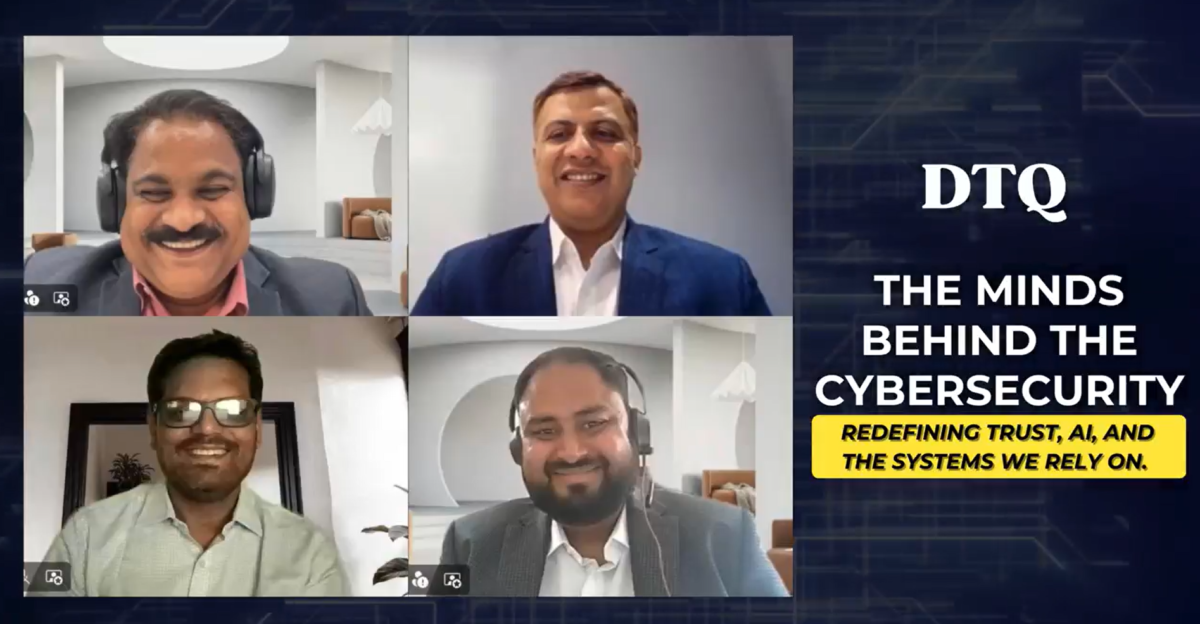
DTQ recently organized an online event—Time To Accountability – Why 2026 is the year the blame game ends— focusing on a critical challenge facing businesses today: who’s responsible when cybersecurity fails. As companies rely more heavily on digital infrastructure, cloud services, and AI systems, the risks have evolved dramatically. Cybersecurity is no longer just an IT problem—it’s now a strategic priority demanding leadership attention.

The discussion kicked off with an insightful observation: organizations typically react to security incidents in one of two ways—either scrambling to fix the problem or pointing fingers. This defensive posture has characterized cybersecurity approaches for years. But speakers argued this mentality falls short in an era of sophisticated cyber threats, high-profile data breaches, and devastating business impacts.

The dialogue proposed a radical rethink—shifting from reactive blame games to continuous, proactive ownership. Under this model, companies must do more than respond swiftly to breaches. They need to explicitly assign responsibilities, integrate security into every layer of operations, and foster collective accountability throughout the organization.

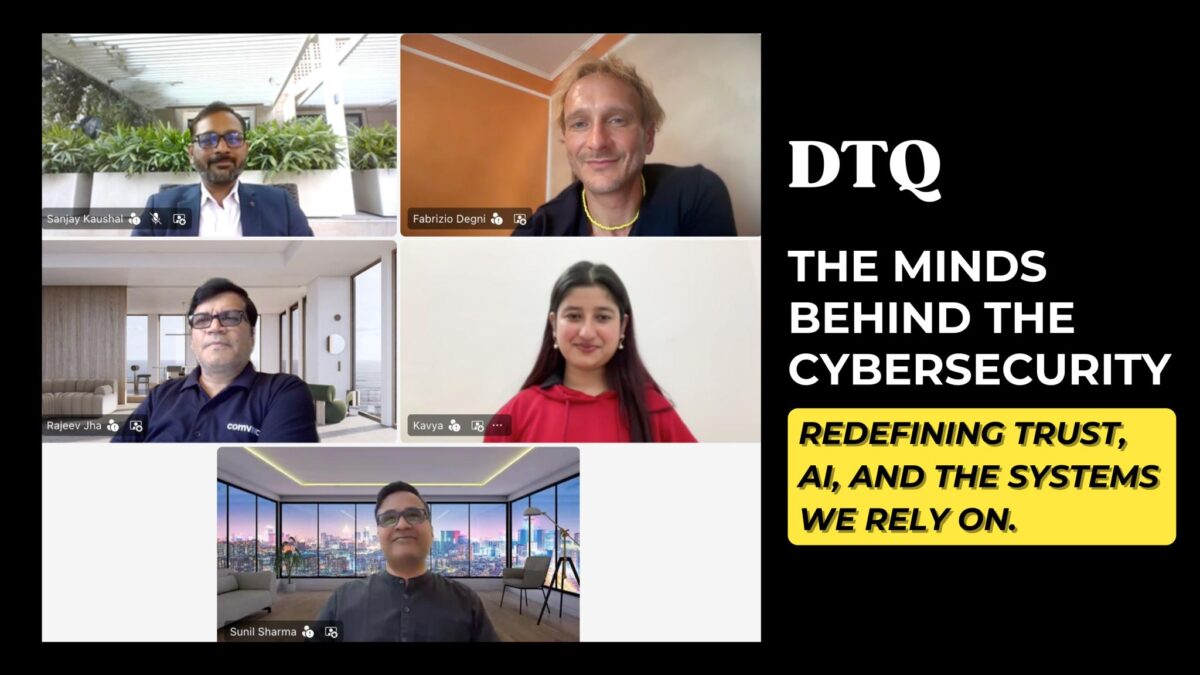
Speakers

  • Dr. Rajeev Jha – Chief Information Security Officer (CISO), Comviva
  • Sunil Sharma – Deputy Chief Information Security Officer (Deputy CISO), Hitachi Digital
  • Sudhanshu Pandey – Cybersecurity Professional, UNISON Insurance Broking Services Pvt Ltd
  • Sanjay Kaushal – Global Chief Information Security Officer (Global CISO), Orbit Techsol

Moderator:

  • Fabrizio Degni – Global Council for Responsible AI (Expert in AI Ethics and Data Governance)

Key Insights and Discussion

  • Cybersecurity Failures Begin Long Before Breaches

A central idea that emerged early in the discussion was that cybersecurity incidents do not originate at the moment of attack. Instead, they are the result of decisions made much earlier within the organization. Breaches are often the final outcome of accumulated risks, ignored warnings, and delayed actions.

The conversation made it clear that focusing only on incident response overlooks the deeper issue. The real problem lies in how risks are identified, prioritized, and addressed before an incident occurs. By the time a breach becomes visible, it is already too late—the failure has already happened at a systemic level.

  • Accountability is Misunderstood as Blame

A recurring theme throughout the session was the misunderstanding of accountability. In many organizations, accountability is treated as a post-incident exercise focused on identifying who is at fault.

However, the discussion challenged this notion by emphasizing that accountability is not about punishment. It is about preparedness and system design. When an incident occurs, the question should not be “Who made the mistake?” but rather “What structures allowed this to happen?”

This shift in perspective moves the focus from individuals to systems, highlighting the importance of building resilient architectures and processes.

  • The Gap Between Compliance and Real Security

The session strongly highlighted the difference between compliance and actual security. Many organizations operate under the assumption that meeting regulatory requirements ensures protection. In reality, compliance often represents only the minimum standard.

Participants discussed how compliance is frequently treated as a checklist activity. Organizations complete required steps, generate reports, and assume they are secure. However, this approach fails to account for real-world threats, evolving attack methods, and internal vulnerabilities.

As a result, organizations may appear compliant while remaining exposed to significant risks. This creates a dangerous illusion of safety that can lead to complacency.

  • Execution and Ownership as Points of Failure

While most organizations intend to implement strong security practices, the breakdown typically occurs during execution. Security frameworks and controls may be defined, but they are not always effectively implemented.

A major contributing factor is the lack of clear ownership. When responsibilities are not clearly assigned, risks tend to remain unaddressed. Teams may assume that someone else is responsible, leading to delays and gaps in action.

The discussion emphasized that while accountability can be shared across teams, ownership must always be clearly defined. Without ownership, there is no follow-through, and without follow-through, security measures fail.

  • Organizational Silos and Misaligned Priorities

Another key issue discussed was the disconnect between different departments. Business teams often focus on growth and revenue, while security teams prioritize risk reduction. This creates a natural tension between speed and protection.

In many cases, business units request exceptions to security controls in order to meet targets or deadlines. These exceptions, while seemingly minor, can accumulate and create significant vulnerabilities.

The session highlighted the need for better alignment between departments. Security should not be seen as a barrier to business but as an enabler of sustainable growth.

  • Leadership as the Driver of Security Culture

Leadership plays a critical role in shaping how cybersecurity is perceived and practiced within an organization. The discussion made it clear that accountability must start at the top.

When leadership treats cybersecurity as a secondary concern, it influences the behavior of the entire organization. Employees are less likely to take security seriously, and compliance becomes a formality rather than a priority.

On the other hand, when leadership actively engages with cybersecurity issues, asks informed questions, and takes ownership of risks, it creates a culture of responsibility. This cultural shift is essential for building a resilient organization.

  • Communication Challenges with Non-Technical Stakeholders

One of the practical challenges highlighted was the difficulty of communicating cybersecurity risks to non-technical stakeholders. Technical teams often struggle to translate complex issues into language that business leaders can understand.

This communication gap leads to poor decision-making. Risks may be underestimated, misunderstood, or ignored altogether. As a result, critical security measures may not receive the support they need.

The discussion emphasized the importance of bridging this gap through education, awareness, and simplified communication. Stakeholders must understand not just the technical details, but the business implications of cybersecurity risks.

  • Low Engagement in Security Awareness

Even when organizations invest in training and awareness programs, engagement remains a challenge. The session highlighted that many employees participate in these sessions only to meet compliance requirements, without actively engaging with the content.

This lack of engagement reduces the effectiveness of training programs and leaves organizations vulnerable to human-related threats such as phishing and social engineering.

Building a strong security culture requires more than just mandatory training—it requires continuous effort, relevance, and active participation.

  • Data Visibility as the Foundation of Security

A fundamental principle discussed during the session was that organizations cannot protect what they cannot see. Data is at the core of cybersecurity, yet many organizations lack a clear understanding of where their data resides and how it is used.

Without proper visibility, security measures become ineffective. Organizations may implement controls, but they cannot ensure protection if they do not know what they are protecting.

Data discovery and mapping were identified as critical first steps in building a strong security framework.

  • Frameworks vs Real-World Preparedness

While frameworks and policies provide structure and guidance, they do not guarantee success. The session emphasized that real-world preparedness requires more than documentation.

Organizations must be ready to respond to incidents in real time. This includes defining roles, conducting drills, and ensuring coordination across teams. Without practice, even well-designed frameworks fail under pressure.

Preparedness is not theoretical—it is operational.

  • AI as Both an Opportunity and a Threat

Artificial intelligence emerged as one of the most significant factors influencing cybersecurity today. The discussion highlighted both its benefits and its risks.

On one hand, AI enhances productivity, automates processes, and improves threat detection. On the other hand, it introduces new vulnerabilities, including advanced phishing attacks and data exposure risks.

The concept of “AI versus AI” reflects the evolving landscape, where both attackers and defenders use AI to gain an advantage. This dynamic creates a continuous cycle of innovation and adaptation.

  • The Challenge of Black Box AI and Accountability

A particularly complex issue discussed was the use of AI systems that are not fully explainable. These “black box” systems make decisions that are difficult to interpret, raising questions about accountability.

If an AI system fails or behaves unpredictably, it becomes unclear who is responsible. This challenges traditional models of governance and risk management.

Organizations must develop strategies to manage these uncertainties, including monitoring AI behavior, setting clear boundaries, and ensuring transparency wherever possible.

  •  Balancing Speed with Security

In a fast-paced business environment, organizations are under pressure to innovate quickly. However, this often leads to compromises in security.

The session emphasized that security should not slow down progress. Instead, it should be integrated into processes from the beginning. By embedding security into development and operations, organizations can achieve both speed and protection.

This balance is essential for long-term success in a competitive and risk-prone environment.

Conclusion

The session provided a comprehensive exploration of cybersecurity accountability, highlighting the need for a shift from reactive practices to proactive, system-driven approaches. It emphasized that accountability is not about assigning blame after an incident but about building resilient systems and cultures that prevent failures.

Key themes included the importance of leadership involvement, the limitations of compliance, the need for clear ownership, and the growing impact of artificial intelligence. The discussion also underscored the importance of communication, collaboration, and continuous preparedness.

Ultimately, the session reinforced that accountability is a shared responsibility. Organizations that embrace this mindset will be better equipped to navigate the complexities of modern cybersecurity and build lasting resilience in an increasingly uncertain digital landscape.

DTQ is a global platform that brings together professionals from diverse industries to share best practices, discuss challenges, and exchange innovative ideas and solutions. It fosters meaningful conversations aimed at strengthening trust in today’s rapidly evolving digital ecosystem. By encouraging collaboration and knowledge sharing, DTQ helps organizations and individuals build more secure, resilient, and accountable systems.

Categories
Data Trust Quotients DTQ Visibility Quotient

The AI Trust Fall: Building Confidence in an Era of Hallucination

Categories
Data Trust Quotients DTQ Visibility Quotient

The AI Trust Fall: Building Confidence in an Era of Hallucination

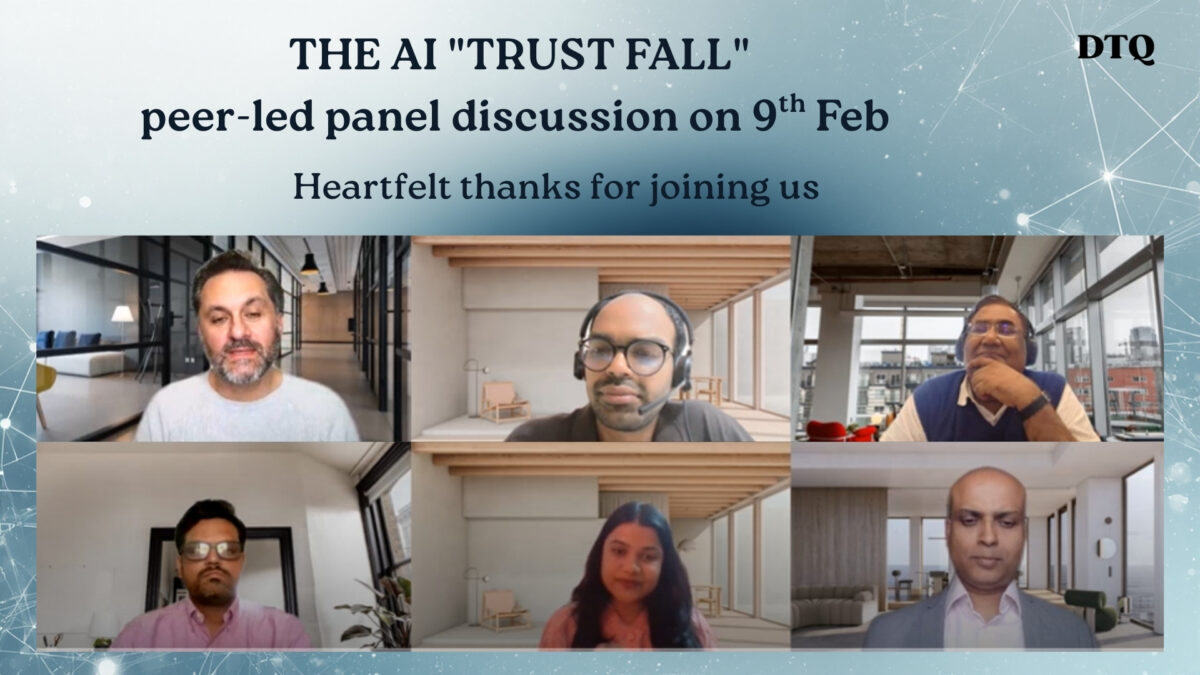
Data Trust Knowledge Session | February 9, 2026

Open Innovator organized a critical knowledge session on AI trust as systems transition from experimental tools to enterprise infrastructure. With tech giants leading trillion-dollar-plus investments in AI, the focus has shifted from model performance to governance, real-world decision-making, and managing a new category of risk: internal intelligence that can hallucinate facts, bypass traditional logic, and sound completely convincing. The session explored how to design systems, governance, and human oversight so that trust is earned, verified, and continuously managed across cybersecurity, telecom infrastructure, healthcare, and enterprise platforms.

Expert Panel

Vijay Banda – Chief Strategy Officer pioneering cognitive security, where monitors must monitor other monitors and validation layers become essential for AI-generated outputs.

Rajat Singh – Executive Vice President bringing telecommunications and 5G expertise where microsecond precision is non-negotiable and errors cascade globally.

Rahul Venkat – Senior Staff Scientist in AI and healthcare, architecting safety nets that leverage AI intelligence without compromising clinical accuracy.

Varij Saurabh – VP and Director of Products for Enterprise Search, with 15-20 years building platforms where probabilistic systems must deliver reliable business foundations.

Moderated by Rudy Shoushany, AI governance expert and founder of BCCM Management and TxDoc. Hosted by Data Trust, a community focused on data privacy, protection, and responsible AI governance.

Cognitive Security: The New Paradigm

Vijay declared that traditional security from 2020 is dead. The era of cognitive security has arrived like having a copilot monitor the pilot’s behavior, not just the plane’s systems. Security used to be deterministic with known anomalies; now it’s probabilistic and unpredictable. You can’t patch a hallucination like you patch a server.

Critical Requirements:

  • Validation layers for all AI-generated content, cross-checked by another agent using golden sources of truth
  • Human oversight checking if outputs are garbage in/garbage out, or worse-confidential data leakage
  • Zero trust of data-never assume AI outputs are correct without verification
  • Training AI systems on correct parameters, acceptable outputs, and inherent biases

The shift: These aren’t insider threats anymore, but probabilistic scenarios where data from AI engines gets used by employees without proper validation.

Telecom Precision: Layered Architecture for Zero Error

Rajat explained why the AI trust question has become urgent. Early social media was a separate dimension from real life. Now AI-generated content directly affects real lives-deepfakes, synthesized datasets submitted to governments, and critical infrastructure decisions.

The Telecom Solution: Upstream vs. Downstream

Systems are divided into two zones:

Upstream (Safe Zone): AI can freely find correlations, test hypotheses, and experiment without affecting live networks.

Downstream (Guarded Zone): Where changes affect physical networks. Only deterministic systems allowed-rule engines, policy makers, closed-loop automation, and mandatory human-in-the-loop.

Core Principle: Observation ≠ Decision ≠ Action. This separation embedded in architecture creates the first step toward near-zero error.

Additional safeguards include digital twins, policy engines, and keeping cognitive systems separate from deterministic ones. The key insight: zero error means zero learning. Managed errors within boundaries drive innovation.

Why Telecom Networks Rarely Crash: Layered architecture with what seems like too many layers but is actually the right amount, preventing cascading failures.

Healthcare: Knowledge Graphs and Moving Goalposts

Rahul acknowledged hallucination exists but noted we’re not yet at a stage of extreme worry. The issue: as AI answers more questions correctly, doctors will eventually start trusting it blindly like they trust traditional software. That’s when problems will emerge.

Healthcare Is Different from Code

You can’t test AI solutions on your body to see if they work. The costs of errors are catastrophically higher than software bugs. Doctors haven’t started extensively using AI for patient care because they don’t have 100% trust—yet.

The Knowledge Graph Moat

The competitive advantage isn’t ChatGPT or the AI model itself—it’s the curated knowledge graph that companies and institutions build as their foundation for accurate answers.

Technical Safeguards:

  • Validation layers
  • LLM-as-judge (another LLM checking if the first is lying)
  • Multiple generation testing (hallucinations produce different explanations each time)
  • Self-consistency checks
  • Mechanistic interpretability (examining network layers)

The Continuous Challenge: The moment you publish a defense technique, AI finds a way to beat it. Like cybersecurity, this is a continuous process, not a one-time solution.

AI Beyond Human Capabilities

Rahul challenged the assumption that all ground truth must come from humans. DeepMind can invent drugs at speeds impossible for humans. AI-guided ultrasounds performed by untrained midwives in rural areas can provide gestational age assessments as accurately as trained professionals, bringing healthcare to underserved communities.

The pragmatic question for clinical-grade AI: Do benefits outweigh risks? Evaluation must go beyond gross statistics to ensure systems work on every subgroup, especially the most marginalized communities.

Enterprise Platforms: Living with Probabilistic Systems

Varij’s philosophy after 15-20 years building AI systems: You have to learn to live with the weakness. Accept that AI is probabilistic, not deterministic. Once you accept this reality, you automatically start thinking about problems where AI can still outperform humans.

The Accuracy Argument

When customers complained about system accuracy, the response was simple: If humans are 80% accurate and the AI system is 95% accurate, you’re still better off with AI.

Look for Scale Opportunities

Choose use cases where scale matters. If you can do 10 cases daily and AI enables 1,000 cases daily with better accuracy, the business value is transformative.

Reframe Problems to Create New Value

Example: Competitors used ethnographers with clipboards spending a week analyzing 6 hours of video for $100,000 reports. The AI solution used thousands of cameras processing video in real-time, integrated with transaction systems, showing complete shopping funnels for physical stores—value impossible with previous systems.

The Product Manager’s Transformed Role

Traditional PM workflow–write user stories, define expectations, create acceptance criteria, hand to testers–is breaking down.

The New Reality:

Model evaluations (evals) have moved from testers to product managers. PMs must now write 50-100 test cases as evaluations, knowing exactly what deserves 100% marks, before testing can begin.

Three Critical Pillars for Reliable Foundations:

1. Data Quality Pipelines – Monitor how data moves into systems, through embeddings, and retrieval processes. Without quality data in a timely manner, AI cannot provide reliable insights.

2. Prompt Engineering – Simply asking systems to use only verified links, not hallucinate, and depend on high-quality sources increases performance 10-15%. Grounding responses in provided data and requiring traceability are essential.

3. Observability and Traceability – If mistakes happen, you must trace where they started and how they reached endpoints. Companies are building LLM observation platforms that score outputs in real-time on completeness, accuracy, precision, and recall.

The shift from deterministic to probabilistic means defining what’s good enough for customers while balancing accuracy, timeliness, cost, and performance parameters.

Non-Negotiable Guardrails

Single Source of Truth – Enterprises must maintain authentic sources of truth with verification mechanisms before AI-generated data reaches employees. Critical elements include verification layers, single source of truth, and data lineage tracking to differentiate artificiality from fact.

NIST AI RMF + ISO 42001 – Start with NIST AI Risk Management Framework to tactically map risks and identify which need prioritizing. Then implement governance using ISO 42001 as the compliance backbone.

Architecture First, Not Model First – Success depends on layered architectures with clear trust boundaries, not on having the smartest AI model.

Success Factors for the Next 3-5 Years

The next decade won’t be won by making AI perfectly truthful. Success belongs to organizations with better system engineers who understand failure, leaders who design trust boundaries, and teams who treat AI as a junior genius rather than an oracle.

What Telecom Deploys: Not intelligence, but responsibility. AI’s role is to amplify human judgment, not replace it. Understanding this prevents operational chaos and enables practical implementation.

AI Will Always Generalize: It will always overfit narratives. Everyone uses ChatGPT or similar tools for context before important sessions—this will continue. Success depends on knowing exactly where AI must not be trusted and making wrong answers as harmless as possible.

The AGI Question and Investment Reality

Panel perspectives on AGI varied from already here in certain forms, to not caring because AI is just a tool, to being far from achieving Nobel Prize-winning scientist level intelligence despite handling mediocre middle-level tasks.

From an investment perspective, AGI timing matters critically for companies like OpenAI. With trillions in commitments to data centers and infrastructure, if AGI isn’t claimed by 2026-2027, a significant market correction is likely when demand fails to match massive supply buildout.

Key Takeaways

1. Cognitive Security Has Replaced Traditional Security – Validation layers, zero trust of AI data, and semantic telemetry are mandatory.

2. Separate Observation from Decision from Action – Layered architecture prevents errors from cascading into mission-critical systems.

3. Knowledge Graphs Are the Real Moat – In healthcare and critical domains, competitive advantage comes from curated knowledge, not the LLM.

4. Accept Probabilistic Reality – Design around AI being 95% accurate vs. humans at 80%, choosing use cases where AI’s scale advantages transform value.

5. PMs Now Own Evaluations – The testing function has moved to product managers who must define what’s good enough in a probabilistic world.

6. Human-in-the-Loop Is Non-Negotiable – Structured intervention at critical decision points, not just oversight.

7. Single Source of Truth – Authentic data sources with verification mechanisms before AI outputs reach employees.

8. Continuous Process, Not One-Time Fix – Like cybersecurity, AI trust requires ongoing vigilance as defenses and attacks evolve.

9. Responsibility Over Intelligence – Deploy systems designed for responsibility and amplifying human judgment, not autonomous decision-making.

10. Better System Engineers Win – Success belongs to those who understand where AI must not be trusted and design boundaries accordingly.

Conclusion

The session revealed a unified perspective: The question isn’t whether AI can be trusted absolutely, but how we architect systems where trust is earned through verification, maintained through continuous monitoring, and bounded by clear human authority.

From cognitive security frameworks to layered telecom architectures, from healthcare knowledge graphs to PM evaluation ownership, the message is consistent: Design for the reality that AI will make mistakes, then ensure those mistakes are caught before they cascade into catastrophic failures.

The AI trust fall isn’t about blindly falling backward hoping AI catches you. It’s about building safety nets first—validation layers, zero trust of data, single sources of truth, human-in-the-loop checkpoints, and organizational structures where responsibility always rests with humans who understand both the power and limitations of their AI tools.

Organizations that thrive won’t have the most advanced AI—they’ll have mastered responsible deployment, treating AI as the junior genius it is, not the oracle we might wish it to be.


This Data Trust Knowledge Session provided essential frameworks for building AI trust in mission-critical environments. Expert panel: Vijay Banda, Rajat Singh, Rahul Venkat, and Varij Saurabh. Moderated by Rudy Shoushany.


Categories
Data Trust Quotients

Why Data Trust & Security Matter in AI

Categories
Data Trust Quotients

Why Data Trust & Security Matter in AI

Artificial intelligence (AI) is no longer a futuristic idea; it is now a part of everyday operations in a variety of sectors, from manufacturing and retail to healthcare and finance. The concerns of data security and trust have become crucial to the appropriate use of AI as businesses use it to boost productivity and creativity. AI runs the danger of undermining stakeholder trust, drawing regulatory attention, and exposing companies to financial and reputational harm in the absence of robust protections and open procedures.

The Foundation of Trust in AI

Confidence in the way data is gathered, handled, and utilized is the first step towards trusting AI. Stakeholders anticipate that AI systems will be morally and technically sound. This entails making sure that decisions are made fairly, minimizing prejudice, and offering openness. When businesses can demonstrate accountability, explain how their models arrive at conclusions, and demonstrate that data is managed appropriately, trust is developed. In this way, trust is just as much about governance and perception as it is about technological precision.

The Imperative of Security

On the other hand, security refers to safeguarding the availability, confidentiality, and integrity of data and models. Because AI systems rely on enormous databases and intricate algorithms that are manipulable, they are particularly vulnerable. While adversarial assaults can purposefully fool models into producing false predictions, breaches can reveal private information. When malicious data is introduced during training, it is known as “model poisoning,” and it has the potential to compromise entire systems. These dangers demonstrate the need for specific security measures for AI that go beyond conventional IT safeguards.

Emerging Risks in AI Ecosystems

Applications of AI confront a variety of hazards. Data breaches are still a persistent risk, especially when it involves sensitive financial or personal data. When datasets are not adequately vetted, bias exploitation may take place, producing unethical or biased results. Adversarial attacks show how easy even sophisticated models can be tricked by manipulating inputs. When taken as a whole, these hazards highlight the necessity of proactive and flexible protections that develop in tandem with AI technologies.

Building a Dual Approach: Trust and Security

Businesses need to take a two-pronged approach, incorporating security and trust into their AI plans. Strict access controls, model hardening against adversarial threats, and encryption of data in transit and at rest are crucial security measures. AI can also be used for security, automating compliance monitoring and reporting and instantly identifying anomalies, fraud, and intrusions.

Transparency and governance are equally crucial. Accountability is ensured by recording decision reasoning, training procedures, and data sources. Giving stakeholders explainability tools enables them to comprehend and verify AI results. Compliance and credibility are strengthened when these procedures are in line with ethical norms and legal requirements, resulting in a positive feedback loop of trust.

Navigating Trade-offs and Challenges

It might be difficult to strike a balance between security and trust. While under-regulation runs the risk of abuse and a decline in public trust, over-regulation may impede innovation. There is a conflict between performance and transparency since complex models, like deep learning, have strong capabilities but are frequently hard to explain. Stronger security measures are necessary to avoid catastrophic breaches and reputational harm, but they necessarily raise operating expenses. As a result, companies need to carefully balance incorporating security and trust into their AI plans without impeding innovation.

The Path Forward

In the end, technological brilliance is not the only way to create reliable AI. It necessitates strong security measures in addition to a dedication to accountability, openness, and ethical alignment. Organizations can cultivate trust among stakeholders by safeguarding both the data and the models, as well as by guaranteeing adherence to changing rules. Successful individuals will not only reduce risks but also acquire a competitive advantage, establishing themselves as pioneers in the ethical and long-term implementation of AI.

Reach out to us at open-innovator@quotients.com or drop us a line to delve into the transformative potential of groundbreaking technologies. We’d love to explore the possibilities with you

Categories
Events

A Powerful Open Innovator Session That Delivered Game-Changing Insights on AI Ethics

Categories
Events

A Powerful Open Innovator Session That Delivered Game-Changing Insights on AI Ethics

In a recent Open Innovator (OI) Session, ethical considerations in artificial intelligence (AI) development and deployment took center stage. The session convened a multidisciplinary panel to tackle the pressing issues of AI bias, accountability, and governance in today’s fast-paced technological environment.

Details of particpants are are follows:

Moderators:

  • Dr. Akvile Ignotaite- Harvard Univ
  • Naman Kothari– NASSCOM COE

Panelists:

  • Dr. Nikolina Ljepava- AUE
  • Dr. Hamza AGLI– AI Expert, KPMG
  • Betania Allo– Harvard Univ, Founder
  • Jakub Bares– Intelligence Startegist, WHO
  • Dr. Akvile Ignotaite– Harvard Univ, Founder

Featured Innovator:

  • Apurv Garg – Ethical AI Innovation Specialist

The discussion underscored the substantial ethical weight that AI decisions hold, especially in sectors such as recruitment and law enforcement, where AI systems are increasingly prevalent. The diverse panel highlighted the importance of fairness and empathy in system design to serve communities equitably.

AI in Healthcare: A Data Diversity Dilemma

Dr. Aquil Ignotate, a healthcare expert, raised concerns about the lack of diversity in AI datasets, particularly in skin health diagnostics. Studies have shown that these AI models are less effective for individuals with darker skin tones, potentially leading to health disparities. This issue exemplifies the broader challenge of ensuring AI systems are representative of the entire population.

Jacob, from the World Health Organization’s generative AI strategy team, contributed by discussing the data integrity challenge posed by many generative AI models. These models, often designed to predict the next word in a sequence, may inadvertently generate false information, emphasizing the need for careful consideration in their creation and deployment.

Ethical AI: A Strategic Advantage

The panelists argued that ethical AI is not merely a compliance concern but a strategic imperative offering competitive advantages. Trustworthy AI systems are crucial for companies and governments aiming to maintain public confidence in AI-integrated public services and smart cities. Ethical practices can lead to customer loyalty, investment attraction, and sustainable innovation.

They suggested that viewing ethical considerations as a framework for success, rather than constraints on innovation, could lead to more thoughtful and beneficial technological deployment.

Rethinking Accountability in AI

The session addressed the limitations of traditional accountability models in the face of complex AI systems. A shift towards distributed accountability, acknowledging the roles of various stakeholders in AI development and deployment, was proposed. This shift involves the establishment of responsible AI offices and cross-functional ethics councils to guide teams in ethical practices and distribute responsibility among data scientists, engineers, product owners, and legal experts.

AI in Education: Transformation over Restriction

The recent controversies surrounding AI tools like ChatGPT in educational settings were addressed. Instead of banning these technologies, the panelists advocated for educational transformation, using AI as a tool to develop critical thinking and lifelong learning skills. They suggested integrating AI into curricula while educating students on its ethical implications and limitations to prepare them for future leadership roles in a world influenced by AI.

From Guidelines to Governance

The speakers highlighted the gap between ethical principles and practical AI deployment. They called for a transition from voluntary guidelines to mandatory regulations, including ethical impact assessments and transparency measures. These regulations, they argued, would not only protect public interest but also foster innovation by establishing clear development frameworks and fostering public trust.

Importance of Localized Governance

The session stressed the need for tailored regulatory approaches that consider local cultural and legal contexts. This nuanced approach ensures that ethical frameworks are both sustainable and effective in specific implementation environments.

Human-AI Synergy

Looking ahead, the panel envisioned a collaborative future where humans focus on strategic decisions and narratives, while AI handles reporting and information dissemination. This relationship requires maintaining human oversight throughout the AI lifecycle to ensure AI systems are designed to defer to human judgment in complex situations that require moral or emotional understanding.

Practical Insights from the Field

A startup founder from Orava shared real-world challenges in AI governance, such as data leaks resulting from unmonitored machine learning libraries. This underscored the necessity for comprehensive data security and compliance frameworks in AI integration.

AI in Banking: A Governance Success Story

The session touched on AI governance in banking, where monitoring technologies are utilized to track data access patterns and ensure compliance with regulations. These systems detect anomalies, such as unusual data retrieval activities, bolstering security frameworks and protecting customers.

Collaborative Innovation: The Path Forward

The OI Session concluded with a call for government and technology leaders to integrate ethical considerations from the outset of AI development. The conversation highlighted that true ethical AI requires collaboration between diverse stakeholders, including technologists, ethicists, policymakers, and communities affected by the technology.

The session provided a roadmap for creating AI systems that perform effectively and promote societal benefit by emphasizing fairness, transparency, accountability, and human dignity. The future of AI, as outlined, is not about choosing between innovation and ethics but rather ensuring that innovation is ethically driven from its inception.

Write to us at Open-Innovator@Quotients.com/ Innovate@Quotients.com to participate and get exclusive insights.