



Categories
DTQ Data Trust Quotients

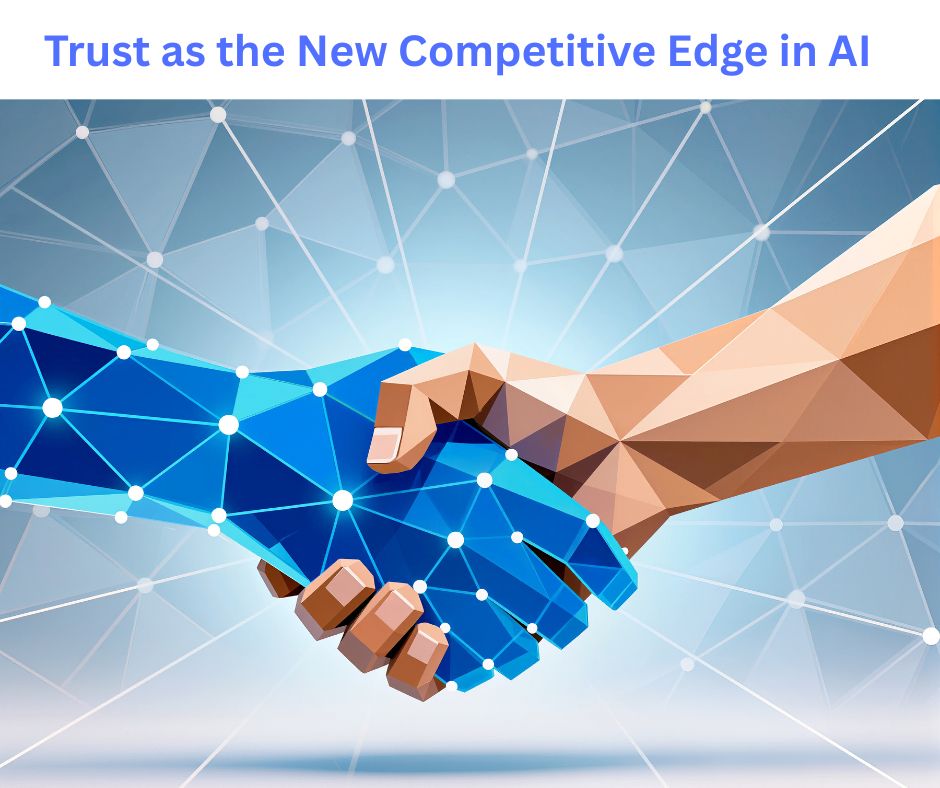
Trust as the New Competitive Edge in AI

Categories
DTQ Data Trust Quotients

Trust as the New Competitive Edge in AI

Artificial Intelligence (AI) has evolved from a futuristic idea to a useful reality, impacting sectors including manufacturing, healthcare, and finance. These systems’ dependence on enormous datasets presents additional difficulties as they grow in size and capacity. The main concern is now whether AI can be trusted rather than whether it can be developed.

Trust is becoming more widely acknowledged as a key differentiator. Businesses are better positioned to draw clients, investors, and regulators when they exhibit safe, open, and moral data practices. Trust sets leaders apart from followers in a world where technological talents are quickly becoming commodities.

Trust serves as a type of capital in the digital economy. Organizations now compete on the legitimacy of their data governance and AI security procedures, just as they used to do on price or quality.

Security-by-Design as a Market Signal

Security-by-design is a crucial aspect of trust. Leading companies incorporate security safeguards at every stage of the AI lifecycle, from data collection and preprocessing to model training and deployment, rather than considering security as an afterthought.

This strategy demonstrates the maturity of the company. It lets stakeholders know that innovation is being pursued responsibly and is protected against abuse and violations. Security-by-design is becoming a need for market leadership in industries like banking, where data breaches can cause serious reputational harm.

One obvious example is federated learning. It lowers risk while preserving analytical capacity by allowing institutions to train models without sharing raw client data. This is a competitive differentiation rather than just a technical protection.

Integrity as Differentiation

Another foundation of trust is data integrity. The dependability of AI models depends on the data they use. The results lose credibility if datasets are tampered with, distorted, or poisoned. Businesses have a clear advantage if they can show provenance and integrity using tools like blockchain, hashing, or audit trails. They may reassure stakeholders that tamper-proof data forms the basis of their AI conclusions. In the healthcare industry, where corrupted data can have a direct impact on patient outcomes, this assurance is especially important. Therefore, integrity is a strategic differentiation as well as a technological prerequisite.

Privacy-Preserving Artificial Intelligence

Privacy is now a competitive advantage rather than just a requirement for compliance. Organizations can provide insights without disclosing raw data thanks to strategies like federated learning, homomorphic encryption, and differential privacy. In industries where data sensitivity is crucial, this enables businesses to provide “insights without intrusion.”

When consumers are assured that their privacy is secure, they are more inclined to interact with AI systems. Additionally, privacy-preserving AI lowers exposure to regulations. Proactively implementing these strategies puts organizations in a better position to adhere to new regulations like the AI Act of the European Union or the Digital Personal Data Protection Act of India.

Transparency as Security

Black-box, opaque AI systems are very dangerous. Organizations find it difficult to gain the trust of investors, consumers, and regulators when they lack transparency. More and more people see transparency as a security measure. Explainable AI guarantees stakeholders, lowers vulnerabilities, and makes auditing easier. It turns accountability from a theoretical concept into a useful defense. Businesses set themselves apart by offering transparent audit trails and decision-making reasoning. “Our predictions are not only accurate but explainable,” they may say with credibility. In sectors where accountability cannot be compromised, this is a clear advantage.

Compliance Across Borders

AI systems frequently function across different regulatory regimes in different regions. The General Data Protection Regulation (GDPR) is enforced in Europe, the California Consumer Privacy Act (CCPA) is enforced in California, and the Digital Personal Data Protection Act (DPDP) was adopted in India. It’s difficult to navigate this patchwork of regulations. Organizations that exhibit cross-border compliance readiness, however, have a distinct advantage. They lower the risk associated with transnational partnerships by becoming preferred partners in global ecosystems. Businesses that can quickly adjust will stand out as dependable global players as data localization requirements and AI trade obstacles become more prevalent.

Resilience Against AI-Specific Threats

Threats like malware and phishing were the main focus of traditional cybersecurity. AI creates new risk categories, such as data leaks, adversarial attacks, and model poisoning.
Leadership is exhibited by organizations that take proactive measures to counter these risks. “Our AI systems are attack-aware and breach-resistant” is one way they might promote resilience as a feature of their product. Because hostile AI attacks could have disastrous results, this capacity is especially important in the defense, financial, and critical infrastructure sectors. Resilience is a competitive differentiator rather than just a technical characteristic.

Trust as a Growth Engine

When security-by-design, integrity, privacy, transparency, compliance, and resilience are coupled, trust becomes a growth engine rather than a defensive measure. Consumers favor trustworthy AI suppliers. Strong governance is rewarded by investors. Proactive businesses are preferred by regulators over reactive ones. Therefore, trust is more than just information security. In the AI era, it is about exhibiting resilience, transparency, and compliance in ways that characterize market leaders.

The Future of Trust Labels

Similar to “AI nutrition facts,” the idea of trust labels is a new trend. These marks attest to the methods utilized for data collection, security, and utilization. Consider an AI solution that comes with a dashboard that shows security audits, bias checks, and privacy safeguards. Such openness may become the norm. Early use of trust labels will set an organization apart. By making trust public, they will turn it from a covert backend function into a significant competitive advantage.

Human Oversight as a Trust Anchor

Trust is relational as well as technological. A lot of businesses are including human supervision into important AI decisions. Stakeholders are reassured by this that people are still responsible. It strengthens trust in results and avoids naive dependence on algorithms. Human oversight is emerging as a key component of trust in industries including healthcare, law, and finance. It emphasizes that AI is a tool, not a replacement for accountability.

Trust Defines Market Leaders

Data security and trust are now essential in the AI era. They serve as the cornerstone of a competitive edge. Businesses will draw clients, investors, and regulators if they exhibit safe, open, and moral AI practices. The market will be dominated by companies who view trust as a differentiator rather than a requirement for compliance. Businesses that turn trust into a growth engine will own the future. In the era of artificial intelligence, trust is power rather than just safety.

Reach out to us at open-innovator@quotients.com or drop us a line to delve into the transformative potential of groundbreaking technologies. We’d love to explore the possibilities with you.


Categories
Events

Open Innovator Virtual Session: Responsible AI Integration in Healthcare

Categories
Events

Open Innovator Virtual Session: Responsible AI Integration in Healthcare

The recent Open Innovator Virtual Session brought together healthcare technology leaders to address a critical question: How can artificial intelligence enhance patient care without compromising the human elements essential to healthcare? Moderated by Suzette Ferreira, the panel featured Michael Dabis, Dr. Chandana Samaranayake, Dr. Ang Yee, and Charles Barton, who collectively emphasized that AI in healthcare is not a plug-and-play solution but a carefully orchestrated process requiring trust, transparency, and unwavering commitment to patient safety.

The Core Message: AI as Support, Not Replacement

The speakers unanimously agreed that AI’s greatest value lies in augmenting human expertise rather than replacing it. In healthcare, where every decision carries profound consequences for human lives, technology must earn trust from both clinicians and patients. Unlike consumer applications where failures cause inconvenience, clinical AI mistakes can result in misdiagnosis, inappropriate treatment, or preventable harm.

Current Reality Check:

  • 63% of healthcare professionals are optimistic about AI
  • 48% of patients do NOT share this optimism – revealing a significant trust gap
  • The fundamental challenge remains unchanged: clinicians are overwhelmed with data and need it transformed into meaningful, actionable intelligence

The TACK Framework: Building Trust in AI Systems

Dr. Chandana Samaranayake introduced the TACK framework as essential for gaining clinician trust:

  • Transparency: Clinicians must understand what data AI uses and how it reaches conclusions. Black-box algorithms are fundamentally incompatible with clinical practice where providers bear legal and ethical responsibility.
  • Accountability: Clear lines of responsibility must be established for AI-assisted decisions, with frameworks for evaluating outcomes and addressing errors.
  • Confidence: AI systems must demonstrate consistent reliability through rigorous validation across diverse patient populations and clinical scenarios.
  • Control: Healthcare professionals must retain ultimate authority over clinical decisions, with the ability to override AI recommendations at any time.

Why AI Systems Fail: Real-World Lessons

The Workflow Integration Problem

Michael Dabis highlighted that the biggest misconception is treating AI as a simple product rather than a complex integration process. Several real-world failures illustrate this:

  • Sepsis prediction systems: Technically brilliant systems that nurses loved during trials but deactivated on night shifts because they required manual data entry, creating more work than they eliminated
  • Alert fatigue: Systems generating too many notifications that overwhelm clinicians and obscure genuinely important insights
  • Radiology AI errors: Speech recognition confusing “ilium” (pelvis bone) with “ileum” (small intestine), leading AI to generate convincing but dangerously wrong reports about intestinal metastasis instead of pelvic metastasis

The Consulting Disaster

Dr. Chandana shared a cautionary tale: A major consulting firm had to refund the Australian government after their AI-generated healthcare report cited publications that didn’t exist. In healthcare, such mistakes don’t just waste money—they can cost lives.

Four Critical Implementation Requirements

1. Workflow Integration

AI must fit INTO clinical workflows, not on top of them. This requires:

  • Co-designing with clinicians from day one
  • Observing how healthcare professionals actually work
  • Ensuring systems add value without creating additional burdens

2. Data Governance

Clean, traceable, validated data is non-negotiable:

  • Source transparency so clinicians know data age and origin
  • Interoperability for holistic patient views
  • Adherence to the principle: garbage in, garbage out

3. Continuous Feedback Loops

  • AI must learn from clinical overrides and corrections
  • Ongoing validation required (supported by FDA’s PCCP guidance)
  • Mechanisms for users to report issues and suggest improvements

4. Cross-Functional Alignment

  • Team agreement on requirements, risk management, and validation criteria
  • Intensive training during deployment, not just online courses
  • Change management principles applied throughout

Patient Safety and Ethical Considerations

Dr. Gary Ang emphasized accountability as going beyond responsibility—it means owning both the solution and the problem. Key concerns include:

Skill Degradation Risk: Over-reliance on AI may erode clinical abilities. Doctors using AI for endoscopy might lose the capacity to detect issues independently when systems fail.

Avoiding Echo Chambers: AI systems must help patients make informed decisions without manipulating behavior or validating delusions, unlike social media algorithms.

Patient-Centered Approach: The patient must always remain at the center, with AI protecting safety rather than prioritizing operational efficiency.

Future Directions: Holistic and Preventive Care

Charles Barton outlined a vision for AI that extends beyond reactive treatment:

The Current Problem: Healthcare data is siloed—no single clinician has end-to-end patient health information spanning sleep, nutrition, physical activity, mental health, and diagnostics.

The Opportunity: 25% of health problems, particularly musculoskeletal and cardiovascular issues affecting 25% of the world’s population, can be prevented through healthy lifestyle interventions supported by AI.

Future Applications:

  • Patient education about procedures, medications, and screening decisions
  • Daily health monitoring instead of reactive treatment
  • Predictive and prescriptive recommendations validated through continuous monitoring
  • Early identification of disease risk years before symptoms appear

Scaling Challenges and Geographic Considerations

Unlike traditional medical devices with predictable inputs and outputs, AI systems are undeterministic and require different scaling approaches:

  • Start with limited, low-risk use cases
  • Expand gradually with continuous validation
  • Recognize that demographics and healthcare issues vary by region—global launches aren’t feasible
  • Prepare organizations for managing AI’s operational complexity

Key Takeaways

For Healthcare Organizations:

  • Treat AI as a process requiring ongoing commitment, not a one-time product purchase
  • Invest in hands-on training and workforce preparation
  • Build data foundations with interoperability in mind
  • Establish clear governance frameworks for accountability and patient safety

For Technology Developers:

  • Spend time in clinical environments understanding actual workflows
  • Design for transparency with explainable AI outputs
  • Enable easy override mechanisms for clinicians
  • Test across diverse populations to avoid amplifying health inequities

For Clinicians:

  • Engage actively in AI development and implementation
  • Maintain clinical reasoning skills alongside AI tools
  • Approach AI suggestions with appropriate professional skepticism
  • Advocate for patient interests above operational efficiency

Conclusion

The Open Innovator Virtual Session made clear that successfully integrating AI into healthcare requires more than technological sophistication. It demands deep respect for clinical workflows, unwavering commitment to patient safety, and genuine collaboration between technologists and healthcare professionals.

The consensus was unequivocal: Fix the foundation first, then build the intelligent layer. Organizations not ready to manage the operational discipline required for AI development and deployment are not ready to deploy AI. The technology is advancing rapidly, but the fundamental principles—earning trust, ensuring safety, and supporting rather than replacing human judgment—remain unchanged.

As healthcare continues its digital transformation, success will depend on preserving what makes healthcare fundamentally human: empathy, intuition, and the sacred responsibility clinicians bear for patient wellbeing. AI that serves these values deserves investment; AI that distracts from them, regardless of sophistication, must be reconsidered.

The future of healthcare will be shaped not by technology alone, but by how wisely we integrate that technology into the profoundly human work of healing and caring for one another.

Reach out to us at open-innovator@quotients.com or drop us a line to delve into the transformative potential of groundbreaking technologies and participate in our events. We’d love to explore the possibilities with you.