




Categories
DTQ Data Trust Quotients

Report: The Last Mile of AI- Why Governance and Trust Are the New ROI in 2026

Categories
DTQ Data Trust Quotients

Report: The Last Mile of AI- Why Governance and Trust Are the New ROI in 2026

The Evolution of the AI Narrative

In the initial gold rush of Generative AI, the global conversation was dominated by three pillars: speed, experimentation, and raw capability. Organizations raced to integrate Large Language Models (LLMs) into their workflows, driven by a “fear of missing out” and the allure of unprecedented productivity gains. However, as we move through 2026, the narrative has fundamentally shifted. The industry has reached a critical inflection point where the novelty of AI has worn off, replaced by a sobering realization of the complexities involved in actual production.

Ashwini Giri, a renowned Architect of Data Trust and Responsible AI, recently led a masterclass titled at DTQ “The Last Mile of AI.” The core question he posed to a room of executives and engineers was simple yet profound: How do we build and deploy AI systems that people can actually trust?

The “last mile” of AI deployment—the transition from a successful laboratory prototype to a reliable, live enterprise system—is where most real-world challenges surface. It is the bridge between a conceptual “cool tool” and a mission-critical business asset. In this virtual masterclass, Giri explored why the path to production is paved with governance, why trust has become the ultimate market differentiator, and how organizations must pivot to survive the transition from AI hype to AI responsibility.

Why Trust Matters: The New Corporate Frontier

We are currently operating under intense AI adoption pressure. Boardrooms, executive committees, and venture capitalists are no longer asking if AI should be integrated, but how fast it can happen. This pressure is driven by the hunt for Return on Investment (ROI). Yet, beneath the surface of this enthusiasm lies a deep-seated fear: the erosion of customer trust.

In the digital economy, trust is not an abstract virtue; it is a tangible asset. It is the differentiator that separates ordinary firms from “blue-chip” organizations. A blue-chip company isn’t defined just by its revenue, but by its reliability and the degree to which it safeguards customer data.

Data integrity serves as the bedrock of this trust. If an AI system hallucinates, leaks sensitive information, or makes biased decisions, the damage to the brand is often irreparable. As Giri notes, organizations are beginning to realize that while models are replaceable, the trust of a customer base, once lost, is nearly impossible to regain.

The Production Paradox: Why AI Projects Fail

To illustrate the gap between expectation and reality, Giri conducted an icebreaker poll asking: “Why do AI projects fail in production?” While many participants initially pointed toward technical hurdles like lack of compute power or poor model accuracy, the definitive answer was weak data quality and governance.

This is the production paradox: we spend millions on sophisticated algorithms, yet the systems fail because of the data they consume. Models are essentially mirrors; they reflect the quality of the input data. Without governance, there is no traceability, no accountability, and no ethical guardrail. Technical limitations are rarely the deal-breaker in 2026; rather, it is the lack of robust processes and oversight that causes projects to collapse at the finish line.

The Current Reality: A Landscape of Jittery Leaders

Despite the billions invested, the statistics regarding AI success remain startling. According to recent McKinsey reports, approximately 80% of AI programs fail to deliver their intended results.

These failures are not just academic; they carry a massive financial burden. Abandoned projects result in losses totaling millions of dollars, leaving ROI expectations unmet and shareholders frustrated. This has created what Giri describes as a “Trust Deficit.” Currently, only 30–35% of business leaders fully trust their data lineage. They lack clarity on:

  • Data Origin: Where did this information come from?
  • Data Flow: How has this data been transformed as it moved through our systems?
  • Integrity: Can we rely on this output to make a multi-million dollar decision?

This uncertainty has left leadership feeling tentative and “jittery.” When a leader cannot explain why an AI arrived at a specific conclusion, they are understandably hesitant to deploy it in high-stakes environments.

The Organizational Response: New Guardians of the Machine

To combat this deficit, a new corporate structure is emerging. We are seeing the rise of specialized leadership roles: the Chief AI Officer (CAIO) and the Chief Trust Officer (CTrO).

These roles are not merely bureaucratic additions; they are the guardians of the “last mile.” Their purpose is to:

  1. Establish Governance Frameworks: Implementing the “rules of the road” for how AI is developed and deployed.
  2. Safeguard Datasets: Ensuring that the fuel for the AI engine is clean, ethical, and legally compliant.
  3. Provide Board-Level Assurance: Translating technical AI metrics into business confidence.
  4. Enable Traceability: Creating systems where every AI-driven decision can be traced back to its source system.

Transparency is becoming a standard feature rather than an afterthought. For example, modern iterations of tools like Microsoft Copilot now prioritize showing the sources for generated responses. This “show your work” approach is essential for building confidence. When a user can see the citation, the AI moves from being a “black box” to a transparent partner.

Key Takeaways: Mastering the Last Mile

The masterclass concluded with several foundational insights that every modern organization must internalize:

  • Trust is the Differentiator: In a world where everyone has access to the same LLMs, the company that can prove its AI is safe and reliable will win the market.
  • The Bottleneck is Human, Not Technical: Data quality and governance are the real hurdles. Solving the math is easy; solving the data lineage is hard.
  • Failure is Visible: Unlike back-office software failures of the past, AI failure is often public and reputationally devastating.
  • Traceability is Mandatory: Board assurance cannot be based on “vibes” or general optimism; it must be based on a documented trail of data.

The “last mile” challenge is ultimately a shift in focus. It is not about how fast you can launch, but about how well you can govern.

Strategic Implications: A Roadmap for the Future

For organizations looking to bridge the gap between experimentation and safe deployment, Giri outlines a strategic roadmap focused on four key pillars:

1. Invest Heavily in Governance

Organizations must build frameworks that prioritize lineage and accountability. This means investing in tools that catalog data, track model versions, and monitor for bias in real-time. Governance should not be viewed as a “brake” on innovation, but as the seatbelt that allows the car to go faster safely.

2. Elevate the Roles of Trust

The Chief AI and Chief Trust Officers must have a seat at the table. They should be empowered to veto projects that do not meet ethical or data-quality standards. Their success should be measured by the organization’s resilience against AI-related risks.

3. Prioritize Data Integrity over Model Complexity

A simple model trained on pristine, high-quality data will almost always outperform a complex model trained on “garbage” data. The focus must shift from chasing the latest parameter counts to perfecting the internal data supply chain.

4. Cultivate a Cultural Shift

The organization must move from “AI Hype”—where the goal is simply to use AI—to “AI Responsibility.” This involves training employees not just on how to use prompts, but on how to critically evaluate AI outputs and understand the ethical implications of the technology.

5. Redefine Success Metrics

ROI remains important, but it is no longer the only metric. Organizations must include Trust Metrics and Governance Compliance in their KPIs. Success should be defined by how many stakeholders feel confident in the system, how transparent the decision-making process is, and how well the organization adheres to emerging global AI regulations.

Conclusion: Doing AI Right

The “last mile” of AI is arguably the most difficult part of the journey. It requires a transition from the creative, “break things” energy of a startup to the disciplined, “protect the asset” mindset of a mature enterprise. As Ashwini Giri emphasized, the goal isn’t just to do AI—it’s to do AI right. By prioritizing governance and trust today, organizations aren’t just protecting themselves from failure; they are building the foundation for the next decade of digital leadership. In 2026 and beyond, the fastest way to the finish line is a safe, governed, and transparent path.

Data Trust Quotients (DTQ) as a strategic ecosystem architect, bridges gaps between industry, startups, and investors. DTQ blends data privacy, governance, and cutting-edge AI to accelerate transformative breakthroughs in different domains.


Categories
DTQ Data Trust Quotients Events

Report: Scaling Data Veracity to Combat AI Model Poisoning

Categories
DTQ Data Trust Quotients Events

Report: Scaling Data Veracity to Combat AI Model Poisoning

Data Trust Quotient (DTQ) Panel Report | April 20, 2026

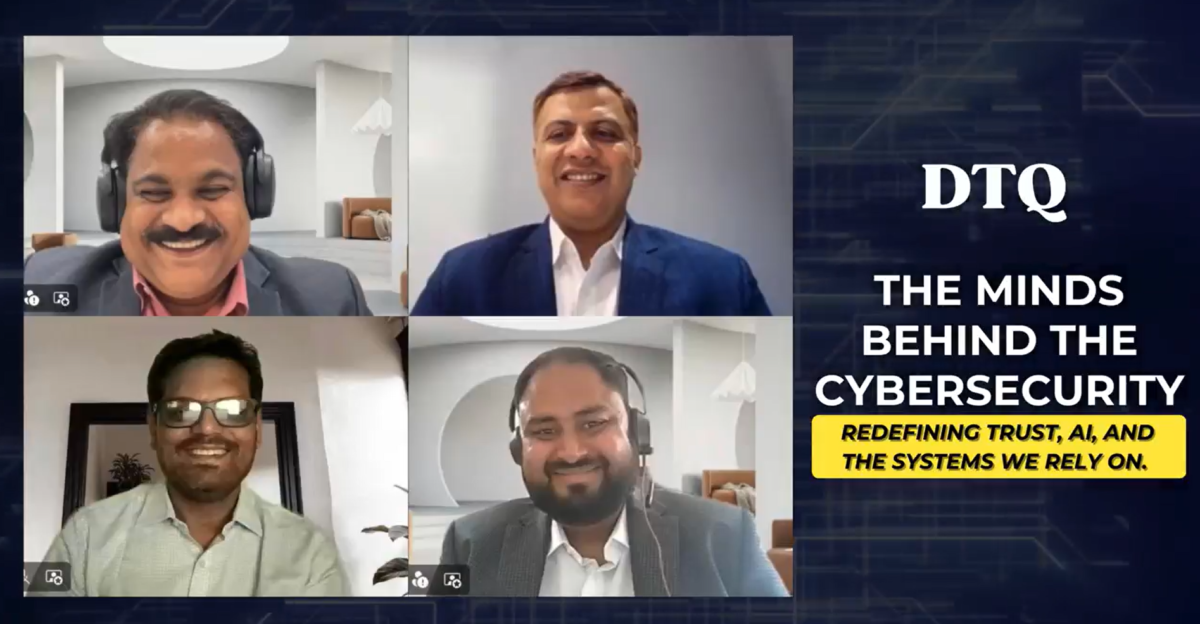
Data Trust Quotient (DTQ) convened a critical panel on April 20, 2026, addressing one of the most pressing challenges in artificial intelligence: ensuring data veracity to combat AI model poisoning. As AI systems increasingly influence critical decisions across industries, the integrity of data feeding these models has become paramount. Poisoned or compromised data can quietly infiltrate systems, leading to biased, misleading, or even dangerous outcomes. This virtual session brought together experts from compliance, cybersecurity, governance, and risk management to explore accountability frameworks, governance evolution, and practical strategies for building trustworthy AI systems at scale.

Expert Panel

Prem Kumar, ACMA, CGMA, CFE, CACM – Head of Ethics and Compliance, bringing expertise in regulatory accountability and ethical frameworks for AI governance.

Subhashish Chandra Saha – Senior GRC Consultant with 16+ years of expertise in Governance, Risk, and Compliance (GRC) and cybersecurity, specializing in translating AI risks into business impact.

Rajesh T R – Director of Cyber Security & Resilience, focusing on emerging threat landscapes where data itself becomes the attack surface.

Vijay Banda – Executive Chairman & Chief Security Officer, providing strategic perspective on organizational accountability and security architecture.


The Fundamental Challenge: Data Veracity in AI Systems

AI models are only as reliable as the data they learn from. The panel emphasized that poisoned data leads to outcomes that are not only inaccurate but potentially harmful. Unlike traditional system failures that announce themselves loudly, data poisoning creeps in silently, making detection extraordinarily difficult.

The Critical Oversight: Organizations focus extensively on building smarter models while neglecting the integrity of data feeding them. This oversight creates vulnerabilities that adversaries can exploit with devastating effect.

Key Realities:

  • Data poisoning misleads AI into producing false or biased results
  • Issues often remain undetected until they cause significant harm
  • Ensuring veracity requires proactive measures rather than reactive fixes
  • The damage compounds silently before manifestation

Layered Accountability: Who Bears Responsibility?

Prem Kumar addressed the complex web of accountability in AI systems, explaining that responsibility is distributed across multiple layers, but regulators ultimately hold decision-makers accountable regardless of technical delegation.

The Accountability Hierarchy

Developers: Responsible for secure engineering, rigorous validation, and continuous monitoring of model behavior.

Businesses: Must ensure secure data sources, define operational controls, and implement poisoning prevention mechanisms.

Leadership: Bears non-delegable accountability. Regulators focus scrutiny on decision rights and executive responsibility regardless of technical complexity.

Chain of Custody: The Evidence Standard

Maintaining traceability of data from source to deployment is critical. Just as digital evidence in legal proceedings requires an unbroken chain of custody, AI data must be validated and protected throughout its entire lifecycle. Any break in this chain compromises the reliability of everything downstream.


Continuous Data Integrity Assurance: Beyond Incident Response

Traditional compliance models rely on incident-based detection—waiting for something to break before responding. AI requires a fundamentally different approach: continuous assurance.

Prem Kumar emphasized the critical importance of real-time data observability and avoiding self-learning environments without rigorous validation gates.

Essential Practices

Data Lineage/Provenance: Track origins, validation checkpoints, and processing transformations. Every data point must have a documented journey.

Validation Layers: Implement checks during both training stages and output stages. One layer is insufficient—defense in depth applies to data integrity.

Segregated Learning Environments: Prevent direct retraining from user-generated data without human review. Self-learning without oversight invites systematic corruption.

The Self-Learning Danger

Self-learning environments can ignore subtle red flags, allowing systematic risks to compound invisibly. Validation layers are essential to prevent false negatives and ensure trustworthy outputs. The convenience of automated learning must never override the necessity of verification.


The Seismic Shift: Data as the New Attack Surface

Rajesh T R highlighted a fundamental transformation in cybersecurity: the attack surface is now the data itself, not just infrastructure and endpoints. Traditional defenses excel at protecting networks and systems, but AI introduces entirely new vulnerability categories.

Emerging Threat Categories

Data Poisoning: Corrupting training data at source or during processing to manipulate model behavior.

Model Inversion: Extracting sensitive information from trained models by reverse-engineering learned patterns.

Adversarial Inputs: Exploiting vulnerabilities in training data to create targeted model failures.

The Scale of the Problem

Alarming Statistics:

  • Studies show approximately 70% of ML models suffer from undetected data corruption in production environments
  • Only 20-25% of firms audit AI pipelines end-to-end, leaving the majority vulnerable to silent compromise

Regulatory Blind Spots

Frameworks like the EU AI Act emphasize data lineage requirements, but many organizations fail to operationalize these mandates. Rajesh stressed the urgent need for data resiliency frameworks encompassing:

  • Poisoning detection mechanisms
  • Federated learning approaches
  • Differential privacy implementations
  • Continuous integrity monitoring

The gap between regulatory intention and organizational implementation remains dangerously wide.


Governance Evolution: Translating AI Risks to Business Impact

Subhashish Chandra Saha discussed how CISOs must bridge the gap between technical AI risks and business risks that boards understand. Organizations currently approach AI cautiously, experimenting with small models rather than large-scale deployments, reflecting the still-evolving nature of AI governance maturity.

Governance System Requirements

Secure Data at Source: Ensure integrity at ingestion point—poisoned data entering the system cannot be fully remediated downstream.

Lifecycle Coverage: Monitor data continuously from ingestion through storage, processing, training, and deployment.

Statistical Tools: Measure model behavior against established tolerance levels. Deviations signal potential poisoning.

Data Versioning: Enable traceability and root cause analysis when issues arise. Without versioning, determining when and how poisoning occurred becomes impossible.

Risk Translation Framework

AI risks must be quantified in terms of business impact—specifically financial losses, regulatory penalties, and reputational damage. Integrating these risks into existing GRC (Governance, Risk, Compliance) frameworks allows organizations to prioritize controls based on potential dollar impact rather than abstract technical concerns.

The Translation: “Model poisoning risk” becomes “potential $X million revenue loss from fraudulent transactions the poisoned model fails to detect.” This language boards understand and act upon.


The Governance Lag: Frameworks Behind Threats

Prem Kumar raised critical concerns about governance frameworks lagging dangerously behind evolving threats. Fraudsters and adversaries adapt with machine speed, while governance models remain frustratingly static.

Core Challenges

Document-Centric vs. Decision-Centric: Governance models focus on documentation compliance rather than decision accountability. This mismatch allows poor decisions to hide behind compliant paperwork.

Reconstruction vs. Patching: AI risks require reconstructing system behavior to understand how poisoning occurred, not just applying patches. Root cause analysis becomes exponentially more complex.

Invisible Threats: Current frameworks evolved to address visible breaches and failures. Data poisoning operates invisibly, making traditional governance inadequate.

Required Evolution

Governance must evolve from document-centric to decision-centric accountability. This shift ensures that leadership decisions, not just documentation completeness, face scrutiny. The question changes from “Do we have the right policies?” to “Did we make the right decisions, and can we prove it?”


Practical Recommendations: Building Resilient AI Systems

The panel offered actionable strategies for organizations to implement immediately:

1. Implement Real-Time Data Observability

Replace periodic audits with continuous monitoring. By the time a quarterly audit discovers poisoning, months of corrupted outputs have already caused damage.

2. Multi-Layer Validation

Implement checks at both training stages and output stages. Single-layer validation creates single points of failure. Defense in depth applies to data integrity as much as network security.

3. Segregated Learning Environments

Avoid retraining directly from user-generated data without rigorous review. Self-learning convenience cannot override verification necessity. Human oversight gates remain essential.

4. Data Resiliency Frameworks

Embed poisoning detection, federated learning, and differential privacy into architectural design from day one. Retrofitting resilience after deployment is exponentially more difficult and expensive.

5. Governance Evolution

Shift from document-centric compliance to decision-centric accountability. Document that decisions were made correctly, not just that policies exist.

6. Budget and Training Investment

Allocate resources for upskilling teams on AI-specific risks and deploy advanced monitoring tools. Traditional security training is insufficient for AI-era threats.


Conclusion: Continuous Responsibility Across Organizations

The DTQ panel underscored that combating AI model poisoning requires a multi-layered approach combining technical safeguards, governance evolution, and leadership accountability at every level.

Data veracity is not a one-time task but a continuous responsibility spanning the entire organization. The challenge scales with deployment—what works for pilot projects fails at production scale without architectural resilience built in from inception.

Critical Imperatives:

  • Scale defenses to match machine-speed threats
  • Embed resilience into AI systems architecturally, not as afterthoughts
  • Evolve governance from documentation to decision accountability
  • Translate technical risks into business impact language
  • Maintain continuous, not periodic, integrity assurance

As AI systems increasingly influence critical decisions affecting millions of lives and billions of dollars, the integrity of data feeding these systems cannot be treated as a technical afterthought. It must be recognized as the fundamental foundation upon which AI trust is built—or catastrophically lost.

Organizations that master data veracity will lead in AI deployment. Those that neglect it will face not just competitive disadvantage but existential risk as poisoned models produce compounding failures at machine speed and scale.


This Data Trust Quotient panel provided essential frameworks for scaling data veracity and combating AI model poisoning. Expert panel: Prem Kumar (Ethics and Compliance), Subhashish Chandra Saha (GRC Consultant), Rajesh T R (Cyber Security & Resilience), and Vijay Banda (CSO).