



Categories
Applied Innovation Healthtech Uncategorized

Self-Balancing Exoskeletons: The Convergence of Artificial intelligence, Robotics, and Biomechanics

Categories
Applied Innovation Healthtech Uncategorized

Self-Balancing Exoskeletons: The Convergence of Artificial intelligence, Robotics, and Biomechanics

Self-balancing exoskeletons and humanoid robots are two innovative technologies that are revolutionizing our understanding of human mobility and automation. These technologies are the result of the convergence of artificial intelligence, robotics, and biomechanics. These developments are the epitome of contemporary engineering, providing previously unheard-of solutions for people with mobility issues while also transforming industrial automation.

Understanding Self-Balancing Exoskeletons

Self-balancing exoskeletons are advanced wearable robotic devices designed to help people with spinal cord injuries, lower limb limitations, or those undergoing rehabilitation regain their mobility. These gadgets differ from conventional mobility aids in that they may keep users balanced on their own without the assistance of walkers or crutches.

These amazing gadgets offer a paradigm change in assistive technology by enabling hands-free, upright movement both indoors and outdoors. These exoskeletons, which are driven by sophisticated artificial intelligence and precise engineering, become an extension of the human body by encircling the user’s lower body with safe fixtures and straps.

The Technology Behind the Magic

The complex component integration of self-balancing exoskeletons is what gives them their sophistication. 

Actuators and Motors: The muscular system of these devices is made up of actuators and motors, which are positioned at the hips, knees, and ankles to power movement and mimic the normal gait patterns of humans. These electric motors produce smooth, organic walking motions in response to directions from AI systems.

Advanced Sensor Networks: With high-frequency sensors that continually track user posture, joint postures, and ambient factors, advanced sensor networks act as the nervous system. This real-time data collecting allows for quick modifications to maximize mobility and preserve balance.

Artificial Intelligence and Control Algorithms: The operation’s brain is represented by control algorithms and artificial intelligence. To maintain dynamic stability, these systems make use of feedback control techniques like Partial Hybrid Zero Dynamics and machine learning. By choosing safe and effective gait patterns and adjusting for changes in the user’s center of mass, the AI responds to user intent.

Power Management Systems: Large-capacity batteries that are intended for prolonged use—typically offering many hours of continuous operation—are a component of power management systems. This guarantees that people may go about their everyday lives without worrying about running out of electricity.

Intuitive User Interfaces: Users with different levels of technical skill can utilize the technology thanks to intuitive user interfaces, which enable gesture-based instructions or therapist-programmed walking, standing, or rehabilitative exercise programs.

Clinical Applications and Personal Use

Exoskeletons with self-balancing capabilities have found use in both personal and medical contexts. For gait training and recovery after strokes or spinal cord injuries, these devices are effective aids in hospitals and rehabilitation facilities. Healthcare practitioners may keep an eye on patients’ development and modify settings for the best possible treatment results in the controlled setting.

The shift in assistive technology toward personal usage marks an important turning point. Individualized personal exoskeletons are being developed by companies to facilitate a variety of everyday tasks in the community and at home. A new age of independence for those with severe mobility disabilities is being ushered in by the shift from clinical tools to personal mobility solutions.

The Future of Human Machine Integration

A new paradigm in human-machine integration is emerging as self-balancing exoskeleton robots continue to advance. These technologies are more than simply engineering marvels; they are a manifestation of our shared goal of improving human potential and establishing more accessible, inclusive spaces.

New avenues for automation, help, and rehabilitation are being made possible by the confluence of biomechanics, robotics, and artificial intelligence. These technologies have the potential to drastically alter our approach to industrial automation and mobility issues as they develop and become more widely available.

As these technologies develop further, there are exciting prospects for the future, including the possibility of far more advanced, useful, and intuitive applications that will increase human potential and independence.

Reach out to us at open-innovator@quotients.com or drop us a line to delve into the transformative potential of groundbreaking technologies. We’d love to explore the possibilities with you


Categories
Applied Innovation Retail

From Chatbots to Humanoids: A Look at the Diverse World of Virtual Beings

Categories
Applied Innovation Retail

From Chatbots to Humanoids: A Look at the Diverse World of Virtual Beings

A Virtual Being is a conversational avatar intended for lifelike human interaction driven by AI. An avatar is a digital representation of a person in a virtual environment used for communication or self-expression. Virtual beings, on the other hand, rely on cutting-edge technology like AI, NLP, and ML and are more complicated creatures created to interact with people in a lifelike manner. Even though both involve developing a digital image of a person, virtual beings are far more advanced and have a wider range of practical uses.

Virtual beings can be used for a range of tasks, including companionship, customer service, and entertainment. The capability of virtual entities to converse with humans in normal language is one of their distinguishing characteristics. They can appear in a variety of ways, such as animated characters on a screen or as humanoid robots. Additionally, they can be tailored to fit particular requirements and preferences by changing things like age, gender, and personality. Virtual beings can be endowed with a variety of different technologies, like facial recognition, emotion detection, and gesture recognition, in addition to their conversational skills. This enables individuals to react to non-verbal cues and engage in more subtle interactions with people.

Examples of Virtual Beings

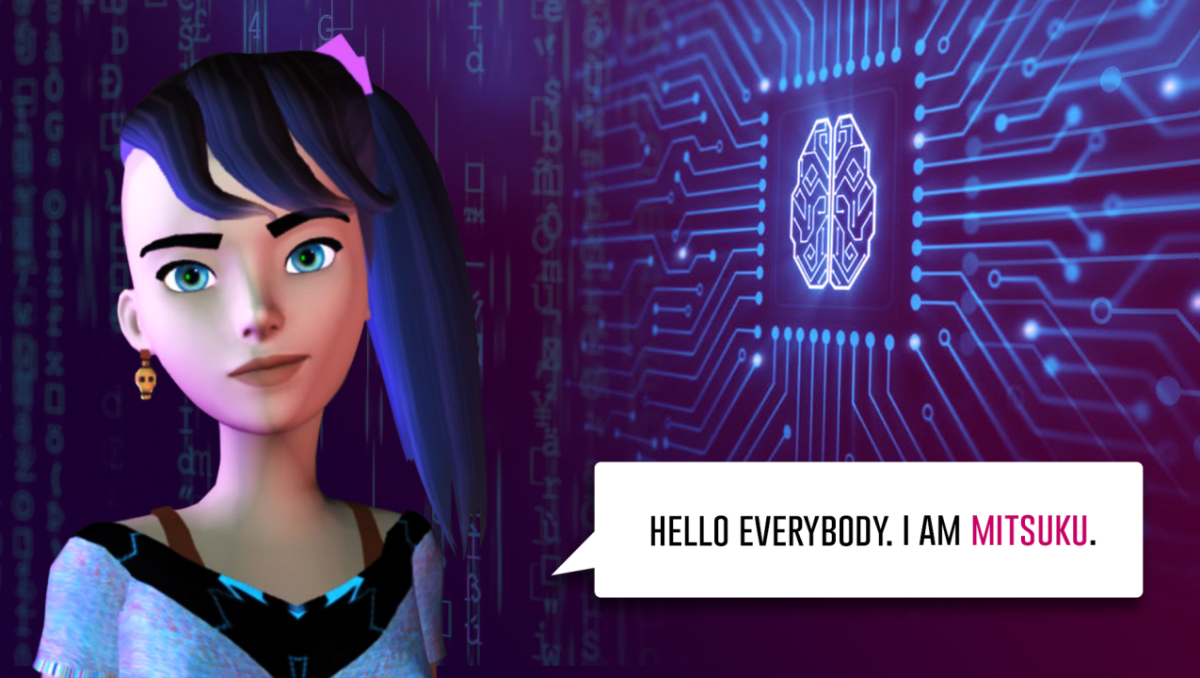
Chatbots and realistic humanoid robots are only two examples of increasingly common virtual entities. Mitsuku, a chatbot created by Steve Worswick, has received recognition for its capacity to carry on frank discussions with people. Another chatbot that adapts its replies based on human input is Replika. Magic Leap’s AI-driven chatbot Mica employs spatial computing to provide an immersive experience. Hanson Robotics created Sophia, a humanoid robot that can replicate facial expressions and have casual conversations with people. Last but not least, Soul Machines’ AI-powered virtual Zoe has been deployed in customer service applications and can communicate authentically with people.

Technologies Used in Virtual Beings

Virtual beings are made possible through a combination of several technologies, including artificial intelligence (AI), natural language processing (NLP), computer graphics, and machine learning (ML). AI forms the foundation of virtual beings, enabling them to understand and respond to human input in a natural and engaging way. NLP is used to teach virtual beings to understand and interpret human language, from casual speech to formal language. Computer graphics play an essential role in creating the visual representation of virtual beings, including their appearance and movements. ML algorithms train virtual beings to recognize patterns and make predictions based on large datasets of information, such as language or image data. Augmented reality (AR) and virtual reality (VR) technologies can be used to create immersive experiences with virtual beings, overlaying virtual objects onto the real world or creating entirely virtual environments for users to explore. As these technologies continue to evolve and improve, virtual beings will become even more advanced and capable, opening up new possibilities and applications in various industries

Natural language processing (NLP), machine learning (ML), and computer graphics are some of the technologies used to program virtual entities. The construction of a 3D model or avatar that will serve as the virtual being’s representation is usually the first step in the programming process for virtual beings. This may entail creating the avatar’s physical attributes, such as its look, attire, and range of motion. Next, natural language processing is used to give the virtual being the ability to comprehend and react to human input. For the virtual entity to comprehend and provide natural language replies, extensive linguistic training is required.

The market for Virtual Beings:

In a number of sectors, including healthcare, education, and entertainment, virtual beings are becoming more and more common. They provide a number of advantages, including scalability, personalization, and availability around the clock.

The market for virtual beings is expected to grow significantly in the coming years. According to a report by MarketsandMarkets, the global virtual and augmented reality market, which includes virtual beings, is projected to reach USD 125.32 billion by 2026, with a compound annual growth rate (CAGR) of 43.8% from 2021 to 2026.

The use of virtual beings is becoming increasingly popular in a range of industries, including healthcare, education, entertainment, and customer service. In the healthcare industry, virtual beings are being used to provide patient support and therapy, while in education, they are being used for virtual tutoring and training.

In the entertainment industry, virtual beings are being used for gaming and virtual experiences, while in customer service, they are being used to provide personalized assistance and support. The COVID-19 pandemic has also accelerated the adoption of virtual beings, as more companies and organizations look for ways to interact with customers and users remotely.

As virtual beings become more advanced and capable, they are likely to be used in even more industries and applications. For example, virtual beings could be used in manufacturing and industrial settings to improve productivity and safety, or in the automotive industry to provide virtual driving assistants.


Overall, the market for virtual beings is expected to continue growing as more companies and organizations look for ways to leverage AI and virtual technologies to improve customer experiences and streamline operations.

Virtual Beings in the Clothing Industry :

Virtual beings can be used in the clothing industry in a number of ways, including virtual try-on experiences, personalized styling, and virtual assistants. One of the most common applications of virtual beings in the clothing industry is virtual try-on experiences. These experiences allow customers to virtually try on clothing items and see how they would look on them before making a purchase. This can be done using augmented reality (AR) or virtual reality (VR) technology, which creates a realistic virtual representation of the clothing item on the customer’s body.

Another use of virtual beings in the clothing industry is personalized styling. Virtual beings can use data about the customer’s body type, style preferences, and past purchases to provide personalized recommendations for clothing items. This can be done through a chatbot or voice assistant that interacts with the customer and offers suggestions based on their input. Virtual assistants can also be used to help customers navigate the online shopping experience. These assistants can answer customer questions, provide product recommendations, and help with checkout and payment processes. They can be powered by AI and NLP technology to provide a natural language conversation experience.

Overall, virtual beings offer a range of opportunities for the clothing industry to enhance the customer experience, increase sales, and improve customer satisfaction. However, the ethical and social ramifications of virtual creatures, such as how they could affect human relationships and how they might be abused, are also a source of worry. It’s important to ensure that these technologies are used in a way that is ethical, transparent, and respects customer privacy.

Please write to us at open-innovator@quotients.com to learn more about Virtual Beings and startups working on its diverse use cases.