



Categories
Applied Innovation

Academia-Industry Synergy: The Driving Force Behind AI’s Innovative Strides

Categories
Applied Innovation

Academia-Industry Synergy: The Driving Force Behind AI’s Innovative Strides

Imagine a worldwide setting where the most eminent academic brains combine with the vast resources of business titans to address society’s most urgent issues. The growing partnerships in the field of artificial intelligence (AI) demonstrate that this is not a futuristic idea but rather a current reality. These strategic alliances serve as the catalyst for the transformation of theoretical advances in AI into tangible, significant solutions that permeate and improve our day-to-day existence.

The Synergistic Union of Research Endeavors and Industrial Prowess

These kinds of partnerships are based on collaborative research projects between industry and academics. Academic knowledge and industry application are intertwined to permit accomplishments that would be impossible on their own. An excellent illustration of this is the collaboration between Google Brain and Stanford University, which has improved human-technology interaction by producing impressive advancements in computer vision and natural language processing (NLP).

Furthermore, the conversion of AI research into useful, real-world applications is greatly aided by application-driven funds. Pfizer’s calculated investments in AI research during the COVID-19 epidemic greatly accelerated the development of vaccines, highlighting the value of these funding in bridging the gap between academia and the fast-paced, results-driven business world.

Technology Transfer Mechanisms: The Nexus Between Theory and Execution

If AI has to successfully go from the realm of scholarly research to the business sector in order to reach its full potential, systems for technology transfer are important. The conversion of intangible intellectual ideas into commercially viable goods is made possible via Knowledge Transfer Partnerships (KTPs). The effective adaptation of MIT’s work on predictive analytics for student retention to improve business training programs is a noteworthy example.

The Delicate Equilibrium: Harmonizing Divergent Intellectual Mindsets

Reconciling the exploratory nature of academic research with the industry’s demand for quick, useful results is one of the main hurdles in these cooperative initiatives.

Agreements pertaining to intellectual property (IP) are essential to these partnerships because they guarantee that innovation may flourish without interference. Stanford’s strategy for partnering on adaptive learning platforms is a prime example of how strong intellectual property frameworks are essential to building mutually beneficial alliances.

Notable Achievements: The Tangible Fruits of Synergy

Let’s look at some noteworthy achievements that have resulted from these mutually beneficial relationships:

Stanford University with Google Brain: Their combined efforts have greatly improved computer vision and natural language processing (NLP), as demonstrated by Google Translate’s sophisticated features.

Pfizer’s Partnerships with Tech Institutions: Pfizer has transformed the pharmaceutical sector by utilizing AI, most notably by speeding up the creation of the COVID-19 vaccine.

Siemens’ Virtual Innovation Centers: By using AI technologies, these hubs have demonstrated the significant influence of predictive maintenance by reducing production downtime by an astounding 30%.

Addressing Challenges: Transparency and Data Confidentiality

These partnerships’ human component entails striking a balance between industry secrecy and academic transparency. These problems can be lessened, though, by multidisciplinary teams skilled at fusing the two cultures and by formal IP agreements. Federated learning, which is used in delicate healthcare partnerships, serves as an example of how data analysis may be done without sacrificing security.

The Essence of Prosperous Partnerships

Congruent incentives, flexible structures, and reciprocal trust are essential elements of successful coalitions. With these components in place and academics and industry working together, the ideal conditions are created for AI innovation to flourish. We can fully utilize AI’s potential and turn scholarly discoveries into real advantages by cultivating and expanding these strategic alliances.

Reach out to us at open-innovator@quotients.com or drop us a line to delve into the transformative potential of groundbreaking technologies. We’d love to explore the possibilities with you.

Categories
Events

A Powerful Open Innovator Session That Delivered Game-Changing Insights on AI Ethics

Categories
Events

A Powerful Open Innovator Session That Delivered Game-Changing Insights on AI Ethics

In a recent Open Innovator (OI) Session, ethical considerations in artificial intelligence (AI) development and deployment took center stage. The session convened a multidisciplinary panel to tackle the pressing issues of AI bias, accountability, and governance in today’s fast-paced technological environment.

Details of particpants are are follows:

Moderators:

  • Dr. Akvile Ignotaite- Harvard Univ
  • Naman Kothari– NASSCOM COE

Panelists:

  • Dr. Nikolina Ljepava- AUE
  • Dr. Hamza AGLI– AI Expert, KPMG
  • Betania Allo– Harvard Univ, Founder
  • Jakub Bares– Intelligence Startegist, WHO
  • Dr. Akvile Ignotaite– Harvard Univ, Founder

Featured Innovator:

  • Apurv Garg – Ethical AI Innovation Specialist

The discussion underscored the substantial ethical weight that AI decisions hold, especially in sectors such as recruitment and law enforcement, where AI systems are increasingly prevalent. The diverse panel highlighted the importance of fairness and empathy in system design to serve communities equitably.

AI in Healthcare: A Data Diversity Dilemma

Dr. Aquil Ignotate, a healthcare expert, raised concerns about the lack of diversity in AI datasets, particularly in skin health diagnostics. Studies have shown that these AI models are less effective for individuals with darker skin tones, potentially leading to health disparities. This issue exemplifies the broader challenge of ensuring AI systems are representative of the entire population.

Jacob, from the World Health Organization’s generative AI strategy team, contributed by discussing the data integrity challenge posed by many generative AI models. These models, often designed to predict the next word in a sequence, may inadvertently generate false information, emphasizing the need for careful consideration in their creation and deployment.

Ethical AI: A Strategic Advantage

The panelists argued that ethical AI is not merely a compliance concern but a strategic imperative offering competitive advantages. Trustworthy AI systems are crucial for companies and governments aiming to maintain public confidence in AI-integrated public services and smart cities. Ethical practices can lead to customer loyalty, investment attraction, and sustainable innovation.

They suggested that viewing ethical considerations as a framework for success, rather than constraints on innovation, could lead to more thoughtful and beneficial technological deployment.

Rethinking Accountability in AI

The session addressed the limitations of traditional accountability models in the face of complex AI systems. A shift towards distributed accountability, acknowledging the roles of various stakeholders in AI development and deployment, was proposed. This shift involves the establishment of responsible AI offices and cross-functional ethics councils to guide teams in ethical practices and distribute responsibility among data scientists, engineers, product owners, and legal experts.

AI in Education: Transformation over Restriction

The recent controversies surrounding AI tools like ChatGPT in educational settings were addressed. Instead of banning these technologies, the panelists advocated for educational transformation, using AI as a tool to develop critical thinking and lifelong learning skills. They suggested integrating AI into curricula while educating students on its ethical implications and limitations to prepare them for future leadership roles in a world influenced by AI.

From Guidelines to Governance

The speakers highlighted the gap between ethical principles and practical AI deployment. They called for a transition from voluntary guidelines to mandatory regulations, including ethical impact assessments and transparency measures. These regulations, they argued, would not only protect public interest but also foster innovation by establishing clear development frameworks and fostering public trust.

Importance of Localized Governance

The session stressed the need for tailored regulatory approaches that consider local cultural and legal contexts. This nuanced approach ensures that ethical frameworks are both sustainable and effective in specific implementation environments.

Human-AI Synergy

Looking ahead, the panel envisioned a collaborative future where humans focus on strategic decisions and narratives, while AI handles reporting and information dissemination. This relationship requires maintaining human oversight throughout the AI lifecycle to ensure AI systems are designed to defer to human judgment in complex situations that require moral or emotional understanding.

Practical Insights from the Field

A startup founder from Orava shared real-world challenges in AI governance, such as data leaks resulting from unmonitored machine learning libraries. This underscored the necessity for comprehensive data security and compliance frameworks in AI integration.

AI in Banking: A Governance Success Story

The session touched on AI governance in banking, where monitoring technologies are utilized to track data access patterns and ensure compliance with regulations. These systems detect anomalies, such as unusual data retrieval activities, bolstering security frameworks and protecting customers.

Collaborative Innovation: The Path Forward

The OI Session concluded with a call for government and technology leaders to integrate ethical considerations from the outset of AI development. The conversation highlighted that true ethical AI requires collaboration between diverse stakeholders, including technologists, ethicists, policymakers, and communities affected by the technology.

The session provided a roadmap for creating AI systems that perform effectively and promote societal benefit by emphasizing fairness, transparency, accountability, and human dignity. The future of AI, as outlined, is not about choosing between innovation and ethics but rather ensuring that innovation is ethically driven from its inception.

Write to us at Open-Innovator@Quotients.com/ Innovate@Quotients.com to participate and get exclusive insights.

Categories
Applied Innovation

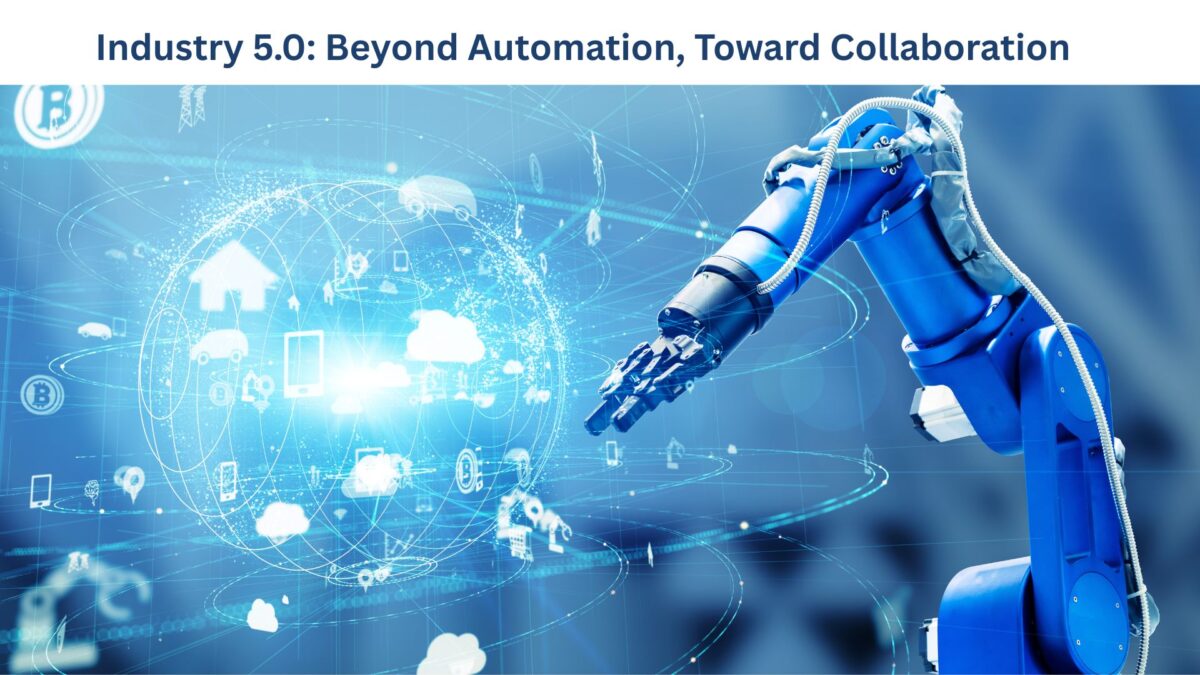
Industry 5.0: Beyond Automation, Towards Collaboration

Categories
Applied Innovation

Industry 5.0: Beyond Automation, Towards Collaboration

The industrial landscape is evolving at a rapid pace, moving beyond the efficiency-centric automation of Industry 4.0. Industry 5.0 represents the next phase of this technological revolution, focusing on the integration of human-machine collaboration, sustainability, and ethical artificial intelligence (AI) to reshape the future of industry.

Unlike its predecessor, Industry 5.0 does not aim to replace human workers with machines but rather to enhance human potential by empowering them with AI-driven tools and systems.

This shift towards a more holistic and human-centric approach to industrial innovation is driven by the desire to create a more resilient, sustainable, and socially responsible industrial environment.

Industry 5.0 vs. Industry 4.0: Understanding the Shift

While both Industry 4.0 and Industry 5.0 are founded on data-driven automation, the way they incorporate human involvement is fundamentally different. Industry 4.0 focused on automation and efficiency, often reducing the role of humans. In contrast, Industry 5.0 places a strong emphasis on human-centricity and sustainability, with humans at the core of decision-making and value creation alongside AI and automation technologies.

The Key Features of Industry 5.0

At the heart of Industry 5.0 lies the recognition that human creativity and intelligence are irreplaceable in manufacturing. It diverges from Industry 4.0 by emphasizing collaborative AI-based systems that prioritize three main aspects: AI that complements human skills rather than fully replacing workers, tailored production to suit individual strengths, and improved work conditions stemming from reduced repetitive work, all of which boost job satisfaction and employee well-being. This sees AI as a strategic ally, fostering innovation while keeping humans central to industrial processes.

Industry 5.0 also champions sustainable and ethical AI practices. It incorporates the circular economy into industrial planning, which includes minimizing waste and optimizing material use. Moreover, it employs AI to create environmentally friendly manufacturing methods, such as cutting emissions and improving resource efficiency.

Transparency and fairness in AI operations are paramount, ensuring equitable decision-making without bias. This holistic approach to AI integration promotes an industrial landscape that values human contribution and environmental stewardship. This comprehensive approach to industry success now requires companies to be evaluated on both financial performance and their environmental footprint and social contributions.

Cobots, or collaborative robots, are central to Industry 5.0’s human-machine integration. These AI-powered helpers operate alongside humans, enhancing precision and adaptability in manufacturing. They also bolster workplace safety by intelligently monitoring environments and minimizing risks. Unlike traditional automation, cobots tailor production systems to incorporate human expertise, refining automated procedures. This represents a shift in industrial thinking, where AI serves to complement rather than replace human intelligence.

Resilience in Industry 5.0: Preparing for Global Disruptions

Recent challenges such as the COVID-19 pandemic and geopolitical uncertainties highlight the urgency for versatile industrial systems. Industry 5.0 emerges as a solution, introducing decentralized smart factories capable of maintaining operations amidst supply chain disruptions. Predictive analytics driven by AI are central to this approach, enabling anticipation and risk mitigation prior to reaching critical stages. Additionally, energy-efficient automation is a key component, offering dual benefits of cost reduction and environmental footprint minimization. This enhanced resilience equips companies to better withstand potential future crises.

Beyond Manufacturing: Industry 5.0’s Expanding Influence

The principles of Industry 5.0 extend beyond manufacturing, influencing various industries. One such area is AI-driven healthcare innovation, which involves using AI algorithms for personalized medicine and automated medical diagnostics to reduce errors and enhance patient outcomes. Additionally, it emphasizes the ethical application of AI to ensure fair and transparent decision-making in healthcare. Another is smart cities and infrastructure, where AI aids in optimizing urban sustainability through advanced urban planning and managing energy grids efficiently. Sustainable agriculture also benefits from Industry 5.0 with the introduction of precision farming to minimize resource waste and AI-managed supply chains to bolster food security. This evolution aims to harmonize technology integration across sectors, prioritizing both efficiency and sustainability.

Strategic Adoption: How Businesses Can Transition

To embrace the era of Industry 5.0, companies are advised to undertake several strategic steps. Firstly, they should integrate AI-assisted collaboration tools that are designed to complement the capabilities of human workers rather than outright replace them. This approach ensures that the workforce remains an essential part of the industrial process, leveraging technology to enhance their productivity and efficiency.

Secondly, businesses should shift towards incorporating sustainable production models that are aligned with the principles of the circular economy. This means adopting practices that reduce waste, promote resource recycling, and encourage the longevity of products. Thirdly, establishing ethical AI governance is crucial to minimize the risks of bias in decision-making processes and to enhance transparency. This involves creating guidelines and frameworks that ensure AI systems are fair and accountable. Lastly, investing in human-AI partnerships through workforce upskilling is vital.

By training employees to work effectively alongside intelligent systems, companies can foster a collaborative environment where humans and AI co-exist and learn from one another. This focus on human-centric innovation empowers organizations to be at the forefront of the Industry 5.0 revolution, leading the way in the integration of advanced technologies while keeping human well-being and societal impact at the core of their strategies.

Takeaway

Industry 5.0 represents a significant pivot towards a more resilient, sustainable, and ethical industrial future. As technology advances, the balance between AI-driven efficiency and human creativity becomes increasingly important. Businesses that embrace Industry 5.0 principles will find themselves at the forefront of a new era that values both technological prowess and the ingenuity of human workers.

Reach out to us at open-innovator@quotients.com or drop us a line to delve into the transformative potential of groundbreaking technologies. We’d love to explore the possibilities with you

Categories
Applied Innovation

How AI is Playing a Transformative Role in Carbon Insetting

Categories
Applied Innovation

How AI is Playing a Transformative Role in Carbon Insetting

Artificial Intelligence (AI) is dramatically altering the corporate approach to carbon insetting, transitioning from conventional offsetting methods to deeply embedded, data-centric sustainability practices. Through the integration of AI in emissions monitoring, project enhancement, and operational efficiency, companies are now capable of achieving genuine, scalable, and quantifiable carbon reductions.

From Carbon Offsetting to Insetting

Traditionally, businesses have relied on carbon offsetting to counteract their emissions through external projects, such as reforestation and renewable energy ventures. Carbon insetting, however, emphasizes the integration of sustainability measures directly within a company’s supply chain, prioritizing internal emission cuts rather than outsourcing environmental responsibilities. AI is facilitating this shift by enabling precise emissions tracking, tailored intervention strategies, and clear reporting systems.

AI-Fueled Emissions Tracking

Monitoring and verifying emissions reductions across intricate supply chains has been a significant hurdle in carbon insetting. AI-powered solutions merge satellite data, IoT devices, and advanced machine learning models to monitor greenhouse gas emissions in real-time. This innovative approach minimizes human errors and uncertainty, enabling organizations to establish reliable carbon impact baselines and track progress continuously.

Intelligent Decisions for Enhanced Impact

AI algorithms scrutinize soil quality, land-use patterns, and climate statistics to pinpoint the most effective locations for carbon insetting initiatives. Whether it’s selecting areas for reforestation or designing regenerative agriculture programs, AI ensures interventions are grounded in scientific evidence and strategically placed to yield the highest environmental benefits.

Predictive Analytics

Historically, emissions reduction strategies have been reactive, addressing carbon footprints post-hoc. AI disrupts this by predicting future emissions trends, enabling businesses to set attainable reduction targets, adjust their tactics in real-time, and secure long-term environmental sustainability.

Efficiency and Sustainability

AI plays a critical role in optimizing agricultural supply chains, which are essential for carbon insetting projects. Through precision agriculture techniques, such as automated water management, enhanced soil treatment, and AI-guided feeding systems for livestock, companies can decrease emissions without compromising productivity.

Transparency and Trustworthiness

To combat skepticism and ensure the authenticity of corporate sustainability efforts, AI provides digital tracking for every carbon insetting intervention. This transparency guarantees that actions taken are verifiable, scientifically sound, and open to scrutiny. Blockchain technology, coupled with AI, further bolsters confidence by rendering carbon tracking immutable and publicly accessible.

AI in Regulatory Compliance and Reporting

As global environmental policies tighten, companies are required to demonstrate adherence to frameworks like the Science-Based Targets initiative (SBTi). AI simplifies carbon reporting by automating the process, thereby reducing administrative workloads and guaranteeing accuracy in sustainability claims.

AI-Enhanced Carbon Insetting in the Agricultural Sector

AI is increasingly utilized in agriculture to tackle substantial Scope 3 emissions. By employing satellite technology to monitor deforestation, AI-optimized crop rotations, and intelligent livestock management systems, businesses can ensure their insetting projects deliver significant environmental outcomes and align with data-driven sustainability strategies.

Expanding Sustainability Horizons

AI is poised to become a cornerstone in carbon insetting, refining the precision of regenerative agriculture networks, emissions monitoring, and policy implementation. As technology advances, AI models will enhance sustainability efforts, fostering broader adoption and standardized verification methods.

AI is redefining carbon insetting, equipping businesses with the tools to manage, optimize, and amplify their sustainability projects in a methodical and scientifically robust manner. By integrating machine learning, IoT, and predictive analytics, corporations are transitioning beyond traditional carbon compensation models to embrace transparent and transformative climate action initiatives.

Reach out to us at open-innovator@quotients.com or drop us a line to delve into the transformative potential of groundbreaking technologies. We’d love to explore the possibilities with you.

Categories
Applied Innovation

How Cross-Industry Partnerships Are Revolutionizing Technology Adoption

Categories
Applied Innovation

How Cross-Industry Partnerships Are Revolutionizing Technology Adoption

In the ever-evolving world of modern technology, artificial intelligence (AI) is a force for transformation that has affected nearly every industry. The process of successfully integrating AI is still difficult for many firms trying to handle the intricate process alone. Experts in the field are now predicting a significant change in approach: collaboration over insularity.

The Intricacy of AI Integration

For most businesses, using AI technology is a complex problem. Working with specialist startups and technology providers is frequently essential for successful adoption, particularly in fields where internal knowledge is deficient.

This change highlights a break from conventional competitive paradigms and implies that organizations ready to form strategic partnerships, rather than aiming for full internal capabilities, will be the ones in control of AI in the future.

Stellar Examples of Cross-Industry Synergy

Think about the cooperative AI use in the airport sector. Airports have created advanced intelligence systems by combining actors from the transport, hotel, and retail industries to improve consumer experiences and boost operational effectiveness. These partnerships tackle issues including passenger flow and customized services, demonstrating how cross-sector collaboration may produce results that are impossible to achieve on one’s own.

In a similar vein, manufacturers are becoming “smart iron” organizations by incorporating AI to increase sustainability and production. For example, to promote innovation in fields ranging from urban planning to agriculture, heavy machinery and construction corporations are collaborating with specialized startups and academic institutions, especially in developing nations like India.

Effective AI implementation is increasingly hinged on consumer input throughout the developmental lifecycle. A diverse array of perspectives, from young adults to seniors, is essential to ensure AI solutions meet genuine needs. By incorporating these viewpoints, companies can align technological prowess with market demand, averting the creation of impressive yet impractical solutions.

Consequently, firms are establishing structured feedback channels that embrace consumer insights at every innovation stage, leading to more inclusive and impactful AI applications.

Data Governance: The Bedrock of Responsible AI

Data governance becomes a critical issue as AI becomes more and more integrated into corporate processes and customer interactions. Businesses struggle with data ownership, privacy, and security, therefore they need strong foundations for implementing AI responsibly.

Prominent businesses are using two approaches: lightweight open-source alternatives for sensitive data scenarios and general-purpose AI models for wide-ranging applications. This is particularly common in Europe, where strict data privacy regulations are enforced by the EU AI Act. Comprehensive access restrictions, data reduction, anonymization, and sophisticated encryption are now considered best practices to protect sensitive data while obtaining insightful information.

Leading companies are employing two strategies: general-purpose AI models for a variety of applications and lightweight open-source alternatives for sensitive data scenarios. This is especially prevalent in Europe, where the EU AI Act enforces stringent data privacy laws. Sophisticated encryption, data minimization, anonymization, and extensive access limitations are widely regarded as recommended practices to safeguard sensitive data while gaining useful insights.

Businesses that use partnership models are seeing real benefits. Through strategic partnerships with AI innovators, industry titans like as HDFC, ICICI, ITC, Flipkart, and Swiggy have achieved notable increases in conversion rates, consumer engagement, and operational efficiency. These results demonstrate that effective AI integration is a business transformation that goes beyond technical benchmarks to produce measurable benefits across important performance indicators.

According to experts, AI will be crucial in tackling social problems like healthcare and climate change. But they also emphasize how important it is to have strong governance structures in order to prevent such abuse. A harmonic fusion of human and machine intellect is suggested by the collaborative future of AI, which will automate repetitive jobs and free up human resources for strategic and creative pursuits.

Takeaway

According to analysts, the next five years will see significant changes in both personal and business activities. As ongoing innovation and knowledge-sharing across stakeholders define the course of technological advancement, the collaborative spirit will continue to be crucial.

Adoption of collaborative AI has the potential to transform industries and address business issues. Organizations may successfully negotiate the complexities of AI integration by adopting this collaborative mentality, providing significant benefit to all stakeholders.

Reach out to us at open-innovator@quotients.com or drop us a line to explore the possibilities with you.

Categories
Events

Industry Leaders Chart the Course for Responsible AI Implementation at OI Knowledge Session

Categories
Events

Industry Leaders Chart the Course for Responsible AI Implementation at OI Knowledge Session

In the “Responsible AI Knowledge Session,” experts from diverse fields emphasize data privacy, cultural context, and ethical practices as artificial intelligence increasingly shapes our daily decisions. The session reveals practical strategies for building trustworthy AI systems while navigating regulatory challenges and maintaining human oversight.

Executive Summary

The “Responsible AI Knowledge Session,” hosted by Open Innovator on April 17th, served as a platform for leading figures in the industry to address the vital necessity of ethically integrating artificial intelligence as it permeates various facets of our daily lives.

The session’s discourse revolved around the significance of linguistic diversity in AI models, establishing trust through ethical methodologies, the influence of regulations, and the imperatives of transparency, as well as the essence of cross-disciplinary collaboration for the effective adoption of AI.

Speakers underscored the importance of safeguarding data privacy, considering cultural contexts, and actively involving stakeholders throughout the AI development process, advocating for a methodical, iterative approach.

Key Speakers

The session featured insights from several AI industry experts:

  • Sarah Matthews, Addeco Group, discussing marketing applications
  • Rym Bachouche, CNTXT AI addressing implementation strategies
  • Alexandra Feeley, Oxford University Press, focusing on localization and cultural contexts
  • Michael Charles Borrelli, Director at AI and Partners
  • Abilash Soundararajan, Founder of PrivaSapient
  • Moderated by Naman Kothari, NASSCOM CoE

Insights

Alexandra Feeley from Oxford University Press’s informed about the initiatives by the organization to promote linguistic and cultural diversity in AI by leveraging their substantial language resources. This involved digitizing under-resourced languages and enhancing the reliability of generative AI through authoritative data sources like dictionaries, thereby enabling AI models to reflect contemporary language usage more precisely.

Sarah Matthews, specializing in AI’s role in marketing, stressed the importance of maintaining transparency and incorporating human elements in customer interactions, alongside ethical data stewardship. She highlighted the need for marketers to communicate openly about AI usage while ensuring that AI-generated content adheres to brand values.

Alexandra Feeley delved into cultural sensitivity in AI localization, emphasizing that a simple translation approach is insufficient without an understanding of cultural subtleties. She accentuated the importance of using native languages in AI systems for precision and high-quality experiences, especially in diverse linguistic landscapes such as Hindi.

Michael Charles Borrelli, from AI and Partners, introduced the concept of “Know Your AI” (KYI), drawing a parallel with the financial sector’s “Know Your Client” (KYC) practice. Borrelli posited that AI products require rigorous pre- and post-market scrutiny, akin to pharmaceutical oversight, to foster trust and ensure commercial viability.

Rym Bachouche underscored a common error where organizations hasten AI implementation without adequate data preparation and interdisciplinary alignment. The session’s panellists emphasized the foundational work of data cleansing and annotation, often neglected in favor of swift innovation.

Abilash Soundararajan, founder of PrivaSapien, presented a privacy-enhancing technology aimed at practical responsible AI implementation. His platform integrates privacy management, threat modeling, and AI inference technologies to assist organizations in quantifying and mitigating data risks while adhering to regulations like HIPAA and GDPR, thereby ensuring model safety and accountability.

Collaboration and Implementation

Collaboration was a recurring theme, with a call for transparency and cooperation among legal, cloud security, and data science teams to operationalize AI principles effectively. Responsible AI practices were identified as a means to bolster client trust, secure contracts, and allay AI adoption apprehensions. Successful collaboration hinges on valuing each team’s expertise, fostering open dialogue, and knowledge sharing.

Moving Forward

The event culminated with a strong assertion of the critical need to maintain control over our data to prevent over-reliance on algorithms that could jeopardize our civilization. The speakers advocated for preserving human critical thinking, educating future generations on technology risks, and committing to perpetual learning and curiosity. They suggested that a successful AI integration is an ongoing commitment that encompasses operational, ethical, regulatory, and societal dimensions rather than a checklist-based endeavor.

In summary, the session highlighted the profound implications AI has for humanity’s future and the imperative for responsible development and deployment practices. The experts called for an experimental and iterative approach to AI innovation, focusing on staff training and fostering data-driven cultures within organizations to ensure that AI initiatives remain both effective and ethically sound.

Reach out to us at open-innovator@quotients.com to join our upcoming sessions. We explore a wide range of technological advancements, the startups driving them, and their influence on the industry and related ecosystems.

Categories
Applied Innovation

Floating Solar Farms: The Cutting-Edge Solution to Land and Energy Challenges

Categories
Applied Innovation

Floating Solar Farms: The Cutting-Edge Solution to Land and Energy Challenges

The quest for sustainable energy has led to a groundbreaking innovation: floating solar farms, or “floatovoltaics.” These water-based solar installations offer a creative response to the dual pressures of climate change and limited land availability. By 2024, global floating solar capacity has skyrocketed to over 10 gigawatts, a dramatic increase from just 10 megawatts in 2014. This article explores the innovations and benefits of this emerging technology, which could revolutionize the way we produce clean energy in an increasingly land-scarce world.

The Ascent of Floatovoltaics

Originating in the early 2010s, floating solar technology has rapidly evolved from small-scale experiments in Japan and South Korea to large-scale deployments in countries like China and the United States. China’s Anhui province is home to the world’s largest floating solar farm, situated on a flooded former coal mining site. The technology’s flexibility allows it to be implemented in various aquatic settings, including reservoirs, hydroelectric dam reservoirs, and even offshore marine environments.

Floating solar panels are gaining traction due to their unique ability to optimize energy production and land conservation. By 2030, the global floating solar market is estimated to surpass billions of dollars. Despite higher initial costs—typically 20-25% more than land-based systems—the advantages of floatovoltaics are increasingly making them an attractive option.

Technological Edge

One of the primary technical advantages of floating solar farms is their enhanced energy yield. Water’s cooling effect can boost photovoltaic efficiency by 5-10%. This translates to greater power output per solar panel, improving project economics and reducing payback periods for developers.

Land Conservation

Land scarcity is a critical issue in many regions, and traditional solar farms are often criticized for their extensive land use. Floatovoltaics offer a solution by utilizing water surfaces that serve other purposes, such as drinking water supplies or irrigation canals. This dual-use approach preserves land for agriculture and housing, while also contributing to renewable energy generation.

Water Stewardship

Floating solar arrays also provide substantial water conservation benefits. By covering water surfaces, these systems can reduce evaporation by 70-90%, conserving millions of gallons of water annually in large reservoirs. Furthermore, they help manage harmful algal blooms by limiting light penetration, which is essential for maintaining water quality and aquatic ecosystems.

Environmental Considerations

While floatovoltaics offer numerous environmental benefits, it is crucial to assess their impact on underwater ecosystems. Reduced sunlight can affect aquatic plant growth and animal habitats. Hence, careful planning and responsible deployment are paramount. Experts advocate for covering no more than 50% of a water body, with the specific balance depending on the local ecosystem and installation design.

Innovative Solutions

To mitigate environmental concerns, innovators are developing advanced mooring systems capable of withstanding various water conditions, from calm reservoirs to the dynamic coastal waters. These systems ensure stability and allow for adequate water circulation beneath the panels.

Another breakthrough involves bifacial floating panels. These panels capture light from both sides, increasing energy yield by 5-15%. By harnessing sunlight from above and its reflection from the water’s surface, they optimize electricity production in different conditions.

The integration of floating solar with existing hydroelectric infrastructure is a particularly promising development. These hybrid systems combine solar and hydroelectric power generation, offering more consistent renewable energy and improved overall efficiency. They also allow for the sharing of transmission infrastructure, reducing costs and environmental footprint.

The Future of Floatovoltaics

The economic potential of floating solar is undeniable. As manufacturing scales up and best practices are established, costs are likely to decrease, making floatovoltaics increasingly competitive with traditional land-based solar installations. The industry is anticipating significant growth in the coming decades, driven by the need for clean energy and the scarcity of suitable land.

Floating solar farms exemplify the ingenuity required to meet our growing energy needs while safeguarding the environment. By capitalizing on underutilized water surfaces, they provide a multi-faceted approach to sustainability that enhances energy production and conserves land and water resources. As technology advances, these systems are set to become a vital component in the global transition to renewable energy.

In conclusion, floating solar represents a promising frontier that addresses the challenges of energy generation and land conservation. Their growth is likely to accelerate, especially in areas with abundant water resources and limited land availability. As we navigate the complexities of climate change and resource management, floatovoltaics stand out as a technology capable of delivering substantial environmental and economic gains.

Reach out to us at open-innovator@quotients.com or drop us a line to delve into the transformative potential of groundbreaking technologies. We’d love to explore the possibilities with you.

Categories
Applied Innovation

Responsible AI:  Principles, Practices, and Challenges

Categories
Applied Innovation

Responsible AI:  Principles, Practices, and Challenges

The emergence of artificial intelligence (AI) has been a catalyst for profound transformation across various sectors, reshaping the paradigms of work, innovation, and technology interaction. However, the swift progression of AI has also illuminated a critical set of ethical, legal, and societal challenges that underscore the urgency of embracing a responsible AI framework. This framework is predicated on the ethical creation, deployment, and management of AI systems that uphold societal values, minimize potential detriments, and maximize benefits.

Foundational Principles of Responsible AI

Responsible AI is anchored by several key principles aimed at ensuring fairness, transparency, accountability, and human oversight. Ethical considerations are paramount, serving as the guiding force behind the design and implementation of AI to prevent harmful consequences while fostering positive impacts. Transparency is a cornerstone, granting stakeholders the power to comprehend the decision-making mechanisms of AI systems. This is inextricably linked to fairness, which seeks to eradicate biases in data and algorithms to ensure equitable outcomes.

Accountability is a critical component, demanding clear lines of responsibility for AI decisions and actions. This is bolstered by the implementation of audit trails that can meticulously track and scrutinize AI system performance. Additionally, legal and regulatory compliance is imperative, necessitating adherence to existing standards like data protection laws and industry-specific regulations. Human oversight is irreplaceable, providing the governance structures and ethical reviews essential for maintaining control over AI technologies.

The Advantages of Responsible AI

Adopting responsible AI practices yields a multitude of benefits for organizations, industries, and society at large. Trust and enhanced reputation are significant by-products of a commitment to ethical AI, which appeals to stakeholders such as consumers, employees, and regulators. This trust is a valuable currency in an era increasingly dominated by AI, contributing to a stronger brand identity. Moreover, responsible AI acts as a bulwark against risks stemming from legal and regulatory non-compliance.

Beyond the corporate sphere, responsible AI has the potential to propel societal progress by prioritizing social welfare and minimizing negative repercussions. This is achieved by developing technologies that are aligned with societal advancement without compromising ethical integrity.

Barriers to Implementing Responsible AI

Despite its clear benefits, implementing responsible AI faces several challenges. The intricate nature of AI systems complicates transparency and explainability. Highly sophisticated models can obscure the decision-making process, making it difficult for stakeholders to fully comprehend their functioning.

Bias in training data also presents a persistent issue, as historical data may embody societal prejudices, thus resulting in skewed outcomes. Countering this requires both technical prowess and a dedication to diversity, including the use of comprehensive datasets.

The evolving legal and regulatory landscape introduces further complexities, as new AI-related laws and regulations demand continuous system adaptations. Additionally, AI security vulnerabilities, such as susceptibility to adversarial attacks, necessitate robust protective strategies.

Designing AI Systems with Responsible Practices in Mind

The creation of AI systems that adhere to responsible AI principles begins with a commitment to minimizing biases and prejudices. This is achieved through the utilization of inclusive datasets that accurately represent all demographics, the application of fairness metrics to assess equity, and the regular auditing of algorithms to identify and rectify biases.

Data privacy is another essential design aspect. By integrating privacy considerations from the onset—through methods like encryption, anonymization, and federated learning—companies can safeguard sensitive information and foster trust among users. Transparency is bolstered by selecting interpretable models and clearly communicating AI processes and limitations to stakeholders.

Leveraging Tools and Governance for Responsible AI

The realization of responsible AI is facilitated by a range of tools and technologies. Explainability tools, such as SHAP and LIME, offer insight into AI decision-making. Meanwhile, privacy-preserving frameworks like TensorFlow Federated support secure data sharing for model training.

Governance frameworks are pivotal in enforcing responsible AI practices. These frameworks define roles and responsibilities, institute accountability measures, and incorporate regular audits to evaluate AI system performance and ethical compliance.

The Future of Responsible AI

Responsible AI transcends a mere technical challenge to become a moral imperative that will significantly influence the trajectory of technology within society. By championing its principles, organizations can not only mitigate risks but also drive innovation that harmonizes with societal values. This journey is ongoing, requiring collaboration, vigilance, and a collective commitment to ethical advancement as AI technologies continue to evolve.

Reach out to us at open-innovator@quotients.com or drop us a line to delve into the transformative potential of groundbreaking technologies. We’d love to explore the possibilities with you

Categories
Events

Knowledge Session-Industry 4.0 & Beyond laid emphasis on collaboration for Innovation

Categories
Events

Knowledge Session-Industry 4.0 & Beyond laid emphasis on collaboration for Innovation

Knowledge Session-Industry 4.0 & Beyond, organized by Open Innovator on February 21st, presented an insightful exploration of the profound impact of advanced technologies such as AI, IoT, and automation on manufacturing and operational processes.

Speaker Lineup:

Yagndeep Gohil, Startup Engagement Manager, MeitY-NASSCOM Center of Excellence

Santosh Panday, General Manager, Aditya Birla Group

Markand P. Pathak, Co-founder, Anedya Systems

Niharika Kolte Alekar, Co-founder, Volar Alta

Nathalie Takpah, Omid Limited

Moderated by Naman Kothari, NASSCOM CoE

Session Summary:

Introduction to Industry 4.0: Yagndeep Gohil kicked off the session with an overview of Industry 4.0, emphasizing the integration of AI, IoT, and automation into manufacturing. He provided a notable example of these technologies in action at the Mahakumbh event, managing a colossal crowd of over 640 million people efficiently.

Panel Discussion on Industry 4.0 Technologies: Santosh Panday discussed how Industry 4.0 has significantly improved industrial safety through data-driven approaches. The conversation touched on the historical evolution of safety measures across industrial revolutions and how today’s protocols are increasingly relying on data for better decision-making.

Startup Contributions in Industry 4.0: The panelists delved into the critical role startups play in fostering innovation, emphasizing the importance of evaluating a startup’s core team, technology scalability, and the presence of industry-specific use cases. Markand P. Pathak shared Anedya’s successful collaboration with a leading manufacturer, addressing IoT compatibility and data security issues using a cloud-based solution.

Infrastructure as a Service (IaaS) and Industrial Device Management: Niharika Kolte Alekar elaborated on the role of drones in industrial inspections and how they’ve evolved from being simple flying cameras to sophisticated tools for safety and efficiency enhancement. She highlighted the benefits of using drones in hazardous environments and various sectors like construction and manufacturing.

Cultural and Organizational Changes for Digital Transformation: The speakers acknowledged the challenges in adopting Industry 4.0 technologies, emphasizing the need for a digital-first culture that encourages data-driven decisions. Santosh Panday introduced “data citizenship,” where domain experts actively engage with data beyond the technical teams.

Startup-Enterprise Collaboration: Effective collaboration was underscored, with a structured approach to co-creation that starts with identifying the right startup match, setting clear objectives, and initiating small-scale pilot projects. Mentorship and ongoing support are essential for integrating innovative solutions into large industrial settings.

AI and Drones in Asset Inspections and Defect Detection: Real-world applications of AI and drones were presented, including their use in topographic surveying, construction monitoring, and pre-commissioning inspections. These technologies have been instrumental in preventing costly errors and ensuring asset integrity.

The Outlook for Smart Manufacturing: Santosh Panday painted a picture of the future, where autonomous manufacturing operations driven by AI, IoT, and emerging technologies will be commonplace. Effective data management will be crucial for achieving success in this domain.

Key Insights:

  • Data-Centric Safety: Industry 4.0 technologies enhance safety and operational efficiency by enabling real-time monitoring and predictive maintenance.
  • Startup-Enterprise Synergy: Startups are innovation drivers, and scalable solutions must align with industrial requirements for successful collaboration.
  • Drone Utilization: Drones are increasingly vital for industrial inspections, reducing downtime and improving safety.
  • Digital Transformation Culture: Embracing a digital-first culture is imperative for the successful implementation of Industry 4.0 technologies.
  • Structured Co-Creation: A systematic approach to collaborating with startups is essential for large enterprises seeking innovation.

The session underscored the significance of technology in transforming industries and the need for strategic alliances between startups and established companies to harness the full potential of Industry 4.0. As the industrial landscape evolves, these collaborations will be instrumental in shaping the future of smart manufacturing.

Categories
Applied Innovation

The Role of AI and Automation in Revolutionizing the Automotive Industry

Categories
Applied Innovation

The Role of AI and Automation in Revolutionizing the Automotive Industry

The automobile industry is currently experiencing a radical shift, propelled by the progress of artificial intelligence (AI) and automation. These innovative technologies are fundamentally altering the paradigm of vehicle design, production, and operation, offering a plethora of opportunities to enhance safety, efficiency, and the overall user experience.

AI’s Ascendancy in Vehicle Operation

The automotive sector is witnessing a pivotal shift towards AI-driven vehicles, which are poised to revolutionize the driving experience. While traditional mechanical systems are being increasingly supplanted by sophisticated, AI-powered technologies, the transition from human-operated to autonomous vehicles marks a significant societal transformation. Initially, the concept of fully autonomous vehicles may encounter resistance from the public, as historical precedents have shown that revolutionary technologies often face skepticism prior to achieving mass adoption.

AI’s prevalence is most evident in the proliferation of Advanced Driver-Assistance Systems (ADAS), which serve to amplify vehicle safety by minimizing human error. These systems are founded on a synthesis of AI and machine learning, capable of performing functions like lane maintenance, adaptive cruise control, and emergency braking. As AI evolves, it is anticipated that these systems will grow increasingly reliable, paving the way for vehicles that demand minimal human input.

The Imperative of Responsible AI Governance

The increasing integration of AI in vehicle systems necessitates careful governance to ensure responsible deployment. The balance between the advantages of automation and potential risks is delicate. Paramount considerations encompass the safety of autonomous vehicles, ethical concerns pertaining to data bias, and the transparency of AI decision-making, especially under critical circumstances. To foster trust among consumers and regulatory bodies, it is essential that AI systems are robust, comprehensible, and devoid of bias.

Moreover, the integration of AI into vehicles raises complex questions regarding accountability. In the event of an autonomous vehicle accident, the attribution of liability can be intricate. This has precipitated debates surrounding the necessity for clear-cut regulatory frameworks that address the legal and ethical ramifications of autonomous driving.

The Trials of Data Management and Integration

A notable challenge in the adoption of AI within the automotive industry is the management of the vast quantities of data produced by connected and autonomous vehicles. The data deluge, derived from sensors, cameras, and onboard technologies, necessitates robust storage and analysis systems. The data volume continues to escalate, which in turn amplifies the associated costs of cloud storage and data management.

Furthermore, integrating AI with the legacy systems of older vehicles poses a substantial hurdle. Many vehicles currently in circulation were not conceived with AI compatibility, making retrofitting them with advanced technologies a complex and costly endeavor. Despite these hurdles, there are substantial opportunities in domains like predictive maintenance, where AI can anticipate potential issues and avert breakdowns, thereby enhancing vehicle reliability and reducing maintenance costs.

The Synergistic Alliance of Startups and Industry Titans

The breakneck pace of innovation in AI and automation has spawned numerous collaborations between nimble startups and established automotive behemoths. Startups contribute their cutting-edge technologies and agility, while traditional manufacturers provide the necessary infrastructure and market penetration to scale these solutions effectively. These collaborative efforts have spawned AI-infused products that optimize vehicle design, safety, and consumer experiences.

Generative AI, for instance, holds the promise of dramatically reducing design cycles by automating the creation of intricate vehicle components and systems. Predictive maintenance represents another promising frontier, where AI can scrutinize vehicle data to foresee potential malfunctions, thereby enabling preventive repairs and minimizing downtime.

The Evolution of AI in Vehicle Safety and Autonomy

Looking to the future, AI’s contributions to vehicle safety and autonomous driving are poised to amplify. Emerging trends such as multimodal AI, integrating data from various sensors to refine vehicle perception, are set to disrupt the industry. Additionally, self-learning systems capable of adapting to real-time driving conditions are likely to proliferate, empowering vehicles to navigate unforeseen situations with greater accuracy.

Swarm intelligence, a concept that involves multiple vehicles communicating to optimize navigation and enhance traffic flow, also holds significant promise. This collaborative driving model has the potential to boost safety, alleviate congestion, and improve fuel economy. Nonetheless, the widespread integration of such technologies hinges on advances in vehicle-to-vehicle communication and cybersecurity to safeguard against potential vulnerabilities.

AI’s Global Market Implications

The embrace of AI in the automotive sector is not homogeneous across the world. While some regions, like the Middle East, are fostering the growth of autonomous vehicle technologies through conducive regulations and testing environments, others, such as South and Southeast Asia, grapple with infrastructural challenges and regulatory discrepancies despite governmental backing for AI and machine learning.

In Europe, where infrastructure is more developed, there is a greater willingness to embrace AI technologies, particularly concerning autonomous vehicles. Nonetheless, the regulatory framework must keep pace with technological advancements to ensure ethical and safe implementation. The disparate regulatory landscapes across regions underscore the criticality of adopting adaptable, region-specific strategies to promote the responsible growth of AI and automation within the automotive sector.

AI’s Influence on Manufacturing and Mobility Innovations

AI’s impact extends beyond autonomous driving to the realms of automotive manufacturing. Technologies such as AI-powered diagnostics, predictive maintenance, and real-time monitoring of production processes are streamlining operations and bolstering efficiency. For instance, embedded AI agents in manufacturing machinery are breaking down silos and enhancing inter-device communication, leading to more fluid production cycles and expedited response times.

Consumer-focused automotive applications of AI include smarter fleet management systems, advanced diagnostics, and the integration of IoT devices. These innovations are not only improving vehicle performance but also elevating the customer experience by providing real-time insights into vehicle health and performance.

Takeaway

AI and automation are set to redefine the automotive industry, bringing forth a new epoch of innovation and productivity. While hurdles persist, particularly in data management, regulatory compliance, and ethical governance, the prospects for advancement are vast. Collaborative efforts between startups, traditional manufacturers, and policymakers will be pivotal to ensure that the deployment of AI and automation in vehicles prioritizes consumer benefits and societal progress.