



Categories
Enterprise Innovation

The Silent Rebellion: Why Your Employees Are Using AI Behind Your Back – and What It’s Really Costing You

Categories
Enterprise Innovation

The Silent Rebellion: Why Your Employees Are Using AI Behind Your Back – and What It’s Really Costing You

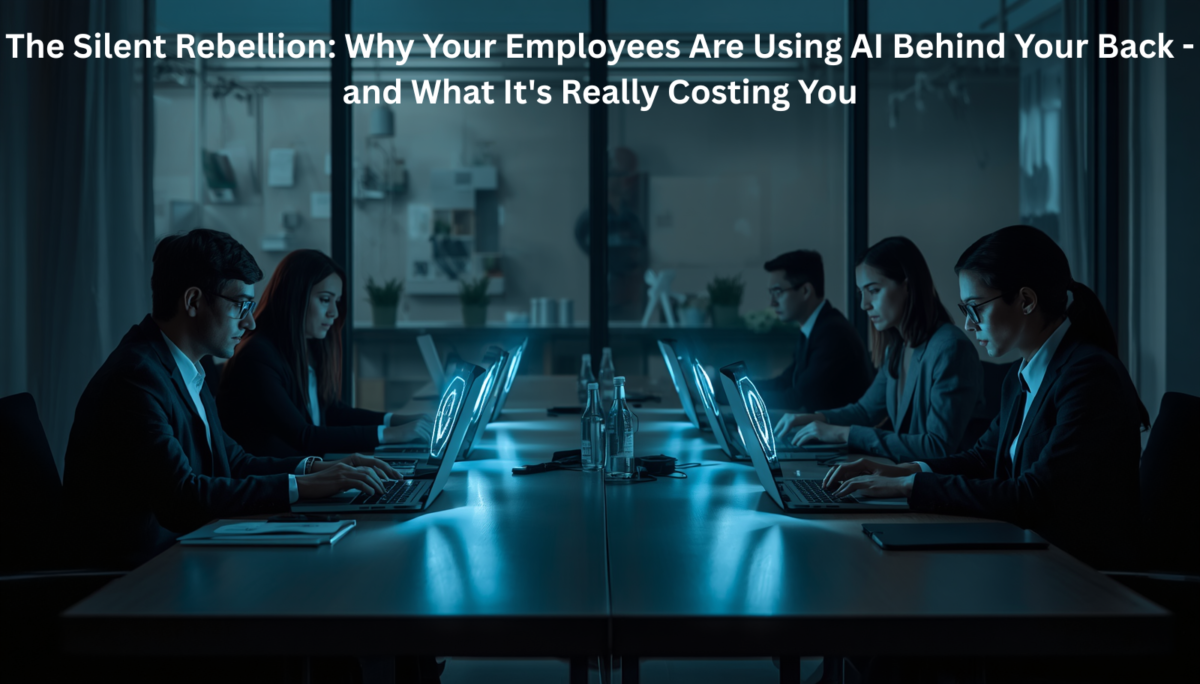
Every day, a silent uprising takes place on computers and in offices all across the world. A worker is in a hurry to fulfill a deadline. The company-approved tools are either locked behind a ticketing system, sluggish, or cumbersome. Thus, they launch a tab on their browser, enter some private information, and let an unapproved AI program do the rest. For now, the issue has been resolved. Shadow AI is changing the workplace in ways that most businesses have hardly had a chance to consider.

Shadow AI is not an isolated phenomena. It is the business equivalent of sending work files via a personal email account or utilizing a side spreadsheet when the official system is too complicated. Without the knowledge, consent, or supervision of IT or security teams, employees utilize internal or external AI technologies for job activities, such as chatbots, writing assistance, and code generators. Confidential strategy papers, proprietary code, customer information, and sensitive material are copied onto platforms that the business does not control, monitor, or regulate. What began as a productivity shortcut turns into an unseen parallel layer of AI use operating behind the formal architecture of the company.

Why it occurs?

The first step to dealing with Shadow AI honestly is to comprehend why it occurs. Malice is rarely the answer. Unsanctioned tools are used by employees because they are more effective and efficient than the alternatives. People make practical decisions when there are tight deadlines and authorized methods seem like barriers. A copywriter won’t wait three days for IT to whitelist a tool if they require a draft in thirty minutes. When troubleshooting production code at midnight, a developer will use whatever works. Most of the time, shadow AI is a sign of a malfunctioning internal system rather than a malfunctioning employee.

The Error Epidemic Nobody Is Talking About

However, this workaround culture has a higher human cost than it may seem. According to IBM research, 57% of workers say that AI has caused them to make mistakes, while 58% admit to accepting AI results without checking them. These are not isolated incidents; rather, they are common behavioral patterns that arise when individuals use technologies they do not fully comprehend in situations without supervision, direction, or responsibility. Workers are taking on personal danger in addition to organizational risk as they operate in a gray area where everyday pressure to meet deadlines collides with rules they are aware they are breaking.

Caught Between Productivity and Policy: The Stress Nobody Accounts For

In business discussions concerning AI governance, the stress factor is frequently disregarded. For employees dealing with unmanageable workloads, shadow AI often turns into a coping strategy or a pressure valve. However, the respite is fleeting. The underlying anxiousness worsens rather than goes away. Employees must balance two conflicting demands: being productive enough to maintain their position and remaining cooperative enough to avoid being dismissed for breaking a policy. When errors do ultimately come to light, and they do, people are held accountable rather than the instruments. One of the most damaging long-term consequences of unchecked AI deployment is this culture of dread and silent disengagement.

Serious regulatory repercussions:

The dangers increase quickly at the organizational level. Employees may be putting private information into systems regulated by completely different privacy conditions when they paste internal data into uncontrolled AI settings. There may be serious regulatory repercussions; GDPR, HIPAA, and industry-specific compliance standards are in place specifically to safeguard the type of data that frequently passes through Shadow AI networks. Beyond data exposure, AI-generated code poses other subtle risks, such as concealed licensing conflicts, security flaws, and technical debt that only shows up months later and is costly to resolve. And all of this is taking place while businesses pay for the problem twice: first for the dispersed, redundant AI tools that staff members are obtaining on their own, and again for incident cleanup.

Cultural effects may be the most detrimental long-term effect. Shadow AI increases the discrepancy between an organization’s stated values and reality on the ground. Governance loses credibility when practice and policy vary on a large scale. Because they can clearly see that the rules are habitually broken in order to complete tasks, employees cease taking compliance seriously. The leadership is no longer able to see how the task is being done. Employers and employees, businesses and their clients, and workers and the AI tools they use without supervision or training all see a decline in trust.

Blocking not the solution:

Blocking tools are not the solution, or at least they are insufficient. Instead of completely eradicating Shadow AI, organizations that just use prohibition tend to drive the practice more underground. Asking “why are employees reaching for unauthorized AI, and what would make the sanctioned alternative genuinely better?” rather than “how do we stop employees from using unauthorized AI,” is the most effective way to respond. A more effective set of treatments is made possible by that reframing. Compared to the shadow alternatives, approved AI solutions must be quicker, more powerful, and simpler to use. Employees will continue to circumvent the official choice if it takes three approval processes and yields subpar outcomes.

When guardrails and enablement are used in tandem, it truly works. Red lines, which are categories of data that must never leave sanctioned settings, such as customer records, source code, and confidential strategy, must be explicitly defined by organizations and communicated in plain language rather than policy-document verbiage. For higher-risk use cases, they require lightweight review procedures so that workers may complete tasks safely rather than covertly. Training is important, but only if it is useful. Employees must be aware of the dangers they are incurring as well as the safe options at their disposal. Culture matters most of all. AI governance works when employees see it as protection rather than punishment — when the organization’s position is “we want you to use AI well” rather than “we are watching for violations.”

Conclusion:

In the end, shadow AI is more of a trust issue than a technological one. Using the greatest resources at their disposal, employees are attempting to thrive inside their businesses rather than undermine them. Organizations that invest in making safe AI truly useful—fast enough to compete with shadow tools, governed enough to manage real risk, and human enough to account for the pressures workers actually face—will be the ones that successfully navigate the AI era rather than those with the strictest prohibition policies. It’s important to pay attention to the silent rebellion. The question is whether corporations will react with control or with something more intelligent: intentional trust-building, one controlled tool at a time.


Quotients is a platform for industry, innovators, and investors to build a competetive edge in this age of disruption. We work with our partners to meet this challenge of metamorphic shift that is taking place in the world of technology and businesses by focusing on key organisational quotients. Reach out to us at open-innovator@quotients.com.

Categories
Events

Ethics by Design: Global Leaders Convene to Address AI’s Moral Imperative

Categories
Events

Ethics by Design: Global Leaders Convene to Address AI’s Moral Imperative

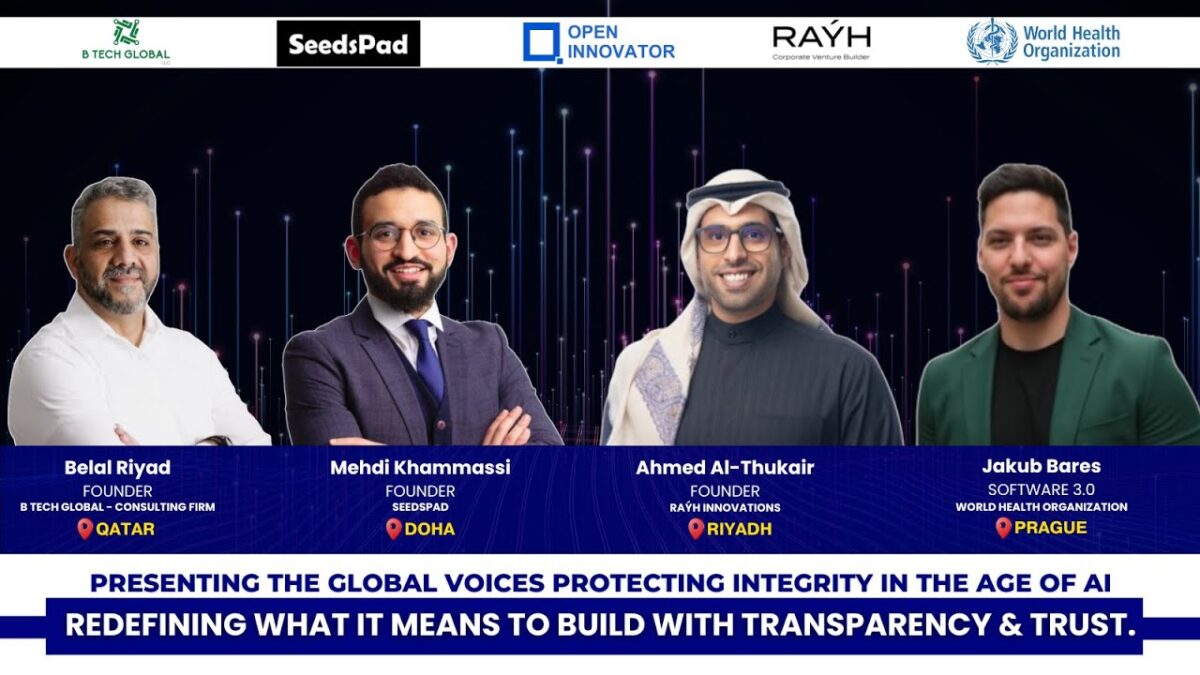
In a world where ChatGPT gained 100 million users in two months—a accomplishment that took the telephone 75 years—the importance of ethical technology has never been more pressing. Open Innovator on November 14th hosted a global panel on “Ethical AI: Ethics by Design,” bringing together experts from four continents for a 60-minute virtual conversation moderated by Naman Kothari of Nasscom. The panelists were Ahmed Al Tuqair from Riyadh, Mehdi Khammassi from Doha, Bilal Riyad from Qatar, Jakob Bares from WHO in Prague, and Apurv from the Bay Area. They discussed how ethics must grow with rapidly advancing AI systems and why shared accountability is now required for meaningful, safe technological advancement.

Ethics: Collective Responsibility in the AI Ecosystem

The discussion quickly established that ethics cannot be attributed to a single group; instead, founders, investors, designers, and policymakers build a collective accountability architecture. Ahmed stressed that ethics by design must start with ideation, not as a late-stage audit. Raya Innovations examines early enterprises based on both market fit and social effect, asking direct questions about bias, damage, and unintended consequences before any code is created. Mehdi developed this into three pillars: human-centricity, openness, and responsibility, stating that technology should remain a benefit for humans rather than a danger. Jakob added the algorithmic layer, which states that values must be testable requirements and architectural patterns. With the WHO implementing multiple AI technologies, identifying the human role in increasingly automated operations has become critical.

Structured Speed: Innovating Responsibly While Maintaining Momentum

Maintaining both speed and responsibility became a common topic. Ahmed proposed “structured speed,” in which quick, repeatable ethical assessments are integrated directly into agile development. These are not bureaucratic restrictions, but rather concise, practical prompts: what is the worst-case situation for misuse? Who might be excluded by the default options? Do partners adhere to key principles? The goal is to incorporate clear, non-negotiable principles into daily workflows rather than forming large committees. As a result, Ahmed claimed, ethics becomes a competitive advantage, allowing businesses to move rapidly and with purpose. Without such guidance, rapid innovation risks becoming disruptive noise. This narrative resonated with the panelists, emphasizing that prudent development can accelerate, rather than delay, long-term growth.

Cultural Contexts and Divergent Ethical Priorities

Mehdi demonstrated how ethics differs between cultural and economic environments. Individual privacy is a priority in Western Europe and North America, as evidenced by comprehensive consent procedures and rigorous regulatory frameworks. In contrast, many African and Asian regions prioritize collective stability and accessibility while functioning under less stringent regulatory control. Emerging markets frequently focus ethical discussions on inclusion and opportunity, whereas industrialized economies prioritize risk minimization. Despite these inequalities, Mehdi pushed for universal ethical principles, claiming that all people, regardless of place, need equal protection. He admitted, however, that inconsistent regulations result in dramatically different reality. This cultural lens highlighted that while ethics is internationally relevant, its local expression—and the issues connected with it—remain intensely context-dependent.

Enterprise Lessons: The High Costs of Ethical Oversights

Bilal highlighted stark lessons from enterprise organizations, where ethical failings have multimillion-dollar consequences. At Microsoft, retrofitting ethics into existing products resulted in enormous disruptions that could have been prevented with early design assessments. He outlined enterprise “tenant frameworks,” in which each feature is subject to sign-offs across privacy, security, accessibility, localization, and geopolitical domains—often with 12 or more reviews. When crises arise, these systems maintain customer trust while also providing legal defenses. Bilal used Google Glass as a cautionary tale: billions were lost because privacy and consent concerns were disregarded. He also mentioned Workday’s legal challenges over alleged employment bias. While established organizations can weather such storms, startups rarely can, making early ethical guardrails a requirement of survival rather than preference.

Public Health AI Designing for Integrity and Human Autonomy

Jakob provided a public-health viewpoint, highlighting how AI design decisions might harm millions. Following significant budget constraints, WHO’s most recent AI systems are aimed at enhancing internal procedures such as reporting and finance. In one donor-reporting tool, the team focused “epistemic integrity,” which ensures outputs are factual while protecting employee autonomy. Jakob warned against Goodhart’s Law, which involves overoptimizing a particular statistic at the detriment of overall value. They put in place protections to prevent surveillance overreach, automation bias, power inequalities, and data exploitation. Maintaining checks and balances across measures guarantees that efficiency gains do not compromise quality or hurt employees. His findings revealed that ethical deployment necessitates continual monitoring rather than one-time judgments, especially when AI replaces duties previously conducted by specialists.

Aurva’s Approach: Security and Observability in the Agentic AI Era

The panel then moved on to practical solutions, with Apurv introducing Aurva, an AI-powered data security copilot inspired by Meta’s post-Cambridge Analytica revisions. Aurva enables enterprises to identify where data is stored, who has access to it, and how it is used—which is crucial in contexts where information is scattered across multiple systems and providers. Its technologies detect misuse, restrict privilege creep, and give users visibility into AI agents, models, and permissions. Apurv contrasted between generative AI, which behaves like a maturing junior engineer, and agentic AI, which operates independently like a senior engineer making multi-step judgments. This autonomy necessitates supervision. Aurva serves 25 customers across different continents, with a strong focus on banking and healthcare, where AI-driven risks and regulatory needs are highest.

Actionable Next Steps and the Imperative for Ethical Mindsets

In conclusion, panelists provided concrete advice: begin with human-impact visibility, undertake early bias and harm evaluations, construct feedback loops, teach teams to acquire a shared ethical understanding, and implement observability tools for AI. Jakob underlined the importance of monitoring, while others stressed that ethics must be integrated into everyday decisions rather than marketing clichés. The virtual event ended with a unifying message: ethical AI is no longer optional. As agentic AI becomes more independent, early, preemptive frameworks protect both consumers and companies’ long-term viability.

Reach out to us at open-innovator@quotients.com or drop us a line to delve into the transformative potential of groundbreaking technologies and participate in our events. We’d love to explore the possibilities with you.

Categories
Events

A Powerful Open Innovator Session That Delivered Game-Changing Insights on AI Ethics

Categories
Events

A Powerful Open Innovator Session That Delivered Game-Changing Insights on AI Ethics

In a recent Open Innovator (OI) Session, ethical considerations in artificial intelligence (AI) development and deployment took center stage. The session convened a multidisciplinary panel to tackle the pressing issues of AI bias, accountability, and governance in today’s fast-paced technological environment.

Details of particpants are are follows:

Moderators:

  • Dr. Akvile Ignotaite- Harvard Univ
  • Naman Kothari– NASSCOM COE

Panelists:

  • Dr. Nikolina Ljepava- AUE
  • Dr. Hamza AGLI– AI Expert, KPMG
  • Betania Allo– Harvard Univ, Founder
  • Jakub Bares– Intelligence Startegist, WHO
  • Dr. Akvile Ignotaite– Harvard Univ, Founder

Featured Innovator:

  • Apurv Garg – Ethical AI Innovation Specialist

The discussion underscored the substantial ethical weight that AI decisions hold, especially in sectors such as recruitment and law enforcement, where AI systems are increasingly prevalent. The diverse panel highlighted the importance of fairness and empathy in system design to serve communities equitably.

AI in Healthcare: A Data Diversity Dilemma

Dr. Aquil Ignotate, a healthcare expert, raised concerns about the lack of diversity in AI datasets, particularly in skin health diagnostics. Studies have shown that these AI models are less effective for individuals with darker skin tones, potentially leading to health disparities. This issue exemplifies the broader challenge of ensuring AI systems are representative of the entire population.

Jacob, from the World Health Organization’s generative AI strategy team, contributed by discussing the data integrity challenge posed by many generative AI models. These models, often designed to predict the next word in a sequence, may inadvertently generate false information, emphasizing the need for careful consideration in their creation and deployment.

Ethical AI: A Strategic Advantage

The panelists argued that ethical AI is not merely a compliance concern but a strategic imperative offering competitive advantages. Trustworthy AI systems are crucial for companies and governments aiming to maintain public confidence in AI-integrated public services and smart cities. Ethical practices can lead to customer loyalty, investment attraction, and sustainable innovation.

They suggested that viewing ethical considerations as a framework for success, rather than constraints on innovation, could lead to more thoughtful and beneficial technological deployment.

Rethinking Accountability in AI

The session addressed the limitations of traditional accountability models in the face of complex AI systems. A shift towards distributed accountability, acknowledging the roles of various stakeholders in AI development and deployment, was proposed. This shift involves the establishment of responsible AI offices and cross-functional ethics councils to guide teams in ethical practices and distribute responsibility among data scientists, engineers, product owners, and legal experts.

AI in Education: Transformation over Restriction

The recent controversies surrounding AI tools like ChatGPT in educational settings were addressed. Instead of banning these technologies, the panelists advocated for educational transformation, using AI as a tool to develop critical thinking and lifelong learning skills. They suggested integrating AI into curricula while educating students on its ethical implications and limitations to prepare them for future leadership roles in a world influenced by AI.

From Guidelines to Governance

The speakers highlighted the gap between ethical principles and practical AI deployment. They called for a transition from voluntary guidelines to mandatory regulations, including ethical impact assessments and transparency measures. These regulations, they argued, would not only protect public interest but also foster innovation by establishing clear development frameworks and fostering public trust.

Importance of Localized Governance

The session stressed the need for tailored regulatory approaches that consider local cultural and legal contexts. This nuanced approach ensures that ethical frameworks are both sustainable and effective in specific implementation environments.

Human-AI Synergy

Looking ahead, the panel envisioned a collaborative future where humans focus on strategic decisions and narratives, while AI handles reporting and information dissemination. This relationship requires maintaining human oversight throughout the AI lifecycle to ensure AI systems are designed to defer to human judgment in complex situations that require moral or emotional understanding.

Practical Insights from the Field

A startup founder from Orava shared real-world challenges in AI governance, such as data leaks resulting from unmonitored machine learning libraries. This underscored the necessity for comprehensive data security and compliance frameworks in AI integration.

AI in Banking: A Governance Success Story

The session touched on AI governance in banking, where monitoring technologies are utilized to track data access patterns and ensure compliance with regulations. These systems detect anomalies, such as unusual data retrieval activities, bolstering security frameworks and protecting customers.

Collaborative Innovation: The Path Forward

The OI Session concluded with a call for government and technology leaders to integrate ethical considerations from the outset of AI development. The conversation highlighted that true ethical AI requires collaboration between diverse stakeholders, including technologists, ethicists, policymakers, and communities affected by the technology.

The session provided a roadmap for creating AI systems that perform effectively and promote societal benefit by emphasizing fairness, transparency, accountability, and human dignity. The future of AI, as outlined, is not about choosing between innovation and ethics but rather ensuring that innovation is ethically driven from its inception.

Write to us at Open-Innovator@Quotients.com/ Innovate@Quotients.com to participate and get exclusive insights.