




Categories
Global News of Significance

Global Innovation Landscape 2025: A Year of Transformation and Strategic Consolidation

Categories
Global News of Significance

Global Innovation Landscape 2025: A Year of Transformation and Strategic Consolidation

The year 2025 has emerged as a watershed point in the global innovation ecosystem, with major technical advancements, strategic mega-mergers, and a dramatic realignment of innovative regions. With record levels of venture capital investment and transformative technologies moving from experimental phases to mainstream deployment, the innovation landscape reflects both the maturation of established markets and the dynamic rise of new innovation hubs across Asia, Africa, and Latin America.

The New Innovation Order: Rankings and Regional Dynamics

Traditional Leaders Maintain Dominance

Switzerland has kept its status as the world’s most innovative economy for 2025, thanks to its robust innovation environment and high scientific output. Sweden and the United States round out the top three, with Sweden leading in R&D intensity and sustainability activities, while the United States maintains its leadership in deep tech startups and venture capital availability.

China’s Historic Breakthrough

China’s debut appearance in the global top ten innovation rankings in 2025 marks a watershed milestone. This feat is due to the country’s status as the world’s second-largest R&D investor, an enormous increase in patent filings, and the effective implementation of quantum computing technology in practical applications. The Shenzhen-Hong Kong-Guangzhou cluster is now the world’s leading innovation cluster, demonstrating China’s hub-centric strategy for innovation leadership.

Rising Stars in the Innovation Ecosystem

India has climbed to 38th place globally and remains the top performer among lower-middle-income countries. This progress comes from strong technology exports, a thriving startup scene with many successful companies, and solid investments in research. Cities like Bengaluru, Delhi, Mumbai, and Chennai are now ranked among the world’s top 100 innovation hubs, thanks to government support for key tech areas like semiconductors, quantum computing, and AI.

Other advancing economies like Türkiye, Vietnam, Thailand, and the Philippines are making strong progress in areas such as high-tech exports, manufacturing, and logistics. In particular, the Philippines stands out as a global leader in high-tech exports and digital services, showing how Southeast Asia is quickly growing its advanced industries.

Technology Breakthroughs Reshaping Industries

Artificial Intelligence Gets Smarter 

AI has moved beyond just helping out—now it works alongside us in businesses, science, and everyday life. It’s tackling big challenges like finding new medicines, predicting climate changes, and running self-driving systems, changing how we solve problems. 

Quantum Computing Goes Live 

2025 marks a huge leap: quantum computers are finally doing real work in fields like data security and supply chains. No longer just theory, companies like PsiQuantum are building practical systems that could redefine computing. 

Healthcare Gets Personal 

Medicine now tailors treatments to your genes, thanks to AI and data science. From cancer breakthroughs to faster vaccine updates, drug makers poured $190 billion into these advances last year—with firms like 23andMe pushing further in 2025. 

6G Is Coming Fast 

Early tests show 6G could be 100x faster than today’s 5G, paving the way for smarter cities, driverless cars, and ultra-realistic virtual worlds. The next era of connectivity is starting now. 

Clean Tech Takes Off 

Electric cars hit record sales in 2025 thanks to better batteries that charge quicker and last longer. Pioneers like QuantumScape made this possible, while green jet fuel and carbon capture tech are slashing emissions across industries. 

The M&A Boom: Strategic Consolidation at Unprecedented Scale

Record-Breaking Acquisitions

The tech world is seeing some massive deals that show what companies really care about these days especially artificial intelligence and security.

Google Makes Its Biggest Buy Ever

Google just bought Wiz, a cloud security startup, for $32 billion the most they’ve ever spent on a company. This shows how important keeping cloud data safe has become, especially with AI growing so fast. Google Cloud wants to be the leader here.

Chips and Software Coming Together

Synopsys is buying ANSYS for $35 billion. This is a big deal because it combines simulation software with chip design know-how—two things that haven’t always worked closely together before. Now they will.

Security Companies Joining Forces

Palo Alto Networks plans to buy CyberArk for $25 billion, one of the biggest security deals ever. This makes sense because protecting networks, cloud services, and people’s digital identities are all connected problems now.

Internet Providers Getting Bigger

Charter Communications bought Cox Communications’ fiber networks for $34.5 billion. This gives them better national coverage as companies prepare for future 6G internet speeds.

AMD Bolsters Its AI Hardware

AMD spent $4.9 billion on ZT Systems to make complete AI solutions—from processors to entire server racks. Owning the whole process helps them compete better.

Venture Capital: Money Keeps Flowing

Investors Still Spending Big

Even with economic worries, venture capital investments hit $120 billion last quarter—up from $112 billion the quarter before. For the whole year, startups have gotten over $250 billion. AI, green energy, and blockchain are getting most of this money.

Fewer Deals, But Bigger Ones

Something interesting is happening: while the total dollars invested are up, the number of separate deals is down. Investors are being pickier, putting more money into established companies rather than risky new ones.

Where the Money’s Going

In wealthy countries, AI and tech infrastructure get most funding. But in places like Africa, Latin America, and Southeast Asia, fintech (financial technology) is huge—partly because so many people there still don’t have bank accounts.

Green Tech and Health Get Attention

Clean energy projects (like green hydrogen and better batteries) and health tech (new medicines, personalized healthcare) are attracting lots of investment too.

Research Spending Paradox

Here’s something strange: while startup funding grows, overall research spending worldwide grew only a bit above 2 % this year—the slowest since 2010. Big companies seem cautious, while startups take more risks.

VR and AR Go Mainstream

Virtual and augmented reality is now over a $100 billion market. It’s not just for games anymore—companies use it for design, remote work, medical training, and shopping.

Rules Changing for New Tech

Governments worldwide are updating laws to handle AI ethics, data privacy, and climate tech. They’re trying to make it easier for researchers and businesses to work together across borders.

What’s Coming Next

More companies are expected to go public in 2026 as markets stabilize. This will help recycle money back into new innovations.

The Big Picture

Tech Hubs Everywhere

While North America and Europe still lead, Asia especially China, India, and Southeast Asia is becoming just as important for new ideas. This brings more talent into tech but also makes rules about patents and data more complicated.

Mixing Tech = Big Wins

The best companies now combine different technologies like AI plus biotech, or cloud computing plus security. Solving hard problems often needs expertise from several fields at once.

Green Tech Isn’t Niche Anymore

Clean energy and sustainable tech are now central to innovation, not just side projects. Things like better batteries and carbon capture are proving they can make money while helping the planet.

The AI Building Boom

All these deals show companies racing to build the physical systems AI needs—not just the software. Winners will offer complete, secure solutions businesses can trust.

The tech world in 2025 is changing fast. New ideas move quickly from labs to real products. More places worldwide are becoming innovation centers. Despite economic uncertainty, investors are betting big on the future. What’s clear is that no company can succeed alone anymore partnerships across industries and countries matter more than ever. The companies that can adapt quickly and work across different technologies will lead the way. These changes aren’t small they’re reshaping how we’ll live and work for years to come.


This report synthesizes data from global innovation indexes, venture capital analyses, and sectoral research to provide a comprehensive overview of innovation activities and trends shaping 2025.

Categories
Events

Ethics by Design: Global Leaders Convene to Address AI’s Moral Imperative

Categories
Events

Ethics by Design: Global Leaders Convene to Address AI’s Moral Imperative

In a world where ChatGPT gained 100 million users in two months—a accomplishment that took the telephone 75 years—the importance of ethical technology has never been more pressing. Open Innovator on November 14th hosted a global panel on “Ethical AI: Ethics by Design,” bringing together experts from four continents for a 60-minute virtual conversation moderated by Naman Kothari of Nasscom. The panelists were Ahmed Al Tuqair from Riyadh, Mehdi Khammassi from Doha, Bilal Riyad from Qatar, Jakob Bares from WHO in Prague, and Apurv from the Bay Area. They discussed how ethics must grow with rapidly advancing AI systems and why shared accountability is now required for meaningful, safe technological advancement.

Ethics: Collective Responsibility in the AI Ecosystem

The discussion quickly established that ethics cannot be attributed to a single group; instead, founders, investors, designers, and policymakers build a collective accountability architecture. Ahmed stressed that ethics by design must start with ideation, not as a late-stage audit. Raya Innovations examines early enterprises based on both market fit and social effect, asking direct questions about bias, damage, and unintended consequences before any code is created. Mehdi developed this into three pillars: human-centricity, openness, and responsibility, stating that technology should remain a benefit for humans rather than a danger. Jakob added the algorithmic layer, which states that values must be testable requirements and architectural patterns. With the WHO implementing multiple AI technologies, identifying the human role in increasingly automated operations has become critical.

Structured Speed: Innovating Responsibly While Maintaining Momentum

Maintaining both speed and responsibility became a common topic. Ahmed proposed “structured speed,” in which quick, repeatable ethical assessments are integrated directly into agile development. These are not bureaucratic restrictions, but rather concise, practical prompts: what is the worst-case situation for misuse? Who might be excluded by the default options? Do partners adhere to key principles? The goal is to incorporate clear, non-negotiable principles into daily workflows rather than forming large committees. As a result, Ahmed claimed, ethics becomes a competitive advantage, allowing businesses to move rapidly and with purpose. Without such guidance, rapid innovation risks becoming disruptive noise. This narrative resonated with the panelists, emphasizing that prudent development can accelerate, rather than delay, long-term growth.

Cultural Contexts and Divergent Ethical Priorities

Mehdi demonstrated how ethics differs between cultural and economic environments. Individual privacy is a priority in Western Europe and North America, as evidenced by comprehensive consent procedures and rigorous regulatory frameworks. In contrast, many African and Asian regions prioritize collective stability and accessibility while functioning under less stringent regulatory control. Emerging markets frequently focus ethical discussions on inclusion and opportunity, whereas industrialized economies prioritize risk minimization. Despite these inequalities, Mehdi pushed for universal ethical principles, claiming that all people, regardless of place, need equal protection. He admitted, however, that inconsistent regulations result in dramatically different reality. This cultural lens highlighted that while ethics is internationally relevant, its local expression—and the issues connected with it—remain intensely context-dependent.

Enterprise Lessons: The High Costs of Ethical Oversights

Bilal highlighted stark lessons from enterprise organizations, where ethical failings have multimillion-dollar consequences. At Microsoft, retrofitting ethics into existing products resulted in enormous disruptions that could have been prevented with early design assessments. He outlined enterprise “tenant frameworks,” in which each feature is subject to sign-offs across privacy, security, accessibility, localization, and geopolitical domains—often with 12 or more reviews. When crises arise, these systems maintain customer trust while also providing legal defenses. Bilal used Google Glass as a cautionary tale: billions were lost because privacy and consent concerns were disregarded. He also mentioned Workday’s legal challenges over alleged employment bias. While established organizations can weather such storms, startups rarely can, making early ethical guardrails a requirement of survival rather than preference.

Public Health AI Designing for Integrity and Human Autonomy

Jakob provided a public-health viewpoint, highlighting how AI design decisions might harm millions. Following significant budget constraints, WHO’s most recent AI systems are aimed at enhancing internal procedures such as reporting and finance. In one donor-reporting tool, the team focused “epistemic integrity,” which ensures outputs are factual while protecting employee autonomy. Jakob warned against Goodhart’s Law, which involves overoptimizing a particular statistic at the detriment of overall value. They put in place protections to prevent surveillance overreach, automation bias, power inequalities, and data exploitation. Maintaining checks and balances across measures guarantees that efficiency gains do not compromise quality or hurt employees. His findings revealed that ethical deployment necessitates continual monitoring rather than one-time judgments, especially when AI replaces duties previously conducted by specialists.

Aurva’s Approach: Security and Observability in the Agentic AI Era

The panel then moved on to practical solutions, with Apurv introducing Aurva, an AI-powered data security copilot inspired by Meta’s post-Cambridge Analytica revisions. Aurva enables enterprises to identify where data is stored, who has access to it, and how it is used—which is crucial in contexts where information is scattered across multiple systems and providers. Its technologies detect misuse, restrict privilege creep, and give users visibility into AI agents, models, and permissions. Apurv contrasted between generative AI, which behaves like a maturing junior engineer, and agentic AI, which operates independently like a senior engineer making multi-step judgments. This autonomy necessitates supervision. Aurva serves 25 customers across different continents, with a strong focus on banking and healthcare, where AI-driven risks and regulatory needs are highest.

Actionable Next Steps and the Imperative for Ethical Mindsets

In conclusion, panelists provided concrete advice: begin with human-impact visibility, undertake early bias and harm evaluations, construct feedback loops, teach teams to acquire a shared ethical understanding, and implement observability tools for AI. Jakob underlined the importance of monitoring, while others stressed that ethics must be integrated into everyday decisions rather than marketing clichés. The virtual event ended with a unifying message: ethical AI is no longer optional. As agentic AI becomes more independent, early, preemptive frameworks protect both consumers and companies’ long-term viability.

Reach out to us at open-innovator@quotients.com or drop us a line to delve into the transformative potential of groundbreaking technologies and participate in our events. We’d love to explore the possibilities with you.

Categories
Applied Innovation

Deep Tech: The Catalyst for Sustainable Innovation

Categories
Applied Innovation

Deep Tech: The Catalyst for Sustainable Innovation

In order to create a sustainable future, deep technology (deep tech) is being emphasized in the face of severe global issues including climate change, resource depletion, and environmental degradation. With its roots in cutting-edge scientific research and advanced engineering, deep tech has the potential to revolutionize a number of sectors and provide game-changing solutions.

Understanding Deep Tech

The term “deep tech” describes cutting-edge scientific discoveries that have the potential to drastically alter whole sectors. Deep tech is supported by state-of-the-art research from fields like artificial intelligence (AI), biotechnology, robotics, quantum computing, advanced materials, and sustainable manufacturing, in contrast to traditional digital solutions that might concentrate on software applications or consumer technologies. It stands out because to its strong scientific and engineering foundation, which promises ground-breaking inventions that can address some of the most important environmental problems of our day.

The Difference Between Deep Tech and Conventional Tech

Deep tech and conventional tech differ from one another in their areas of concentration and the extent of their influence. While deep tech offers revolutionary breakthroughs that have the potential to upend established industrial paradigms, conventional technologies frequently strive for small, incremental gains. In contrast to consumer-centric breakthroughs like mobile applications or cloud services, deep tech frequently requires a significant investment and a longer gestation period for creation. This is partly due to the amount of study and intricacy needed in deep tech.

Deep Tech’s Role in Advancing Sustainability

Using AI, robots, biotechnology, and quantum computing to provide effective and eco-friendly solutions, deep tech is at the forefront of sustainability. It has an impact on a number of important areas:

Climate-Resilient Agriculture

Agriculture is particularly susceptible to the consequences of climate change and contributes significantly to global emissions. With breakthroughs like AI-optimized crops, carbon-sequestering soil technologies, and autonomous farm swarms that increase precision farming and cut waste, deep tech is tackling these issues and enhancing food security and resource efficiency.

Sustainable Energy and Decarbonization

Deep tech interventions like AI-driven smart grids that optimize energy distribution and next-generation battery technologies that improve storage capacity are crucial to the shift to a low-carbon economy. Furthermore, synthetic biology contributes to direct air carbon capture, which lowers atmospheric CO₂ concentrations.

Circular Economy and Sustainable Materials

The material landscape is being redefined by deep tech, with self-healing and biodegradable materials lowering waste and promoting the circular economy. Resource efficiency is improved by AI-optimized recycling systems, while material sustainability and durability are advanced via molecular imaging.

Water Conservation and Environmental Restoration

Deep tech offers solutions such filtration systems based on nanotechnology and bioengineered organisms that aid in the restoration of natural settings in light of the impending water shortage and the threat to ecosystems. For example, biotechnology helps clean up oceans using pollution-absorbing algae, and artificial intelligence plays a key role in managing water resources.

Ethical AI and Smart Cities

Additionally, deep tech is changing urban settings to conform to sustainability ideals. Blockchain technologies and AI-powered urban planning guarantee sustainable tracking and ethical sourcing. Furthermore, edge computing lowers energy usage in networks of smart cities.

Deep Tech’s Alignment with Global Sustainability Goals

Deep tech’s promise is demonstrated by its compatibility with a number of Sustainable Development Goals (SDGs) of the UN. It promotes the clean energy transition, encourages sustainable industrial developments, aids in water and ocean conservation, and supports climate action through carbon capture and emission reduction. It also promotes sustainable urbanization and food security.

Takeaway

Deep tech is actively rebuilding sectors to offer durable and scalable answers to global problems, rather than just enhancing sustainability initiatives. Achieving a low-carbon, ecologically conscious future requires its integration into other industries. Continuous investment, interdisciplinary cooperation, and supporting regulatory frameworks are necessary for the implementation of these solutions. In the pursuit of sustainable economic growth and fair environmental stewardship, deep tech is a vital pillar. Deep tech’s contribution to solving today’s most important problems is becoming more and more obvious as we negotiate the complexity of the modern world.

Reach out to us at open-innovator@quotients.com or drop us a line to delve into the transformative potential of groundbreaking technologies. We’d love to explore the possibilities with you.

Categories
Applied Innovation

Ethical AI: Constructing Fair and Transparent Systems for a Sustainable Future

Categories
Applied Innovation

Ethical AI: Constructing Fair and Transparent Systems for a Sustainable Future

Artificial Intelligence (AI) is reshaping the global landscape, with its influence extending into sectors such as healthcare, agritech, and sustainable living. To ensure AI operates in a manner that is fair, accountable, and transparent, the concept of Ethical AI has become increasingly important. Ethical AI is not merely about minimizing negative outcomes; it is about actively creating equitable environments, fostering sustainable development, and empowering communities.

The Pillars of Ethical AI

For AI to be both responsible and sustainable, it must be constructed upon five core ethical principles:

Accountability: Ensuring that AI systems are equipped with clear accountability mechanisms is crucial. This means that when an AI system makes a decision or influences an outcome, there must be a way to track and assess its impact. In the healthcare sector, where AI is increasingly utilized for diagnostic and treatment purposes, maintaining a structured governance framework that keeps medical professionals as the ultimate decision-makers is vital. This protects against AI overriding patient autonomy.

Transparency: Often, AI operates as a black box, making the reasoning behind its decisions obscure. Ethical AI demands transparency, which translates to algorithms that are auditable, interpretable, and explainable. By embracing open-source AI development and mandating companies to reveal the logic underpinning their algorithms, trust in AI-driven systems can be significantly bolstered.

Fairness & Bias Mitigation: AI models are frequently trained on historical data that may carry biases from societal disparities. It is essential to integrate fairness into AI from the outset to prevent discriminatory practices. This involves using fairness-focused training methods and ensuring data diversity, which can mitigate biases and promote equitable AI applications across various demographics.

Privacy & Security: The handling of personal data is a critical aspect of ethical AI. With AI systems interacting with vast amounts of sensitive information, adherence to data protection laws, such as the General Data Protection Regulation (GDPR) and India’s Digital Personal Data Protection Act, is paramount. A commitment to privacy and security helps prevent unauthorized data access and misuse, reinforcing the ethical integrity of AI systems.

Sustainability: AI must consider long-term environmental and societal consequences. This means prioritizing energy-efficient models and sustainable data centers to reduce the carbon footprint associated with AI training. Ethical AI practices should also emphasize the responsible use of AI to enhance climate resilience rather than contribute to environmental degradation.

Challenges in Ethical AI Implementation

Several obstacles stand in the way of achieving ethical AI:

AI models learn from historical data, which often reflect societal prejudices. This can lead to the perpetuation and amplification of discrimination. For instance, an AI system used for loan approvals might inadvertently reject individuals from marginalized communities due to biases embedded in the training data.

The Explainability Conundrum

Advanced AI models like GPT-4 and deep neural networks are highly complex, making it difficult to comprehend their decision-making processes. This lack of explainability undermines accountability, especially in healthcare where AI-driven diagnostic tools must provide clear rationales for their suggestions.

Regulatory & Policy Lag

While the ethical discourse around AI is evolving, legal frameworks are struggling to keep up with technological advancements. The absence of a unified set of global AI ethics standards results in a patchwork of national regulations that can be inconsistent.

Economic & Social Disruptions

AI has the potential to transform industries, but without careful planning, it could exacerbate economic inequalities. Addressing the need for inclusive workforce transitions and equitable access to AI technologies is essential to prevent adverse societal impacts.

Divergent Global Ethical AI Approaches

Ethical AI policies vary widely among countries, leading to inconsistencies in governance. The contrast between Europe’s emphasis on strict data privacy, China’s focus on AI-driven economic growth, and India’s balance between innovation and ethical safeguards exemplifies the challenge of achieving a cohesive international approach.

Takeaway

Ethical AI represents not only a technical imperative but also a social obligation. By embracing ethical guidelines, we can ensure that AI contributes to fairness, accountability, and sustainability across industries. The future of AI is contingent upon ethical leadership that prioritizes human empowerment over mere efficiency optimization. Only through collective efforts can we harness the power of AI to create a more equitable and sustainable world.

Write to us at Open-Innovator@Quotients.com/ Innovate@Quotients.com to get exclusive insights

Categories
Events

A Powerful Open Innovator Session That Delivered Game-Changing Insights on AI Ethics

Categories
Events

A Powerful Open Innovator Session That Delivered Game-Changing Insights on AI Ethics

In a recent Open Innovator (OI) Session, ethical considerations in artificial intelligence (AI) development and deployment took center stage. The session convened a multidisciplinary panel to tackle the pressing issues of AI bias, accountability, and governance in today’s fast-paced technological environment.

Details of particpants are are follows:

Moderators:

  • Dr. Akvile Ignotaite- Harvard Univ
  • Naman Kothari– NASSCOM COE

Panelists:

  • Dr. Nikolina Ljepava- AUE
  • Dr. Hamza AGLI– AI Expert, KPMG
  • Betania Allo– Harvard Univ, Founder
  • Jakub Bares– Intelligence Startegist, WHO
  • Dr. Akvile Ignotaite– Harvard Univ, Founder

Featured Innovator:

  • Apurv Garg – Ethical AI Innovation Specialist

The discussion underscored the substantial ethical weight that AI decisions hold, especially in sectors such as recruitment and law enforcement, where AI systems are increasingly prevalent. The diverse panel highlighted the importance of fairness and empathy in system design to serve communities equitably.

AI in Healthcare: A Data Diversity Dilemma

Dr. Aquil Ignotate, a healthcare expert, raised concerns about the lack of diversity in AI datasets, particularly in skin health diagnostics. Studies have shown that these AI models are less effective for individuals with darker skin tones, potentially leading to health disparities. This issue exemplifies the broader challenge of ensuring AI systems are representative of the entire population.

Jacob, from the World Health Organization’s generative AI strategy team, contributed by discussing the data integrity challenge posed by many generative AI models. These models, often designed to predict the next word in a sequence, may inadvertently generate false information, emphasizing the need for careful consideration in their creation and deployment.

Ethical AI: A Strategic Advantage

The panelists argued that ethical AI is not merely a compliance concern but a strategic imperative offering competitive advantages. Trustworthy AI systems are crucial for companies and governments aiming to maintain public confidence in AI-integrated public services and smart cities. Ethical practices can lead to customer loyalty, investment attraction, and sustainable innovation.

They suggested that viewing ethical considerations as a framework for success, rather than constraints on innovation, could lead to more thoughtful and beneficial technological deployment.

Rethinking Accountability in AI

The session addressed the limitations of traditional accountability models in the face of complex AI systems. A shift towards distributed accountability, acknowledging the roles of various stakeholders in AI development and deployment, was proposed. This shift involves the establishment of responsible AI offices and cross-functional ethics councils to guide teams in ethical practices and distribute responsibility among data scientists, engineers, product owners, and legal experts.

AI in Education: Transformation over Restriction

The recent controversies surrounding AI tools like ChatGPT in educational settings were addressed. Instead of banning these technologies, the panelists advocated for educational transformation, using AI as a tool to develop critical thinking and lifelong learning skills. They suggested integrating AI into curricula while educating students on its ethical implications and limitations to prepare them for future leadership roles in a world influenced by AI.

From Guidelines to Governance

The speakers highlighted the gap between ethical principles and practical AI deployment. They called for a transition from voluntary guidelines to mandatory regulations, including ethical impact assessments and transparency measures. These regulations, they argued, would not only protect public interest but also foster innovation by establishing clear development frameworks and fostering public trust.

Importance of Localized Governance

The session stressed the need for tailored regulatory approaches that consider local cultural and legal contexts. This nuanced approach ensures that ethical frameworks are both sustainable and effective in specific implementation environments.

Human-AI Synergy

Looking ahead, the panel envisioned a collaborative future where humans focus on strategic decisions and narratives, while AI handles reporting and information dissemination. This relationship requires maintaining human oversight throughout the AI lifecycle to ensure AI systems are designed to defer to human judgment in complex situations that require moral or emotional understanding.

Practical Insights from the Field

A startup founder from Orava shared real-world challenges in AI governance, such as data leaks resulting from unmonitored machine learning libraries. This underscored the necessity for comprehensive data security and compliance frameworks in AI integration.

AI in Banking: A Governance Success Story

The session touched on AI governance in banking, where monitoring technologies are utilized to track data access patterns and ensure compliance with regulations. These systems detect anomalies, such as unusual data retrieval activities, bolstering security frameworks and protecting customers.

Collaborative Innovation: The Path Forward

The OI Session concluded with a call for government and technology leaders to integrate ethical considerations from the outset of AI development. The conversation highlighted that true ethical AI requires collaboration between diverse stakeholders, including technologists, ethicists, policymakers, and communities affected by the technology.

The session provided a roadmap for creating AI systems that perform effectively and promote societal benefit by emphasizing fairness, transparency, accountability, and human dignity. The future of AI, as outlined, is not about choosing between innovation and ethics but rather ensuring that innovation is ethically driven from its inception.

Write to us at Open-Innovator@Quotients.com/ Innovate@Quotients.com to participate and get exclusive insights.

Categories
Applied Innovation

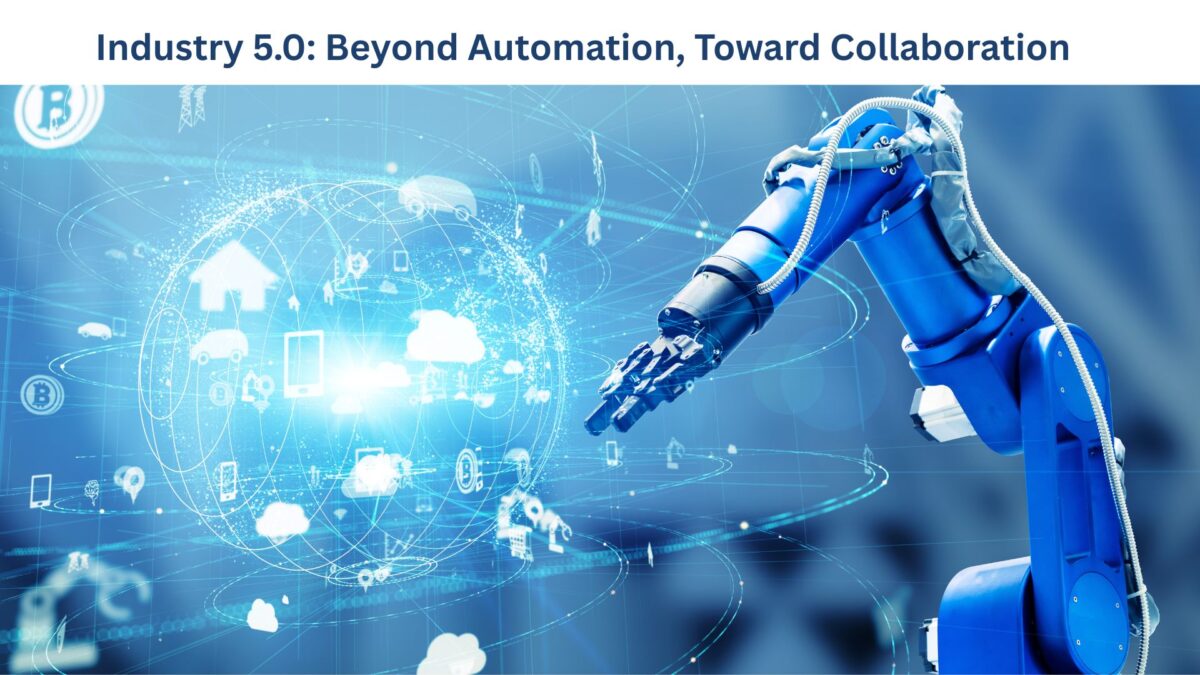
Industry 5.0: Beyond Automation, Towards Collaboration

Categories
Applied Innovation

Industry 5.0: Beyond Automation, Towards Collaboration

The industrial landscape is evolving at a rapid pace, moving beyond the efficiency-centric automation of Industry 4.0. Industry 5.0 represents the next phase of this technological revolution, focusing on the integration of human-machine collaboration, sustainability, and ethical artificial intelligence (AI) to reshape the future of industry.

Unlike its predecessor, Industry 5.0 does not aim to replace human workers with machines but rather to enhance human potential by empowering them with AI-driven tools and systems.

This shift towards a more holistic and human-centric approach to industrial innovation is driven by the desire to create a more resilient, sustainable, and socially responsible industrial environment.

Industry 5.0 vs. Industry 4.0: Understanding the Shift

While both Industry 4.0 and Industry 5.0 are founded on data-driven automation, the way they incorporate human involvement is fundamentally different. Industry 4.0 focused on automation and efficiency, often reducing the role of humans. In contrast, Industry 5.0 places a strong emphasis on human-centricity and sustainability, with humans at the core of decision-making and value creation alongside AI and automation technologies.

The Key Features of Industry 5.0

At the heart of Industry 5.0 lies the recognition that human creativity and intelligence are irreplaceable in manufacturing. It diverges from Industry 4.0 by emphasizing collaborative AI-based systems that prioritize three main aspects: AI that complements human skills rather than fully replacing workers, tailored production to suit individual strengths, and improved work conditions stemming from reduced repetitive work, all of which boost job satisfaction and employee well-being. This sees AI as a strategic ally, fostering innovation while keeping humans central to industrial processes.

Industry 5.0 also champions sustainable and ethical AI practices. It incorporates the circular economy into industrial planning, which includes minimizing waste and optimizing material use. Moreover, it employs AI to create environmentally friendly manufacturing methods, such as cutting emissions and improving resource efficiency.

Transparency and fairness in AI operations are paramount, ensuring equitable decision-making without bias. This holistic approach to AI integration promotes an industrial landscape that values human contribution and environmental stewardship. This comprehensive approach to industry success now requires companies to be evaluated on both financial performance and their environmental footprint and social contributions.

Cobots, or collaborative robots, are central to Industry 5.0’s human-machine integration. These AI-powered helpers operate alongside humans, enhancing precision and adaptability in manufacturing. They also bolster workplace safety by intelligently monitoring environments and minimizing risks. Unlike traditional automation, cobots tailor production systems to incorporate human expertise, refining automated procedures. This represents a shift in industrial thinking, where AI serves to complement rather than replace human intelligence.

Resilience in Industry 5.0: Preparing for Global Disruptions

Recent challenges such as the COVID-19 pandemic and geopolitical uncertainties highlight the urgency for versatile industrial systems. Industry 5.0 emerges as a solution, introducing decentralized smart factories capable of maintaining operations amidst supply chain disruptions. Predictive analytics driven by AI are central to this approach, enabling anticipation and risk mitigation prior to reaching critical stages. Additionally, energy-efficient automation is a key component, offering dual benefits of cost reduction and environmental footprint minimization. This enhanced resilience equips companies to better withstand potential future crises.

Beyond Manufacturing: Industry 5.0’s Expanding Influence

The principles of Industry 5.0 extend beyond manufacturing, influencing various industries. One such area is AI-driven healthcare innovation, which involves using AI algorithms for personalized medicine and automated medical diagnostics to reduce errors and enhance patient outcomes. Additionally, it emphasizes the ethical application of AI to ensure fair and transparent decision-making in healthcare. Another is smart cities and infrastructure, where AI aids in optimizing urban sustainability through advanced urban planning and managing energy grids efficiently. Sustainable agriculture also benefits from Industry 5.0 with the introduction of precision farming to minimize resource waste and AI-managed supply chains to bolster food security. This evolution aims to harmonize technology integration across sectors, prioritizing both efficiency and sustainability.

Strategic Adoption: How Businesses Can Transition

To embrace the era of Industry 5.0, companies are advised to undertake several strategic steps. Firstly, they should integrate AI-assisted collaboration tools that are designed to complement the capabilities of human workers rather than outright replace them. This approach ensures that the workforce remains an essential part of the industrial process, leveraging technology to enhance their productivity and efficiency.

Secondly, businesses should shift towards incorporating sustainable production models that are aligned with the principles of the circular economy. This means adopting practices that reduce waste, promote resource recycling, and encourage the longevity of products. Thirdly, establishing ethical AI governance is crucial to minimize the risks of bias in decision-making processes and to enhance transparency. This involves creating guidelines and frameworks that ensure AI systems are fair and accountable. Lastly, investing in human-AI partnerships through workforce upskilling is vital.

By training employees to work effectively alongside intelligent systems, companies can foster a collaborative environment where humans and AI co-exist and learn from one another. This focus on human-centric innovation empowers organizations to be at the forefront of the Industry 5.0 revolution, leading the way in the integration of advanced technologies while keeping human well-being and societal impact at the core of their strategies.

Takeaway

Industry 5.0 represents a significant pivot towards a more resilient, sustainable, and ethical industrial future. As technology advances, the balance between AI-driven efficiency and human creativity becomes increasingly important. Businesses that embrace Industry 5.0 principles will find themselves at the forefront of a new era that values both technological prowess and the ingenuity of human workers.

Reach out to us at open-innovator@quotients.com or drop us a line to delve into the transformative potential of groundbreaking technologies. We’d love to explore the possibilities with you

Categories
Applied Innovation

AI Agents: Revolutionizing Efficiency and Productivity Across Industries

Categories
Applied Innovation

AI Agents: Revolutionizing Efficiency and Productivity Across Industries

In order to increase productivity and efficiency in a variety of fields, artificial intelligence (AI) agents are highly advanced autonomous systems created to carry out activities on users’ behalf. With the use of natural language processing and machine learning, these agents may function independently or semi-autonomously, interacting with their surroundings and gradually improving their performance.

Definition and Functionality

Intelligent systems that can carry out tasks on their own without direct human assistance are known as AI agents. They are able to comprehend human input, decide, and act in accordance with preset objectives. With the help of these features, AI agents may carry out a variety of activities, including task automation, data extraction, and customer support interactions. AI agents are able to continually learn from their interactions and enhance their effectiveness over time by utilizing machine learning and natural language processing.

Key Features of AI Agents

The autonomy of AI bots is one of its distinguishing features. Based on their programming and the information they get from their surroundings, these autonomous systems are able to make judgments. AI agents that are autonomous may carry out activities without continual oversight, which helps them deal with challenging and changing circumstances.

Through self-learning processes, AI agents are able to learn and adapt. They may find trends, enhance their decision-making, and adjust to new knowledge by examining data and user interactions. AI agents are guaranteed to stay applicable and efficient in dynamic situations because to their capacity for continual learning.

AI agents are particularly good at handling repetitive activities like answering consumer questions, transferring data between apps, and automating repetitive procedures. AI agents take care of these duties, freeing up human resources so that workers may concentrate on more intricate and strategic jobs. This increases overall operational efficiency in addition to productivity.

Applications in Various Industries

AI agents are being incorporated more and more into a variety of industries, such as education, IT support, and customer service. Their capacity to handle several jobs at once enables companies to greatly increase operational efficiency.

AI agents are essential to improving client experiences in the customer service sector. When needed, they may escalate complicated situations to human representatives, fix problems, and reply to questions. Natural language processing-capable AI agents are able to comprehend and interpret consumer inquiries, giving prompt, precise answers. This lessens the effort for customer support workers while simultaneously increasing customer happiness.

By automating procedures like ticket management, system monitoring, and troubleshooting, AI agents are revolutionizing IT assistance. These agents are capable of doing standard duties including password resets, network troubleshooting, and technical support. AI agents increase service levels, speed up response times, and free up IT personnel to work on more important projects like infrastructure management and cybersecurity by automating these procedures.

AI agents are also expected to help the education industry by better handling administrative duties and customizing learning experiences. AI systems are able to examine student data in order to spot trends in learning, suggest individualized study schedules, and give immediate feedback. They may also automate administrative duties including scheduling, grading, and parent and student communications. This raises the standard of education by enabling teachers to devote more time to mentorship and instruction.

Future Prospects

By 2025, it’s anticipated that the field of AI agents will have grown considerably, with big tech firms like Microsoft and Nvidia making considerable investments in their creation. This projected expansion points to a move toward more comprehensive AI systems that can manage progressively challenging jobs on their own.

It is anticipated that AI bots will get more competent and adaptable as the technology develops. AI agents will be able to do a wider variety of jobs more accurately and efficiently thanks to developments in robotics, machine learning techniques, and natural language processing. AI agents may, for instance, be able to carry out intricate data analysis, offer sophisticated medical diagnostics, and even carry out manual labor in sectors like manufacturing and healthcare.

Workflows and commercial processes will increasingly incorporate AI agents. AI agents will be used by organizations to improve decision-making, optimize resource allocation, and simplify operations. The capabilities of AI agents will be further improved by integration with other technologies, such as blockchain and the Internet of Things (IoT). AI agents might, for example, use data from Internet of Things devices to proactively plan maintenance and forecast equipment breakdowns.

Humans and AI systems will work together more in the future of AI agents. AI agents will enhance human abilities and knowledge rather than replace them. While AI agents take care of monotonous and data-intensive jobs, humans will be able to concentrate on tasks that call for creativity, critical thinking, and emotional intelligence thanks to this cooperative approach, also known as enhanced intelligence. Across industries, this convergence will boost innovation and productivity.

Some Considerations

It will be critical to address ethical issues as AI agents proliferate. Careful management is required of issues including data privacy, bias in AI systems, and the possible effect on employment. To guarantee that AI agents are created and used properly, organizations must put strong ethical frameworks and norms into place. To preserve confidence and guarantee just and equal results, AI decision-making procedures must be transparent and accountable.

Governments and regulatory bodies will play a crucial role in shaping the future of AI agents. Establishing comprehensive regulatory frameworks will be necessary to address legal, ethical, and safety concerns associated with AI technologies. These frameworks will provide guidelines for the development, deployment, and use of AI agents, ensuring that they are aligned with societal values and norms. Collaboration between industry stakeholders, policymakers, and academia will be essential to create a balanced and effective regulatory environment. The future of AI agents will be significantly shaped by governments and regulatory agencies. To handle the ethical, legal, and safety issues related to AI technology, extensive regulatory frameworks will need to be established. These frameworks will offer recommendations for the creation, application, and deployment of AI agents, guaranteeing that they conform to social norms and values. To establish a fair and efficient regulatory framework, cooperation between academic institutions, policymakers, and industrial players will be crucial.

Take away

The use of artificial intelligence in a variety of disciplines is being revolutionized by AI agents. They are important resources for businesses looking to increase production and efficiency because of their independence, capacity for learning, and ability to carry out tasks. Businesses may enhance decision-making, streamline processes, and provide better experiences for their stakeholders and consumers by incorporating AI agents into customer service, IT support, education, and other domains.

With growing investment and technological developments propelling their growth, AI agents have a bright future. AI agents will change how businesses function and open up new avenues for innovation as they get more competent, integrated, and cooperative. To guarantee the appropriate and fair use of AI agents, it is imperative to address ethical issues and create regulatory frameworks.

In conclusion, by automating processes, increasing productivity, and facilitating human-AI cooperation, AI agents have the potential to completely transform a variety of sectors. Adopting this game-changing technology will be essential to maintaining competitiveness in the quickly changing digital market.

Categories
Applied Innovation

How AI Ops is the future of intelligent IT operations management

Categories
Applied Innovation

How AI Ops is the future of intelligent IT operations management

In today’s fast-paced digital world, where organisations rely significantly on technology to power their operations, guaranteeing IT systems’ maximum performance and availability has become critical. AIOps (Artificial Intelligence for IT Operations) is a new method that promises to alter how businesses manage their IT infrastructures. AIOps solutions are positioned to simplify and optimise IT operations by leveraging powerful machine learning and artificial intelligence, resulting in increased productivity, lower downtime, and better overall business outcomes.

At its heart, AIOps systems are intended to combine and interpret massive volumes of data from many sources in real time, offering complete visibility into IT processes. This data-driven strategy allows IT teams to gather useful insights and make educated decisions based on a complete picture of their systems’ health and performance.

Intelligent automation is a major aspect of AIOps platforms. These systems can use machine learning algorithms to analyse trends and fix concerns before they affect the system. Routine and time-consuming processes like software patching, configuration management, and incident response may be automated, allowing IT professionals to concentrate on strategic projects that deliver business value.

Real-time monitoring and intelligent alerting are other important features of AIOps platforms. These solutions continually monitor the whole IT environment, alerting teams to irregularities and enabling preventive steps to avoid interruptions. Advanced analytics and machine learning approaches are used to prioritise warnings, minimising noise and ensuring significant concerns are addressed quickly.

When problems develop, AIOps solutions automate the root cause analysis process, employing powerful analytics and machine learning capabilities to identify the exact source of the problem. This expedited root cause identification considerably decreases mean time to resolution (MTTR), mitigating disruptions and guaranteeing business continuity.

User-friendly interfaces are another distinguishing feature of good AIOps platforms. Clear dashboards, actionable information, and customisable alerts let IT personnel make quick decisions, allowing them to take preventive actions and maintain peak system performance.

The benefits of AIOps systems go beyond operational efficiency. These solutions provide rapid issue detection and resolution by delivering real-time insights into IT performance, reducing downtime and improving overall dependability. Furthermore, AIOps platforms can predict prospective issues by analysing past data and trends, allowing organisations to resolve them before they escalate, resulting in a more robust and stable IT environment.

However, like with any technology, AIOps platforms have problems. Data quality concerns can have a substantial impact on the success of these platforms, which are only as good as the data they get and the algorithms they are trained with. Maintaining correct and up-to-date data is critical for peak performance.

Deployment and integration problems might also arise, since establishing and integrating AIOps systems can take time and demand significant resources. Furthermore, overreliance on automation might result in a single point of failure and limit IT teams’ capacity to react to new scenarios. Ethical problems around AI technology, such as the perpetuation of existing biases in data sets, must also be addressed in order to ensure the ethical and fair adoption of AI platforms.

Despite these limitations, the future of AIOps looks promising. As digital transformation programmes gain traction, demand for AIOps is projected to increase, bridging the gap between varied, dynamic IT infrastructures and user expectations for minimal interruption to application performance and availability.

In conclusion, AIOps is the future of intelligent IT operations management. These platforms, which use the power of sophisticated machine learning and artificial intelligence, enable organisations to simplify their IT processes, improve productivity, and drive commercial success. As technology evolves and matures, resolving its issues will be critical to achieving its full potential and ushering in a new era of intelligent, data-driven IT operations management.

Contact us at open-innovator@quotients.com to schedule a consultation and explore the transformative potential of this innovative technology