



Categories
Events

From Hype to Cash Flow: What Will Actually Make Money in AI by 2026

Categories
Events

From Hype to Cash Flow: What Will Actually Make Money in AI by 2026

Open Innovator Knowledge Session | January 30, 2026

Open Innovator organized a no-holds-barred knowledge session on “From Hype to Cash Flow: What Will Actually Make Money in AI by 2026” on January 30, 2026, cutting through the noise to address the market’s critical pivot point. As moderator Naman Kothari put it: “Everyone is an AI expert in today’s world. We have reached peak hype.” But as 2026 unfolds, the market has developed low tolerance for potential and high hunger for profit.

The gold rush is over; we’re in the settlement phase where nobody cares how cool your algorithm is if your cash flow is stuck in a tailspin. This candid session brought together three investors and growth strategists who literally spend their days separating signal from noise, steering companies through high-stakes waters where the question isn’t about the technologyโ€”it’s about whether the same old business logic dressed in a new hoodie can actually generate sustainable revenue.

Expert Panel

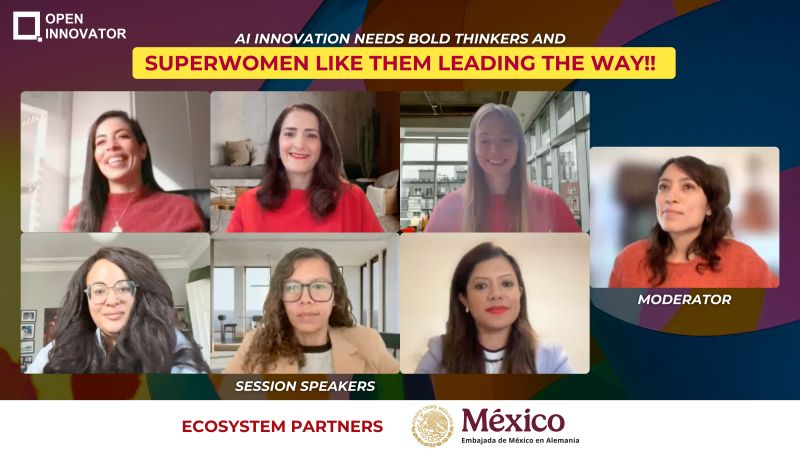
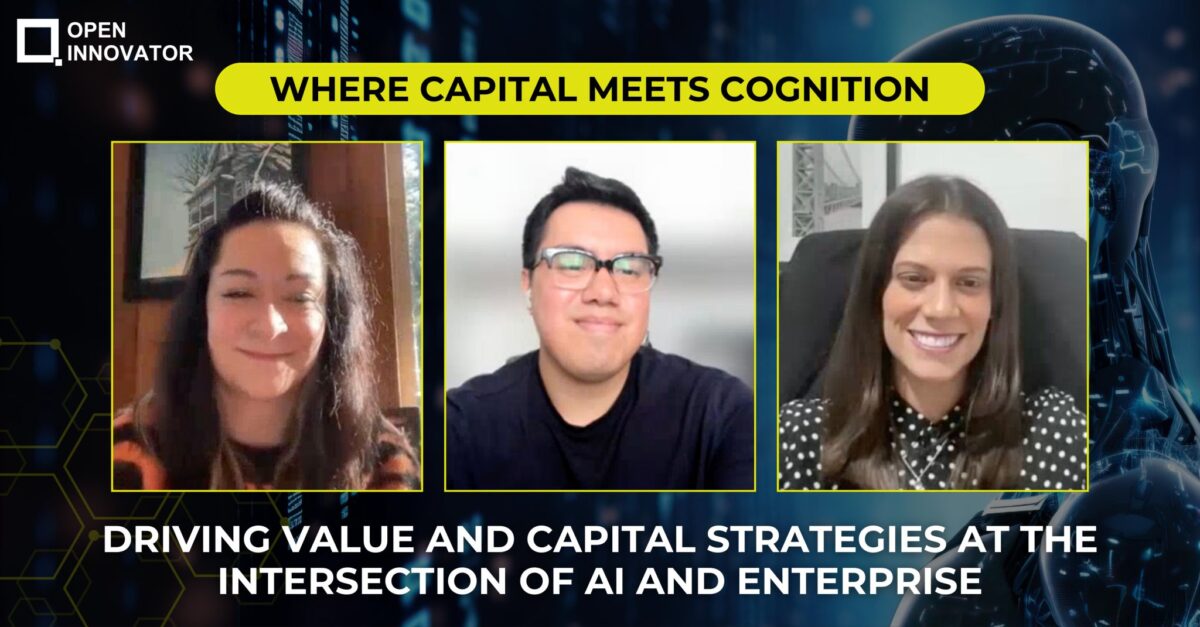
The session convened three experts who evaluate AI investments from distinctly different but complementary perspectives:

Deborah Boechat – Founder & CEO of Onit Center, bringing over 10 years of global experience helping startups and scaleups turn innovation into revenue through international expansion across the US, Latin America, Europe, and Asia Pacific, with strategic growth and capital connections that bridge four continents.

Carolina Castilla – Creator of the world’s first Artificial Intelligence Awareness Experiment (Love My Robot, Inc.) and Venture Capitalist at VC Lab, bringing culture, capital, and consciousness into the AI economy. An electronic music producer who uses performances as a “Trojan horse” to access Fortune 100 meetings, Carolina has developed AI-powered risk assessment tools that analyze startup viability in 30 seconds based on 100 questions VCs actually ask.

Hugo Lara – Investment Associate at BDev Ventures, backing Seed to Series B B2B software companies with real traction and a relentless focus on revenue generation, specifically targeting companies at the half-million ARR mark who are ready to scale to $5-10 million.

The discussion was moderated by Naman Kothari from NASSCOM, who framed the central challenge: “The era of cheap capital and high hype is over. We are now in the era of cash flow.”

The Litmus Test: Real Revenue Driver or Shiny Distraction?

The Founder’s Dilemma: People vs. AI Tools

Deborah opened with a fundamental tension she observes across continents: founders struggling between hiring more people or substituting them with AI tools that might perform similarly.

“Working with founders in their decision-making process around growth, I notice there’s a struggle: Should I hire more people or substitute that amount of people for a tech or AI tool that could perform in a maybe similar way?”

Her litmus test centers on understanding the business model and cash flow internally. The critical question: Is an AI tool a suitable solution, or can existing team members handle it?

“From a realistic standpoint, founders need good balance. Everyone wants to go for AIโ€”’Show me what’s trending right now in AI that can help me solve this problem.’ But technology is a tool, a great guidance. There’s a need to keep balance between both, respecting budget.”

Budget respect is paramount, especially for companies seeking funding. “Technology is globalizedโ€”even though it’s different demographics and geographies, at the end of the day, it’s a similar struggle or decision-making process.”

The 30-Second Verdict: Can AI Replace Investor Intuition?

Carolina brought a provocative perspective: she can assess investment readiness in 30 seconds using AI analysis of pitch decks, powered by research collected from interviewing VCs at startup competitions.

“I started interviewing VCs and collecting dataโ€”I got 100 questions that VCs ask to know if a startup is going to succeed. I sat with my CTO and started prompting four years ago. Now I can get a pitch deck and say, ‘OK, these are the red flags or green flags of this startup.'”

But she immediately qualified this capability: “That doesn’t mean anything. I’m a general manager of a fund. My responsibility is make money for my investors, make my startups successful. But my real mission is asking: How do you personally separate innovation that improves human life from innovation that just accelerates everything, focusing on profits without taking care of workers who helped build the system?”

Her investment philosophy: “I follow founders with compelling value proposition. Obviously cash flow is the most important, but the question is more about human natureโ€”where is this going and why are we putting so much into this?”

Integration Over Transformation: The Sustainable Path

Hugo provided the clearest framework for distinguishing temporary spikes from sustainable paths to $5-10 million cash flow.

“Ask the fundamental question: Is AI actually needed here, or is this just a nice-to-have that will pass at some point?”

He emphasized this is especially critical for companies targeting enterprise segments, where deals can be large and create the illusion of rapid traction.

The Integration Principle: “What I believe is the type of approach that looks to integrate will stick better than the type of approach that tries to transform the whole process. Look at it like trying to convert a combustion gas car into an EVโ€”also while the car is moving. That’s going to be very hard. It’s going to sound promising, but companies rarely have time to wait for all that disruption to happen.”

His prescription: “When companies try to integrate into current discussionsโ€”pricing, churn, revenue growthโ€”decisions that have mattered since the beginning, if you make your way into those conversations and are consistent about delivering results, that has better chance to stick past the initial early adopters.”

The warning: Many companies at the hype peak promised complete transformations of critical processes like sales and procurementโ€”strategic areas that are extremely hard to change in short windows. “That’s why you hear headlines about ‘AI is not returning anything on investment’โ€”because many ideas started with trying to change the way business is done instead of integrating into the way business is actually carried out nowadays.”

The Moats and Misfires: Where Investors See Value

Will AI Augment Capital Decisions or Will Human Judgment Remain the Final Moat?

Carolina’s answer was unequivocal but nuanced: “I will not call it intuition. AI helps meโ€”I get a pitch deck and in 30 seconds I know if I’m introducing this startup to my advisors. But that is just an assessment. The real thing about investing is human and is responsibility.”

She outlined what AI can and cannot do:

What AI Can Do:

  • Save time understanding a business, company, founder, team, readiness, business plan, competitive advantage, compelling value proposition
  • Provide readiness scores and assessments

What AI Cannot Do:

  • Provide responsibility (“The founder gets the money and goes to Hawaii to party”)
  • Replace due diligence teams that verify data accuracy
  • Ensure founder tenacity to respond to boards and continue raising money

Her perspective on the CEO role: “Everybody loves their startups, doing their products, doing demos. But the CEO life is not thatโ€”you get a team to do all that. You just keep knocking doors and raise money for the rest of your startup’s life.”

Bottom line: “Yes, we can get some readiness, but no, AI doesn’t give us responsibility.”

The Phantom Growth Trap: When Momentum Isn’t Scalable

Hugo identified the most common false confidence at the $500K+ ARR stage: “Founders often feel like they’ve nailed sales. When you talk to them, they actually don’t have a playbookโ€”their sales is still founder-led and network-driven.”

This is perfectly fine, but it’s often not scalable or repeatable. “If selling depends on you being at the right place at the right time, talking to the right person, that’s very hard to replicate at scale. It can be a way of building a business, but not necessarily one that will generate double-digit growth, which is what you need for venture-backable companies.”

BDev Ventures specifically looks for $1 million+ ARR because “we back-tested it and found this is where companies usually have a go-to-market strategy that’s not evolving very fast and a sales team that can replicate the playbook.”

But the verification is critical: “Sometimes that’s not the case, and that’s certainly one of the most common false positives I find in day-to-day conversations.”

Global Expansion: Strength or Distraction?

Deborah brought crucial perspective on when international growth strengthens cash flow versus when it becomes a distraction from monetization.

The Right Stage to Expand:

  • The company has matured in their current market
  • They have a defined ICP (Ideal Customer Profile)โ€”they know exactly who their client is
  • They have cash flow and revenue coming in
  • The business model is proven, sells well, and is scalable

The Critical Analysis: “If Company X was able to grow in that specific market, if they dominate what they’re doing from a scalable perspective even though it’s local, that’s good momentum to start looking outside. Look at other markets where your ICP has similar behavior.”

Important Considerations Beyond Finding Customers:

  • Some countries/regions have barriers to entry
  • Understand the new area or region thoroughly
  • The purpose is more clients, opportunities, and revenueโ€”not just a selling point like “we’re operating in this country”

Deborah’s warning: “If they’re not being profitable, it’s just not effective. It’s better for these companies to stay where they are and shore up before expanding to a new region.”

Her formula: “It’s all about good timing and understanding the numbers. Cash is kingโ€”it’s important to respect timing and money.”

Practical Investment Criteria: What Actually Matters

How to Decide: Double Down or Write Off?

When asked how to decide whether to double down on an AI investment or write it off as sunk cost, Hugo emphasized: “You really have to take a very close look at who’s actually winning.”

While cash flow is the lifeblood, for most of the growth stage “you’re going to look at how fast revenue is growingโ€”that’s the first thing I would look at to prove the bets they’re making are paying off.”

The deeper analysis: “As Deborah mentioned, if growth came from a bet placed on global expansion and it actually paid out, that’s talking about not only revenue growth but the execution of something as complex as going to another country and actually selling. Those are signals about the team, not just superficial stages or numbers.”

Hugo’s framework: “There has to be a story and narrative behind the success that you believe will continue. That’s where you double down. The contrary is where you’d be more cautiousโ€”about companies making bets that aren’t paying off one after the other.”

Building Models vs. Solving Real Problems

When asked whether investors prefer AI companies building models or applying AI to solve real business problems, Carolina identified a nuanced trade-off:

The Risk of Building on Existing Platforms: “If you just build your agents or things on top of Anthropic or OpenAI, there is a risk.”

The Attraction of Proprietary LLMs: “Obviously you’re more attractive if you’re building your own LLM. But now, competing with billion and trillion-dollar companies like OpenAI is impossible.”

What She Actually Looks For:

  • Privacy by design
  • Auditability
  • Bias testing
  • Strong security
  • Business models that don’t depend on exploiting attention or selling data

Carolina’s fund structure reflects this philosophy: “We’re investing seed in AI for enterprise, but we left 20% of the fund for AI that invests in the creator economy.”

Her stance on generative AI: “I’m totally against Gen AI and the tokenization model. I like to invest in businesses where the business model is not exploiting.”

Rapid Fire Insights: Gut Reactions from the Front Lines

Founder-Market Fit vs. Aggressive Unit Economics

Hugo’s answer: Founder-market fit.

His reasoning: “I find it has been more durable over time than unit economics. Unit economics becoming so important over the last 10 years is more a product of markets not being able to keep up with amounts of cash needed in new rounds.”

He provided historical context: Ten years ago, a Series A would be $3 million. “Nowadays a Series A can be upwards of $50 million. That’s why investors require companies not only to go for the full hike at all costs, but to make camp whenever possibleโ€”to look at if they’re making money, which you wouldn’t see in the early 2000s or even the 90s.”

The constant across time: “What you will see is always: who are you investing in?”

Can AI Become a Better Limited Partner Than Humans?

Carolina’s answer: False.

Her 15-second defense: “AI is prompted by a human. The human has mistakes by itself. I prompted AI when I was at a very big company, and the AI could think what I was prompting was correct. But I could probably be mistaken. So no, false.”

Dominating One Market vs. Being Average Across Three Continents

Deborah’s answer: Average across three countries.

Her reasoning: “Simply because when you’re in three different economies, worst-case scenario, if there’s a crash in one economy, you still have two to handle your business as an option.”

Will the AI Bubble Burst Before End of 2026?

Unanimous answer: No.

All three panelists agreed the AI bubble will not burst before 2026 ends, though Deborah qualified: “Not that soon.”

Green Flags: What Gets Investors Excited

Deborah: The Global Powerhouse DNA

Green flags that signal a global powerhouse, not just a tool seller:

  1. They have clients and revenue coming in
  2. Product-market fit is established – they understand exactly who their customer is
  3. With that configuration properly understood, scaling becomes easier

Deborah’s summary: “Definitely great flags: #1, do they have clients? If yes, they’re getting started. But certainly product-market fitโ€”that’s definitely a path to scalability.”

On MVP stage specifically: “Do you have demand? Do you have people who are going to purchase your solution? It’s important to understand to which point AI is going to help or substitute humans. That’s something investors look at: How far can you go without our money? If you can make a lot of sales with less effort, that’s something investors will look at.”

Carolina: Compelling Value Proposition Wins

When asked what signal her AI picks up that humans might miss that makes her lean forward, Carolina’s answer was simple and direct: “Compelling value proposition.”

Her AI analyzes 100 questions to answer one prompt: “Is this startup going to succeed?” The tool came from organizing Startup World Cup regionals with access to the best startups and judges globally.

The workflow: “In 30 seconds it tells me how ready this pitch is for due diligence. That doesn’t mean what they say is realโ€”there needs to be a person looking at data, team, resume, how they manage finances. It’s just a tool that tells me, ‘OK, this is a startup worth faster introduction than the other one.'”

Her cautionary tale: She once had a founder claim $30 million in signed MOUs in a pitch. “They fooled all the judges. When we went into diligence, everything was a lie. So I get data from the pitchโ€”’Oh, what an amazing startup.’ Let’s get the meeting. ‘Oh, this is not a breakthrough. The LLM is not proprietaryโ€”they took 60% of OpenAI.'”

The conclusion: “AI can analyze data that humans present, but there’s due diligence and responsibility from the GM, investor, and founder to organize a business that’s good for the world, the team, the investors, and all stakeholders.”

Hugo: Trust Built Through Long Conversations

Beyond ARR and spreadsheets, Hugo looks for behavioral green flagsโ€”specifically how founders talk about cash flow.

“Now that AI is helping us do most manual processes at VC funds to save time, I’m sure from today until probably end of this year, most funds will switch to spending 90-95% of their time building trust with founders they’re looking to invest in and nurturing those relationships.”

Why? “At the end of the day, it’s like marrying for at least 10 years with a company. You need to be sure you’re investing in people you trust.”

What stands out in deals:

  • Who’s the founder? What have they done before?
  • How much do they actually know their business?
  • Can they articulate a narrative beyond ‘give me this money and I’ll generate this result’?
  • Can they go into the workings? Point out assumptions and levers that need to be pulled?

Hugo’s honest assessment: “I’ve had answers like, ‘I will work harder than the competition,’ and I’m sure they willโ€”but that’s very hard for me to buy.”

BDev Ventures’ process reflects this: “Our investment process is very longโ€”three to five months. But for the 60+ companies in our portfolio, that’s been beneficial. We’ve been working together for a good amount of time and know each other very well. Founders know if we’re the right investor; we’ve built enough conviction to make a decision.”

His conclusion: “As much as the market pushes for faster due diligence, I think it’s always going to be an investment in people. My green flag would be that I trust the person across the screen.”

The Five-Year Outlook: Infrastructure, Applications, or Tools?

When asked what type of AI investment will give the highest returns over the next five years, the panel offered varied but infrastructure-leaning perspectives:

Carolina: “I feel mobility could be a big one.”

Hugo: “I think infrastructureโ€”but the infrastructure that could make a big difference. I’m not sure all VC funds will be able to invest in that, but I do think it’s a type of technology that could change people’s lives.”

Deborah: “I would also go with Hugo on infrastructure. I feel like it’s a good momentum. To consider five years from now with the evolution of technology and AI toolsโ€”we’re at the very beginning. As years go by, people are just going to think out-of-the-box and bring in solutions.”

Key Takeaways for 2026

1. Balance Is Everything

Technology is a tool and great guidance, but founders need balance between AI solutions and human capabilities, always respecting budget constraints.

2. Integration Beats Transformation

AI approaches that integrate into current business processes (pricing, churn, revenue growth) stick better than those promising complete transformations of strategic functions.

3. Cash Flow Is Still King

In 2026, the market has low tolerance for potential and high hunger for profit. Durability of the problem being solved matters more than algorithmic sophistication.

4. Founder-Market Fit Endures

While unit economics matter, founder-market fit has proven more durable over time. Investors are spending 90-95% of their time building trust with founders.

5. Scalability Requires More Than Founder-Led Sales

At $500K+ ARR, the most common false confidence is thinking you’ve “nailed sales” when it’s still founder-led and network-drivenโ€”hard to replicate at scale.

6. Global Expansion Timing Is Critical

Expand only when you’ve dominated your current market with proven ICP, cash flow, and scalable business model. Otherwise, it’s a distraction from monetization.

7. AI Cannot Replace Due Diligence Responsibility

AI can assess readiness in 30 seconds, but it cannot verify data accuracy, ensure founder tenacity, or guarantee they won’t go to Hawaii instead of executing.

8. Compelling Value Proposition Remains Supreme

Despite all the AI analysis tools, the fundamental question remains: Does this solve a real problem in a way customers will pay for consistently?

Conclusion: From Gold Rush to Settlement Phase

As Naman concluded: “The AI gold rush is moving into its most important phaseโ€”the phase of accountability.”

The unified message from all three investors: “In 2026, the market isn’t looking for the most advanced AI. It’s looking for the most indispensable business.”

From Deborah’s insights on global expansion timing to Carolina’s perspective on augmented decision-making while maintaining human responsibility, to Hugo’s warnings about phantom growth traps, the consensus is clear: Stop looking at valuation. Start looking at value.

The era of cheap capital and AI labels on every pitch deck is over. The settlement phase has begun, and in this phase, the question isn’t whether your algorithm is coolโ€”it’s whether your business logic actually generates predictable, sustainable cash flow.

This Open Innovator Knowledge Session delivered a pragmatic master class on separating AI signal from noise in 2026. Deep appreciation to the expert panelโ€”Deborah Boechat (Onit Center), Carolina Castilla (VC Lab/Love My Robot), and Hugo Lara (BDev Ventures)โ€”for cutting through the hype and providing the real-world math on what will actually make money in AI.

Categories
Events

The AI Arms Race: Defense vs. Offense

Categories
Events

The AI Arms Race: Defense vs. Offense

Open Innovator Knowledge Session | January 27, 2026

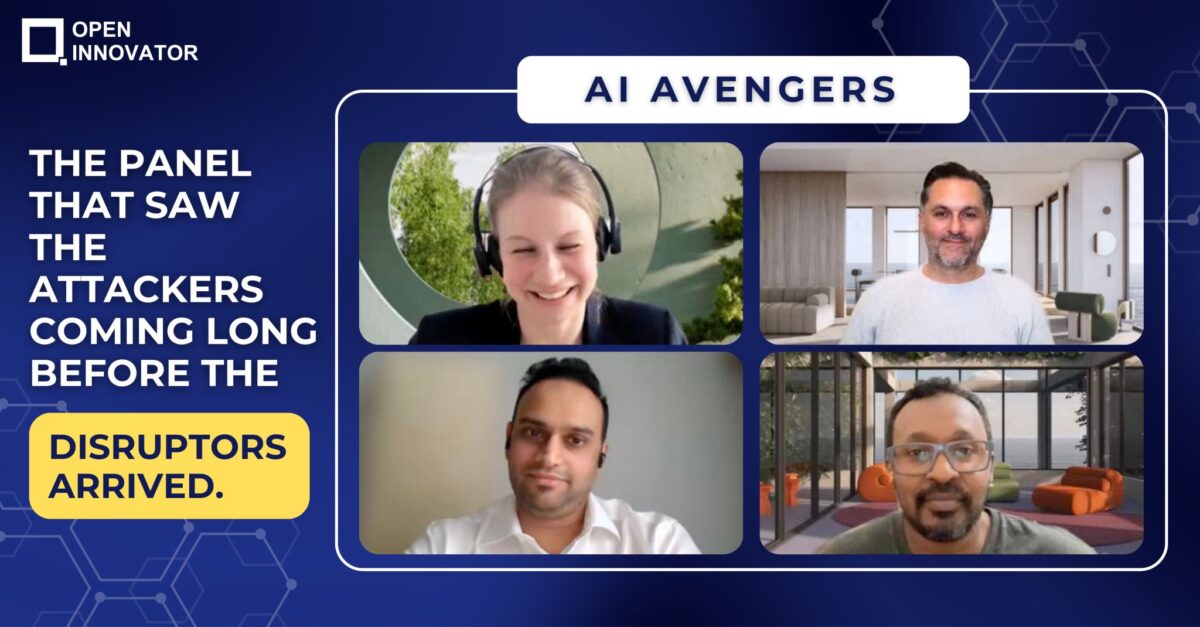
Open Innovator organized a critical knowledge session on “The AI Arms Race: Defense vs. Offense” on January 27, 2026, addressing one of the most urgent challenges facing organizations today: the exponential acceleration of AI-powered cyber threats.

With Gartner reporting that cyber attacks now occur every 39 secondsโ€”meaning five companies worldwide face breach attempts during a typical opening introductionโ€”the session explored a stark reality: we are no longer worried about hackers in basements or even organized crime, but about code that doesn’t sleep, doesn’t blink, and operates at speeds human brains cannot perceive.

The panel examined whether AI-driven defenses have finally given organizations a defender’s advantage, or whether we’re simply building taller walls for increasingly sophisticated attackers wielding autonomous digital weapons.

Expert Panel

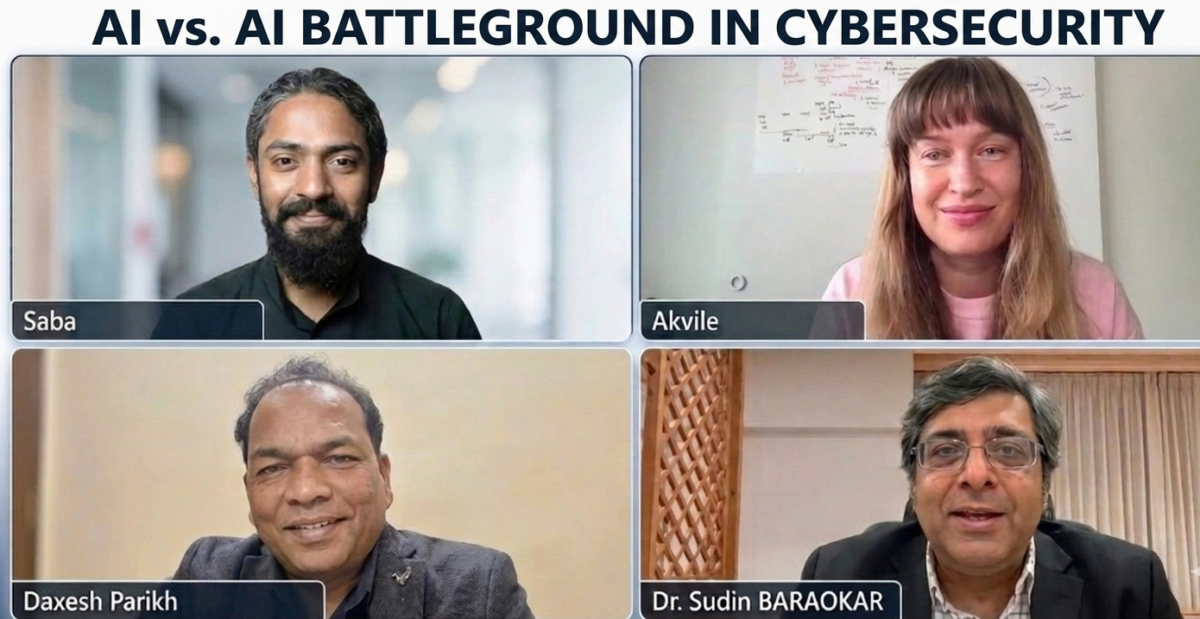
The session convened four cybersecurity leadersโ€”dubbed the “AI Avengers”โ€”bringing expertise from infrastructure security, governance, zero-trust architecture, and enterprise AI deployment:

Clen C Richard – “The Zero Trust Visionary,” multi-award-winning strategist who builds digital immune systems, specializing in environments where trust is never assumed and verification is continuousโ€”even when the entity requesting access looks and sounds exactly like your CEO.

Rudy Shoushany – “The Governance Architect,” Forbes Tech Council veteran who translates cybersecurity from an IT line item into the boardroom’s digital transformation insurance policy, bridging the gap between technical reality and executive decision-making.

Ella Tรผrรผmina – “The AI Readiness Architect” at Siemens and founder of her own AI consulting practice, serving as the bridge between big ambition and big protection, ensuring enterprise AI scaling doesn’t inadvertently leave backdoors open for autonomous intruders.

Fadi Adam – “The Infrastructure Sentinel,” CEH-certified professional who has witnessed the zero moments of corporate security evolution firsthand, ensuring that when AI battles commence, the foundational infrastructure doesn’t just holdโ€”it fights back.

The discussion was expertly moderated by Naman Kothari from NASSCOM, who framed the critical challenge: “We are literally bringing human brains to a machine gun fight.”

The Arms Race Reality: Speed as the New Currency

Naman opened with alarming statistics that set the urgency level:

  • AI-driven phishing attacks have spiked 1,200% in recent months
  • Attacks now happen in milliseconds while traditional human response times are measured in hours
  • 76% of organizations admit they’re struggling to keep pace with AI-powered attack speeds
  • The threat has evolved from Nigerian prince emails to deepfake CEOs on Zoom calls requesting urgent wire transfers

The fundamental question: Has the defender finally gained an advantage, or are we just building more sophisticated defenses for even more sophisticated attacks?

Round One: The Defender’s Advantageโ€”Real or Illusion?

Zero Trust: Coverage Gaps Remain Critical

Clen Richard opened with a sobering reality check: “The defender’s advantage is there, but the asymmetry problem still exists. As defenders, we have to be right 100% of the time. Attackers only have to be right once.”

He highlighted a critical gap: even with AI deployed for threat defense, only 18% of the attack surface is currently covered. The remaining 82% remains vulnerable, demanding urgent attention.

For AI agents specifically, Clen outlined a three-layer verification model essential for zero-trust environments:

Layer 1: Identity – “Who are you?” New frameworks like SPIFFE and Spire use short-lived tokens and auto-credentials to continuously verify AI agent identities.

Layer 2: Behavioral Drift Detection – “What are you becoming?” As AI agents evolve and touch more systems, organizations must detect abnormal patterns and drifts from expected behavior.

Layer 3: Intent Analysis – “Why are you acting like this?” The Explainable AI Index (AEI) helps determine at what confidence level machines should act autonomously, requiring AI to justify decisions and explain why signals were considered malicious.

Clen’s verdict: “Speed is definitely a multiplier, and both attackers and defenders have the advantage. But at the end of the day, it’s the overall maturity in how you handle this that gives defenders the advantage.”

Governance: The Tug of War Where Attackers Stay Ahead

Rudy Shoushany brought the governance perspective with stark honesty: “It’s a tug of war. Winning isโ€”I won’t say we’re not succeeding, but with smart AI and automation, vibe coding has become accessible to all. We’re seeing new attacks where AI itself develops attacks, not just humans anymore.”

He identified a critical escalation: AI agents are now creating their own attacks, moving beyond human-directed threats. With this advancement, attackers aren’t just one step aheadโ€”they’re two or three steps more advanced.

The governance gap is severe. Despite frameworks existing on paper, Rudy noted: “When you put it on the ground, the attacker has always been one step ahead. And now with AI involved, it’s maybe 2 steps or even 3 steps more advanced.”

A disturbing reality persists: “We talk with senior management, and unfortunately, many of them still don’t take the cybersecurity aspect as serious as it is and should beโ€”even with all the bad experiences they’ve faced.”

Rudy pointed to vibe coding as an example of governance failure: organizations allow the technology without proper testing frameworks, creating “a new kind of vulnerabilities in the governance itself.”

His call to action: Management must act faster, more proactively, and “more viciously in a defense perspective,” potentially implementing blue team/red team methodologies to constantly work toward strong governance.

Enterprise Reality: Speed Meets Scale Challenges

Ella Tรผrรผmina brought practical insights from working with Siemens-scale enterprises and her own AI consulting practice launched in 2025. Her philosophy: move from “progress to innovation” by first evaluating whether organizations truly need AI or if automation would suffice, then building ecosystems that satisfy ROI ambitions.

“Not building taller walls, but bringing defense in other dimensions and making governance sexy again,” Ella explained, noting that enterprise scale offers both advantages and challenges.

The upside: When a CEO issues a directive in a large organization, implementation happens universally. “If your CEO addresses the science, the circular which everyone has to implement from today evening, then people just do it.”

The downside: Global enterprises span cultures, regions, and tools, making rollout time-consuming. However, with proper lean management and change management, “people also have fire in their eyes and they want to go through with you.”

Ella emphasized a three-layer pyramid approach: Governance first, then architecture, then deployment with continuous monitoring. The monitoring is criticalโ€”tracking AI performance against KPIs and swapping models when performance degrades.

Infrastructure: The Foundation Must Fight Back

Fadi Adam brought the conversation to the technical foundation, emphasizing that AI enhances compliance with frameworks like GDPR, HIPAA, and PCI, but only when organizations actually follow these regulations.

His core belief: “AI is a tool to enhance. We cannot just replace humans. You cannot replace humans.”

Fadi warned against the dangerous assumption that AI tools can simply replace human security professionals: “Most companies think ‘I will buy this AI tool to do the job of a human,’ but after some time they have breach or loophole they cannot close because AI will not support full automation.”

He stressed several critical practices:

  • Zero trust always – “Never trust, always verify, revalidations”
  • Patch accurately and test before going live – citing the CrowdStrike incident where untested patches caused massive system failures
  • Test patches outside working hours to avoid business interruption
  • Maintain updated disaster recovery plans for business continuity

Fadi’s perspective on the arms race: “AI will enhance the defense mechanism, but the question is: when we implement AI, are we ready for it? Because if you’re not ready, something goes wrong always.”

Round Two: Battlefield-Specific Challenges

Securing Borderless Infrastructure When Code Is the Person

Fadi tackled the challenge of autonomous AI agents moving freely through networks. His prescription:

1. Zero trust as the foundation – Always verify, never assume 2. Short-lived credentials – Not long-lived credentials that create persistent vulnerabilities
3. AI agent identity management – Each agent must have a verified identity tracking what it does, sees, and shares 4. Kill switches – Manual override capability when AI executes unauthorized code 5. Comparable models and tools – Multiple validation systems 6. Rule-based AND behavior-based restrictions – Dual-layer control mechanisms

“The AI agent should always be looked over through the identityโ€”what it does, what it should do, what it should see, and what it should share,” Fadi emphasized, noting the lethal risk of AI accessing and sharing data without proper constraints.

Shadow AI: Innovation Underground or Security Nightmare?

Rudy addressed the explosive challenge of shadow AIโ€”employees using unvetted AI tools to move faster, creating unauthorized backdoors.

His counterintuitive solution: Don’t try to ban it. You can’t.

“I did something like that 20 years ago,” Rudy admitted. “If you kill innovation in an organization, employees will be frustrated and find alternative ways. This is shadow IT, shadow AI. Organizations get it wrongโ€”you cannot ban it. It’s there. It will always remain.”

His approach: The Sandbox Freedom Environment

Instead of driving innovation underground, create approved AI environments with clear boundaries:

  • Data boundaries are clear
  • Access is transparent
  • It’s freedom, not surveillance
  • In a controlled environment

“Do whatever you want there, but give us reporting. Let us learn. Most initiatives that go underground have no reportingโ€”I never learn what’s happening. I’m changing this to get the output, learn, and put it back in the enterprise.”

Rudy’s rule of thumb for C-suites: “If employees are faster than your policy cycle, guess what? The policies are obsolete.”

This is the current reality with AI. Organizations need agility in both delivery and policy creation. “Governance is not there to police. Governance is there to enhance the environment in a very subtle way so everyone knows it’s a tool to drive innovation and enable, but with the guardrails we need.”

Security by Design: Speed AND Safety

Ella challenged the false choice between innovation speed and security: “Sometimes it may seem like you have to choose between speed and safety and fail at both. But the real insight is that security by design doesn’t compete with innovationโ€”it accelerates it.”

How? Governance clarity eliminates rework. Automation compresses timelines. Stage rollouts catch problems at 1% scale instead of 100%.

Her three-layer approach:

  1. Work with people – Lean management and change management for buy-in
  2. Guide through governance first, then architecture – Bridge legacy and modern systems
  3. Deploy with safety gates – Continuous monitoring, transparency, and close analytics

The payoff is measurable. Ella cited 2025 consulting reports from McKinsey and the World Economic Forum: Organizations using this three-layer approach report almost 30% gains from automation, with incident response times measured in minutes rather than hours.

“To sum up, we don’t need to choose between security and speed. We go from the foundationโ€”governance, architecture, deployment everywhere with control, people controlling the sequence, and onboarding with learning curves. Success will be around the corner when you have clarity and transparency.”

Identity in the Age of AI Agents

Clen tackled perhaps the most profound challenge: verifying identity when the “person” requesting access is code that can be perfectly spoofed in milliseconds.

His starting point: Accept that identity is no longer purely human.

“We have to accept the fact that identity layer is now beyond humans,” Clen stated. “It’s now shared by applications, by machines, and machine identity is very, very critical.”

He pointed to Privileged Access Management (PAM) as an example of this evolution. Traditional PAM focused on RDP, SSH, and web accessโ€”now called “legacy PAM.” The new concept: Modern PAM with zero standing privileges and app-to-app permissions.

AI’s detection capabilities are demonstrating their power: AI solutions have detected vulnerabilities in SQLite that were hidden for over 20 years, undetected by traditional fuzzing methods. “That’s when you see the capability of AIโ€”the speed is just unmatched.”

For continuous verification, new frameworks are emerging:

  • SPIFFE and Spire – Using short-lived certificates and existing authentication layers
  • Continuous authentication – Not authenticate once, but continuously prove legitimacy

Clen described a proof of concept with WSO2 and Microsoft involving booking agents: “Although they are part of the same app, when the user agent speaks to the booking agent, the booking agent still must verify it. There is segregation on the identity at the agent level, and they must continuously verify their authenticity before they can work with others.”

Rapid Fire Insights: Bold Predictions

Biometrics vs. Passwords

Clen’s answer: Biometrics. “Passwords are easy to crack and breach. Biometrics are more complicated in implementation.” When challenged about deepfakes, he acknowledged the cat-and-mouse game: “Liveness detection systems to detect deepfakes are also evolving.”

Brand Reputation = Cybersecurity Record?

Rudy’s answer: True. His reasoning was blunt: “I will not work with a company that has been hacked, that has been compromised. Very simply, I will not do that. I will not put my money, not spend anything. It’s reputation today.”

Speed vs. Security?

Ella’s answer: Security. “There is no speed without security. You can be as fast as possible, but to really contribute long-term, you need a safe environment. First the governance, then innovation and speed rise exponentially afterwards.”

Humans as the Weakest Link?

Fadi’s answer: True. “Humans always make errors. We are made to make errors and fail. The AI corrects human error.”

Rudy’s addition: “A human will always be accountable and is the weakest point. But AI could also be the weakest pointโ€”it will be the strongest, but also the weakest. We must balance, balance, balance.”

Clen’s critical question: “When you offload everything to AI and AI makes a mistake that causes business disruption, who’s accountable? The AI? The developer? The person who used it? Your company? This is a very interesting topic.”

Trillion-Dollar Cyber Attack Before 2030?

Unanimous answer: Yes. All four panelists agreed this milestone will be reached before the decade ends.

Looking to 2030: The Smartest Moves We Must Make Now

Clen: The Partnership Between Human and AI

“By 2030, it’s not about who has the power or what model is strongestโ€”it’s the partnership between human and AI.”

He used Security Operations Centers (SOCs) as an example: analyst burnout is very real due to overwhelming incident volumes. AI is simultaneously the solution and the causeโ€”attackers leverage AI creating more pressure, while analysts can use AI for quick decisions.

The key distinction: “Do we reach full autonomy? No. Humans always have to be in the loopโ€”it’s human ON the loop rather than human IN the loop.”

Clen’s vision: Routine tasks must be autonomous. Irreversible tasks must always remain within human control. This partnership is the key for the future.

Rudy: Commoditize AI, Preserve Human Judgment

“By 2030, I think the discussion of AI won’t be here anymoreโ€”it will be something else. But our human judgments will always remain key. It will not be commoditized.”

Organizations that will thrive:

  • Open innovation through smart sandboxing
  • Preserve human override authority
  • Have the latest research to challenge the algorithms
  • Reward employees working in 24/7/365 SOC environments

Rudy’s critical framework: Create a map showing where AI is taking over, then identify how humans remain involved and who owns each piece. “We will be ruled by machines in the future, so how can humans stay valid in this loop?”

Ella: Map Decision Rights on a Single Page

Ella’s advice for C-level executives: “Pick your 5-10 most critical AI-driven decisionsโ€”where money moves, people are hired, machines are controlledโ€”and map the decision rights on a single page for each.”

Write it down in plain language:

  • The decision
  • The role of AI
  • The role of humans
  • The escalation triggers
  • The exact way a human can override the system

“Your AI suddenly comes from being magic to realityโ€”just a tool like Excel. It’s no longer powerful above humans. It’s just a tool which humans operate, not something operating above them.”

Ella’s conclusion: “AI won’t replace humans. It’s just a new normal.”

Fadi: Align With the AI Shield

“Companies and organizations should adaptโ€”not just adapt, but adapt under the pressures of governance. All companies should comply and follow standards and regulations to align with the AI shield to build very strong defense infrastructure.”

He emphasized the CIA triad (Confidentiality, Integrity, Availability) as the foundation for every AI implementation in defense.

Most importantly: “Human always has to supervise the AI shield. Always human has to be in the picture.”

Key Takeaways for 2026 and Beyond

1. The Attack Surface Has Exploded

Only 18% is currently covered by AI-driven defenses. The remaining 82% represents urgent unaddressed risk.

2. Governance Is Not Policing

Create sandbox environments where innovation can flourish with guardrails, not underground where you have no visibility or control.

3. Speed Without Security Fails

Security by design doesn’t slow innovationโ€”it accelerates it by eliminating costly rework and catching problems at 1% scale.

4. Identity Must Be Continuously Verified

In a world where AI agents request access, authentication cannot be a one-time eventโ€”it must be continuous at every interaction.

5. Human ON the Loop, Not IN the Loop

Routine tasks should be autonomous. Irreversible decisions must remain under human control with clear override mechanisms.

6. Shadow AI Cannot Be Banned

Organizations must provide approved environments for experimentation rather than driving innovation underground where security cannot monitor or learn from it.

7. Kill Switches Are Non-Negotiable

Every autonomous AI agent must have manual override capability when it executes unauthorized actions.

Conclusion: The Question Isn’t If Machines Are Comingโ€”It’s Whether We’re Ready to Lead Them

As Naman concluded: “AI is the weapon, but the human is still the architect.”

The panel consensus was unambiguous: by 2030, organizations that survive and thrive will be those that master the partnership between human judgment and AI capability. They will commoditize AI while preserving irreplaceable human override authority. They will map decision rights clearly, create governance frameworks that enable rather than police, and build infrastructure where humans remain supervisors, not spectators.

The arms race is real. The trillion-dollar cyber attack is coming before 2030. But the defender’s advantage exists for those mature enough to implement zero-trust frameworks, short-lived credentials, behavioral drift detection, explainable AI, andโ€”most criticallyโ€”the wisdom to know when humans must step in.

As the session closed, the roadmap was clear: The question isn’t whether the machines are coming. It’s whether you are ready to lead them.

This Open Innovator Knowledge Session provided a survival manual for the AI arms race. Huge appreciation to the expert panelโ€”Clen C Richard, Rudy Shoushany, Ella Tรผrรผmina, and Fadi Adamโ€”for their candid insights on defending against autonomous threats while scaling AI safely and strategically.

Categories
Events

The Age of AI Agents: What Leaders Need to Know for 2026 & Beyond

Categories
Events

The Age of AI Agents: What Leaders Need to Know for 2026 & Beyond

Open Innovator Knowledge Session | January 19, 2026

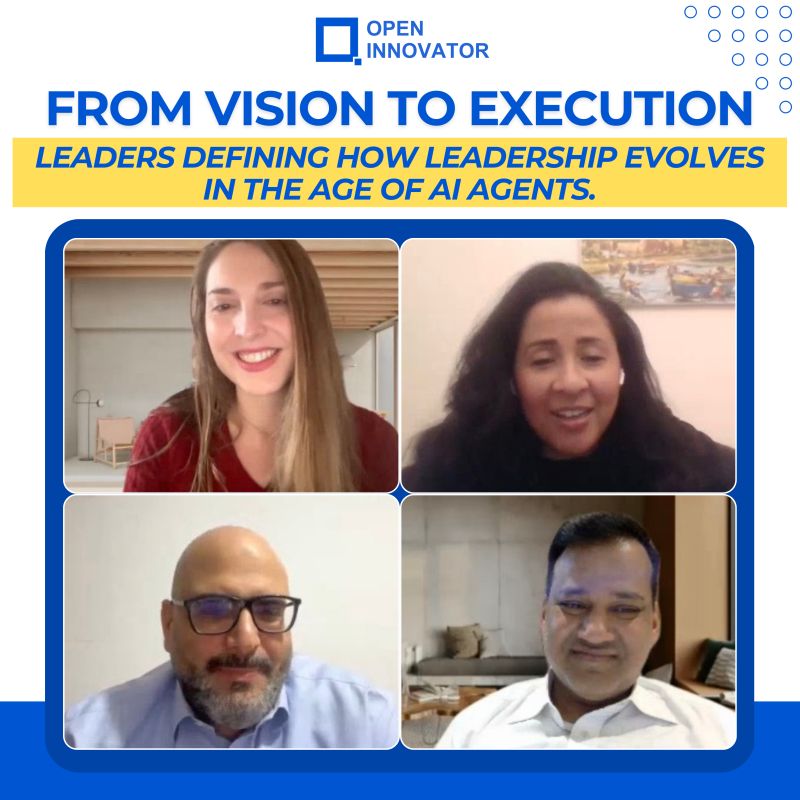
Open Innovator organized a groundbreaking knowledge session on “The Age of AI Agents: What Leaders Need to Know for 2026 & Beyond” on January 19, 2026, marking the first major discussion of the new year on how leadership must evolve as we transition from the chatbot era to the agentic AI era.

This pivotal session brought together global experts to examine a fundamental shift: moving from AI that suggests to AI that executes from copilots to autonomous digital workforce. The panel explored critical questions around trust, accountability, ethics, and the strategic decisions leaders must make as AI agents become capable of acting independently while humans sleep, transforming not just how work gets done, but whoโ€”or whatโ€”does it.

Expert Panel

The session featured four distinguished experts bringing diverse perspectives from policy, healthcare technology, enterprise transformation, and AI development:

Beatriz Zambrano Serrano – Expert at the intersection of MedTech and virtual reality, ensuring AI agents work in high-stakes healthcare environments where the margin for error is zero, with deep expertise in VR-based medical training simulations.

Hanane Boujemi – Tech policy expert and “guardian of the guardrails,” navigating the policy landscape to keep AI innovation ethical and legal, with nearly two decades of experience working at the highest levels of both big tech and government.

Ahmed Elrayes – Enterprise transformation veteran and “organizational architect,” serving as an advisor on digital transformation who bridges the gap between high-tech AI agents and high-impact human teams, particularly in government and Saudi Arabian markets.

Puneet Agarwal – Founder of AI LifeBOT, turning agentic theory into digital workforce reality with over 100 AI agents deployed across healthcare, manufacturing, retail, and other sectors globally.

The discussion was expertly moderated by Naman Kothari from NASSCOM, who framed the conversation around a provocative premise: “AI won’t replace you, but a leader who manages AI agents will replace the leader who still thinks AI is just a fancy Google search.”

From Copilot to Chief of Staff: Understanding the Shift

Naman opened the session with a powerful distinction that set the tone for the entire discussion. In 2024, if you asked a chatbot to help you get to London for a Tuesday meeting, it would act as a copilotโ€”scanning the web, presenting flight options, hotel prices, and weather forecasts, perhaps even drafting an email. But then the work stopped. You still had to book the flight, coordinate the Uber, and manage the calendar.

In 2026, agentic AI changes everything. You tell the agent “I need to be in London for that Tuesday meeting. Make it happen.” The agent doesn’t give you a listโ€”it negotiates for you, identifies the best pricing, transacts on your behalf, and syncs your calendar. As Naman put it: “Gen AI is your consultant. The AI agent is your chief of staff.”

First Responsibilities: What Would You Trust to an AI Executive?

The panel tackled a provocative scenario: if an AI agent joined your leadership team tomorrow as a decision-maker, what would you trust it with first, and what would you never give up?

Healthcare: Data Analysis, Not Value Judgments

Beatriz brought the critical perspective from high-stakes medical environments. She would immediately hand her AI agent all the accumulated training simulation dataโ€”information on how medical personnel performed, where mistakes occurred, what was effective and intuitive. “There are many things that we as humans miss,” she explained, noting the difficulty of processing vast amounts of training data to improve simulators and make practice as real as possible.

However, Beatriz drew a firm line: she would never let AI design the actual training scenarios. “That’s really an ethical call. It’s a value-based judgment. You need to understand why you’re doing the case, all the demographical information about the patient. For that, you need real physicians and real experts.”

Enterprise: Operational Tasks, Not Strategic Decisions

Ahmed identified a major opportunity in the operational realm. He observed that in his work across organizations, particularly in Saudi Arabia, people are drowningโ€”spending 70-80% of their time on repetitive operational tasks like pulling data from multiple sources, issuing reports, managing IT service requests, and writing feedback comments.

“The first thing I would give them is operational tasks that are repeated with clear decisions,” Ahmed stated. “I don’t want to replace my team yet, but I want to free them for more strategic work, more creative work, more work involving ethical values.”

What would he never hand over? “Any responsibility that requires strategic decisions dealing with values and customers, something that has accountability with it. Anything that involves culture, values, or human perspectiveโ€”I wouldn’t give to an AI agent yet.”

Policy: Building Intelligence and Empathy First

Hanane offered a fascinating perspective from the policy world. Before deploying AI agents, she would focus on having them develop “exceptional communication skills”โ€”not personality traits, but values essential to policy-making. She emphasized that agents need high levels of intelligence, empathy, and the ability to navigate complexity and ambiguity.

“We need to look at the foundations of how to make technology work with the help of policyโ€”not to hinder it, but to help it benefit either the business model, service delivery, or scientific research,” Hanane explained. She stressed that data is agnostic until we can make sense of it, and agents need to be intelligent enough not to replace humans but to guide, coach, and anchor them.

What must remain human? Strategic decisions that require understanding your specific situation and context. “You need to be able to make the right call for your own situation and not apply a blanket policy.”

AI Development: Leading HR, With Human Loop

Puneet brought practical experience from building AI agents. With characteristic humor, he said if an AI agent joined his team, “I will hand it over lead HRโ€”but jokes apart,” he acknowledged the current reality requires human oversight.

His more serious point focused on preparation: “How I empower the AI agent for the future is critical. Every decision, including hyper-personalization and decision-making, the AI agent will be able to do better than us as we move forwardโ€”because it will be more enriched with data, with clean data.” The current limitation? We don’t have clean data yet, which is why human-in-the-loop remains essential.

Bold Predictions: The State of AI Agents by End of 2026

The session moved to rapid-fire predictions about where we’ll be by the end of 2026.

Will Employees Manage More AI Agents Than Human Subordinates?

Ahmed’s answer: Not yet. Especially in government sectors and markets like Saudi Arabia, significant preparation work needs to happen first. “There are regulations around cloud services and other technologies. Organizations need to build themselves in terms of data structure, automation, and systems,” he explained.

Beyond technical limitations, Ahmed identified a critical cultural barrier: “A lot of leaders treat agentic AI as a collaborative tool, an added toolโ€”not as a fundamental operational change in how you deliver value within your services.” His bold prediction: the majority of organizations are still behind, though some unicorns will emerge.

Will the Most Powerful AI Agents Live in Headsets and Glasses?

Beatriz’s answer: True, but with major caveats. She pointed to exciting startups in San Francisco combining humanoid robotics with AI, seeing this as the future trendโ€”if politics and regulation allow it. “I see that trend, if regulation allows it, which is very difficult in my opinion. That would be the most powerful. However, I don’t know when we would allow it to enact its full power.”

Hanane reinforced this point, noting that wearables are “the ticket item”โ€”the hardware that will make a huge difference for the AI hype, but “we need to get it right this time because we have the frameworks in place.” She cited significant challenges: fitting all the necessary chips into wearable form factors, operating beyond current infrastructure layers, and navigating regulatory pushback.

Who’s Liable When AI Agents Make Million-Dollar Mistakes?

When asked who gets fired if an AI agent makes a massive financial errorโ€”the CEO, CTO, or software vendorโ€”Hanane’s answer was unequivocal: Everyone will be on the case of the CEO.

Drawing from her experience at Meta, she explained that when CEOs make wrong bets on major initiatives, they bear ultimate responsibility. But her deeper point was about getting the fundamentals right: “We need to do more work to get everybody on board. We need consensus building. Doing things on your own or coming with a top-down approach doesn’t work anymore. Testing regulatory readiness in some markets before deploying products is critical.”

Real-World Impact: AI Agents Already Transforming Industries

Puneet provided concrete examples of how AI LifeBOT is deploying agentic AI across sectors:

Healthcare:

  • Avatar-based appointment booking systems that talk to patients in real-time, helping them schedule appointments based on doctor preferences, clinic locations, and availabilityโ€”all integrated with backend hospital management systems
  • Diabetic boot sensors that measure foot pressure and alert patients to prevent ulcers, shifting from reactive treatment to preventive medicine

Manufacturing:

  • Voice-enabled predictive maintenance systems allowing blue-collar workers to speak to machines in their native languages (Spanish, Chinese, Hindi, Arabic, English)
  • Workers can ask questions about machine maintenance in natural language, with data captured by IoT devices but engagement happening through voice

Retail & Consumer Products:

  • Customer service AI agents handling warranty services, repair requests, and support calls
  • Analysis of customer journeys across channels to improve support delivery

Cross-Functional Applications:

  • Over 100 AI agents created for various functions: legal, IT, sales, operations, finance, marketing
  • Sector-agnostic, plug-and-play solutions deployed across US, India, Africa, and Southeast Asia

Critically, Puneet emphasized built-in safeguards: “We understand these kinds of mistakes can happen due to hallucination. While building agents for enterprises, we are putting a lot of checks and balances. We have agents doing actions, and we also have anti-agents doing audit and performance management of other agents.”

Critical Warnings: The Gaps We’re Missing

The Clean Data Problem

Puneet was direct about current limitations: “One important reason for immaturity is the data we have right now. It will take more time to reach maturity where we don’t require human-in-the-loop. Right now, for critical decisions, we are putting human-in-the-loop.”

The Wrong Goal: Efficiency Over Innovation

Ahmed issued a powerful warning about what leaders will regret: “Leaders will think ‘I wish I didn’t run after ROI or cost reduction or efficiency from the start.’ They were running after the hype, saying ‘I have agentic AI’ without understanding what AI is, what agentic AI is, what LLM is.”

He emphasized the need for capacity building: “Leaders should spend more money on understanding the technology, what it’s capable of doing, how to deploy it correctly, and change managementโ€”how to treat the technology within their organization.”

The danger? “It’s not like implementing a new ERP where you can put it back to manual. The damage of going after AI and creating more issues is very hard to recover from. You need a roadmap, an ambition roadmap for managing change, educating people, and having governance in place.”

The Equity Gap

Beatriz raised a profound concern about global inequality: “The world is not equitable at the moment. We have a lot of disparity. I would love for everybody to be at the same level before all these advancements happen, because if not, some are inevitably going to be left behind.”

She called for foundational work first: “I would really like for all governments, people, and leaders to build the infrastructureโ€”to be connected to the Internet, to have basic digital literacy and digital skills. And then when we have that base, we can advance.”

Hanane reinforced this, noting that “a few billion people are not yet connected to the Internet. We have a big chunk of data that we aim to process which is not yet available.”

Looking to 2030: What Will Future Leaders Say We Got Wrong?

In the session’s most thought-provoking segment, panelists imagined what leaders in 2030 or 2035 will say about the decisions being made today.

Hanane: “We Worried About the Wrong Things”

“I would definitely think of AI as not as smart as we all think,” Hanane projected. “Ten years down the line, as a policy makerโ€”hopefully by then I’ll become a ministerโ€”I’ll be thinking these AI agents are not as smart as us. We have to be on top of the technology as humans because we can make sense of communication and the implicit much better than any agent we train ourselves.”

Her vision: AI should be “more of a tool in systematic decisions that cuts time and energy and helps optimize processes, especially when running large projectsโ€”whether in big companies or at the level of government.”

But she warned: “The machine ultimately will never outsmart the human. We need to mobilize the machine to follow instructions, have checks and balances in situ, make sure foundations are there for infrastructure, deployment, and data protection frameworks.”

Ahmed: “We Chased Efficiency Instead of Transformation”

Ahmed’s regret prediction was pointed: “Leaders will think ‘I wish I didn’t run after ROI or cost reduction from the start, running after the hype.’ A lot of organizations lack understanding of what’s AI, what’s agentic AI, what’s LLM.”

His prescription: “Probably would have spent more money in capacity building, understanding the technology, change management, and how to treat the technology within the organization. Many organizations treat AI as an add-on technology which is notโ€”it has a profound impact on organization structure, decision-making, hierarchy, and workforce.”

Beatriz: “We Learned Humility From Our Blind Spots”

Beatriz offered the most optimistic perspective: “I’m very positive about the future. Agentic AI has actually made me very humble because I’ve seen what I have missed personally, what blind spots I have. Technology shows us what we’re lacking, and if we are humble enough to really analyze their judgment versus what we would have done, we can really learn and advance as a society.”

Her hope: “First really help everybody to be at the same level. Build infrastructure, get connected to the Internet, have basic digital literacy and skills. Then when we have that base, we can advance.”

Key Takeaways for Leaders

1. From Automation to Autonomy

As Puneet emphasized, “Agent AI is a mind shift. We are moving from automation to autonomy. This is not going to be stoppedโ€”this is the future. But we have to understand the consequences.”

2. Don’t Pave the Cow Pathโ€”Build New Roads

Ahmed’s warning resonates: Don’t just seek efficiency gains. Use AI agents to reimagine entirely new business models and ways of delivering value that were previously impossible.

3. Human-in-the-Loop Remains Essential

Across all perspectives, the consensus was clear: for critical decisions involving values, culture, strategy, and accountability, human judgment remains non-negotiableโ€”at least for now.

4. Foundation First, Innovation Second

Hanane’s policy perspective emphasized getting the basics right: infrastructure, data protection frameworks, digital literacy, and regulatory readiness must precede widespread deployment.

5. Technology Only Works When It Works for Everyone

Beatriz’s closing remark captured the ethical imperative: “There’s a lot of power in agentic AI, but honestly, it’s only worth it if it makes us better and if it makes humanity better. So let’s all work towards that.”

Conclusion: The Leadership Evolution Has Begun

The session made clear that 2026 marks a pivotal moment. As Naman framed it at the close: “The age of agents isn’t just a tech upgradeโ€”it’s a leadership evolution.”

Future leaders won’t be remembered for the agents they deployed, but for the culture of innovation they built to manage them. The challenge ahead isn’t technologicalโ€”it’s human. It’s about building capacity, managing change, establishing governance, ensuring equity, and maintaining the ethical compass that only humans can provide.

The digital workforce is here. The question is: are leaders ready to orchestrate it?

This Open Innovator Knowledge Session featured expert insights on navigating the agentic AI revolution. A huge shoutout to the brilliant speakersโ€”Beatriz Zambrano Serrano, Hanane Boujemi, Ahmed Elrayes, and Puneet Agarwalโ€”for bringing clarity, candour, and perspective to the discussion. Special thanks to Puneet Agarwal, founder of AI LifeBOT, for showing what innovation with intent truly looks like.

Categories
Events

The New Face of Leadership: Redefining Thinking in the Age of AI

Categories
Events

The New Face of Leadership: Redefining Thinking in the Age of AI

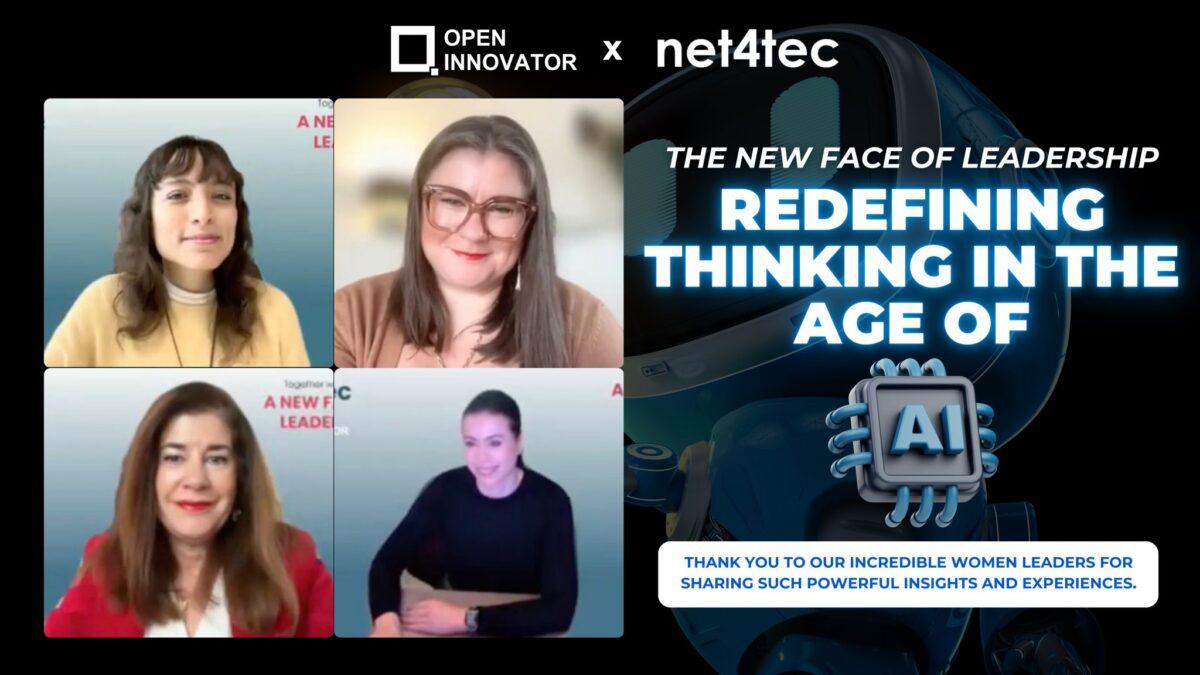
Open Innovator organized a groundbreaking knowledge session on “The New Face of Leadership: Redefining Thinking in the Age of AI” on December 11, 2025, bringing together three distinguished women leaders from across the globe to address a critical challenge facing organizations today.

As AI rapidly reshapes how teams think, how organizations move, and how leaders must lead, the session explored an uncomfortable truth: the leadership mindsets that drove success in the past decade cannot sustain us through the coming years.

Hosted in collaboration with Net4Tech-a global ecosystem advancing women’s careers in technology- the 60-minute panel discussion moved beyond tools and algorithms to examine the deeper evolution of leadership required when machines think alongside humans, touching on essential themes of empathy, ethics, psychological safety, and the critical thinking skills leaders need to stay trusted, relevant, and effective in 2026 and beyond.

Expert Panel

The session featured four distinguished women leaders in technology and innovation as part of the Open Innovator Knowledge Sessions:

  • Begonia Vazquez Merayo (Moderator) – Founder of Net4Tech, a global ecosystem advancing women’s careers in technology, and leadership coach advocating for equality in tech.
  • Adriana Carmona Beltran – CEO and Founder of Tedix, global entrepreneur with experience building innovative tech startups across continents.
  • Deborah Hรผller – Partner at IBM Consulting, expert in analytics and AI since 2014, advising federal agencies on digital transformation and public sector modernization.
  • Dr. Kamila Klug – Director of Business Development, Altair , Advisory Board Member.

Key Insights: Leadership Capabilities for the AI Era

The Curiosity Imperative

Adriana Carmona opened the discussion by identifying curiosity as the most underestimated leadership skill. “We cannot lead people in a future that we are afraid of,” she emphasized, advocating for a discovery mindset over fear when approaching AI. She positioned AI not as a replacement but as a tool to augment human capabilities, stressing that leaders must inspire curiosity in their teams to explore new possibilities.

Critical Thinking as a Compass

Dr. Kamila Klug highlighted the shift from traditional leadership to navigating changing terrain with values as a compass. She emphasized that in the AI era, critical thinking is essential for challenging assumptions and choosing the right path from multiple AI-generated options. Leaders must question not just AI outputs but their own biases to avoid creating echo chambers.

Psychological Safety in Fast-Changing Times

Deborah Hรผller introduced psychological safety as a crucial leadership focus, noting that “AI accelerates change and change only works when people feel safe to learn.” She stressed that as teams face constant unlearning and relearning, creating environments where people can fail forward becomes essential rather than optional.

Cultural Philosophy and Human-Centric Innovation

Adriana shared insights from building companies across continents, emphasizing that leadership and innovation are inherently cultural. Her leadership philosophy combines emotional intelligence, empathy, and curiosity to understand diverse cultures and build meaningful connections. “AI is not here to replace us. AI is here to augment us,” she stated, positioning human relationship-building as the key differentiator in an AI-enhanced world.

Public Sector Transformation Challenges

Deborah addressed the complex challenge of transforming government institutions, which operate under zero-error tolerance and strict public fund management. She identified a critical tension: public servants are desperate to experiment with AI and fail forward, but the system doesn’t permit it. “We need to change the culture AND the system,” she emphasized, calling for systemic reforms that allow responsible experimentation while maintaining public trust.

Leading Through Continuous Transformation

Dr. Kamila Klug drew from her experience across countries and industries to advocate for coherent adaptabilityโ€”maintaining core values while navigating constant change. She emphasized asking the right questions rather than simply asking many questions, and using AI as a “thinking sparring partner” that challenges rather than simply provides solutions.

Critical Warnings: AI Bias and Inclusion

The panel raised crucial concerns about AI perpetuating biases. Adriana provided a compelling example: most AI systems trained predominantly on English-language, US-based data could recommend California for agricultural projects while overlooking opportunities in Tanzania or Mozambique due to data scarcity. “If we are not aware of that, we are actually leaving behind a big part of society,” she warned.

Dr. Kamila Klug added a linguistic dimension, explaining how language itself shapes thoughtโ€”a bridge described as masculine in one language is viewed as “strong,” while in languages where it’s feminine, it’s seen as “beautiful.” These biases embed themselves in AI training data.

Deborah emphasized the importance of inclusive automation design, noting that much AI will operate in the background without human oversight. “If we are not having inclusion in mind when building these systems, it will end in a non-inclusive world,” she cautioned.

Balancing Agility and Structure

Responding to audience questions about maintaining agility without chaos, the panel offered practical guidance. Adriana advocated for defining clear “North Stars”โ€”specific goals that guide decision-making amid constant change. Deborah added that even agile environments need agreed-upon structures, with transparent communication when those structures evolve.

The Path Forward

The session concluded with a call to action from Begonia: “We are democratizing technology. We are opening doors for everyone to become a leader in AI.” She urged participants to avoid creating a new “AI gap” that would disproportionately affect women, encouraging everyone to be conscious creators who challenge biases and shape the future deliberately.

The consensus: AI presents unprecedented opportunities, but leaders must approach it with curiosity, critical thinking, psychological safety, and unwavering commitment to inclusion. As Adriana summarized, AI should be treated as a “junior collaborator” that requires training, guardrails, and guidanceโ€”not as a perfect oracle.


This Open Innovator Knowledge Session was part of “The New Face of Leadership” movement in collaboration with Net4Tech. Open Innovator specializes in digital transformation and innovation strategies, co-creating solutions where bold ideas turn into action. Write to us at open-innovator@quotients.com

Categories
Events

Ethics by Design: Global Leaders Convene to Address AI’s Moral Imperative

Categories
Events

Ethics by Design: Global Leaders Convene to Address AI’s Moral Imperative

In a world where ChatGPT gained 100 million users in two monthsโ€”a accomplishment that took the telephone 75 yearsโ€”the importance of ethical technology has never been more pressing. Open Innovator on November 14th hosted a global panel on “Ethical AI: Ethics by Design,” bringing together experts from four continents for a 60-minute virtual conversation moderated by Naman Kothari of Nasscom. The panelists were Ahmed Al Tuqair from Riyadh, Mehdi Khammassi from Doha, Bilal Riyad from Qatar, Jakob Bares from WHO in Prague, and Apurv from the Bay Area. They discussed how ethics must grow with rapidly advancing AI systems and why shared accountability is now required for meaningful, safe technological advancement.

Ethics: Collective Responsibility in the AI Ecosystem

The discussion quickly established that ethics cannot be attributed to a single group; instead, founders, investors, designers, and policymakers build a collective accountability architecture. Ahmed stressed that ethics by design must start with ideation, not as a late-stage audit. Raya Innovations examines early enterprises based on both market fit and social effect, asking direct questions about bias, damage, and unintended consequences before any code is created. Mehdi developed this into three pillars: human-centricity, openness, and responsibility, stating that technology should remain a benefit for humans rather than a danger. Jakob added the algorithmic layer, which states that values must be testable requirements and architectural patterns. With the WHO implementing multiple AI technologies, identifying the human role in increasingly automated operations has become critical.

Structured Speed: Innovating Responsibly While Maintaining Momentum

Maintaining both speed and responsibility became a common topic. Ahmed proposed “structured speed,” in which quick, repeatable ethical assessments are integrated directly into agile development. These are not bureaucratic restrictions, but rather concise, practical prompts: what is the worst-case situation for misuse? Who might be excluded by the default options? Do partners adhere to key principles? The goal is to incorporate clear, non-negotiable principles into daily workflows rather than forming large committees. As a result, Ahmed claimed, ethics becomes a competitive advantage, allowing businesses to move rapidly and with purpose. Without such guidance, rapid innovation risks becoming disruptive noise. This narrative resonated with the panelists, emphasizing that prudent development can accelerate, rather than delay, long-term growth.

Cultural Contexts and Divergent Ethical Priorities

Mehdi demonstrated how ethics differs between cultural and economic environments. Individual privacy is a priority in Western Europe and North America, as evidenced by comprehensive consent procedures and rigorous regulatory frameworks. In contrast, many African and Asian regions prioritize collective stability and accessibility while functioning under less stringent regulatory control. Emerging markets frequently focus ethical discussions on inclusion and opportunity, whereas industrialized economies prioritize risk minimization. Despite these inequalities, Mehdi pushed for universal ethical principles, claiming that all people, regardless of place, need equal protection. He admitted, however, that inconsistent regulations result in dramatically different reality. This cultural lens highlighted that while ethics is internationally relevant, its local expressionโ€”and the issues connected with itโ€”remain intensely context-dependent.

Enterprise Lessons: The High Costs of Ethical Oversights

Bilal highlighted stark lessons from enterprise organizations, where ethical failings have multimillion-dollar consequences. At Microsoft, retrofitting ethics into existing products resulted in enormous disruptions that could have been prevented with early design assessments. He outlined enterprise “tenant frameworks,” in which each feature is subject to sign-offs across privacy, security, accessibility, localization, and geopolitical domainsโ€”often with 12 or more reviews. When crises arise, these systems maintain customer trust while also providing legal defenses. Bilal used Google Glass as a cautionary tale: billions were lost because privacy and consent concerns were disregarded. He also mentioned Workday’s legal challenges over alleged employment bias. While established organizations can weather such storms, startups rarely can, making early ethical guardrails a requirement of survival rather than preference.

Public Health AI Designing for Integrity and Human Autonomy

Jakob provided a public-health viewpoint, highlighting how AI design decisions might harm millions. Following significant budget constraints, WHO’s most recent AI systems are aimed at enhancing internal procedures such as reporting and finance. In one donor-reporting tool, the team focused “epistemic integrity,” which ensures outputs are factual while protecting employee autonomy. Jakob warned against Goodhart’s Law, which involves overoptimizing a particular statistic at the detriment of overall value. They put in place protections to prevent surveillance overreach, automation bias, power inequalities, and data exploitation. Maintaining checks and balances across measures guarantees that efficiency gains do not compromise quality or hurt employees. His findings revealed that ethical deployment necessitates continual monitoring rather than one-time judgments, especially when AI replaces duties previously conducted by specialists.

Aurva’s Approach: Security and Observability in the Agentic AI Era

The panel then moved on to practical solutions, with Apurv introducing Aurva, an AI-powered data security copilot inspired by Meta’s post-Cambridge Analytica revisions. Aurva enables enterprises to identify where data is stored, who has access to it, and how it is usedโ€”which is crucial in contexts where information is scattered across multiple systems and providers. Its technologies detect misuse, restrict privilege creep, and give users visibility into AI agents, models, and permissions. Apurv contrasted between generative AI, which behaves like a maturing junior engineer, and agentic AI, which operates independently like a senior engineer making multi-step judgments. This autonomy necessitates supervision. Aurva serves 25 customers across different continents, with a strong focus on banking and healthcare, where AI-driven risks and regulatory needs are highest.

Actionable Next Steps and the Imperative for Ethical Mindsets

In conclusion, panelists provided concrete advice: begin with human-impact visibility, undertake early bias and harm evaluations, construct feedback loops, teach teams to acquire a shared ethical understanding, and implement observability tools for AI. Jakob underlined the importance of monitoring, while others stressed that ethics must be integrated into everyday decisions rather than marketing clichรฉs. The virtual event ended with a unifying message: ethical AI is no longer optional. As agentic AI becomes more independent, early, preemptive frameworks protect both consumers and companies’ long-term viability.

Reach out to us atย open-innovator@quotients.comย or drop us a line to delve into the transformative potential of groundbreaking technologies and participate in our events. Weโ€™d love to explore the possibilities with you.

Categories
Events

Open Innovator Virtual Session: Responsible AI Integration in Healthcare

Categories
Events

Open Innovator Virtual Session: Responsible AI Integration in Healthcare

The recent Open Innovator Virtual Session brought together healthcare technology leaders to address a critical question: How can artificial intelligence enhance patient care without compromising the human elements essential to healthcare? Moderated by Suzette Ferreira, the panel featured Michael Dabis, Dr. Chandana Samaranayake, Dr. Ang Yee, and Charles Barton, who collectively emphasized that AI in healthcare is not a plug-and-play solution but a carefully orchestrated process requiring trust, transparency, and unwavering commitment to patient safety.

The Core Message: AI as Support, Not Replacement

The speakers unanimously agreed that AI’s greatest value lies in augmenting human expertise rather than replacing it. In healthcare, where every decision carries profound consequences for human lives, technology must earn trust from both clinicians and patients. Unlike consumer applications where failures cause inconvenience, clinical AI mistakes can result in misdiagnosis, inappropriate treatment, or preventable harm.

Current Reality Check:

  • 63% of healthcare professionals are optimistic about AI
  • 48% of patients do NOT share this optimism – revealing a significant trust gap
  • The fundamental challenge remains unchanged: clinicians are overwhelmed with data and need it transformed into meaningful, actionable intelligence

The TACK Framework: Building Trust in AI Systems

Dr. Chandana Samaranayake introduced the TACK framework as essential for gaining clinician trust:

  • Transparency: Clinicians must understand what data AI uses and how it reaches conclusions. Black-box algorithms are fundamentally incompatible with clinical practice where providers bear legal and ethical responsibility.
  • Accountability: Clear lines of responsibility must be established for AI-assisted decisions, with frameworks for evaluating outcomes and addressing errors.
  • Confidence: AI systems must demonstrate consistent reliability through rigorous validation across diverse patient populations and clinical scenarios.
  • Control: Healthcare professionals must retain ultimate authority over clinical decisions, with the ability to override AI recommendations at any time.

Why AI Systems Fail: Real-World Lessons

The Workflow Integration Problem

Michael Dabis highlighted that the biggest misconception is treating AI as a simple product rather than a complex integration process. Several real-world failures illustrate this:

  • Sepsis prediction systems: Technically brilliant systems that nurses loved during trials but deactivated on night shifts because they required manual data entry, creating more work than they eliminated
  • Alert fatigue: Systems generating too many notifications that overwhelm clinicians and obscure genuinely important insights
  • Radiology AI errors: Speech recognition confusing “ilium” (pelvis bone) with “ileum” (small intestine), leading AI to generate convincing but dangerously wrong reports about intestinal metastasis instead of pelvic metastasis

The Consulting Disaster

Dr. Chandana shared a cautionary tale: A major consulting firm had to refund the Australian government after their AI-generated healthcare report cited publications that didn’t exist. In healthcare, such mistakes don’t just waste moneyโ€”they can cost lives.

Four Critical Implementation Requirements

1. Workflow Integration

AI must fit INTO clinical workflows, not on top of them. This requires:

  • Co-designing with clinicians from day one
  • Observing how healthcare professionals actually work
  • Ensuring systems add value without creating additional burdens

2. Data Governance

Clean, traceable, validated data is non-negotiable:

  • Source transparency so clinicians know data age and origin
  • Interoperability for holistic patient views
  • Adherence to the principle: garbage in, garbage out

3. Continuous Feedback Loops

  • AI must learn from clinical overrides and corrections
  • Ongoing validation required (supported by FDA’s PCCP guidance)
  • Mechanisms for users to report issues and suggest improvements

4. Cross-Functional Alignment

  • Team agreement on requirements, risk management, and validation criteria
  • Intensive training during deployment, not just online courses
  • Change management principles applied throughout

Patient Safety and Ethical Considerations

Dr. Gary Ang emphasized accountability as going beyond responsibilityโ€”it means owning both the solution and the problem. Key concerns include:

Skill Degradation Risk: Over-reliance on AI may erode clinical abilities. Doctors using AI for endoscopy might lose the capacity to detect issues independently when systems fail.

Avoiding Echo Chambers: AI systems must help patients make informed decisions without manipulating behavior or validating delusions, unlike social media algorithms.

Patient-Centered Approach: The patient must always remain at the center, with AI protecting safety rather than prioritizing operational efficiency.

Future Directions: Holistic and Preventive Care

Charles Barton outlined a vision for AI that extends beyond reactive treatment:

The Current Problem: Healthcare data is siloedโ€”no single clinician has end-to-end patient health information spanning sleep, nutrition, physical activity, mental health, and diagnostics.

The Opportunity: 25% of health problems, particularly musculoskeletal and cardiovascular issues affecting 25% of the world’s population, can be prevented through healthy lifestyle interventions supported by AI.

Future Applications:

  • Patient education about procedures, medications, and screening decisions
  • Daily health monitoring instead of reactive treatment
  • Predictive and prescriptive recommendations validated through continuous monitoring
  • Early identification of disease risk years before symptoms appear

Scaling Challenges and Geographic Considerations

Unlike traditional medical devices with predictable inputs and outputs, AI systems are undeterministic and require different scaling approaches:

  • Start with limited, low-risk use cases
  • Expand gradually with continuous validation
  • Recognize that demographics and healthcare issues vary by regionโ€”global launches aren’t feasible
  • Prepare organizations for managing AI’s operational complexity

Key Takeaways

For Healthcare Organizations:

  • Treat AI as a process requiring ongoing commitment, not a one-time product purchase
  • Invest in hands-on training and workforce preparation
  • Build data foundations with interoperability in mind
  • Establish clear governance frameworks for accountability and patient safety

For Technology Developers:

  • Spend time in clinical environments understanding actual workflows
  • Design for transparency with explainable AI outputs
  • Enable easy override mechanisms for clinicians
  • Test across diverse populations to avoid amplifying health inequities

For Clinicians:

  • Engage actively in AI development and implementation
  • Maintain clinical reasoning skills alongside AI tools
  • Approach AI suggestions with appropriate professional skepticism
  • Advocate for patient interests above operational efficiency

Conclusion

The Open Innovator Virtual Session made clear that successfully integrating AI into healthcare requires more than technological sophistication. It demands deep respect for clinical workflows, unwavering commitment to patient safety, and genuine collaboration between technologists and healthcare professionals.

The consensus was unequivocal: Fix the foundation first, then build the intelligent layer. Organizations not ready to manage the operational discipline required for AI development and deployment are not ready to deploy AI. The technology is advancing rapidly, but the fundamental principlesโ€”earning trust, ensuring safety, and supporting rather than replacing human judgmentโ€”remain unchanged.

As healthcare continues its digital transformation, success will depend on preserving what makes healthcare fundamentally human: empathy, intuition, and the sacred responsibility clinicians bear for patient wellbeing. AI that serves these values deserves investment; AI that distracts from them, regardless of sophistication, must be reconsidered.

The future of healthcare will be shaped not by technology alone, but by how wisely we integrate that technology into the profoundly human work of healing and caring for one another.

Reach out to us atย open-innovator@quotients.comย or drop us a line to delve into the transformative potential of groundbreaking technologies and participate in our events. Weโ€™d love to explore the possibilities with you.

Categories
Events

OI Session- Climate Tech Experts Address Urgent Need for Resilient Innovation

Categories
Events

OI Session- Climate Tech Experts Address Urgent Need for Resilient Innovation

A distinguished international panel of climate technology experts recently convened at our recent Open Innovator Virtual Session to address the urgent challenges facing innovation in the climate crisis era. The discussion featured:

  • Doreen Rietentiet, Founder & CEO based in Berlin, a climate adaptation technology specialist focused on energy solutions
  • Rajarshi Ray, Co-Founder & CEO based in London, an expert in regional climate tech implementation and market analysis
  • Wendy Niu, Co-Founder & CMO based in Bangalore, a sustainability strategist emphasizing regulatory adaptation
  • Tassilo Weber, Co-Founder & CTO based in Berlin, a climate tech ecosystem development professional
  • Yacine Cherraoui, Founder & Independent Consultant based in Berlin, a specialist in sustainable business models and market viability
  • Mrudul Mudothoty, Head of Product based in Bangalore, founder of an AI-powered waste management solution.

The session was moderated by Naman K, Nasscom COE who opened with the sobering statistic that climate disasters have cost the world over the past two decades, setting the urgent context for discussing how technology must evolve to address not just climate mitigation but adaptation to irreversible environmental changes.

Key Discussion Points

The Critical Shift from Mitigation to Adaptation

Doreen emphasized the fundamental need to transition from purely mitigation-focused climate technologies toward adaptation solutions that help communities survive and thrive despite changing environmental conditions. This represents a significant mindset shift for the climate tech industry, which has traditionally focused on preventing climate change rather than preparing for its inevitable impacts.

The discussion highlighted innovative air conditioning and cooling technologies as critical adaptation needs, particularly as rising global temperatures make traditional cooling methods unsustainable and insufficient for maintaining human health and productivity in extreme heat conditions.

Regional Disparities and Market Challenges

Rajshri Ray brought crucial insights about the significant disparities in climate tech market conditions across different global regions. He stressed that solutions effective in developed markets often require substantial adaptation for implementation in developing economies, where resource constraints and infrastructure limitations create unique challenges.

The panel discussed how understanding these regional differences becomes essential for creating truly scalable climate tech solutions that can address global challenges while remaining economically viable across diverse market conditions.

Navigating Regulatory Uncertainty and Flexibility

Wendy emphasized the importance of building flexibility into climate tech solutions to adapt to rapidly evolving regulatory landscapes. As governments worldwide implement new climate policies and standards, technology companies must design products and services that can quickly adapt to changing compliance requirements without losing effectiveness or market viability.

This regulatory uncertainty creates both challenges and opportunities for climate tech innovators, requiring strategic approaches that balance compliance with innovation speed and market responsiveness.

Ecosystem Collaboration and Sustainable Business Models

Some panelists addressed critical barriers to launching climate-focused products, emphasizing that successful climate tech requires unprecedented collaboration across traditional industry boundaries. They argued that climate challenges are too complex for any single organization to address effectively, requiring coordinated efforts among innovators, investors, policymakers, and community organizations.

The discussion focused on developing sustainable business models that maintain economic viability while delivering genuine environmental benefits, challenging the traditional assumption that environmental responsibility necessarily conflicts with financial success.

Transparency and Ethical Responsibility

Rajshri Ray stressed the crucial importance of transparency and auditability in climate tech solutions, particularly for startups seeking investment in sustainability-focused ventures. Investors and customers increasingly demand verifiable evidence of environmental impact, requiring climate tech companies to build transparency into their core operations rather than treating it as a marketing afterthought.

This emphasis on ethical responsibility extends beyond environmental impact to include social equity and community benefit, ensuring that climate tech solutions don’t inadvertently exacerbate existing inequalities while addressing environmental challenges.

Innovative Solutions in Practice

Mrudul presented a practical example through an AI-powered home appliance that manages waste decomposition by converting organic waste into usable soil. This demonstration illustrated how climate tech innovations can address multiple sustainability challenges simultaneously while providing clear value propositions for consumers.

The example highlighted key principles for successful climate tech: addressing real user needs, providing measurable environmental benefits, and creating economically sustainable value chains that support widespread adoption.

Core Principles for Climate-Resilient Technology

The panel identified several fundamental principles for developing effective climate tech solutions:

  • Systems Thinking Approach: Climate challenges require holistic solutions that consider interconnected environmental, social, and economic systems rather than addressing isolated problems independently.
  • Long-term Sustainability Focus: Successful climate tech must prioritize long-term environmental and social benefits over short-term financial gains, though economic viability remains essential for scaling impact.
  • Adaptive Design Philosophy: Climate tech solutions must be designed for flexibility and adaptation as environmental conditions and regulatory requirements continue evolving rapidly.
  • Cross-Sector Collaboration: No single organization or industry can address climate challenges effectively, requiring unprecedented collaboration across traditional boundaries.

Practical Implementation Strategies

The experts provided concrete recommendations for developing climate-resilient technologies. Innovators should focus on user-centered design that addresses real community needs while delivering measurable environmental benefits. This approach ensures that climate tech solutions gain adoption and create genuine impact rather than remaining theoretical possibilities.

Startups and established companies should build transparency and auditability into their core operations from the beginning rather than adding these capabilities later. This proactive approach builds investor confidence and customer trust while ensuring that environmental claims can be verified and validated.

Business model development must balance environmental impact with economic sustainability, creating value propositions that support widespread adoption while generating sufficient revenue for continued innovation and scaling.

Future Outlook and Vision

The panelists shared their visions for climate tech development over the next five to ten years, emphasizing the need for sustained long-term thinking and unwavering commitment from stakeholders across industries. They envision a future where climate adaptation technologies become as common and essential as current digital technologies.

The discussion highlighted the importance of maintaining optimism and determination despite the scale of climate challenges, focusing on actionable solutions that can create measurable progress toward climate resilience.

Call for Collective Action

The session concluded with strong encouragement for continued collaboration and innovation in addressing climate challenges. Panelists emphasized that the climate crisis requires collective action across all sectors of society, with technology playing a crucial but not exclusive role in creating sustainable solutions.

The experts stressed that everyone involved in innovation and technology development has a responsibility to consider climate impacts and adaptation needs in their work, regardless of their specific industry or focus area.

The panel reinforced that building climate-resilient technology requires not just technical innovation but fundamental changes in how organizations approach business models, collaboration, and long-term planning, making climate adaptation a central consideration in all technology development decisions.

Reach out to us atย open-innovator@quotients.comย or drop us a line to delve into the transformative potential of groundbreaking technologies and participate in our OI sessions. Weโ€™d love to explore the possibilities with you.

Categories
Events

OI Session: Tech Leaders Address Gender Inclusion and Diversity Challenges

Categories
Events

OI Session: Tech Leaders Address Gender Inclusion and Diversity Challenges

Expert Panel Explores Strategies for Creating More Inclusive Technology Environments

A distinguished panel of technology leaders recently gathered at the Open Innovation Virtual session to address the critical issue of gender inclusion and diversity in the tech industry. The discussion featured Neo Chatyaka, a technology innovator focused on creating solutions for diverse communities; Ashley McBeath, a tech executive specializing in embedding diverse perspectives into technological development; Ella Tรผrรผnima, Enterprise Architect at Siemens Mobility GmbH; Begonia Vazquez Meraya, Tech Founder of Net4Tec; and Mercedes Pantoja, Head of Global Data & AI at Siemens Healthineers. Together, these trailblazing women shared bold insights and actionable strategies to foster inclusive workplace cultures and redefine leadership in global tech.

The session was moderated by Naman K, Nasscom CoE, on the Open Innovator platform, a community dedicated to fostering innovation and collaboration among technocrats, industry leaders, and startups. The discussion opened with a thought-provoking scenario about gender stereotypes, highlighting how ingrained mental models continue to shape perceptions about professional roles, particularly in technology sectors.

Key Discussion Points

Confronting Unconscious Bias and Stereotypes

The panel began by addressing fundamental challenges around gender stereotypes in professional settings. Through an engaging scenario about assumptions regarding surgeons and other professional roles, the discussion highlighted how deeply embedded mental models influence perceptions about who belongs in technology positions. This opening set the stage for examining how these biases impact women’s representation and advancement in tech roles.

Defining Meaningful Innovation Through Inclusion

Neo emphasized that meaningful innovation must serve diverse communities rather than focusing solely on dominant market segments. She argued that technology solutions developed without diverse perspectives often fail to address real-world problems faced by underrepresented groups. This approach requires intentionally including varied viewpoints throughout the innovation process.

Ashley reinforced this perspective by discussing how embedding diverse perspectives directly into technological development processes leads to more comprehensive and effective solutions. She stressed that diversity extends beyond gender to include varied mindsets, experiences, and cultural backgrounds that enrich problem-solving approaches.

Transforming Leadership and Workplace Culture

The panel addressed the critical need for inclusive leadership that actively fosters environments where women can thrive. Panelists shared personal insights about their career paths and experiences navigating male-dominated technology environments, emphasizing that leadership must be intentional about creating inclusive cultures rather than assuming they will develop naturally.

The discussion highlighted the importance of encouraging women to apply for leadership roles even when they don’t meet every listed requirement, challenging the tendency for women to self-select out of opportunities due to perceived qualification gaps.

Redesigning Talent Pipelines in Technology

Ashley focused specifically on artificial intelligence and technology sectors, discussing the urgent need to redesign talent pipelines to include diverse candidates. She emphasized that organizations must implement systemic changes in recruitment, retention, and advancement strategies rather than relying on individual efforts to drive inclusion.

The conversation addressed barriers that prevent women from entering and remaining in technology careers, including cultural expectations, lack of mentorship, and organizational environments that don’t support diverse working styles and perspectives.

Personal Leadership Development and Resilience

Panelists shared personal moments that shaped their leadership approaches, emphasizing the importance of resilience, continuous learning, and personal experiences in developing effective leadership styles. These stories illustrated how diverse backgrounds and experiences contribute to stronger leadership capabilities.

The discussion highlighted how personal narratives can inspire others to recognize their own leadership potential and overcome barriers that might otherwise prevent career advancement in technology fields.

Core Principles for Inclusive Technology Environments

The experts identified several fundamental principles for creating more inclusive technology workplaces:

  • Proactive Cultural Change: Organizations must actively work to create environments where women and other underrepresented groups can succeed, rather than expecting individuals to adapt to existing cultures that may not serve them effectively.
  • Comprehensive Mentorship Systems: Effective mentorship programs that connect women with both technical and leadership development opportunities prove essential for retention and advancement in technology careers.
  • Systemic Recruitment Reform: Traditional recruitment and hiring practices often perpetuate existing biases, requiring deliberate redesign to attract and retain diverse talent pools.
  • Leadership Visibility: Women in leadership positions must be visible throughout organizations to provide role models and demonstrate career advancement possibilities for other women.

Call to Action for Technology Professionals

The session concluded with strong encouragement for attendees to actively participate in creating more inclusive technology environments. This includes networking with and supporting other women in technology, advocating for inclusive practices within their organizations, and continuously developing leadership capabilities.

The panel stressed that everyone, regardless of their current position or level of influence, can contribute to building more diverse and inclusive technology communities through their daily actions and choices.

The discussion reinforced that creating equitable technology environments benefits everyone by fostering innovation, improving problem-solving capabilities, and ensuring that technological advancement serves broader societal needs effectively.

Write us to atย open-innovator@quotients.comย to get more information and participate in our upcoming sessions.

Categories
Events

OI Session: Startup Experts Reveal Strategies for Acquiring First 10 Real Customers

Categories
Events

OI Session: Startup Experts Reveal Strategies for Acquiring First 10 Real Customers

Panel Discussion Addresses Critical Challenge of Moving from Product Creation to Customer Acquisition

An expert panel of startup specialists recently participated in virtual session convened by Open Innovator. The goal was to address one of entrepreneurship’s most critical challenges: acquiring the first 10 real customers.

The discussion featured Angelie Mullin, a branding expert specializing in storytelling and narrative development; Jack Winter, a strategic marketing professional with expertise in demand validation; Celen Ebru, a community building specialist focused on targeted audience engagement; and featured a live startup pitch from Punit Agrawal, founder of an AI-powered customer support platform. The session was moderated by Naman K, who brings years of startup experience and emphasized the harsh reality that while every founder believes their product will succeed, the true test lies in actual customer acquisition.

Key Discussion Points

The Customer Acquisition Reality

The panel opened with a sobering statistic that 42% of startups fail due to lack of customers, not product issues. Naman highlighted the common founder illusion that first customers will come easily, describing this as a dangerous trap that leads many promising startups to failure. The discussion emphasized the critical difference between building a product and building a sustainable customer base.

Essential Mindset Shifts for Founders

Angelie stressed the importance of transitioning from founder-led sales to scalable sales models. She explained that founders must resist the temptation to over-customize their products for individual customers and instead focus on developing core offerings that appeal to broader market segments. This shift requires founders to think beyond their personal attachment to specific features.

Input-Focused Decision Making

Jack introduced the concept of validating demand before building products, using Dropbox as a prime example. The founder tested market interest through a simple video demonstration before investing in full product development. This approach emphasizes gathering real market feedback rather than making assumptions about customer needs.

Strategic Focus Over Scatter Approach

Celen emphasized the critical importance of focusing marketing efforts on fewer, more impactful activities rather than adopting a scattered approach. She stressed understanding specific audience segments deeply, arguing that trying to appeal to everyone often results in appealing to no one effectively.

Building Relationships Beyond Transactions

The panel unanimously agreed that successful customer acquisition requires moving beyond transactional relationships toward building long-term value connections. Early customers should be viewed as partners in product development rather than simply revenue sources, creating opportunities for referrals and testimonials.

The Power of Authentic Storytelling

A significant portion of the discussion focused on storytelling as a customer acquisition tool. Angelie noted that “people don’t buy what you sell, people believe what you believe,” emphasizing how emotional connections drive purchasing decisions. The panel shared tactics for using personal narratives to create resonance with potential customers.

Core Customer Acquisition Principles

The experts identified several fundamental principles for effective customer acquisition:

Problem-Solution Fit: Successful customer acquisition begins with solving genuine problems rather than promoting product features. Founders must understand customer pain points deeply and position their solutions accordingly.

Network Leverage: Building and utilizing professional networks emerges as crucial during early stages for gaining visibility and generating qualified leads. Personal connections often provide the most effective path to first customers.

Authentic Communication: Customers respond to genuine communication about challenges and solutions rather than polished marketing messages. Authenticity in founder communication creates trust and credibility.

Focused Targeting: Rather than casting wide nets, successful founders identify specific customer profiles and concentrate efforts on reaching these ideal segments effectively.

Practical Implementation Strategies

The panel provided concrete recommendations for implementing these principles. Founders should start with their immediate networks to identify potential early adopters who genuinely need their solutions. This approach provides validation opportunities while building initial customer relationships.

Storytelling should be integrated into all customer communications, focusing on the founder’s journey and the problem they’re solving rather than technical product details. This narrative approach helps potential customers understand the motivation behind the solution.

Community engagement and relationship building should take priority over paid advertising in early stages. Organic growth through genuine connections often produces more loyal customers than paid acquisition channels.

Addressing Long-Term Sustainability

The discussion acknowledged that acquiring first customers represents only the beginning of startup challenges. Panelists emphasized that early success doesn’t guarantee long-term viability without understanding broader market dynamics and developing scalable acquisition systems.

Real-World Application

The session included a live pitch demonstration from Punit Agrawal, showcasing an AI platform for automating customer support voice interactions. This practical example illustrated how founders can present their solutions while incorporating the discussed principles of customer-focused positioning and clear value proposition communication.

Key Takeaways for Entrepreneurs

The expert panel concluded with several critical insights for startup founders. Success requires moving beyond product creation excitement toward systematic customer acquisition approaches. Founders must develop empathy for customer needs while building authentic relationships that extend beyond initial transactions.

The emphasis on storytelling and emotional connections provides a competitive advantage in crowded markets, while strategic focus prevents resource waste on ineffective broad-spectrum marketing approaches. Building strong networks and leveraging personal connections offers the most reliable path to first customer acquisition.

The session reinforced that customer acquisition represents a fundamental business skill that requires dedicated attention and systematic development, challenging the assumption that great products automatically attract customers without strategic effort.

Reach out to us at open-innovator@quotients.com or drop us a line to delve into the transformative potential of groundbreaking technologies and participate in our OI sessions. Weโ€™d love to explore the possibilities with you.

Categories
Events

Innovation Experts Champion ‘Fail Fast, Learn Faster’ Approach

Categories
Events

Innovation Experts Champion ‘Fail Fast, Learn Faster’ Approach

At our recent Open Innovator Session, we dove into topic ‘F๐—ฎ๐—ถ๐—น F๐—ฎ๐˜€๐˜ ๐—ฎ๐—ป๐—ฑ L๐—ฒ๐—ฎ๐—ฟ๐—ป F๐—ฎ๐˜€๐˜๐—ฒ๐—ฟ’. A distinguished panel of innovation experts gathered to explore the transformative power of failure in driving business success.

The discussion featured Mehdi Khammassi, an experienced entrepreneur specializing in rapid iteration strategies; Professor Dr Yang (Lucy) Lu, an academic leader in innovation education; Dr. Deena Elsori, a researcher focused on entrepreneurial psychology and confidence building; and Belal Riyad, a startup practitioner with extensive experience in customer-centric product development. The session was moderated by Naman K, who facilitated insights on building collaborative innovation communities.

Key Discussion Points

The Failure Reality Check

The panel opened with a striking statistic: 90% of startups fail not because they have bad ideas, but because they learn too slowly from their mistakes. This fundamental insight shaped the entire conversation, with participants arguing that traditional approaches to avoiding failure actually slow down the innovation process.

Redefining Success and Failure

The experts challenged conventional thinking by positioning failure as the actual process of success rather than its opposite. Khammassi emphasized that “it’s not us who fail; it’s our hypothesis,” helping entrepreneurs separate their personal identity from business outcomes. This psychological shift enables faster decision-making and reduces the emotional barriers to necessary pivots.

Building Confidence Through Action

Dr. Elsori provided a counterintuitive insight about confidence, stating that “confidence is a result of overcoming failure, not a prerequisite.” This perspective encourages entrepreneurs to take action despite uncertainty, building resilience through direct experience rather than waiting for complete confidence before moving forward.

Customer-Centric Learning

Belal Riyad stressed the importance of understanding customer pain points and using real feedback to guide product development. He advocated for focusing on small features and minimal viable products to learn faster, rather than building extensive solutions based on assumptions. This approach ensures that innovation efforts address actual market needs.

Academic Innovation

Professor Dr Lu discussed how educational institutions can foster fail-fast principles through structured experimentation. She emphasized creating learning environments where failure becomes a valuable educational tool rather than a source of discouragement.

Core Methodology Principles

The panel identified several key principles for implementing fail-fast approaches:

Speed of Learning: Organizations must prioritize how quickly they can extract lessons from failures rather than focusing solely on avoiding mistakes. Rapid iteration and hypothesis testing become more valuable than extensive planning.

Ego Management: Successful innovators learn to receive objective feedback without letting personal attachment to ideas prevent necessary changes. This emotional discipline enables more rational decision-making throughout the innovation process.

Customer Engagement: Direct interaction with target markets provides the most valuable insights for refining products and services. Customer feedback should drive iteration cycles rather than internal preferences or assumptions.

Risk Reframing: Rather than avoiding risks, successful innovators take calculated risks with rapid feedback mechanisms that minimize potential losses while maximizing learning opportunities.

Practical Applications

The experts provided concrete strategies for implementing these principles across different contexts. Startups can use minimal viable products to quickly test market assumptions before investing in full development. Academic institutions can create experimentation-friendly environments that encourage student innovation. Established companies can develop internal cultures that reward learning from failure rather than penalizing unsuccessful attempts.

Community and Collaboration

Host Naman K emphasized the collaborative nature of innovation, encouraging continued dialogue among innovators, entrepreneurs, and educators.

The session also had a presentation from Puneet Agarwal, Founder, AI LifeBOAT, who introduced his product to the panelists. The virtual event concluded with strong encouragement for community engagement and peer-to-peer learning as essential components of the fail-fast methodology.

Looking Forward

The panel’s insights suggest a fundamental shift in how organizations should approach innovation challenges. By embracing failure as a learning accelerator rather than an outcome to avoid, businesses can develop more effective products, build stronger teams, and create sustainable competitive advantages in rapidly changing markets. The unanimous agreement among these diverse experts indicates growing recognition that strategic failure management will become increasingly critical for innovation success.

Write us to at open-innovator@quotients.com to get more information on our upcoming sessions.