




Categories
Applied Innovation

AI-Powered Smart Dustbins: Revolutionizing Waste Management with Biodegradable Technology

Categories
Applied Innovation

AI-Powered Smart Dustbins: Revolutionizing Waste Management with Biodegradable Technology

The problem of efficient waste management has never been more urgent in the quickly changing urban environment. Traditional trash disposal techniques are unable to keep up with the growth of cities and rising demand, which results in environmental damage, overflowing landfills, and ineffective recycling. In this context, AI-powered smart dustbin, a technical advancement can revolutionize garbage handling, sorting, and processing by fusing biodegradable processing, the Internet of Things (IoT), and artificial intelligence.

The Rise of Smart Dustbins: Bridging Technology and Sustainability

Compared to traditional containers, smart dustbins are a significant improvement. Smart dustbins are equipped with sophisticated sensors, microcontrollers, and networking modules, in contrast to conventional dumpsters that depend on manual sorting and sporadic pickup. These parts allow for automatic lid operation, intelligent waste stream sorting, and real-time waste level monitoring.

The incorporation of artificial intelligence is fundamental to this invention. Smart dustbins are capable of precisely identifying and categorizing waste materials as recyclable, non-recyclable, or biodegradable by utilizing computer vision and machine learning algorithms. By ensuring that biodegradable garbage is treated effectively and reducing contamination in recycling streams, this automated sorting at the source helps to minimize the amount of waste that ends up in landfills.

By sending real-time data to municipal trash management platforms, such as fill levels and bin status, IoT connection improves the system even more. This eliminates the environmental risks connected with overflowing bins, optimizes collection routes, and lowers operating expenses.

How AI Transforms Waste Sorting and Collection

The application of AI in waste management is a game-changer for both efficiency and sustainability. Here’s how AI-driven smart dustbins are revolutionizing the process:

  • Automated Waste Identification: As objects are placed in smart dustbins, integrated cameras and sensors scan them. To identify the kind of waste—plastic, metal, paper, or organic matter—AI algorithms, especially deep learning and neural networks, examine visual and physical traits.
  • Source-Level Segregation: AI-powered bins minimize contamination and human error, two significant obstacles to efficient recycling, by instantaneously separating garbage into distinct compartments. The effective processing of biodegradable trash and the preservation of recyclable materials are guaranteed by this exact segmentation.
  • Predictive Analytics for Collection: AI systems use real-time and historical data from hundreds of trash cans located around a city to forecast where and when waste will build up. This lowers labor costs, pollutants, and fuel usage by enabling garbage collection providers to design the best routes.
  • User Guidance and Feedback: Users receive instant feedback from interactive interfaces, including on-bin displays or smartphone applications, which inform them of appropriate disposal procedures and promote responsible behavior. Certain systems even make the experience more fun by rewarding users who correctly sort.
  • Quality Control in Recycling: AI-powered inspection tools keep an eye on the sorted materials’ quality, identifying any contamination or non-compliance and guaranteeing that only recyclables of the highest caliber enter the processing stream.

Municipalities, corporations, and individuals all gain from the outcome, which is a waste management system that is more effective, economical, and ecologically benign.

Integrating Biodegradable Technology: Closing the Loop on Organic Waste

  • Biodegradable technology: It tackles the problem of organic waste, while artificial intelligence streamlines sorting and collecting. Methane emissions and resource loss result from the conventional landfilling of food scraps and other biodegradable items. An eco-friendly substitute is provided by smart dustbins with integrated biodegradable processing.
  • Composting on-site: Modern smart dustbins have sections that control temperature, aeration, and moisture to produce the best composting conditions. When organic waste is placed in these bins, it decomposes into nutrient-rich compost or organic fertilizer, which can be sold to make money or utilized for landscaping or urban agriculture.
  • Automated Separation: AI minimizes contamination and increases process efficiency by ensuring that only appropriate biodegradable materials reach the composting compartment.
  • Environmental Monitoring: To ensure safe and efficient operation, sensors within the bin monitor gas emissions (such methane), the rate of decomposition, and other environmental factors.
  • Benefits of the Circular Economy: Smart dustbins help create a circular economy by turning organic trash into useful byproducts, which lessens the need for landfills and promotes local food production and green areas. By using biodegradable technology, trash is not only kept out of landfills but is also turned into a resource, which is in line with green waste management principles and global sustainability goals.

Real-Time Monitoring, Data Analytics, and the Smart City Ecosystem

The capacity to produce and use data is where AI-powered smart trash cans really shine. Each trash can gains IoT connection, turning it into a node in a citywide network that continually feeds data into platforms for centralized waste management.

• Real-Time Fill Level Monitoring: Data about whether the bin is empty, half-filled, or full is transmitted via ultrasonic sensors that detect the quantity of garbage in each compartment. A bin’s GPS position and condition are immediately sent to local authorities as it fills up, ensuring prompt collection and avoiding overflow.

• Data-Driven Decision Making: By combining data from hundreds of bins, municipal planners can more accurately anticipate trends, pinpoint trash hotspots, and distribute resources. Proactive management is made possible by predictive analytics’ ability to predict spikes in trash production, such as those that occur during festivals or holidays.

Improved Public Health and Hygiene: Smart dustbins help create cleaner and healthier urban environments by reducing trash, odor, and the danger of disease transmission by making sure bins are emptied before they overflow.

• Integration with Other Smart City Systems: By connecting smart dustbins to other urban infrastructure, including electricity grids, public health systems, and traffic management, synergies may be created that improve the resilience and sustainability of the city as a whole.

IoT connectivity, AI analytics, and real-time monitoring make smart dustbins a key component of the smart city movement.

The Future of Waste Management: Challenges and Opportunities

As the adoption of AI-powered smart dustbins accelerates, several trends and challenges are emerging:

  • Scalability and Cost: Although the initial outlay for smart dustbin infrastructure may be high, there are considerable long-term benefits in terms of environmental cleanup, landfill reduction, and operating efficiency. Cities of various sizes may now afford smart dustbins thanks to advancements in sensor technology and AI algorithms.
  • Data Security and Privacy: To safeguard sensitive data and maintain system integrity, strong cybersecurity measures are required as connection grows.
  • Public Engagement: User involvement is essential to the success of smart trash cans. Continuous education initiatives, rewards, and open communication are necessary to promote appropriate waste management and optimize the advantages of the technology.
  • Policy and Regulation: To guarantee that smart dustbins fulfill their sustainability pledges, governments must set precise rules for data usage, environmental requirements, and the incorporation of biodegradable processes.

In the future, waste management innovation will be fueled by the confluence of AI, IoT, and biodegradable technologies. Future smart dustbins may integrate with renewable energy sources, use blockchain technology to track garbage processes transparently, or even use sophisticated robots for automatic maintenance.

Takeaway:

Waste management has undergone a paradigm leap with the combination of biodegradable technology and AI-powered smart dustbins. These technologies provide a scalable, sustainable, and data-driven solution to the global garbage challenge by facilitating intelligent sorting, real-time monitoring, and on-site processing of organic waste. Cleaner urban surroundings, less reliance on landfills, and a more environmentally friendly future are all made possible by cities and companies adopting this technology.

Reach out to us at open-innovator@quotients.com or drop us a line to delve into the transformative potential of groundbreaking technologies. We’d love to explore the possibilities with you

Categories
Applied Innovation

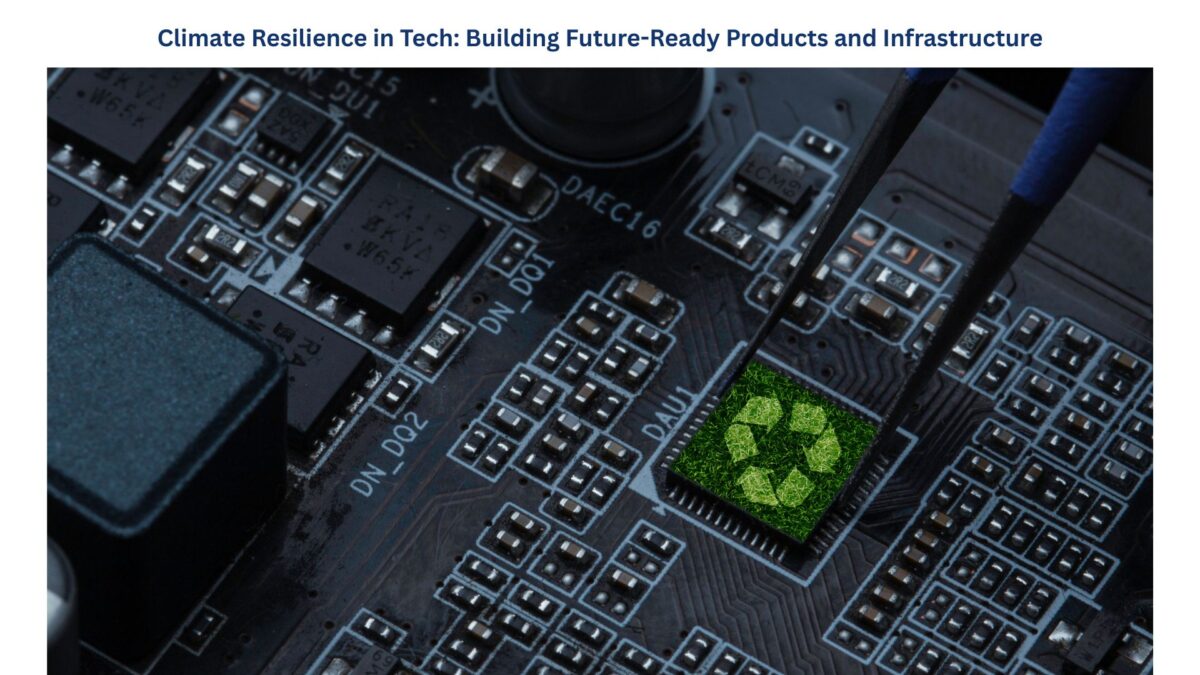
Climate Resilience in Tech: Building Future-Ready Products and Infrastructure

Categories
Applied Innovation

Climate Resilience in Tech: Building Future-Ready Products and Infrastructure

The technological environment is changing due to climate change, which is making businesses reevaluate how they develop, manufacture, and implement products and services.

Climate resilience has gone from being a nice-to-have feature to a business-critical capacity as extreme weather events increase in frequency and environmental rules tighten internationally. The market for climate resilience technologies is expected to grow to $100 billion USD over the next ten years, however financing for these technologies is declining as investors want scalable, tested solutions.

Building infrastructure and products that can endure environmental upheavals while minimizing their own environmental effect is what technology businesses mean by climate resilience. Integration between supply chain management, business strategy, software architecture, and hardware design is necessary for an all-encompassing approach.

Understanding Climate-Resilient Technology Architecture

Multiple layers make up the architecture of contemporary climate-resilient technology, each of which is built to resist and adapt to environmental conditions. This translates to distributed systems architecture at the infrastructure level that can continue to operate even in the face of climate-related disturbances to individual components. While edge computing lessens reliance on centralized data centers susceptible to severe weather, cloud computing platforms are increasingly utilizing regional redundancy particularly to avoid climatic risk zones.

Adaptive algorithms that can react dynamically to shifting environmental variables are included into software design for climate resilience. When the supply of renewable energy varies or when severe weather jeopardizes the stability of infrastructure, these systems automatically adapt resource distribution based on real-time climatic data. Here, artificial intelligence (AI)-driven optimization becomes essential, allowing for anticipatory reactions to climatic events before they affect system efficiency.

In response to rising temperatures, more humidity, and an increase in the frequency of extreme weather occurrences, hardware design has changed. This entails the development of sophisticated cooling systems, the use of materials resistant to corrosion for coastal deployments, and the creation of modular designs that provide quick field repairs in the event that equipment is damaged by climatic events. While modern materials can survive environmental conditions that older components cannot, energy-efficient processors minimize heat emission.

Real-time environmental monitoring is made possible by the integration of Internet of Things (IoT) sensors across infrastructure. This allows systems to automatically modify operations in response to temperature, humidity, air quality, and other climatic conditions. As a result, technological ecosystems become self-adapting and continue to function even when the environment changes.

Navigating Supply Chain Disruptions and Material Sourcing

Critical vulnerabilities in global technology supply chains have been revealed by climate change, especially in rare earth mining that is impacted by extreme weather and semiconductor production that is concentrated in areas that are prone to typhoons. In response, top IT firms are implementing complex supply chain diversification plans that distribute risk among several suppliers and climatic zones.

Resilient supply chains are increasingly based on the concepts of the circular economy. Closed-loop recycling initiatives have been put in place by some businesses which lessen reliance on virgin resources while establishing more stable supply chains. This strategy protects against mining and extraction interruptions brought on by climate change while simultaneously lessening the impact on the environment.

Proactive sourcing decisions are made possible by advanced supply chain analytics that employ climate modeling to forecast disruptions months in advance. To maximize purchase time and location, these systems combine supplier risk assessments, geopolitical climate policy, and weather predictions. To determine which supplier networks are the most robust, machine learning algorithms examine supply chain performance and historical climatic data.

As businesses create more responsive supply chains and cut emissions associated with transportation, local and regional sourcing techniques are becoming more and more popular. By lowering reliance on long-distance transportation that is susceptible to climatic disturbances, this regionalization strategy strengthens supply chain resilience while promoting local economic growth in important markets.

Entire supply networks are made more robust by strategic alliances with suppliers who are committed to climate adaption. This include cooperative development of climate-adaptive materials and components, coordinated climate risk assessments, and combined investments in supplier facility hardening.

Energy Infrastructure and Renewable Integration Strategies

Technology businesses developing climate-resilient operations have both possibilities and problems as a result of the shift to renewable energy sources. Complex energy management systems that may automatically modify usage depending on renewable energy availability and grid conditions are necessary to mitigate grid instability caused by renewable energy intermittency.

The dependability required for vital technological infrastructure is provided by hybrid energy systems that integrate solar, wind, and battery storage with smart grid connections. Businesses are working on 24/7 carbon-free energy projects that employ artificial intelligence (AI) to optimize energy use across a variety of renewable sources and storage systems, allowing operations to continue even in the event that individual renewable sources are unavailable.

Technology systems can automatically lower power usage during periods of peak demand or grid stress situations thanks to demand response integration. During climate-related stress events, advanced algorithms can enhance grid stability and preserve service availability by prioritizing crucial systems while temporarily cutting power to non-essential processes.

Specialized AI chips and quantum computing preparations are examples of energy-efficient computing systems that lower total energy requirements without sacrificing performance. Energy efficiency is a crucial part of designing climate-adaptive technologies because it has the twin advantages of lessening environmental impact and enhancing climate resilience.

Regulatory Compliance and Future-Proofing Strategies

The regulatory environment around technology and climate change is changing quickly, with new standards appearing in several jurisdictions. Technology businesses must manage a complicated compliance environment that includes regulations, and new carbon border adjustments.

While lowering regulatory risk, proactive compliance frameworks that foresee future rules offer competitive benefits. Building modular compliance structures that can quickly adjust to new regulatory needs, taking part in standard-setting procedures, and putting in place sustainability reporting systems that go above and beyond present regulations are all examples of this.

By employing artificial intelligence (AI) to detect regulatory changes across several jurisdictions and automatically update compliance procedures, regulatory technology (RegTech) solutions automate compliance monitoring and reporting. These technologies guarantee accuracy and completeness in regulatory reporting while lowering the administrative load of compliance.

Innovation and Market Leadership in Climate Technology

Maintaining market leadership in climate-resilient technology necessitates ongoing innovation in a variety of technological fields. This includes novel software architectures that naturally take climate concerns into account, sophisticated AI algorithms for environmental optimization, and breakthrough materials research for climate-adaptive hardware.

Access to cutting-edge technologies is made possible by strategic venture investments in climate technology businesses, which also create innovation ecosystems. Businesses that set up extensive climate tech investment plans may promote the wider development of climate solutions while spotting and incorporating innovative technology ahead of rivals.

Rapid integration of external climate technology is made possible by open innovation platforms, which also allow industry partners to share development expenses. Through shared technical advancement, these cooperative techniques foster industry-wide resilience while accelerating innovation.

New capacities for climate monitoring, modeling, and adaptation are made possible by the integration of cutting-edge technologies such as space-based systems, quantum computing, and sophisticated biotechnology. Businesses may quickly incorporate new capabilities when they become economically feasible by preparing their architectures for these technologies.

Reach out to us at open-innovator@quotients.com or drop us a line to delve into the transformative potential of groundbreaking technologies. We’d love to explore the possibilities with you

Categories
Applied Innovation Healthtech Uncategorized

Self-Balancing Exoskeletons: The Convergence of Artificial intelligence, Robotics, and Biomechanics

Categories
Applied Innovation Healthtech Uncategorized

Self-Balancing Exoskeletons: The Convergence of Artificial intelligence, Robotics, and Biomechanics

Self-balancing exoskeletons and humanoid robots are two innovative technologies that are revolutionizing our understanding of human mobility and automation. These technologies are the result of the convergence of artificial intelligence, robotics, and biomechanics. These developments are the epitome of contemporary engineering, providing previously unheard-of solutions for people with mobility issues while also transforming industrial automation.

Understanding Self-Balancing Exoskeletons

Self-balancing exoskeletons are advanced wearable robotic devices designed to help people with spinal cord injuries, lower limb limitations, or those undergoing rehabilitation regain their mobility. These gadgets differ from conventional mobility aids in that they may keep users balanced on their own without the assistance of walkers or crutches.

These amazing gadgets offer a paradigm change in assistive technology by enabling hands-free, upright movement both indoors and outdoors. These exoskeletons, which are driven by sophisticated artificial intelligence and precise engineering, become an extension of the human body by encircling the user’s lower body with safe fixtures and straps.

The Technology Behind the Magic

The complex component integration of self-balancing exoskeletons is what gives them their sophistication. 

Actuators and Motors: The muscular system of these devices is made up of actuators and motors, which are positioned at the hips, knees, and ankles to power movement and mimic the normal gait patterns of humans. These electric motors produce smooth, organic walking motions in response to directions from AI systems.

Advanced Sensor Networks: With high-frequency sensors that continually track user posture, joint postures, and ambient factors, advanced sensor networks act as the nervous system. This real-time data collecting allows for quick modifications to maximize mobility and preserve balance.

Artificial Intelligence and Control Algorithms: The operation’s brain is represented by control algorithms and artificial intelligence. To maintain dynamic stability, these systems make use of feedback control techniques like Partial Hybrid Zero Dynamics and machine learning. By choosing safe and effective gait patterns and adjusting for changes in the user’s center of mass, the AI responds to user intent.

Power Management Systems: Large-capacity batteries that are intended for prolonged use—typically offering many hours of continuous operation—are a component of power management systems. This guarantees that people may go about their everyday lives without worrying about running out of electricity.

Intuitive User Interfaces: Users with different levels of technical skill can utilize the technology thanks to intuitive user interfaces, which enable gesture-based instructions or therapist-programmed walking, standing, or rehabilitative exercise programs.

Clinical Applications and Personal Use

Exoskeletons with self-balancing capabilities have found use in both personal and medical contexts. For gait training and recovery after strokes or spinal cord injuries, these devices are effective aids in hospitals and rehabilitation facilities. Healthcare practitioners may keep an eye on patients’ development and modify settings for the best possible treatment results in the controlled setting.

The shift in assistive technology toward personal usage marks an important turning point. Individualized personal exoskeletons are being developed by companies to facilitate a variety of everyday tasks in the community and at home. A new age of independence for those with severe mobility disabilities is being ushered in by the shift from clinical tools to personal mobility solutions.

The Future of Human Machine Integration

A new paradigm in human-machine integration is emerging as self-balancing exoskeleton robots continue to advance. These technologies are more than simply engineering marvels; they are a manifestation of our shared goal of improving human potential and establishing more accessible, inclusive spaces.

New avenues for automation, help, and rehabilitation are being made possible by the confluence of biomechanics, robotics, and artificial intelligence. These technologies have the potential to drastically alter our approach to industrial automation and mobility issues as they develop and become more widely available.

As these technologies develop further, there are exciting prospects for the future, including the possibility of far more advanced, useful, and intuitive applications that will increase human potential and independence.

Reach out to us at open-innovator@quotients.com or drop us a line to delve into the transformative potential of groundbreaking technologies. We’d love to explore the possibilities with you

Categories
Applied Innovation

Emotionally Intelligent AI, a Game Changer in Healthcare

Categories
Applied Innovation

Emotionally Intelligent AI, a Game Changer in Healthcare

In the quickly changing field of healthcare innovation, where everyday innovations are fueled by surgical robots, diagnostic algorithms, and predictive analytics, empathy is still a vital but sometimes disregarded element. Building robots that can comprehend human emotions has become crucial as artificial intelligence expands into more personal facets of health care. This is a profoundly human dilemma in addition to a technological one.

The goal of emotionally intelligent AI, or EIAI, is to interact with the emotional nuances of both patients and doctors in addition to just obeying directives. This change heralds a significant revolution in which technology not only supports healing but actively participates in it.

How Machines Learn to Feel

Emotional intelligence has traditionally been a human trait. It’s what allows a nurse to calm a child’s anxieties or a doctor to console a bereaved family. However, this paradigm is changing now because to developments in human-centered design, machine learning, and emotional computing.

AI that is emotionally intelligent is taught to recognize emotional cues in context, speech, text, and facial expressions and to modify replies subtly. Voice biomarkers and minor language clues are already being used by some system to identify emotional discomfort. These days, robots listen for what is not spoken, for what is in between the words, rather than just providing answers to inquiries.

Emotion as a Clinical Resource

AI with emotional intelligence isn’t only for small talk. Real-world medical decisions are starting to be influenced by it. For example, algorithms can identify irritation or bewilderment during virtual consultations and assist doctors in modifying their communication style accordingly. They can spot early indicators of anxiety or sadness in mental health settings before human clinicians do.

These methods provide recommendations that honor emotional preparedness in addition to clinical realities during end-of-life conversations or pediatric care. Often neglected in conventional data analysis, emotion is now a crucial component of diagnosis, triage, and long-term care. With this perspective, EIAI becomes into an emotional stimulant as well as a digital instrument.

Ethics in a Mirror: Can We Trust Empathic Algorithms?

Great responsibility accompanies great sensitivity. AI’s ability to recognize and react to emotion raises ethical questions. Should our inner life be monitored by machines? Who is the owner of the data? Is a machine only mimicking empathy, or will it ever be able to “understand” us? These are real-world problems that have an impact on safety, openness, and trust in healthcare environments.

Patients should be informed about the methods and timing of their emotional state monitoring. Developers need to consider individual differences and cultural nuances while designing. Emotionally intelligent AI has the potential of being manipulative if not handled properly. It can strengthen the moral foundation of care if properly managed.

A Compassionate Future, Augmented by AI

Notwithstanding obstacles, emotionally aware AI has great potential to support physicians and protect emotional health. Consider healthcare systems where patients are guided through soothing therapies by wearable technology that detects their stress reaction.

Imagine post-operative robots that interact with mood as well as symptom checklists, changing their tone to be encouraging and consoling. This is enhancement rather than automation. The underlying technology is sophisticated, combining contextual AI, real-time learning, and multimodal sensing.

Even when the system is overburdened, its goal is to make patients feel noticed, restore emotional presence, and soften the edges of care—all of which are incredibly human. AI that is emotionally intelligent doesn’t pose as a human. It only learns to be there for us, to be patient, to be silent, to comprehend us.

Reach out to us at open-innovator@quotients.com or drop us a line to delve into the transformative potential of groundbreaking technologies. We’d love to explore the possibilities with you

Categories
Applied Innovation

The Future of Human-AI Relations: Unveiling the Digital Humans

Categories
Applied Innovation

The Future of Human-AI Relations: Unveiling the Digital Humans

Digital Humans represent a new frontier in the constantly changing field of artificial intelligence that will revolutionize our digital relationships. An important advancement in human-computer interaction, these AI-powered virtual characters provide experiences so lifelike that the digital and real worlds merge.

Advanced virtual beings that have been painstakingly created to mimic human appearance, behavior, and interaction patterns are known as “digital humans.” These advanced avatars combine the best aspects of 3D modeling, artificial intelligence, and emotion detection to create really engaging digital experiences that go beyond the limitations of simple chatbots and AI assistants.

They are useful in a variety of industries, including customer service, healthcare, education, and entertainment, so they are not merely amazing technological marvels. Their ability to understand context, recognize emotions, and respond with appropriate movements and facial expressions makes them excellent partners for businesses looking to provide customized, scalable interactions.

The Science Behind the Sorcery

The process of creating a digital person involves a complex dance between several technology layers, each of which blends in perfectly and plays a vital function. A modular architecture that separates different functional components for a cohesive overall performance is at the forefront.

With its lifelike 3D modeling, fluid speech synthesis, and dynamic text chat, the user interface represents the public face of the digital human. However, behind this captivating façade is an intricate network of backend technologies that painstakingly decipher human speech.

With machine learning algorithms for tailored and adaptable conversations and Natural Language Processing (NLP) for decoding human voice and writing, the intelligence layer serves as the cognitive foundation of the digital human. With the use of these features, the avatar may alter with every encounter, improving future replies by learning from previous interactions.

Digital humans rely on real-time data processing to keep their knowledge up to date and applicable. While state-of-the-art animation systems move their faces and bodies to provide depth to the interface, advanced voice technologies—both for synthesis and recognition—transform text into realistic speech and understand spoken orders.

The highlight is emotion recognition, which distinguishes digital people from their AI counterparts by giving them empathy. Because of their ability to sense and respond to human emotions, they are able to create encounters that feel really attentive and helpful.

The Journey from Blueprint to Reality

The process of creating a digital person is painstaking and begins with a clear understanding of its function. Companies must identify the target audience and specify the avatar’s function, such as customer service, medical consultations, or teaching.

In order to create hyper-realistic avatars with expressive expressions, suitable motions, and contextual settings that align with the brand and user expectations, 3D modeling experts and animation masters collaborate during the design process.

Iterative development takes place, and prototypes are thoroughly examined for accuracy and naturalness. Feedback serves as the compass for ongoing improvements, making sure that interactions are as realistic as possible.

Where They Fit in Our World

Digital people are already causing a stir in a number of areas thanks to their exceptional adaptability. They provide fundamental medical advice and expedite patient contacts in the healthcare industry. They facilitate training and act as virtual instructors in the field of education. They are the sympathetic faces of businesses when it comes to customer service, and they are available 24/7.

Through API integration, they connect to databases, external apps, and customer relationship management systems, allowing them to access relevant data and automate processes like reminders and appointment scheduling.

The Road Ahead

Different infrastructure approaches, such as scalable cloud platforms, secure on-site servers, or edge computing for quick reaction times, can be used for the digital human deployment. Real-time analytics monitor user involvement closely and provide insights that help users perform better over time.

Digital human design places a strong emphasis on accessibility, making sure that tools like voice commands, text-to-speech, and subtitle support successfully serve all users. Their usefulness and attractiveness are increased by this user-centric strategy.

The Transformation of Digital Engagement

Digital people represent a paradigm change toward more human-like digital interactions as well as a technological milestone. AI and emotional intelligence are developing together, giving businesses the ability to create individualized, emotionally intelligent digital experiences.

Digital humans will likely become more complex in the near future, and their interactions will eventually resemble those of real people. Industries including entertainment, education, healthcare, and customer service will probably change as a result of this transition, creating new opportunities for meaningful digital interaction.

Voice commands and text-based communication are no longer the only ways that humans and AI will interact in the future. With their ability to provide empathy, comprehension, and real relationships to our digital lives, digital humans are the next big thing. The line between digital and human connection will eventually be almost eliminated as companies adopt and improve these technologies.

Reach out to us at open-innovator@quotients.com or drop us a line to delve into the transformative potential of groundbreaking technologies. We’d love to explore the possibilities with you
Categories
Applied Innovation

Quantum Positioning Systems: A New Era in Navigation

Categories
Applied Innovation

Quantum Positioning Systems: A New Era in Navigation

For centuries, external references such as maps, stars, and, more recently, satellite-based systems like GPS were used for navigation. Despite being revolutionary, GPS has inherent drawbacks, such as the potential for signal interruptions, jamming, and reliance on satellites that might be compromised during natural catastrophes or military conflicts.

The revolutionary technology known as Quantum Positioning Systems (QPS) has the potential to revolutionize navigation by doing away with the need for outside signals. In situations when conventional GPS is ineffective, QPS provides previously unheard-of levels of precision, robustness, and security by utilizing the basic ideas of quantum physics.

Applications for quantum location are emerging in autonomous cars, deep space exploration, military operations, and even aircraft as developments in quantum sensors, inertial measurement units (IMUs), and gravity-based navigation pick up speed. The question is how quantum positioning can strengthen and future-proof global navigation systems, not if it will replace GPS.

The Science Behind Quantum Positioning

Quantum positioning provides a self-sufficient way to track location with a high degree of precision, in contrast to traditional navigation systems that rely on receiving signals from satellites. Highly sensitive quantum sensors that can pick up on rotation, acceleration, and even gravitational anomalies are used to do this.

Atom interferometry, which uses ultra-cold atoms to detect acceleration and angular velocity with accuracy considerably beyond that of traditional IMUs, is one of the most promising technologies advancing quantum positioning. It is possible to investigate the activity of these atoms to pinpoint precise movement patterns since they behave similarly to quantum waves. Long-term navigation without external recalibration is made possible by quantum IMUs’ substantially reduced drift rate as compared to conventional sensors, which collect errors over time.

By identifying even the smallest changes in the Earth’s magnetic field, other quantum-based sensors, such diamond-based magnetometers, make navigation possible. A vehicle or vessel fitted with this technology may locate itself even in areas where GPS signals are totally inaccessible, including deep underground, underwater, or inside tightly guarded military zones, because each site has its own magnetic signature.

Military and Aerospace Applications

Military forces throughout the world are quickly using quantum locating technology, especially in defense settings where GPS is susceptible to spoofing or jamming assaults. Quantum compasses were added to the UK’s Astute-class submarines in 2024, enabling months-long underwater missions with little positional drift—a crucial feature for covert operations.

Similar improvements are being made in aviation. With a positional accuracy of only 32 meters, Boeing’s quantum IMU achieved four-hour GPS-free flights—a significant improvement over the 3-kilometer inaccuracies found in traditional inertial navigation systems. For military aircraft operating in areas with blocked signals, where dependence on GPS might be problematic, this is especially important.

Quantum location has even been used into municipal infrastructure. In a successful testing using quantum beacons, London’s subterranean transit system achieved an unparalleled degree of accuracy for subterranean navigation: station alignment precision of just 17 millimeters.

Performance Benchmarks: Why QPS Outshines GPS

Quantum positioning is preferable because of its unparalleled precision and immunity to interference. While environmental obstacles, satellite failures, and signal jamming can interfere with traditional GPS, QPS functions without the aid of outside references.

One of the most notable benefits is its immunity to jamming; unlike GPS, which can be disrupted by a 5-watt jammer, quantum positioning is impervious to jamming as it doesn’t depend on satellites or radio transmissions. Furthermore, compared to traditional navigation systems, position hold accuracy—which measures the amount of drift over time—is 100 times greater.

The speed of cold start acquisition is another innovation. In contrast to GPS-based systems, which can take up to 30 seconds to setup, quantum positioning is far more efficient, achieving location fixes in as little as 8 seconds.

Overcoming Challenges: Miniaturization and Scalability

Even though quantum positioning systems have many advantages, commercial adoption is still hampered by issues with cost and scalability. Present-day quantum navigation technologies are difficult for consumer applications as they frequently call for extensive laboratory setups. Nonetheless, miniaturization is advancing more quickly.

The Future of Quantum Navigation

The technique of quantum location is quickly moving into widespread use. Luxury electric cars are anticipated to come equipped with chip-scale quantum navigation systems within a few years, which would enable smooth navigation through urban canyons and tunnels where GPS signals frequently falter. These devices, which offer extremely precise self-reliant location tracking, will improve autonomous driving.

Exploration of deep space will also greatly benefit. In order to enable future moon landings with sub-centimeter precision, a lunar quantum positioning grid is now being developed. This new quantum-enabled network will provide a strong positioning foundation for lunar activities, in contrast to satellite-based GPS systems on Earth.

Furthermore, there is a growing push to standardize quantum navigation protocols. By establishing international standards for cross-platform compatibility, the IEEE P2891 quantum positioning framework—which is expected to be completed by 2030—will guarantee that quantum positioning may be easily integrated across sectors.

Conclusion: The Quantum Revolution in Navigation

The future of navigation is being actively shaped by quantum positioning systems, which are no longer just a far-off idea. These systems offer unmatched precision, security, and resilience in applications ranging from deep-space missions to autonomous transportation, military defense, and aerospace by doing away with the need for satellites. Quantum positioning technology is poised to revolutionize human navigation on Earth and beyond as continuous advancements propel its downsizing and commercialization.

Reach out to us at open-innovator@quotients.com or drop us a line to delve into the transformative potential of groundbreaking technologies. We’d love to explore the possibilities with you.

Categories
Applied Innovation

Decentralized Finance (DeFi): Revolutionizing Financial Systems Through Blockchain

Categories
Applied Innovation

Decentralized Finance (DeFi): Revolutionizing Financial Systems Through Blockchain

Decentralized Finance (DeFi), which provides safe, open, and independent transactions without the need for conventional middlemen like banks or brokers, has the potential to revolutionize the worldwide financial scene. DeFi, which is based on blockchain technology, uses smart contracts and peer-to-peer networks to simplify financial processes while cutting expenses and improving accessibility. DeFi is revolutionizing how consumers interact with financial services as adoption picks up speed, encouraging innovation and financial inclusiveness globally.

The Core Mechanisms of DeFi

Blockchain technology, which permits decentralized transaction recording, is at the core of DeFi. It uses distributed ledgers, where consensus processes validate transactions, rather than being governed by a single organization. This approach guarantees immutability, which means that once information is entered, it cannot be changed without compromising the blockchain’s overall integrity.

Because they automate financial transactions based on preset circumstances, smart contracts are essential to DeFi. These self-executing contracts eliminate the need for human involvement, resulting in smooth and effective asset management, insurance claims, lending, and borrowing. Through decentralized apps (dApps), users engage directly with DeFi protocols, giving them total control over their assets and financial operations without the need for middlemen.

Security and Transparency: Strengths and Challenges

DeFi’s transparency is one of its main benefits. Public blockchains record every transaction, guaranteeing accountability and enabling real-time verification. By facilitating community-driven audits and assisting in the identification of vulnerabilities before they become serious concerns, open-source development further improves security.

Nevertheless, DeFi has security issues in spite of its benefits. There is still a chance of fraudulent schemes, hacker efforts, and smart contract vulnerabilities. Protocols provide bug bounty programs, carry out thorough security audits, and incorporate decentralized insurance systems that reimburse users in the event of security breaches in order to lessen these difficulties.

Key Use Cases Transforming Financial Services

DeFi’s adaptability goes beyond only trading cryptocurrencies. While decentralized exchanges (DEXs) allow peer-to-peer trading without middlemen, automated lending systems allow users to borrow assets without traditional credit checks. Real-world assets, like real estate or artwork, can be represented as blockchain-based tokens through asset tokenization, increasing their liquidity and accessibility.

Pegged to conventional fiat currencies, stablecoins offer a remedy for cryptocurrency volatility by guaranteeing transaction price stability. Users may also construct and exchange financial instruments based on the prices of physical or digital assets thanks to decentralized derivatives markets. Insurance platforms with DeFi capabilities simplify claims processing, which lowers administrative workloads and fraud.

Benefits Driving DeFi Adoption

DeFi’s ability to save costs by doing away with middlemen and drastically lowering transaction fees and overhead charges is by far its greatest benefit. Another significant advantage is financial inclusion, as DeFi enables those who do not have access to traditional banks to engage in international trade. Users are empowered by the democratization of financial services because it allows them to participate in governance choices and maintain control over their assets.

Innovation is another important component that propels adoption. DeFi’s open-source nature encourages innovation and flexibility while speeding up the creation of new financial solutions. Rapid iterations of decentralized apps are made possible by smart contract flexibility, meeting changing market demands.

Challenges and Future Prospects

DeFi has to get over scale issues and regulatory uncertainty despite its disruptive potential. Although layer-2 scaling solutions and new blockchain networks are tackling these issues, network congestion and hefty transaction fees on popular blockchains like Ethereum are preventing widespread adoption. Global regulators are looking at ways to safeguard consumers and support DeFi’s expansion without limiting creativity.

DeFi’s future depends on better scaling solutions, more security measures, and clearer regulations. DeFi has the potential to become an essential part of the global financial system as blockchain technology develops further, combining inclusion, efficiency, and transparency.

Reach out to us at open-innovator@quotients.com or drop us a line to delve into the transformative potential of groundbreaking technologies. We’d love to explore the possibilities with you.

Categories
Applied Innovation

Deep Tech: The Catalyst for Sustainable Innovation

Categories
Applied Innovation

Deep Tech: The Catalyst for Sustainable Innovation

In order to create a sustainable future, deep technology (deep tech) is being emphasized in the face of severe global issues including climate change, resource depletion, and environmental degradation. With its roots in cutting-edge scientific research and advanced engineering, deep tech has the potential to revolutionize a number of sectors and provide game-changing solutions.

Understanding Deep Tech

The term “deep tech” describes cutting-edge scientific discoveries that have the potential to drastically alter whole sectors. Deep tech is supported by state-of-the-art research from fields like artificial intelligence (AI), biotechnology, robotics, quantum computing, advanced materials, and sustainable manufacturing, in contrast to traditional digital solutions that might concentrate on software applications or consumer technologies. It stands out because to its strong scientific and engineering foundation, which promises ground-breaking inventions that can address some of the most important environmental problems of our day.

The Difference Between Deep Tech and Conventional Tech

Deep tech and conventional tech differ from one another in their areas of concentration and the extent of their influence. While deep tech offers revolutionary breakthroughs that have the potential to upend established industrial paradigms, conventional technologies frequently strive for small, incremental gains. In contrast to consumer-centric breakthroughs like mobile applications or cloud services, deep tech frequently requires a significant investment and a longer gestation period for creation. This is partly due to the amount of study and intricacy needed in deep tech.

Deep Tech’s Role in Advancing Sustainability

Using AI, robots, biotechnology, and quantum computing to provide effective and eco-friendly solutions, deep tech is at the forefront of sustainability. It has an impact on a number of important areas:

Climate-Resilient Agriculture

Agriculture is particularly susceptible to the consequences of climate change and contributes significantly to global emissions. With breakthroughs like AI-optimized crops, carbon-sequestering soil technologies, and autonomous farm swarms that increase precision farming and cut waste, deep tech is tackling these issues and enhancing food security and resource efficiency.

Sustainable Energy and Decarbonization

Deep tech interventions like AI-driven smart grids that optimize energy distribution and next-generation battery technologies that improve storage capacity are crucial to the shift to a low-carbon economy. Furthermore, synthetic biology contributes to direct air carbon capture, which lowers atmospheric CO₂ concentrations.

Circular Economy and Sustainable Materials

The material landscape is being redefined by deep tech, with self-healing and biodegradable materials lowering waste and promoting the circular economy. Resource efficiency is improved by AI-optimized recycling systems, while material sustainability and durability are advanced via molecular imaging.

Water Conservation and Environmental Restoration

Deep tech offers solutions such filtration systems based on nanotechnology and bioengineered organisms that aid in the restoration of natural settings in light of the impending water shortage and the threat to ecosystems. For example, biotechnology helps clean up oceans using pollution-absorbing algae, and artificial intelligence plays a key role in managing water resources.

Ethical AI and Smart Cities

Additionally, deep tech is changing urban settings to conform to sustainability ideals. Blockchain technologies and AI-powered urban planning guarantee sustainable tracking and ethical sourcing. Furthermore, edge computing lowers energy usage in networks of smart cities.

Deep Tech’s Alignment with Global Sustainability Goals

Deep tech’s promise is demonstrated by its compatibility with a number of Sustainable Development Goals (SDGs) of the UN. It promotes the clean energy transition, encourages sustainable industrial developments, aids in water and ocean conservation, and supports climate action through carbon capture and emission reduction. It also promotes sustainable urbanization and food security.

Takeaway

Deep tech is actively rebuilding sectors to offer durable and scalable answers to global problems, rather than just enhancing sustainability initiatives. Achieving a low-carbon, ecologically conscious future requires its integration into other industries. Continuous investment, interdisciplinary cooperation, and supporting regulatory frameworks are necessary for the implementation of these solutions. In the pursuit of sustainable economic growth and fair environmental stewardship, deep tech is a vital pillar. Deep tech’s contribution to solving today’s most important problems is becoming more and more obvious as we negotiate the complexity of the modern world.

Reach out to us at open-innovator@quotients.com or drop us a line to delve into the transformative potential of groundbreaking technologies. We’d love to explore the possibilities with you.

Categories
Applied Innovation

Ethical AI: Constructing Fair and Transparent Systems for a Sustainable Future

Categories
Applied Innovation

Ethical AI: Constructing Fair and Transparent Systems for a Sustainable Future

Artificial Intelligence (AI) is reshaping the global landscape, with its influence extending into sectors such as healthcare, agritech, and sustainable living. To ensure AI operates in a manner that is fair, accountable, and transparent, the concept of Ethical AI has become increasingly important. Ethical AI is not merely about minimizing negative outcomes; it is about actively creating equitable environments, fostering sustainable development, and empowering communities.

The Pillars of Ethical AI

For AI to be both responsible and sustainable, it must be constructed upon five core ethical principles:

Accountability: Ensuring that AI systems are equipped with clear accountability mechanisms is crucial. This means that when an AI system makes a decision or influences an outcome, there must be a way to track and assess its impact. In the healthcare sector, where AI is increasingly utilized for diagnostic and treatment purposes, maintaining a structured governance framework that keeps medical professionals as the ultimate decision-makers is vital. This protects against AI overriding patient autonomy.

Transparency: Often, AI operates as a black box, making the reasoning behind its decisions obscure. Ethical AI demands transparency, which translates to algorithms that are auditable, interpretable, and explainable. By embracing open-source AI development and mandating companies to reveal the logic underpinning their algorithms, trust in AI-driven systems can be significantly bolstered.

Fairness & Bias Mitigation: AI models are frequently trained on historical data that may carry biases from societal disparities. It is essential to integrate fairness into AI from the outset to prevent discriminatory practices. This involves using fairness-focused training methods and ensuring data diversity, which can mitigate biases and promote equitable AI applications across various demographics.

Privacy & Security: The handling of personal data is a critical aspect of ethical AI. With AI systems interacting with vast amounts of sensitive information, adherence to data protection laws, such as the General Data Protection Regulation (GDPR) and India’s Digital Personal Data Protection Act, is paramount. A commitment to privacy and security helps prevent unauthorized data access and misuse, reinforcing the ethical integrity of AI systems.

Sustainability: AI must consider long-term environmental and societal consequences. This means prioritizing energy-efficient models and sustainable data centers to reduce the carbon footprint associated with AI training. Ethical AI practices should also emphasize the responsible use of AI to enhance climate resilience rather than contribute to environmental degradation.

Challenges in Ethical AI Implementation

Several obstacles stand in the way of achieving ethical AI:

AI models learn from historical data, which often reflect societal prejudices. This can lead to the perpetuation and amplification of discrimination. For instance, an AI system used for loan approvals might inadvertently reject individuals from marginalized communities due to biases embedded in the training data.

The Explainability Conundrum

Advanced AI models like GPT-4 and deep neural networks are highly complex, making it difficult to comprehend their decision-making processes. This lack of explainability undermines accountability, especially in healthcare where AI-driven diagnostic tools must provide clear rationales for their suggestions.

Regulatory & Policy Lag

While the ethical discourse around AI is evolving, legal frameworks are struggling to keep up with technological advancements. The absence of a unified set of global AI ethics standards results in a patchwork of national regulations that can be inconsistent.

Economic & Social Disruptions

AI has the potential to transform industries, but without careful planning, it could exacerbate economic inequalities. Addressing the need for inclusive workforce transitions and equitable access to AI technologies is essential to prevent adverse societal impacts.

Divergent Global Ethical AI Approaches

Ethical AI policies vary widely among countries, leading to inconsistencies in governance. The contrast between Europe’s emphasis on strict data privacy, China’s focus on AI-driven economic growth, and India’s balance between innovation and ethical safeguards exemplifies the challenge of achieving a cohesive international approach.

Takeaway

Ethical AI represents not only a technical imperative but also a social obligation. By embracing ethical guidelines, we can ensure that AI contributes to fairness, accountability, and sustainability across industries. The future of AI is contingent upon ethical leadership that prioritizes human empowerment over mere efficiency optimization. Only through collective efforts can we harness the power of AI to create a more equitable and sustainable world.

Write to us at Open-Innovator@Quotients.com/ Innovate@Quotients.com to get exclusive insights