



Categories
DTQ Events

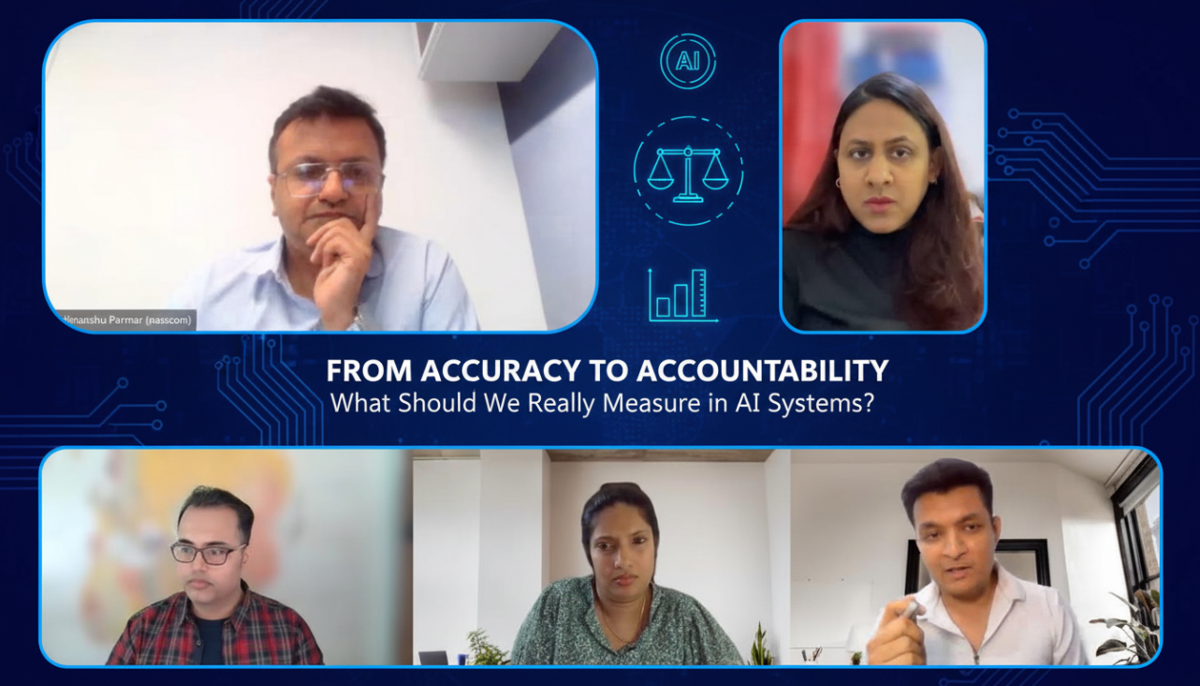
Report: From Accuracy to Accountability- What Should We Really Measure in AI Systems

Categories
DTQ Events

Report: From Accuracy to Accountability- What Should We Really Measure in AI Systems

The rapid acceleration of artificial intelligence adoption has brought with it a fundamental shift in how we evaluate technological success. Traditionally, AI systems have been judged primarily on performance metrics such as accuracy, precision, and speed. However, as these systems move from controlled environments into real-world applications—impacting healthcare, governance, finance, and everyday decision-making—the limitations of these metrics have become increasingly evident.

The Data Trust Quotients (DTQ) recently convened a thought‑provoking discussion titled “From Accuracy to Accountability: What Should We Really Measure in AI Systems?” The dialogue tackled a critical shift in how we evaluate AI: is accuracy alone sufficient, or should accountability, trust, and human impact take precedence. The virtual session explored the growing realization that high-performing models can still fail in practice if they lack proper governance, transparency, and ethical grounding. As organizations race toward rapid deployment, the need to redefine evaluation frameworks for AI systems has never been more urgent.

Speakers

  • Naman Kothari – NASSCOM COE (Moderator)
  • Anniliza Crasta – Director, Information Security, Juniper Networks
  • Sneha Pillai – Data Protection Lawyer, Bosch Middle East
  • Abhishek Tripathi – Head of Cybersecurity & IT Operations
  • Himanshu Parmar – Senior Manager, AI, NASSCOM COE

Key Insights from the Discussion

1. The AI Adoption Paradox

The session opened by highlighting a striking imbalance in the current AI ecosystem. On one hand, there is unprecedented enthusiasm and investment, with billions of dollars flowing into AI development and a majority of enterprises actively integrating generative AI into their operations. On the other hand, there is a significant lack of preparedness when it comes to managing the risks associated with these systems. Organizations are under immense pressure to deploy AI quickly in order to remain competitive, yet only a small fraction feel confident in their ability to implement proper safeguards. This creates a paradox where speed is prioritized over safety, leading to fragile systems that may not withstand real-world complexities.

2. Accuracy as a Misleading Benchmark

A key theme throughout the discussion was the idea that accuracy, while important, can often be a misleading indicator of success. Examples were shared where models achieved near-perfect accuracy in testing environments but failed dramatically once deployed. These failures were not due to flaws in the mathematical models themselves but rather due to unaddressed external factors such as biased data, changing environments, and lack of human oversight. This highlights a critical gap between theoretical performance and practical reliability. In real-world scenarios, systems must operate under uncertainty, adapt to new conditions, and interact with human users—factors that accuracy metrics alone cannot capture.

3. The Shift from Accuracy to Trust

As AI systems take on more complex and sensitive roles, there is a growing recognition that trust is becoming the ultimate measure of success. Trust encompasses multiple dimensions, including fairness, transparency, reliability, and security. Organizations are beginning to move away from purely technical metrics toward a more holistic evaluation framework that considers how systems behave over time and how they are perceived by users. This shift reflects a broader understanding that AI systems must not only perform well but also inspire confidence among stakeholders.

4. Hidden Risks Across the AI Lifecycle

One of the most significant insights from the discussion was the identification of risks that are often overlooked during the development and deployment of AI systems. These risks are not confined to a single stage but span the entire lifecycle:

  • Data-related risks: Biases embedded in datasets, errors in labeling, and poor data quality can significantly impact outcomes.
  • Design assumptions: Many systems are built on implicit assumptions that are neither documented nor tested, leading to unexpected behavior.
  • Context drift: The environment in which a model operates can change over time, reducing its effectiveness.
  • Post-deployment gaps: Once a system is deployed, accountability often becomes unclear, and continuous monitoring is neglected.

These blind spots can lead to failures even when initial performance metrics appear satisfactory.

5. The Complexity of Global Regulations

The discussion also highlighted the challenges posed by the lack of a unified global standard for AI governance and data privacy. Different regions have developed their own regulatory frameworks, each with unique requirements and expectations. This creates a complex landscape for organizations operating across multiple jurisdictions. Systems that are compliant in one region may not meet the standards of another, requiring constant adaptation. The evolving nature of these regulations further complicates the situation, making compliance an ongoing process rather than a one-time achievement.

6. Security as an Integral Design Element

Another important takeaway was the need to rethink how security is approached in AI systems. Instead of treating security as a final checkpoint before deployment, it must be integrated into every stage of development. This involves designing systems with security considerations from the outset, ensuring that vulnerabilities are addressed early rather than patched later. Such an approach not only reduces risks but also aligns with the fast-paced nature of AI development, where late-stage changes can be costly and disruptive.

7. Real-World Deployment Challenges

When AI systems are deployed in real-world environments, a range of operational challenges emerges. These include over-permissioned systems that have access to more data than necessary, lack of domain-specific constraints, and insufficient control mechanisms. In some cases, AI agents may perform tasks beyond their intended scope, leading to unintended consequences. These issues underscore the importance of clearly defining the boundaries within which AI systems operate and ensuring that they are aligned with their intended purpose.

8. The Emergence of Shadow AI

The increasing accessibility of AI tools has led to the rise of “shadow AI,” where individuals within organizations use AI systems independently without proper oversight. While often driven by a desire to innovate or improve efficiency, this practice introduces significant risks. Sensitive data may be exposed, and untested systems may be integrated into workflows without adequate safeguards. Addressing this challenge requires both technical solutions and a cultural shift toward responsible AI usage.

9. The Challenge of AI Hallucinations

AI hallucinations—instances where systems generate incorrect or fabricated information—remain a persistent issue. Despite advancements in model design, these errors cannot be entirely eliminated. Instead, organizations must focus on mitigating their impact through validation mechanisms and oversight processes. This reinforces the need for layered accountability, where multiple checks are in place to ensure reliability.

10. Data as Both an Asset and a Challenge

While data is often described as the fuel of AI, the discussion revealed that managing data effectively is one of the most challenging aspects of AI development. Collecting high-quality data requires significant effort and resources, and legal restrictions can complicate cross-border data transfers. Even after data is collected and processed, it may not always meet the requirements for training effective models. This highlights the need for careful planning and validation at every stage of the data lifecycle.

11. The Importance of a Structured Data Strategy

A recurring theme was the lack of a comprehensive data strategy in many organizations. Without a clear framework for managing data, organizations risk inefficiencies and vulnerabilities. A robust data strategy should include classification, access control, and lifecycle management, ensuring that data is treated as a critical asset. Such an approach not only enhances security but also supports the development of more reliable AI systems.

12. Governance as the Backbone of AI System

Governance plays a crucial role in ensuring that AI systems operate within defined boundaries. It involves establishing policies, setting standards, and monitoring compliance throughout the lifecycle. Unlike operational management, governance focuses on creating the structures that guide decision-making. Effective governance ensures consistency, reduces risks, and supports the responsible use of AI.

13. Measuring Human Impact

One of the most important yet often overlooked aspects of AI evaluation is its impact on users. AI systems can influence behavior, decision-making, and societal outcomes in ways that are not immediately apparent. Evaluating these effects requires a long-term perspective and continuous monitoring. By considering human impact, organizations can ensure that their systems contribute positively to society.

14. Building Trust Through Design

Moving from compliance to trust requires a proactive approach to system design. Features such as transparency, user control, and data minimization can enhance trust and improve user experience. Trust is not built through policies alone but through consistent and predictable system behavior. By prioritizing user-centric design, organizations can create systems that are both effective and trustworthy.

15. The Need for Interdisciplinary Collaboration

The discussion emphasized the importance of collaboration between technical, legal, and business teams. As AI systems become more complex, no single discipline can address all the challenges involved. Bridging the gap between these domains is essential for developing systems that are both innovative and responsible.

Conclusion

The session underscores a critical shift in how AI systems should be evaluated. While accuracy remains an important metric, it is no longer sufficient on its own. The future of AI lies in building systems that are accountable, transparent, and aligned with human values. This requires a comprehensive approach that considers the entire lifecycle of AI systems, from data collection and model design to deployment and long-term impact. By expanding the scope of measurement to include trust, governance, and human impact, organizations can move toward a more responsible and sustainable AI ecosystem.

Categories
DTQ Events

Report: Transitioning to Agentic Cyber Defense

Categories
DTQ Events

Report: Transitioning to Agentic Cyber Defense

Introduction

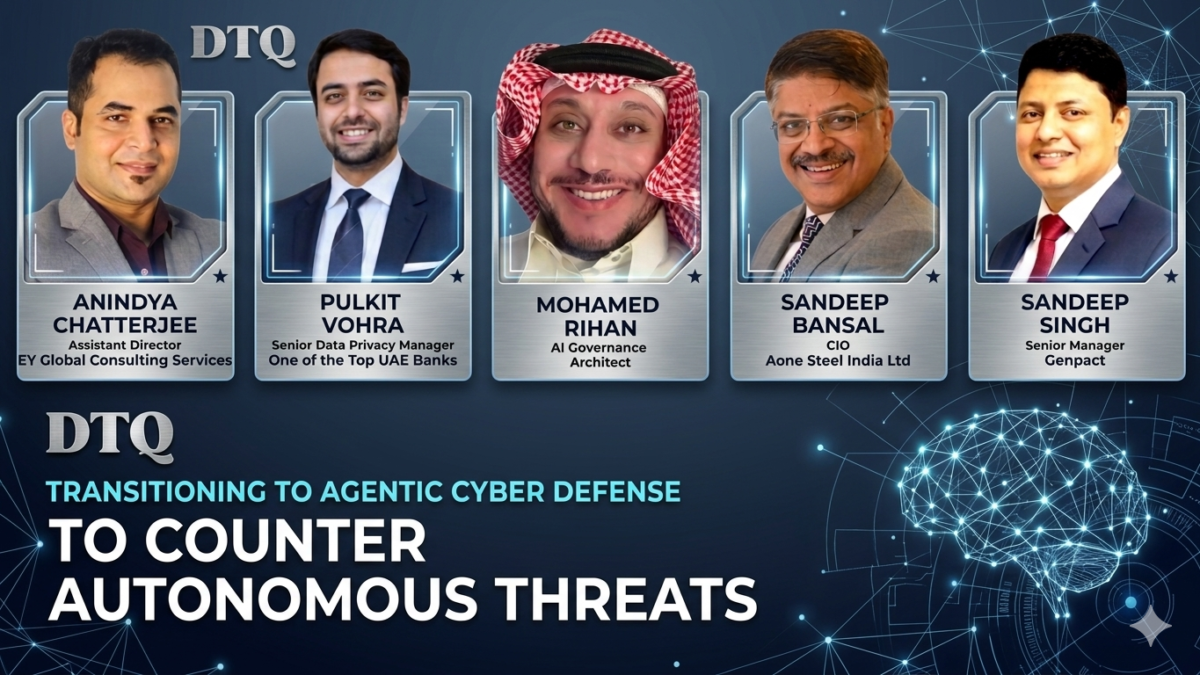
DTQ recently convened a specialized session, “Transitioning to Agentic Cyber Defense to Counter Autonomous Threats,” to explore the evolution of defensive strategies in an era of self-evolving adversarial tactics. The online discussion framed “agentic defense” not merely as an upgrade in tooling, but as a strategic pivot from reactive, signature-based controls toward autonomous systems capable of reasoning and adapting within defined risk parameters.

The Speakers

The panel featured a cross-disciplinary group of leaders representing the financial, industrial, and consulting sectors:

  • Anindya Chatterjee — Assistant Director, EY Global Consulting Services
  • Pulkit Vohra — Senior Data Privacy Manager, Top UAE Financial Institution
  • Mohamed A. S. — AI Governance Architect
  • Sandeep Bansal — CIO, Aone Steel India Ltd
  • Sandeep Singh — Senior Manager, Genpact

Key Insights

The Changing Threat Landscape

  • Lowered Barriers to Entry: AI and automation allow low-skill actors to execute high-sophistication attacks. Phishing and credential harvesting are becoming indistinguishable from human activity.
  • Compressed Response Windows: The primary vulnerability is no longer just the “bad decision,” but the “unquestioned execution” of rapid, automated attacks.
  • Cognitive Overload: Traditional SOC workflows are structurally incapable of managing the current volume of alerts; governed automation is now a survival requirement.

Principles of Agentic Defense

  • Bounded Autonomy: Systems must operate within “guardrails.” High-confidence, low-risk actions can be fully automated, while high-impact shifts require human-in-the-loop (HITL) authorization.
  • Radical Transparency: Every autonomous action must be explainable and auditable, detailing the rationale and data inputs for regulatory and forensic purposes.
  • Collateral-Aware Logic: Systems must calculate the potential business impact (e.g., service downtime) before executing a defensive maneuver, with built-in “safe rollback” capabilities.

Governance and Accountability

  • Human-Centric Liability: Regardless of the level of autonomy, accountability remains with human stakeholders. Responsibilities must be clearly mapped across model owners and business leaders.
  • Policy-as-Code: Governance should be machine-readable, allowing agentic systems to enforce legal and internal constraints at the same speed as the threats they counter.
  • Cross-Functional Oversight: Alignment between Security, Legal, and Privacy teams is essential to define the boundaries of “acceptable” autonomous behavior.

Privacy and Data Strategy

  • Privacy-Preserving Telemetry: Implementation of data minimization and pseudonymization ensures that detection needs do not compromise privacy obligations.
  • Engineering-Led Privacy: Privacy cannot be a checkbox; it must be baked into the architecture and model training phases to prevent data “scope creep.”

Operationalization Strategy

  • Phased Deployment: Start with “low-hanging fruit,” such as quarantining known malware or blocking confirmed fraud, before scaling to complex decision-making.
  • Continuous Simulation: Use red-teaming and “chaos experiments” to test how autonomous playbooks behave under extreme or unpredictable stress.
  • Legacy Integration: Agentic capabilities should augment—not replace—existing SIEM, EDR, and IAM investments to ensure telemetry continuity.

Technical & Sector Considerations

Technical Design

  • Model Lifecycle Management: Rigorous versioning and drift detection are required to prevent adversarial manipulation of the defense models themselves.
  • Fail-Safe Defaults: When confidence scores are low, systems must default to “Alert Only” modes rather than taking disruptive actions.

Sector-Specific Applications

  • Financial Services: Focus on real-time fraud prevention and identity risk scoring while maintaining high explainability for regulators.
  • Industrial/OT: Priority is placed on Operator-Assist recommendations. Given the risk of physical damage, direct autonomous actuation must be approached with extreme caution.
  • Managed Services (MSSPs): Providers can act as a force multiplier by centralizing model management and threat intelligence for multiple clients.

Practical Recommendations for Leaders

  1. Tier Your Automation: Classify defensive actions by risk level. Automate the “obvious” and assist the “complex.”
  2. Codify Your Rules: Move from written PDFs to machine-executable Policy-as-Code.
  3. Enrich Your Context: Invest in high-quality telemetry (Identity, Asset, and Business process mapping) to improve the “reasoning” of agentic tools.
  4. Monitor the Models: Treat your security AI as a high-value asset; implement drift monitoring and adversarial testing.
  5. Foster Collaboration: Establish a cross-functional forum where Legal and IT define the rules of engagement together.

Conclusion

Agentic cyber defense is no longer a futuristic concept—it is an operational necessity. To successfully transition, organizations must balance the speed of AI with the wisdom of human oversight. By adopting a phased, risk-aware approach grounded in Policy-as-Code and explainable AI, security leaders can build a resilient posture that scales with the threat while remaining firmly under human control.

DTQ serves as a platform dedicated to mapping global industry shifts and providing “information capital” before it reaches the mainstream. in cybersecurity space. Please write us at open-innovator@quotients.com for more information.

Categories
DTQ Data Trust Quotients Events

Report: Scaling Data Veracity to Combat AI Model Poisoning

Categories
DTQ Data Trust Quotients Events

Report: Scaling Data Veracity to Combat AI Model Poisoning

Data Trust Quotient (DTQ) Panel Report | April 20, 2026

Data Trust Quotient (DTQ) convened a critical panel on April 20, 2026, addressing one of the most pressing challenges in artificial intelligence: ensuring data veracity to combat AI model poisoning. As AI systems increasingly influence critical decisions across industries, the integrity of data feeding these models has become paramount. Poisoned or compromised data can quietly infiltrate systems, leading to biased, misleading, or even dangerous outcomes. This virtual session brought together experts from compliance, cybersecurity, governance, and risk management to explore accountability frameworks, governance evolution, and practical strategies for building trustworthy AI systems at scale.

Expert Panel

Prem Kumar, ACMA, CGMA, CFE, CACM – Head of Ethics and Compliance, bringing expertise in regulatory accountability and ethical frameworks for AI governance.

Subhashish Chandra Saha – Senior GRC Consultant with 16+ years of expertise in Governance, Risk, and Compliance (GRC) and cybersecurity, specializing in translating AI risks into business impact.

Rajesh T R – Director of Cyber Security & Resilience, focusing on emerging threat landscapes where data itself becomes the attack surface.

Vijay Banda – Executive Chairman & Chief Security Officer, providing strategic perspective on organizational accountability and security architecture.


The Fundamental Challenge: Data Veracity in AI Systems

AI models are only as reliable as the data they learn from. The panel emphasized that poisoned data leads to outcomes that are not only inaccurate but potentially harmful. Unlike traditional system failures that announce themselves loudly, data poisoning creeps in silently, making detection extraordinarily difficult.

The Critical Oversight: Organizations focus extensively on building smarter models while neglecting the integrity of data feeding them. This oversight creates vulnerabilities that adversaries can exploit with devastating effect.

Key Realities:

  • Data poisoning misleads AI into producing false or biased results
  • Issues often remain undetected until they cause significant harm
  • Ensuring veracity requires proactive measures rather than reactive fixes
  • The damage compounds silently before manifestation

Layered Accountability: Who Bears Responsibility?

Prem Kumar addressed the complex web of accountability in AI systems, explaining that responsibility is distributed across multiple layers, but regulators ultimately hold decision-makers accountable regardless of technical delegation.

The Accountability Hierarchy

Developers: Responsible for secure engineering, rigorous validation, and continuous monitoring of model behavior.

Businesses: Must ensure secure data sources, define operational controls, and implement poisoning prevention mechanisms.

Leadership: Bears non-delegable accountability. Regulators focus scrutiny on decision rights and executive responsibility regardless of technical complexity.

Chain of Custody: The Evidence Standard

Maintaining traceability of data from source to deployment is critical. Just as digital evidence in legal proceedings requires an unbroken chain of custody, AI data must be validated and protected throughout its entire lifecycle. Any break in this chain compromises the reliability of everything downstream.


Continuous Data Integrity Assurance: Beyond Incident Response

Traditional compliance models rely on incident-based detection—waiting for something to break before responding. AI requires a fundamentally different approach: continuous assurance.

Prem Kumar emphasized the critical importance of real-time data observability and avoiding self-learning environments without rigorous validation gates.

Essential Practices

Data Lineage/Provenance: Track origins, validation checkpoints, and processing transformations. Every data point must have a documented journey.

Validation Layers: Implement checks during both training stages and output stages. One layer is insufficient—defense in depth applies to data integrity.

Segregated Learning Environments: Prevent direct retraining from user-generated data without human review. Self-learning without oversight invites systematic corruption.

The Self-Learning Danger

Self-learning environments can ignore subtle red flags, allowing systematic risks to compound invisibly. Validation layers are essential to prevent false negatives and ensure trustworthy outputs. The convenience of automated learning must never override the necessity of verification.


The Seismic Shift: Data as the New Attack Surface

Rajesh T R highlighted a fundamental transformation in cybersecurity: the attack surface is now the data itself, not just infrastructure and endpoints. Traditional defenses excel at protecting networks and systems, but AI introduces entirely new vulnerability categories.

Emerging Threat Categories

Data Poisoning: Corrupting training data at source or during processing to manipulate model behavior.

Model Inversion: Extracting sensitive information from trained models by reverse-engineering learned patterns.

Adversarial Inputs: Exploiting vulnerabilities in training data to create targeted model failures.

The Scale of the Problem

Alarming Statistics:

  • Studies show approximately 70% of ML models suffer from undetected data corruption in production environments
  • Only 20-25% of firms audit AI pipelines end-to-end, leaving the majority vulnerable to silent compromise

Regulatory Blind Spots

Frameworks like the EU AI Act emphasize data lineage requirements, but many organizations fail to operationalize these mandates. Rajesh stressed the urgent need for data resiliency frameworks encompassing:

  • Poisoning detection mechanisms
  • Federated learning approaches
  • Differential privacy implementations
  • Continuous integrity monitoring

The gap between regulatory intention and organizational implementation remains dangerously wide.


Governance Evolution: Translating AI Risks to Business Impact

Subhashish Chandra Saha discussed how CISOs must bridge the gap between technical AI risks and business risks that boards understand. Organizations currently approach AI cautiously, experimenting with small models rather than large-scale deployments, reflecting the still-evolving nature of AI governance maturity.

Governance System Requirements

Secure Data at Source: Ensure integrity at ingestion point—poisoned data entering the system cannot be fully remediated downstream.

Lifecycle Coverage: Monitor data continuously from ingestion through storage, processing, training, and deployment.

Statistical Tools: Measure model behavior against established tolerance levels. Deviations signal potential poisoning.

Data Versioning: Enable traceability and root cause analysis when issues arise. Without versioning, determining when and how poisoning occurred becomes impossible.

Risk Translation Framework

AI risks must be quantified in terms of business impact—specifically financial losses, regulatory penalties, and reputational damage. Integrating these risks into existing GRC (Governance, Risk, Compliance) frameworks allows organizations to prioritize controls based on potential dollar impact rather than abstract technical concerns.

The Translation: “Model poisoning risk” becomes “potential $X million revenue loss from fraudulent transactions the poisoned model fails to detect.” This language boards understand and act upon.


The Governance Lag: Frameworks Behind Threats

Prem Kumar raised critical concerns about governance frameworks lagging dangerously behind evolving threats. Fraudsters and adversaries adapt with machine speed, while governance models remain frustratingly static.

Core Challenges

Document-Centric vs. Decision-Centric: Governance models focus on documentation compliance rather than decision accountability. This mismatch allows poor decisions to hide behind compliant paperwork.

Reconstruction vs. Patching: AI risks require reconstructing system behavior to understand how poisoning occurred, not just applying patches. Root cause analysis becomes exponentially more complex.

Invisible Threats: Current frameworks evolved to address visible breaches and failures. Data poisoning operates invisibly, making traditional governance inadequate.

Required Evolution

Governance must evolve from document-centric to decision-centric accountability. This shift ensures that leadership decisions, not just documentation completeness, face scrutiny. The question changes from “Do we have the right policies?” to “Did we make the right decisions, and can we prove it?”


Practical Recommendations: Building Resilient AI Systems

The panel offered actionable strategies for organizations to implement immediately:

1. Implement Real-Time Data Observability

Replace periodic audits with continuous monitoring. By the time a quarterly audit discovers poisoning, months of corrupted outputs have already caused damage.

2. Multi-Layer Validation

Implement checks at both training stages and output stages. Single-layer validation creates single points of failure. Defense in depth applies to data integrity as much as network security.

3. Segregated Learning Environments

Avoid retraining directly from user-generated data without rigorous review. Self-learning convenience cannot override verification necessity. Human oversight gates remain essential.

4. Data Resiliency Frameworks

Embed poisoning detection, federated learning, and differential privacy into architectural design from day one. Retrofitting resilience after deployment is exponentially more difficult and expensive.

5. Governance Evolution

Shift from document-centric compliance to decision-centric accountability. Document that decisions were made correctly, not just that policies exist.

6. Budget and Training Investment

Allocate resources for upskilling teams on AI-specific risks and deploy advanced monitoring tools. Traditional security training is insufficient for AI-era threats.


Conclusion: Continuous Responsibility Across Organizations

The DTQ panel underscored that combating AI model poisoning requires a multi-layered approach combining technical safeguards, governance evolution, and leadership accountability at every level.

Data veracity is not a one-time task but a continuous responsibility spanning the entire organization. The challenge scales with deployment—what works for pilot projects fails at production scale without architectural resilience built in from inception.

Critical Imperatives:

  • Scale defenses to match machine-speed threats
  • Embed resilience into AI systems architecturally, not as afterthoughts
  • Evolve governance from documentation to decision accountability
  • Translate technical risks into business impact language
  • Maintain continuous, not periodic, integrity assurance

As AI systems increasingly influence critical decisions affecting millions of lives and billions of dollars, the integrity of data feeding these systems cannot be treated as a technical afterthought. It must be recognized as the fundamental foundation upon which AI trust is built—or catastrophically lost.

Organizations that master data veracity will lead in AI deployment. Those that neglect it will face not just competitive disadvantage but existential risk as poisoned models produce compounding failures at machine speed and scale.


This Data Trust Quotient panel provided essential frameworks for scaling data veracity and combating AI model poisoning. Expert panel: Prem Kumar (Ethics and Compliance), Subhashish Chandra Saha (GRC Consultant), Rajesh T R (Cyber Security & Resilience), and Vijay Banda (CSO).

Categories
DTQ Data Trust Quotients

Report: Redefining Cybersecurity Accountability in the Age of AI

Categories
DTQ Data Trust Quotients

Report: Redefining Cybersecurity Accountability in the Age of AI

DTQ recently organized an online event—Time To Accountability – Why 2026 is the year the blame game ends— focusing on a critical challenge facing businesses today: who’s responsible when cybersecurity fails. As companies rely more heavily on digital infrastructure, cloud services, and AI systems, the risks have evolved dramatically. Cybersecurity is no longer just an IT problem—it’s now a strategic priority demanding leadership attention.

The discussion kicked off with an insightful observation: organizations typically react to security incidents in one of two ways—either scrambling to fix the problem or pointing fingers. This defensive posture has characterized cybersecurity approaches for years. But speakers argued this mentality falls short in an era of sophisticated cyber threats, high-profile data breaches, and devastating business impacts.

The dialogue proposed a radical rethink—shifting from reactive blame games to continuous, proactive ownership. Under this model, companies must do more than respond swiftly to breaches. They need to explicitly assign responsibilities, integrate security into every layer of operations, and foster collective accountability throughout the organization.

Speakers

  • Dr. Rajeev Jha – Chief Information Security Officer (CISO), Comviva
  • Sunil Sharma – Deputy Chief Information Security Officer (Deputy CISO), Hitachi Digital
  • Sudhanshu Pandey – Cybersecurity Professional, UNISON Insurance Broking Services Pvt Ltd
  • Sanjay Kaushal – Global Chief Information Security Officer (Global CISO), Orbit Techsol

Moderator:

  • Fabrizio Degni – Global Council for Responsible AI (Expert in AI Ethics and Data Governance)

Key Insights and Discussion

  • Cybersecurity Failures Begin Long Before Breaches

A central idea that emerged early in the discussion was that cybersecurity incidents do not originate at the moment of attack. Instead, they are the result of decisions made much earlier within the organization. Breaches are often the final outcome of accumulated risks, ignored warnings, and delayed actions.

The conversation made it clear that focusing only on incident response overlooks the deeper issue. The real problem lies in how risks are identified, prioritized, and addressed before an incident occurs. By the time a breach becomes visible, it is already too late—the failure has already happened at a systemic level.

  • Accountability is Misunderstood as Blame

A recurring theme throughout the session was the misunderstanding of accountability. In many organizations, accountability is treated as a post-incident exercise focused on identifying who is at fault.

However, the discussion challenged this notion by emphasizing that accountability is not about punishment. It is about preparedness and system design. When an incident occurs, the question should not be “Who made the mistake?” but rather “What structures allowed this to happen?”

This shift in perspective moves the focus from individuals to systems, highlighting the importance of building resilient architectures and processes.

  • The Gap Between Compliance and Real Security

The session strongly highlighted the difference between compliance and actual security. Many organizations operate under the assumption that meeting regulatory requirements ensures protection. In reality, compliance often represents only the minimum standard.

Participants discussed how compliance is frequently treated as a checklist activity. Organizations complete required steps, generate reports, and assume they are secure. However, this approach fails to account for real-world threats, evolving attack methods, and internal vulnerabilities.

As a result, organizations may appear compliant while remaining exposed to significant risks. This creates a dangerous illusion of safety that can lead to complacency.

  • Execution and Ownership as Points of Failure

While most organizations intend to implement strong security practices, the breakdown typically occurs during execution. Security frameworks and controls may be defined, but they are not always effectively implemented.

A major contributing factor is the lack of clear ownership. When responsibilities are not clearly assigned, risks tend to remain unaddressed. Teams may assume that someone else is responsible, leading to delays and gaps in action.

The discussion emphasized that while accountability can be shared across teams, ownership must always be clearly defined. Without ownership, there is no follow-through, and without follow-through, security measures fail.

  • Organizational Silos and Misaligned Priorities

Another key issue discussed was the disconnect between different departments. Business teams often focus on growth and revenue, while security teams prioritize risk reduction. This creates a natural tension between speed and protection.

In many cases, business units request exceptions to security controls in order to meet targets or deadlines. These exceptions, while seemingly minor, can accumulate and create significant vulnerabilities.

The session highlighted the need for better alignment between departments. Security should not be seen as a barrier to business but as an enabler of sustainable growth.

  • Leadership as the Driver of Security Culture

Leadership plays a critical role in shaping how cybersecurity is perceived and practiced within an organization. The discussion made it clear that accountability must start at the top.

When leadership treats cybersecurity as a secondary concern, it influences the behavior of the entire organization. Employees are less likely to take security seriously, and compliance becomes a formality rather than a priority.

On the other hand, when leadership actively engages with cybersecurity issues, asks informed questions, and takes ownership of risks, it creates a culture of responsibility. This cultural shift is essential for building a resilient organization.

  • Communication Challenges with Non-Technical Stakeholders

One of the practical challenges highlighted was the difficulty of communicating cybersecurity risks to non-technical stakeholders. Technical teams often struggle to translate complex issues into language that business leaders can understand.

This communication gap leads to poor decision-making. Risks may be underestimated, misunderstood, or ignored altogether. As a result, critical security measures may not receive the support they need.

The discussion emphasized the importance of bridging this gap through education, awareness, and simplified communication. Stakeholders must understand not just the technical details, but the business implications of cybersecurity risks.

  • Low Engagement in Security Awareness

Even when organizations invest in training and awareness programs, engagement remains a challenge. The session highlighted that many employees participate in these sessions only to meet compliance requirements, without actively engaging with the content.

This lack of engagement reduces the effectiveness of training programs and leaves organizations vulnerable to human-related threats such as phishing and social engineering.

Building a strong security culture requires more than just mandatory training—it requires continuous effort, relevance, and active participation.

  • Data Visibility as the Foundation of Security

A fundamental principle discussed during the session was that organizations cannot protect what they cannot see. Data is at the core of cybersecurity, yet many organizations lack a clear understanding of where their data resides and how it is used.

Without proper visibility, security measures become ineffective. Organizations may implement controls, but they cannot ensure protection if they do not know what they are protecting.

Data discovery and mapping were identified as critical first steps in building a strong security framework.

  • Frameworks vs Real-World Preparedness

While frameworks and policies provide structure and guidance, they do not guarantee success. The session emphasized that real-world preparedness requires more than documentation.

Organizations must be ready to respond to incidents in real time. This includes defining roles, conducting drills, and ensuring coordination across teams. Without practice, even well-designed frameworks fail under pressure.

Preparedness is not theoretical—it is operational.

  • AI as Both an Opportunity and a Threat

Artificial intelligence emerged as one of the most significant factors influencing cybersecurity today. The discussion highlighted both its benefits and its risks.

On one hand, AI enhances productivity, automates processes, and improves threat detection. On the other hand, it introduces new vulnerabilities, including advanced phishing attacks and data exposure risks.

The concept of “AI versus AI” reflects the evolving landscape, where both attackers and defenders use AI to gain an advantage. This dynamic creates a continuous cycle of innovation and adaptation.

  • The Challenge of Black Box AI and Accountability

A particularly complex issue discussed was the use of AI systems that are not fully explainable. These “black box” systems make decisions that are difficult to interpret, raising questions about accountability.

If an AI system fails or behaves unpredictably, it becomes unclear who is responsible. This challenges traditional models of governance and risk management.

Organizations must develop strategies to manage these uncertainties, including monitoring AI behavior, setting clear boundaries, and ensuring transparency wherever possible.

  •  Balancing Speed with Security

In a fast-paced business environment, organizations are under pressure to innovate quickly. However, this often leads to compromises in security.

The session emphasized that security should not slow down progress. Instead, it should be integrated into processes from the beginning. By embedding security into development and operations, organizations can achieve both speed and protection.

This balance is essential for long-term success in a competitive and risk-prone environment.

Conclusion

The session provided a comprehensive exploration of cybersecurity accountability, highlighting the need for a shift from reactive practices to proactive, system-driven approaches. It emphasized that accountability is not about assigning blame after an incident but about building resilient systems and cultures that prevent failures.

Key themes included the importance of leadership involvement, the limitations of compliance, the need for clear ownership, and the growing impact of artificial intelligence. The discussion also underscored the importance of communication, collaboration, and continuous preparedness.

Ultimately, the session reinforced that accountability is a shared responsibility. Organizations that embrace this mindset will be better equipped to navigate the complexities of modern cybersecurity and build lasting resilience in an increasingly uncertain digital landscape.

DTQ is a global platform that brings together professionals from diverse industries to share best practices, discuss challenges, and exchange innovative ideas and solutions. It fosters meaningful conversations aimed at strengthening trust in today’s rapidly evolving digital ecosystem. By encouraging collaboration and knowledge sharing, DTQ helps organizations and individuals build more secure, resilient, and accountable systems.

Categories
DTQ Data Trust Quotients

The Future of Digital Resilience: Why Platformization is the New Standard for Cybersecurity

Categories
DTQ Data Trust Quotients

The Future of Digital Resilience: Why Platformization is the New Standard for Cybersecurity

The digital landscape has reached a tipping point. For years, the standard approach to staying safe online was to buy a new tool for every new threat. If you were worried about emails, you bought an email filter. If you were worried about hackers entering your network, you bought a firewall.

Today, this “one tool for one problem” strategy is failing. Organizations are finding themselves buried under dozens of different security products that don’t talk to each other. This complexity has created a “security gap”—a space where threats hide because no single tool has the full picture.

The solution emerging for 2026 is Platformization. This is the shift from a fragmented collection of tools to a single, integrated ecosystem. In this article, we will explore why this shift is happening, how it works, and why it is the only way to build a resilient future.

The Problem with “Point Products”: Why More Isn’t Better

“Point products” made sense in the early days of IT security. They were specialized instruments made to do a certain task very well. However, the number of point products skyrocketed as companies embraced remote work and went to the cloud.

Your security staff spends more time administering software than really combating attacks when you have 50 different solutions from 20 different firms. Alert fatigue results from the system sending so many signals that the ones that are actually threatening are overlooked.

Additionally, these instruments provide blind spots because to their silos. A hacker may cause a minor alert in one tool and another in another, but the security team is never able to view the entire attack pattern without a platform to link the dots.

What is Platformization?

Platformization is about streamlining security operations by integrating them into a cohesive framework. Rather than juggling isolated tools like individual wrenches or hammers, envision an adaptive ecosystem where components seamlessly interact- a “smart factory” for cybersecurity. 

A comprehensive security platform unifies every layer- cloud infrastructure, corporate networks, and remote employee devices- into a single, synchronized environment. Centralizing this data enables advanced automation, allowing the system to detect, analyze, and neutralize threats instantly across the entire enterprise.

The Power of Unified Intelligence

The biggest benefit of using a platform approach is enhanced visibility. When security tools are interconnected, they operate from a unified data source.  Picture this: a login attempt from an unfamiliar location triggers an alert in your identity system. In a disconnected setup, this warning might stand alone-unaware that the same user simultaneously attempted to download a large volume of confidential cloud data. But on an integrated platform, these events are immediately correlated.  The system recognizes a coordinated threat and can swiftly block the account before any data is exfiltrated. This seamless “cross-domain” detection defines next-generation security and trust.

Reducing the “Mean Time to Respond” (MTTR)

In cybersecurity, rapid response is critical. The duration a cybercriminal remains undetected within a network directly correlates with the extent of potential harm. Platformization aims to accelerate threat detection and elimination.

By automating data correlation tasks, platforms eliminate the need for security teams to manually piece together logs across disparate systems. This shift enables teams to transition from identifying threats to resolving them within moments-not days. Such operational efficiency not only reduces organizational risk but also ensures uninterrupted business continuity.

Cost Efficiency and Operational Simplicity

Many people mistakenly believe that transitioning to a premium platform will cost more, when in reality, the reverse is frequently the case. Managing multiple licenses, footing the bill for various support agreements, and onboarding employees across numerous disparate systems can be far more expensive than anticipated.

Platformization presents a cost-efficient alternative:

•          Decreased Licensing Costs: Streamlining vendors typically results in more favorable rates and eliminates redundant service fees.

•          Minimized Training Requirements: Employees only need to become proficient with a single, unified system rather than multiple platforms.

•          Optimized Workforce Utilization: Skilled personnel can redirect their efforts from maintaining outdated tools to strategic initiatives and preventive security measures.

The Role of AI: Fighting Fire with Fire

You cannot rely on outdated, manual methods to protect against sophisticated cyber threats. Attackers are leveraging AI-powered tools to generate polymorphic malware and deceptive phishing schemes that bypass traditional defenses. Organizations must adopt AI-based security solutions to remain protected.

A unified security platform employs machine learning to establish a baseline of expected activity for your unique environment. It detects subtle anomalies that would otherwise go unnoticed by human analysts. This approach goes beyond simple automation-it enhances human capabilities. The AI processes vast amounts of data in real-time, freeing security professionals to focus only on situations requiring expert intervention.

Bridging the Gap: From Legacy Systems to Modern Platforms

Many organizations struggle with outdated “legacy systems”—technology not built for the modern digital landscape, often becoming the most vulnerable point in their security. 

Platformization offers a solution by enabling these older systems to function within a protected, modern framework. Acting as a “secure wrapper,” contemporary platforms can shield legacy tech while exposing previously hidden network segments. This approach allows gradual modernization without abrupt overhauls, blending old infrastructure with new safeguards.

Digital Trust as a Competitive Advantage

In 2026, cybersecurity transcends technical concerns- it becomes the bedrock of business operations. Stakeholders i.e. customers, partners, and regulators now insist on verifiable guarantees of data protection. 

A disjointed security framework appears chaotic and perilous to external evaluators. Conversely, an integrated platform signals security-by-design, reflecting an organization’s strategic grasp of risk and its deployment of automated solutions. In an era where trust reigns supreme, a robust security infrastructure isn’t just prudent-it’s a decisive edge.

Preparing for the Future: A Long-Term Migration

Platformization isn’t an instant transformation- it’s a gradual process. Start by evaluating your existing tools to spot redundancies or missing capabilities. Then prioritize migrating essential functions such as identity management and cloud security into a cohesive system.

The aim is to shift from merely accumulating tools to proactively handling risk. With cyber threats growing more advanced and data regulations tightening, streamlined platforms will emerge as the benchmark for thriving organizations.

Conclusion: The End of the “Toolbox” Era

The era of relying on scattered security tools has passed. Today’s digital battles move too quickly and spread too widely for outdated methods. Adopting a unified platform approach lets organizations cut through overwhelming alerts, slash expenses, and create defenses that match modern threats in speed and smarts.

This shift goes beyond purchasing superior software-it demands a transformation in thinking. It means prioritizing seamless connections over standalone solutions and smart simplicity over tangled systems. In our connected world, true security leaders won’t boast about tool quantity, but about having the most powerfully integrated systems.

Reach out to us at open-innovator@quotients.com or drop us a line to delve into the transformative potential of groundbreaking technologies. We’d love to explore the possibilities with you.

Categories
Events Visibility Quotient

Report: AI in the Core vs AI at the Edge – Where Is Real Value Being Created?

Categories
Events Visibility Quotient

Report: AI in the Core vs AI at the Edge – Where Is Real Value Being Created?

On March 27, 2026, Open Innovator hosted a panel discussion titled “AI in the Core vs AI at the Edge: Where Is Real Value Being Created?”. The virtual session explored whether AI’s true impact lies in centralized infrastructure (the core) or in real-world applications (the edge). The conversation highlighted hype versus utility, the importance of trust, and the evolving role of AI across education, enterprise, and culture.

  • Naman Kothari (Nasscom CoE) – Moderator, framing the debate around core vs edge AI.
  • Gregory Limperis – Education leader, focused on classroom transformation.
  • Carolina Castilla – Venture capitalist, TEDx speaker, and electronic music producer.
  • Jordan Wahbeh (SV Venture Group) – Venture capital veteran and COO, specializing in enterprise AI.

Key Findings and Insights

1. Core vs Edge Value

Core AI, which refers to cloud-based centralized models, is often likened to potential energy. It holds immense power and capability but is sometimes misapplied to tasks that do not fully leverage its strengths. On the other hand, Edge AI represents the kinetic energy of artificial intelligence, where the technology is applied directly in real-world scenarios to solve practical problems and create compounded value. This distinction underscores the debate about where AI’s real value is generated—whether in the centralized core infrastructure or at the edge where human interaction and application occur.

2. Education Perspective (Gregory Limperis)

From the viewpoint of education, AI’s greatest value is realized at the edge. Here, AI assists teachers by streamlining lesson planning, enabling personalized learning experiences, and reducing administrative burdens. This application of AI shifts the educational focus away from rote memorization and repetitive tasks toward fostering higher-order thinking and meaningful classroom discussions. However, this integration comes with a strong emphasis on data safety, the establishment of clear guidelines, and ensuring the appropriate use of AI tools to protect student privacy and maintain trust.

3. Venture Capital & Culture (Caro Castilla)

Carolina Castilla brings a critical perspective from the venture capital and cultural domains, cautioning against confusing fluency with wisdom and speed with quality. She highlighted that many AI-driven demos, while impressive, often lack lasting impact and durability. Instead, she stressed that trust and genuine utility are paramount for sustainable AI adoption. Furthermore, AI is reshaping cultural landscapes by enabling synthetic companionship, producing polished creative outputs, and challenging traditional notions of authorship. Despite these advances, the human-in-the-loop remains essential to ensure ethical standards and meaningful outcomes in AI-generated content.

4. Enterprise & Startups (Jordan Wahbeh)

In the enterprise and startup ecosystem, the real value of AI lies not merely in owning AI engines but in developing AI-enabled solutions that integrate seamlessly into business processes. AI is becoming foundational infrastructure, akin to CRM or ERP systems, that supports back-office operations, product development, and go-to-market strategies. Startups leverage AI to gain competitive advantages, but as AI access becomes more universal, this edge is diminishing globally. The challenge for enterprises is to move beyond hype and focus on practical, scalable AI applications that drive measurable business outcomes.

5. Common Themes

Across these diverse perspectives, several common themes emerge. There is a clear need to distinguish noise from signal, separating hype from durable utility. The human-in-the-loop concept is critical for maintaining trust, ethical integrity, and contextual relevance in AI applications. The panel also recognizes that AI is transitioning from a phase of magical demonstrations to one of practical utility, where integration into everyday workflows becomes the norm.

Conclusion

The panelists collectively agreed on a nuanced understanding that real value in AI emerges when core AI infrastructure and edge applications converge in trusted, human-centered ways. While the core provides the scale and potential power, the edge delivers tangible impact by addressing complex, real-world challenges. Looking ahead, the next decade will be defined not by AI’s novelty but by its utility, trustworthiness, and seamless integration into daily work and life, marking a maturation of the technology from hype to meaningful, sustained value creation

Open Innovator (OI) is at the forefront of fostering meaningful conversations and collaborations around AI, driving innovation that balances technological advancement with ethical responsibility. Through events like this panel, OI continues to champion the integration of AI in ways that create real, trusted value for society. Reach out to us at open-innovator@quotients.com.

Categories
Events

Beyond the Zip Code: How Digital Trust and AI are Powering the 2026 Medical Migration

Categories
Events

Beyond the Zip Code: How Digital Trust and AI are Powering the 2026 Medical Migration

Open Innovator recently organized a virtual session, exploring the massive disruption within the global medical tourism sector and the strategic pivots required to lead the future of borderless healthcare.

Session Participants

  • Naman Kothari: Moderator, Nasscom.
  • Dr. Asad Riad: Medical excellence expert for Egypt and the MENA region.
  • Professor Alaa Garad: Global hospital strategy authority, based in Scotland.
  • Abdullah Ebid: Technology innovator and developer of AI-driven patient journey platforms.
  • Dr. Merita Osmani: Healthcare visionary representing Albania’s emerging medical sector.

The Death of Geographic Monopoly

The traditional paradigm where healthcare quality was determined by a patient’s zip code has effectively collapsed. In 2026, we are witnessing a “silent migration” of over millions of people annually crossing international borders for care. This billion dollar industry is no longer a niche market; it is a strategic financial pivot for patients. While a complex heart bypass in the United States might cost upwards of $150,000, the same procedure in India—performed by surgeons trained at world-class institutions like Stanford—costs approximately $10,000. This massive cost delta allows patients to integrate high-end travel and family recovery into their medical budgets while still retaining significant savings.

From Medical Intervention to Holistic Health Tourism

The industry is evolving beyond simple surgical procedures into a broader “Health Tourism” umbrella. This shift encompasses six to seven distinct segments, including regenerative medicine, wellness, mental health, and spiritual healing. The journey is no longer viewed as a purely physical transaction but as an opportunity for cultural discovery and personal growth. Strategists noted that while digital consultations can replace some physical visits, the human element of travel—experiencing new territories and food—remains a vital component of the recovery and business ecosystem.

Trust: The Only Currency That Matters

While affordability was once the primary driver, the modern international patient now prioritizes certainty and reputation. In a market where multiple countries offer similar pricing, the deciding factor is trust. Experts emphasized that “trust is the currency, but technology is the bank.” This trust is built on invisible infrastructure: post-operative care, insurance interoperability, and the elimination of legal surprises, such as medication restrictions at transit airports. The focus has shifted from finding the cheapest price to identifying the “right” doctor who fits a specific condition, verified by AI-driven precision.

The Digital Navigator and AI Precision

The future of the sector likely belongs to digital platforms that act as “medical navigators” rather than simple marketplaces. Unlike booking a hotel or a flight, healthcare requires a deep, guided coordination of the entire patient relationship from start to finish. AI now allows for a “digital handshake” to occur long before a patient arrives at a facility. These platforms provide informed decision-making tools, allowing patients to compare treatment plans—often cross-referencing them with generative AI models—to ensure they are making the safest choice.

Infrastructure vs. Cultural Software

A critical distinction was made between “hardware” and “software” in healthcare. While building state-of-the-art hospitals and purchasing advanced machinery (the hardware) is relatively easy with sufficient capital, developing the “software”—ethics, transparency, and cultural sensitivity—is the true challenge. Leading destinations must invest in learning-driven environments where staff are trained in cultural nuances, such as faith-based medical preferences and linguistic diversity. Furthermore, there is a recognized risk of creating “two-tier” systems where international patients receive faster care than locals; a balanced national strategy is essential to ensure that medical tourism supports, rather than burdens, the local healthcare infrastructure.

Conclusion

The future of medical tourism in 2026 is being defined by a move away from fragmented services toward integrated, learning-driven patient experiences. Success will not be measured by the number of hospital beds, but by the strength of the digital and ethical “software” that fosters global trust. As new hubs like Egypt, Albania, and Scotland rise to challenge traditional leaders, the winners will be those who treat healthcare not just as a medical procedure, but as a borderless, culturally sensitive journey.

Open Innovator serves as a platform dedicated to mapping global industry shifts and providing “information capital” before it reaches the mainstream. Please write us at open-innovator@quotients.com for more information.

Categories
Events Visibility Quotient

Empowering the Core: Women Redefining the AI Value Chain

Categories
Events Visibility Quotient

Empowering the Core: Women Redefining the AI Value Chain

The rapid ascent of Artificial Intelligence is often discussed through the lens of silicon, datasets, and compute power. However, as the global tech landscape shifts toward 2026, a more critical narrative is emerging: the human architecture behind the algorithms. On March 9, 2026, a landmark session titled “Women Across the AI Value Chain” brought together a powerhouse of leaders to dismantle the stereotypes and structural barriers that have historically sidelined female voices in technology. Hosted by Open Innovator, and supported by the Mexican Embassy in Germany, the dialogue served as more than just a commemorative event for International Women’s Day; it was a strategic masterclass on leadership, influence, and the future of innovation.

Panelists

  • Isma Khemies – Advocate for inclusive leadership in AI
  • Shayma Kurz – Driving innovation through ethical AI practices
  • Sina Landorff – Championing diversity in tech ecosystems
  • Angeley Mullins – Scaling global AI-driven businesses
  • Linda Kohl – Breaking barriers in AI adoption and strategy
  • Jomy Jose – Empowering women in AI entrepreneurship

Co-Hosts

  • Adriana Carmona Beltran – Facilitating dialogue on women in AI leadership
  • Tedix – Partner organization amplifying voices in technology

Ecosystem Partners

  • Oliver Contla – Secretaría de Relaciones Exteriores de México, supporting international collaboration
  • Francisco Quiroga – Secretaría de Relaciones Exteriores de México, strengthening global AI networks

The Invisible Foundation of Leadership

The conversation opened with a poignant reflection on the nature of unrecognized leadership. Drawing a parallel between the high-stakes world of AI and the domestic sphere, the host highlighted how women have historically managed complex systems—families, communities, and educational environments—with resilience and innovation, yet these efforts are rarely labeled as “leadership.”

In the context of the AI value chain, this invisibility often persists. While women are integral to the development, ethical oversight, and deployment of AI, their contributions frequently remain behind the scenes.

The goal of the panel was to bridge this gap, moving from quiet contribution to radical visibility. As emphasized during the discussion, visibility creates opportunity. When a woman is seen as a decisive founder or an expert engineer, she provides a blueprint for the next generation. The panel sought to redefine traits like empathy and decisiveness not as gendered characteristics, but as essential human qualities necessary for navigating the “real system” of AI: the people who make the decisions.

Navigating the “Boys’ Club” and Building Credibility

Shayma Kurz, a veteran of the automotive industry and a former engineer at Mercedes-Benz, provided a visceral look at the challenges of navigating male-dominated technical environments. In industries like automotive and AI infrastructure, women often find themselves as the “only one in the room.” Kurz’s journey is a testament to the fact that influence in technical spaces is not built through the volume of one’s voice, but through the undeniable quality of one’s work.

Kurz identified three pillars for building credibility: competency, value creation, and strategic relationships. She emphasized that to succeed in a “boys’ club,” a woman must often solve the problems that others cannot. By becoming the person who can fix a broken data architecture or streamline a complex process, the focus shifts from gender to utility. However, Kurz also warned against the trap of waiting for an invitation to speak. Influence, she noted, is often built before a meeting starts. By aligning stakeholders and understanding the technical “pain points” of a project ahead of time, women can enter decision-making rooms with a foundation of support that makes their presence undeniable.

The Shift from Hierarchy to Data-Augmented Decisions

Jomy Jose, bringing two decades of experience across hospitality and insurance, explored how the nature of decision-making itself is evolving. In the past, corporate structures were strictly hierarchical, with decisions flowing from the top down based largely on seniority and intuition. Today, the integration of AI has transformed this into a data-augmented process.

According to Jose, AI acts as a “helper” that compresses the time between analysis and action. Decisions are now a hybrid of human judgment and AI-supported insights. This shift presents a unique opportunity for women. As AI agents and agentic workflows take over operational tasks, the value of strategic oversight increases. Jose emphasized that communities play a vital role here. By creating psychologically safe spaces for women to experiment with new tools and ask “stupid” questions, professional networks accelerate the learning curve and help women stay at the forefront of the AI value chain.

The Structural Gap: Informal Power vs. Formal Title

One of the most striking segments of the discussion was led by Isma Khemies, an executive coach with deep roots in international key account management. Isma deconstructed the “structural gap” that exists in large organizations. On paper, decisions are made by C-suite executives and board members. In reality, power resides where risk, revenue, and relationships intersect.

Isma shared a sobering personal account of the “competency paradox.” In her previous role, she was the “Wikipedia of the company,” holding deep influence over clients worth millions. Yet, she was passed over for a Sales Director position precisely because she was too valuable in her current role. This highlights a recurring theme for women in tech: holding immense informal power (resolving conflicts, spotting risks, and maintaining client trust) without the formal title or compensation to match. To close this gap, Isma argued that women must move closer to the Profit and Loss (P&L) statements. Influence must be made measurable. If a woman’s leadership is the reason a multi-million dollar account remains loyal, that impact must be quantified and used as leverage for formal advancement.

Scaling AI Through Diversity and Inclusion

The panelists, including Sina Landorff, Angeley Mullins, and Linda Kohl, collectively reinforced the idea that scaling AI requires a diversity of perspectives. AI is not just about the model; it is about the deployment of that model in a human world. When women lead AI teams, they bring a holistic view of the “value chain”—from the ethical sourcing of data to the final user experience.

The discussion touched upon the “double bind” mentioned by Adriana Carmona Beltran: the reality that women are often criticized for being “too manly” if they are decisive, or “too feminine” if they are soft. The consensus among the superwomen on the panel was to reject these labels entirely. By focusing on the high-stakes outcomes—revenue growth, risk mitigation, and technological breakthrough—these leaders are carving out a new definition of authority that is based on impact rather than performance of gender.

A Community of Innovation

The success of the “Women Across the AI Value Chain” event was a collaborative effort. A huge shoutout is deserved for the superwomen panelists: Isma Khemies, Shayma Kurz, Sina Landorff, Angeley Mullins, Linda Kohl, and Jomy Jose. Their willingness to share raw, unvarnished experiences provided a masterclass for everyone in the room.

The conversation was brought to life by co-host Adriana Carmona Beltran and the support of Tedix. Furthermore, the dialogue was amplified by incredible ecosystem partners Oliver Contla and Francisco Quiroga from the Secretaría de Relaciones Exteriores de México, whose support underscores the global importance of inclusive innovation.

Conclusion

As we look toward the future of the AI ecosystem, it is clear that technical skill alone is not enough. The leaders of tomorrow will be those who can navigate complex social architectures, leverage data-augmented insights, and turn informal influence into formal power. The journey of these women shows that while the glass ceiling still exists, it is being cracked by the sheer force of competency and community. By stepping into the spotlight and claiming their roles as builders, scalers, and influencers, women are not just participating in the AI value chain—they are defining it.


About Open Innovator

Open Innovator is a global platform dedicated to fostering collaboration, breaking down silos, and empowering the next generation of tech leaders. We believe that the best innovations happen when diverse minds meet at the intersection of technology and humanity. Through sessions like these, we aim to bridge the gap between theory and real-world impact.

Join the Movement

Are you ready to be part of the future of AI? We are always looking for passionate innovators, thinkers, and leaders to join our growing ecosystem.

Write to us today at open-innovator@quotients.com to join our community and stay updated on upcoming sessions!

Categories
Data Trust Quotients Events

Report: The AI vs. AI Digital Arms Race

Categories
Data Trust Quotients Events

Report: The AI vs. AI Digital Arms Race

March 6, 2026

The global technological landscape has reached a pivotal tipping point where the narrative of Artificial Intelligence has shifted from “assistance” to “autonomy.” We have officially entered an era of a digital arms race—a state where AI systems are simultaneously being engineered to compromise global infrastructure and to defend it.

In a landmark knowledge session organized by DTQ, a panel of elite practitioners from the banking, telecommunications, and aviation sectors convened to dissect this “AI vs. AI” phenomenon. The consensus was clear: the battlefield has moved beyond human reaction times. The security of our future now depends on how we architect the machines that fight on our behalf.

The session brought together three leading practitioners in AI-driven cybersecurity across banking, telecom, and aviation:

  • Dr. Sudin Baraokar – AI and quantum scientist, former Head of Innovation at SBI, architect of the Yono app (100M+ users), and builder of AI-native banking systems.
  • Daxesh Parikh – EVP at DoveLoft Limited, specializing in telecom-based authentication for government, banking, and fintech, working with major Indian banks on next-gen security beyond OTPs.
  • Sabarikumar KB – Group Manager & CSO at Airbus, with frontline SOC experience countering AI-generated attacks and expertise in aviation security architecture.

Moderator: Dr. Akvile, founder of System Akvile and CEO, participant in G20 AI governance discussions, with extensive work on AI in health and youth sectors

The Opening Salvo: From Tools to Combatants

The discussion opened with a provocative observation: technology is advancing at a velocity that has outpaced traditional oversight. Only a few years ago, AI was seen as a helpful tool for automation; today, it has become a primary combatant. Some systems are designed to create problems, while others are built to stop them, turning the digital landscape into a battle where one AI generates threats and another AI counters them—leaving humans as spectators to the unfolding drama.

This drama plays out through a sophisticated cycle: attackers deploy Large Language Models to craft flawless phishing campaigns, generate hyper-realistic deepfakes for social engineering, and automate brute-force hacking that can probe millions of vulnerabilities in seconds. In response, defensive AI is being woven into the fabric of networks, detecting anomalies and neutralizing threats at machine speed

Banking Infrastructure: Resiliency at 24,000 TPS

The primary concern for any digital economy is the stability of its financial heart. Dr. Sudin Baraokar, an AI and Quantum Scientist with a storied career at SBI, IBM, and GE, provided a masterclass on how banking infrastructure is evolving to survive an AI-native world.

The Scale of the Challenge

Dr. Sudin shared staggering benchmarks from his tenure as Head of Innovation at the State Bank of India (SBI). These figures provide the context for why traditional security is no longer sufficient:

  • Transaction Speed: Core banking systems are benchmarked at 24,000 transactions per second (TPS).
  • Daily Volume: Handling approximately 1.5 billion transactions daily.
  • Customer Reach: Protecting the data of 500 million customers across 700 million accounts.
  • The Yono Factor: The Yono digital lending app has now crossed 100 million users, representing a massive surface area for potential attacks.

The Shift to Artificial Superintelligence (ASI)

Dr. Sudin emphasized that the advent of AI and Gen AI allows banks to “talk to their data” in ways previously unimagined. The shift is moving away from static rules and manual libraries toward Security Model Management.

“Previously, we used to have a whole lot of templates and rules, but now it’s all model-driven,” he explained. This allows for a three-level approach to security:

  1. Level 1 (Business Rules & Intent): Establishing the foundational logic of what a transaction should look like.
  2. Level 2 (Reasoning): Using AI to analyze the context and intent behind system behavior.
  3. Level 3 (Decisioning): Enabling the system to take autonomous action to block a threat.

The Human Factor: The Persistent Weakest Link

Moderator Dr. Akvile, Founder and CEO of System Akvile, brought a grounding perspective to the high-tech discussion. Despite the billions of dollars invested in AI shields, she pointed out that the most frequent point of failure is still the human being sitting at the keyboard.

The “Grandmother” Scam and Deepfakes

Dr. Akvile highlighted a growing trend in European banking: the largest investments are no longer just in software, but in human education. She shared anecdotes of “grandmothers” in Germany giving away banking details to AI-generated voices claiming to be their granddaughters.

“Banks are doing a lot to protect from cyberattacks, but the biggest issue is still the person handling the account,” she remarked. Whether it is using “Password123” or sharing sensitive data on fraudulent web pages, human fallibility provides a backdoor that even the most advanced AI struggles to close.

The Value of Information

Working with young people in the health sector, Dr. Akvile expressed concern over the “value of information.” In an age of deepfakes and AI influencers, the public’s ability to distinguish reality from manipulation is eroding. This creates a secondary security risk: the manipulation of public opinion to trigger bank runs or healthcare panics.

The Telecom Backbone: Beyond the OTP

Daxesh Parikh, Executive Vice President at Dovelofts Limited, pivoted the conversation toward the “nervous system” of the digital world: Telecommunications. He argued that data theft is synonymous with “business paralysis.”

The RBI Mandate of 2026

In a significant update for the Indian BFSI sector, Parikh discussed the April 1, 2026, RBI mandate. The regulator is demanding a robust alternative to the One-Time Password (OTP) to prevent fraud and reduce friction.

“Fraudsters can weaponize SS7 and SIP protocols to intercept OTPs,” Parikh warned. The industry is moving toward Predictive Real-Time Authentication using the “crypto engine” already present in every SIM card.

The “Crypto Engine” Solution

By leveraging the unique cryptographic identity held by telecom operators, banks can verify a user’s identity without ever sending a text message. This “silent” authentication is already being used by Barclays Bank in Europe and is expected to become the global standard by 2030.

Frontline Defense: The Struggling SOC

Saba, Group Manager and CSO at Airbus, provided a reality check from the Security Operations Center (SOC). She confirmed that traditional detection tools are “struggling” because they were built to recognize historical patterns.

The Experimentation Advantage

Attackers now have the “experimentation advantage.” Instead of sending one phishing email, they can use AI to generate 100,000 variations, testing each one against common filters until they find a “perfect” version that looks like a genuine internal HR update.

The SOC Shift

To counter this, Saba outlined a necessary evolution for security teams:

  • Behavior Over Signatures: Stop looking for what a file “is” and start looking at what it “does.”
  • Correlation Over Isolated Events: Using AI to connect a harmless-looking login with an unusual data export.
  • Analytical Thinking: Analysts must move from being “tool operators” to “investigators.”

Security by Design in an AI-Native World

The panel agreed that “Security by Design” has fundamentally changed. It is no longer enough to secure the infrastructure (the “car”); you must secure the intelligence (the “driver”).

The Three Pillars of Model Security

Dr. Sudin and Saba identified three critical areas where AI-native systems must be protected:

  1. Training Data Security: Preventing “data poisoning” where an attacker injects malicious data into the AI’s learning set.
  2. Model Behavior: Implementing filters to prevent “prompt injection,” where a user tricks an AI into bypassing its own safety rules.
  3. Lifecycle Monitoring: AI systems “drift” over time. Continuous monitoring is required to ensure the AI doesn’t develop harmful biases or vulnerabilities as it learns from new data.

Compliance: The Floor, Not the Ceiling

A common mistake made by organizations is treating compliance (GDPR, ISO, India’s DPDP) as the goal. Saba argued that compliance is merely the floor—the absolute minimum baseline.

“Compliance moves at the speed of governance, but threats move at the speed of code,” she noted. An organization can be 100% compliant and still be 100% vulnerable. The goal must shift from “being compliant” to “being resilient.”

The 2036 Vision: Agentic and Autonomic Security

Looking toward the next decade, Dr. Sudin outlined a future of Agentic Security. In this world, security fabrics will function like a neural network—automated, autonomic (self-managing), and self-audited.

He compared this transformation to the current $5 trillion investment in AI hardware, such as NVIDIA’s Blackwell chips, which feature 200 billion transistors. “We need to accelerate our journeys across business, data, and technology just as fast as the hardware is accelerating,” he urged.

Conclusion: Fortune Favors the Prepared

The DTQ session concluded with a final round of advice for the next generation of entrepreneurs and leaders:

  • Dr. Sudin: “Don’t depend on particular LLMs. Build your own organizational Small Language Models (SLMs) to own your IP and security.”
  • Daxesh Parikh: “Fortune favors the brave. Take calculated risks, align with AI-routing platforms early, and don’t wait indefinitely for the ‘perfect’ time.”
  • Saba: “Do the basics first. HTTPS, MFA, and API security are the foundations. AI is the roof. You cannot build the roof before the foundation.”
  • Dr. Akvile: “Preserve humanity. As we use more AI, we must ensure we don’t lose our empathy and authenticity.”

Final Takeaways

  1. AI vs. AI is Reality: Organizations must fight automation with intelligence.
  2. The OTP is Dying: Prepare for hardware-based, cryptographic identity.
  3. Model-Driven GRC: Governance must be integrated into the AI’s reasoning layer from Day Zero.
  4. Education is Essential: The human link must be strengthened through constant awareness.

The “AI vs. AI” digital arms race is not a drama we can afford to watch from the sidelines. It is a fundamental shift in the human-machine relationship, and the winners will be those who build their defenses as intelligently as their offenses.

This DTQ Session provided essential insights on the AI vs. AI battleground in cybersecurity. Expert panel: Dr. Sudin Baraokar (AI/Quantum Scientist, former SBI Head of Innovation), Daxesh Parikh (DoveLoft Limited), and Saba (Airbus CSO). Moderated by Dr. Akvile. Write to us at open-innovator@quotients.com for participating and more information about our upcoming sessions.

Categories
Events Uncategorized Visibility Quotient

The Case for Patient Capital: Navigating the Myth vs. Reality of Long-Gestation Investments

Categories
Events Uncategorized Visibility Quotient

The Case for Patient Capital: Navigating the Myth vs. Reality of Long-Gestation Investments

Executive Summary

In a global market increasingly conditioned for rapid scaling and quarterly liquidity, the Open Innovator Session held on March 2, 2026, provided a contrarian framework for value creation.

The panel featured George Jones, Managing Director at Woodside Capital Partners; Keshia Theobald-van Gent, Venture Capital Partner at B Dev Ventures; and Matteo R. Oldani, Associate Partner at Your Group and Fractional CFO at Rosetta Omics. Together, they unpacked the structural realities of investing in technologies that require seven to eleven years to mature.

The consensus among the panel was clear: in sectors such as semiconductors, photonics, and life sciences, time is not a liability, but a strategic moat. When managed with financial discipline and commercial validation, long-horizon ventures offer superior defensibility and enhanced terminal value.

I. Deconstructing the Liquidity Myth

A primary friction point for LPs and GPs is the perceived “capital lock-up” inherent in deep tech. However, historical data and fund behavior suggest a more nuanced reality:

  • Fund Lifecycle Elasticity: While nominally ten-year vehicles, most venture funds operate on 15-to-17-year horizons through extensions, aligning naturally with the 9-year maturity average for semiconductors and 11-year average for IoT.
  • The Maturity Premium: Delayed liquidity often results in higher-quality exits. Companies with a decade of development enter acquisition talks with validated Intellectual Property (IP), stabilized risk profiles, and crystallized product-market fit.

“Liquidity is not absent in long-gestation cycles; it is deferred in exchange for enhanced valuation and competitive insulation.”

II. Risk Mitigation: Beyond the Binary “Moonshot”

The panel rejected the trope that deep tech is a binary “all-or-nothing” bet. Instead, they proposed a model of Incremental De-risking through disciplined milestone execution:

  1. Structured Experimentation: Success is predicated on completing full pilot cycles before pivoting.
  2. Market-Anchored Pivots: Tactical shifts must be driven by external feedback, not internal technical frustration.
  3. Mission Continuity: While tactics evolve, the core strategic objective must remain constant to maintain investor alignment.

III. The Transition: From Technical Elegance to Economic Validation

A critical failure point identified by Keshia Theobald-van Gent (B Dev Ventures) is the “Innovation Trap”—optimizing technology at the expense of market readiness.

StageFocusPrimary Objective
SeedProduct ValidationTechnical Proof of Concept
Series BEconomic ValidationRepeatable Sales & Unit Economics

To bridge this gap, founders must prioritize a clearly defined Ideal Customer Profile (ICP) and early evidence of Willingness to Pay (WTP). As the session noted: “Innovation gets you to Seed; discipline gets you to Series B.”

IV. Financial Architecture and Capital Efficiency

From a CFO perspective, Matteo R. Oldani emphasized that strategic patience is only viable when paired with rigorous financial oversight. Long-gestation founders must distinguish between EBITDA and Cash Flow while maintaining an acute understanding of investor incentives.

Lessons from the 2020–2025 Cycle:

The recent era of “cheap money” served as a cautionary tale. Excess capital often distorts discipline and inflates valuations beyond sustainable levels. The panel’s directive: Raise what is required, not what is offered. Efficiency is a structural advantage that reduces future fundraising pressure.

V. Designing for the Exit

The sequence of development should ideally follow a Sell → Design → Build methodology. By validating customer demand before final construction, downstream risks are significantly mitigated.

Exit Pathway Realities:

  • Acquisition Readiness: Should be integrated into the corporate DNA from Day 1.
  • Secondaries: Partial sales can provide interim liquidity, easing the pressure of the 10-year wait.
  • Ego vs. Tech: Investors cited “ego-driven decision making” and “founder detachment” as more frequent deal-killers than technical failure or messy cap tables.

Conclusion: The Decade Test

The session concluded with a shift in perspective on what constitutes a “successful” investment. While financial returns remain the primary metric, the enduring impact on healthcare, energy, and infrastructure provides the underlying stability of the asset class.

The Bottom Line:

The greatest wealth in the current venture ecosystem is not being built on 18-month hype cycles. It is being forged in the decade-long pursuit of hard tech. For the disciplined investor, long-horizon thinking remains the ultimate competitive edge.

Write us to at open-innovator@quotients.com to participate and get more information on our upcoming sessions.